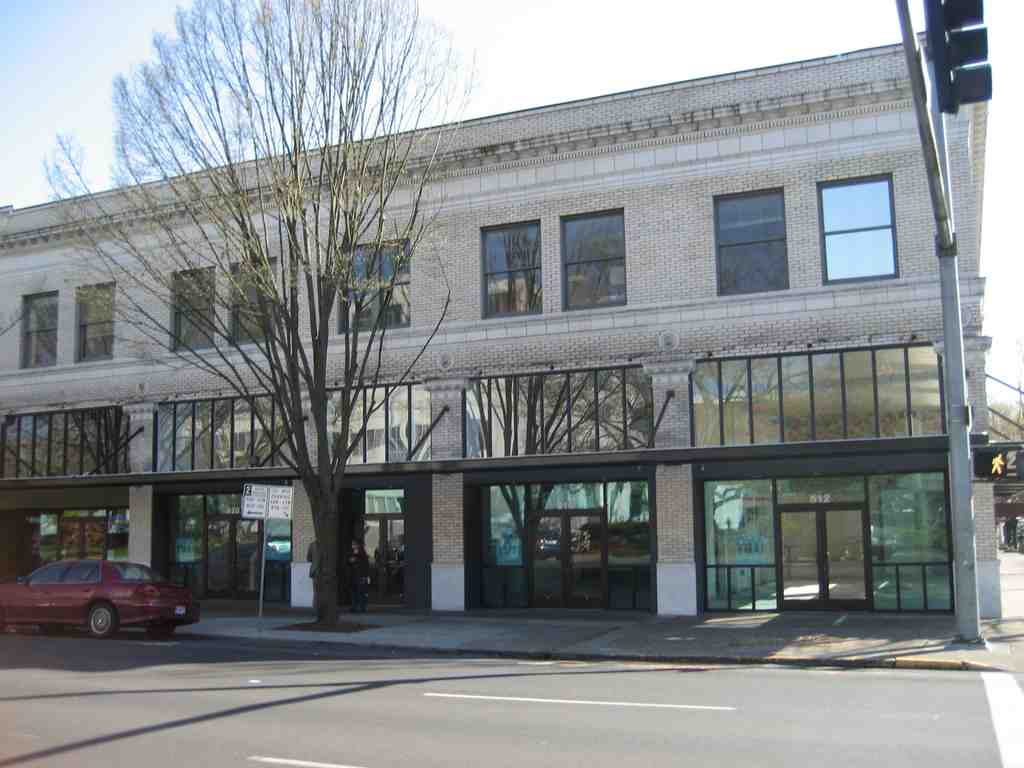
This is the Pacific Building, originally the retail wing of the Bligh Building, constructed in 1926. It was commissioned by Frank Bligh, an ambitious thirty-four-year-old taking over from his father, T.G. Bligh. The elder Bligh was a Canadian immigrant who arrived in Salem practically penniless in 1910 and built an entertainment empire. He opened the city's first ten-cent movie house, charging an admission fee that would be about three dollars today. But his run was cut short. He was arrested in a 1917 bootlegging raid where agents dramatically seized a grand total of seven cases of beer, and he later died in a 1924 car accident. Frank built this massive complex as a monument to his father's legacy. It covered a quarter of a block, featuring twelve storefronts, thirty-five offices, and the colossal Capitol Theater with twelve hundred seats. The theater was built for vaudeville, a popular form of live stage entertainment featuring a dizzying variety of unconnected musical, acrobatic, and comedy acts. On opening night, Frank waived the admission fee. Ten thousand people squeezed through to gawk at the Florentine-style interior, characterized by heavy, ornate Italian Renaissance architectural details. It even featured soundproof, glass-enclosed crying rooms so patrons could manage fussy infants without missing the show. The theater's crown jewel was its brilliantly lit, stained-glass marquee, shaped exactly like the dome of the second Oregon State Capitol. When the actual State Capitol burned to the ground in 1935, this theater's marquee became a glowing, accidental memorial to the lost landmark until it was finally modernized in 1952. Tap the image on your screen to see a historic photo from 1934, revealing that magnificent marquee for yourself. Like so many grand stages, the theater eventually lost its audience, converting to movies before closing in 1990 and facing the wrecking ball in 2000 because of structural decay. It is just a parking lot now. But pieces survived. Its prized Wurlitzer pipe organ embarked on a bizarre journey to a Seattle ice rink in 1941, before ultimately being broken down and mixed with parts from a Portland theater to create a massive franken-organ in a private Washington home. The Bligh family name suffered a similar dismantling. Their nearby Bligh Hotel devolved into a low-rent boarding house that tragically burned in 1975, taking the lives of residents Arnold Stover and August Cico. Frank had smartly sold this retail wing to the family behind the Pendleton Woolen Mills empire in 1927, shielding it from the Great Depression and leaving the Pacific Building as the last dignified survivor of the Bligh legacy.
Stop 16 of 17
Pacific Building