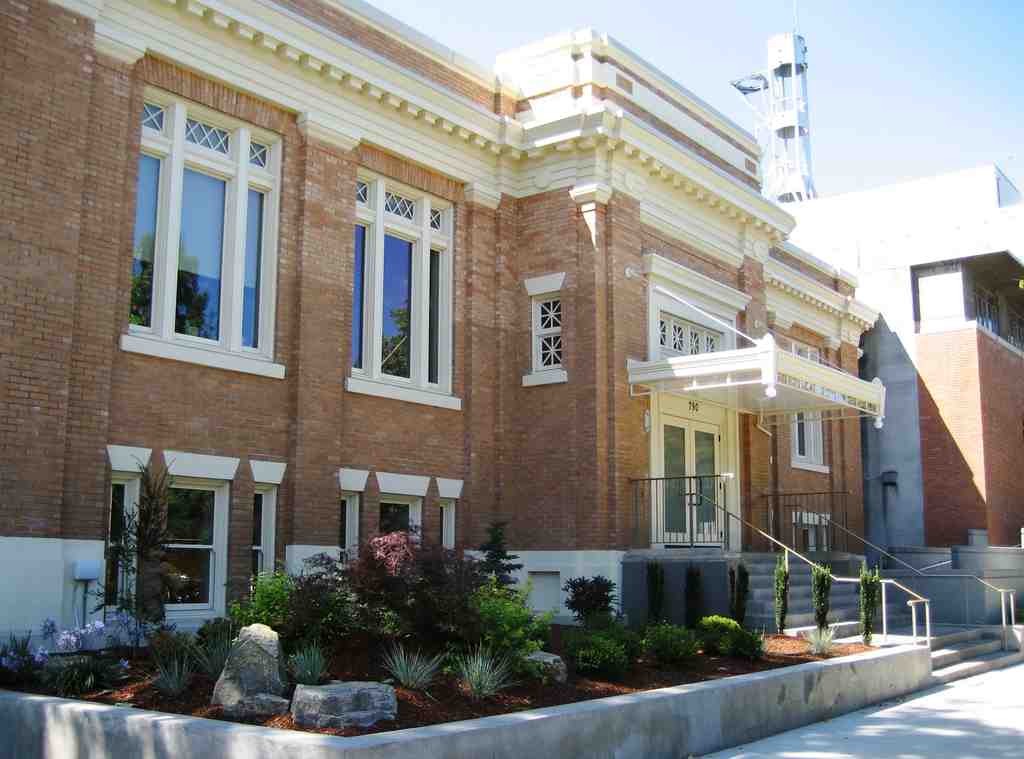
This handsome Beaux Arts structure, an architectural style characterized by formal symmetry and decorative stone accents, stands today out of sheer, unadulterated spite. Back in 1903, the Salem Woman's Club started a public library with a grand total of fifty books. By 1909, they had raised funds and purchased this very plot of land to build a permanent home. Naturally, the Salem City Council decided to take charge. Without consulting the women, the city applied for and secured a grant of fourteen thousand dollars, which is about four hundred and fifty thousand dollars today, from the Carnegie Foundation. Andrew Carnegie was a wealthy industrialist who funded the construction of free public libraries across the globe. The city thought they had won. They were wrong. In the ultimate act of women shaping the city's future, the club refused to be sidelined. Since they held the deed to the land, they went straight over the city's head and contacted the Carnegie Foundation directly to halt the funding. It was a brilliant, ruthless power move. Not only did they force the city to negotiate, but a local cultural leader named Lulu Bush lobbied Carnegie to nearly double the grant to twenty seven thousand five hundred dollars, roughly eight hundred and fifty thousand dollars today. The women got their grand structure on their own terms. If you tap the historic image in your app, you can slide between how this looked in 1922 and today, which is quite a transformation. When it opened in 1912, the building featured a look-out basement, an architectural trick where the lower level is only partially submerged so full-sized windows can let natural light flood into the reading rooms. But structures in this town rarely get to sit still. By 1971, the library had outgrown the space. The adjacent Young Women's Christian Association bought the building for one hundred and fifty thousand dollars, or about 1.1 million today. They made some drastic physical changes, completely upending the quiet academic atmosphere by bolting a massive swimming pool annex onto the side. For over three decades, the hushed silence of reading rooms was replaced by the humid, echoing splashes of a busy aquatic center. But the cycle of reinvention turned again. In 2003, Willamette University bought the property. They demolished the swimming pool, restored the original layout, and resurrected the space into a modern hub for their College of Law. When it was rededicated in 2008, Supreme Court Justice Ruth Bader Ginsburg came to speak. During her visit, the diminutive justice joked about how often she used to be confused with Sandra Day O'Connor, noting she actually missed the mix-ups because it meant she was no longer the only woman on the bench.
Stop 12 of 17
Oregon Civic Justice Center