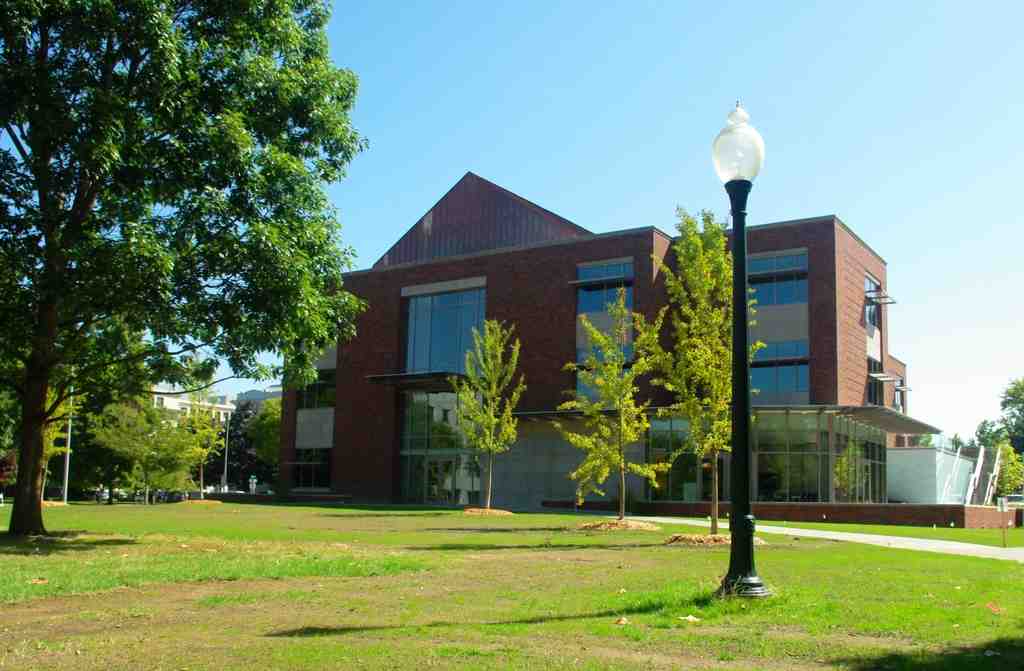
Ford was not just a wealthy benefactor writing checks from a distance. After moving to Salem, she enrolled here as a non-traditional student in her seventies and eighties, taking art classes under noted painter Carl Hall. She forged a deep bond with the university, and just months before she passed away in two thousand and seven, she provided that massive gift, covering half of the sixteen million dollar cost to build Ford Hall. When Willamette University hired Hennebery Eddy Architects, they demanded a design that respected the land. The architects adopted a one hundred year building philosophy, an engineering concept focused on immense durability and minimizing waste. In a brilliant bit of ambitious rebirth, the trees that had to be removed from this footprint were not thrown away. Instead, the construction team milled them and brought them right back inside. That site-harvested timber was crafted into the standing trim, mechanical grilles, and custom furniture you see throughout the building, literally forging the new structure from the landscape it displaced. The engineering behind this place is genuinely fascinating. It earned a LEED Gold certification, which is an international standard proving a building is highly energy efficient. One of its cleverest tricks is a displacement ventilation heating system. Instead of blasting hot air down from the ceiling like a giant hair dryer, the system gently releases air at low velocity from floor level vents, allowing it to rise naturally as it warms. Combine that with a twenty six point eight kilowatt solar panel array on the roof and copper cladding chosen for its recycled content, and this hall consumes fifty eight percent less energy than standard codes require. Of course, building a green utopia is rarely entirely peaceful. The project's harmonious image took a hit when the Pacific Northwest Regional Council of Carpenters set up a picket line outside. They were protesting the use of a subcontractor who did not meet area wage standards. So you had intense labor friction on the lawn while an environmental masterpiece went up behind the gates. Despite the pickets, Hoffman Construction finished the forty two thousand square foot building in just fourteen months to open for the two thousand and nine academic year. Inside, the architecture forces interaction, featuring collaborative spaces called hearths where computer science, mathematics, and digital art students mix.
Stop 6 of 17
Ford Hall