
Lausanne Audio Tour: Castles, Cathedrals & Swiss Secrets Unveiled
Lausanne’s towers guard secrets older than the glacial lake below—stone and glass hiding centuries of conflict, innovation, and intrigue. This self-guided audio tour leads you off the beaten path and into the city’s living heart, revealing the stories and corners most travelers overlook. Hear whispers echoing from the Notre-Dame Cathedral’s ancient bells, courtroom dramas at Switzerland’s Federal Supreme Court, and astonishing breakthroughs within the halls of Debiopharm. What desperate act once shook the entire city from the cathedral steps? Who vanished beneath the marble columns of Swiss justice—and why? Which laboratory discovery forever altered the fate of local farmers on a foggy morning? Trace Lausanne’s twisting streets where revolutions sparked and illusions broke apart. Feel each step reverberate underfoot as visions of scandal and determination unfold around you. Get ready to see Lausanne tilt, shimmer, and come alive. Begin the journey—Lausanne’s secrets are waiting.
Tour preview
About this tour
- scheduleDuration 100–120 minsGo at your own pace
- straighten4.3 km walking routeFollow the guided path
- location_onLocationEpalinges, Switzerland
- wifi_offWorks offlineDownload once, use anywhere
- all_inclusiveLifetime accessReplay anytime, forever
- location_onStarts at Photo Elysée
Stops on this tour
lock_open 3 free previews · 7 unlock with purchase
Look for a long, pale concrete building with crisp rectangular lines and the black Photo Elysée name marking the facade. Welcome to a museum that treats images like public…Read moreShow less
Open dedicated page →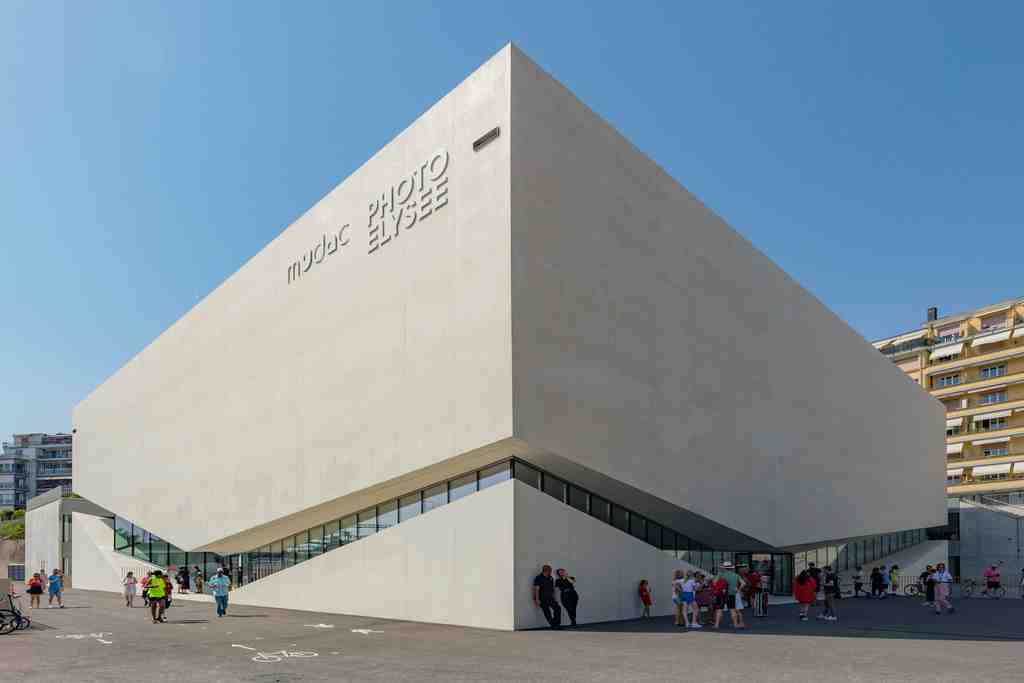
Photo ElyséePhoto: Von.schweiz, Wikimedia Commons, CC BY-SA 4.0. Cropped & resized. Look for a long, pale concrete building with crisp rectangular lines and the black Photo Elysée name marking the facade.
Welcome to a museum that treats images like public evidence. Photo Elysée opened in nineteen eighty-five as the first museum in Switzerland devoted entirely to photography, which sounds obvious now... but at the time it was a fairly bold way of saying that pictures shape civic memory just as surely as laws, sermons, or bank ledgers.
Charles-Henri Favrod, a writer and photo historian, started it. He didn’t treat photography as a precious hobby for specialists; he pushed it into public life. Locals still remember his Nuits de la photo, evenings that turned looking at photographs into a communal ritual long before digital sharing made that seem normal. In other words, he built not just an archive, but a gathering place.
The museum began in an older kind of prestige: an eighteenth-century manor house in Ouchy called the Campagne de l’Élysée. If you glance at the image on your screen, you can see that first home, elegant and patrician, the sort of place that says culture in a low, confident voice. Then Lausanne shifted the center of gravity. From October twenty twenty to June twenty twenty-two, the museum closed, moved here to Plateforme ten on the former locomotive-hall site, and reopened beside the Cantonal Museum of Fine Arts and mudac, the design and contemporary applied arts museum. Different costume, same authority.
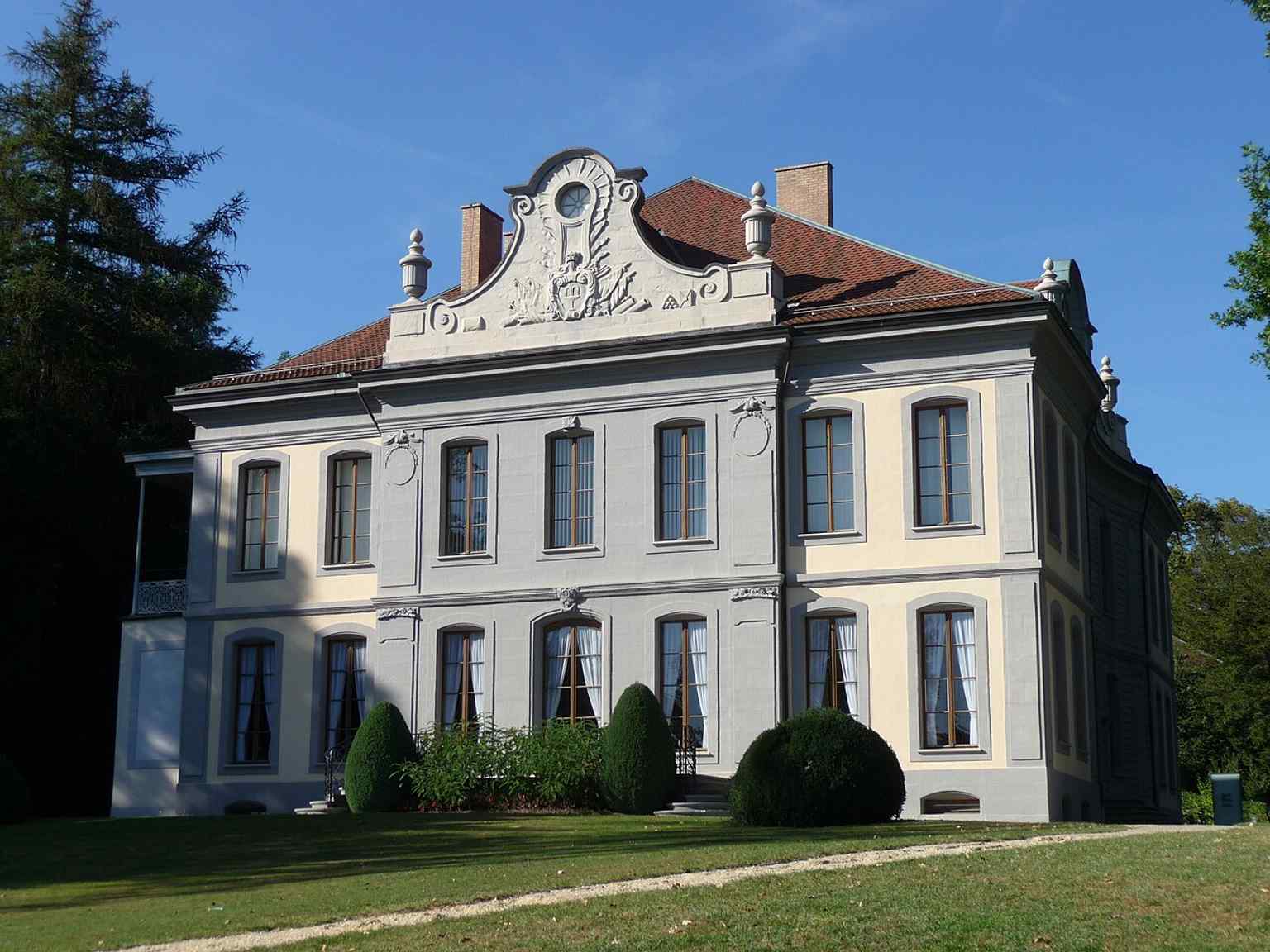
The former Musée de l’Elysée at Campagne de l’Élysée in Lausanne, where the museum began in 1985 before moving to Plateforme 10.Photo: Sandro Senn, Wikimedia Commons, CC BY-SA 3.0. Cropped & resized. That’s one of Lausanne’s favorite tricks: it keeps relocating prestige without throwing it away. A manor by the lake once gave photography status; now a clean-edged cultural quarter by the rails gives it reach. Power, it turns out, is perfectly willing to change outfits.
Inside, the collection runs deep: more than one hundred thousand original photographs from the nineteenth and twentieth centuries, with names like Francis Frith, Robert Capa, and Mario Giacomelli. It holds major archives too, including Charlie Chaplin, René Burri, Ella Maillart, and Sabine Weiss. Her enormous legacy arrived here in early twenty twenty-four: hundreds of thousands of negatives, contact sheets, and prints entrusted to this museum because she believed it could preserve her life’s work and keep it accessible.
If you check another image, you’ll see the place still works the way Favrod imagined: people gathered around photographs, not tiptoeing past them like relics.
A Photo Elysée event at Plateforme 10, reflecting the museum’s role as a lively meeting place for photography, not just an archive.Photo: PhotoElysée, Wikimedia Commons, CC BY-SA 4.0. Cropped & resized. Before you move on, consider this: when a city decides that pictures deserve a museum of their own, which version of itself is it trying to preserve... and who gets to hold the frame?
Lausanne will keep answering that question in different costumes. Our next stop, Lausanne Billiard Masters twenty fifteen, is about a ten-minute walk from here.
If you want to come back inside later, Photo Elysée usually opens from ten AM to six PM, stays closed on Tuesdays, and keeps its doors open until eight PM on Thursdays.

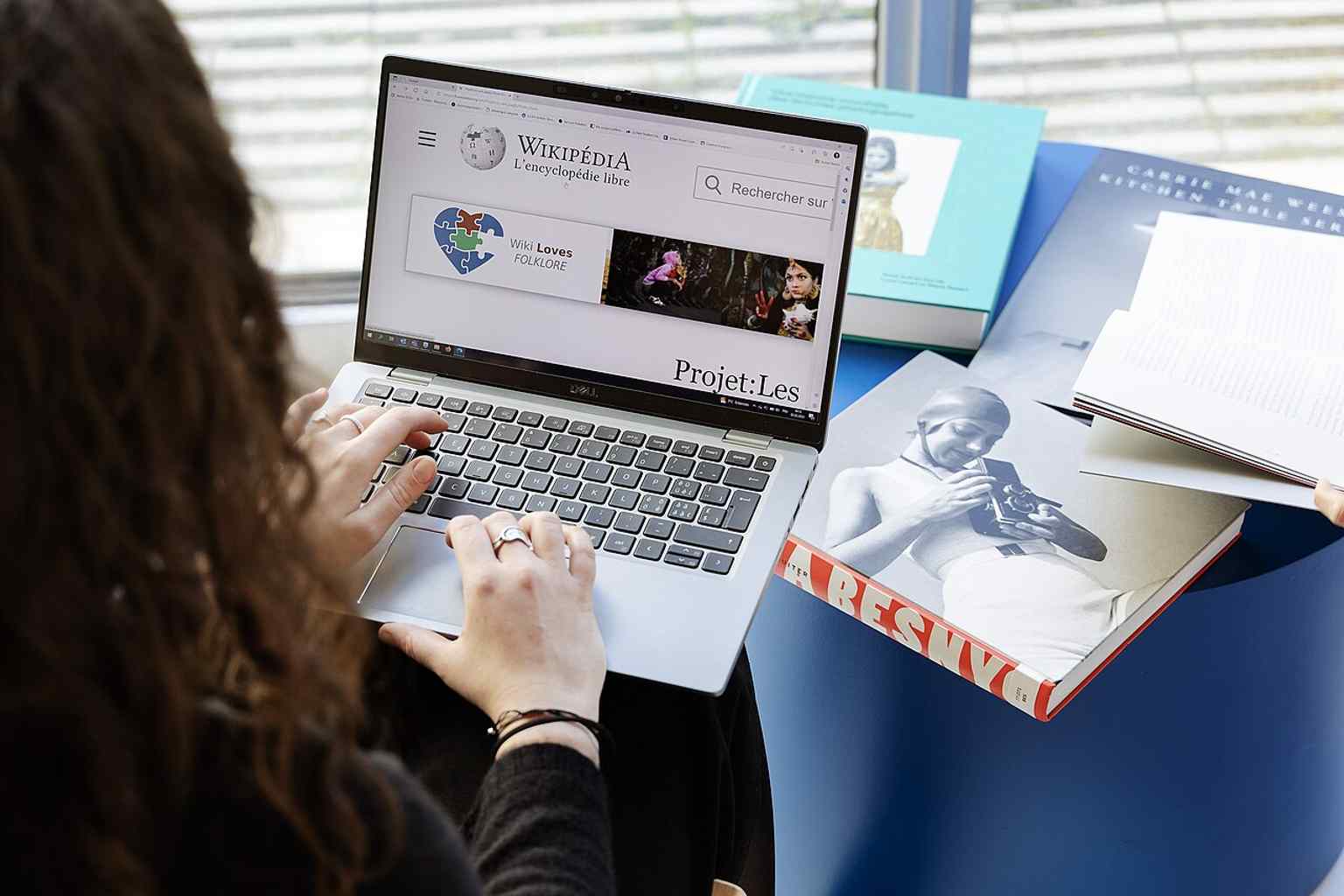
The current Photo Elysée logo, marking the museum’s rebrand after its move into the new Plateforme 10 cultural quarter.Photo: done by Gavillet & Cie, Wikimedia Commons, CC BY-SA 4.0. Cropped & resized. 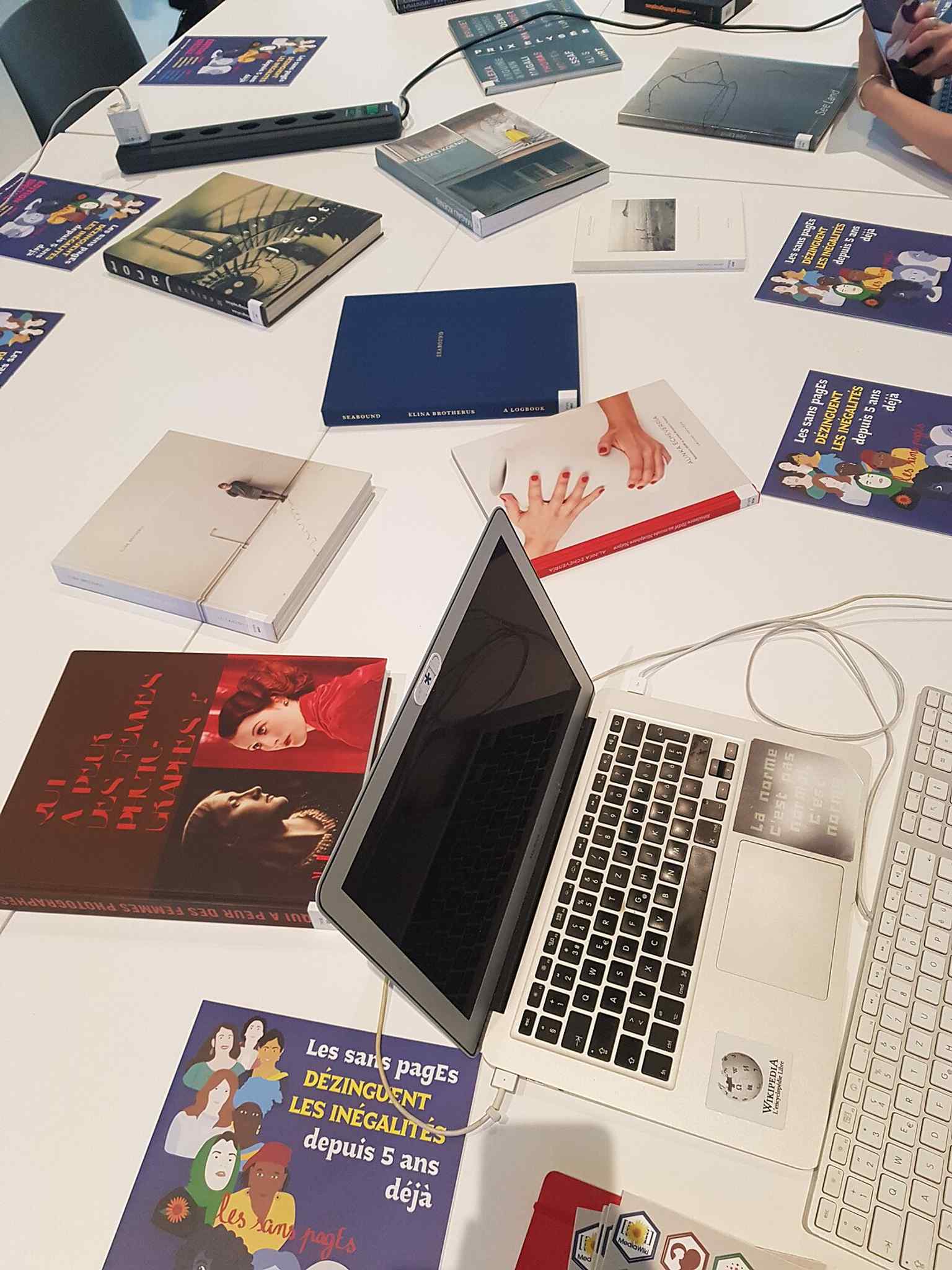
A workshop table filled with books and zines, echoing Photo Elysée’s public programming and photography culture activities.Photo: Flor Méchain, Wikimedia Commons, CC BY-SA 4.0. Cropped & resized. 
A contemporary meetup inside Photo Elysée, showing the museum’s ongoing use as a social and educational space in Lausanne.Photo: Natacha LSP, Wikimedia Commons, CC BY-SA 4.0. Cropped & resized. 
A larger gathering at Photo Elysée, illustrating how the museum continues to bring people together around photography.Photo: Natacha LSP, Wikimedia Commons, CC BY-SA 4.0. Cropped & resized. Look for the broad pale-stone façade, the steep central staircase, and the sculpted entrance marked by freestanding columns topped with griffins. This is the Palais de Rumine,…Read moreShow less
Open dedicated page →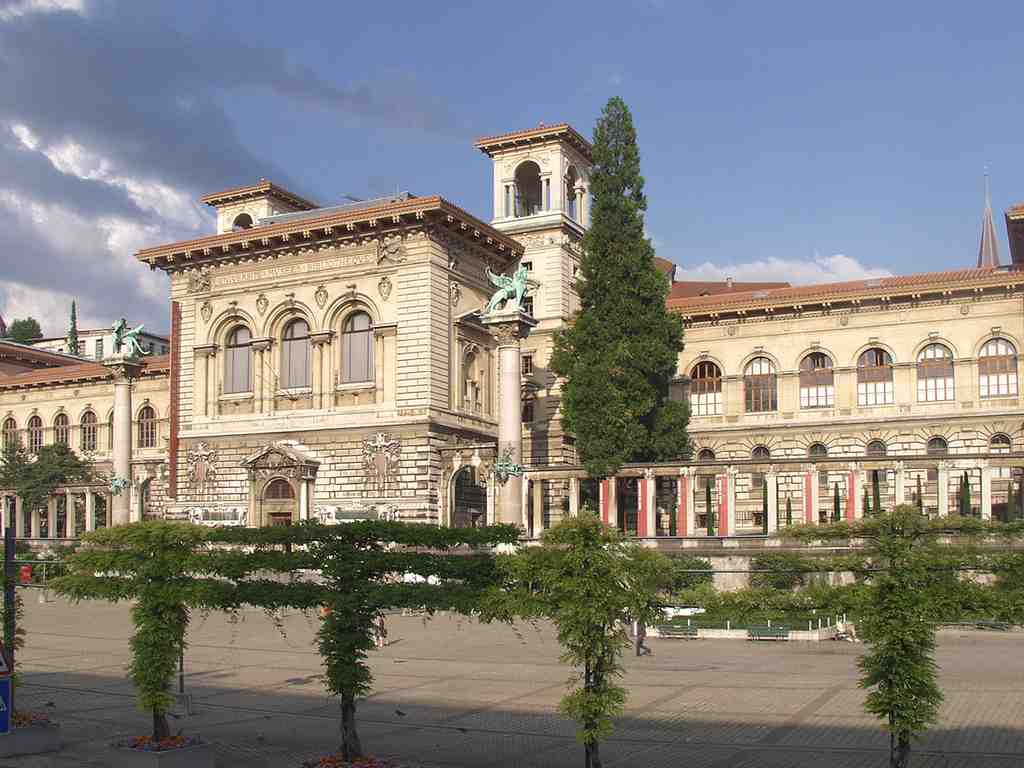
Rumine PalacePhoto: Urs Zeier, Wikimedia Commons, CC BY-SA 3.0. Cropped & resized. Look for the broad pale-stone façade, the steep central staircase, and the sculpted entrance marked by freestanding columns topped with griffins.
This is the Palais de Rumine, and it wears ambition very openly. It looks like a palace because Lausanne wanted more than a practical public building here; it wanted a statement in stone. Yet this is also a place where memory keeps arguing with change. One young man’s inheritance started it, delays and redesigns reshaped it, and later generations kept stuffing new roles inside it until the building became part university, part library, part museum, part political stage.
Gabriel de Rumine never saw any of that. He was a Lausanne-born civil engineer from a Russian family, and when he died in eighteen seventy-one at just thirty, he left the city one and a half million francs... a fortune worth well over ten million in today’s money. He attached conditions, too: invest it, let it grow, then use it after fifteen years to build a public institution. Even in death, he sounds faintly like an engineer.
The city took the gift and immediately proved that grand ideas rarely move in straight lines. In eighteen eighty-nine, officials launched an architectural competition. Thirty-six designs arrived. The jury liked none of them enough to award first prize. Very efficient. The city then chose Dominique Demierre’s project, only to disqualify him after discovering he worked in the same office as juror Henri-Paul Nénot. So the commission passed to Gaspard André of Lyon. Then politics delayed the start, critics complained about the site and the unstable ground, and André himself died before construction began. Four other architects carried his design forward, and work finally started in eighteen ninety-eight.
Take a moment and study the façade... does it feel like a museum, a palace, or a civic flex? The answer is basically yes. If you glance at the image in the app, you can see how the whole front balances weight and ceremony. The style draws from the Florentine Renaissance, meaning the grand urban palaces of Florence: symmetry, heavy stone, a sense that culture and authority should arrive together. André had to cut the usual arcade level to preserve views and save money, so the building ended up lower and bulkier than planned. To lighten that heaviness, he added those small tower-like stair turrets with open loggias at the top, and those griffins by the entrance as if the place needed mythological security staff.
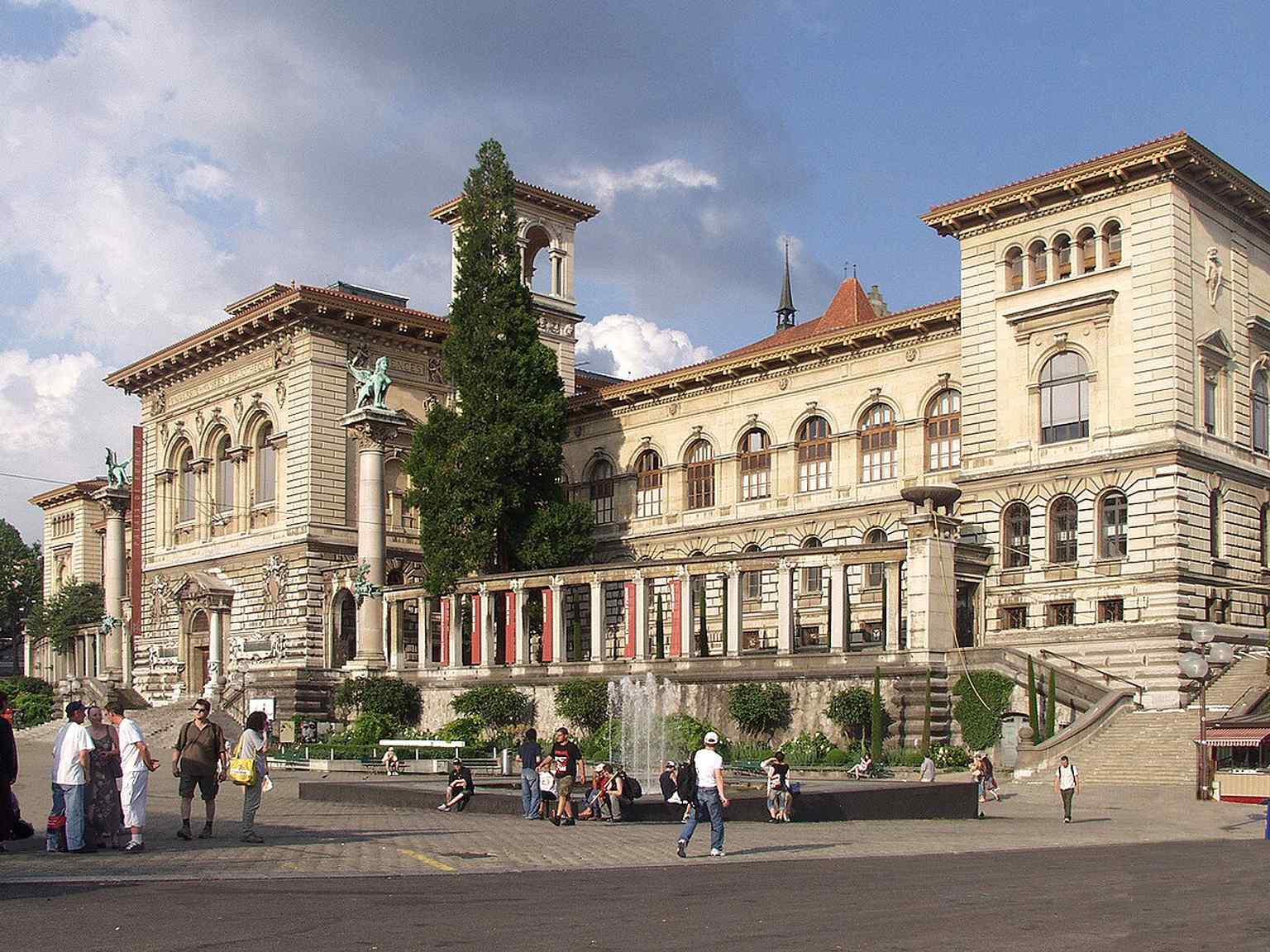
The main façade of Palais de Rumine in Lausanne, the Florentine-Renaissance landmark that once housed the University of Lausanne and now contains several museums.Photo: Urs Zeier, Wikimedia Commons, CC BY-SA 3.0. Cropped & resized. Inside, the building became a machine for public life: university halls, the cantonal and university library, and today five museums. It also carries details you cannot read from out here. The great aula, the ceremonial hall under a glass roof, gained its painted decoration only later, when Louis Rivier spent years covering its walls and ceiling with a vast program of images painted directly onto plaster. If you check the stair detail on your screen, you get a hint of the theatrical approach to entering the place.
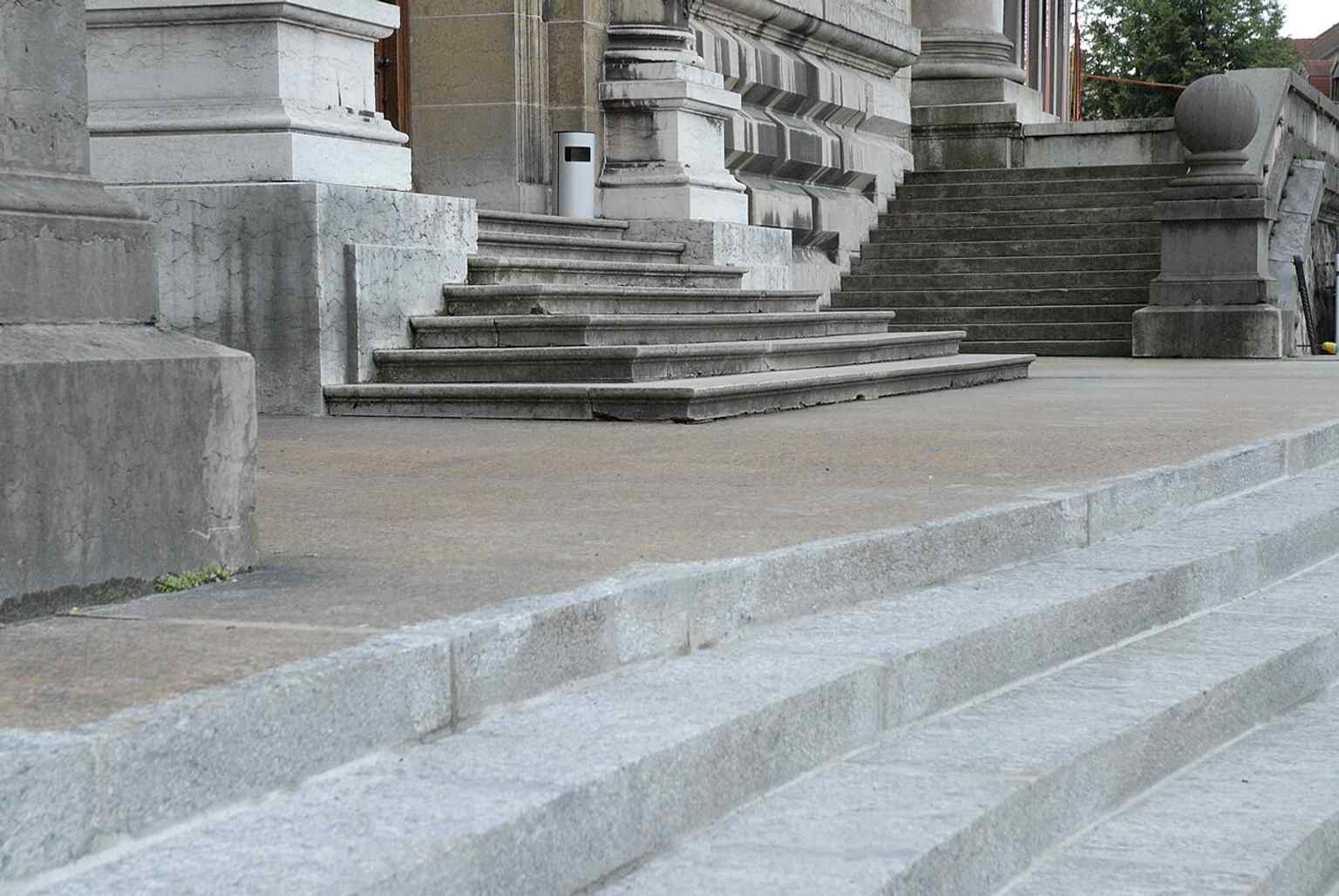
Exterior stair details at Palais de Rumine, a useful close look at the monumental approach to the building on Place de la Riponne.Photo: Michel Krafft, Wikimedia Commons, CC BY-SA 4.0. Cropped & resized. And then came the sharp turn. On the twenty-fourth of July, nineteen twenty-three, delegates signed the Treaty of Lausanne in that aula. A building raised from a private legacy suddenly became the stage for an international agreement that fixed the population exchange between Greece and Turkey. Beautiful halls can do severe work.
In about four minutes, Saint-Maire Castle shows you an older, less polished face of authority. If you want to come inside here later, the museums are generally open Tuesday through Sunday from ten to five, and closed on Monday.
Show 7 more stopsShow fewer stopsexpand_moreexpand_less
On your left, look for a hefty rectangular block with pale sandstone at the base, reddish brick above, and a steep roofline lined with small windows tucked just under the eaves.…Read moreShow less
Open dedicated page →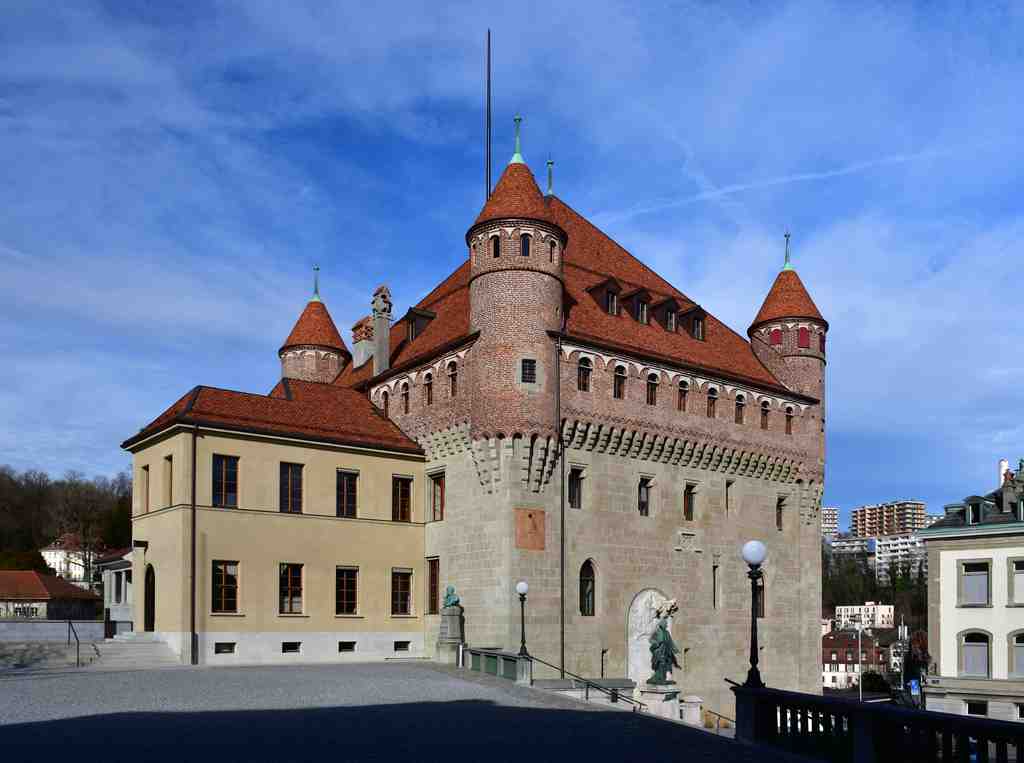
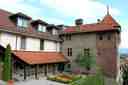
Saint-Maire CastlePhoto: Gzzz, Wikimedia Commons, CC BY-SA 4.0. Cropped & resized. On your left, look for a hefty rectangular block with pale sandstone at the base, reddish brick above, and a steep roofline lined with small windows tucked just under the eaves.
Saint-Maire Castle looks exactly like what it began as: a fortified residence for men who mixed prayer with hard power. Guillaume of Menthonay started it in thirteen ninety-seven, Guillaume of Challant finished it in fourteen twenty-five, and they named it for Saint Marius, the first bishop of Lausanne. In the bishops’ Lausanne, authority did not split neatly into church here, government there. The bishop ran both souls and systems.
You can still read that ambition in the walls. The whole castle was conceived as one massive rectangle, sandstone below, brick above, blunt and confident. If you check the image on your screen, the fortress-like façade makes that medieval logic obvious. Originally the top had Ghibelline merlons - those swallowtail battlements with a V-shaped notch, more Italian in flavor than Swiss. Later builders filled them in and stretched the roof out over them, because elegant battlements are less charming when water keeps getting into the masonry. Practicality usually wins.
This city has hidden afterlives. New rulers almost never wipe a place clean; they cover, divide, repaint, and pretend the old meaning has politely left the room. Inside Saint-Maire, Bernese officials later hid episcopal decoration under whitewash. The older world stayed there anyway, just beneath the surface... quiet, but not gone.
The sharp break came in fifteen thirty-six, when Bern conquered Lausanne and secularized the bishopric. Bishop Sébastien of Montfalcon did not stay to negotiate; he escaped through a hidden stairwell. After that, Bern installed its bailiff here, turned parts of the castle into an armory, used basement spaces as prison cells until eighteen eleven, and chopped up rooms to suit administrative habits. Same walls, different script.
And yet some private traces survived. Locals sometimes mention the bishop’s chamber almost in passing, but it is one of the most intimate clues in the whole building: Aymon de Montfalcon’s fireplace and painted ceiling still remain there, despite all the conquest, whitewash, and official furniture. Power changed hands; the room kept receipts.
Later, the building changed jobs again. In seventeen eighty-eight and seventeen eighty-nine, Gabriel Delagrange inserted a monumental stair inside, replacing the old drawbridge logic with something fit for government. After Vaud became a canton in eighteen oh-three, the castle became the seat of the Council of State - and one northern cellar even housed coin-striking machinery for the new canton. Nothing says “new regime” like minting your own money in the old bishop’s basement.
So here’s the question to carry uphill: when conquerors keep the walls but repaint their meaning, is that preservation... or a very tidy form of erasure?
From here, continue to Notre-Dame Cathedral, about three minutes away. If this castle was where the bishops defended their rule, the cathedral is where they made it feel unquestionable.
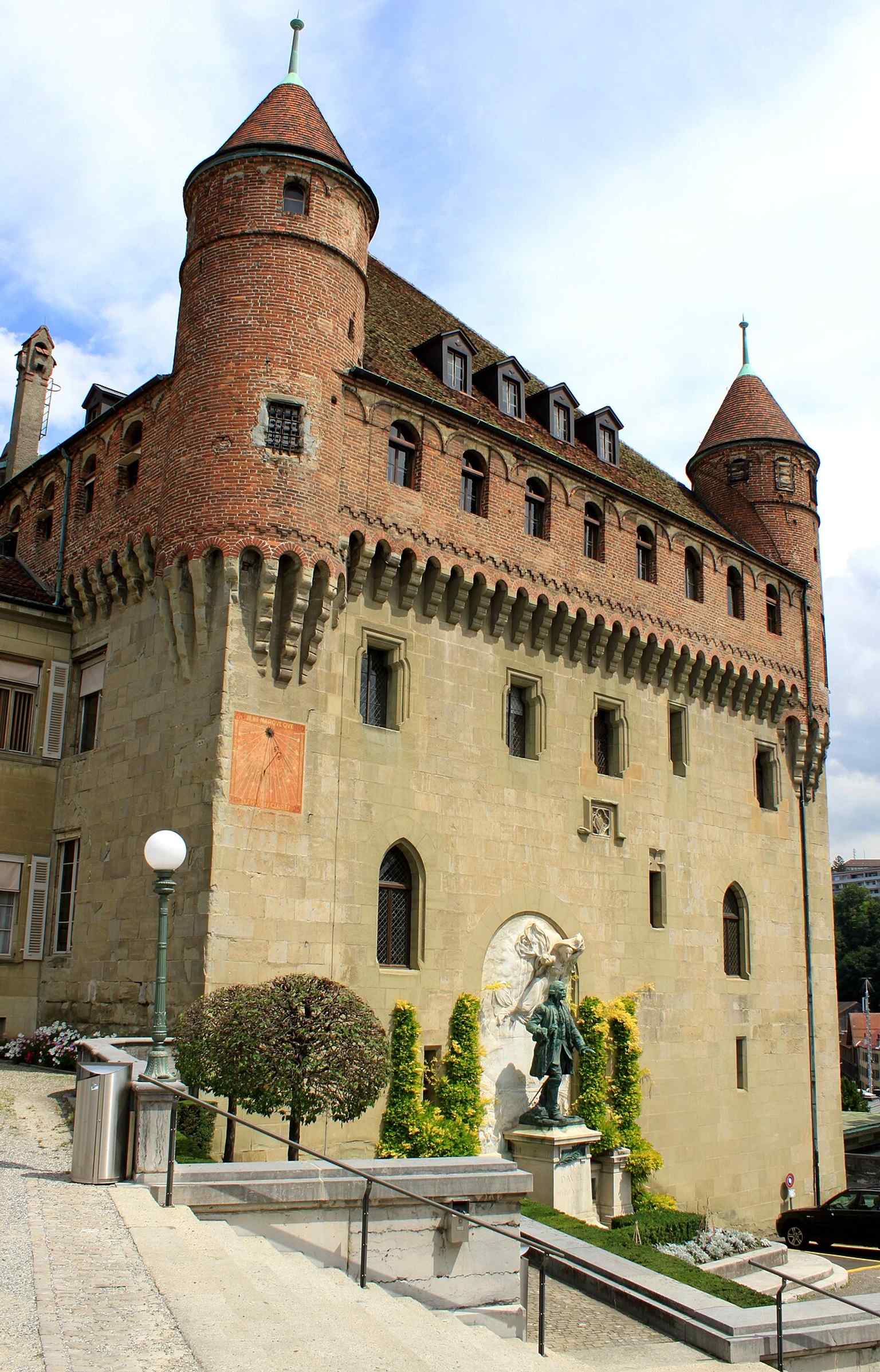
The stairway approach to Saint-Maire Castle, the former bishop’s residence that later became the seat of Vaud’s government.Photo: Odrade123, Wikimedia Commons, CC BY-SA 3.0. Cropped & resized. On your left, look for a pale molasse-stone Gothic church with a long steep roof, pointed buttressed walls, and a square lantern tower rising above the center. This is…Read moreShow less
Open dedicated page →On your left, look for a pale molasse-stone Gothic church with a long steep roof, pointed buttressed walls, and a square lantern tower rising above the center.
This is Notre-Dame of Lausanne, and it reads like a case file written in stone. Before the Reformation, this was the bishop’s church, the sacred center of the bishops’ Lausanne. After the Reformation, it became the city’s main Reformed church. Same building... different authority, different theology, same commanding presence.
The cathedral’s layered construction matters here. A church had stood on this hill since the sixth century, and the site kept being rebuilt long before the Gothic cathedral rose here. Around the late twelfth century, builders began again in earnest. Under Bishop Landry de Durnes, they shaped the eastern choir, the part around the high altar, with a walkway circling it. From about eleven ninety, the so-called Master of Lausanne pushed the project westward in the new Gothic style: the crossing, where the long central hall and the side arms meet, the transept, and much of the nave, that soaring main interior space. Around twelve fifteen, Jean Cotereel took over and finished the nave and the west end. In twelve seventy-five, Pope Gregory the Tenth and Rudolf of Habsburg stood here for the consecration. Not bad attendance, frankly.
Now let your eyes travel along the building’s length... and trust your instincts. The axis is not perfectly certain. As plans changed, the line of the church shifted slightly. That tiny misalignment is one of the most honest things about this place. It admits that great monuments are negotiated, revised, and occasionally improvised.
Some ambitions never fully landed. The west front was planned as a two-tower façade, but only one tower was completed. The broad western bay may first have been meant to carry a tower aligned with the nave; later, that idea was dropped, and for a time a road actually passed through part of the church. Medieval urban planning could be wonderfully direct. In the sixteenth century, Bishop Aymon de Montfalcon finally closed that passage and added the rich late-Gothic west portal.
If you want a quick visual cheat sheet, glance at the rose window image in the app; its early thirteenth-century glass tries to picture the whole known world, from seasons and zodiac signs to monsters at the edges. That ambition tells you what this cathedral meant: not just a church, but a model of creation.
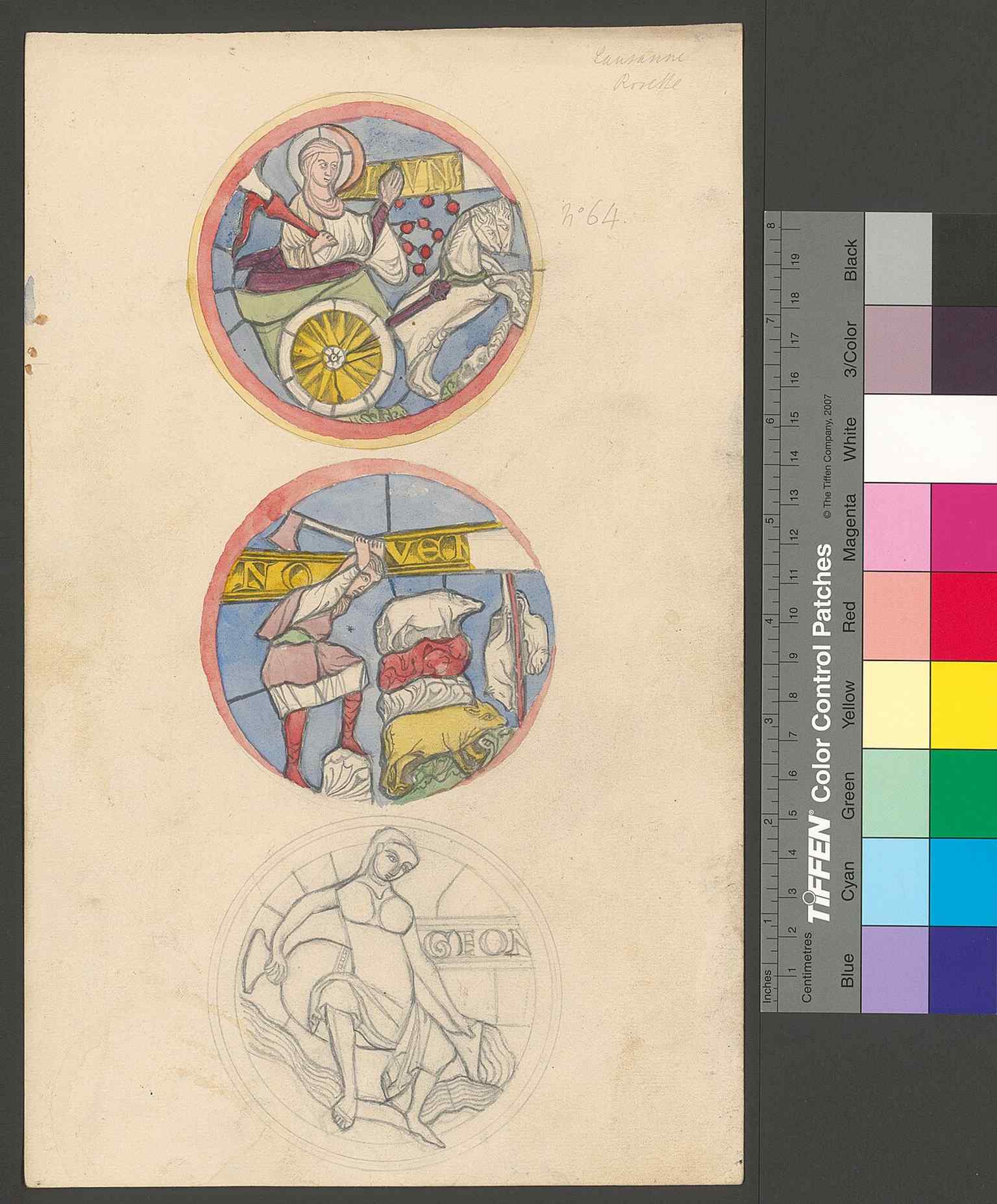
The great rose window of the south transept, whose 13th-century glass maps the known world with seasons, months, and zodiac signs.Photo: Johann Rudolf Rahn, Wikimedia Commons, Public domain. Cropped & resized. And yet it has survived by being stubbornly practical. The stone is molasse, a soft sandstone, beautiful and fragile. So repairs never really end. In the eighteenth century, architect Gabriel Delagrange argued fiercely against removing part of the north tower corner, warning that the odd little turret acted as a structural counterweight. He was right: touch the wrong piece, and the whole body could suffer. If you like, check the before-and-after image in the app to see how the city changed around this mass while the cathedral kept its role in the skyline.
That’s the pattern Lausanne keeps showing us: power changes costume, but the old stage never quite disappears.
Next, we move from memory in stone to memory under careful protection at the Lausanne Historical Museum, about one minute away. If you want to step inside later, the cathedral is generally open daily from nine AM to five thirty PM.
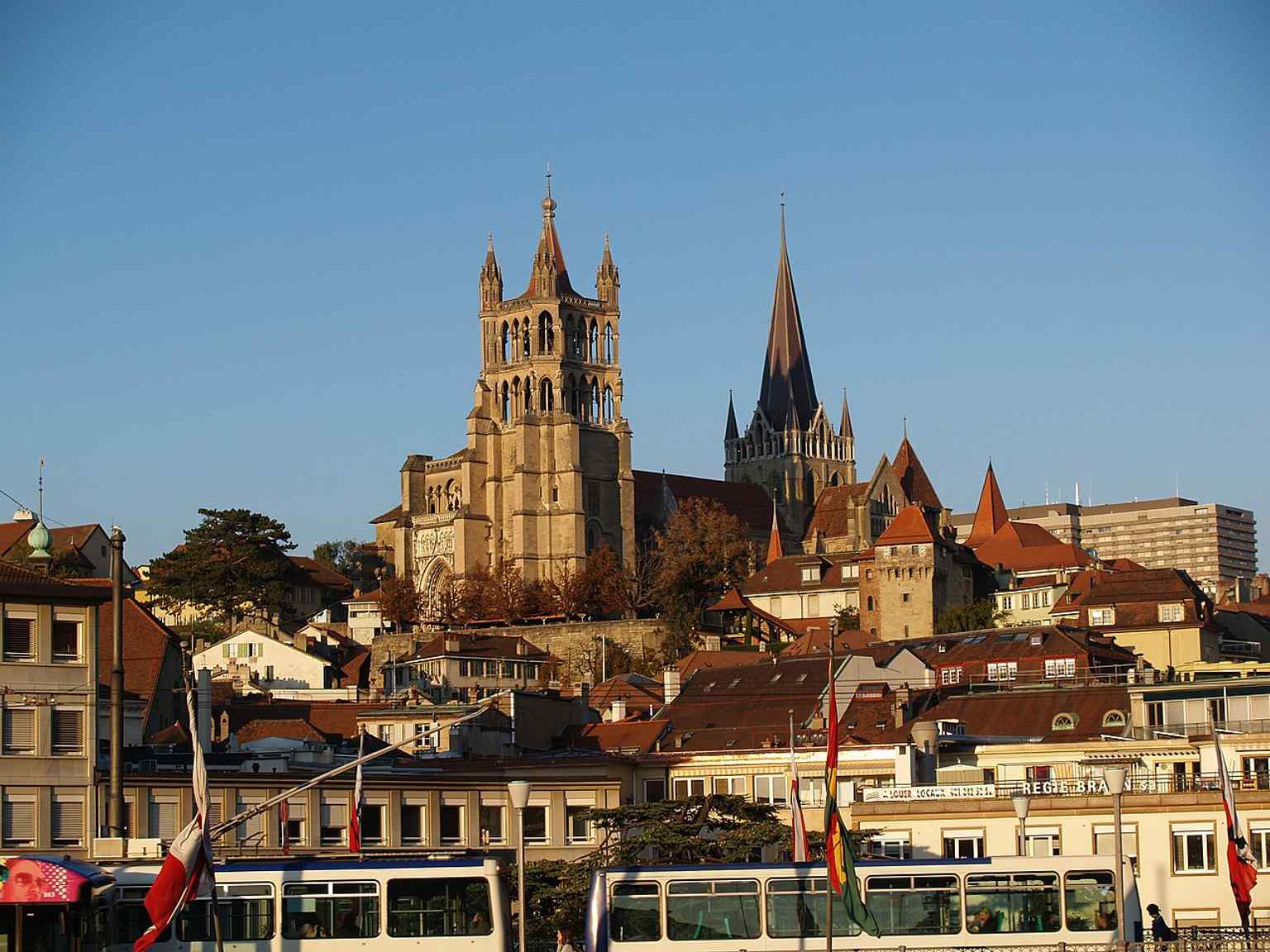
Seen from the Grand-Pont, this wider city view places Notre-Dame in Lausanne’s historic skyline and hints at its role above the old town.Photo: Maicomaico, Wikimedia Commons, CC BY-SA 3.0. Cropped & resized. 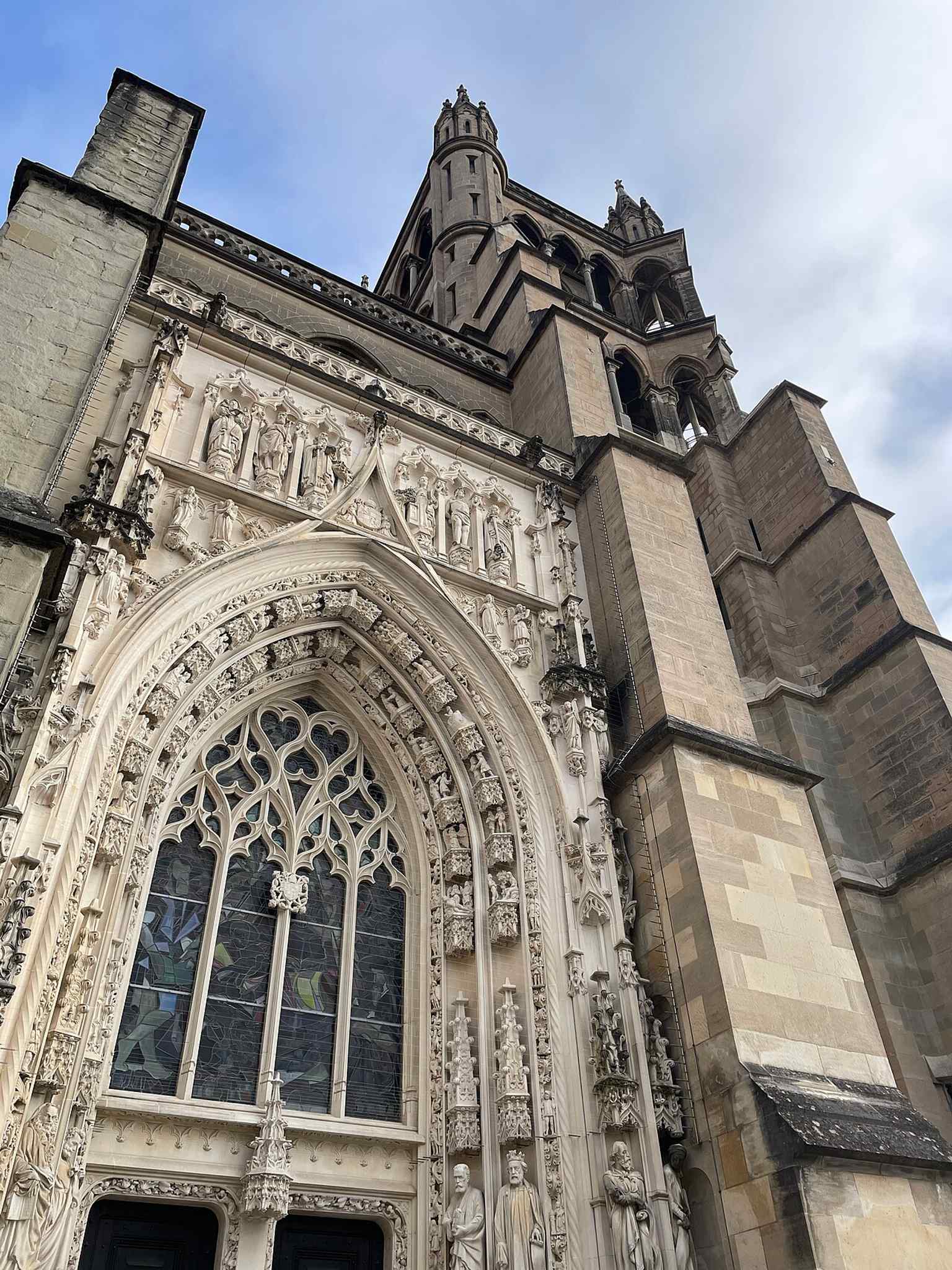
A recent side view of the cathedral highlights the long stone walls and buttresses that have required near-constant restoration because of the soft Molasse sandstone.Photo: Jufu03, Wikimedia Commons, CC0. Cropped & resized. 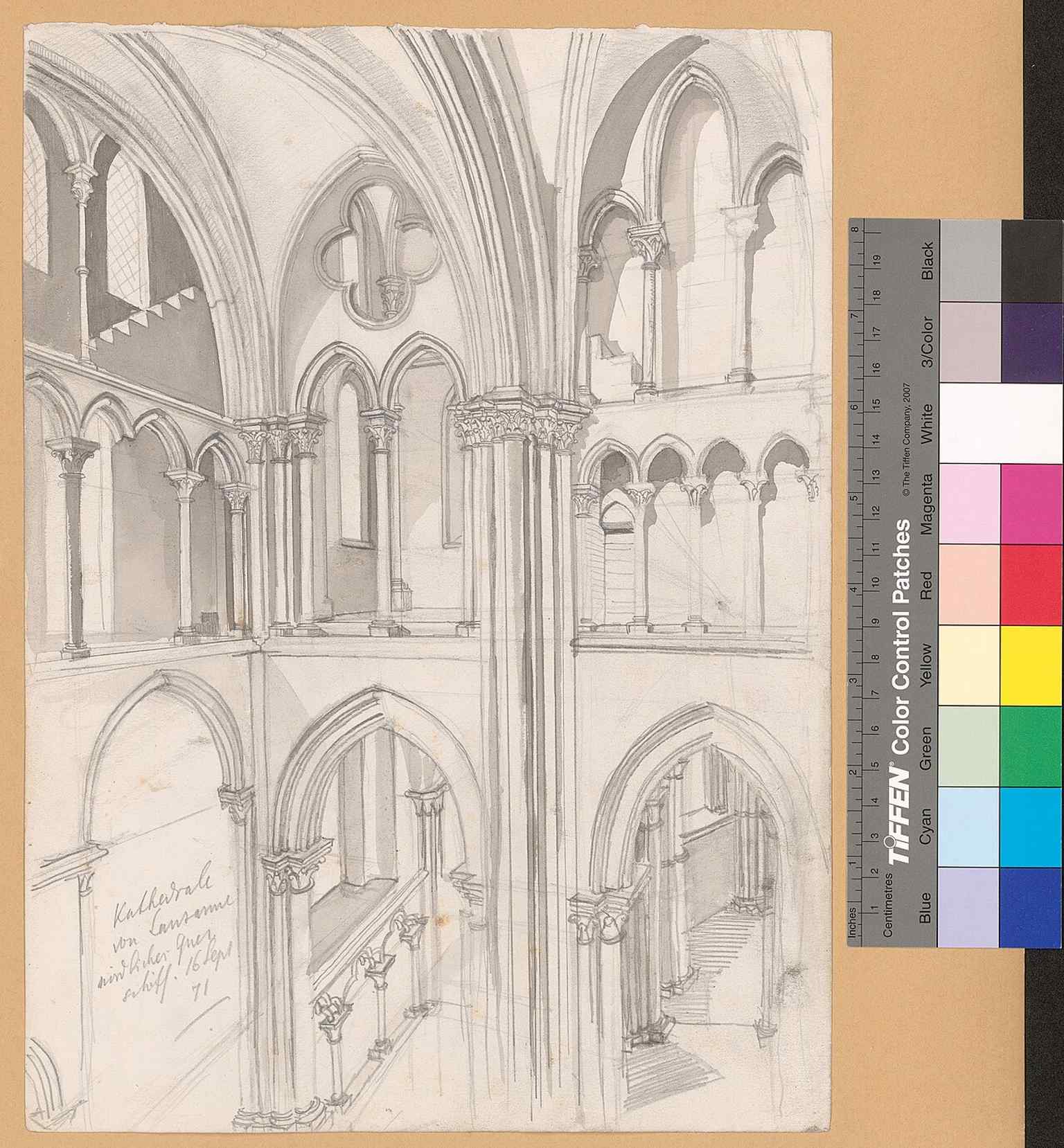
A 19th-century interior view of the north transept, useful for the building’s historic atmosphere before modern restorations and lighting changes.Photo: Johann Rudolf Rahn, Wikimedia Commons, Public domain. Cropped & resized. 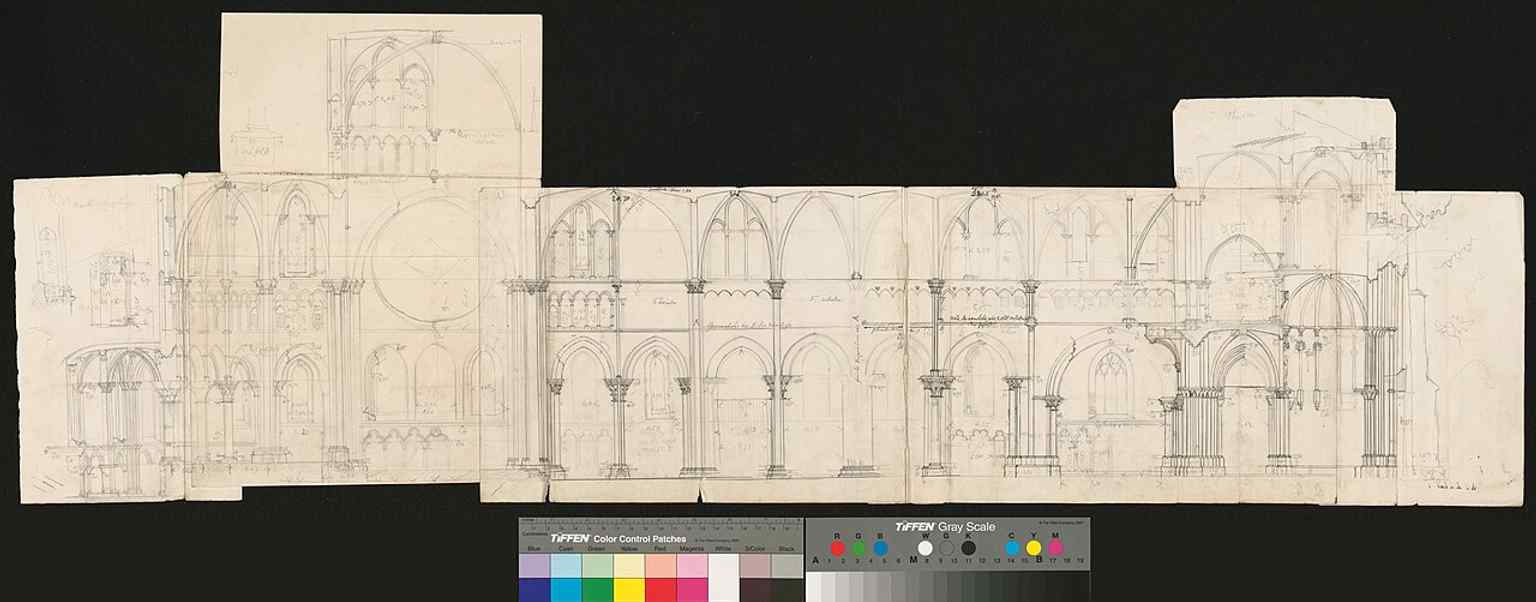
This 1860 longitudinal section reveals the cathedral’s full Gothic layout, including nave, transept, choir, and the prominent crossing tower.Photo: Johann Rudolf Rahn, Wikimedia Commons, Public domain. Cropped & resized. 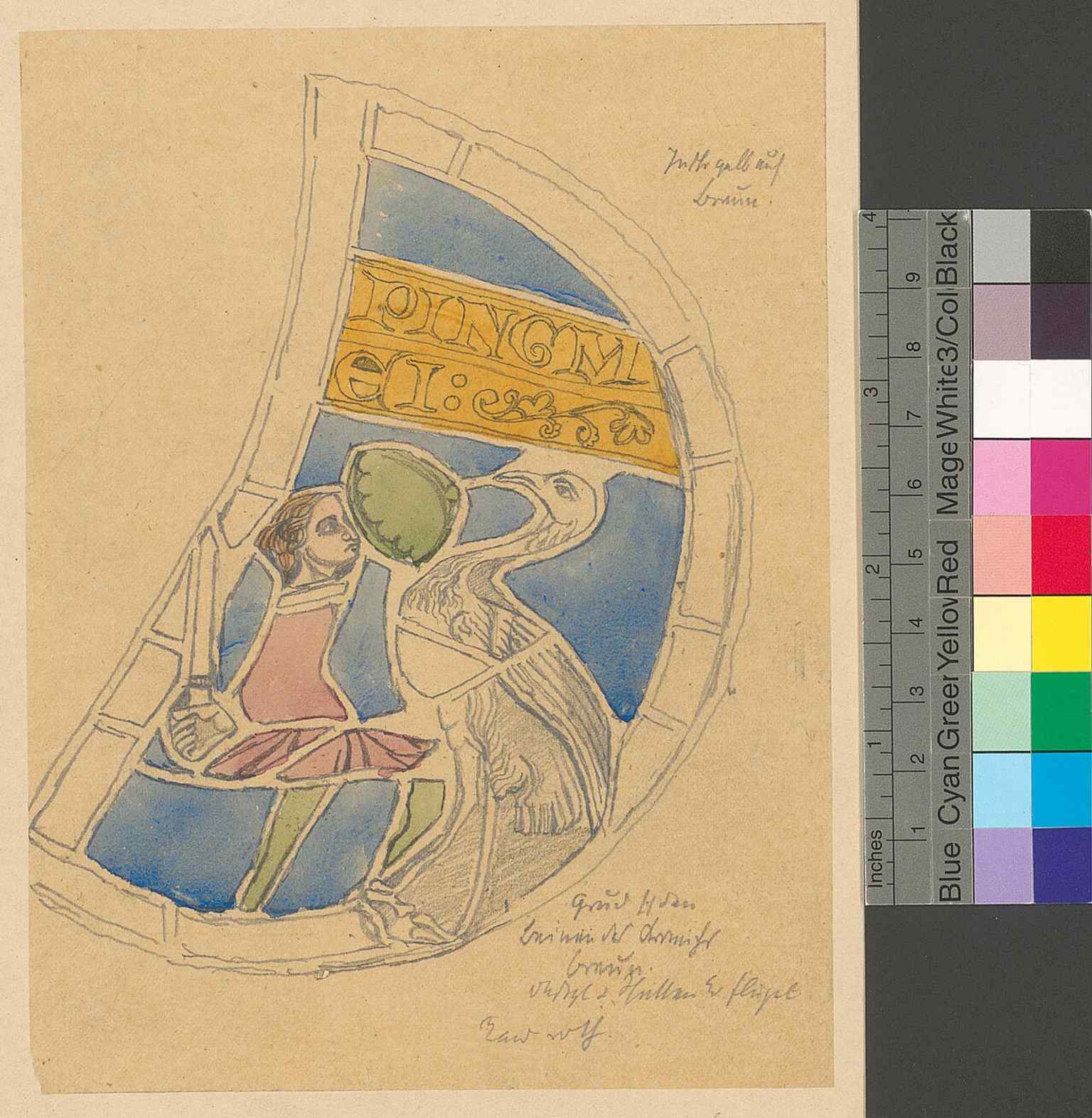
A detail from the rose window showing one of its exotic medieval scenes, reflecting the window’s ambitious symbolic program about creation and the edge of the world.Photo: Johann Rudolf Rahn, Wikimedia Commons, Public domain. Cropped & resized. 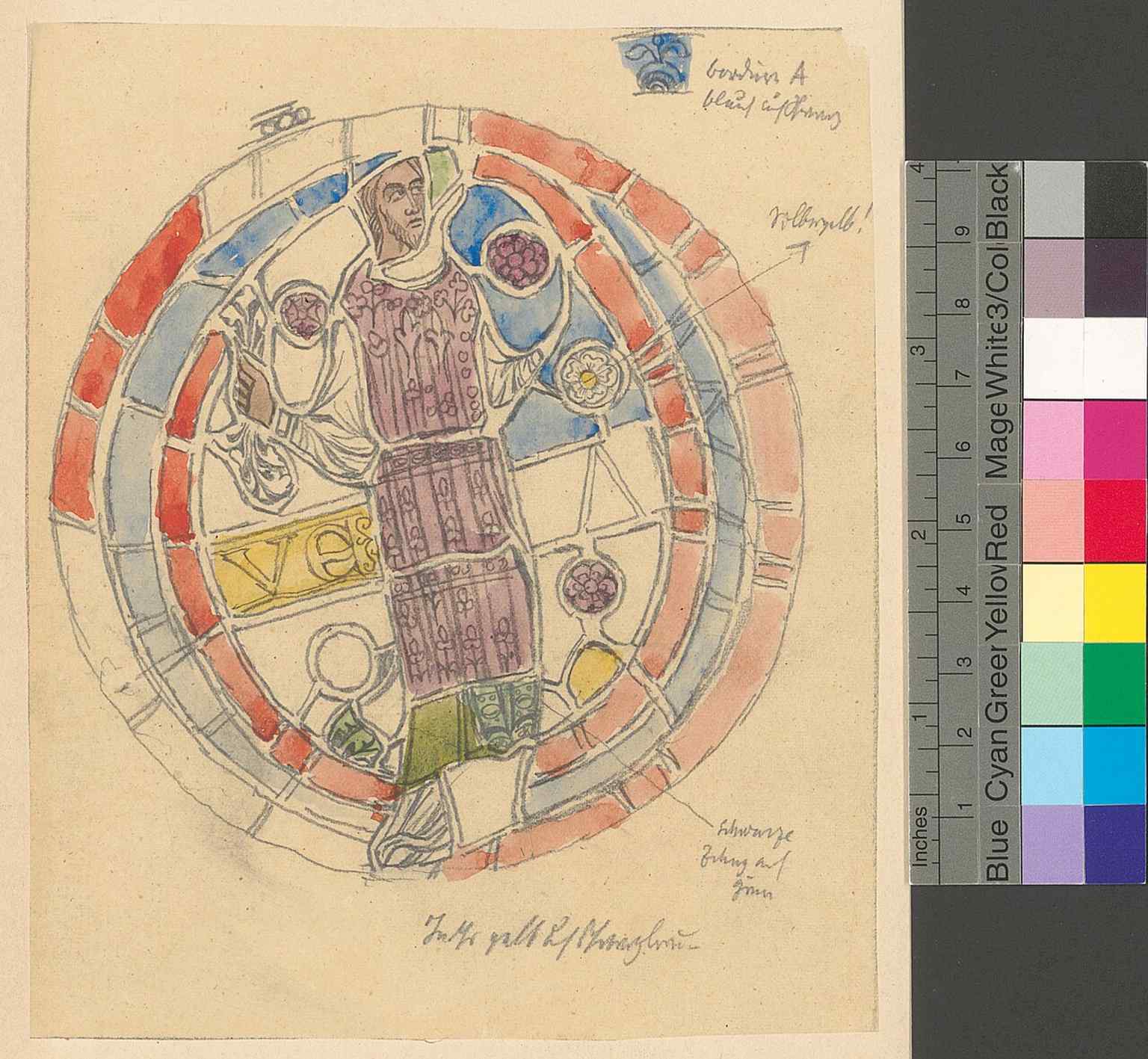
The rose window’s spring medallion, part of the medieval cycle of seasons and months preserved in the south transept.Photo: Johann Rudolf Rahn, Wikimedia Commons, Public domain. Cropped & resized. 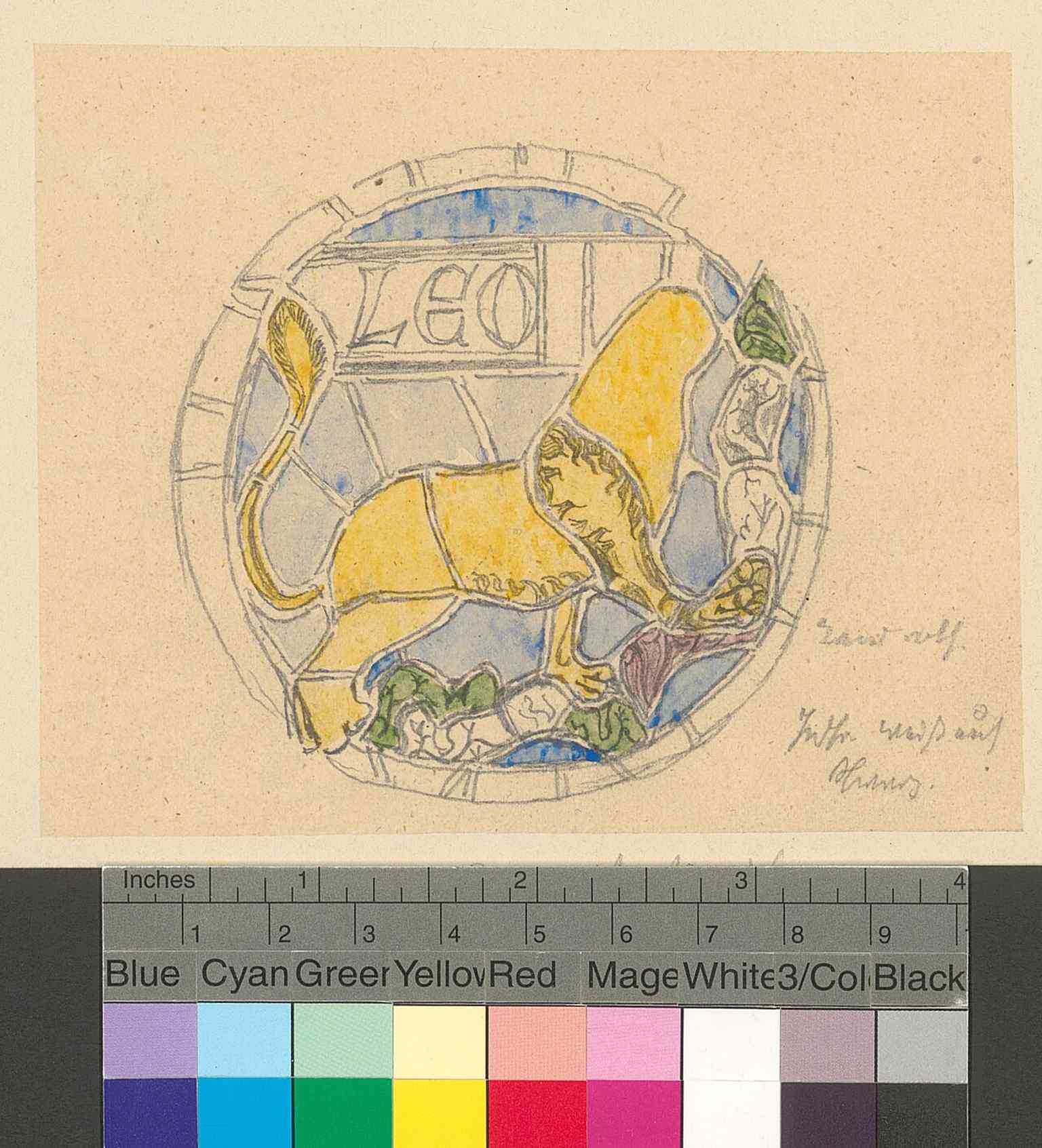
A zodiac medallion from the rose window — the cathedral’s glazing famously combines astronomy, cosmology, and biblical symbolism.Photo: Johann Rudolf Rahn, Wikimedia Commons, Public domain. Cropped & resized. 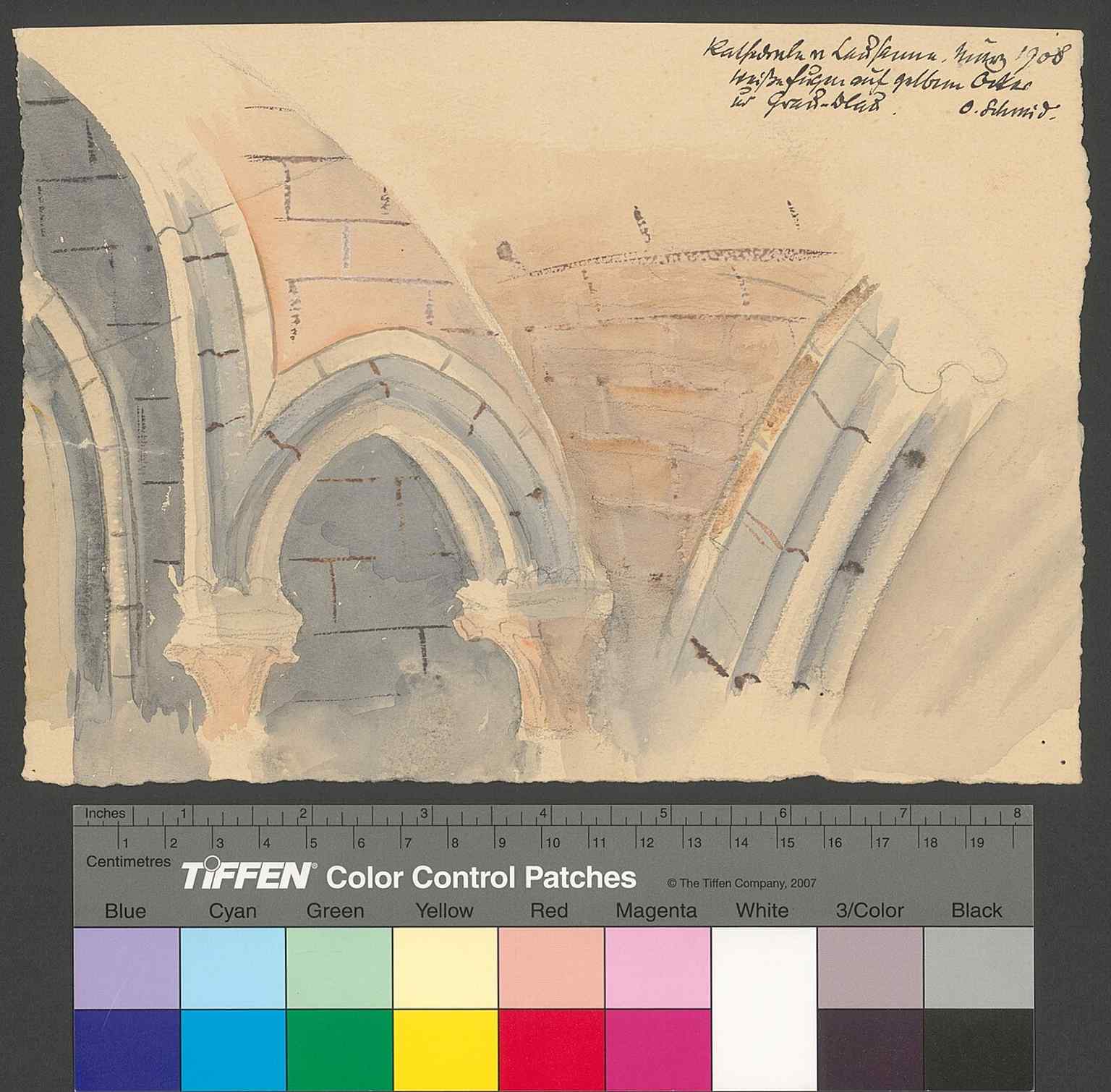
Painted masonry detail from 1908, showing the grey-and-ochre interior palette that matches the cathedral’s original color scheme.Photo: O. Schmid, Wikimedia Commons, Public domain. Cropped & resized. 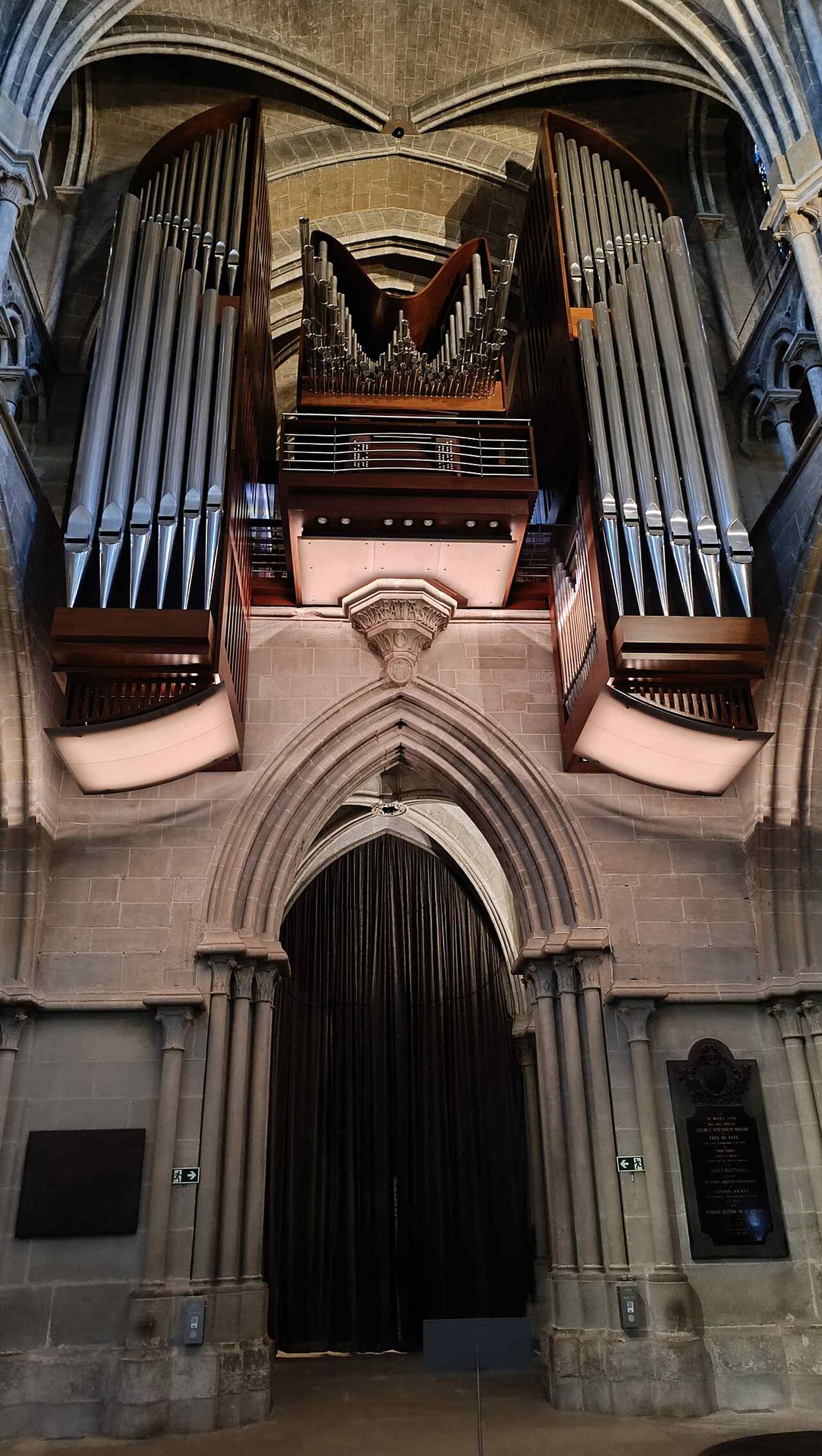
The interior with the grand organ, echoing the cathedral’s long musical tradition and its major 2003 Fisk organ installation.Photo: Nickispeaki, Wikimedia Commons, CC BY-SA 4.0. Cropped & resized. 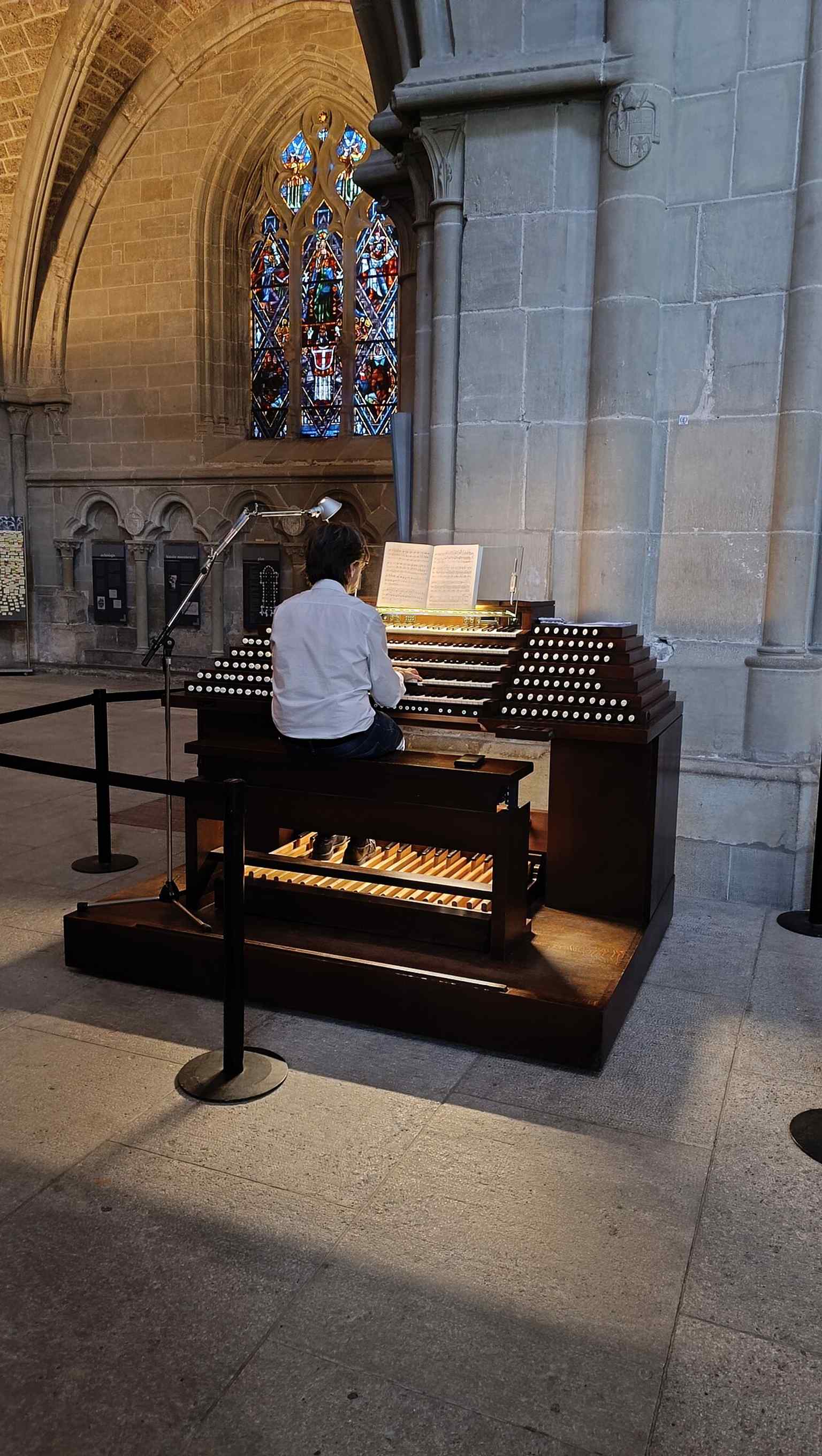
Another organ-cabinet interior view, ideal for showing the cathedral’s nave scale and the modern organ ensemble inside the medieval shell.Photo: Nickispeaki, Wikimedia Commons, CC BY-SA 4.0. Cropped & resized. 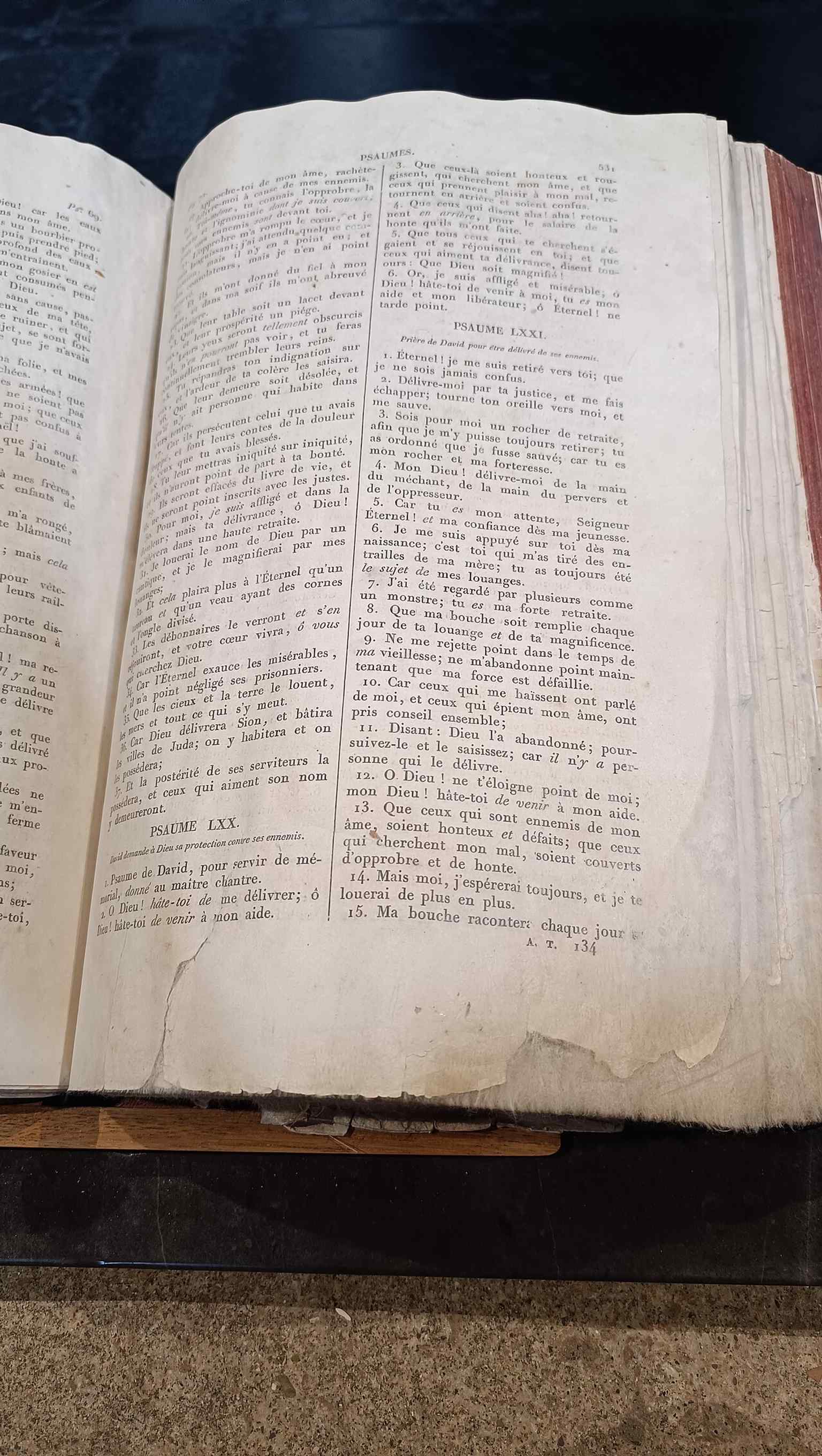
A recent interior detail with a Bible display, giving a contemporary sense of worship and visitor presentation inside the reformert cathedral.Photo: Nickispeaki, Wikimedia Commons, CC BY-SA 4.0. Cropped & resized. On your right, look for a pale stone building with a steep tiled roof, irregular medieval lines, and a modern glass entrance set into the old bishop’s palace. This is the Musée…Read moreShow less
Open dedicated page →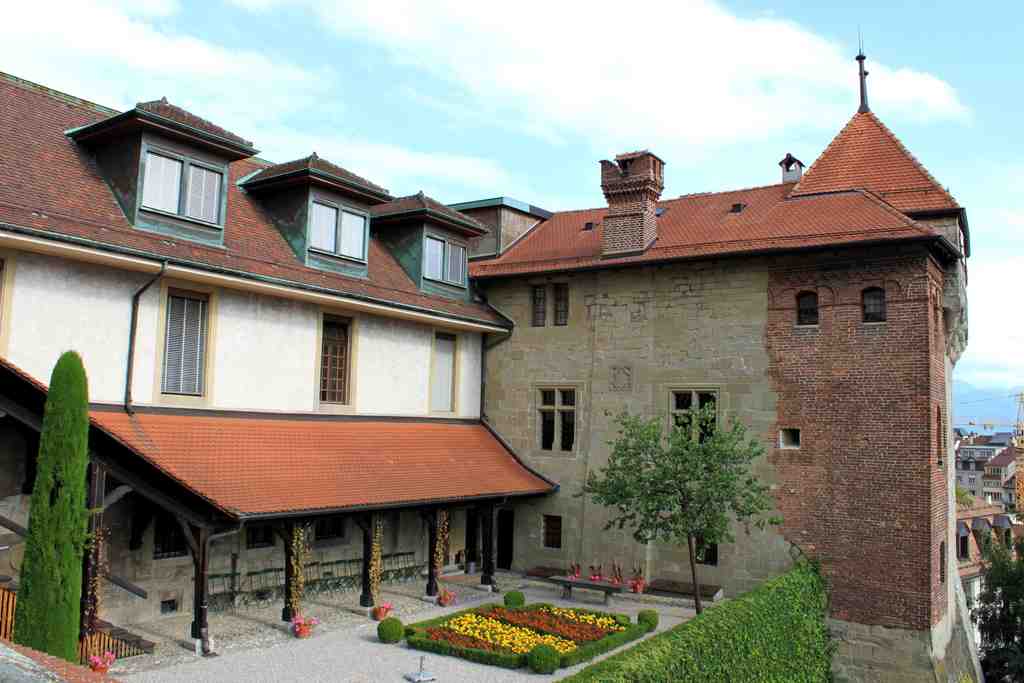
Lausanne Historical MuseumPhoto: Odrade123, Wikimedia Commons, CC BY-SA 3.0. Cropped & resized. On your right, look for a pale stone building with a steep tiled roof, irregular medieval lines, and a modern glass entrance set into the old bishop’s palace.
This is the Musée historique Lausanne, but the first thing to know is that it survived by argument, not by accident. Long before it became a city museum, this building served as the bishop’s residence, part of the old machinery of religious power. Later, when Lausanne modernized at full speed, people began tearing away chunks of the old city as if history were clutter. Cities do love calling demolition “improvement.”
One of the first people to push back was Pastor Paul Vionnet. Starting in eighteen forty-seven, he gathered engravings, plans, and photographs to resist the disappearance of old Lausanne. He understood something crucial: if a city loses its buildings and also loses the images that prove they mattered, memory gets erased twice. His Collection iconographique vaudoise, created in eighteen ninety-six and later handed to the state, entered the museum in nineteen oh-three. After Paul died in nineteen fourteen, his daughter Esther Vionnet stepped in as interim curator, which gives this story a welcome human detail: the rescue of a city’s memory passed from one pair of hands to another.
The people around him became the guardians of old Lausanne. They were not dreamy nostalgics; they used documents, pictures, public exhibitions, and stubborn civic pressure to fight the vanishing of the historic city. They used documents, pictures, public exhibitions, and stubborn civic pressure to fight the vanishing of the historic city.
That fight became very real here. Around nineteen hundred, this former bishop’s residence already had some protection, yet certain elected officials still wanted part of it demolished. So, on the sixth of February, nineteen oh-two, Berthold van Muyden and others founded the Association du Vieux-Lausanne. That same year, they staged a major exhibition at the Grenette, and the public response brought in a flood of donations. In nineteen oh-eight, the city finally agreed to fund the conversion of former prison rooms inside this old bishop’s palace to house the collections. So the museum began not simply as a cultural project, but as a rescue operation with display cases.
If you glance at the image in the app, you can see that mix of old authority and later adaptation in the building itself: the medieval mass of the palace, then the cleaner intervention of the entrance added much later. Between nineteen oh-nine and nineteen seventeen, the architect Schmid de Veytaux carried out major restoration work to prepare the place for museum life. The museum opened here on the twenty-seventh of December, nineteen eighteen. Much later, between nineteen eighty-six and nineteen ninety, Wolfgang Freienberg added the glass entrance hall facing the cathedral square, a new staircase, and even a two-level shelter for cultural treasures under the west garden. Quite practical, really: save memory, then build a bunker for it.
Inside, the museum now holds more than five hundred fifty thousand objects, and since the reopening in twenty eighteen, its exhibition “Lausanne, l’Exposition” tells the city’s story in twelve thematic stations, including the twentieth and twenty-first centuries. The old bishop’s palace no longer governs souls; now it guards evidence.
And that turns the story. Once authority here wore a mitre. Then it wore a curator’s gloves. Next, we head toward another kind of trust altogether: Banque Cantonale Vaudoise, where confidence moves from relics and records into money, credit, and the paper promises that keep a modern city standing. If you want to return inside later, the museum is closed on Monday and open from eleven to six the rest of the week.
On your right, look for a compact stone church with a steep gabled roof, an asymmetrical outline, and narrow pointed windows cut into its pale walls. This is the Scots Kirk of…Read moreShow less
Open dedicated page →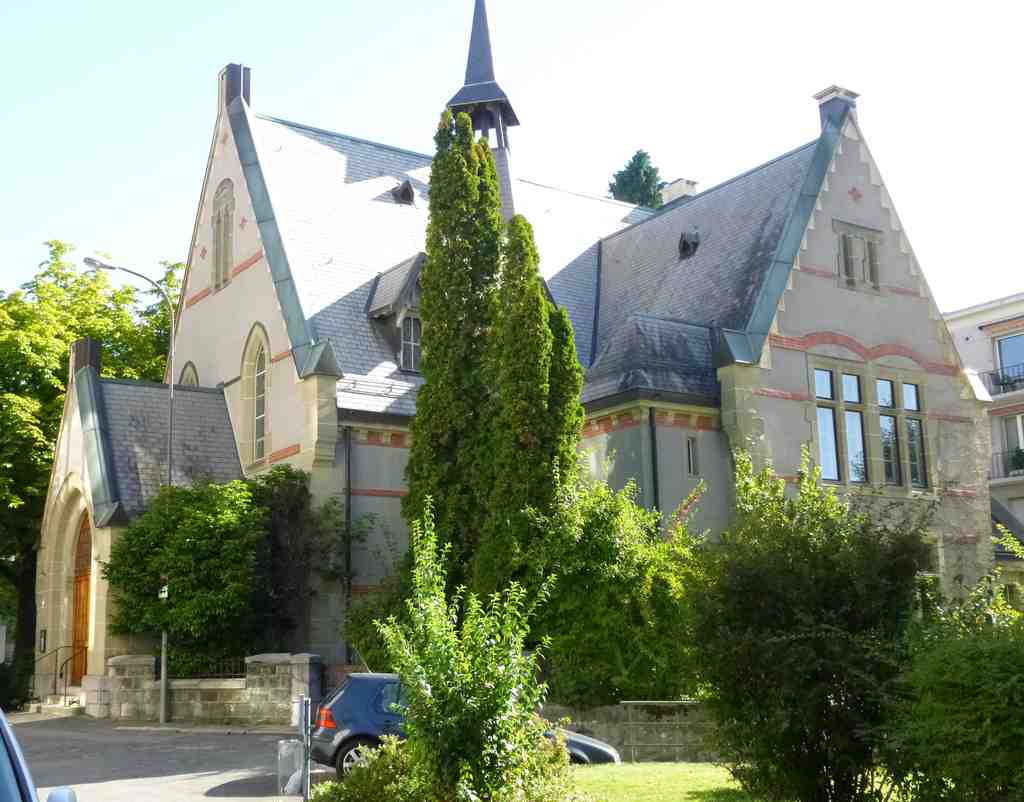
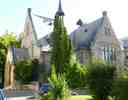
Scots Kirk, LausannePhoto: Peb45, Wikimedia Commons, CC BY-SA 3.0. Cropped & resized. On your right, look for a compact stone church with a steep gabled roof, an asymmetrical outline, and narrow pointed windows cut into its pale walls.
This is the Scots Kirk of Lausanne, and it tells you something important about the city: Lausanne never stayed sealed inside its own traditions for long. Even religion here could arrive with an accent.
The first attempt to form a Presbyterian congregation in Lausanne began in eighteen sixty-six... and folded after only two years. That might have been the end of it. Instead, a determined pastor named Amalric-Frédéric Buscarlet stepped in. He usually served in Naples, but he spent time in Montreux as a chaplain for visitors. In eighteen seventy-four, Mrs. Williamina Davidson invited him to Lausanne to lead weekday services. He came, gathered a small congregation with surprising speed, and then did the unglamorous miracle every institution depends on: he raised support, persuaded people, and made something fragile feel permanent.
At first, the congregation borrowed rooms in the Musée industriel and the chapel of the Église libre des Terreaux. In other words, worship here began the same way much of city life does... by finding a room and convincing people to show up. Buscarlet then pushed for a proper church, and the little project suddenly attracted a very large name: Eugène-Emmanuel Viollet-le-Duc, the French architect already working on Lausanne Cathedral. Modest commission, not exactly modest architect.
Locals like to note one detail most visitors miss: Viollet-le-Duc reportedly took an interest in this church while recovering in Lausanne from a serious illness. That gives the place an oddly personal origin. It also became a rare church design for him outside France, which makes this small kirk rarer than it first appears. If you glance at the image in the app, that slightly off-balance silhouette is part of the point.
Jules Verrey, a local architect, then carried out the construction. They dedicated the church in April of eighteen seventy-seven, even before everything was finished, and added the vestry two years later. Unlike the cathedral we saw earlier, layered over centuries, this building arrived quickly and on purpose: a Scottish Protestant identity, carefully translated into Lausanne stone. Its asymmetrical shape and timbered roof drew on rural English and Scottish churches, and inside, Viollet-le-Duc designed the original furnishings too, including the raised central pulpit reached by two staircases converging like a small piece of theological stagecraft.
The kirk later took the name Saint Andrew’s. It survived restorations, gained heritage protection, and kept adapting. Today it belongs to the Church of Scotland’s International Presbytery, holds services in English, and gathers people from twenty-three nationalities. The hall hosts potluck lunches, conversation classes, Scottish country dancing, and, after Russia’s invasion of Ukraine in twenty twenty-two, the church helped launch a local Ukraine Centre with neighboring congregations. So this is not just a refuge for expatriates. It is one of those Lausanne buildings that keeps finding new uses without losing its memory.
And that, is very Lausanne indeed. In a few minutes, you’ll see the same talent for second lives in a thoroughly modern costume, where reinvention moves from the sanctuary to the laboratory... at Debiopharm.
On your right stands the Federal Supreme Court, where Swiss power reaches its most polished and least theatrical form... which is saying something in a city that has given…Read moreShow less
Open dedicated page →On your right stands the Federal Supreme Court, where Swiss power reaches its most polished and least theatrical form... which is saying something in a city that has given authority some very fine costumes.
The court did not begin in grandeur. After the constitutional revision of eighteen seventy-four turned it into a permanent national court, the new institution in Lausanne had exactly one workroom. One room for the highest court in the country... a modest start for justice with national ambitions. Then came confidence. Between eighteen eighty-one and eighteen eighty-six, architect Benjamin Recordon gave the court its first purpose-built home at Place de Montbenon, with a monumental facade, French Renaissance style, and fifteen kinds of stone gathered from across Switzerland, as if the young federal state wanted to say: every region belongs in this wall, and in this law.
This building followed in the nineteen twenties, set here in Parc Mon Repos and completed between nineteen twenty-two and nineteen twenty-seven by Prince, Begin, and Alphonse Laverrière. Laverrière matters because he did not stop at the shell. He and his partners designed the interiors and the furniture too, and those plans still survive here. If you check the image on your screen, you can see that total design mentality in section, almost like a legal argument drawn in stone and wood. Laverrière worked closely with the Held joinery in Montreux, which crafted much of the interior, including the library. Even the library later had its own small restoration drama: in twenty eleven, workers carefully uncovered parts of the original linoleum floor and refreshed the woodwork while the court kept functioning. Quiet repair... very Swiss, very court-like.
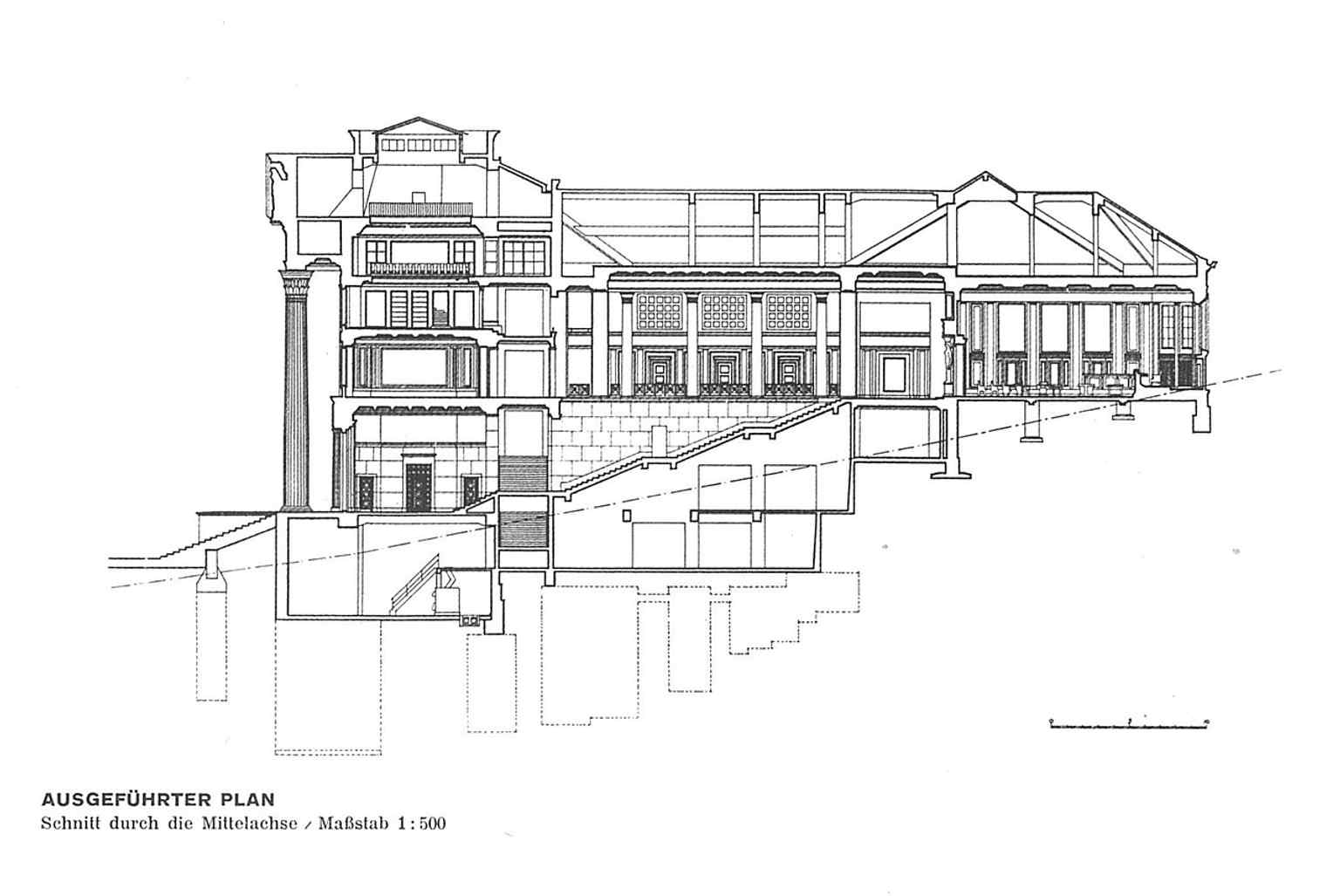
Architectural section of the 1927 Lausanne courthouse — the current Federal Supreme Court home, designed by Prince, Begin et Laverrière with every interior element planned on site.Photo: Jacques Béguin ,Louis-Ernest Prince, Wikimedia Commons, Public domain. Cropped & resized. And the institution kept changing inside its dignified walls. In nineteen seventy-two, the annual report noted the election of a woman as a substitute judge; in nineteen seventy-four, the first female federal judge joined the bench. For a court long shaped almost entirely by men, that was not decoration. That was a shift in who got to interpret the country.
Today, around one hundred and eighty court clerks help the judges weigh cases and draft rulings, and about two hundred more staff keep the machine running. In twenty twenty-five, the court received seven thousand nine hundred and forty-seven complaints and resolved seven thousand eight hundred and eighty-three. The average case lasted one hundred and eighty-nine days, and only ten and a half percent succeeded. So yes, the building is grand, but its real business is disappointment, precision, and the occasional correction of the state.
Since two thousand and seven, its decisions have generally appeared online in anonymized form, and final rulings without reasons are publicly posted in the Lausanne courthouse for four weeks. Even this highest authority has learned that legitimacy needs daylight. A useful reminder: even the top interpreter of the law must submit to scrutiny.
After everything this city has shown you, which power feels strongest here: the power to preserve, to persuade, to finance, to heal... or to judge? Lausanne seems to answer that none of them stands alone. Trust lives in the braid between them, and the city holds because each leaves a record the others can test.
If you plan to come back, the court is generally open on weekdays from seven thirty in the morning to six in the evening, and closed on weekends.
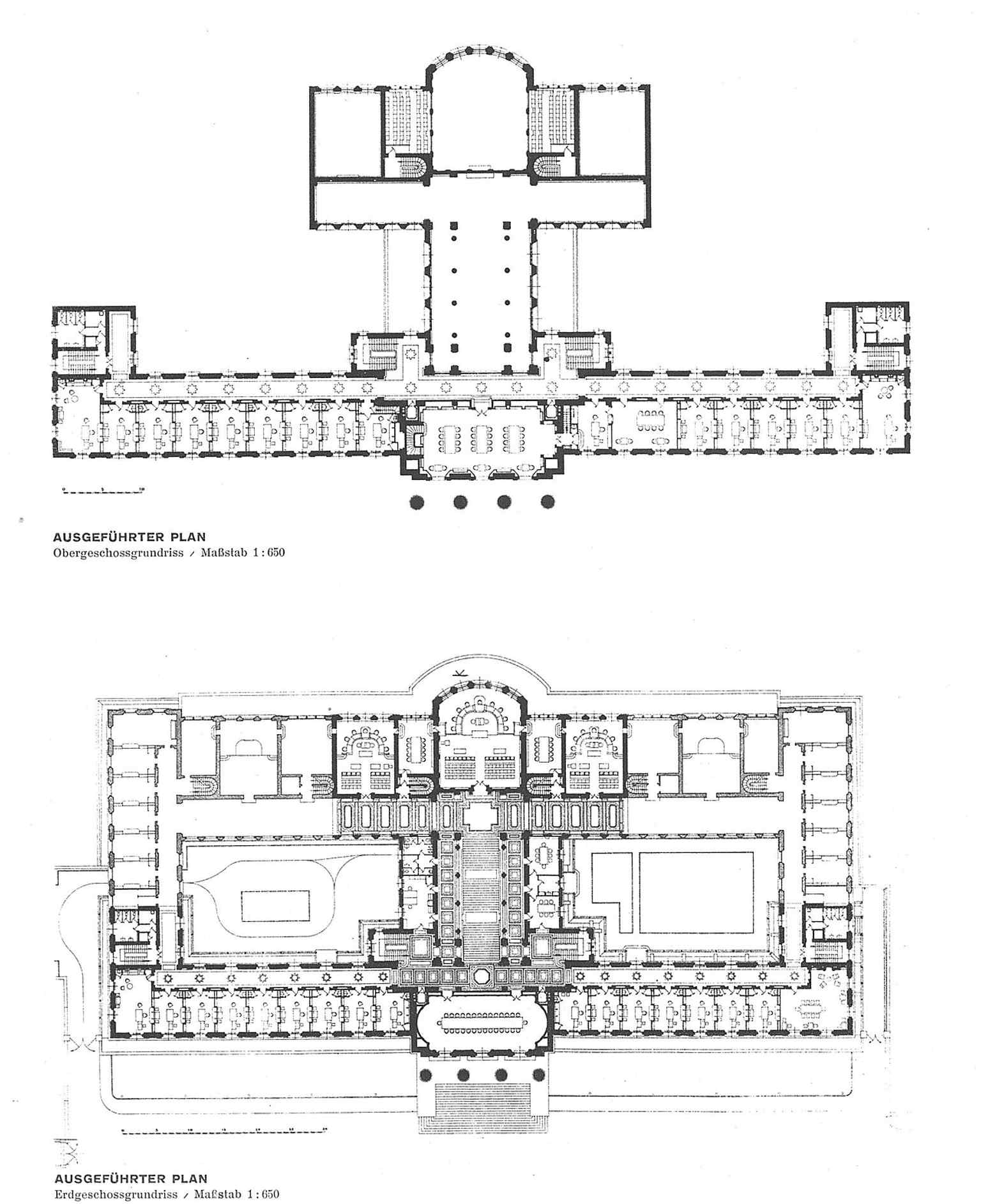
The original floor plan of the Lausanne Federal Supreme Court building, showing how the 1922–1927 move to Parc Mon Repos was carefully designed from the start.Photo: Jacques Béguin ,Louis-Ernest Prince, Wikimedia Commons, Public domain. Cropped & resized. 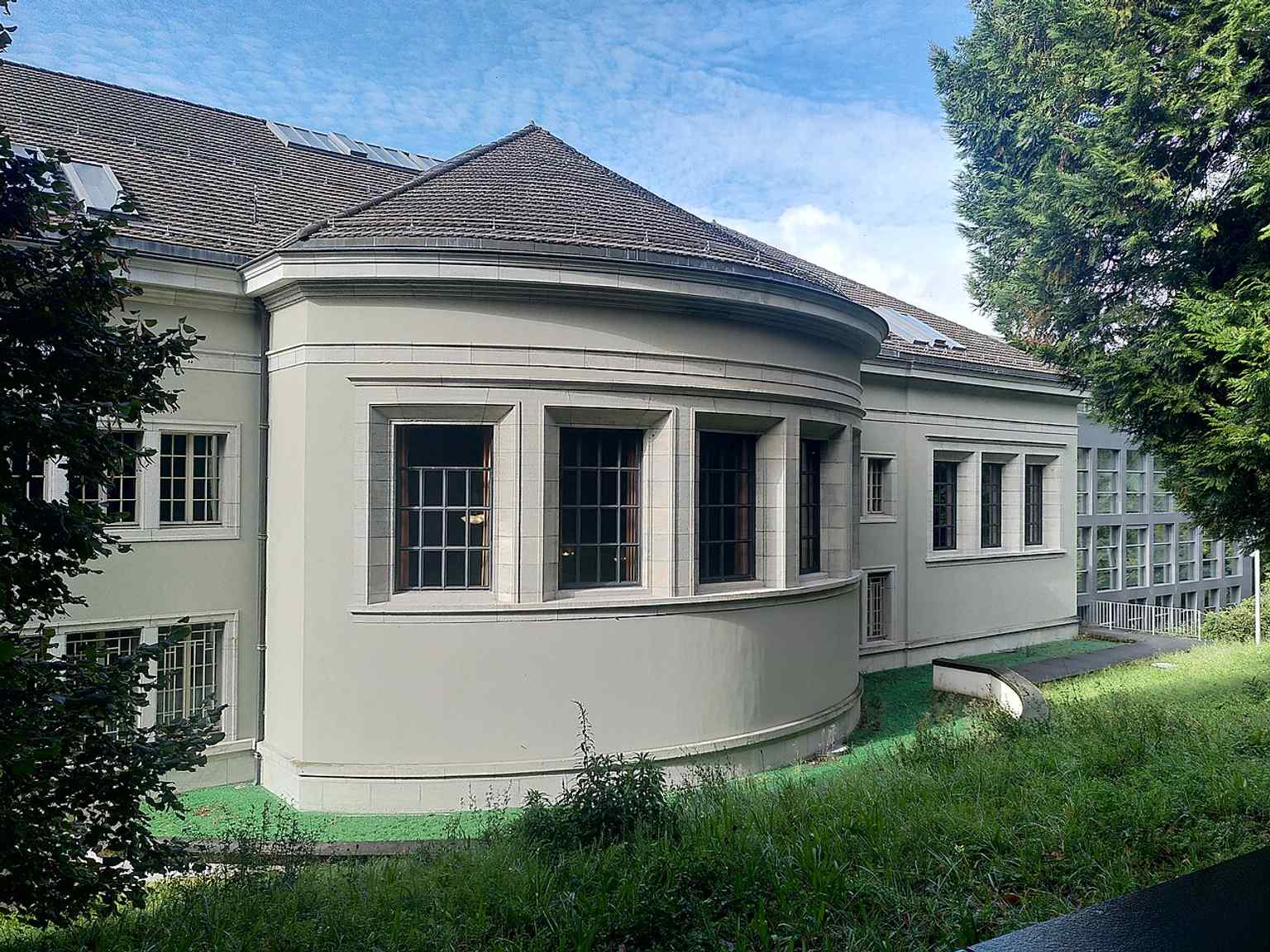
Rear view of the Federal Supreme Court in Lausanne, including the later 1990s extension beside the Grand Courtroom.Photo: Hadi, Wikimedia Commons, CC BY-SA 4.0. Cropped & resized. 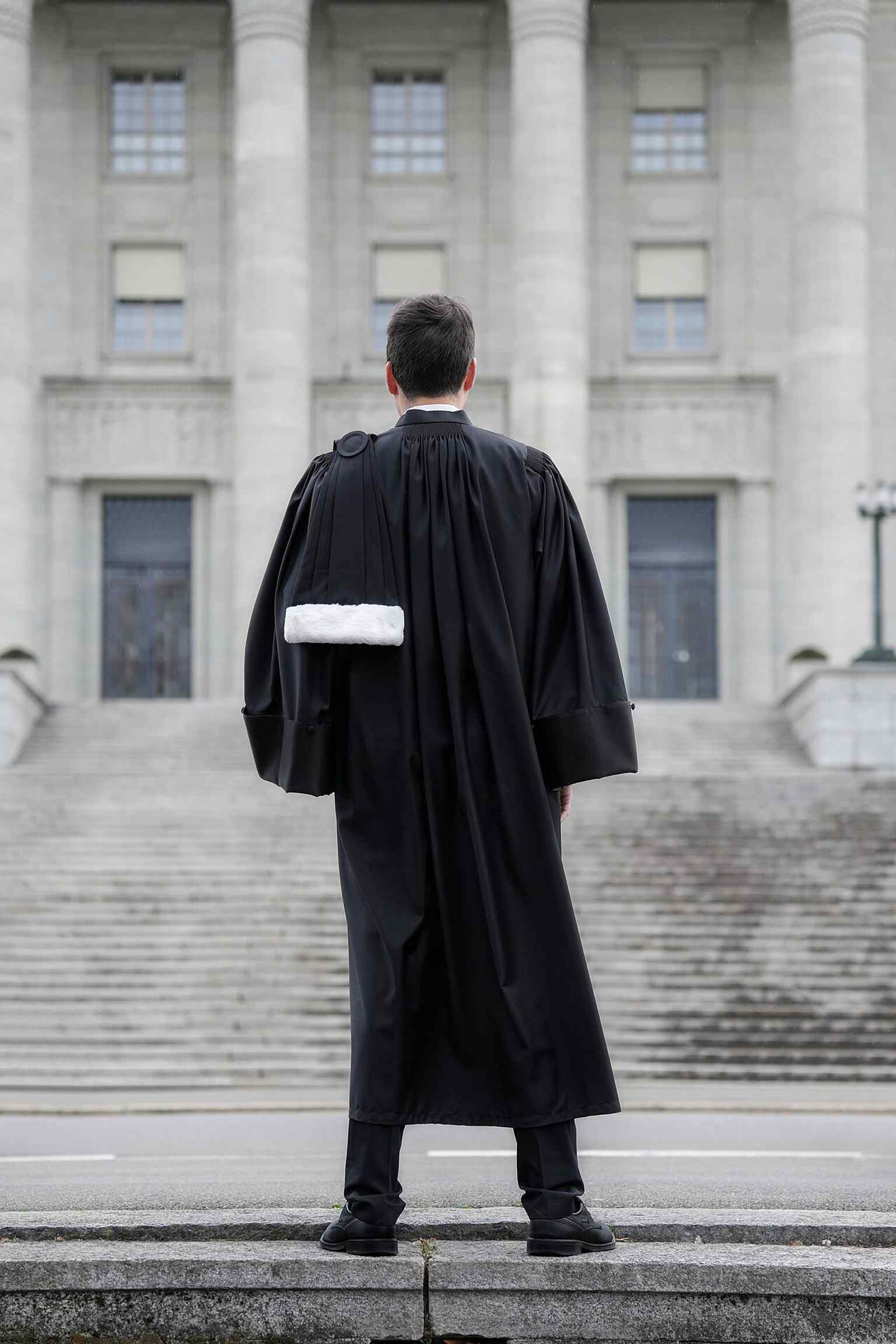
A lawyer in full court dress outside the Federal Supreme Court — a good scene for the court’s modern daily work and its open public presence.Photo: Giles Laurent, Wikimedia Commons, CC BY-SA 4.0. Cropped & resized.
Frequently asked questions
How do I start the tour?
After purchase, download the AudaTours app and enter your redemption code. The tour will be ready to start immediately - just tap play and follow the GPS-guided route.
Do I need internet during the tour?
No! Download the tour before you start and enjoy it fully offline. Only the chat feature requires internet. We recommend downloading on WiFi to save mobile data.
Is this a guided group tour?
No - this is a self-guided audio tour. You explore independently at your own pace, with audio narration playing through your phone. No tour guide, no group, no schedule.
How long does the tour take?
Most tours take 60–90 minutes to complete, but you control the pace entirely. Pause, skip stops, or take breaks whenever you want.
What if I can't finish the tour today?
No problem! Tours have lifetime access. Pause and resume whenever you like - tomorrow, next week, or next year. Your progress is saved.
What languages are available?
All tours are available in 50+ languages. Select your preferred language when redeeming your code. Note: language cannot be changed after tour generation.
Where do I access the tour after purchase?
Download the free AudaTours app from the App Store or Google Play. Enter your redemption code (sent via email) and the tour will appear in your library, ready to download and start.
If you don't enjoy the tour, we'll refund your purchase. Contact us at [email protected]
Checkout securely with 






.jpg)


