
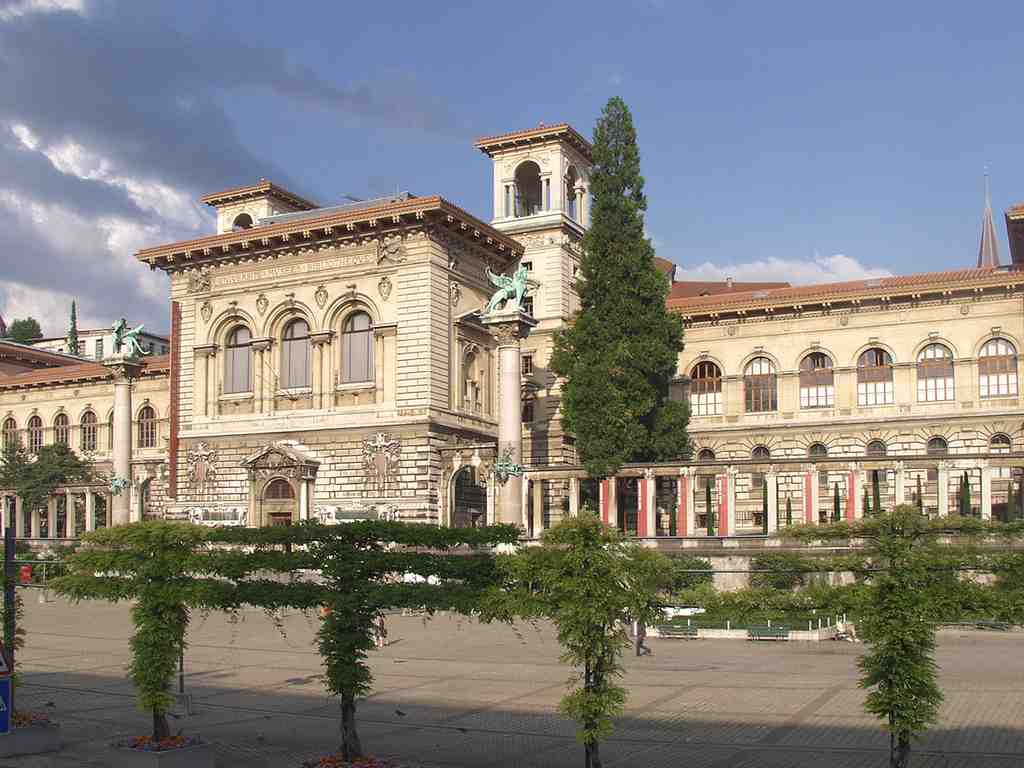
Look for the broad pale-stone façade, the steep central staircase, and the sculpted entrance marked by freestanding columns topped with griffins.
This is the Palais de Rumine, and it wears ambition very openly. It looks like a palace because Lausanne wanted more than a practical public building here; it wanted a statement in stone. Yet this is also a place where memory keeps arguing with change. One young man’s inheritance started it, delays and redesigns reshaped it, and later generations kept stuffing new roles inside it until the building became part university, part library, part museum, part political stage.
Gabriel de Rumine never saw any of that. He was a Lausanne-born civil engineer from a Russian family, and when he died in eighteen seventy-one at just thirty, he left the city one and a half million francs... a fortune worth well over ten million in today’s money. He attached conditions, too: invest it, let it grow, then use it after fifteen years to build a public institution. Even in death, he sounds faintly like an engineer.
The city took the gift and immediately proved that grand ideas rarely move in straight lines. In eighteen eighty-nine, officials launched an architectural competition. Thirty-six designs arrived. The jury liked none of them enough to award first prize. Very efficient. The city then chose Dominique Demierre’s project, only to disqualify him after discovering he worked in the same office as juror Henri-Paul Nénot. So the commission passed to Gaspard André of Lyon. Then politics delayed the start, critics complained about the site and the unstable ground, and André himself died before construction began. Four other architects carried his design forward, and work finally started in eighteen ninety-eight.
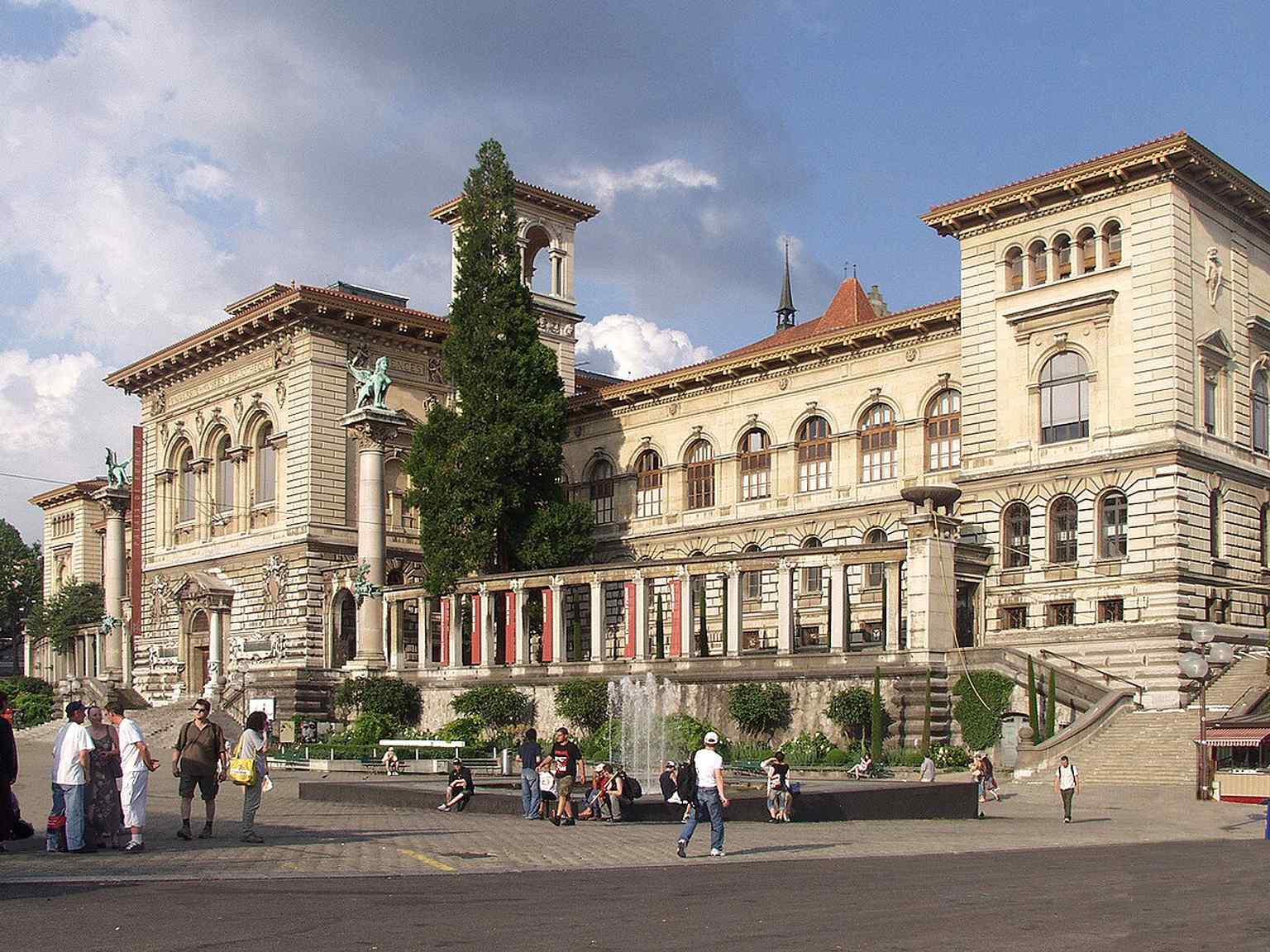
Take a moment and study the façade... does it feel like a museum, a palace, or a civic flex? The answer is basically yes. If you glance at the image in the app, you can see how the whole front balances weight and ceremony. The style draws from the Florentine Renaissance, meaning the grand urban palaces of Florence: symmetry, heavy stone, a sense that culture and authority should arrive together. André had to cut the usual arcade level to preserve views and save money, so the building ended up lower and bulkier than planned. To lighten that heaviness, he added those small tower-like stair turrets with open loggias at the top, and those griffins by the entrance as if the place needed mythological security staff.
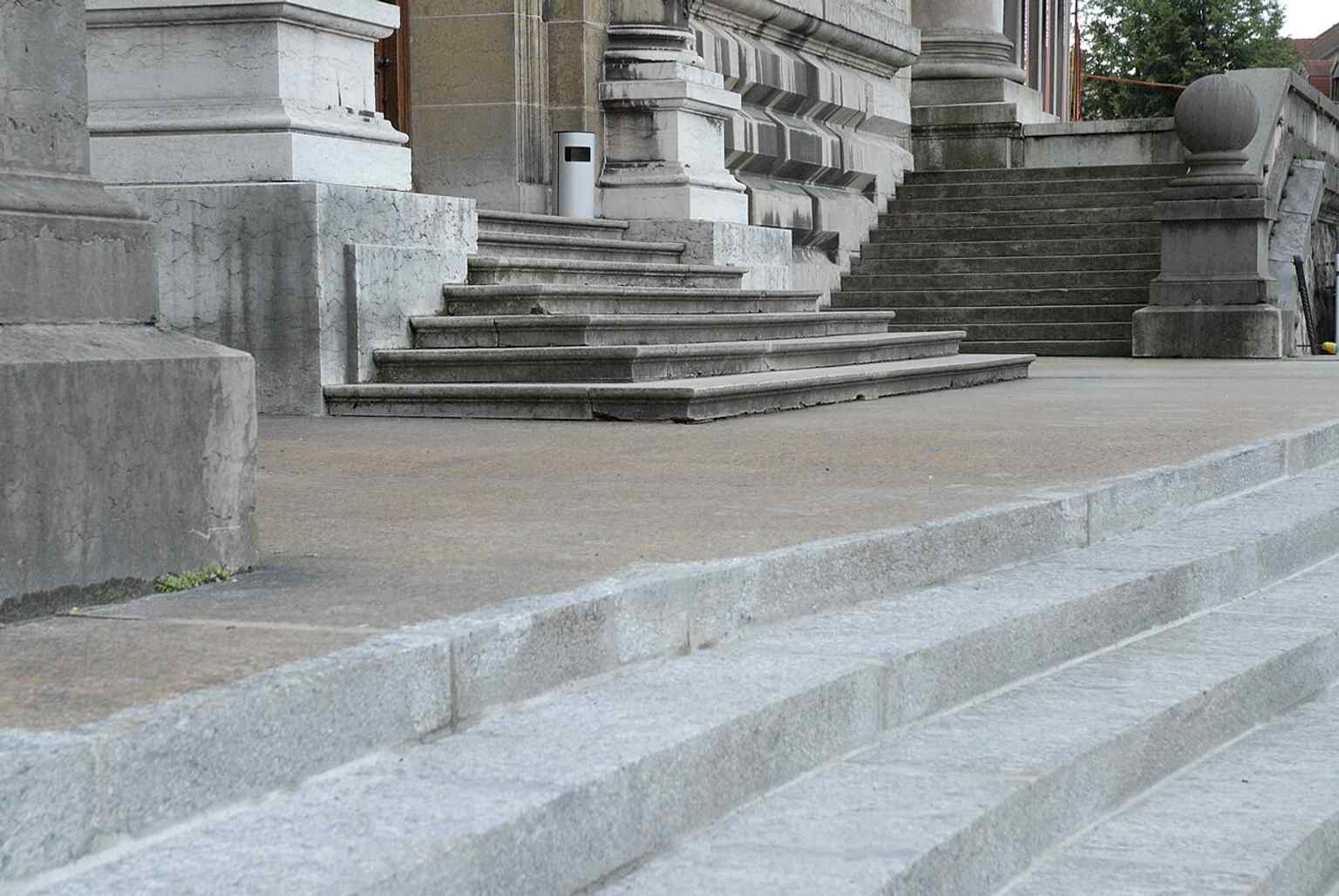
Inside, the building became a machine for public life: university halls, the cantonal and university library, and today five museums. It also carries details you cannot read from out here. The great aula, the ceremonial hall under a glass roof, gained its painted decoration only later, when Louis Rivier spent years covering its walls and ceiling with a vast program of images painted directly onto plaster. If you check the stair detail on your screen, you get a hint of the theatrical approach to entering the place.
And then came the sharp turn. On the twenty-fourth of July, nineteen twenty-three, delegates signed the Treaty of Lausanne in that aula. A building raised from a private legacy suddenly became the stage for an international agreement that fixed the population exchange between Greece and Turkey. Beautiful halls can do severe work.
In about four minutes, Saint-Maire Castle shows you an older, less polished face of authority. If you want to come inside here later, the museums are generally open Tuesday through Sunday from ten to five, and closed on Monday.






