
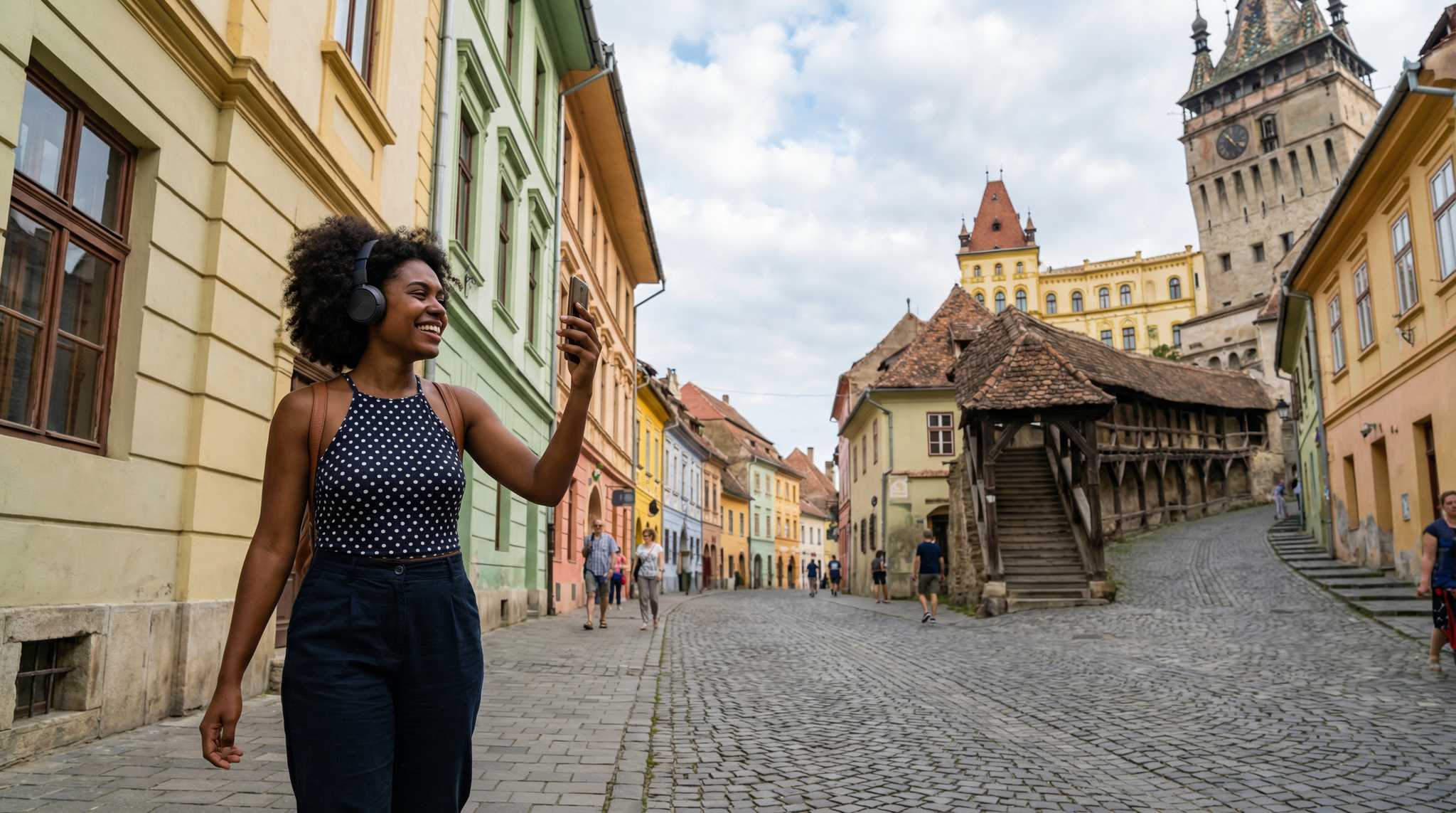
Sighișoara Audio Tour: Legends Echoing from Towers and Cobblestones
Blood stains the cobblestones of Sighișoara long after the last executioner left the Clock Tower. Behind the brightly painted facades of this medieval citadel lies a tangled web of political betrayal, religious rebellion, and whispered scandals that most travelers walk right past. This self-guided audio tour unlocks the forgotten layers of the city. Navigate the steep Scholar’s Stairs toward the Church on the Hill and uncover truths buried beneath the ancient timber. Why did a local noble decide to haunt the school corridors for centuries? What terrifying secret lies hidden within the Clock Tower mechanisms? Which specific family was erased from the town archives following a midnight riot? Climb through time as the weight of history presses against the stone walls. Feel the pulse of a city that never truly sleeps. Trade the tourist map for a deeper, darker understanding of Sighișoara. Start your descent into the shadows now.
Tour preview
About this tour
- scheduleDuration 70–90 minsGo at your own pace
- straighten2.8 km walking routeFollow the guided path
- location_onLocationSighisoara, Romania
- wifi_offWorks offlineDownload once, use anywhere
- all_inclusiveLifetime accessReplay anytime, forever
- location_onStarts at Church on the Hill
Stops on this tour
lock_open 3 free previews · 8 unlock with purchase
You are standing before a massive pale stone structure anchored by a broad square tower that shoots up into a sharply pointed red-tiled spire. There is a kind of quiet strength in…Read moreShow less
Open dedicated page →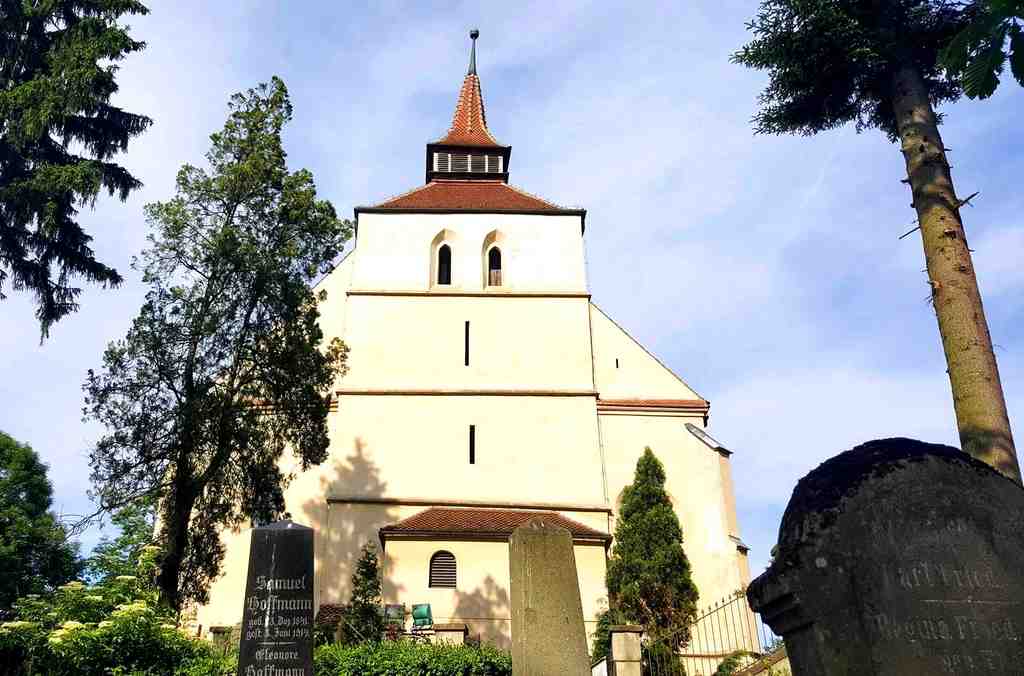
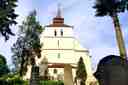
Church on the HillPhoto: Andrea Dioporco, Wikimedia Commons, CC BY-SA 4.0. Cropped & resized. You are standing before a massive pale stone structure anchored by a broad square tower that shoots up into a sharply pointed red-tiled spire. There is a kind of quiet strength in simple walls like these. This place has seen it all, and its survival through the absolute chaos of the 1838 earthquake and the catastrophic 1704 fire makes it the ultimate monument to the city's toughness. During the 1704 Kuruc siege, when Hungarian rebels were violently tearing through the region, this church acted as the final desperate refuge for terrified townspeople. They huddled inside and watched in horror as the roof caught fire, melting the massive bronze bells until they plunged from the belfry in a terrifying torrent of sparks.
Then came 1838. A powerful earthquake rolling in from the Vrancea region shook the hill so violently that the heavy stone vaults over the choir, the sacred space near the altar, totally caved in. The community lacked the funds for permanent stone repairs, so they put up wooden imitations painted to look exactly like stone. Take a peek at your screen to see those wooden vaults that ended up serving as a temporary fix for over a hundred and fifty years.
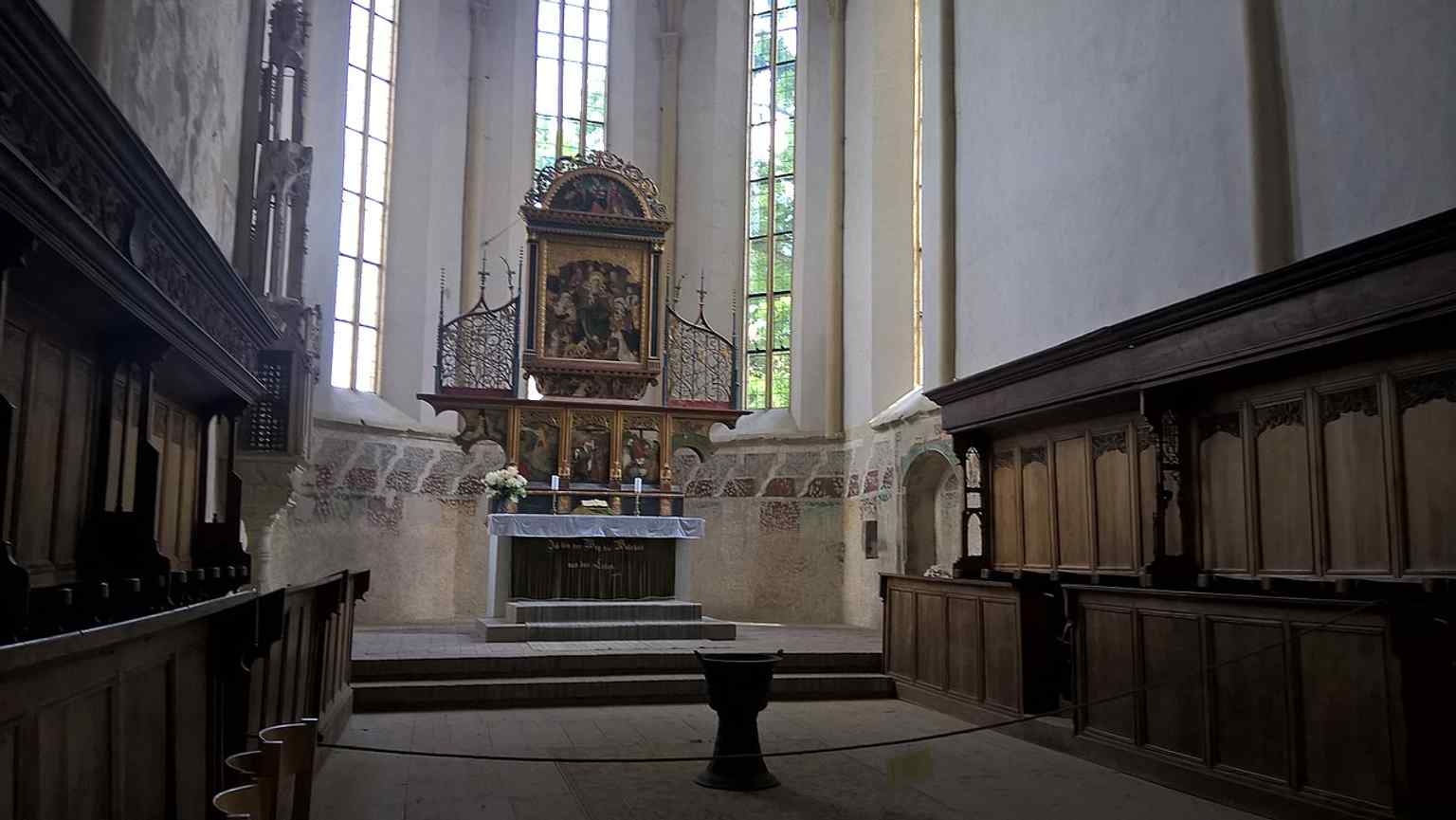
Look up at the choir vaults, rebuilt with painted wooden imitations after the devastating 1838 earthquake, a 'temporary' solution that lasted for over 150 years.Photo: Leontin l, Wikimedia Commons, CC BY-SA 3.0 ro. Cropped & resized. If you think the outside is a survivor, wait until you hear about the interior. Back in 1777, the church leaders decided the incredible Gothic and Renaissance murals were old-fashioned and basically worthless, so they just painted right over them with white lime. Luckily, that layer of lime actually protected the art perfectly. In 1934, a restoration crew carefully peeled back the whitewash, revealing absolute masterpieces hidden right in plain sight. Check your app for a glimpse of these brilliantly colored, recovered frescoes. They were painted in 1488 by Master Valentin, a fascinating guy who somehow managed to be both a master painter and the mayor of Sighișoara at the exact same time.
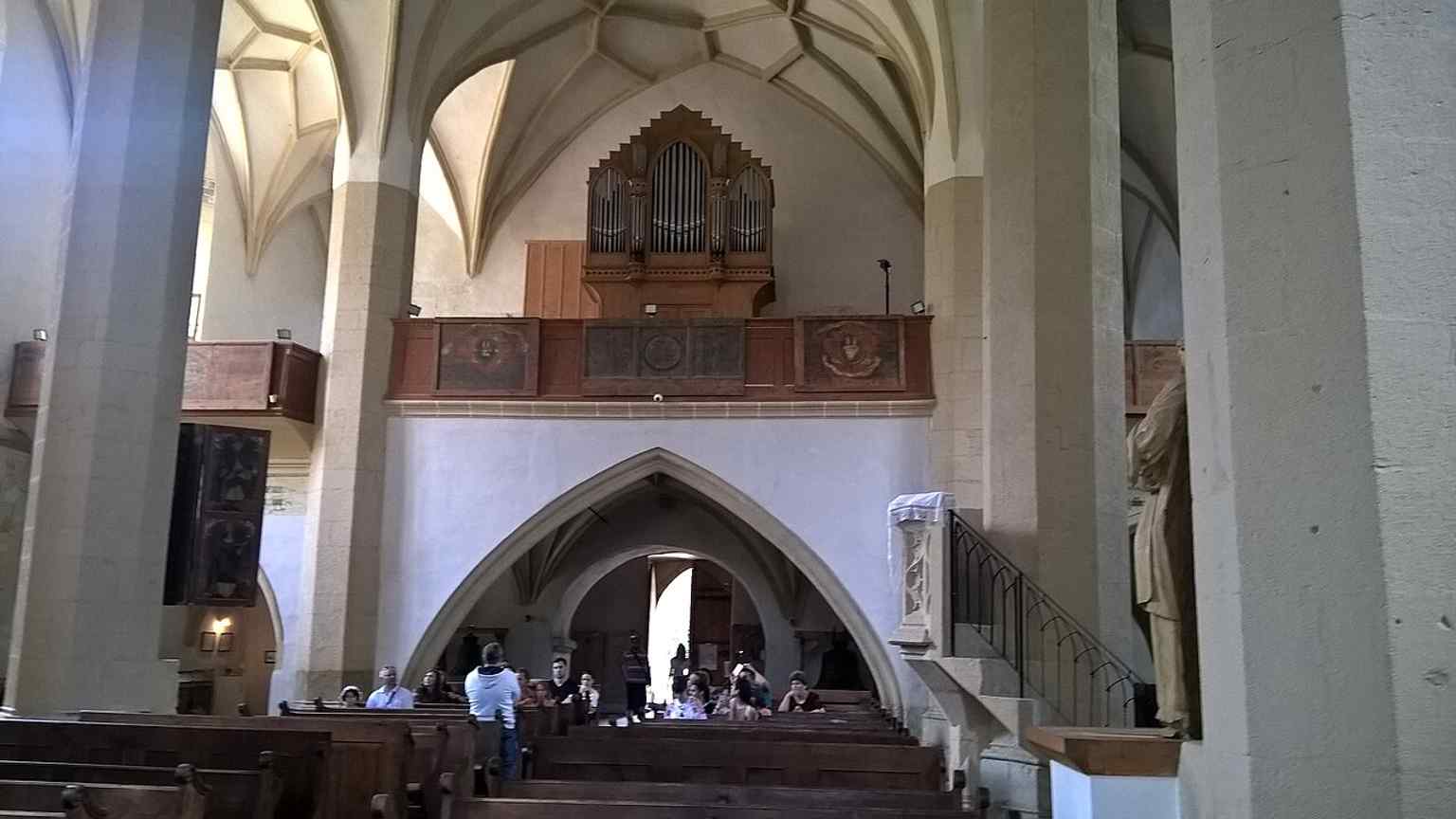
Step into the grand interior, where major restorations in 1934 revealed priceless frescoes previously whitewashed in 1776, bringing vibrant art back to life.Photo: Leontin l, Wikimedia Commons, CC BY-SA 3.0 ro. Cropped & resized. Beneath those painted walls lies the only ancient crypt in Transylvania. Over the centuries, grave robbers kept breaking in, absolutely convinced the tombs of wealthy mayors were packed with hidden treasure. They usually left empty-handed, ignoring the simple coffins and the bones of folks like Georgius Krauss. He was a seventeenth-century chronicler whose meticulous diaries are the main reason we even know these wild stories today.
The church is open daily from ten in the morning to six in the evening if you want to step into the nave, the soaring central hall, and explore the crypt yourself. But for now, let's shift our gaze from the physical survival of these stone walls to the survival of ideas, and head over to the school on the hill just a one minute walk away.
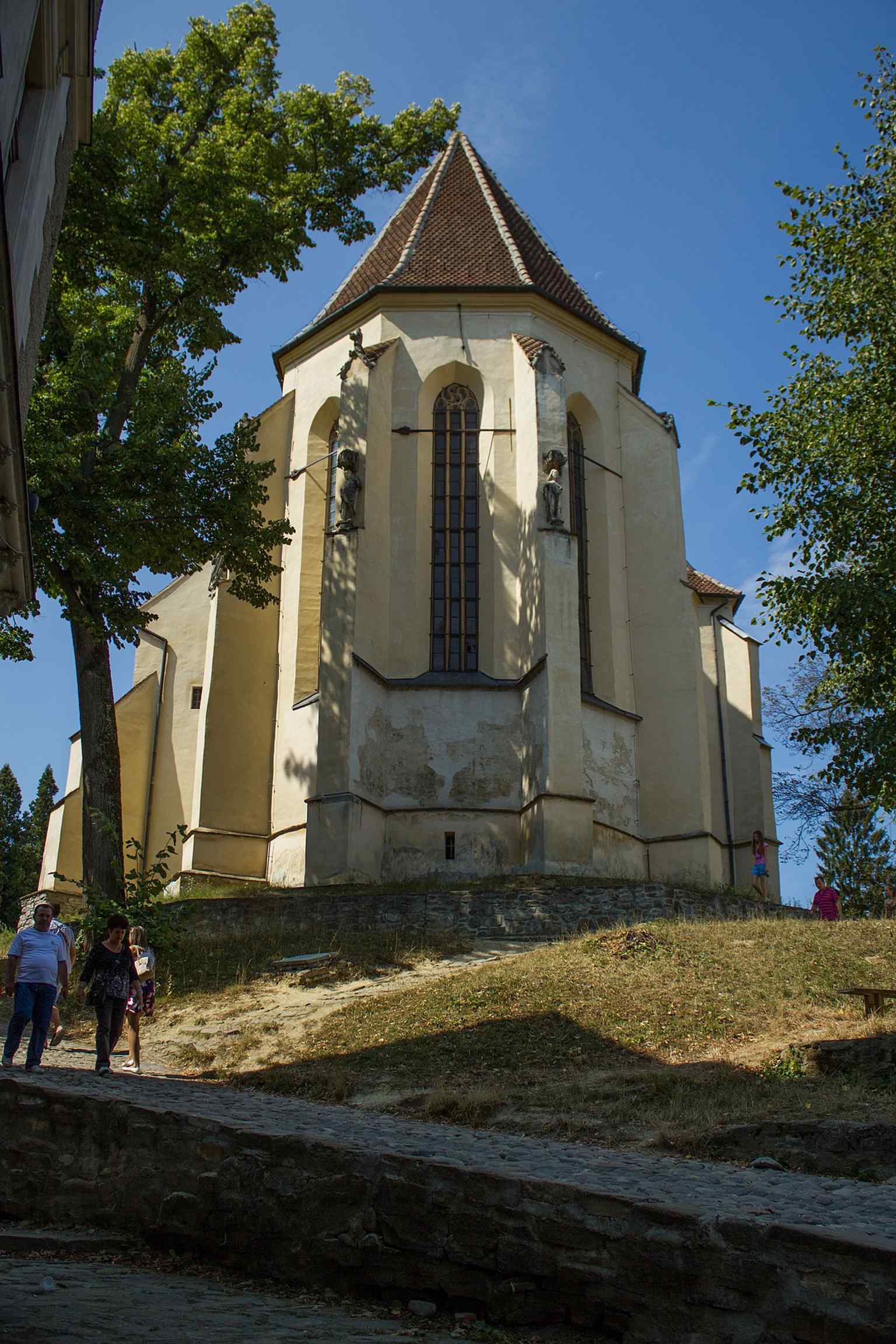
The Church on the Hill dominates the city of Sighișoara from its 429-meter altitude, a testament to its imposing Gothic architecture, which evolved from an old Romanesque basilica.Photo: Tiberiu Neag, Wikimedia Commons, CC BY-SA 3.0 ro. Cropped & resized. 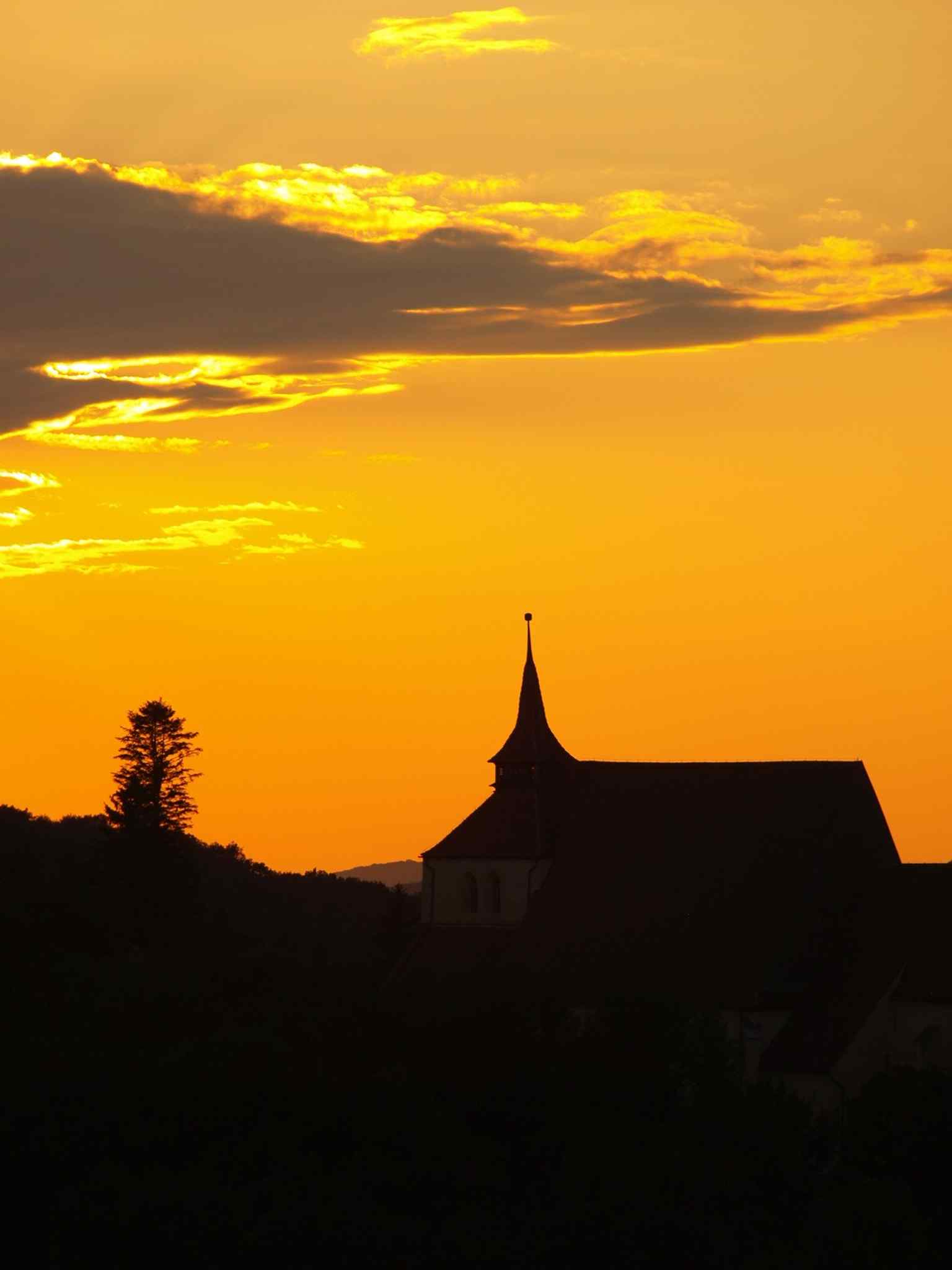
Experience the Church on the Hill at sunset, a monumental landmark visible from great distances that defines the Sighișoara skyline.Photo: Gotagabriela, Wikimedia Commons, CC BY-SA 3.0 ro. Cropped & resized. 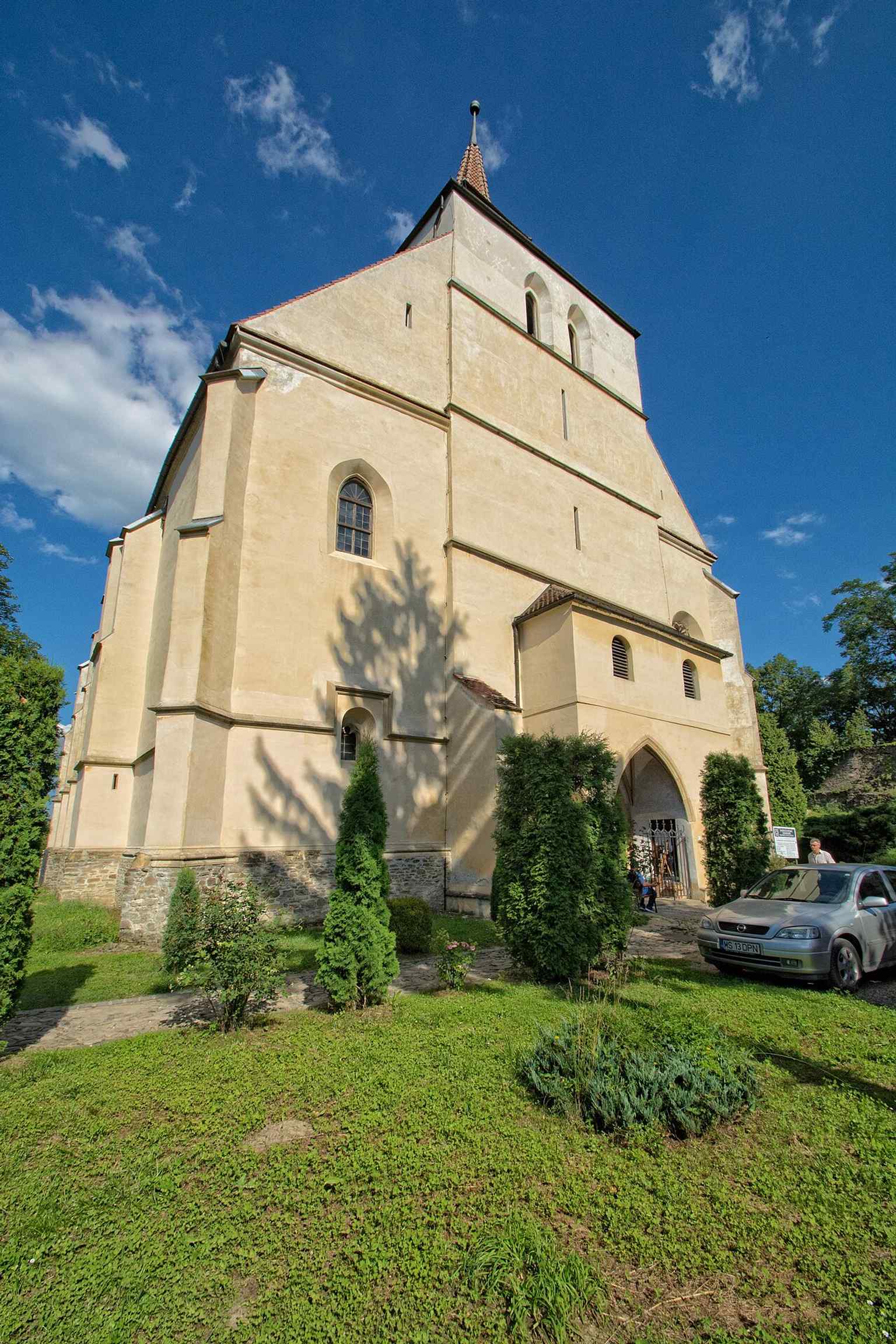
A direct view of the church's exterior, characterized by its simplicity, which contrasts with Western European Gothic monuments, typical of fortified Saxon churches in Transylvania.Photo: Daria Virbanescu, Wikimedia Commons, CC BY-SA 4.0. Cropped & resized. 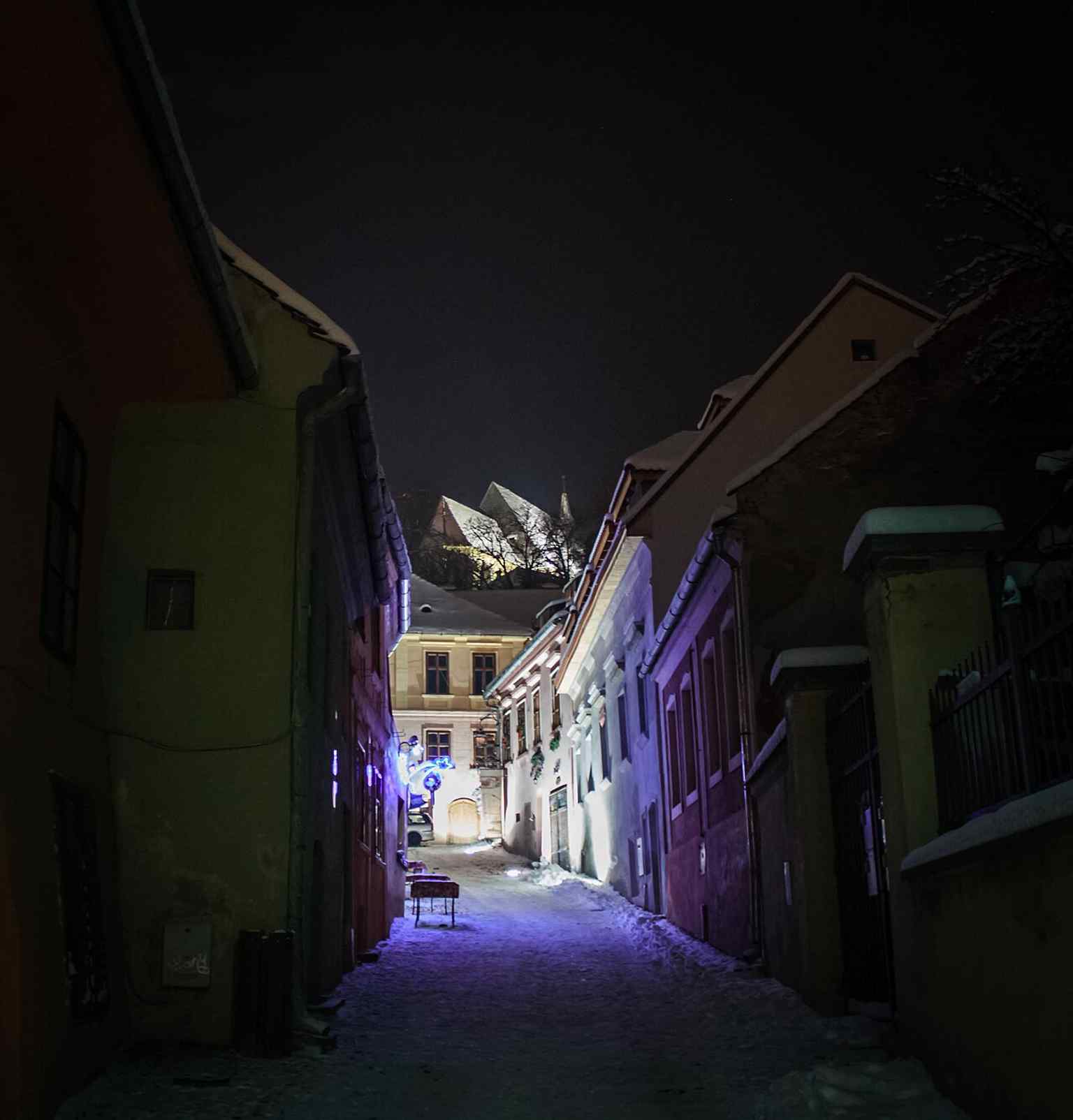
A unique winter perspective of the church, showcasing its enduring presence through all seasons, much like its centuries of architectural evolution.Photo: Radueduard, Wikimedia Commons, CC BY-SA 4.0. Cropped & resized. 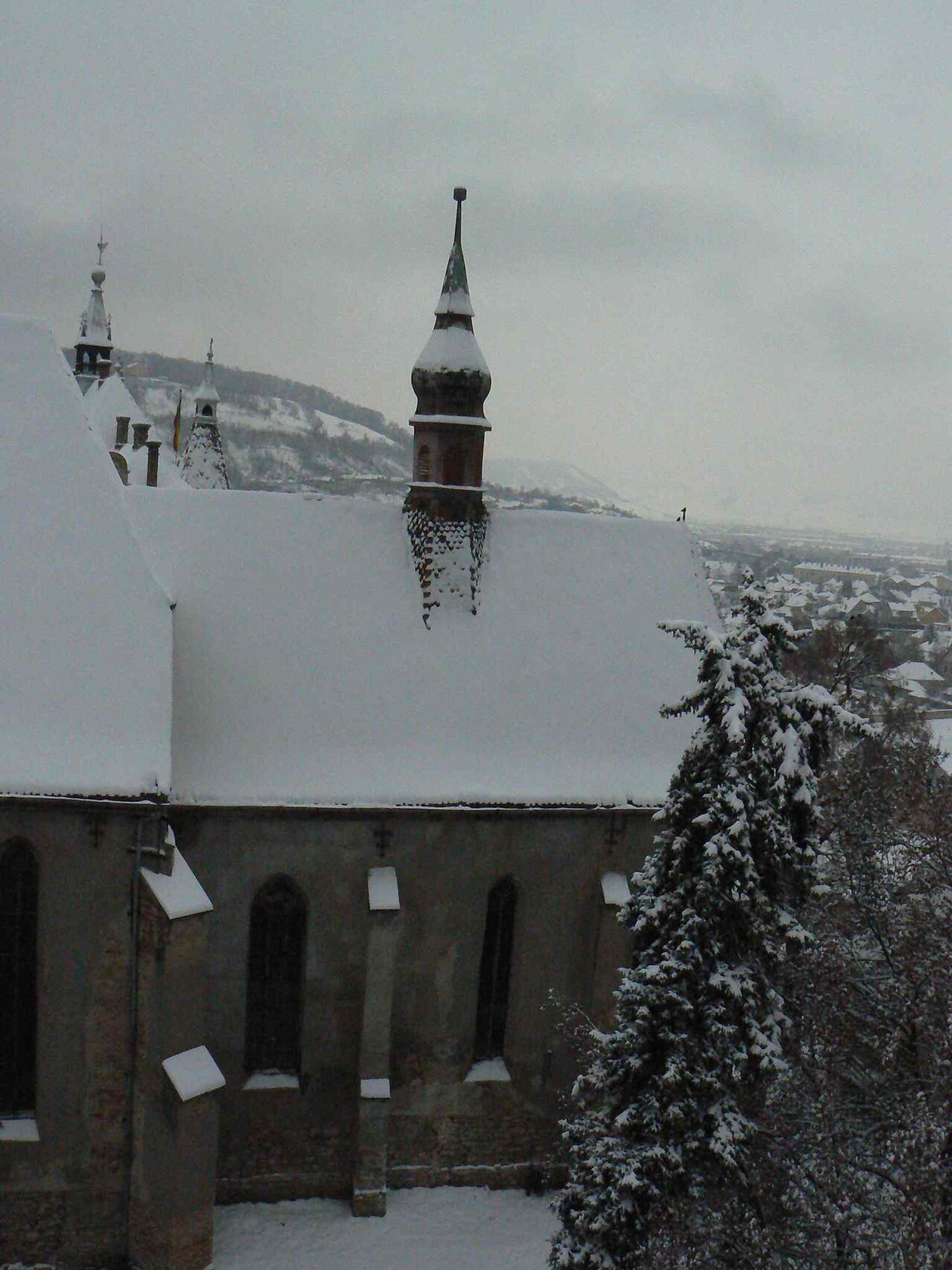
An intricate exterior detail, hinting at the gradual construction over centuries and the influence of the German school of architecture on its Gothic form.Photo: Brigaela, Wikimedia Commons, CC BY-SA 3.0 ro. Cropped & resized. 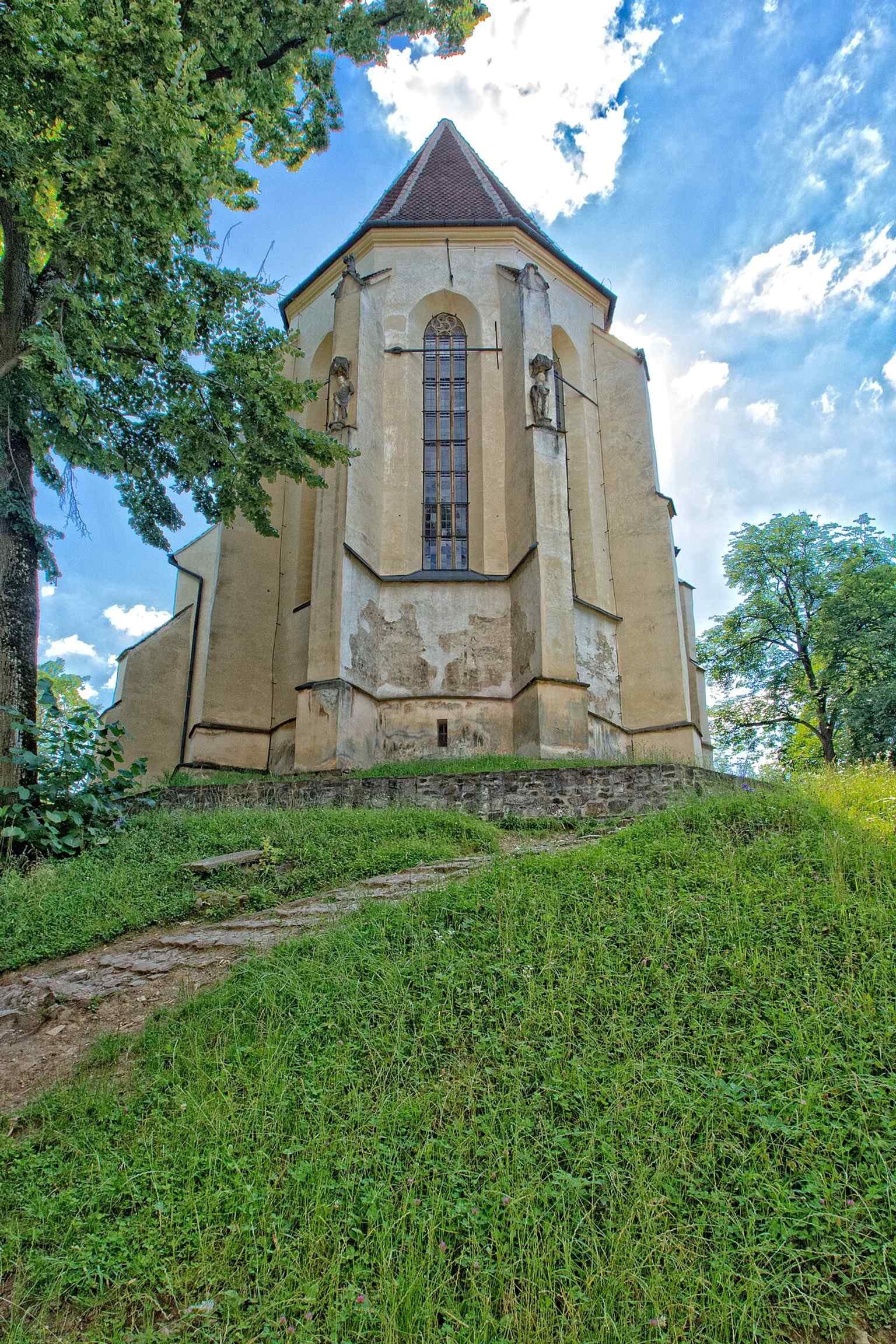
The exterior of the choir, a section believed by researchers to demonstrate the church's evolution in stages, with architectural details that reveal its long history.Photo: Daria Virbanescu, Wikimedia Commons, CC BY-SA 4.0. Cropped & resized. 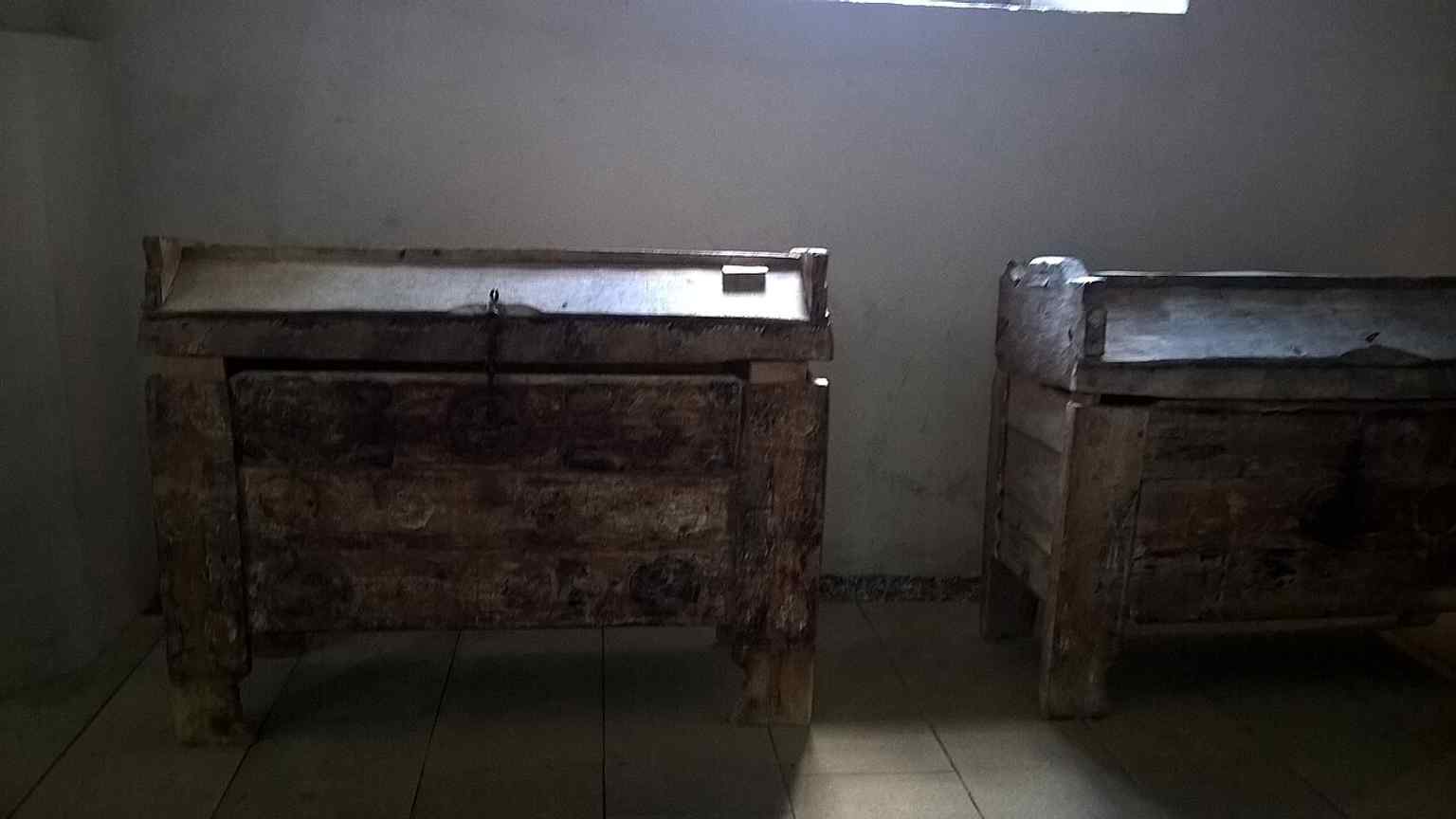
A view of the church's interior, featuring some of the monumental wood pews, crafted by elite Renaissance artisans like Johannes Reychmut, that still line the nave.Photo: Leontin l, Wikimedia Commons, CC BY-SA 3.0 ro. Cropped & resized. 
A rare depiction of the Holy Trinity within an archway, an iconographic style often suppressed elsewhere, showing a single entity with three faces on one head.Photo: Radueduard, Wikimedia Commons, CC BY-SA 4.0. Cropped & resized. 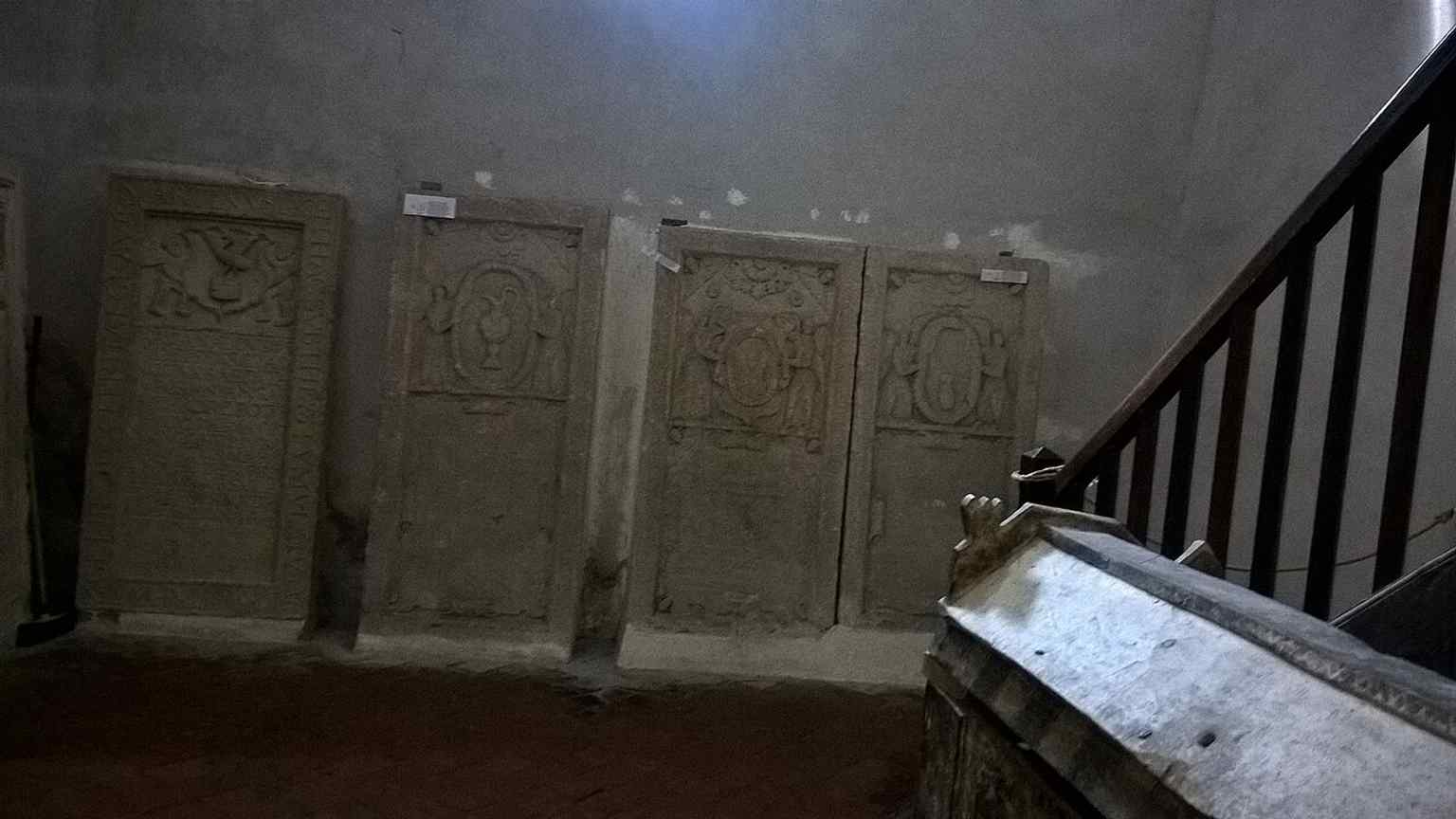
Another perspective of the meticulously restored interior, highlighting the church's function as a 'liturgical museum' for altarpieces rescued from abandoned Saxon churches.Photo: Leontin l, Wikimedia Commons, CC BY-SA 3.0 ro. Cropped & resized. 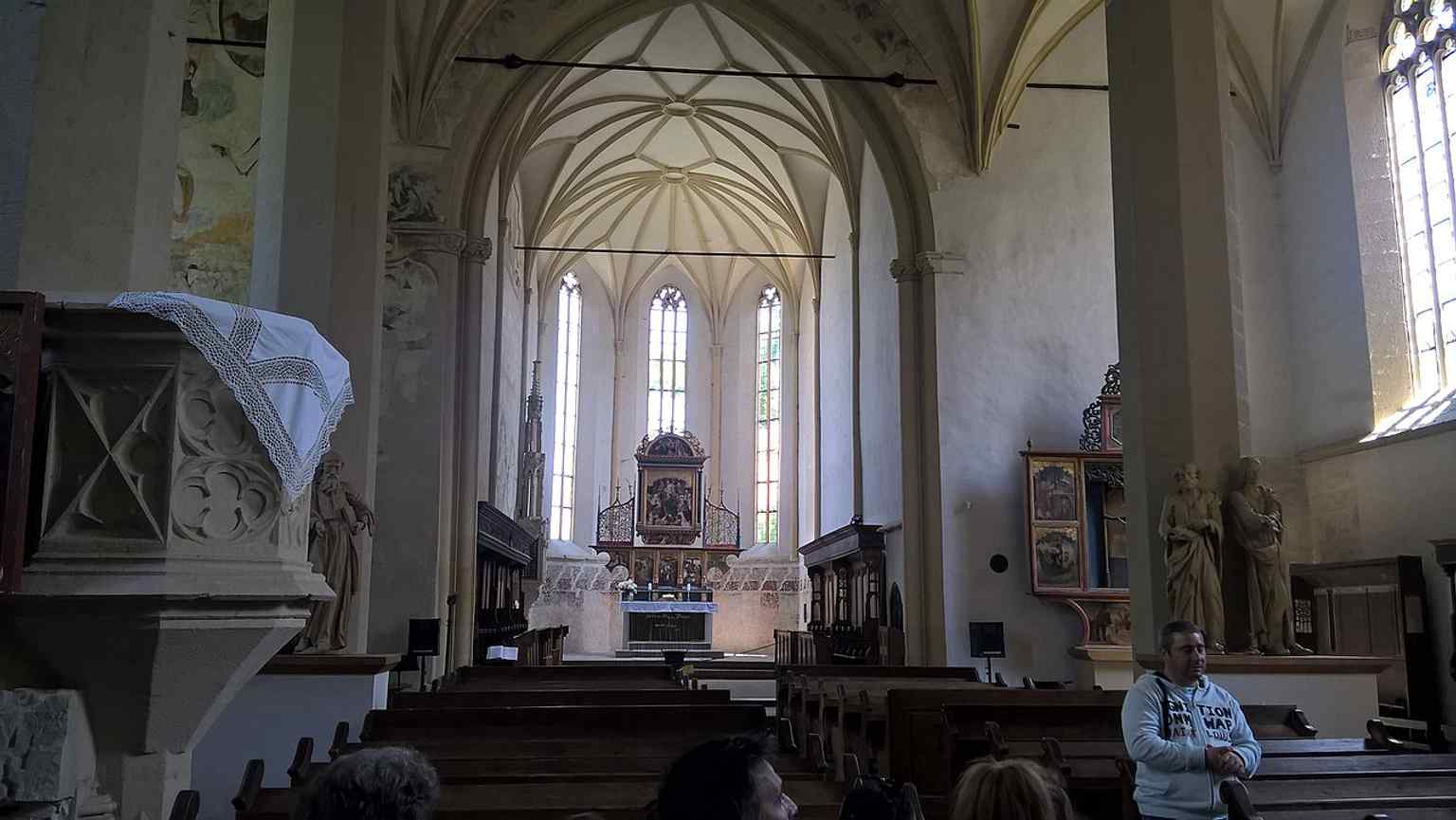
Within the nave, explore the solemn row of 60 sarcophagi, part of the unique historical context of this Transylvanian church.Photo: Leontin l, Wikimedia Commons, CC BY-SA 3.0 ro. Cropped & resized. Over on your right stands the School on the Hill, a towering masonry building defined by its sharp triangular gable and the deep arched entryway welcoming you at its base. It…Read moreShow less
Open dedicated page →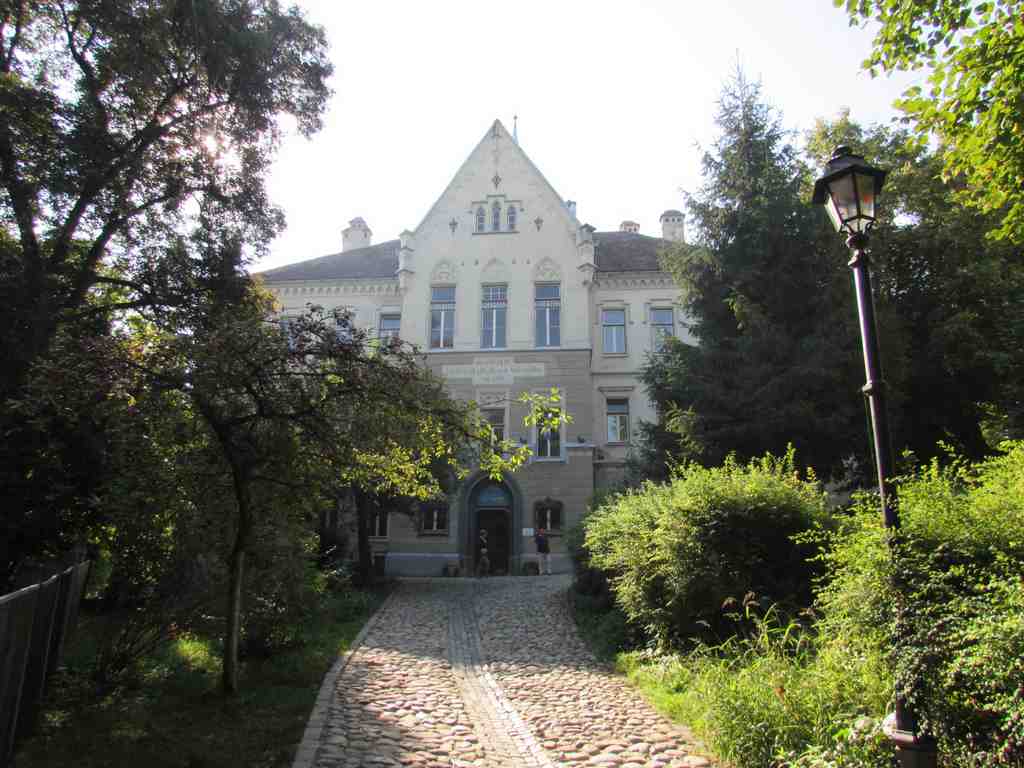
The school on the hill in SighișoaraPhoto: Cezar Suceveanu, Wikimedia Commons, CC BY-SA 4.0. Cropped & resized. Over on your right stands the School on the Hill, a towering masonry building defined by its sharp triangular gable and the deep arched entryway welcoming you at its base. It might just look like a typical European high school, but the roots of this place reach all the way back to the year 1522. That is when the local town council gifted the school rector a coat worth four florins, an amount equivalent to several hundred modern dollars for a luxury garment. It was not just a generous fashion statement, though. That coat officially recognized his status as a baccalaureus, a university bachelor degree granting early academic standing. It meant local teenagers were getting such a top tier education they could head straight off to prestigious universities in places like Vienna.
Even back then, the town leaders knew that knowledge was the ultimate foundation. That brings us to a remarkable legacy of civic duty. In 1619, Mayor Martin Eisenburger pushed for a massive expansion, declaring that the school was a nursery of the state. It was a deeply humanist idea, a philosophy prioritizing human potential, logic, and the shaping of responsible citizens. They even let the senior students run their own mini government called a Coetus. These older kids had their own treasury, their own internal laws, and the power to discipline the younger peers. They were basically running a tiny autonomous society to prepare them for real world leadership.
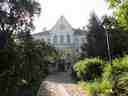
Of course, building a powerhouse of learning up here was a massive test of will. Through shifting political borders and devastating catastrophes, this institution held its ground. When a brutal plague wiped out a third of the city population in 1709, the classrooms sat completely empty for years, yet the structure remained as a quiet monument of the community pulling through. They always bounced back, eventually erecting the core of the current building you see in 1790. If you pull up the second photo on your screen, you can see the Latin inscription over the entrance. It dedicates the school to virtue and to Pallas Athena, the ancient goddess of wisdom.
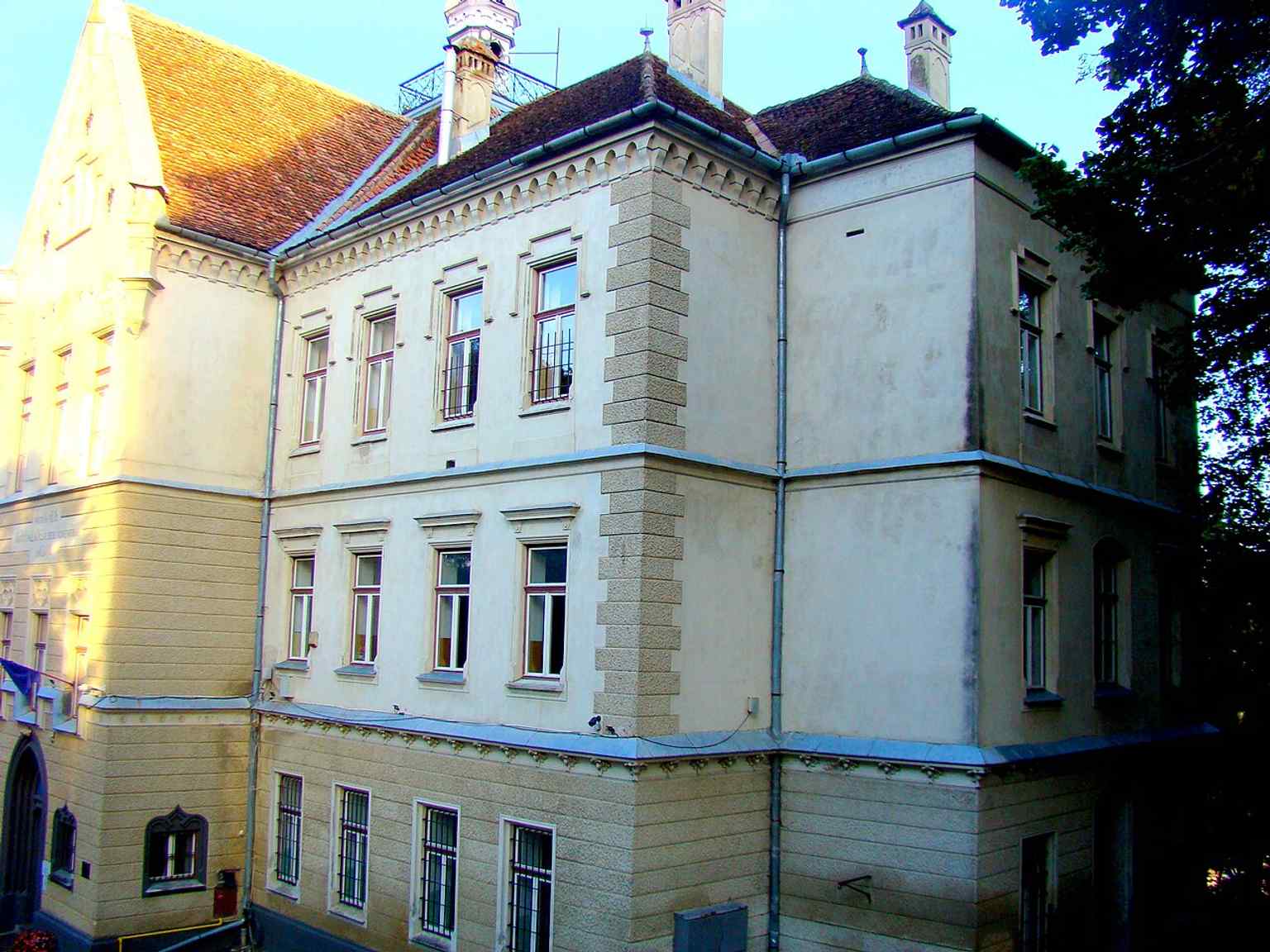
This main building, begun in 1790 and expanded with an added floor in 1901, bears the inscription 'PATRIAE FILIIS VIRTUTI PALLADIQUE SESE VOVENTIBUS SACRUM' - 'Sacred to the sons of the fatherland dedicated to virtue and wisdom'.Photo: Țetcu Mircea Rareș, Wikimedia Commons, CC BY-SA 4.0. Cropped & resized. That dedication totally paid off over the centuries. This very school produced brilliant minds like Josef Haltrich, a rector who became close friends with the famous Brothers Grimm and applied their rigorous research methods to local Transylvanian folklore. It also nurtured Hermann Oberth, widely considered one of the founding fathers of spaceflight. Even as a young student in 1908, he was sitting up here on this hill, inspired by the school library, sketching out some of the first practical designs for liquid fueled rockets.
Now, picture being a young scholar up here hundreds of years ago, wrapped in whatever heavy wool you had. Think about the brutal, freezing commute of trekking up this steep hill every single day in the harsh weather before the town came up with a clever architectural solution. Let us head toward that exact solution next, the Scholars Stairs, which is just a three minute walk away.
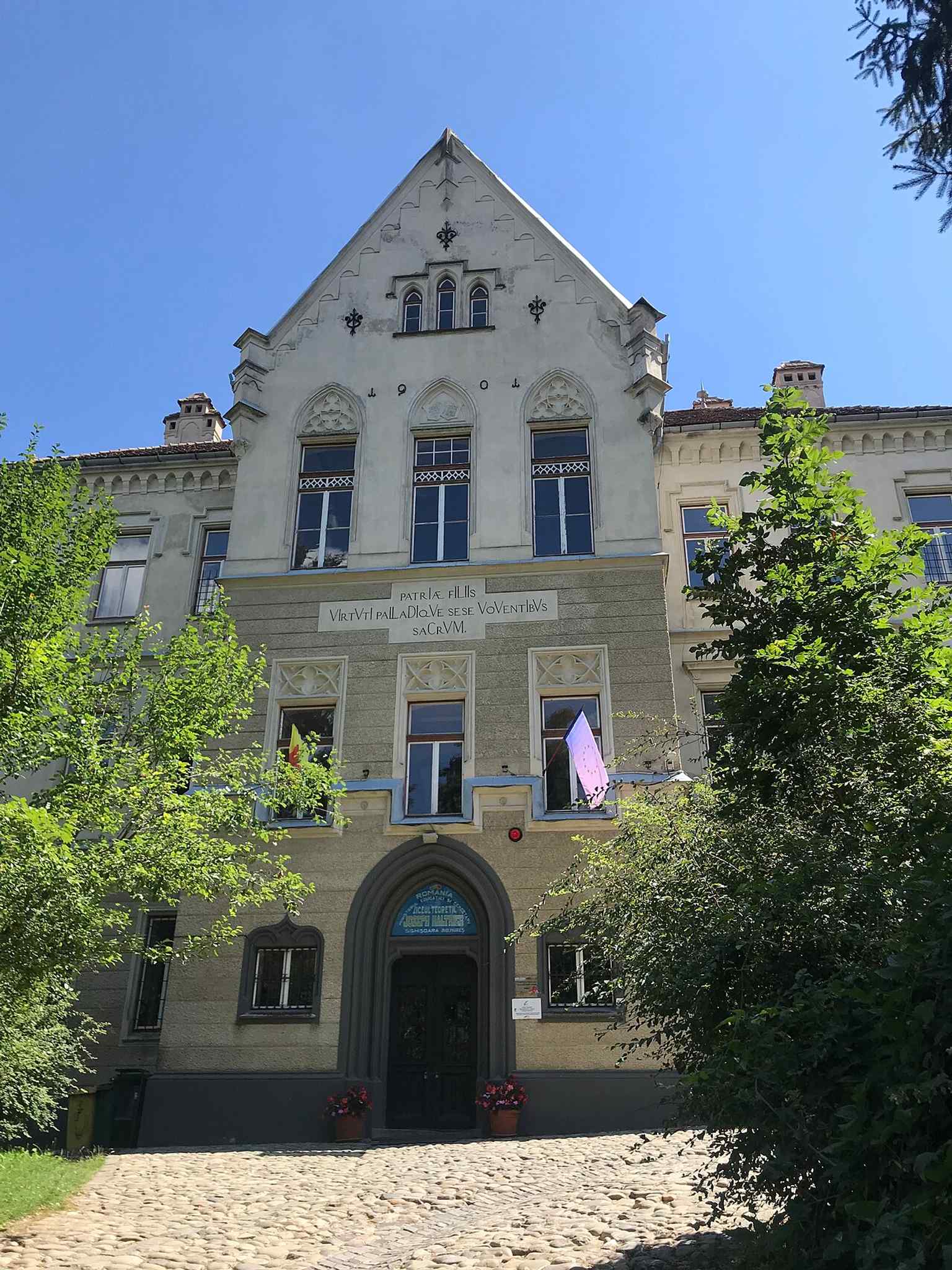
Behold the Josef Haltrich High School, also known as the 'School on the Hill', an educational institution with a history dating back to 1522.Photo: Antimuonium, Wikimedia Commons, CC BY-SA 4.0. Cropped & resized. 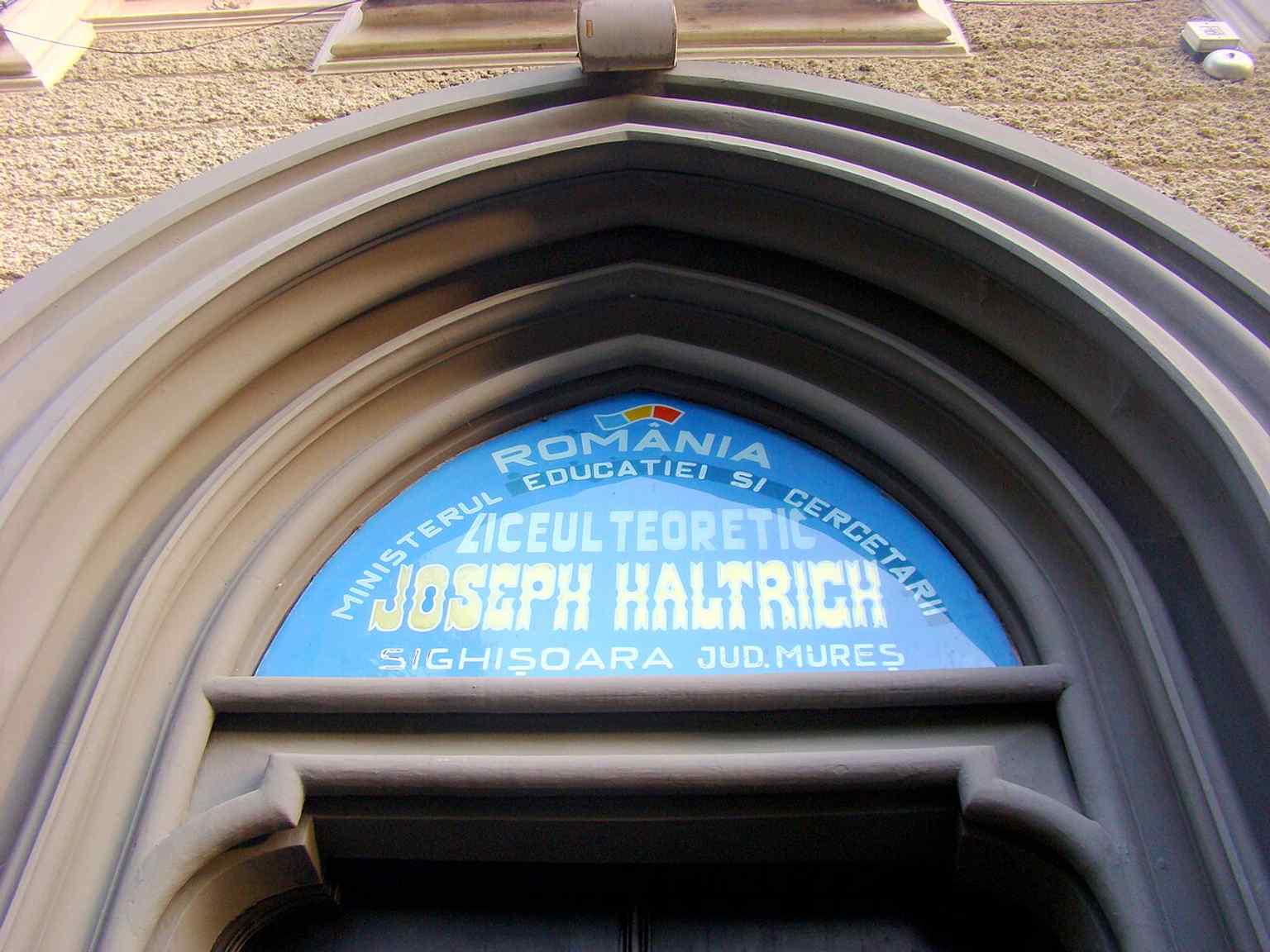
Located prominently on the hill, the school is famously connected to the lower town by the 'Covered Stairway', a unique landmark built in 1642 to help students reach classes.Photo: Țetcu Mircea Rareș, Wikimedia Commons, CC BY-SA 4.0. Cropped & resized. Right in front of you, the Scholars' Stairs rise up like a long, wooden tunnel topped with a shingled roof and anchored by a rugged stone foundation. Back in 1642, Mayor Johann…Read moreShow less
Open dedicated page →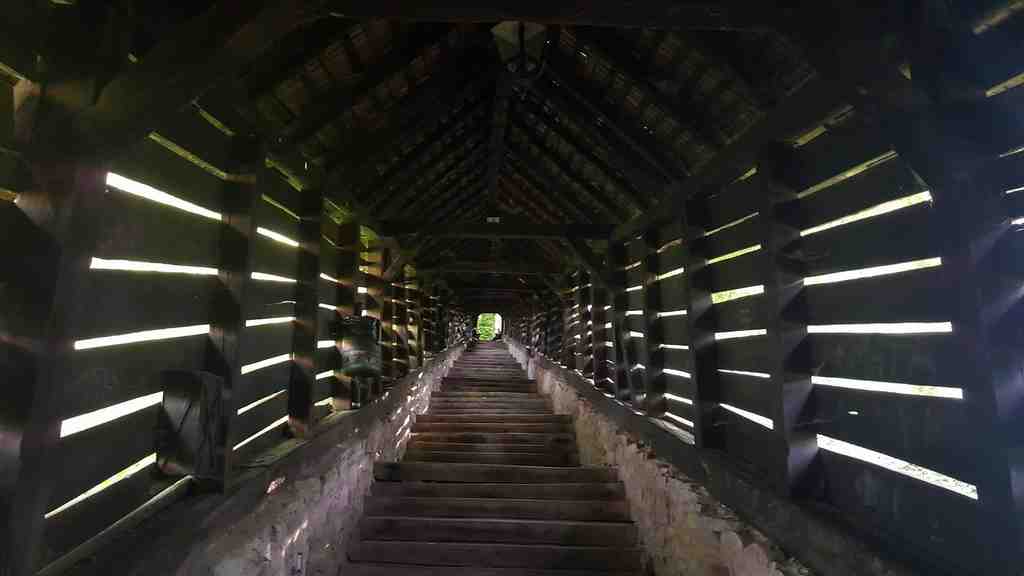
Scholars' StairsPhoto: Xhulia Likaj, Wikimedia Commons, CC BY-SA 4.0. Cropped & resized. Right in front of you, the Scholars' Stairs rise up like a long, wooden tunnel topped with a shingled roof and anchored by a rugged stone foundation. Back in 1642, Mayor Johann Both saw a problem. The kids of this town had to hike up a punishing hill to get to the church and the school, battling famously brutal Transylvanian winters. He built this protected pathway as a remarkably caring solution for a tough environment, giving the youth a safe route between the lower civic town and the spiritual center above.
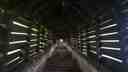
Take a look at the sides of the structure, or check out the interior view on your app. Notice how the walls are made of horizontal wooden slats that let thin, bright shafts of sunlight slice right through the tunnel. That clever design blocked the fierce winds while keeping the air fresh.
Originally, this structure had three hundred steps. That is a lot for a kid half-asleep. In 1849, builders knocked that number down to one hundred seventy-four by adding wide platforms so students could catch their breath. Still, some kids embraced the burn. Local legend talks about the scholar's sprint, where boys would tear up the entire staircase in under a minute to beat the bell. Many of those fast-footed boys later marched off to serve in World War One, leaving their names memorialized in the churchyard at the summit. Josef Haltrich, the school rector and folklorist we just talked about, likely collected plenty of local myths right from these steps. One such legend is a test of love, where a boy had to kiss his partner on every single step without stumbling to prove his devotion.
This site is open twenty-four hours every day, and if you come back after dark, the whistling wind and creaking timber give it a spooky vibe worthy of Dracula's birthplace. During the day, the acoustic reverb turns the enclosure into a giant natural amplifier, making it a favorite spot for guitarists. Let your eyes catch the sunlight playing through those slats one more time while you mentally prepare to head down toward the city's older defenses. Our next stop, the Tanners' Tower, is just a one-minute walk away.
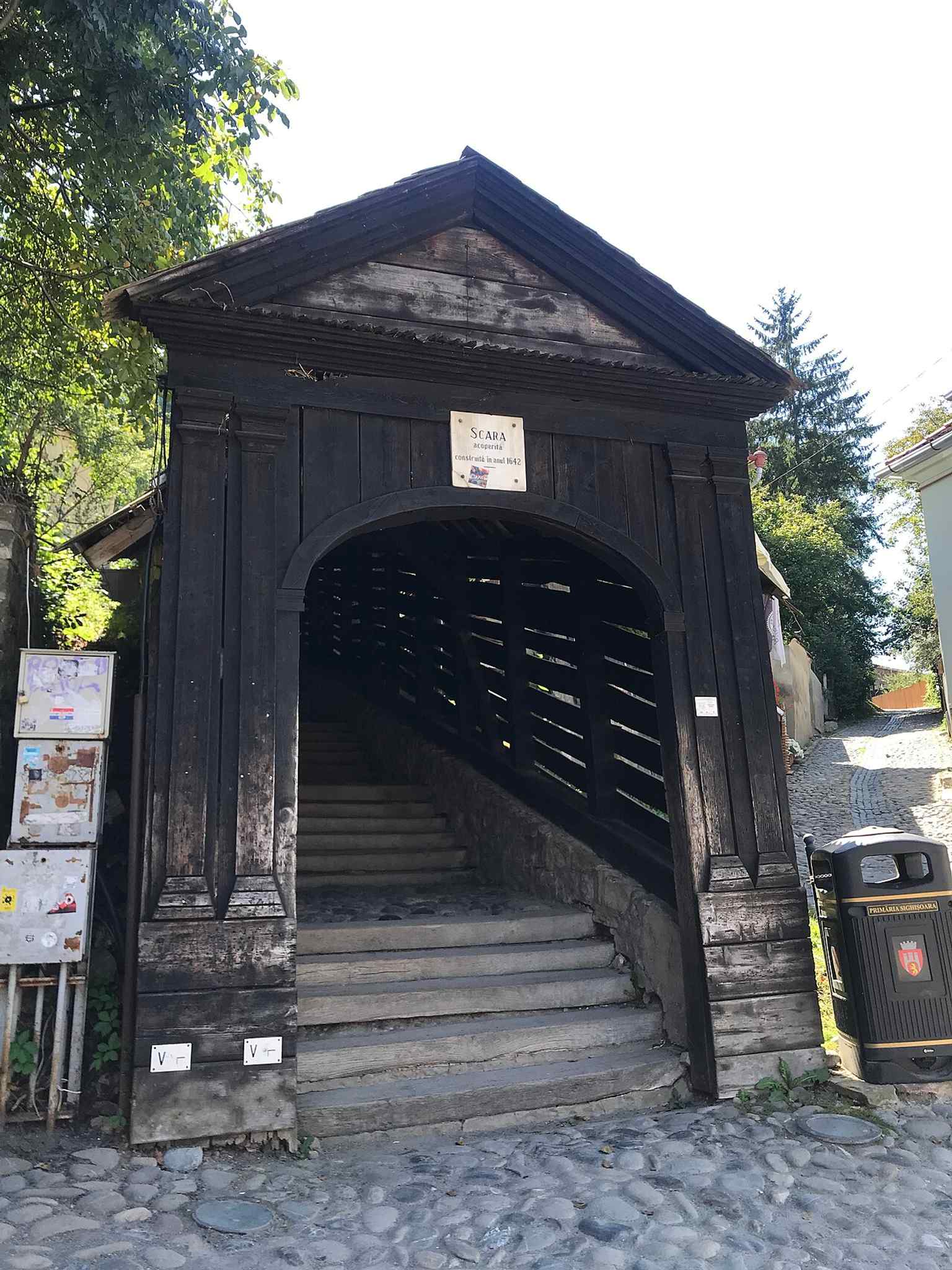
This image shows the north entrance of the Scholars' Stairs, a 'long, wooden tunnel' built in 1642 by Mayor Johann Both to ensure students had a safe climb to school during freezing winters.Photo: Antimuonium, Wikimedia Commons, CC BY-SA 4.0. Cropped & resized.
Show 8 more stopsShow fewer stopsexpand_moreexpand_less
Look down this curving cobblestone street, framed by smooth plastered facades in pastel hues, leading your eye straight toward that massive stone tower with its bulbous,…Read moreShow less
Open dedicated page →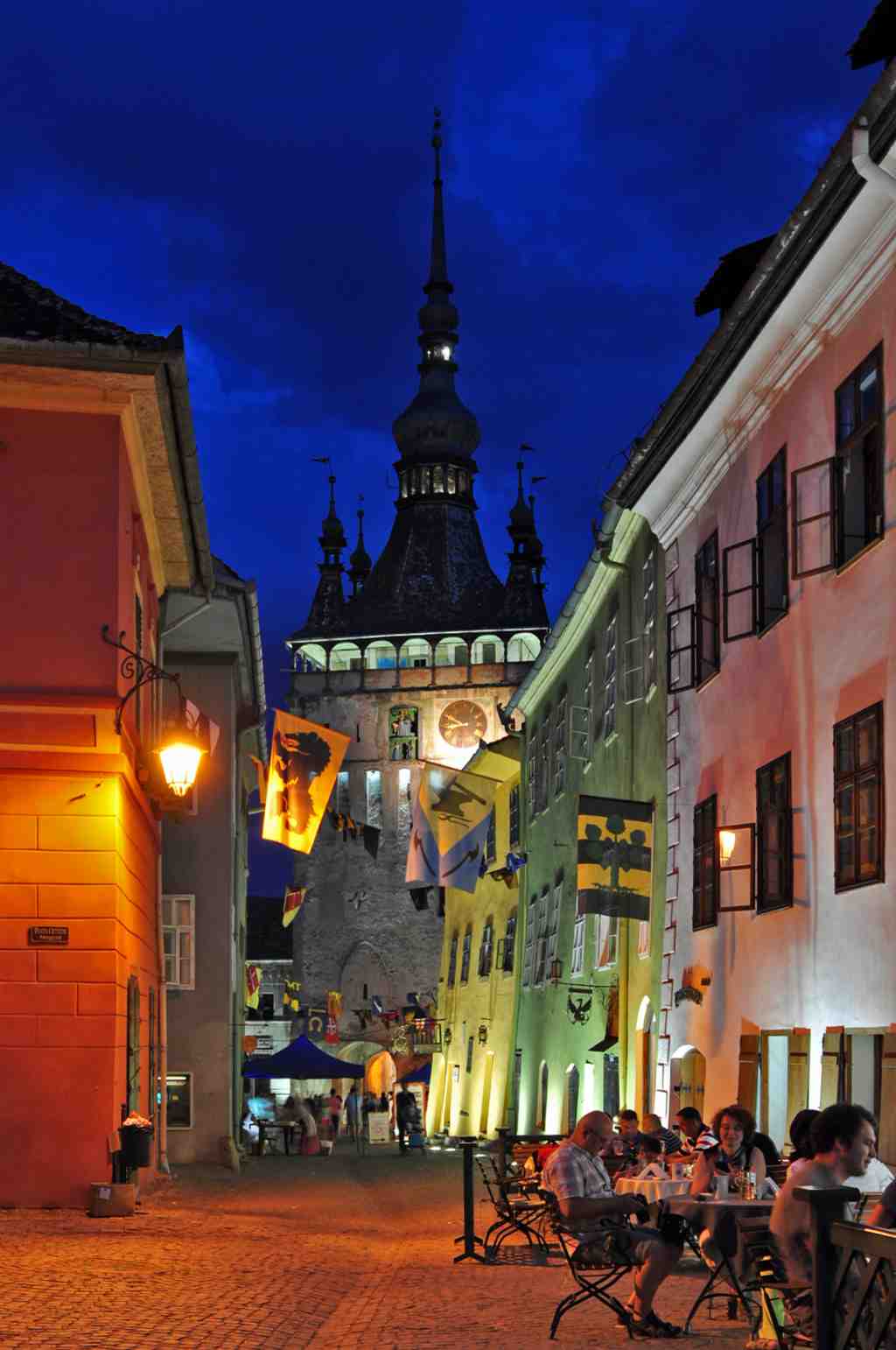
Historic Centre of SighișoaraPhoto: Paszczur01, Wikimedia Commons, CC BY-SA 3.0 RO. Cropped & resized. Look down this curving cobblestone street, framed by smooth plastered facades in pastel hues, leading your eye straight toward that massive stone tower with its bulbous, multi-tiered roof. This is the Historic Centre of Sighișoara.
It feels like stepping directly into a dark fairy tale, and honestly, the legends here fit the mood perfectly. How exactly did a thriving Germanic community suddenly appear in the heart of the Carpathian Mountains back in the twelfth century? Local folklore claims the Saxon settlers were actually the lost children of Hamelin, lured away by the Pied Piper's magical flute through a subterranean passage that eventually emerged right here in Transylvania. It is a wild, haunting story that locals used for generations to explain their mysterious origins. Take a glance at your phone to see a great perspective of these ancient defensive walls and centuries-old merchant houses.
With its towering defenses, the citadel quickly evolved into a heavily fortified safe haven where powerful figures could hide in the shadows and plot their next moves. It was the ultimate sanctuary for outcasts and exiled royals.
One of those famous fugitives was Vlad the Second Dracul, who lived here in exile between 1431 and 1435. He rented rooms in one of the city's few civilian stone houses, using this secure base to gather an army of loyalists so he could violently reclaim the throne of Wallachia. Decades later, in the mid-twentieth century, a secret mural was discovered hidden away inside that very house, depicting a mysterious man believed to be Vlad himself. His infamous son, Vlad the Impaler, spent his earliest years soaking in this intense atmosphere of political intrigue.
But even massive stone walls could not protect the city from a threat within. During the terrifying 1676 fire we mentioned, a blaze sparked by a gunpowder explosion in the Tailors' Tower ripped through these narrow streets. The blaze consumed seventy percent of the urban landscape in just a few hours. Forced to rebuild from the ashes, the city council brought in Austrian master builders. They replaced the old, purely functional Gothic defenses with the ornate Baroque style, an architectural approach all about dramatic curves and decorative flair, which gave the city its multi-colored roof tiles and those distinct onion-shaped domes.
Fire, folklore, and fugitive royals. This place has truly absorbed the shocks of history and kept on standing. Now, let your eyes follow the street up toward that spectacular, soaring structure dominating the skyline ahead of us. We are going to head right over to the Sighișoara Clock Tower, which is just a four minute walk away.
Standing before you is a massive rectangular stone tower climbing sixty four meters into the sky, featuring a large clock face with golden numbers and capped by an intricate,…Read moreShow less
Open dedicated page →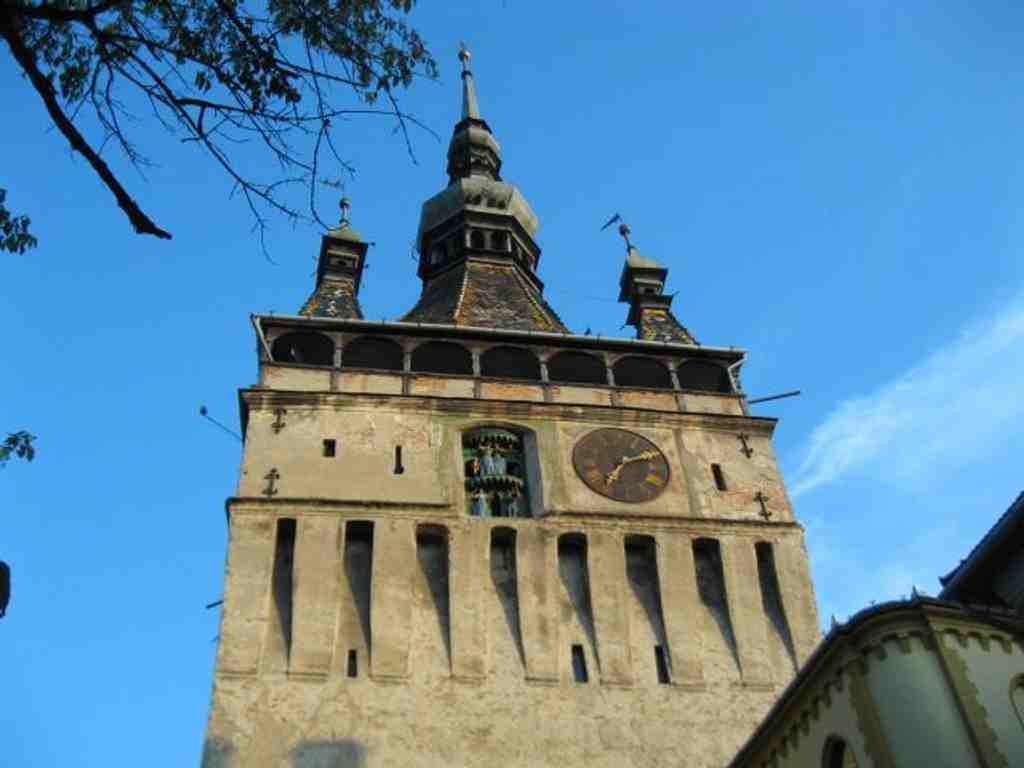
Sighișoara Clock TowerPhoto: Pmatlock, Wikimedia Commons, CC BY-SA 3.0. Cropped & resized. Standing before you is a massive rectangular stone tower climbing sixty four meters into the sky, featuring a large clock face with golden numbers and capped by an intricate, multi-tiered roof complete with five small turrets.
Looking up at that beautiful spire, you would think this place was just the beating heart of the city's civic life. And it was. Unlike other towers owned by different trade guilds, this was public property. It housed the town hall, the city orchestra on holidays, and the local administration. But this building has a brutal, split personality.
See those four little turrets perched on the corners of the roof? They were not just decorative. They were a chilling signal of the city's judicial autonomy, basically a medieval billboard announcing that the local judge had the power to order capital punishment, the death penalty.
Justice here was not subtle. Sentences were read aloud from the high balcony, echoing over the square before the condemned were led to execution. For lesser crimes, like cheating someone at the market, you might be forced to ride that painful wooden donkey right in the shadow of this tower, the same punishment the tanners used.
And if you think that sounds rough, it gets darker. Deep within the stone basement lies the Torture Room. Prisoners were held down there in absolute, crushing darkness, interrogated and broken before being dragged upstairs to the council for their final judgment.
But the absolute most dramatic chapter of this tower's life did not come from a judge. It came from a spark.
Back in the seventeenth century, the city made the highly questionable decision to use this towering fortress to store its gunpowder deposits. Picture the sheer terror of realizing the city's entire gunpowder supply was sitting right there as the Great Fire of 1676 roared toward it. What would you have even tried to save first?
The wind-whipped flames reached the stone walls, and the situation went exactly how you might expect. A massive, catastrophic explosion shattered the heavy stone structure and blasted the roof into the sky. The blast leveled three-quarters of the surrounding lower town, leaving the city absolutely decimated.
Yet, the locals refused to stay in the ashes. Three traveling craftsmen stepped up and rebuilt the tower with its incredible baroque roof in just a few months, finishing in 1677. It cost the city six hundred and fifty florins, roughly equivalent to tens of thousands of dollars today, a sum that left the local government in financial ruin for years but gave them back their most vital lookout point.
This tower stands as a monument to a community that endured brutal laws, catastrophic explosions, and total ruin, only to pull itself together and rebuild its heart stronger each time.
Let's leave the harsh echoes of medieval justice behind us now and move toward something a little more peaceful. We are going to head over to St. Joseph's Roman Catholic Church, which is just a short three minute walk away, to explore a quieter kind of devotion. If you want to check out the history museum inside the tower later, it is open daily from nine to three thirty, except for Mondays when it is closed, and it opens at ten on weekends.
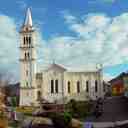
Up ahead on your right is St. Joseph's Roman Catholic Church, easily spotted by its smooth, vibrant yellow facade, rows of tall rounded windows, and a towering, needle-pointed…Read moreShow less
Open dedicated page →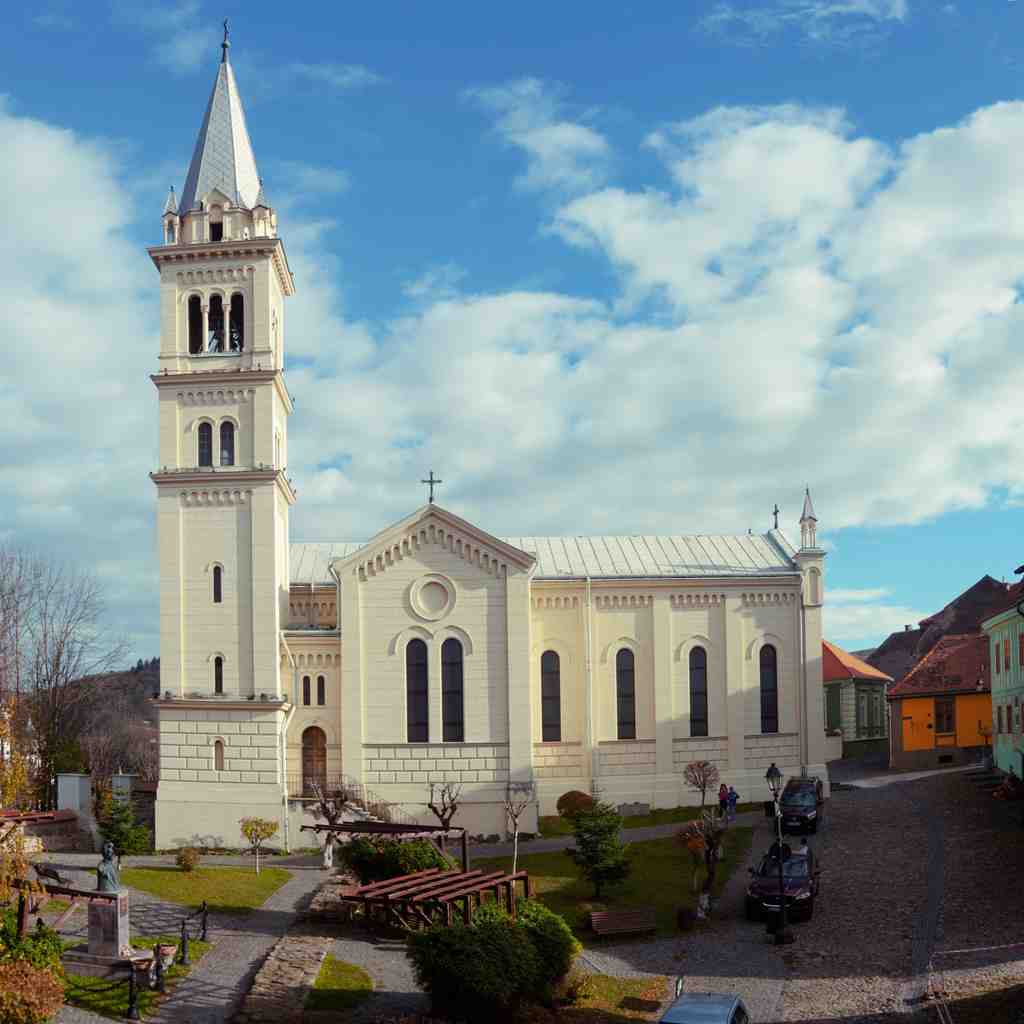
St. Joseph's Roman Catholic ChurchPhoto: ZARAKA Z, Wikimedia Commons, CC BY-SA 4.0. Cropped & resized. Up ahead on your right is St. Joseph's Roman Catholic Church, easily spotted by its smooth, vibrant yellow facade, rows of tall rounded windows, and a towering, needle-pointed belfry. If you glance at your app, you can see how this eclectic mix of shapes really stands out against the older, sober Saxon buildings in the city.
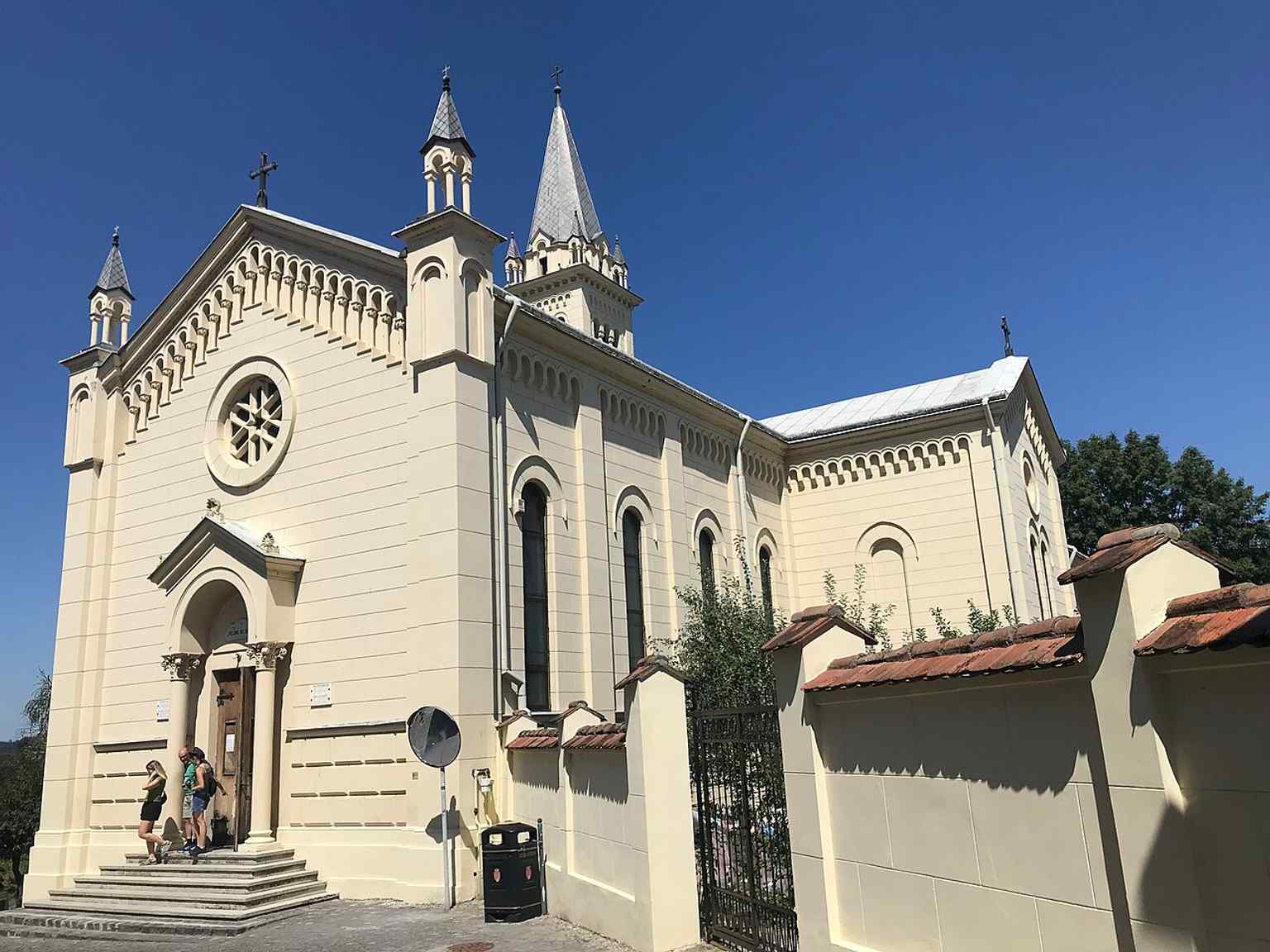
This exterior view highlights the church's vibrant yellow facade and tall belfry, a striking eclectic design that set it apart from the city's Saxon churches when it was built.Photo: Antimuonium, Wikimedia Commons, CC BY-SA 4.0. Cropped & resized. The story of this spot is basically a masterclass in holding your ground. During the Reformation, the local Saxon population switched over to Lutheranism, and the Catholic community almost vanished completely. For a while, the Catholic faith in this city was kept alive by just one lone Franciscan monk who arrived in 1702, living in a crude plank hut and holding mass out in the open air. Talk about dedication.
Decades passed, the Hungarian Catholic community slowly rebounded, and by the 1890s, they were ready to make a statement. They wanted a grand church. But in a packed medieval citadel, space does not just magically appear. To build this yellow landmark, they had to sacrifice some serious history. They demolished the old monastery that stood here, and even tore down the Locksmiths' Tower, a heavy stone defensive bastion that once guarded this corner. They traded military defense for spiritual presence.
But this church has had its own battles to fight. In 1983, a catastrophic fire ripped right through the sanctuary. The roof completely collapsed into the nave, the main hall for the congregation. Take a look at the second photo on your screen. When they rebuilt the interior, they had to use modern materials, losing that original nineteenth century decoration. Yet, miraculously, the fire spared a few precious pieces, including the altars and the original baptismal font. It is a space defined as much by what it survived as by what it lost.
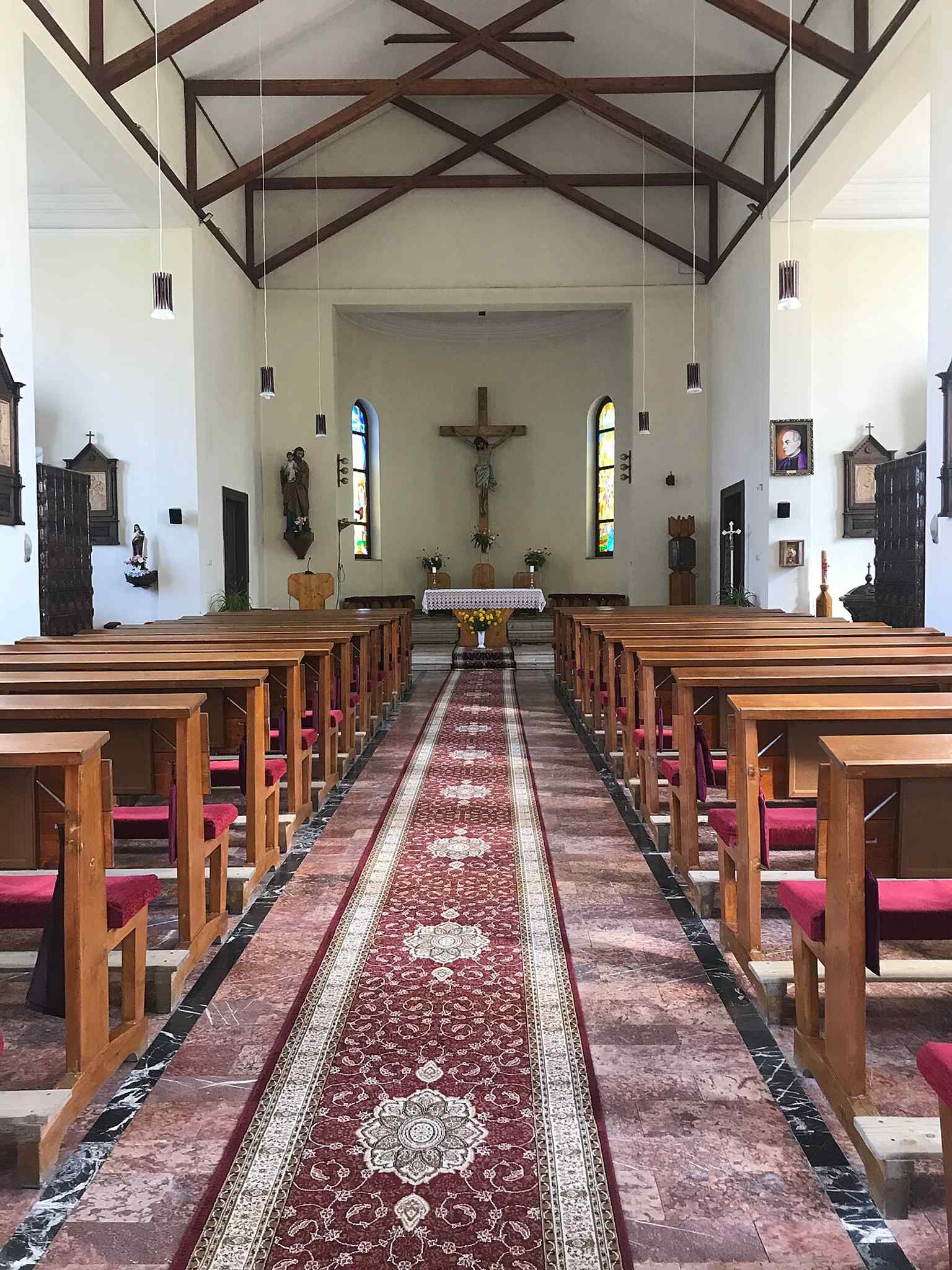
The interior reflects the reconstruction after the devastating 1983 fire, resulting in a more contemporary feel compared to its eclectic exterior, though some historical artifacts like altars and the baptismal font were miraculously preserved.Photo: Antimuonium, Wikimedia Commons, CC BY-SA 4.0. Cropped & resized. Before we move on, take a good look at how the church sits on the street. It is actually slightly askew. It does not line up perfectly with the medieval grid around it. Local legends claim the builders intentionally shifted it using spiritual geometry to ward off evil spirits from this corner of the citadel. See if you can spot that quirky angle, and then let us keep rolling toward the Bootmakers' Tower, which is just a two minute walk away.
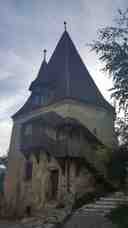
You are looking at a pale stone pentagonal structure with a steep tiled roof that sprouts two elegant little observation turrets. Take a look at your screen to get a good angle on…Read moreShow less
Open dedicated page →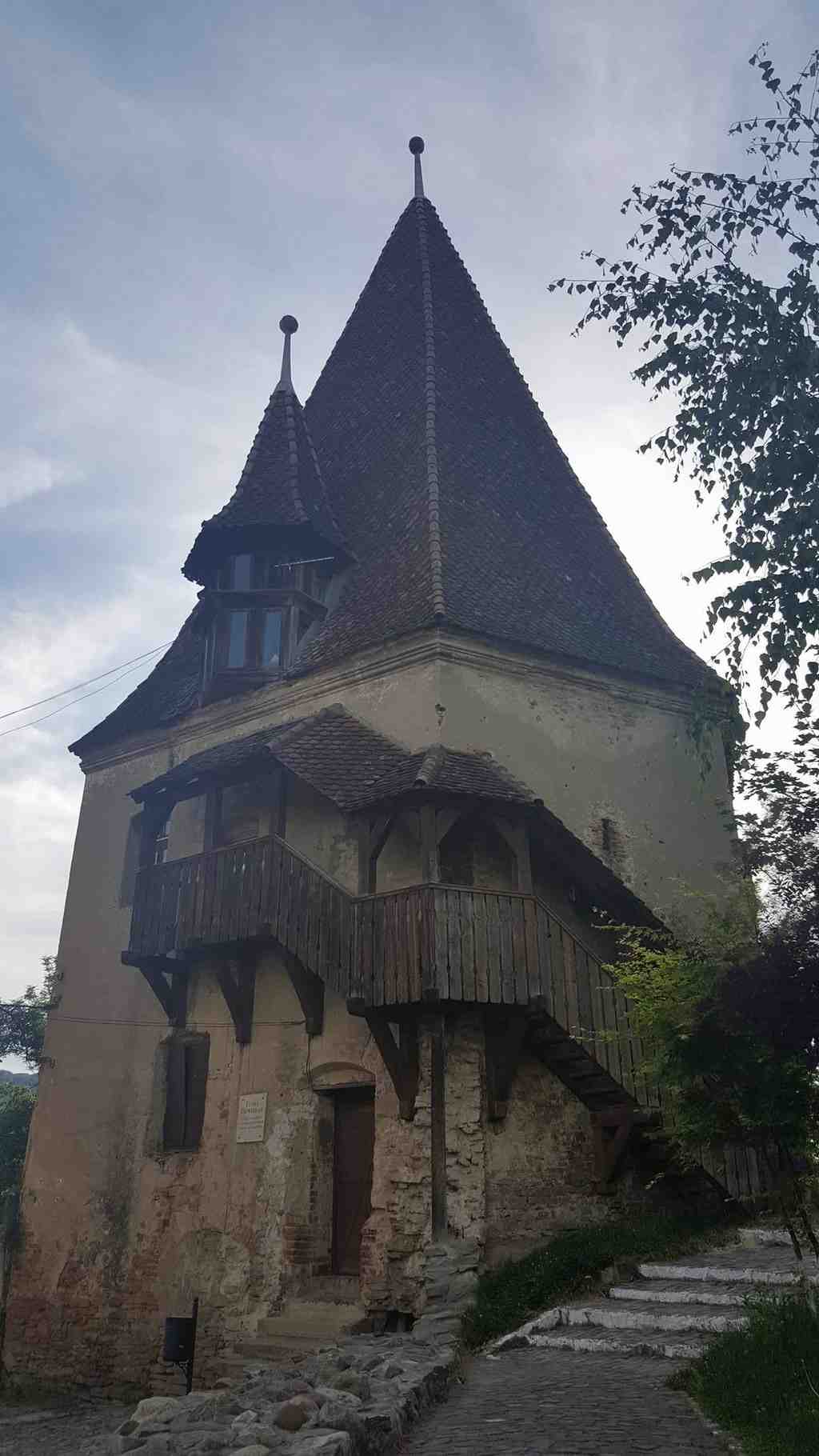
Bootmakers' TowerPhoto: Xhulia Likaj, Wikimedia Commons, CC BY-SA 4.0. Cropped & resized. You are looking at a pale stone pentagonal structure with a steep tiled roof that sprouts two elegant little observation turrets. Take a look at your screen to get a good angle on those unique roof details.
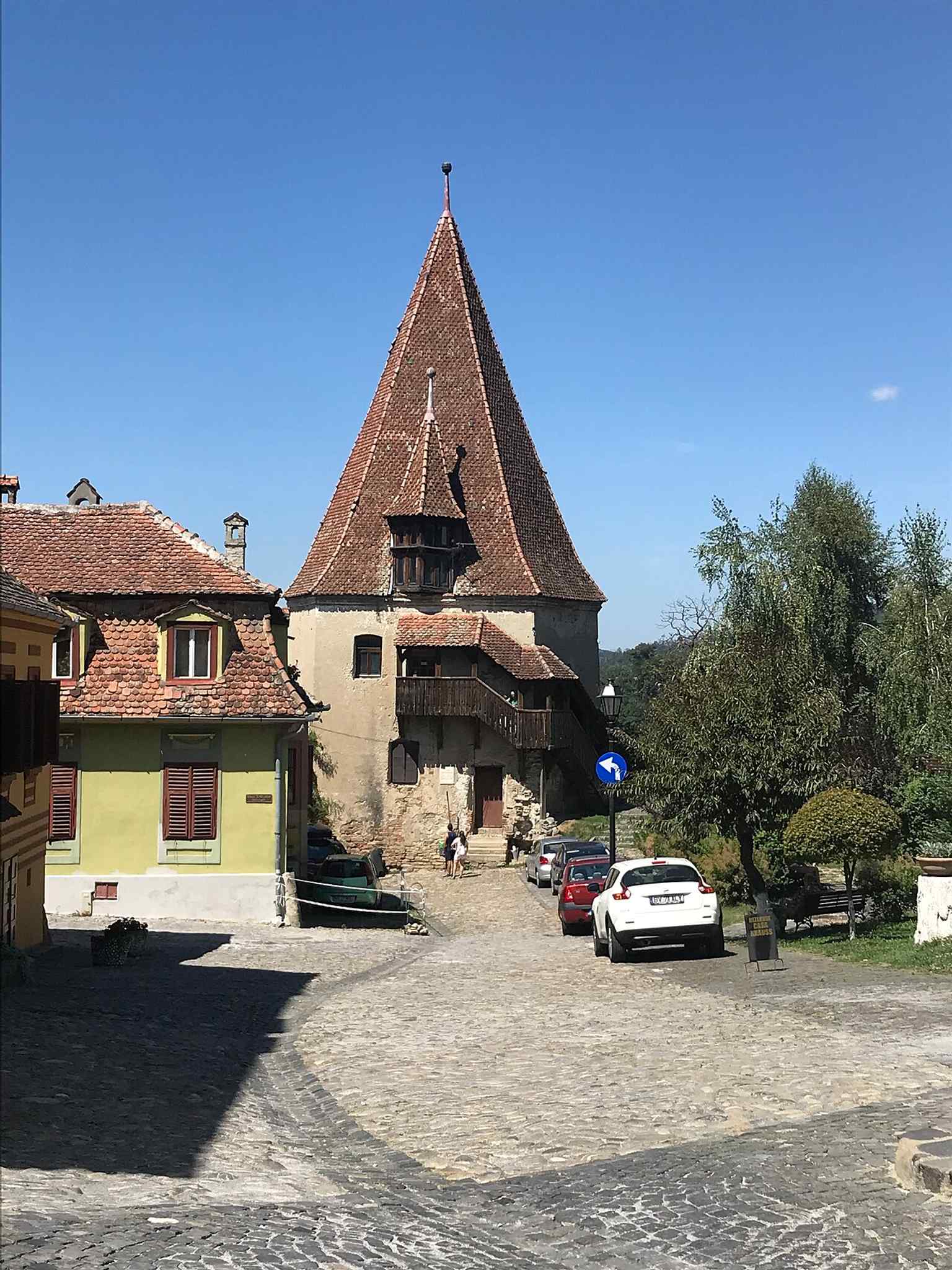
The Bootmakers' Tower today, rebuilt in 1681 in the Baroque style after the devastating fire of 1676. Its distinctive roof features two elegant observation towers, strategically placed for panoramic views of the Târnava Valley.Photo: Antimuonium, Wikimedia Commons, CC BY-SA 4.0. Cropped & resized. This is the Bootmakers' Tower, and honestly, if any building here understands the city's unyielding resilience, it is this one. It has been knocked down, blown up, and completely redesigned more times than you might guess.
Back in the thirteenth century, it started as a small, rectangular stone tower. But as warfare evolved, small just did not cut it anymore. In August 1605, mercenaries launched a massive bombardment from a nearby hill, hurling twenty to twenty five pound projectiles at the fortifications. The attack practically demolished the wall connecting this tower to the Locksmiths' Tower next door. The defenders realized they had to rethink everything, so they rebuilt the tower three times larger.
But the universe was not done with the Bootmakers' Tower yet. You might remember the Great Fire of 1676 that swept through these streets. Well, the fire eventually reached this tower, which unfortunately was being used to store massive amounts of gunpowder at the time. The resulting explosion completely leveled it.
Enter Mayor Michael Helwig. He took charge of the city's recovery and pushed for modern defenses. Under his leadership in 1681, the tower was reborn in the Baroque style you see today. Helwig added those two little lookout turrets to the roof. They were not just for decoration. They gave sentries a sweeping view of the valley below, letting this relatively short tower do the surveillance work of a giant.
During a siege, things got very real here. An old defense plan from 1704 shows that the senior master bootmakers stayed safely inside the tower, operating heavy weapons like arquebuses. Meanwhile, the calfe, the guild's young journeymen and apprentices, were sent out to defend the exposed, open walls. It was a harsh legacy of civic duty where the absolute rookies literally manned the front lines.
Today, the tower has a much lighter vibe. Since the year 2000, it has been the headquarters for a local radio station. In a funny twist of fate, the radio equipment needed strict climate control, which forced the city to maintain the building and actually saved the stone structure from decay. So instead of cannon fire, you might just hear pop music echoing through the thick walls.
Next, we are going to head somewhere a bit quieter, a humble setting that required its own kind of deep determination to build. Let us take a twelve minute walk over to the Entry of the Theotokos into the Temple Church.
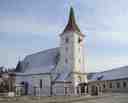
You should see a bright white stone church on your right, featuring a long main body and a tall square tower capped with a sharply pointed roof that has the numbers 17 and 97…Read moreShow less
Open dedicated page →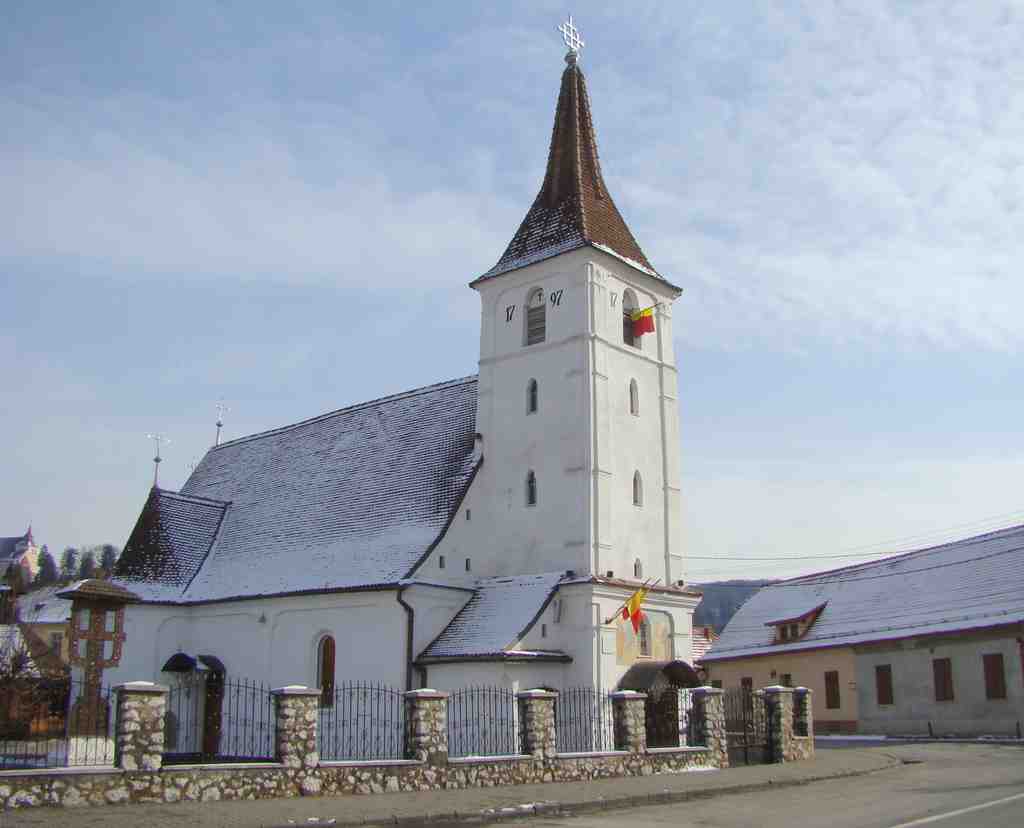
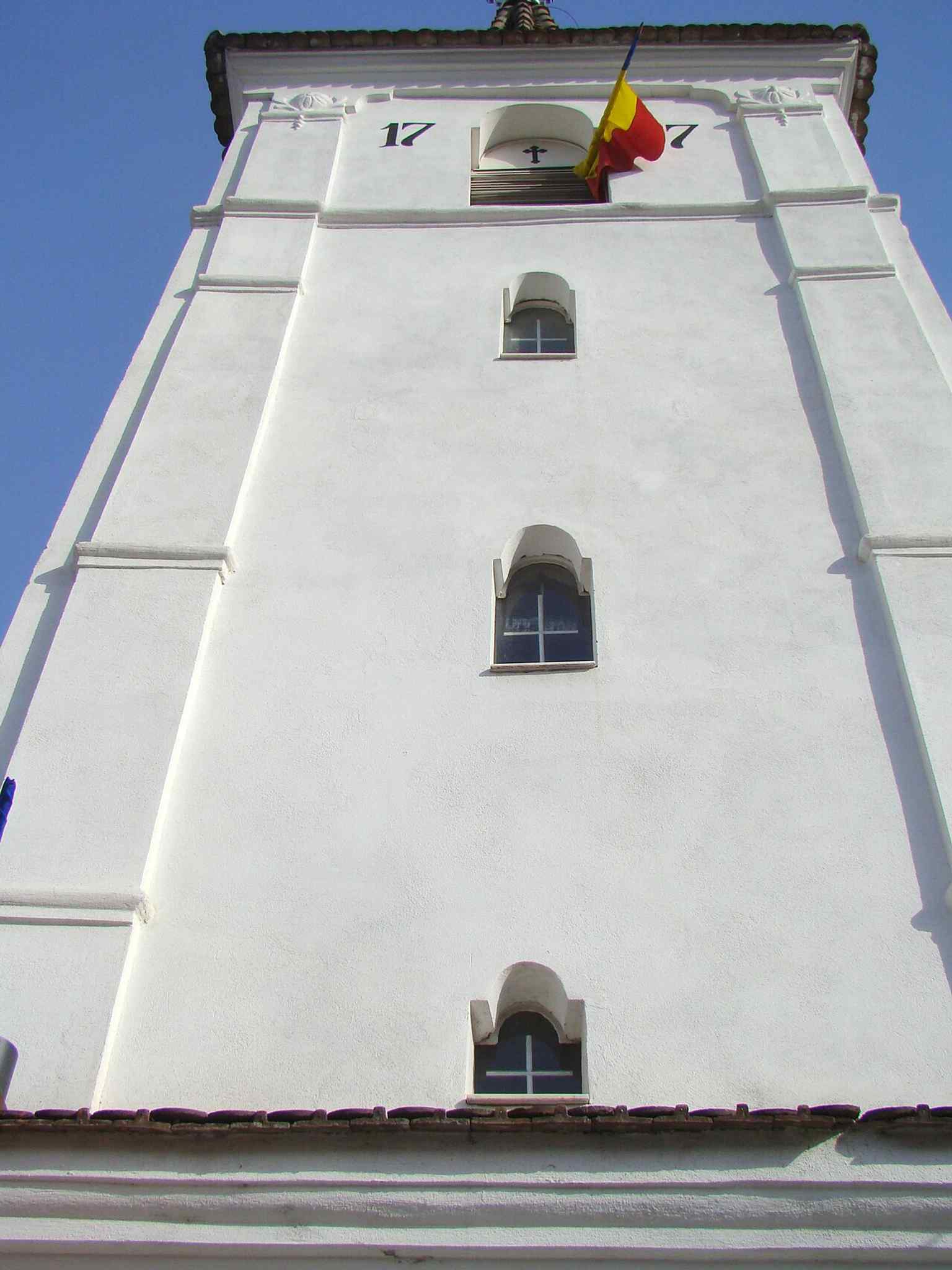
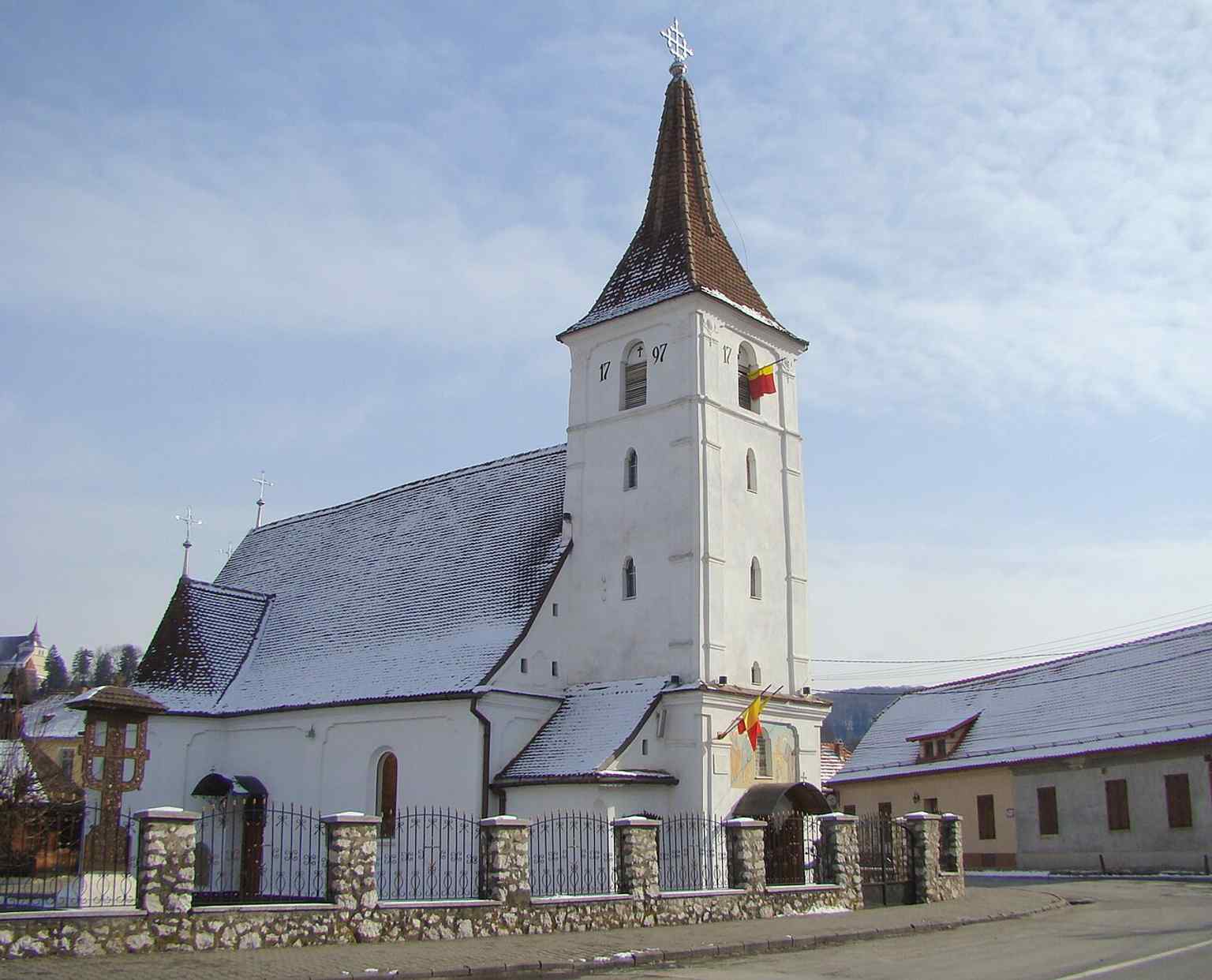
Entry of the Theotokos into the Temple Church, SighișoaraPhoto: Țetcu Mircea Rareș, Wikimedia Commons, CC BY-SA 4.0. Cropped & resized. You should see a bright white stone church on your right, featuring a long main body and a tall square tower capped with a sharply pointed roof that has the numbers 17 and 97 painted just below the eaves.
It is peaceful here... but this building represents an incredible fight just to exist.
Earlier on this walk, we saw the massive Church on the Hill, commanding the whole city. Down here in what was once the outskirts, things were different. Back in the eighteenth century, Sighișoara was strictly segregated. The ruling authorities forbade Orthodox Romanians from living inside the fortified citadel or even building permanent stone structures.
So, they were pushed out here to the Cornești suburb. Without a legal right to build a proper sanctuary, about a hundred and twenty families took an abandoned hayloft in a local man named George Gârda's courtyard and quietly turned it into their spiritual home. For decades, they practiced a kind of quiet defiance. They gathered in that wooden barn to hear traveling priests who sneaked in from neighboring villages to hold services. It was a massive risk. Every prayer was an act of rebellion. Check out your screen for a look at the expansive interior space they eventually built from those humble beginnings.
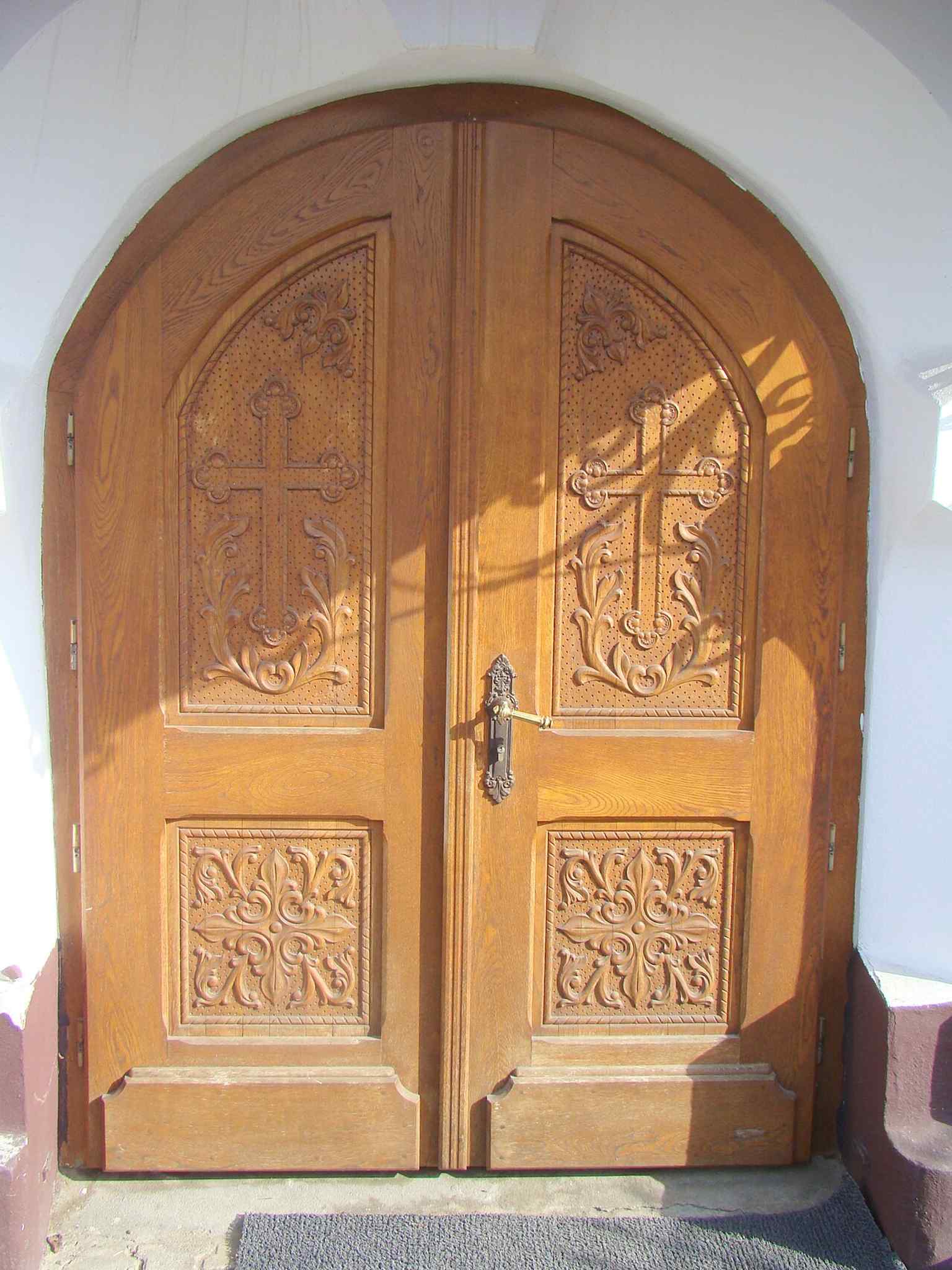
A wider view of the church interior, illustrating the overall space where 120 families once gathered in a makeshift hayloft for clandestine services before this permanent stone structure was built.Photo: Țetcu Mircea Rareș, Wikimedia Commons, CC BY-SA 4.0. Cropped & resized. The turning point came when a fiercely dedicated priest named Ștefan Balaș arrived. Balaș was the kind of guy who did not take no for an answer. When Emperor Joseph the Second visited Sighișoara, Balaș personally petitioned the monarch for land to build on... and he won.
With the land secured, the community began laying stone in 1780. They were finally building something permanent. Inside, they eventually installed an iconostasis... which is a highly decorated wall of icons and religious paintings separating the sanctuary from the rest of the church. If you pull up the next picture on your phone, you can see the stunning, refined carvings created for it by master artist Nicolae Stoica in 1818.
The richly carved and painted iconostasis, a centerpiece of the interior, was created in 1818 by master Nicolae Stoica from Brașov.Photo: Țetcu Mircea Rareș, Wikimedia Commons, CC BY-SA 4.0. Cropped & resized. In 1822, Bishop Vasile Moga arrived to officially consecrate this building. They called it the Lower Cathedral. It was a massive triumph. They were finally recognized. Amazingly, the congregation still preserves a Gospel Book printed in 1760, a miraculous survivor from those secret days in the hayloft. Even today, the church honors its roots as a refuge for the marginalized by distributing hundreds of loaves of bread to those in need every year.
We are about to trade this quiet perseverance for the clashing swords and thick walls of the old citadel defenses. Let us head toward the Butchers' Tower, which is about a ten minute walk from here.
A clear frontal view of the Entry of the Theotokos into the Temple Church, also known as the "Lower Cathedral," which was officially consecrated in 1822 by Bishop Vasile Moga.Photo: Țetcu Mircea Rareș, Wikimedia Commons, CC BY-SA 4.0. Cropped & resized. 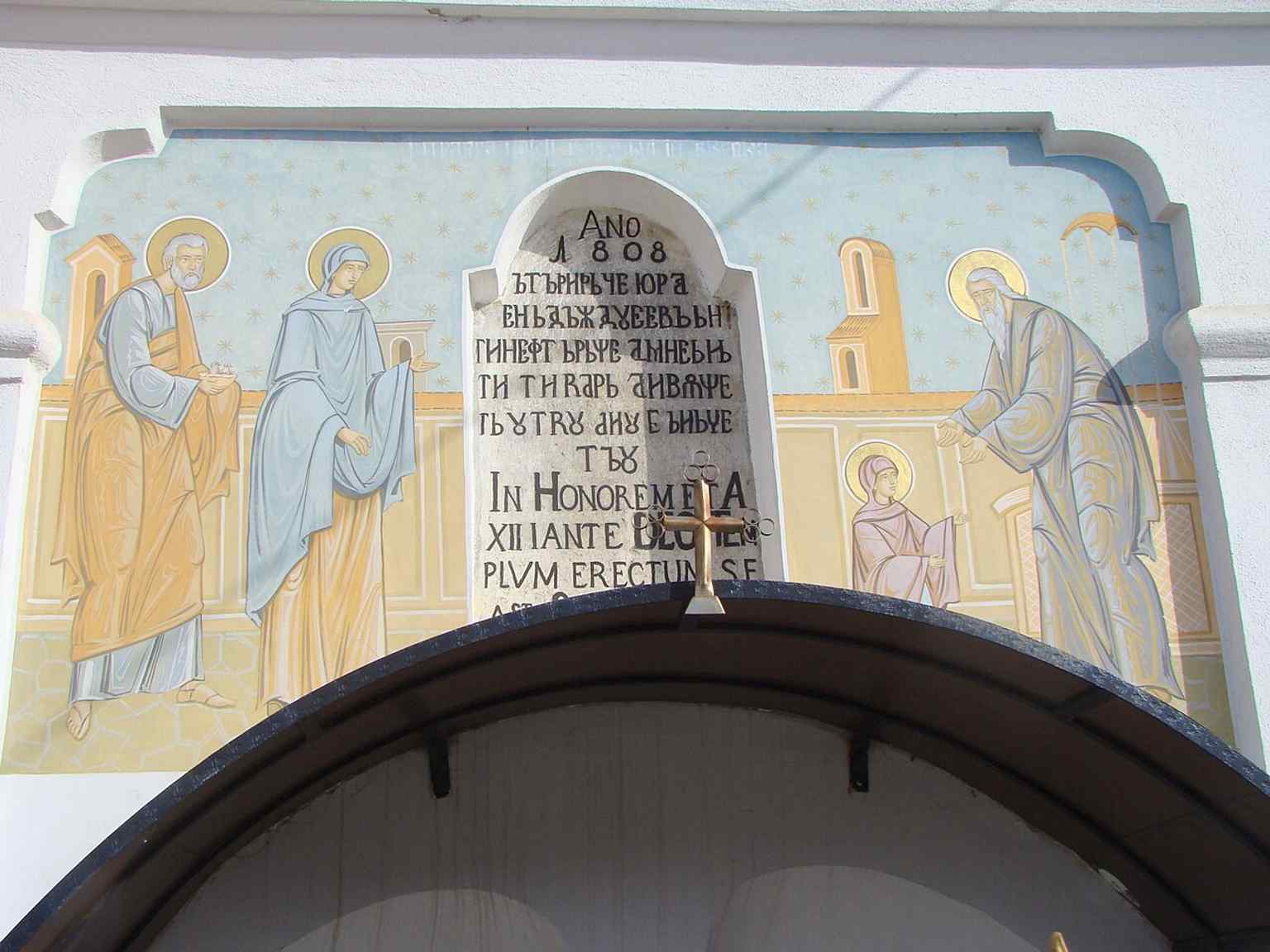
An exterior view of the church, showing its setting in the Cornești suburb, historically the area where Orthodox Romanians were marginalized and built this stone structure as a symbol of defiance.Photo: Țetcu Mircea Rareș, Wikimedia Commons, CC BY-SA 4.0. Cropped & resized. 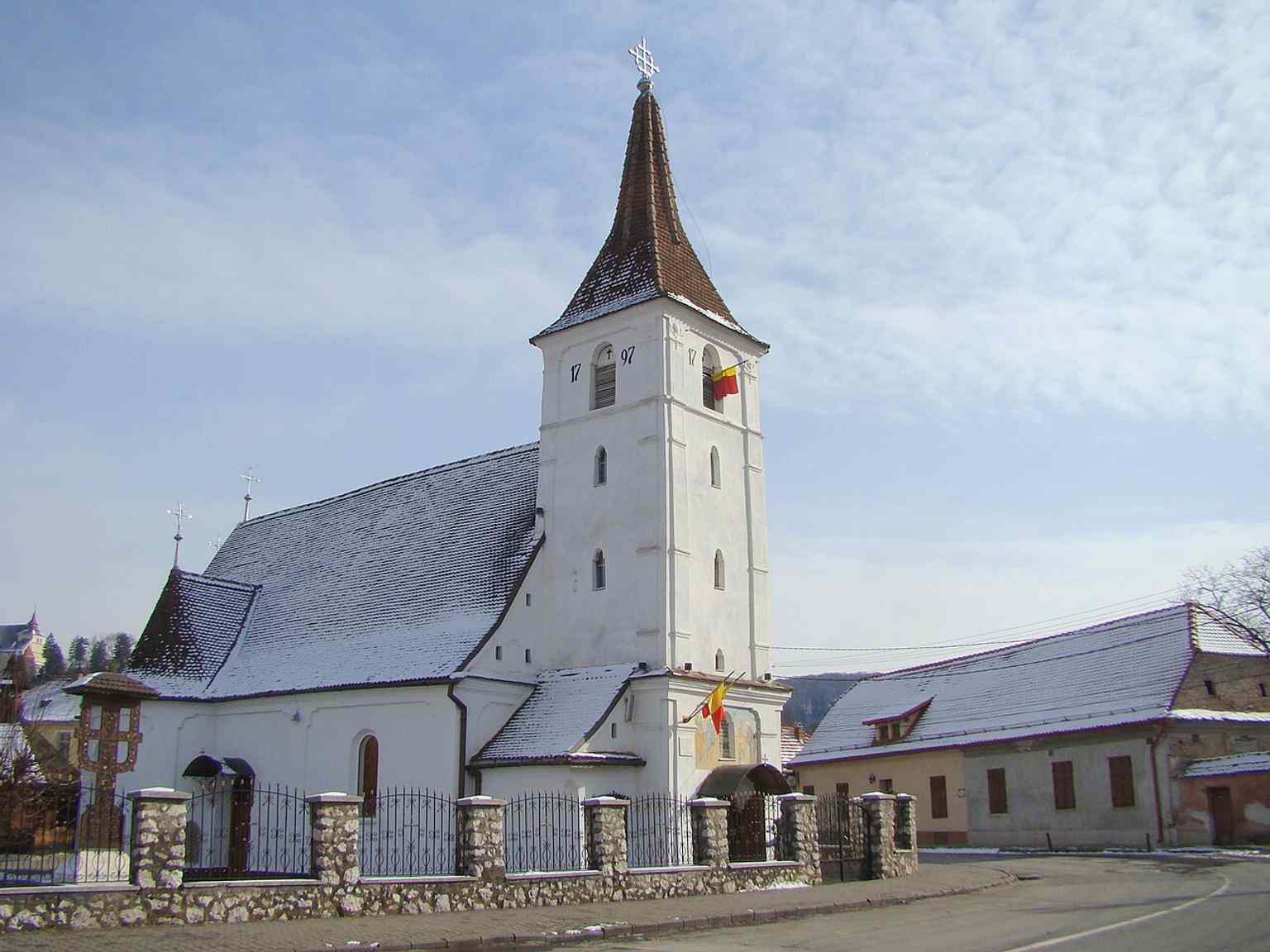
A close-up of the church's entrance, featuring the inscription placed above it in 1805, a significant step in the church's construction.Photo: Țetcu Mircea Rareș, Wikimedia Commons, CC BY-SA 4.0. Cropped & resized. 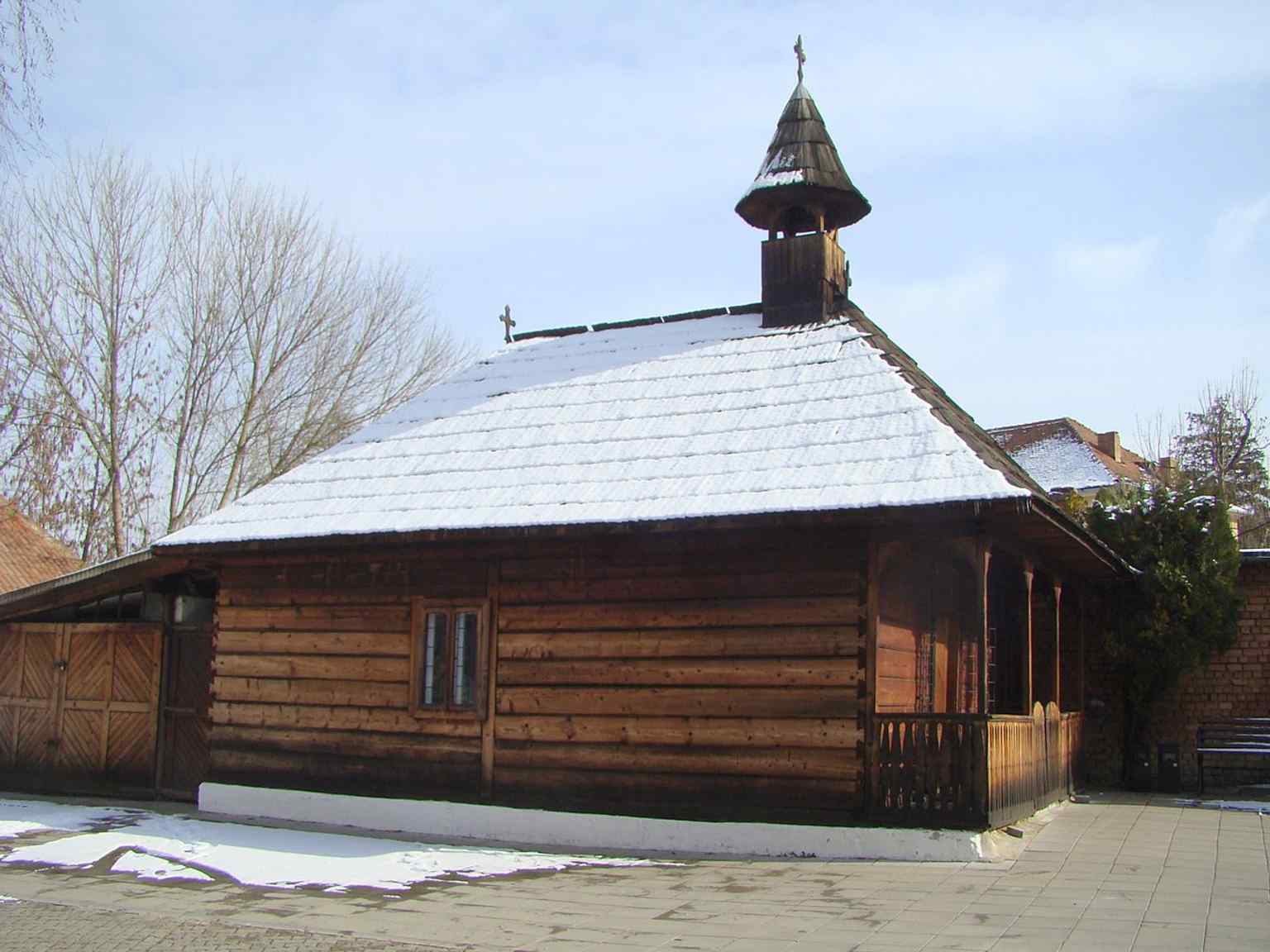
This side view highlights the cross-shaped architectural plan of the church, a design which began construction in 1780 and was largely finished by 1788.Photo: Țetcu Mircea Rareș, Wikimedia Commons, CC BY-SA 4.0. Cropped & resized. 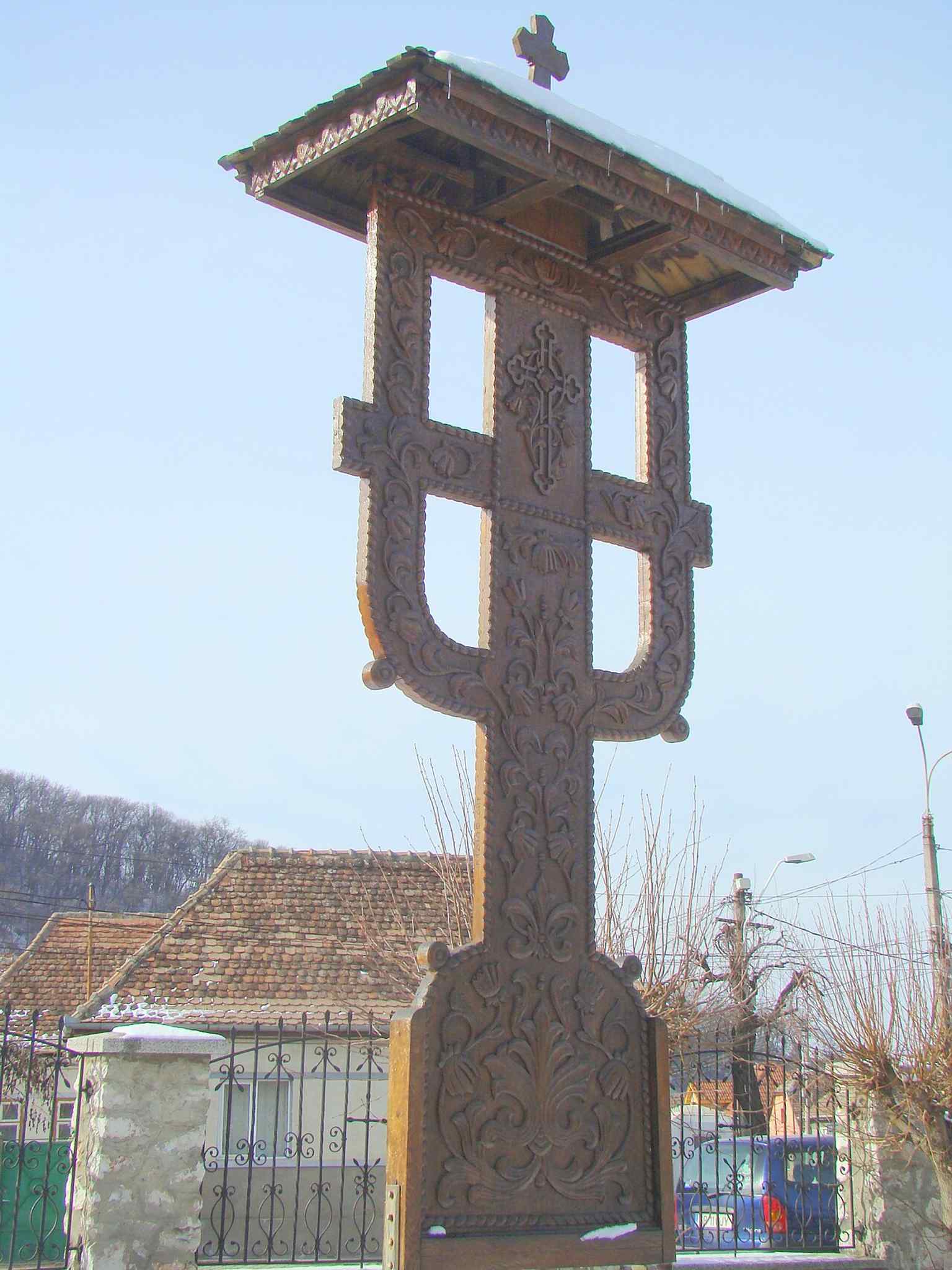
A detailed view of an icon on the iconostasis, showcasing the refined post-Byzantine elegance characteristic of Nicolae Stoica's 1818 artwork.Photo: Țetcu Mircea Rareș, Wikimedia Commons, CC BY-SA 4.0. Cropped & resized. 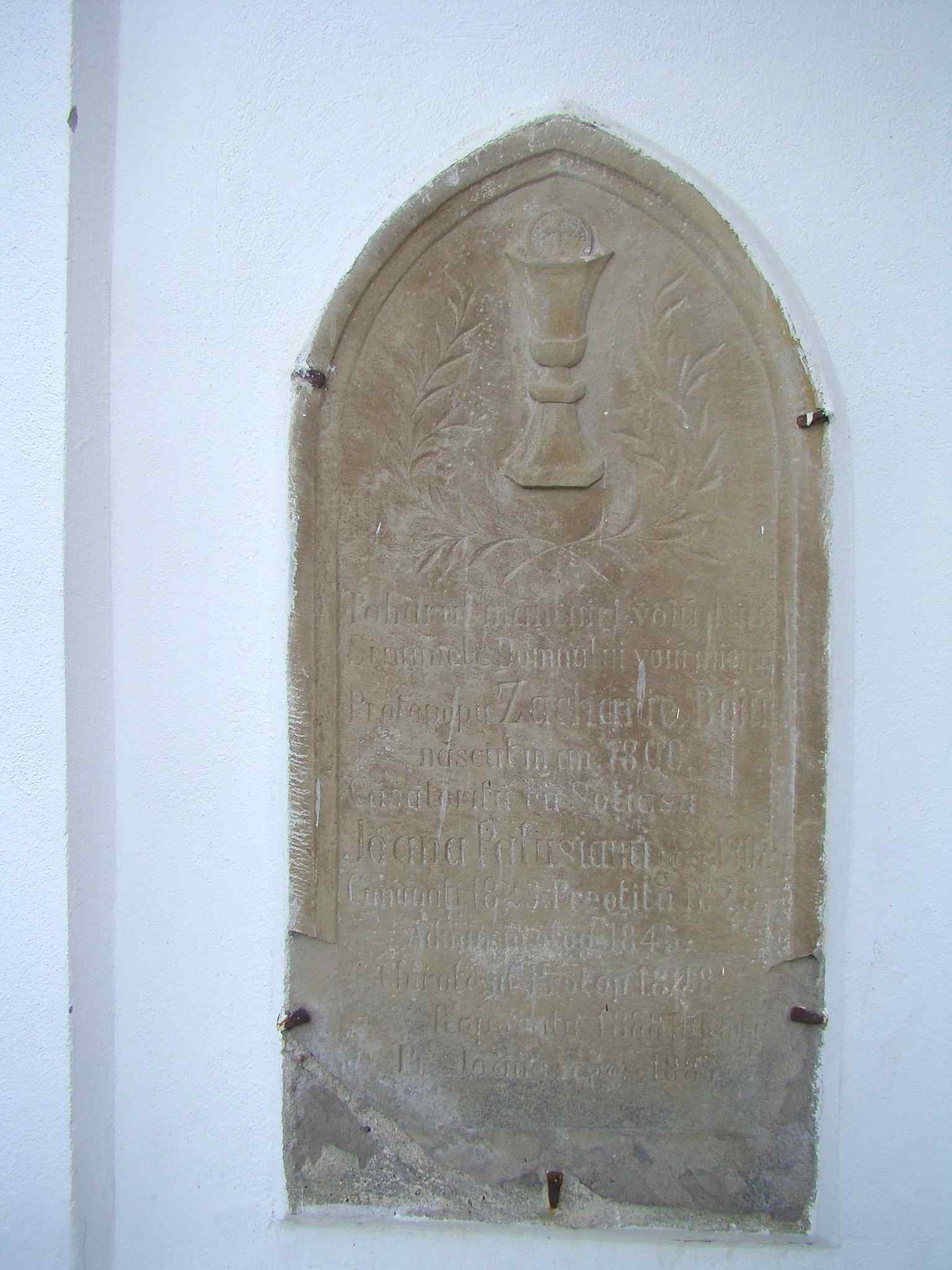
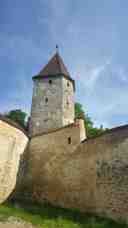
Looking towards the altar, this interior shot shows the sacred space where rare objects, such as a 1760 Gospel Book and a six-armed candelabra from 1780, are preserved today.Photo: Țetcu Mircea Rareș, Wikimedia Commons, CC BY-SA 4.0. Cropped & resized. Take a look to your right at that tall hexagonal stone tower with its weathered, patchy plaster walls and a steeply pitched red tile roof dotted with narrow slit windows. This is…Read moreShow less
Open dedicated page →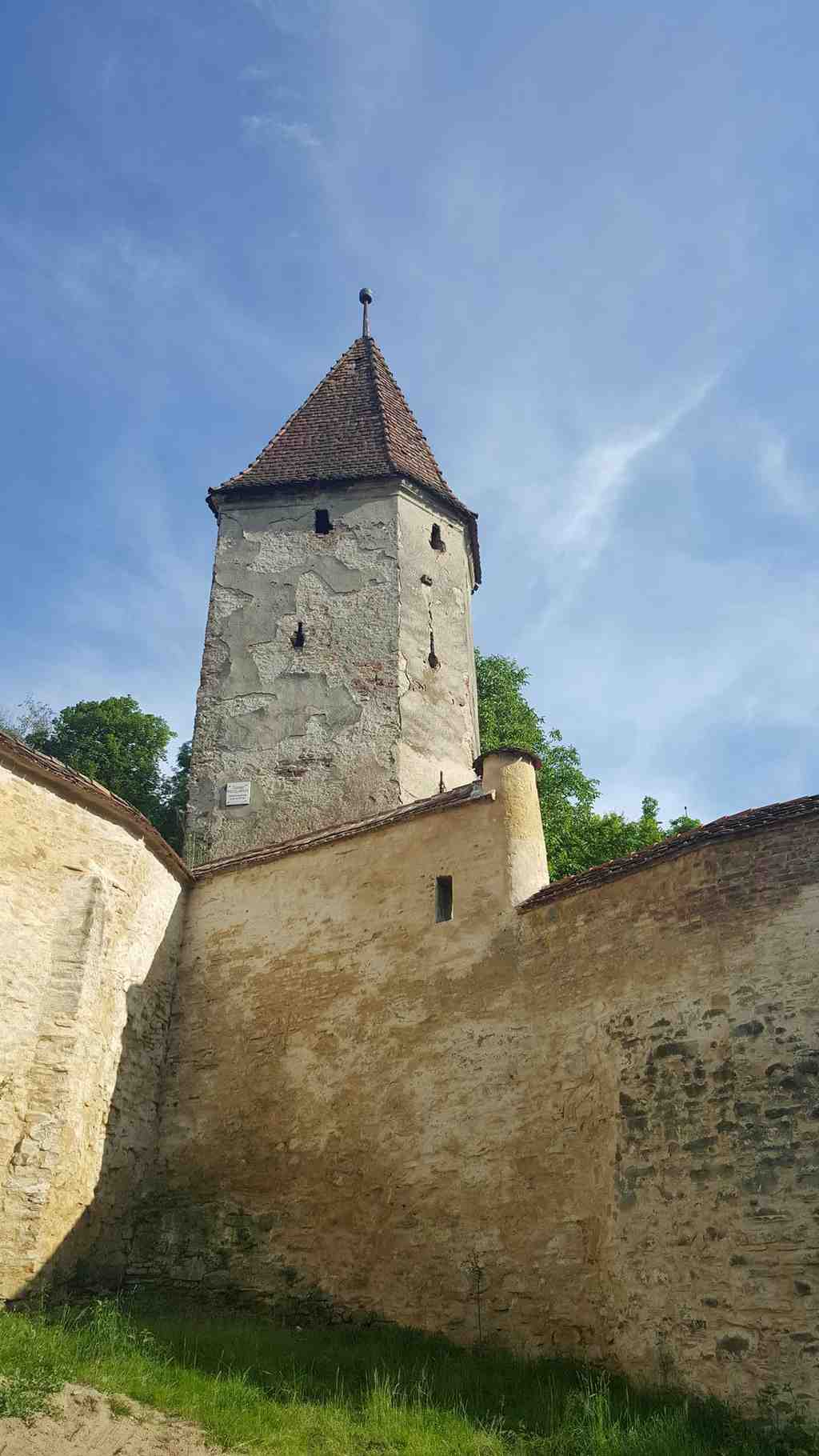
Butchers' TowerPhoto: Xhulia Likaj, Wikimedia Commons, CC BY-SA 4.0. Cropped & resized. Take a look to your right at that tall hexagonal stone tower with its weathered, patchy plaster walls and a steeply pitched red tile roof dotted with narrow slit windows. This is the Butchers' Tower, and back in the day, it was the ultimate watchman for the secondary Törle gate. Imagine this place every evening. Absolute organized chaos. Shepherds driving flocks back from the pastures, squeezing them right between this tower and the neighboring Furriers' tower. They meticulously counted every sheep, separating them into pens. Take a look at your screen to see how it guarded that agricultural hub.
But this was not just a sheep pen. Notice the shape? Built in the late fifteenth century, it started out as an eight-sided prism. In the sixteenth century, the butchers decided they needed an upgrade and rebuilt it into a hexagon. Why? Pure tactical architecture. Shifting the geometry gave defenders superior firing angles down the steep rugged terrain, protecting a small bastion - a projecting defensive stone outwork - built right in front of it. Check out your app to see those strategic sightlines from the west.
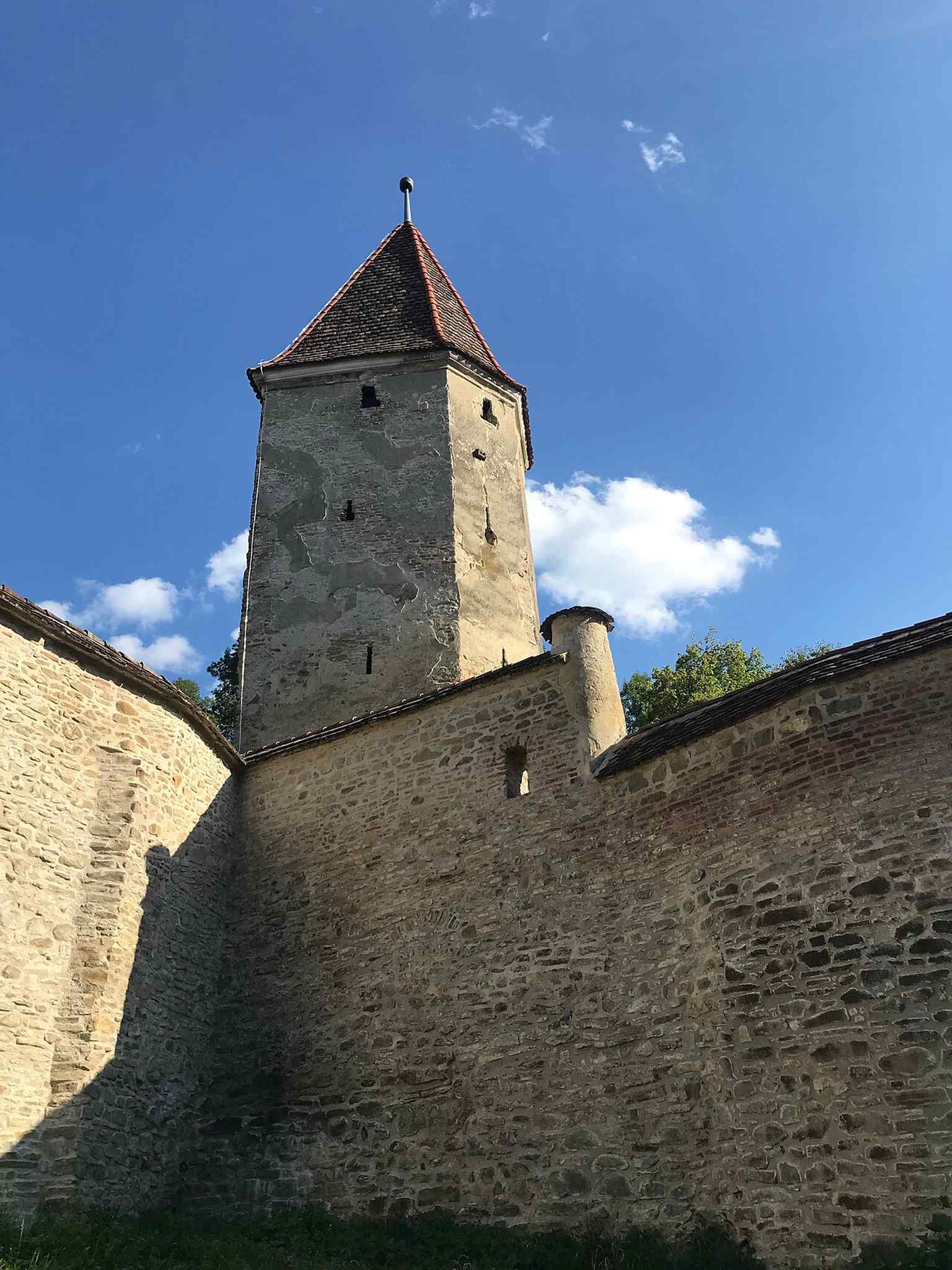
This view from the west highlights the tower's strategic importance, defending the rugged western side of the Citadel where specialized firing angles were crucial.Photo: Antimuonium, Wikimedia Commons, CC BY-SA 4.0. Cropped & resized. These guys knew how to fight. In 1612, outlaws working for Prince Gabriel Báthory tried to seize the citadel by trickery. But the butchers were already at their posts. Seeing the prepared citizens, the six hundred attackers just abandoned their camp without a fight. By 1680, the tower was an armory, holding quintals of gunpowder, cannonballs, five arquebuses, plus a beautiful double-barreled hook gun. Since it was essentially a giant powder keg, it is completely wild that it survived the 1676 fire untouched.
Eventually, nature did what armies and flames could not. The military importance faded, the oak stairs rotted, and the structure fell into neglect. Luckily, recent restorations brought it back, adding modern wooden elements to turn it into a living museum where local kids study history directly from the centuries-old masonry.
This place evolved from stockpiling medieval weaponry to standing as a peaceful classroom. But conflict does not always involve gunpowder. Sometimes, it looks a lot more like political isolation. Let us explore that next as we take a quick three-minute walk to the N. D. Cocea Memorial House.
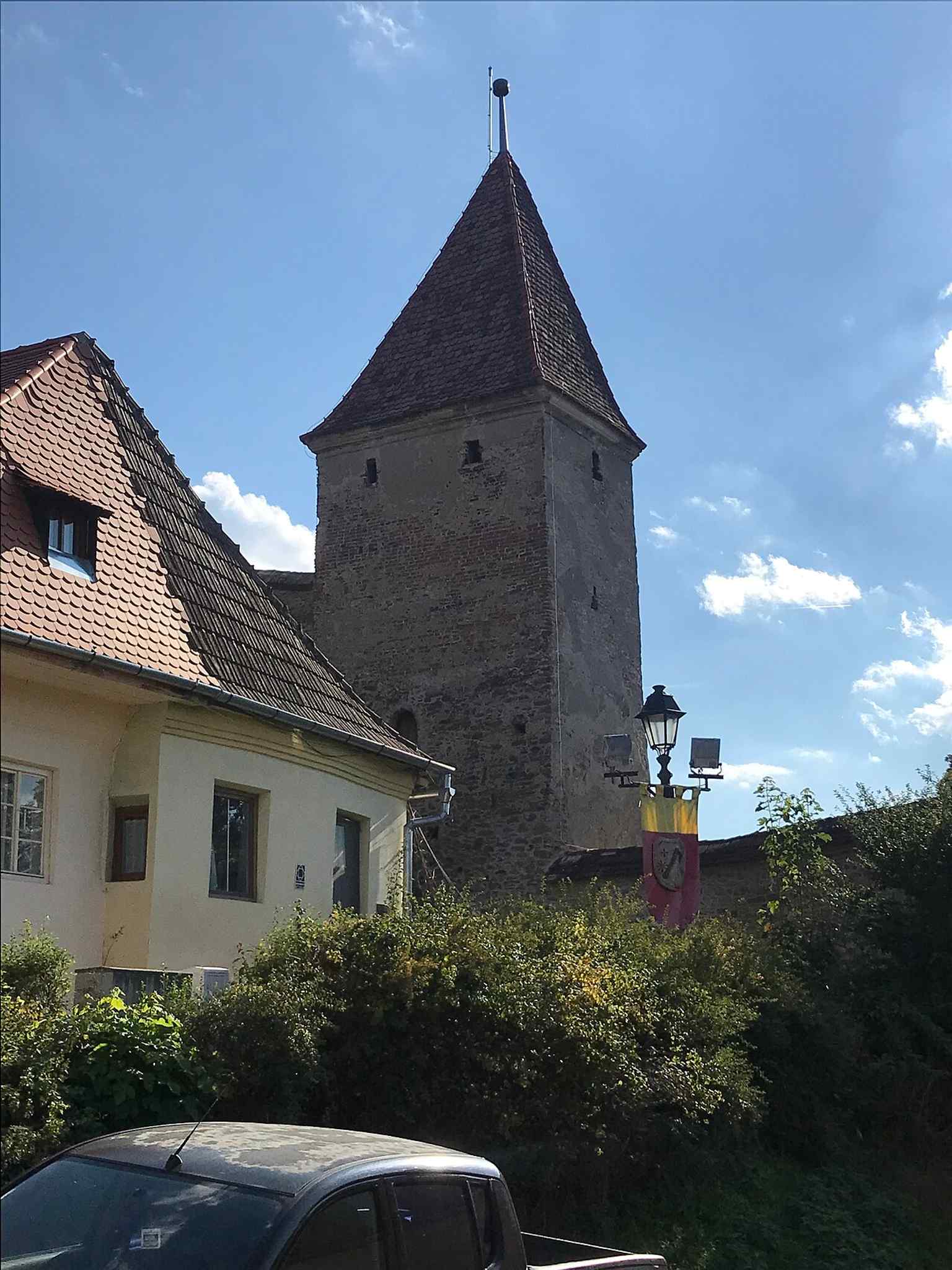
The Butchers' Tower, seen here from the east, transitioned from an eight-sided prism to its current hexagonal plan in the 16th century, a deliberate tactical upgrade.Photo: Antimuonium, Wikimedia Commons, CC BY-SA 4.0. Cropped & resized.
Frequently asked questions
How do I start the tour?
After purchase, download the AudaTours app and enter your redemption code. The tour will be ready to start immediately - just tap play and follow the GPS-guided route.
Do I need internet during the tour?
No! Download the tour before you start and enjoy it fully offline. Only the chat feature requires internet. We recommend downloading on WiFi to save mobile data.
Is this a guided group tour?
No - this is a self-guided audio tour. You explore independently at your own pace, with audio narration playing through your phone. No tour guide, no group, no schedule.
How long does the tour take?
Most tours take 60–90 minutes to complete, but you control the pace entirely. Pause, skip stops, or take breaks whenever you want.
What if I can't finish the tour today?
No problem! Tours have lifetime access. Pause and resume whenever you like - tomorrow, next week, or next year. Your progress is saved.
What languages are available?
All tours are available in 50+ languages. Select your preferred language when redeeming your code. Note: language cannot be changed after tour generation.
Where do I access the tour after purchase?
Download the free AudaTours app from the App Store or Google Play. Enter your redemption code (sent via email) and the tour will appear in your library, ready to download and start.
If you don't enjoy the tour, we'll refund your purchase. Contact us at [email protected]
Checkout securely with 





.jpg)
.jpg)


.jpg)

.jpg)
.jpg)
.jpg)

.jpg)

.jpg)
.jpg)
.jpg)
.jpg)
.jpg)

.jpg)
.jpg)
.jpg)
.jpg)
.jpg)
.jpg)
.jpg)