
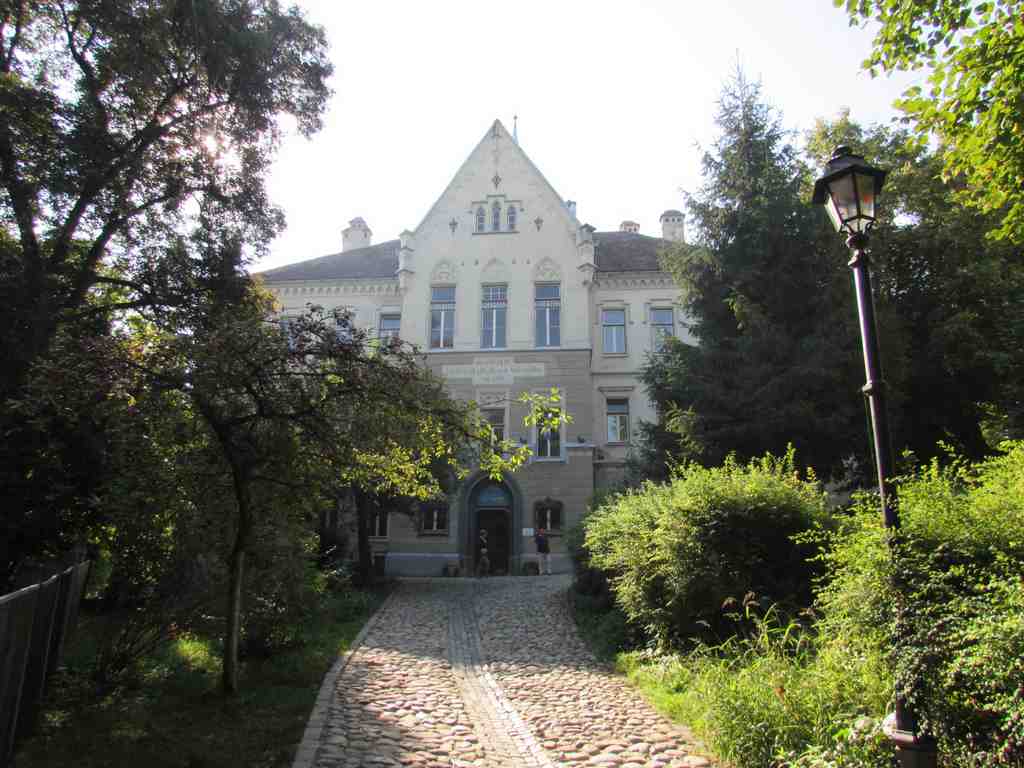
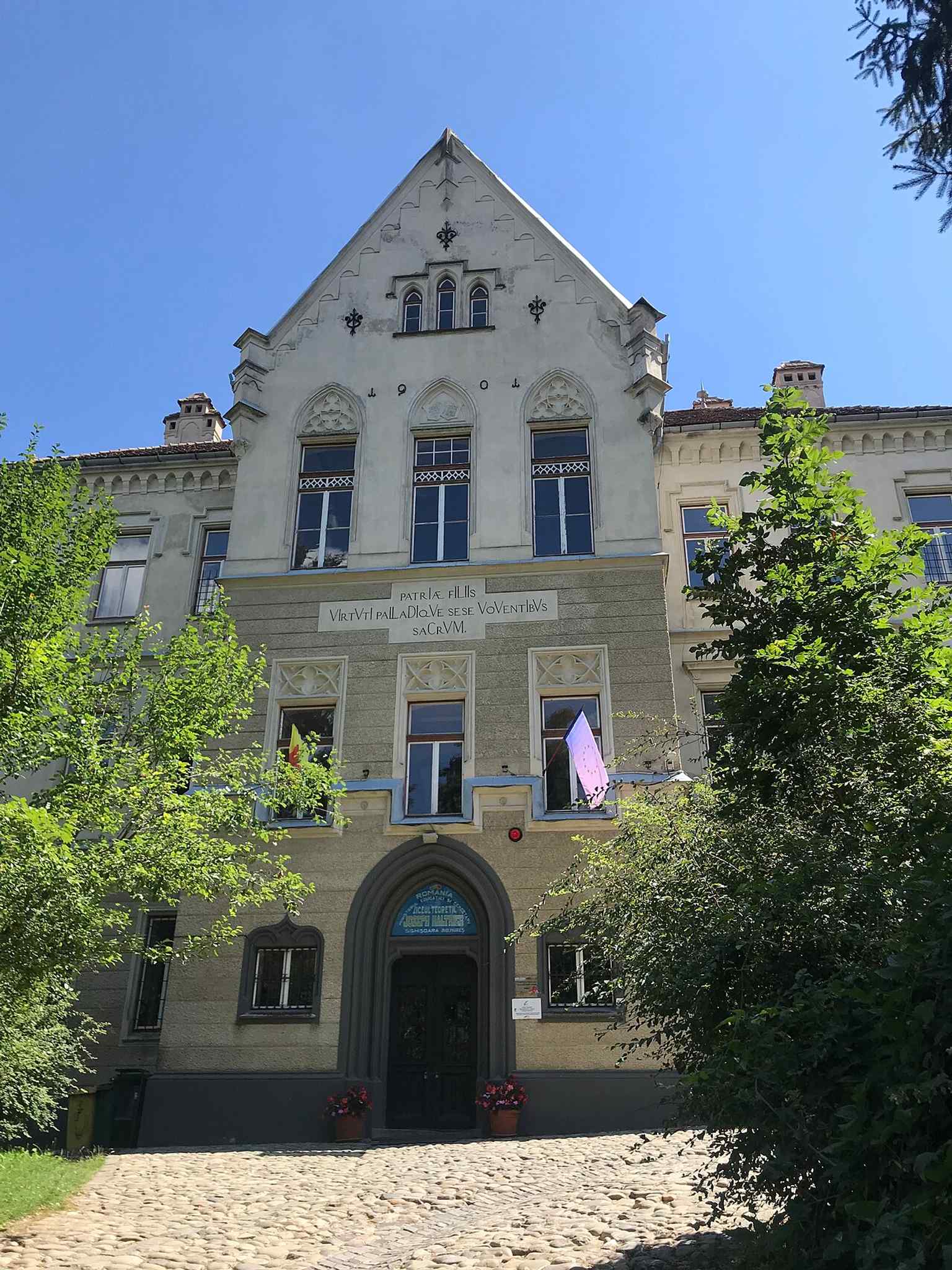
Over on your right stands the School on the Hill, a towering masonry building defined by its sharp triangular gable and the deep arched entryway welcoming you at its base. It might just look like a typical European high school, but the roots of this place reach all the way back to the year 1522. That is when the local town council gifted the school rector a coat worth four florins, an amount equivalent to several hundred modern dollars for a luxury garment. It was not just a generous fashion statement, though. That coat officially recognized his status as a baccalaureus, a university bachelor degree granting early academic standing. It meant local teenagers were getting such a top tier education they could head straight off to prestigious universities in places like Vienna.
Even back then, the town leaders knew that knowledge was the ultimate foundation. That brings us to a remarkable legacy of civic duty. In 1619, Mayor Martin Eisenburger pushed for a massive expansion, declaring that the school was a nursery of the state. It was a deeply humanist idea, a philosophy prioritizing human potential, logic, and the shaping of responsible citizens. They even let the senior students run their own mini government called a Coetus. These older kids had their own treasury, their own internal laws, and the power to discipline the younger peers. They were basically running a tiny autonomous society to prepare them for real world leadership.
Of course, building a powerhouse of learning up here was a massive test of will. Through shifting political borders and devastating catastrophes, this institution held its ground. When a brutal plague wiped out a third of the city population in 1709, the classrooms sat completely empty for years, yet the structure remained as a quiet monument of the community pulling through. They always bounced back, eventually erecting the core of the current building you see in 1790. If you pull up the second photo on your screen, you can see the Latin inscription over the entrance. It dedicates the school to virtue and to Pallas Athena, the ancient goddess of wisdom.
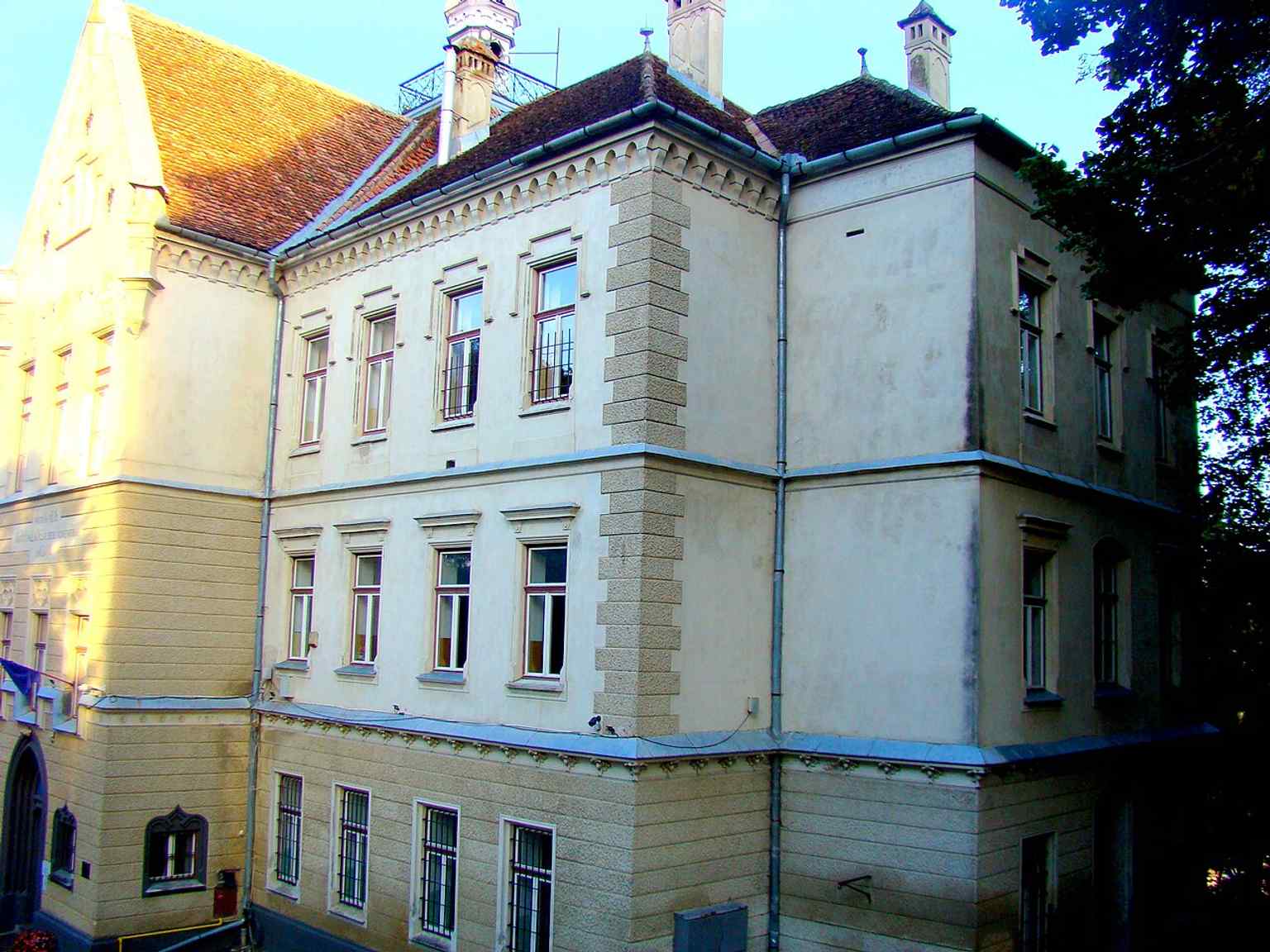
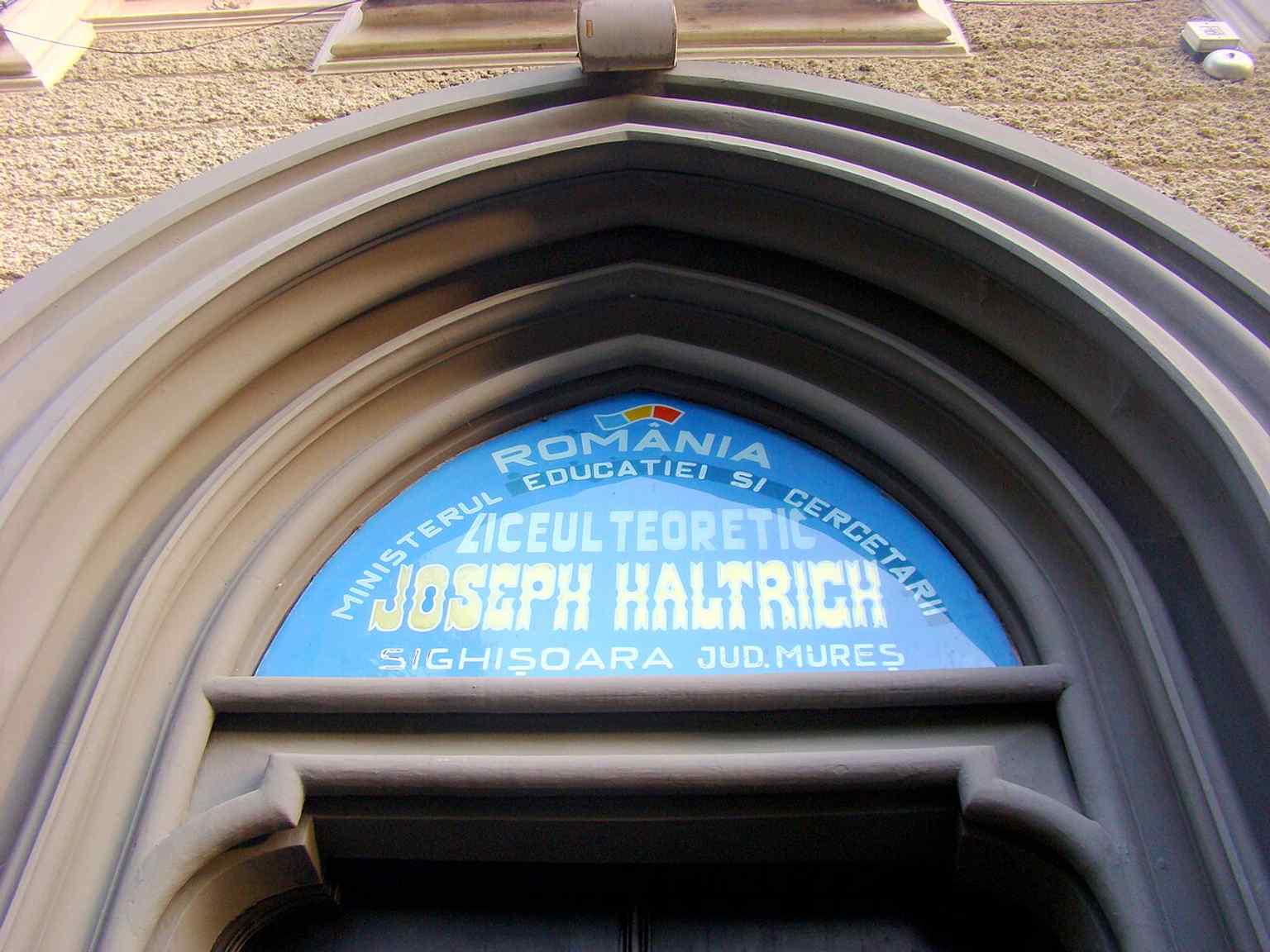
That dedication totally paid off over the centuries. This very school produced brilliant minds like Josef Haltrich, a rector who became close friends with the famous Brothers Grimm and applied their rigorous research methods to local Transylvanian folklore. It also nurtured Hermann Oberth, widely considered one of the founding fathers of spaceflight. Even as a young student in 1908, he was sitting up here on this hill, inspired by the school library, sketching out some of the first practical designs for liquid fueled rockets.
Now, picture being a young scholar up here hundreds of years ago, wrapped in whatever heavy wool you had. Think about the brutal, freezing commute of trekking up this steep hill every single day in the harsh weather before the town came up with a clever architectural solution. Let us head toward that exact solution next, the Scholars Stairs, which is just a three minute walk away.





.jpg)

.jpg)