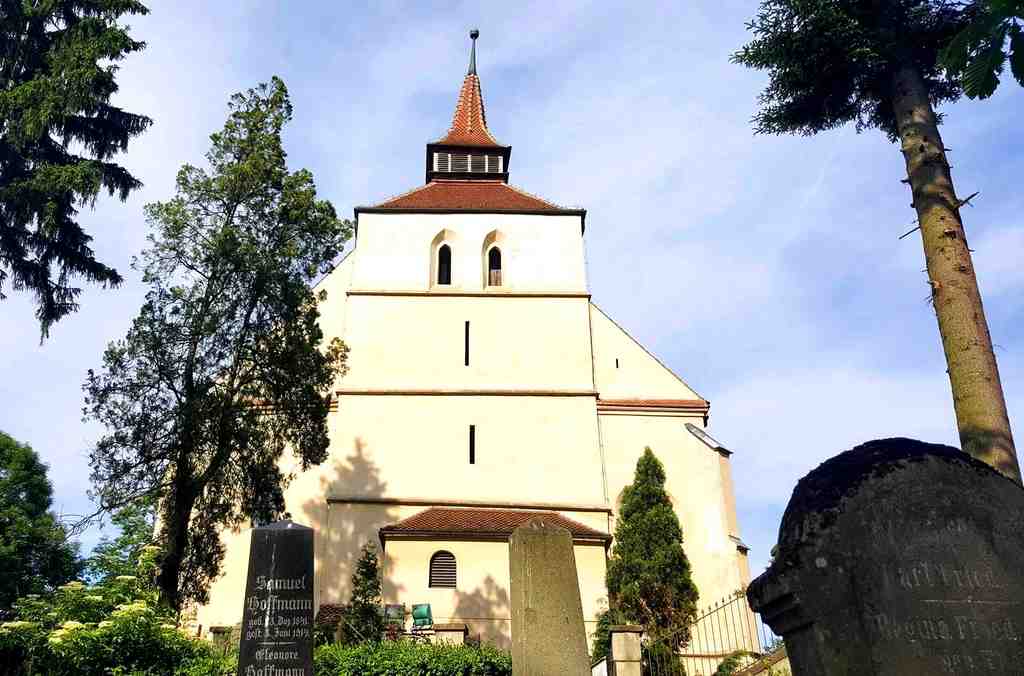
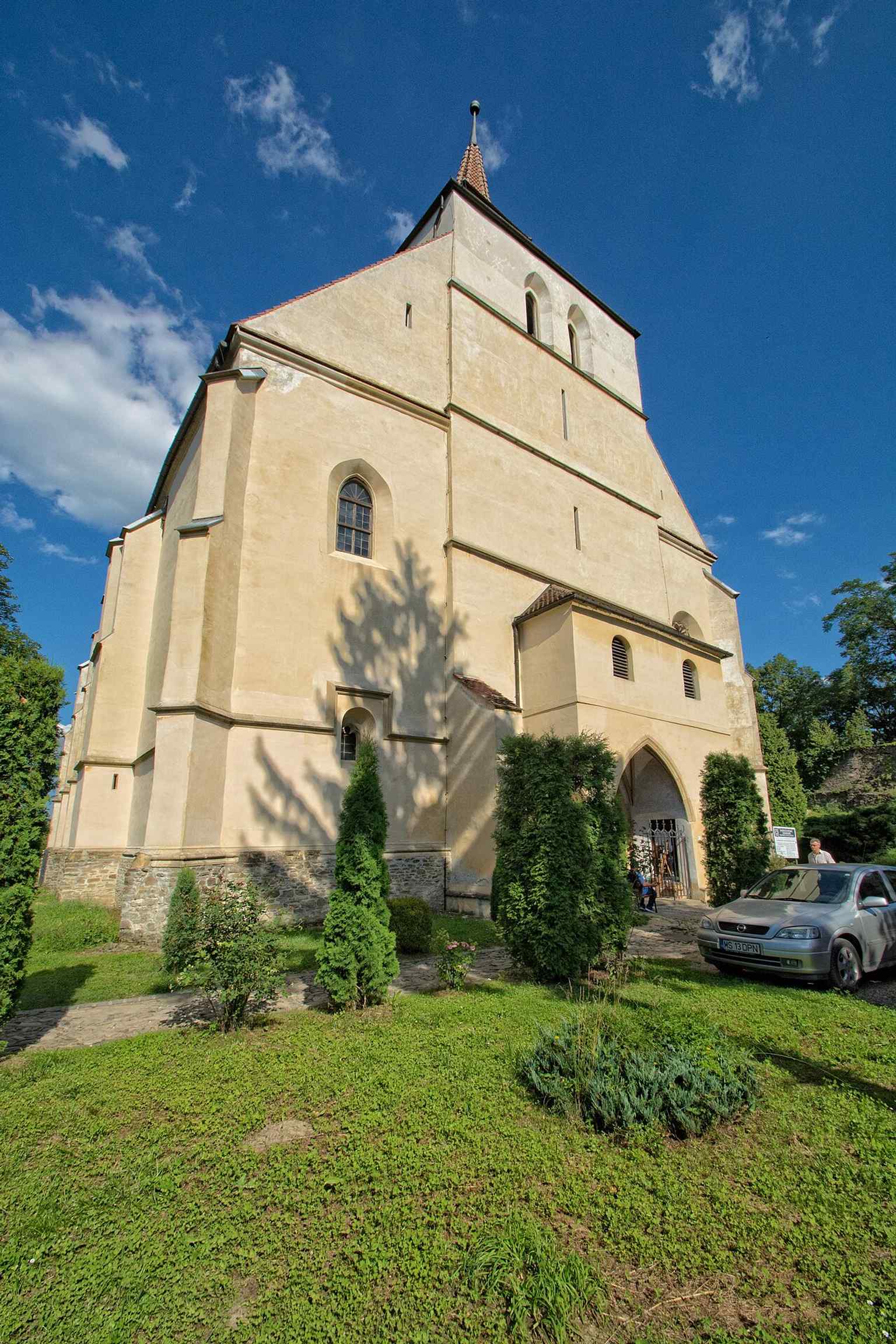
You are standing before a massive pale stone structure anchored by a broad square tower that shoots up into a sharply pointed red-tiled spire. There is a kind of quiet strength in simple walls like these. This place has seen it all, and its survival through the absolute chaos of the 1838 earthquake and the catastrophic 1704 fire makes it the ultimate monument to the city's toughness. During the 1704 Kuruc siege, when Hungarian rebels were violently tearing through the region, this church acted as the final desperate refuge for terrified townspeople. They huddled inside and watched in horror as the roof caught fire, melting the massive bronze bells until they plunged from the belfry in a terrifying torrent of sparks.
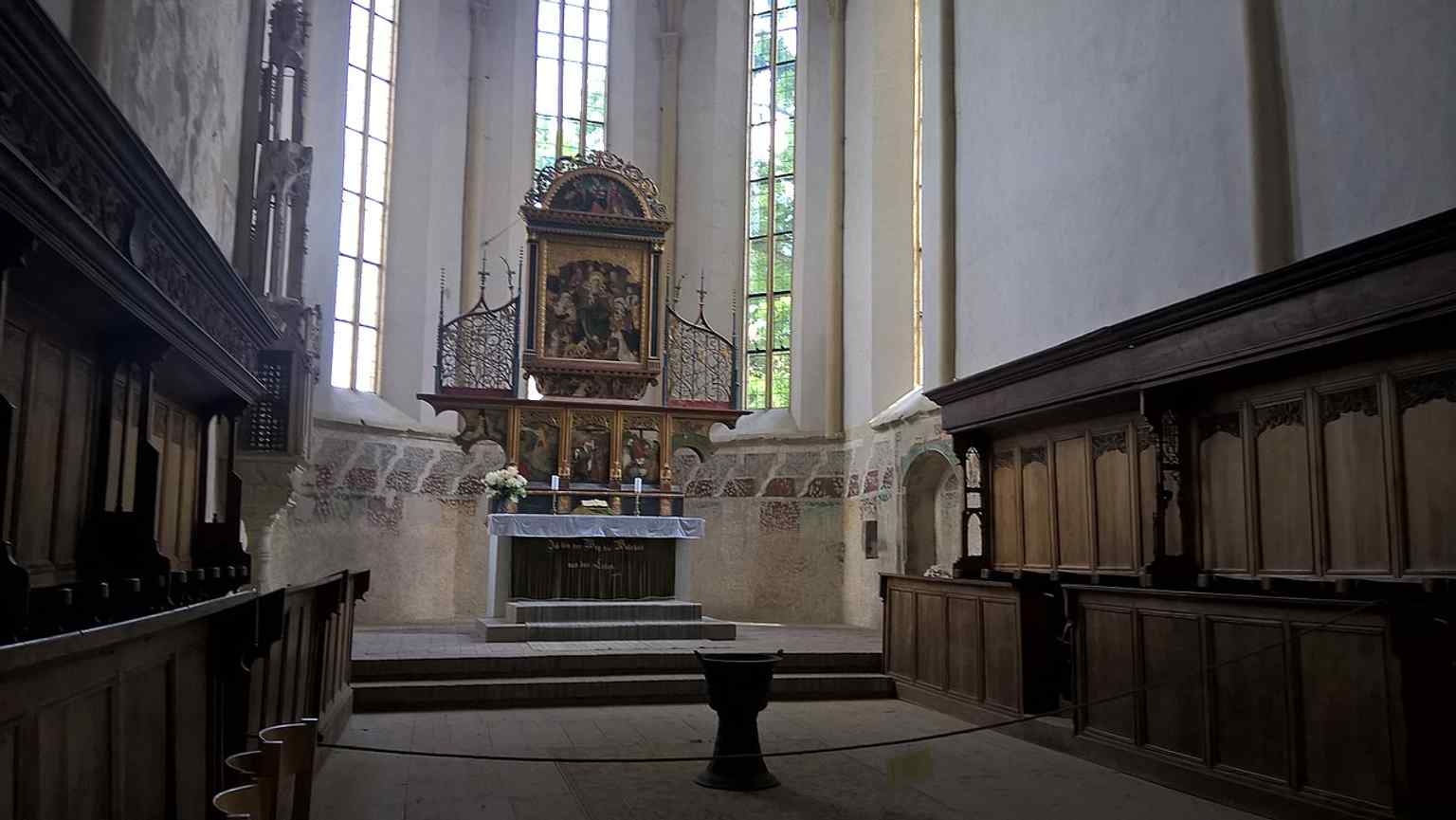
Then came 1838. A powerful earthquake rolling in from the Vrancea region shook the hill so violently that the heavy stone vaults over the choir, the sacred space near the altar, totally caved in. The community lacked the funds for permanent stone repairs, so they put up wooden imitations painted to look exactly like stone. Take a peek at your screen to see those wooden vaults that ended up serving as a temporary fix for over a hundred and fifty years.
Look up at the choir vaults, rebuilt with painted wooden imitations after the devastating 1838 earthquake, a 'temporary' solution that lasted for over 150 years.Photo: Leontin l, Wikimedia Commons, CC BY-SA 3.0 ro. Cropped & resized.
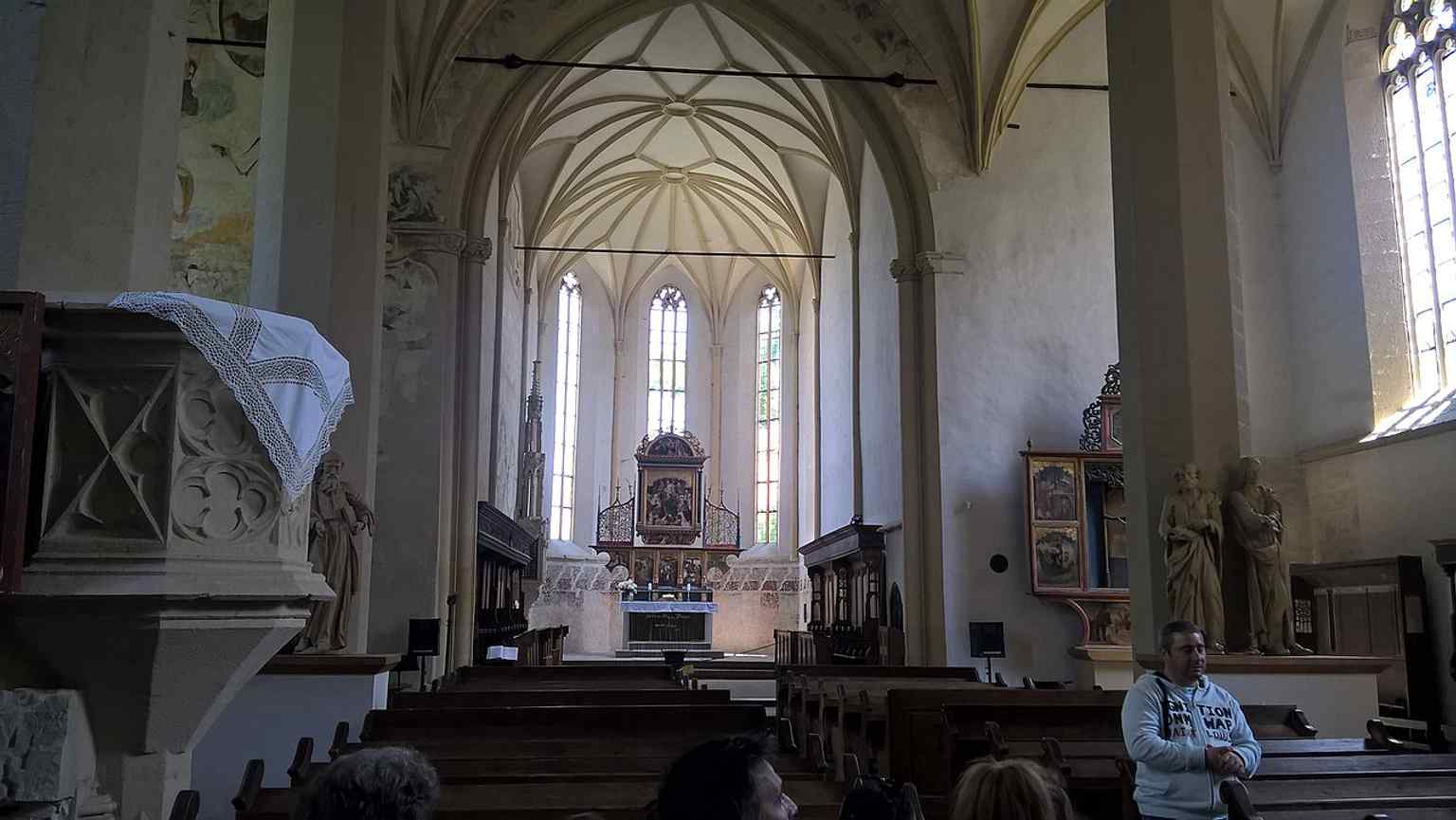
If you think the outside is a survivor, wait until you hear about the interior. Back in 1777, the church leaders decided the incredible Gothic and Renaissance murals were old-fashioned and basically worthless, so they just painted right over them with white lime. Luckily, that layer of lime actually protected the art perfectly. In 1934, a restoration crew carefully peeled back the whitewash, revealing absolute masterpieces hidden right in plain sight. Check your app for a glimpse of these brilliantly colored, recovered frescoes. They were painted in 1488 by Master Valentin, a fascinating guy who somehow managed to be both a master painter and the mayor of Sighișoara at the exact same time.
Step into the grand interior, where major restorations in 1934 revealed priceless frescoes previously whitewashed in 1776, bringing vibrant art back to life.Photo: Leontin l, Wikimedia Commons, CC BY-SA 3.0 ro. Cropped & resized.
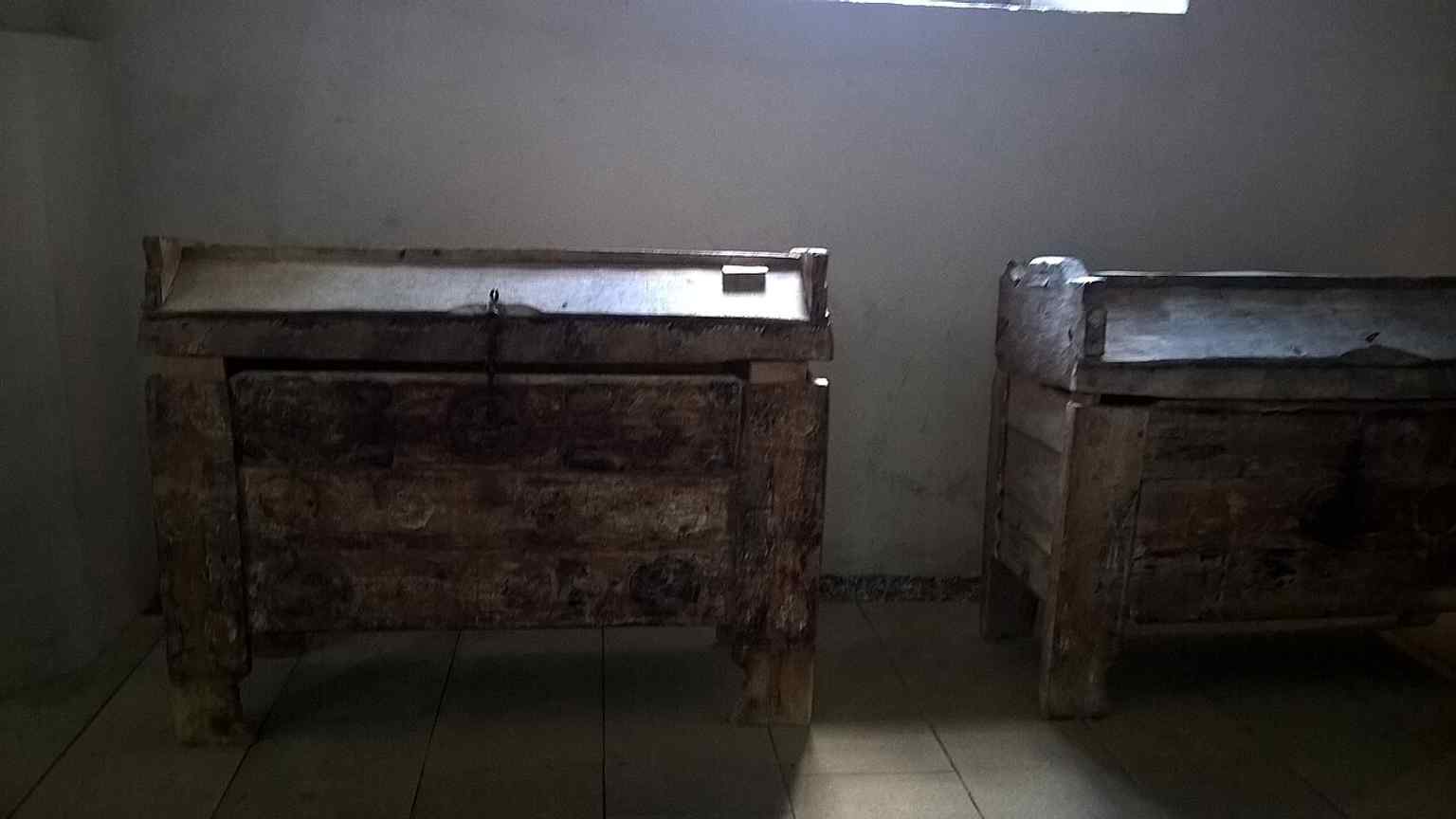
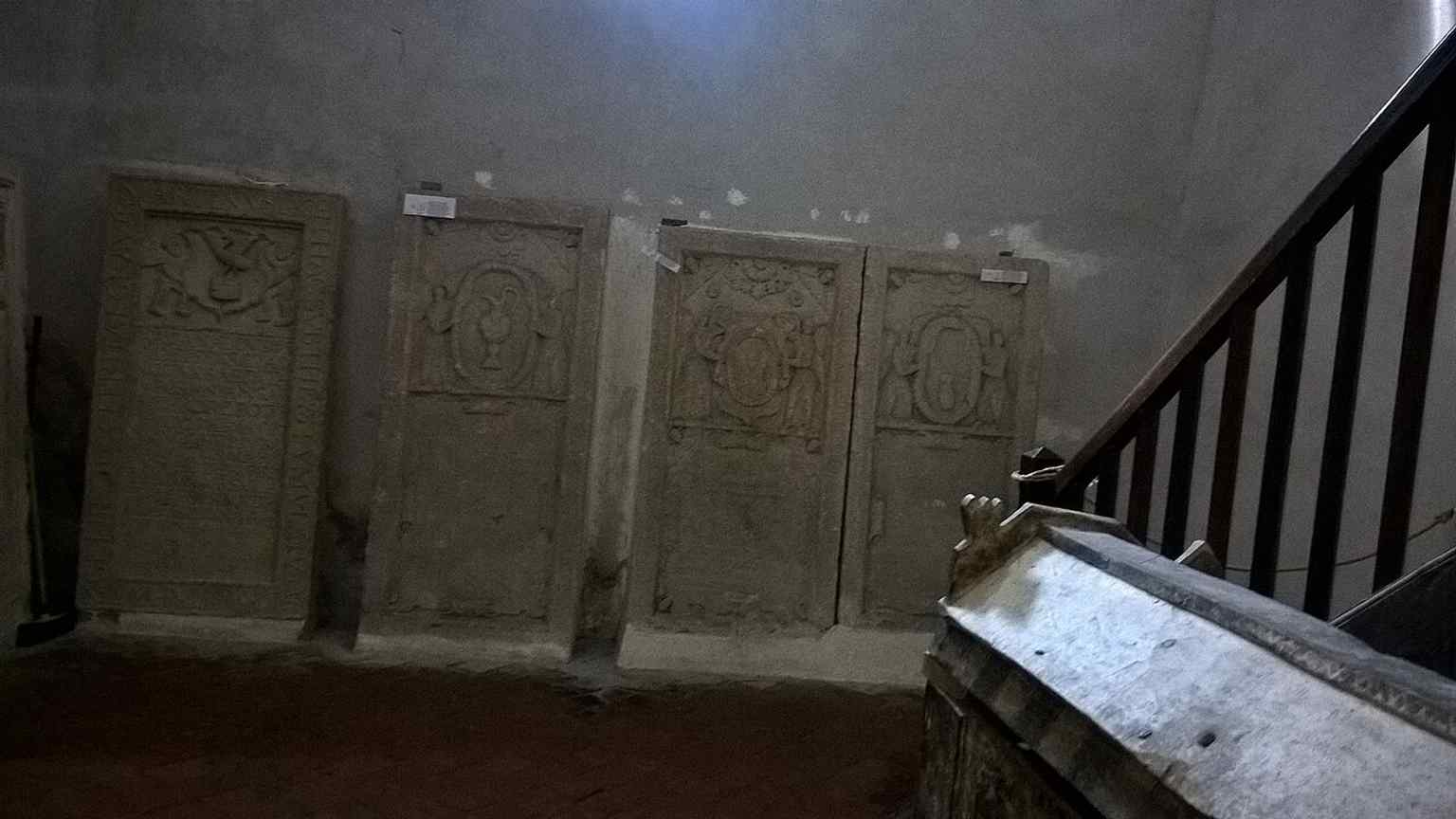
Beneath those painted walls lies the only ancient crypt in Transylvania. Over the centuries, grave robbers kept breaking in, absolutely convinced the tombs of wealthy mayors were packed with hidden treasure. They usually left empty-handed, ignoring the simple coffins and the bones of folks like Georgius Krauss. He was a seventeenth-century chronicler whose meticulous diaries are the main reason we even know these wild stories today.
The church is open daily from ten in the morning to six in the evening if you want to step into the nave, the soaring central hall, and explore the crypt yourself. But for now, let's shift our gaze from the physical survival of these stone walls to the survival of ideas, and head over to the school on the hill just a one minute walk away.
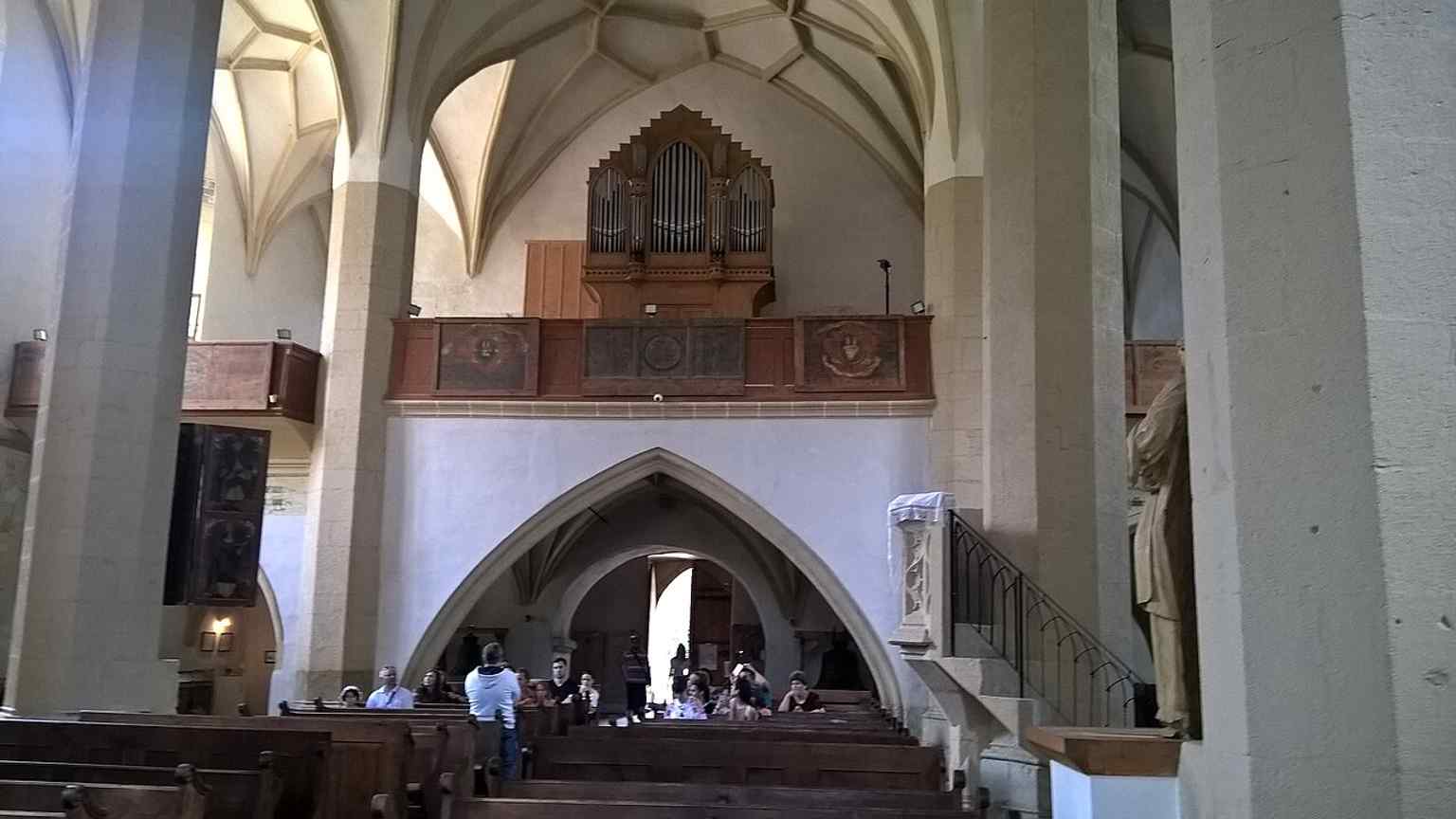
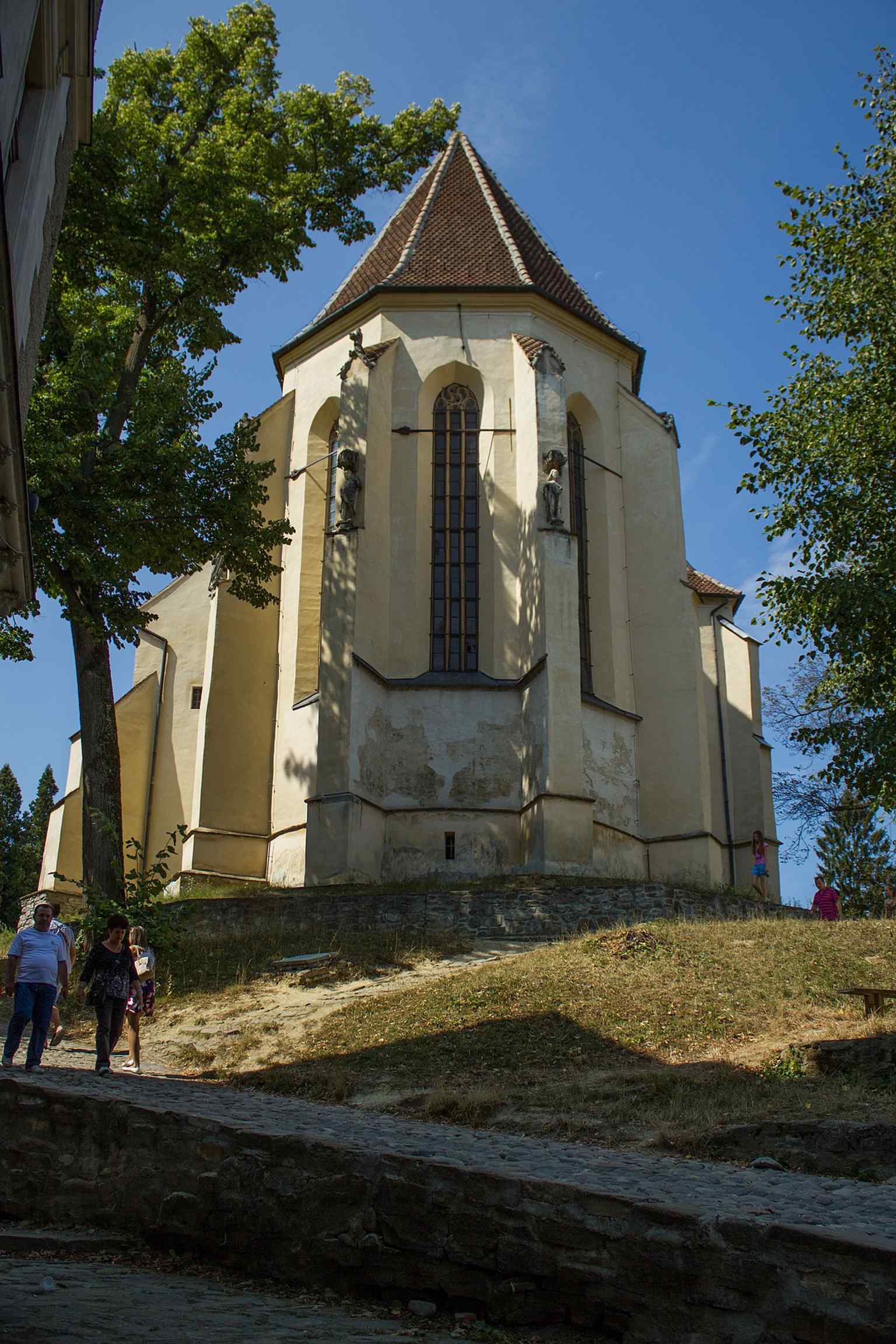
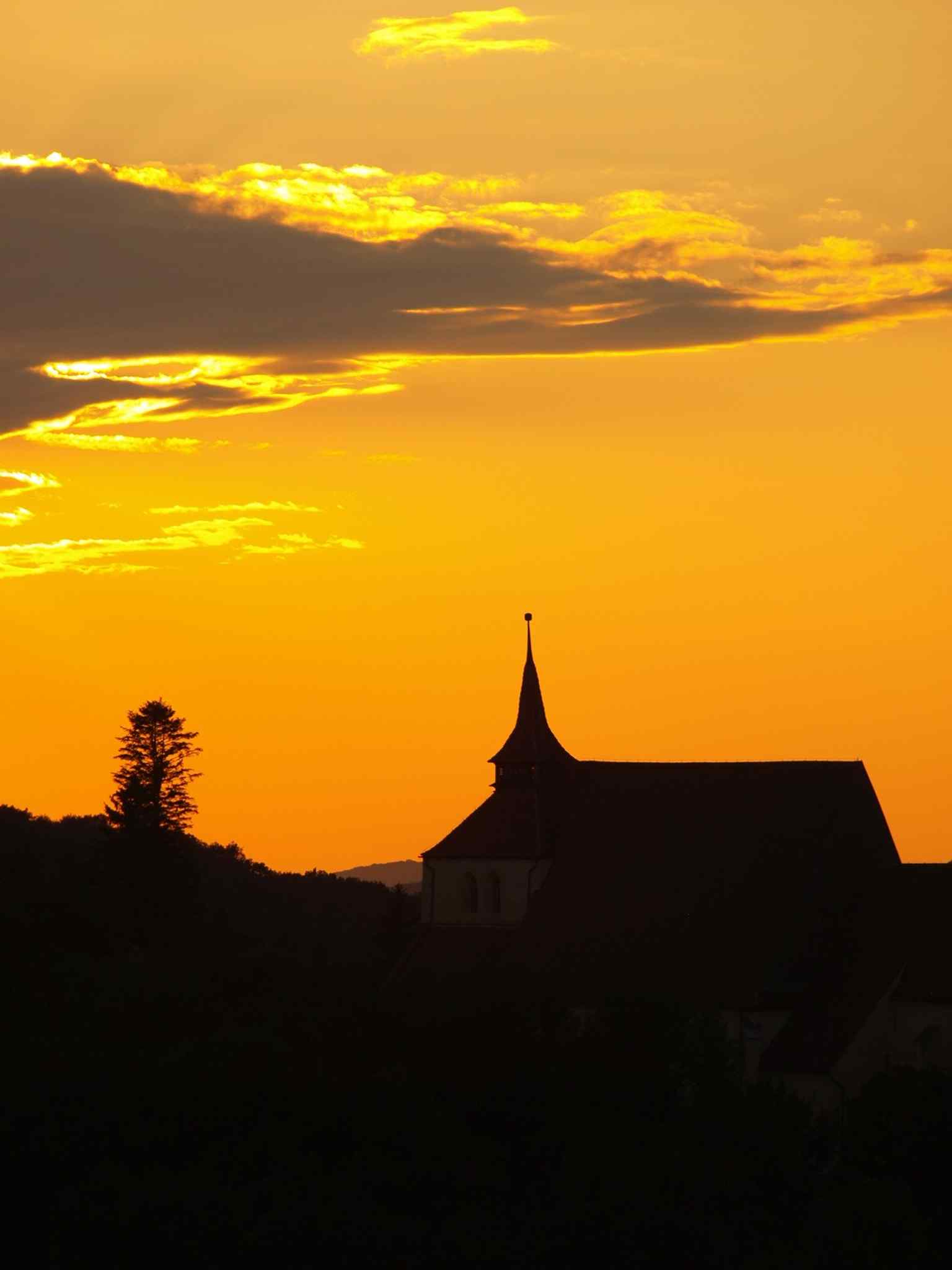
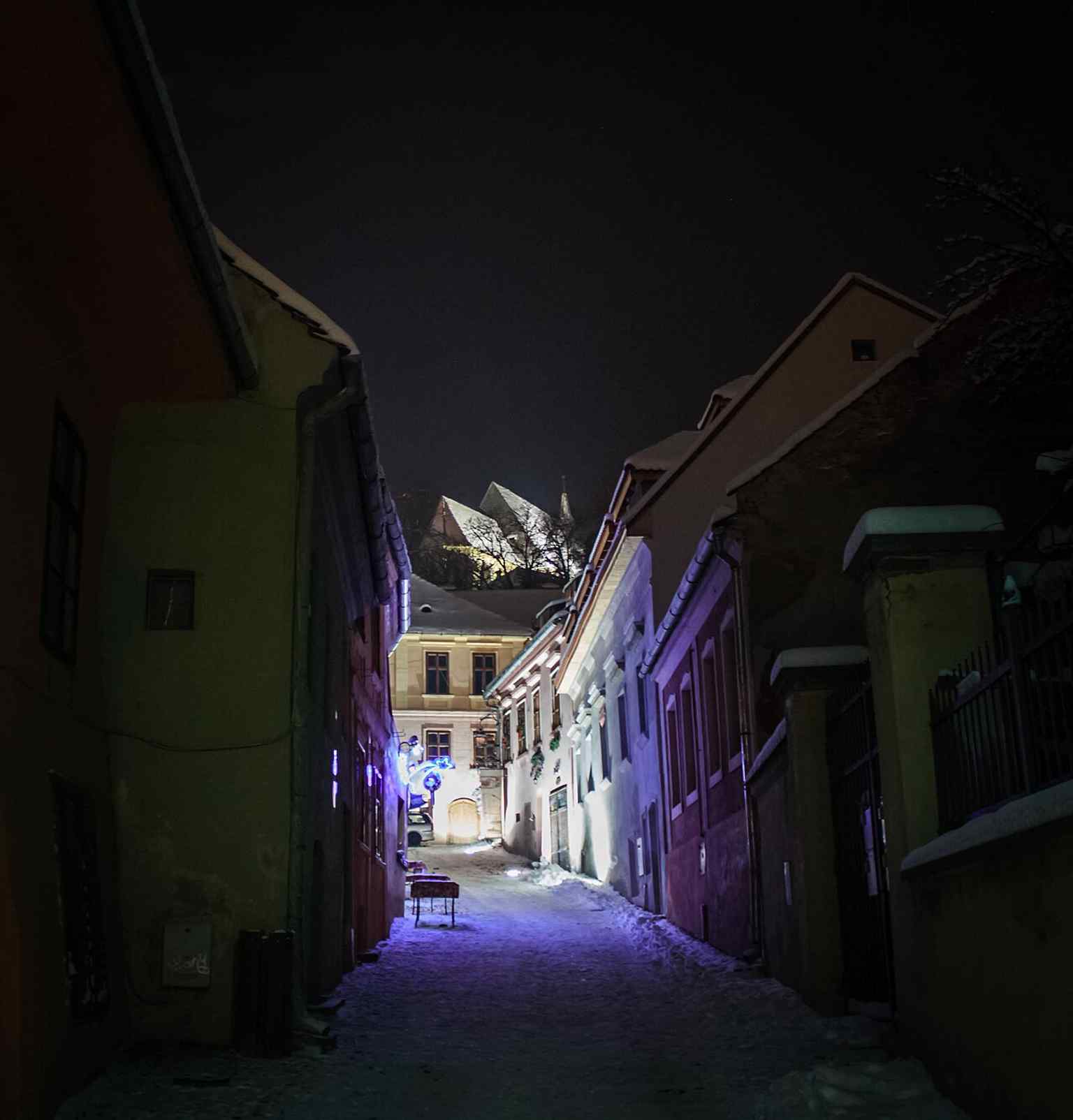
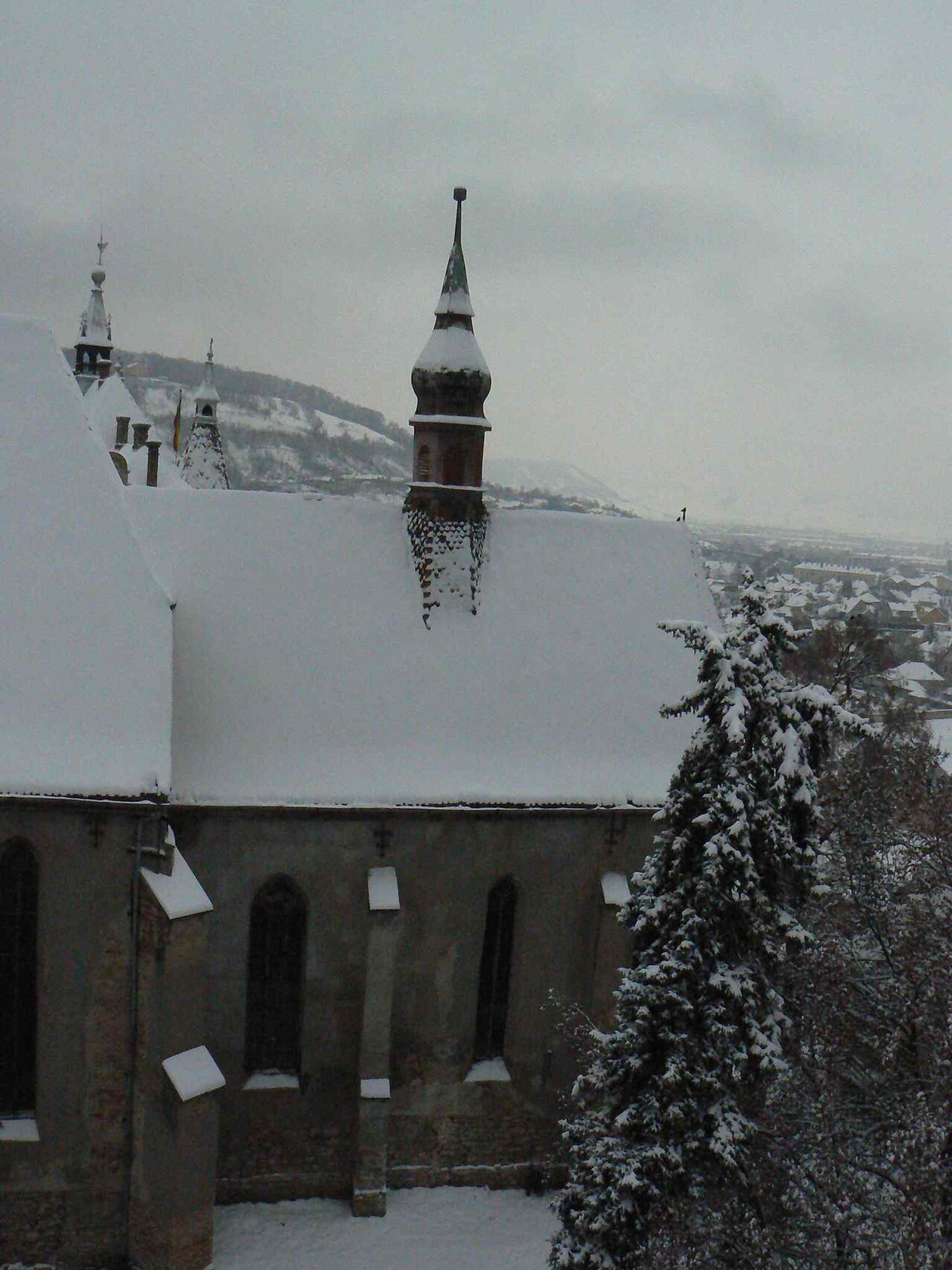
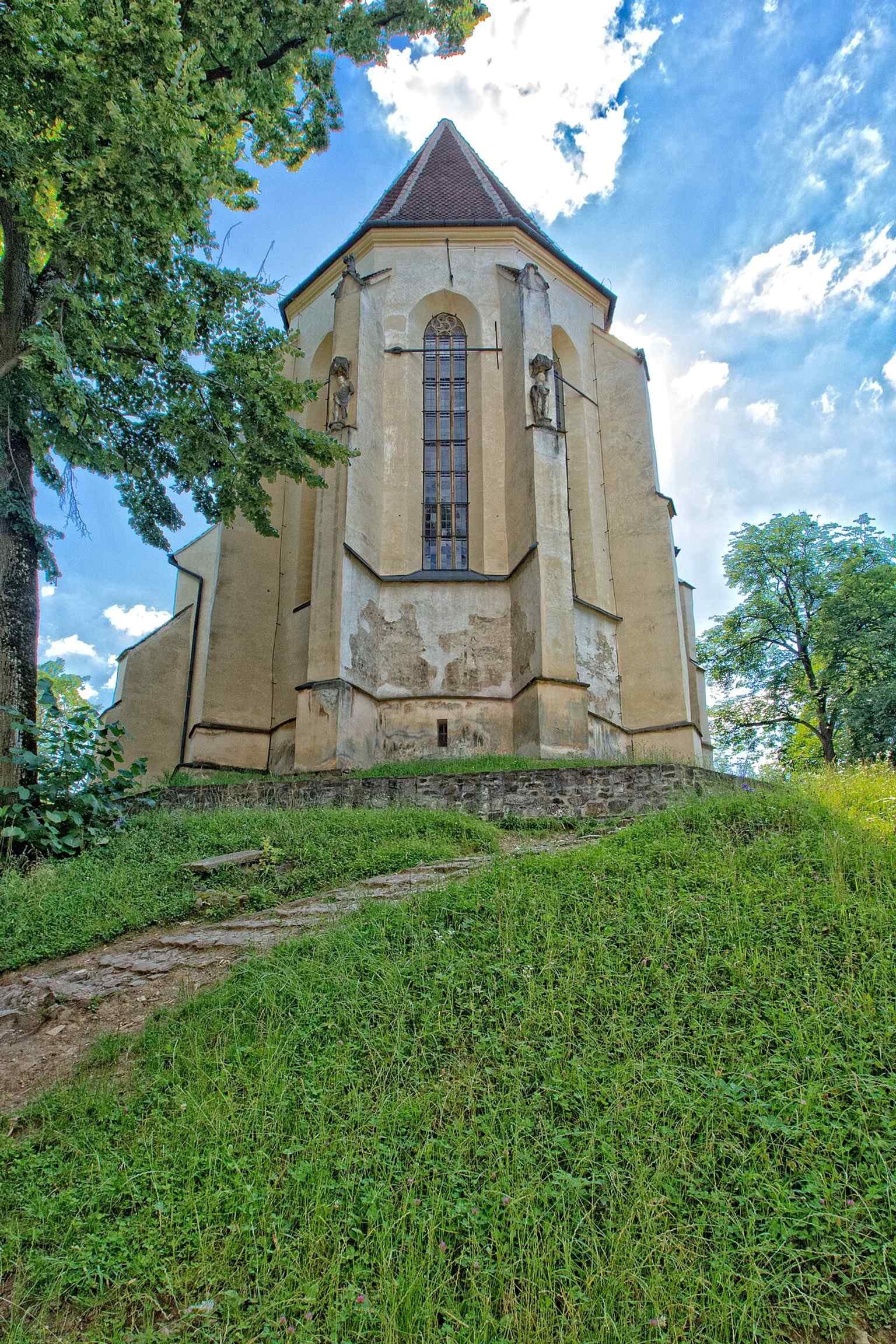
The Church on the Hill dominates the city of Sighișoara from its 429-meter altitude, a testament to its imposing Gothic architecture, which evolved from an old Romanesque basilica.Photo: Tiberiu Neag, Wikimedia Commons, CC BY-SA 3.0 ro. Cropped & resized.Experience the Church on the Hill at sunset, a monumental landmark visible from great distances that defines the Sighișoara skyline.Photo: Gotagabriela, Wikimedia Commons, CC BY-SA 3.0 ro. Cropped & resized.A direct view of the church's exterior, characterized by its simplicity, which contrasts with Western European Gothic monuments, typical of fortified Saxon churches in Transylvania.Photo: Daria Virbanescu, Wikimedia Commons, CC BY-SA 4.0. Cropped & resized.A unique winter perspective of the church, showcasing its enduring presence through all seasons, much like its centuries of architectural evolution.Photo: Radueduard, Wikimedia Commons, CC BY-SA 4.0. Cropped & resized.An intricate exterior detail, hinting at the gradual construction over centuries and the influence of the German school of architecture on its Gothic form.Photo: Brigaela, Wikimedia Commons, CC BY-SA 3.0 ro. Cropped & resized.The exterior of the choir, a section believed by researchers to demonstrate the church's evolution in stages, with architectural details that reveal its long history.Photo: Daria Virbanescu, Wikimedia Commons, CC BY-SA 4.0. Cropped & resized.A view of the church's interior, featuring some of the monumental wood pews, crafted by elite Renaissance artisans like Johannes Reychmut, that still line the nave.Photo: Leontin l, Wikimedia Commons, CC BY-SA 3.0 ro. Cropped & resized.A rare depiction of the Holy Trinity within an archway, an iconographic style often suppressed elsewhere, showing a single entity with three faces on one head.Photo: Radueduard, Wikimedia Commons, CC BY-SA 4.0. Cropped & resized.Another perspective of the meticulously restored interior, highlighting the church's function as a 'liturgical museum' for altarpieces rescued from abandoned Saxon churches.Photo: Leontin l, Wikimedia Commons, CC BY-SA 3.0 ro. Cropped & resized.Within the nave, explore the solemn row of 60 sarcophagi, part of the unique historical context of this Transylvanian church.Photo: Leontin l, Wikimedia Commons, CC BY-SA 3.0 ro. Cropped & resized.arrow_back Back to Sighișoara Audio Tour: Legends Echoing from Towers and Cobblestones
Loved by travellers
Thousands of tours started. Plenty of opinions.
4.8 across the App Store and Google Play. Here's a few we keep coming back to.
starstarstarstarstar
This tour was such a great way to see the city. The stories were interesting without feeling too scripted, and I loved being able to explore at my own pace.
Started this tour with a croissant in one hand and zero expectations. The app just vibes with you, no pressure, just you, your headphones, and some cool stories.






.jpg)
.jpg)


.jpg)

.jpg)
.jpg)