
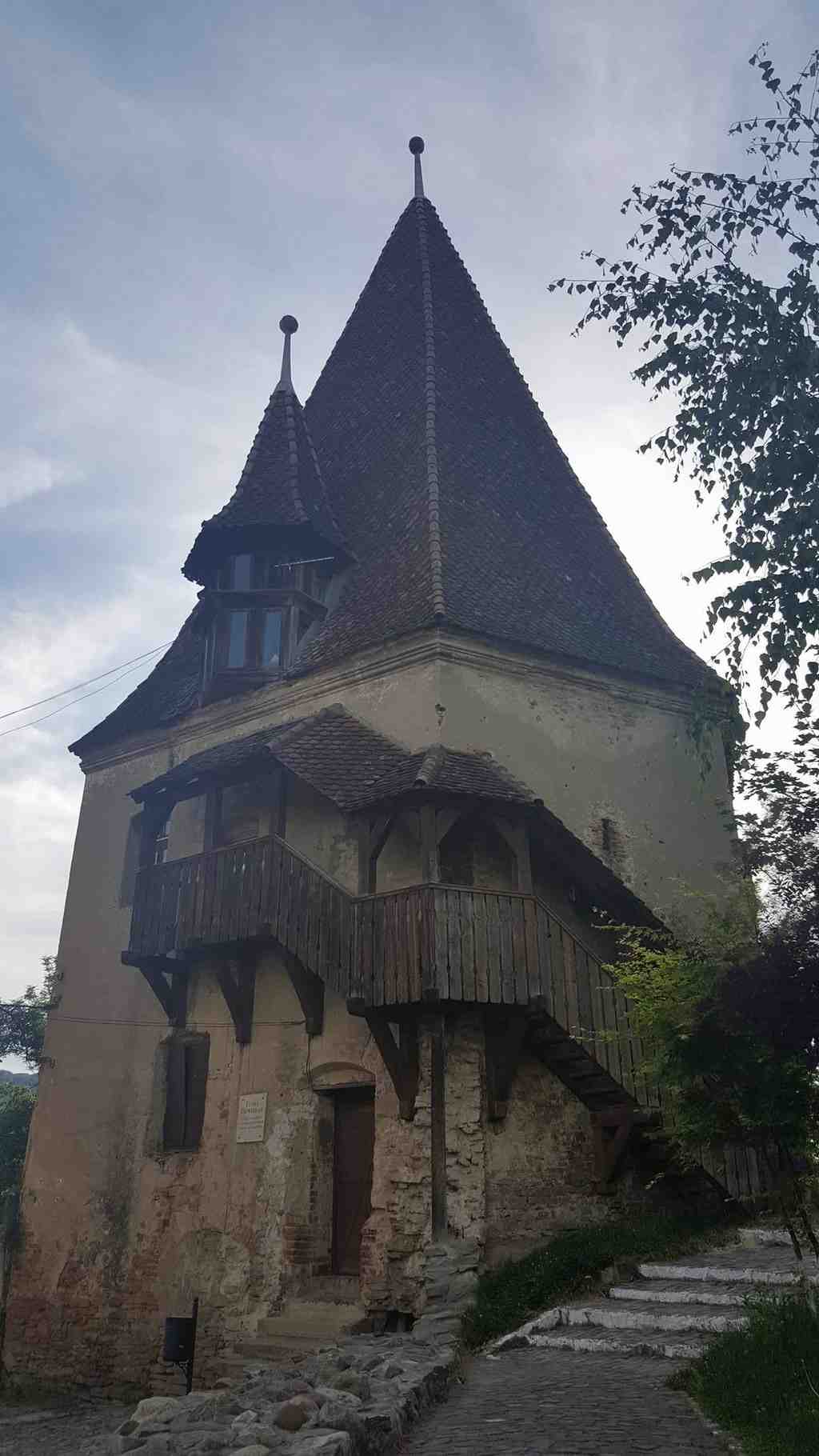
You are looking at a pale stone pentagonal structure with a steep tiled roof that sprouts two elegant little observation turrets. Take a look at your screen to get a good angle on those unique roof details.
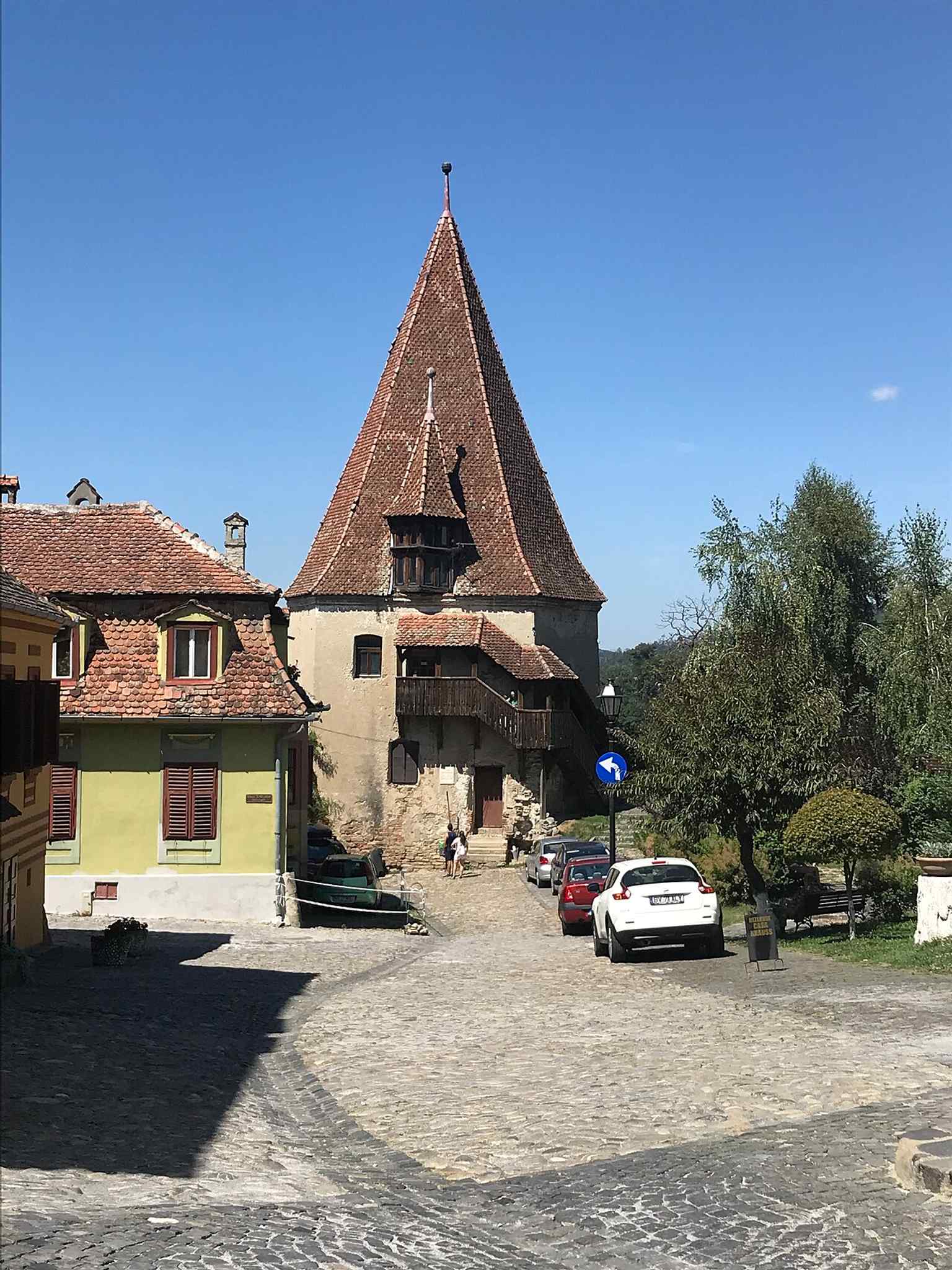
This is the Bootmakers' Tower, and honestly, if any building here understands the city's unyielding resilience, it is this one. It has been knocked down, blown up, and completely redesigned more times than you might guess.
Back in the thirteenth century, it started as a small, rectangular stone tower. But as warfare evolved, small just did not cut it anymore. In August 1605, mercenaries launched a massive bombardment from a nearby hill, hurling twenty to twenty five pound projectiles at the fortifications. The attack practically demolished the wall connecting this tower to the Locksmiths' Tower next door. The defenders realized they had to rethink everything, so they rebuilt the tower three times larger.
But the universe was not done with the Bootmakers' Tower yet. You might remember the Great Fire of 1676 that swept through these streets. Well, the fire eventually reached this tower, which unfortunately was being used to store massive amounts of gunpowder at the time. The resulting explosion completely leveled it.
Enter Mayor Michael Helwig. He took charge of the city's recovery and pushed for modern defenses. Under his leadership in 1681, the tower was reborn in the Baroque style you see today. Helwig added those two little lookout turrets to the roof. They were not just for decoration. They gave sentries a sweeping view of the valley below, letting this relatively short tower do the surveillance work of a giant.
During a siege, things got very real here. An old defense plan from 1704 shows that the senior master bootmakers stayed safely inside the tower, operating heavy weapons like arquebuses. Meanwhile, the calfe, the guild's young journeymen and apprentices, were sent out to defend the exposed, open walls. It was a harsh legacy of civic duty where the absolute rookies literally manned the front lines.
Today, the tower has a much lighter vibe. Since the year 2000, it has been the headquarters for a local radio station. In a funny twist of fate, the radio equipment needed strict climate control, which forced the city to maintain the building and actually saved the stone structure from decay. So instead of cannon fire, you might just hear pop music echoing through the thick walls.
Next, we are going to head somewhere a bit quieter, a humble setting that required its own kind of deep determination to build. Let us take a twelve minute walk over to the Entry of the Theotokos into the Temple Church.





.jpg)