
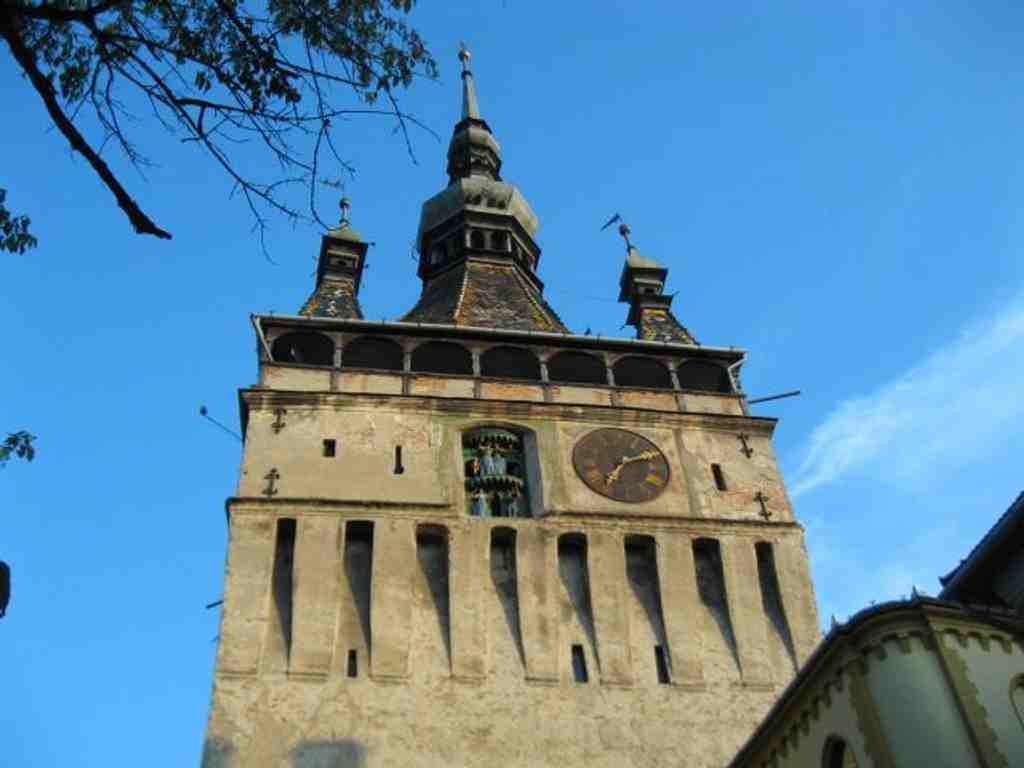
Standing before you is a massive rectangular stone tower climbing sixty four meters into the sky, featuring a large clock face with golden numbers and capped by an intricate, multi-tiered roof complete with five small turrets.
Looking up at that beautiful spire, you would think this place was just the beating heart of the city's civic life. And it was. Unlike other towers owned by different trade guilds, this was public property. It housed the town hall, the city orchestra on holidays, and the local administration. But this building has a brutal, split personality.
See those four little turrets perched on the corners of the roof? They were not just decorative. They were a chilling signal of the city's judicial autonomy, basically a medieval billboard announcing that the local judge had the power to order capital punishment, the death penalty.
Justice here was not subtle. Sentences were read aloud from the high balcony, echoing over the square before the condemned were led to execution. For lesser crimes, like cheating someone at the market, you might be forced to ride that painful wooden donkey right in the shadow of this tower, the same punishment the tanners used.
And if you think that sounds rough, it gets darker. Deep within the stone basement lies the Torture Room. Prisoners were held down there in absolute, crushing darkness, interrogated and broken before being dragged upstairs to the council for their final judgment.
But the absolute most dramatic chapter of this tower's life did not come from a judge. It came from a spark.
Back in the seventeenth century, the city made the highly questionable decision to use this towering fortress to store its gunpowder deposits. Picture the sheer terror of realizing the city's entire gunpowder supply was sitting right there as the Great Fire of 1676 roared toward it. What would you have even tried to save first?
The wind-whipped flames reached the stone walls, and the situation went exactly how you might expect. A massive, catastrophic explosion shattered the heavy stone structure and blasted the roof into the sky. The blast leveled three-quarters of the surrounding lower town, leaving the city absolutely decimated.
Yet, the locals refused to stay in the ashes. Three traveling craftsmen stepped up and rebuilt the tower with its incredible baroque roof in just a few months, finishing in 1677. It cost the city six hundred and fifty florins, roughly equivalent to tens of thousands of dollars today, a sum that left the local government in financial ruin for years but gave them back their most vital lookout point.
This tower stands as a monument to a community that endured brutal laws, catastrophic explosions, and total ruin, only to pull itself together and rebuild its heart stronger each time.
Let's leave the harsh echoes of medieval justice behind us now and move toward something a little more peaceful. We are going to head over to St. Joseph's Roman Catholic Church, which is just a short three minute walk away, to explore a quieter kind of devotion. If you want to check out the history museum inside the tower later, it is open daily from nine to three thirty, except for Mondays when it is closed, and it opens at ten on weekends.




