
Copenhagen Audio Tour: Historic Hearts
Beneath the polished facade of Copenhagen lies a graveyard of fractured crowns and whispered conspiracies. Cobblestones here act as silent witnesses to centuries of royal paranoia and bloody political uprisings that shaped the modern world. Unlock these buried secrets with a self-guided audio tour designed to lead you far beyond the standard tourist path. Discover the hidden stories of the Botanical Garden and the dark corridors of Rosenborg Castle that most travelers ignore. Why did a single address at Skindergade 8 trigger a midnight panic that silenced the city for a decade? What sinister ritual hides behind the manicured hedges of the king’s private park? And why was a high-ranking official caught burning evidence in the rain on a quiet Tuesday in 1848? Trace the arc of history through the city’s veins. Ignite your curiosity and walk the jagged line between legend and reality. Start your journey now.
Tour preview
About this tour
- scheduleDuration 90–110 minsGo at your own pace
- straighten3.7 km walking routeFollow the guided path
- location_onLocationCopenhagen, Denmark
- wifi_offWorks offlineDownload once, use anywhere
- all_inclusiveLifetime accessReplay anytime, forever
- location_onStarts at University of Copenhagen Botanical Garden
Stops on this tour
lock_open 3 free previews · 11 unlock with purchase
Before you stands a magnificent white iron-and-glass structure featuring a soaring central domed rotunda, all approached by a sweeping, wide stone staircase. I am Axel, and I will…Read moreShow less
Open dedicated page →Before you stands a magnificent white iron-and-glass structure featuring a soaring central domed rotunda, all approached by a sweeping, wide stone staircase. I am Axel, and I will be your guide through Copenhagen today. We are starting off strong with the University of Copenhagen Botanical Garden. What you are looking at is ten hectares of meticulous horticultural engineering, crowned by that stunning conservatory complex from eighteen seventy-four.
This garden has some serious baggage. Literally. The entire collection has been packed up and moved across the city twice. The original garden was founded back in the year sixteen hundred by King Christian the Fourth. After the Reformation, when many Catholic convents and their medicinal gardens were dismantled, the king needed a secure supply of medicinal plants. So, he set aside a plot of land and commanded a university professor to tend it.
Naturally, a university professor was thrilled to suddenly be doing manual agricultural labor.
Eventually, the garden was relocated and expanded under the direction of a botanist named Georg Christian Oeder in seventeen fifty-two. Oeder began an ambitious project called Flora Danica, a massive illustrated encyclopedia describing all Danish and Norwegian plants. But things did not end well for him. He was fired in seventeen seventy-one after getting tangled up in the political fallout of the Johann Friedrich Struensee affair, a chaotic moment where the king's physician essentially took control of the Danish government before being dramatically overthrown.
By seventeen seventy-eight, the garden moved again, this time to a low, waterlogged area behind Charlottenborg Palace. It was cramped, damp, and completely inadequate for housing sensitive foreign plants. Finally, in eighteen seventy, the garden landed right where you are standing.
Four years later, J-C Jacobsen, the founder of the Carlsberg brewery, decided the capital needed something spectacular. He funded these glasshouses, drawing heavy inspiration from the famous Crystal Palace built in London for the Great Exhibition of eighteen fifty-one. Take a glance at your screen to see inside the central Palm House. Notice the incredibly narrow, cast-iron spiral staircase winding its way up the sixteen-meter-tall dome. It is a brilliant piece of Victorian-era industrial design, allowing visitors to climb right into the canopy to view a palm tree that has been growing here since eighteen twenty-four.
Today, the garden is a living archive holding over thirteen thousand plant species, from a fifty-meter-long glasshouse just for cacti to an air-conditioned greenhouse designed to perfectly replicate Arctic environments.
Check the app once more to see the Social Sciences Faculty Library, located just at the edge of the gardens. Johan Daniel Herholdt designed it in eighteen eighty-eight as a botanical laboratory, modeling it after Italian palazzi, the grand, fortress-like stone palaces of Renaissance Italy.
The garden operates every day of the week from eight thirty in the morning until six in the evening, giving you free admission to wander the grounds. Take a moment to soak in the scale of this botanical masterpiece. When you are ready, we can head over to our next stop, the Østervold Observatory.
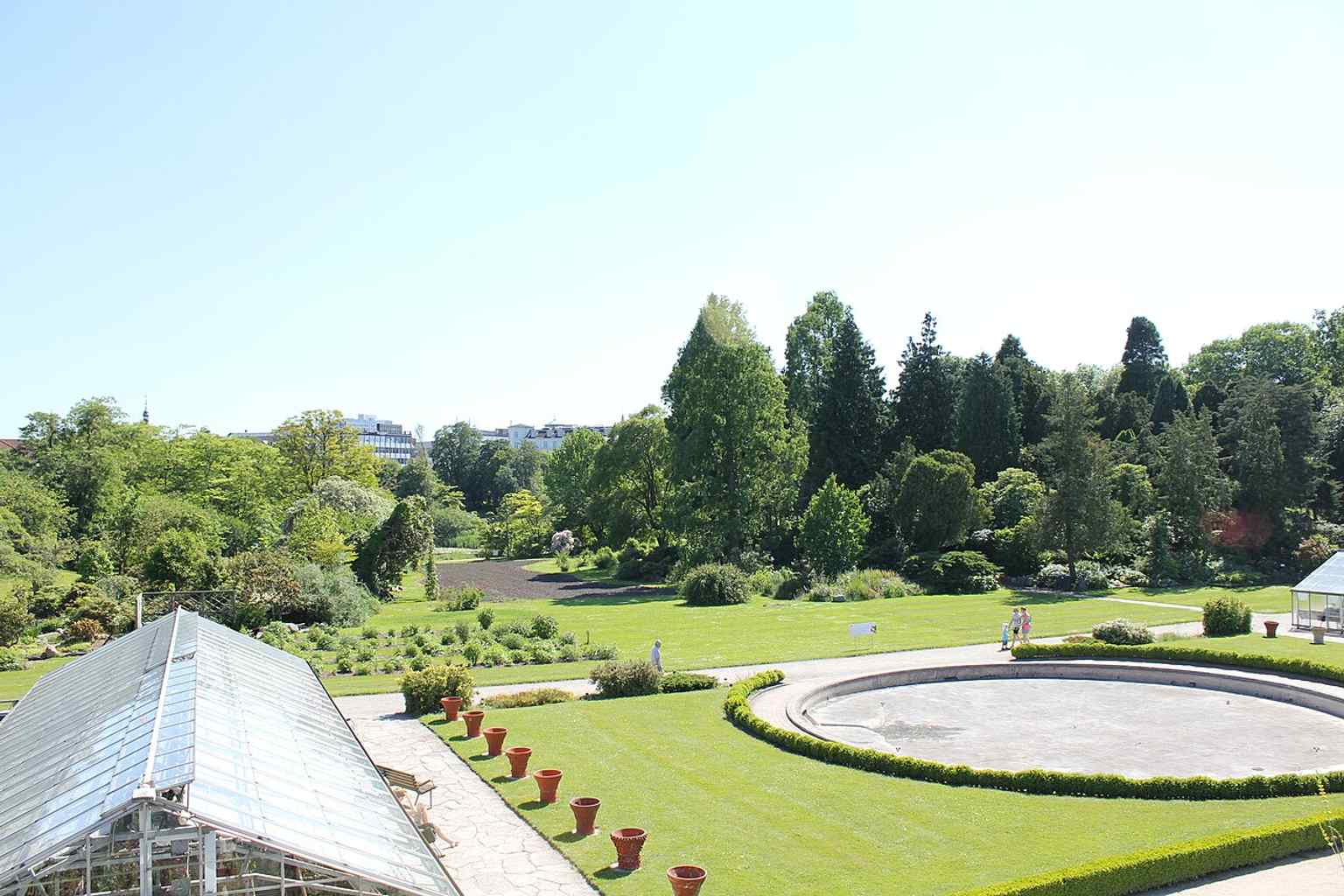
A general view of the University of Copenhagen Botanical Garden, which covers 10 hectares in the center of Copenhagen and serves research, educational, and recreational purposes.Photo: Thue, Wikimedia Commons, Public domain. Cropped & resized. 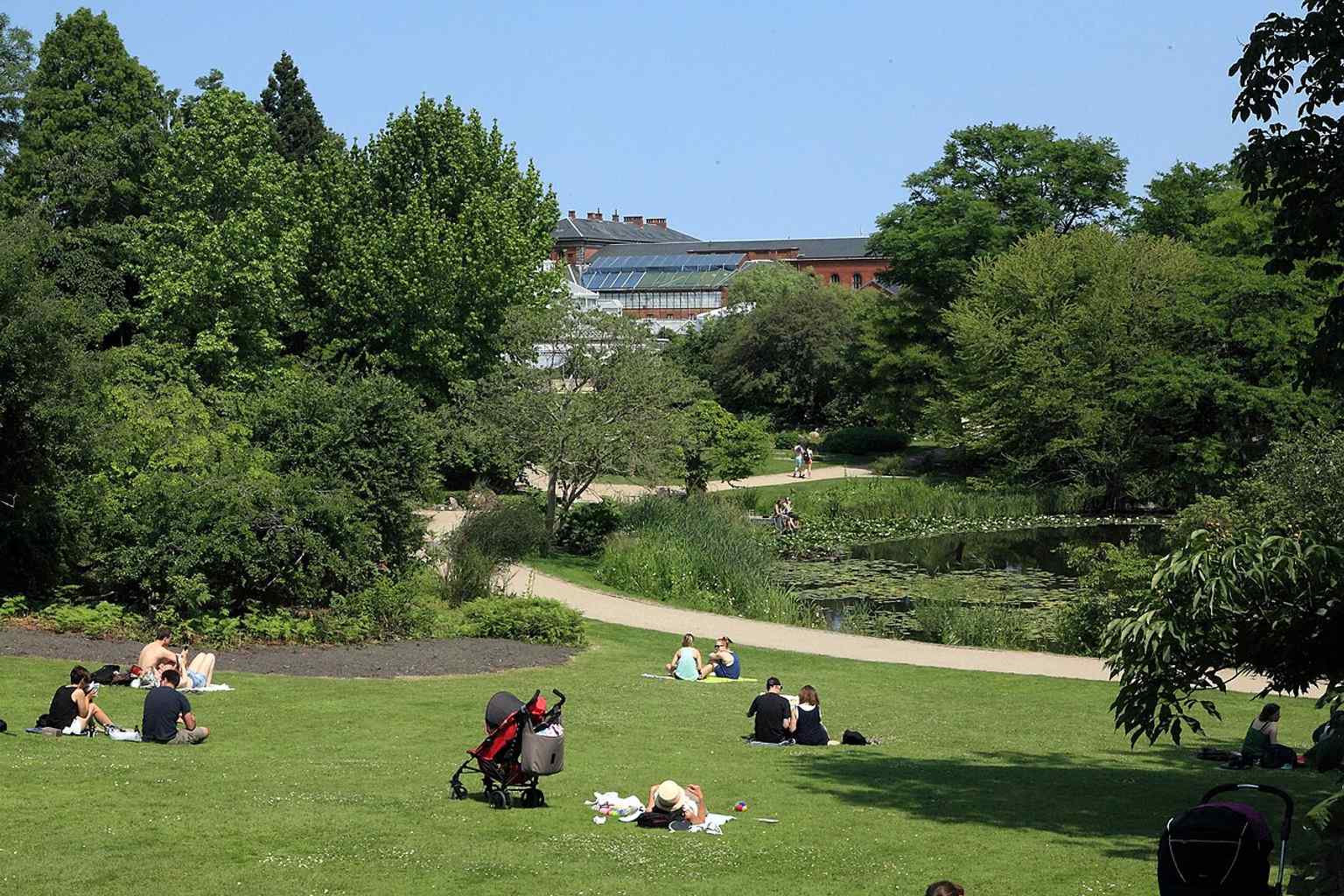
View across the tranquil lake within the botanical garden, with the iconic 1874 Palm House visible in the background.Photo: Falk2, Wikimedia Commons, CC BY-SA 4.0. Cropped & resized. 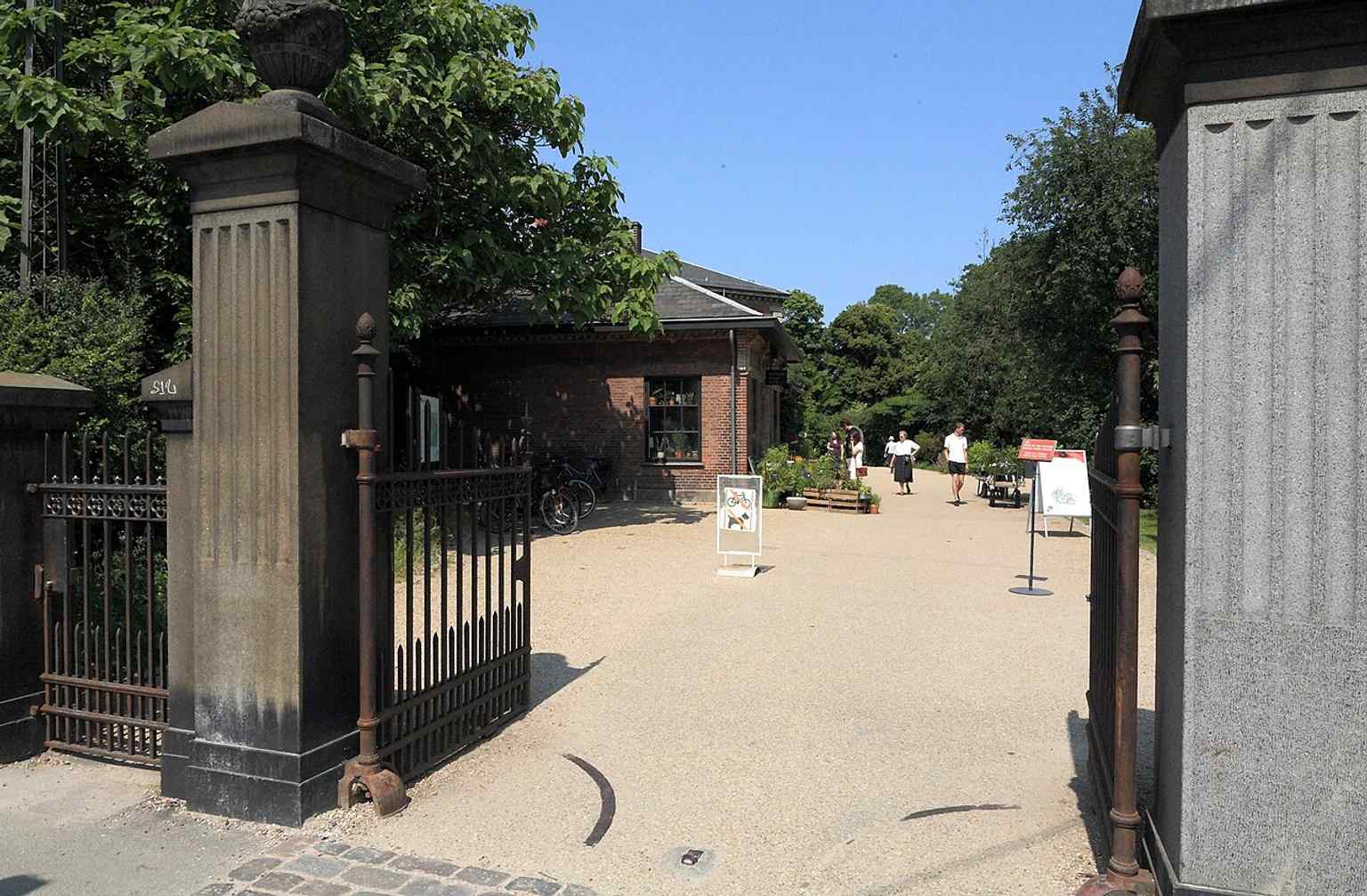
The main entrance to the botanical garden, which is an informal garden with free admission and includes a shop for plants and seeds.Photo: Falk2, Wikimedia Commons, CC BY-SA 4.0. Cropped & resized. 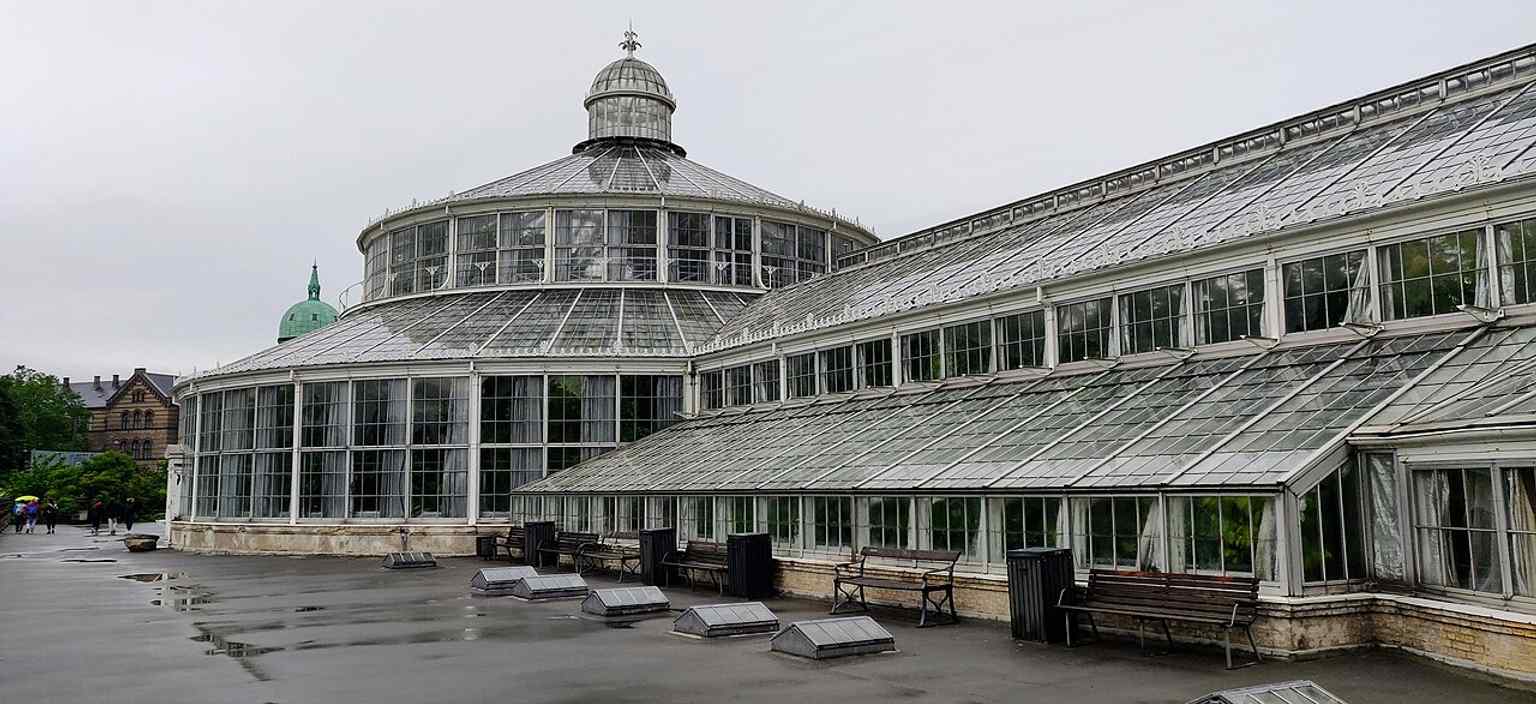
Inside the magnificent Palm House, a 16-meter tall conservatory complex built in 1874, which was inspired by London's Crystal Palace.Photo: Jonaseckerbom, Wikimedia Commons, CC0. Cropped & resized. Look to your left for a large, rectangular red brick building defined by a dark sloped roof and a repeating row of arched windows along its middle floor. This is the main…Read moreShow less
Open dedicated page →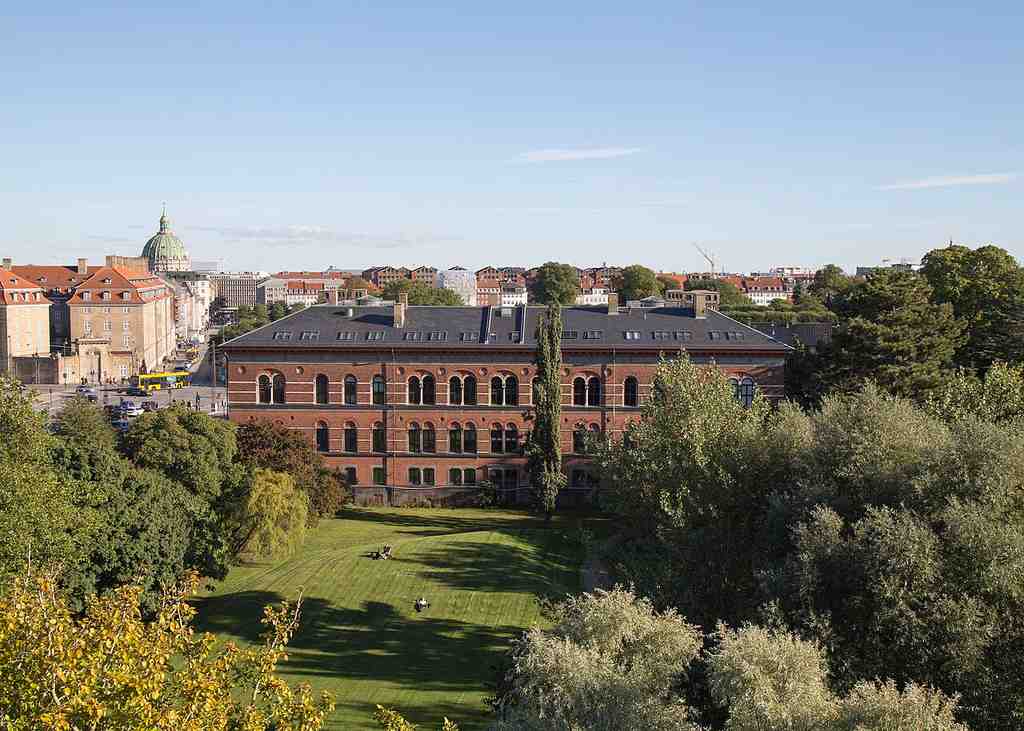
Natural History Museum of DenmarkPhoto: Origins DK, Wikimedia Commons, CC BY-SA 4.0. Cropped & resized. Look to your left for a large, rectangular red brick building defined by a dark sloped roof and a repeating row of arched windows along its middle floor. This is the main headquarters of the Natural History Museum of Denmark. I know we just spent time looking out into space at the Observatory, but this place is all about understanding the very ground we walk on.
The museum as an organization was officially formed in two thousand and four, when the government decided to mash together the national zoological, geological, and botanical collections. For a long time, the official catalog claimed they held roughly fourteen million specimens. Then, in twenty twenty-three, an international team did a thorough recount and realized the actual number was closer to seventeen million. You really have to admire an institution that can casually misplace three million objects.
The roots of this massive hoarding instinct go back four hundred years to a Danish physician named Ole Worm. In the mid sixteen hundreds, he created Museum Wormianum. This was not just the first museum in Denmark, but genuinely one of the earliest museums in the entire world. It was a classic cabinet of curiosities, stuffed with oddities from across the globe. After Worm died, King Frederik the Third absorbed the massive collection into his own Royal Cabinet of Curiosities, and the national obsession with cataloging nature was born.
By the seventeen sixties, this collection process became highly systematic. A naturalist named Peter Forsskål embarked on the first major scientific expedition to Arabia Felix, an area we now know as Yemen, from seventeen sixty-three to seventeen sixty-seven. He spent years meticulously collecting corals, shells, insects, and plants. He managed to successfully describe sixty completely new plant genera and seven hundred new species before he caught malaria and died on the journey. His surviving botanical and zoological collections remain some of the most important items inside these walls today.
The sheer volume of what is preserved here is staggering. We are talking mammoth skeletons, meteorites, dinosaur bones, and countless bizarre deep sea creatures floating in jars of alcohol. They are also responsible for the botanical garden network, which manages about ten thousand living plant species.
If the organization seems slightly in transition right now, it is because they are preparing a massive upgrade. They are constructing a brand new museum building nearby, set to open in twenty twenty-six, designed by Lundgaard and Tranberg Architects. They are finally giving those seventeen million specimens some proper elbow room.
If you want to view the exhibitions, keep in mind they are closed on Mondays, but open from ten in the morning to five in the afternoon the rest of the week, staying open until nine in the evening on Wednesdays.
This institution holds almost four billion years of planetary history under one roof. Consider the immense scale of what is preserved here, then follow your map to our next destination.
Show 11 more stopsShow fewer stopsexpand_moreexpand_less
On your right is Rosenborg Castle. Look at those soaring towers and the red brickwork accented with sandstone. This is a masterclass in Dutch Renaissance architecture, a style…Read moreShow less
Open dedicated page →On your right is Rosenborg Castle. Look at those soaring towers and the red brickwork accented with sandstone. This is a masterclass in Dutch Renaissance architecture, a style known for its ornate gables and striking symmetry, which became the standard for Danish buildings of the era. King Christian the Fourth started this project in sixteen oh six. He originally envisioned a modest little hermitage, a quiet getaway. But, as kings tend to do, he got carried away. Over the next twenty-eight years, the building went through four massive expansions until it reached the form you see before you.
If you pull up the before and after image on your app, you will notice that while the gardens have evolved, that distinct architectural profile has remained remarkably untouched over the last century.
Christian the Fourth adored this place. In fact, his attachment was a bit extreme. When he lay dying at another palace, he actually ordered his staff to drag him onto a horse-drawn sled and haul him back to Rosenborg, just so he could end his days in his favorite building.
By seventeen ten, his great-grandson, Frederik the Fourth, decided the castle was outdated. Instead of living here, he repurposed it as a giant storage unit for his royal collections. Because of that practical decision, Rosenborg features some of the most perfectly preserved historical interiors in Europe. Take a glance at your screen to see the stunning crown of King Christian the Fourth, one of the priceless jewels protected inside.
If you want to view the regalia yourself, the museum is open every day from ten A-M to five P-M. Take your time admiring the masonry, and whenever you are ready, we can head to our next stop.
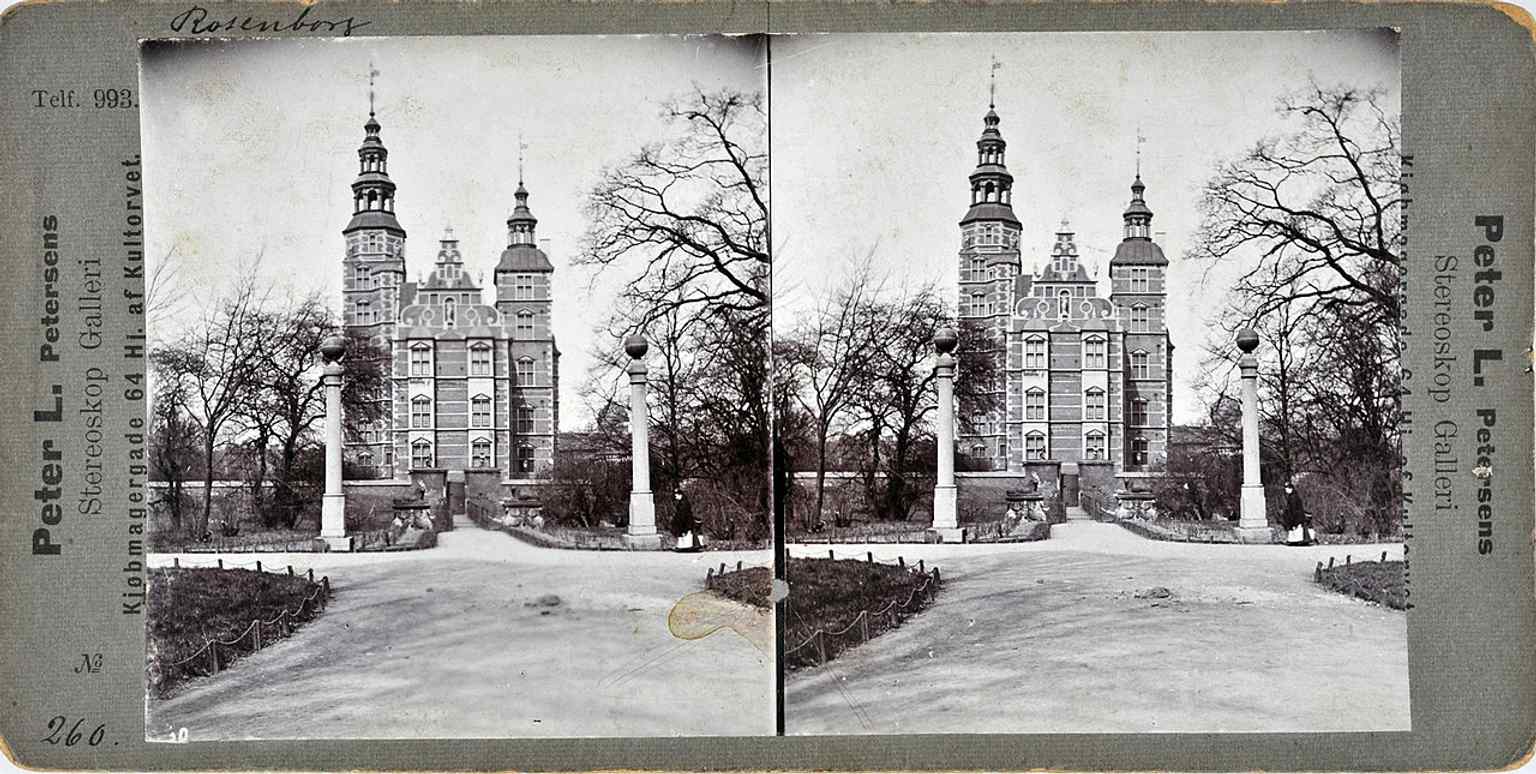
Rosenborg Castle around 1900, after it opened to the public in 1838, allowing visitors to journey through Denmark's royal history.Photo: Peter Lars Elfelt (før Petersen), Wikimedia Commons, Public domain. Cropped & resized. 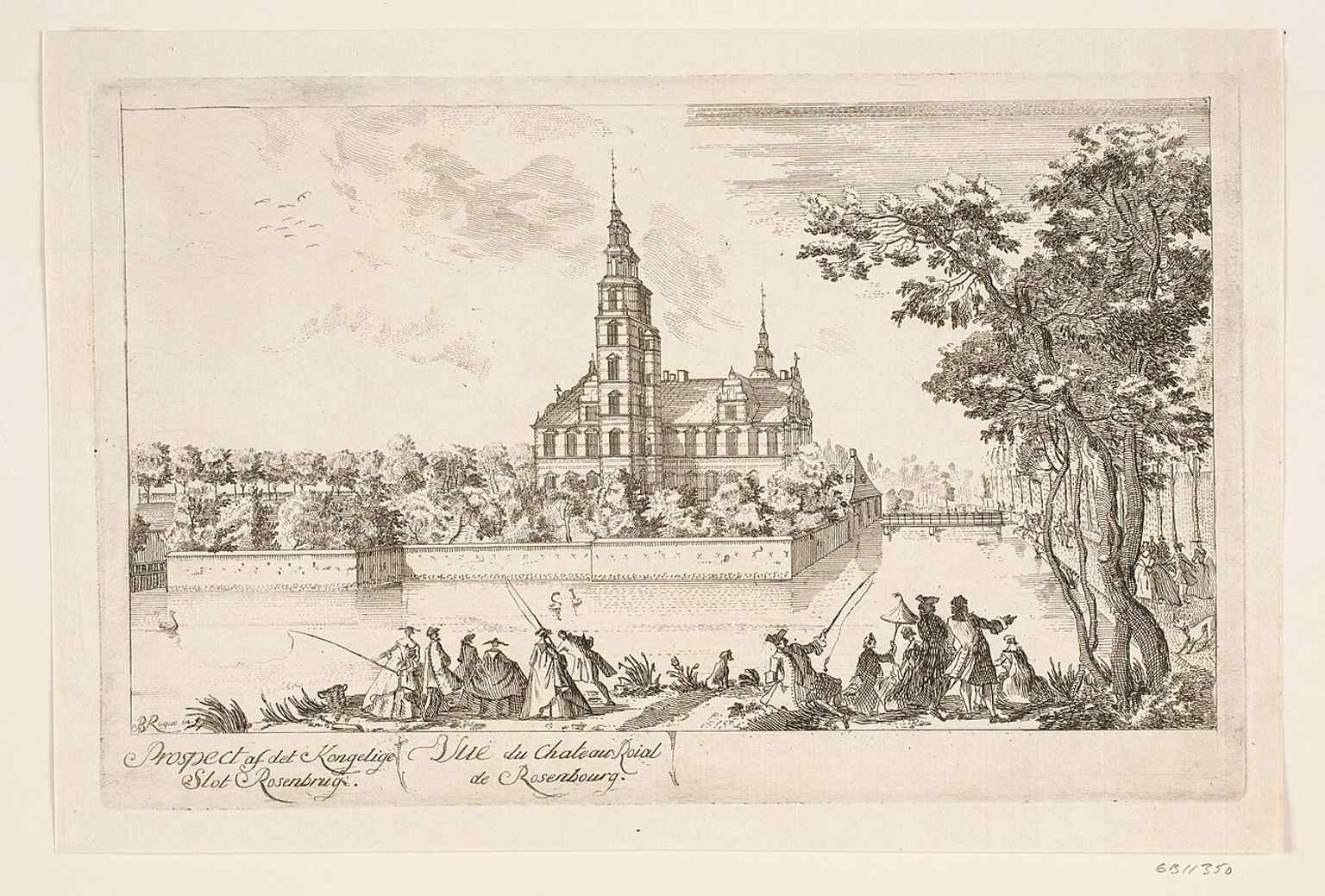
An 18th-century artwork of Rosenborg Castle, which stopped being a primary royal residence around 1710, later transforming into a museum for royal collections.Photo: Barthélemy de La Rocque, Wikimedia Commons, Public domain. Cropped & resized. 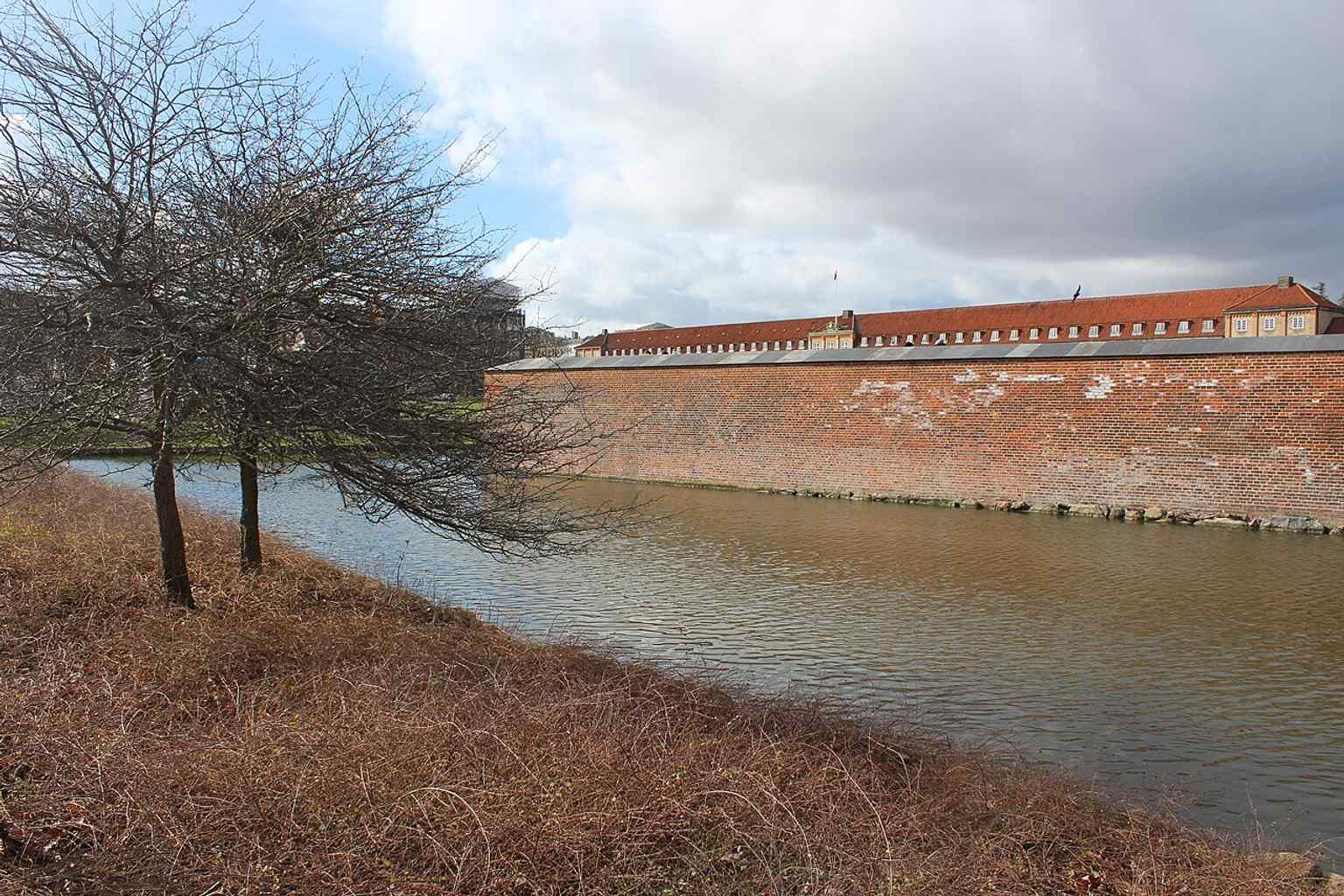
The Royal Life Guards barracks stand adjacent to Rosenborg Castle, fulfilling their duty to guard the historic royal site, just as they have for centuries.Photo: GattoCeliaco, Wikimedia Commons, CC BY-SA 4.0. Cropped & resized. 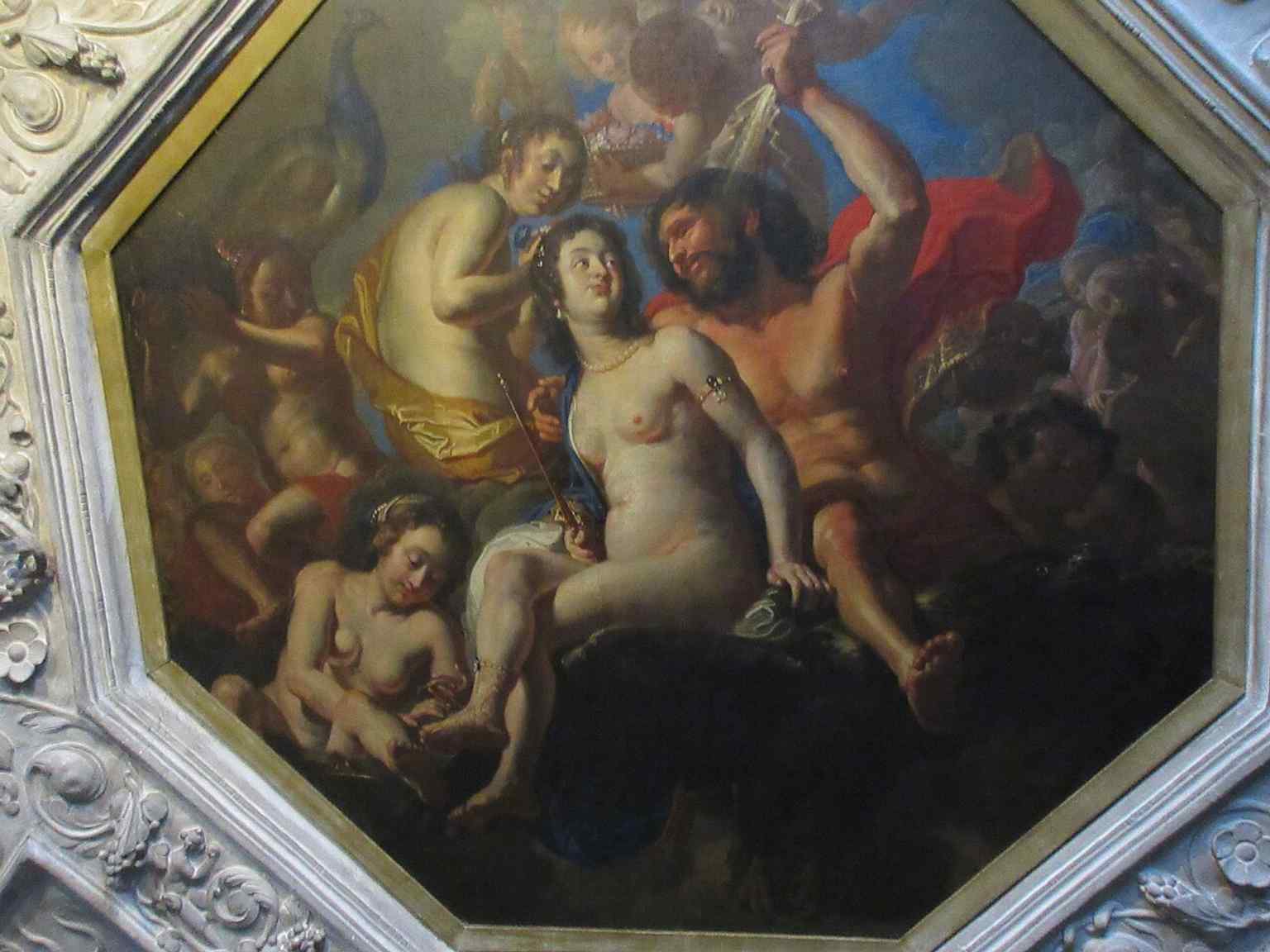
The ornate ceiling painting 'Hera and Zeus on Olympus' by Abraham Wuchters from the 1660s, believed to feature Queen Sophie Amalie, is one of Rosenborg's well-preserved interior artworks.Photo: Ole Ryhl Olsson, Wikimedia Commons, CC BY-SA 4.0. Cropped & resized. On your left, look for a pale symmetrical building featuring a deep central alcove framed by two stout columns, housing a dramatic stone statue of a man wrestling a lion. This…Read moreShow less
Open dedicated page →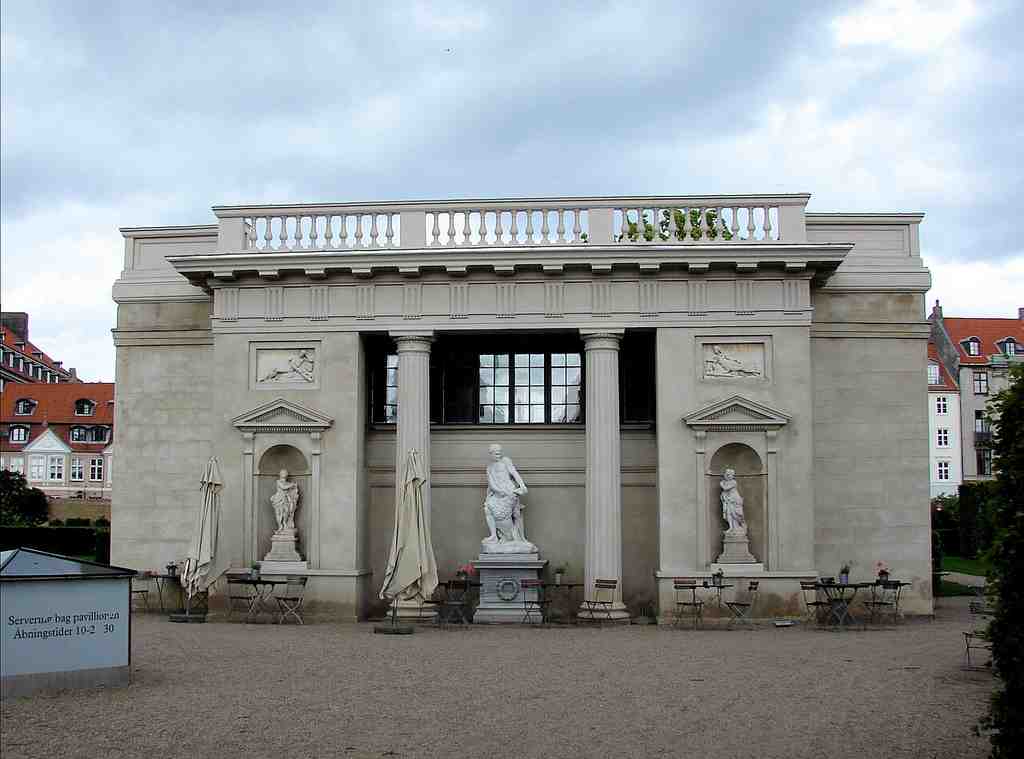
The Hercules PavilionPhoto: Orf3us, Wikimedia Commons, Public domain. Cropped & resized. On your left, look for a pale symmetrical building featuring a deep central alcove framed by two stout columns, housing a dramatic stone statue of a man wrestling a lion.
This is the Hercules Pavilion. When King Christian the Fourth built the original structure here in sixteen oh six, he engineered a rather clever trick. He installed hidden acoustic channels in the walls so his guests could enjoy invisible music on the upper floor while the orchestra played out of sight below.
In sixteen seventy-one, King Christian the Fifth upgraded the building into an eremitage, a private retreat where royals could dine without servants eavesdropping. He solved the privacy problem through sheer mechanics, building a dining table that was fully set in the downstairs kitchen and then hoisted up through a trapdoor. An elegant solution.
By seventeen seventy-two, the park had fallen into decay. A royal commission wanted to scrap almost everything, but architect C-F Harsdorff intervened. Pull up your screen to see the classical facade he designed in seventeen seventy-three. Harsdorff carved out that deep central niche specifically to house the Hercules statue, which a previous king had shipped all the way from Florence.
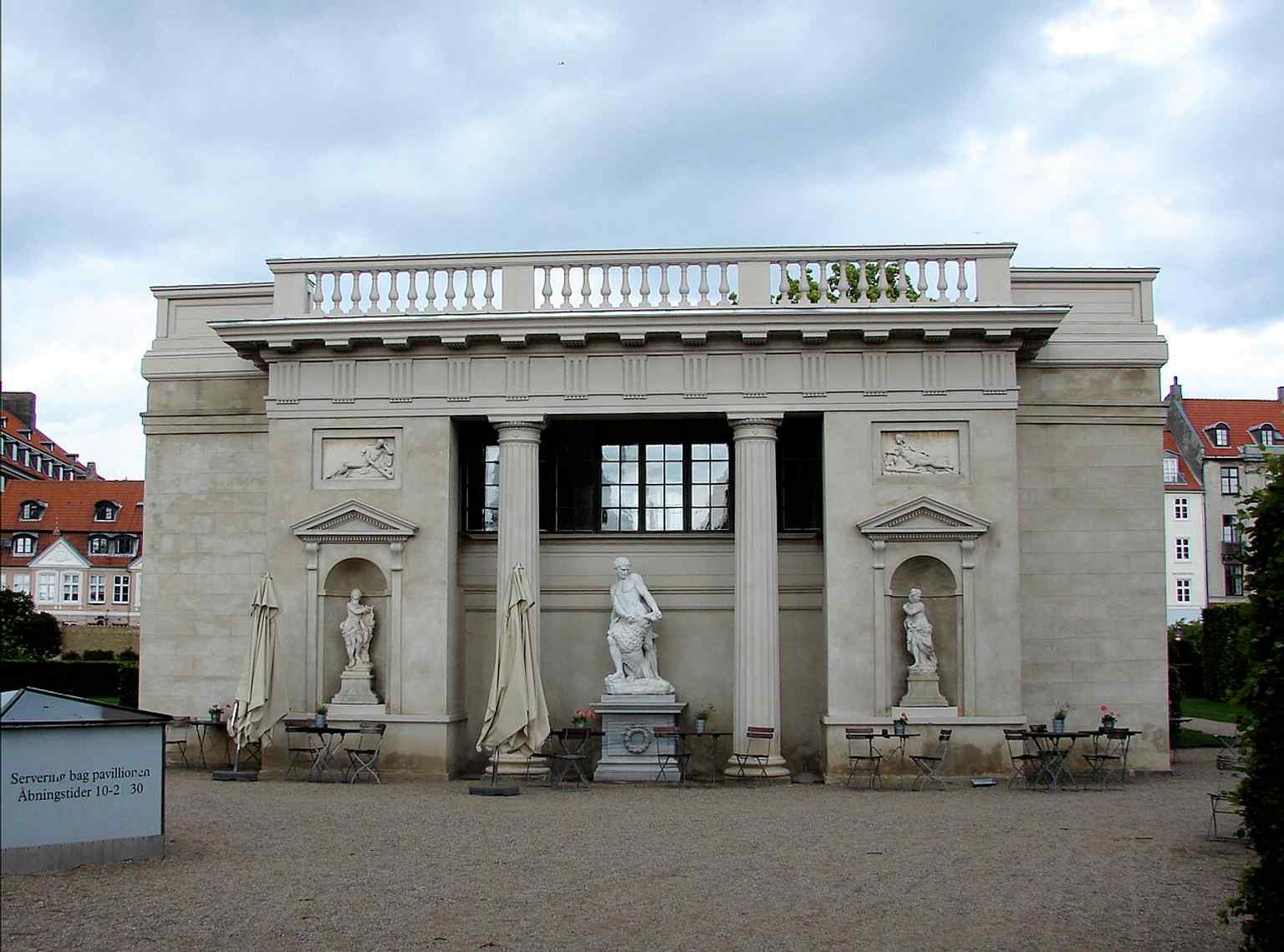
The Hercules Pavilion in its classical form, designed by architect C.F. Harsdorff in 1773, features the sculpture Hercules and the Lion flanked by two Tuscan columns. Today, it operates as a popular cafe in the King's Garden.Photo: Orf3us, Wikimedia Commons, Public domain. Cropped & resized. By eighteen ten, the pavilion found its modern calling when a confectioner began serving punch and lemonade to the public. It still operates as a moderately priced cafe today, open from nine in the morning until six or seven in the evening depending on the day.
Take your time admiring the clever architecture. When you are ready to move on, we will head to our next location.
Look to your left for a stately red brick townhouse with strictly ordered white-framed windows and an elegant double doorway. Check your screen for a wider look at the exterior.…Read moreShow less
Open dedicated page →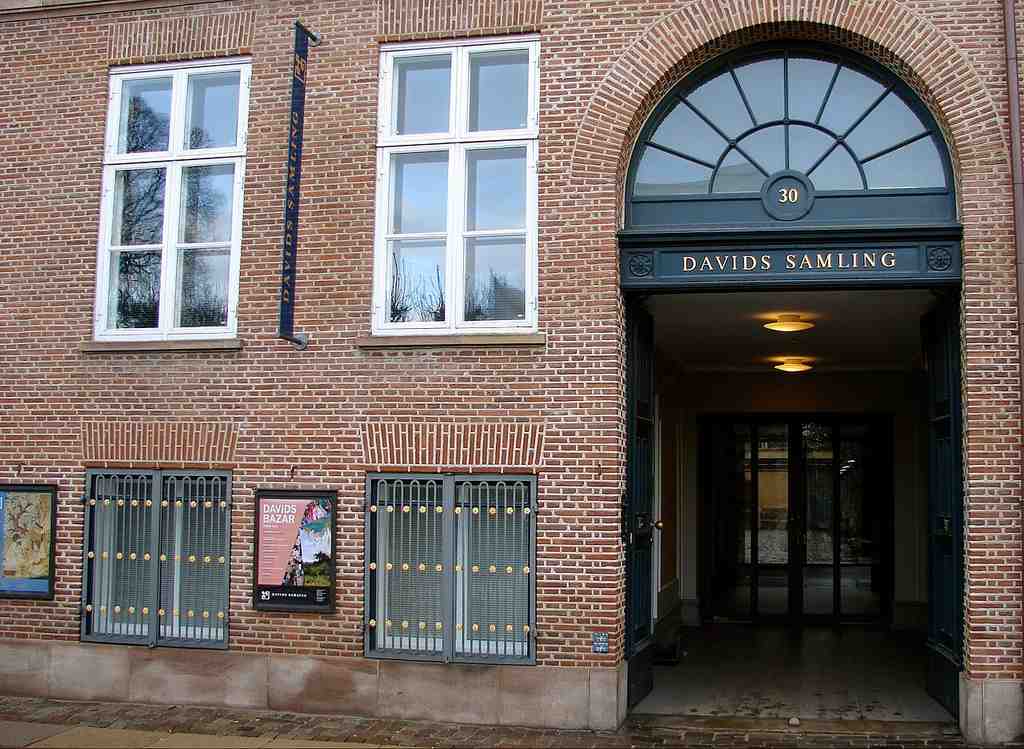
The David CollectionPhoto: Orf3us, Wikimedia Commons, Public domain. Cropped & resized. Look to your left for a stately red brick townhouse with strictly ordered white-framed windows and an elegant double doorway. Check your screen for a wider look at the exterior. Supreme Court lawyer Christian Ludvig David owned this building. He filled it with fine art, and then, rather generously, turned his home into a public foundation in nineteen forty-five. The doors opened in nineteen forty-eight. Upon his death in nineteen sixty, David left his entire fortune to the museum. Today, the David Collection houses eighteenth-century European art arranged as original nineteenth-century room interiors, plus Danish works featuring eleven paintings by Vilhelm Hammershøi. However, the true marvel is the Islamic art collection. Spanning from Spain to India across the eighth to the nineteenth centuries, it is the largest of its kind in Scandinavia and ranks in the top ten worldwide. As part of the Parkmuseerne network, you can visit Tuesday through Sunday from ten A-M to five P-M, and until nine P-M on Wednesdays. It is a quiet powerhouse of global history hiding behind a polite facade. Whenever you are ready, we will head to our next destination.
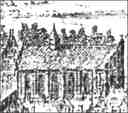
Look at the image on your screen to spot the original long rectangular stone hall with its steep pitched roof and prominent vertical buttresses, marking exactly what once stood…Read moreShow less
Open dedicated page →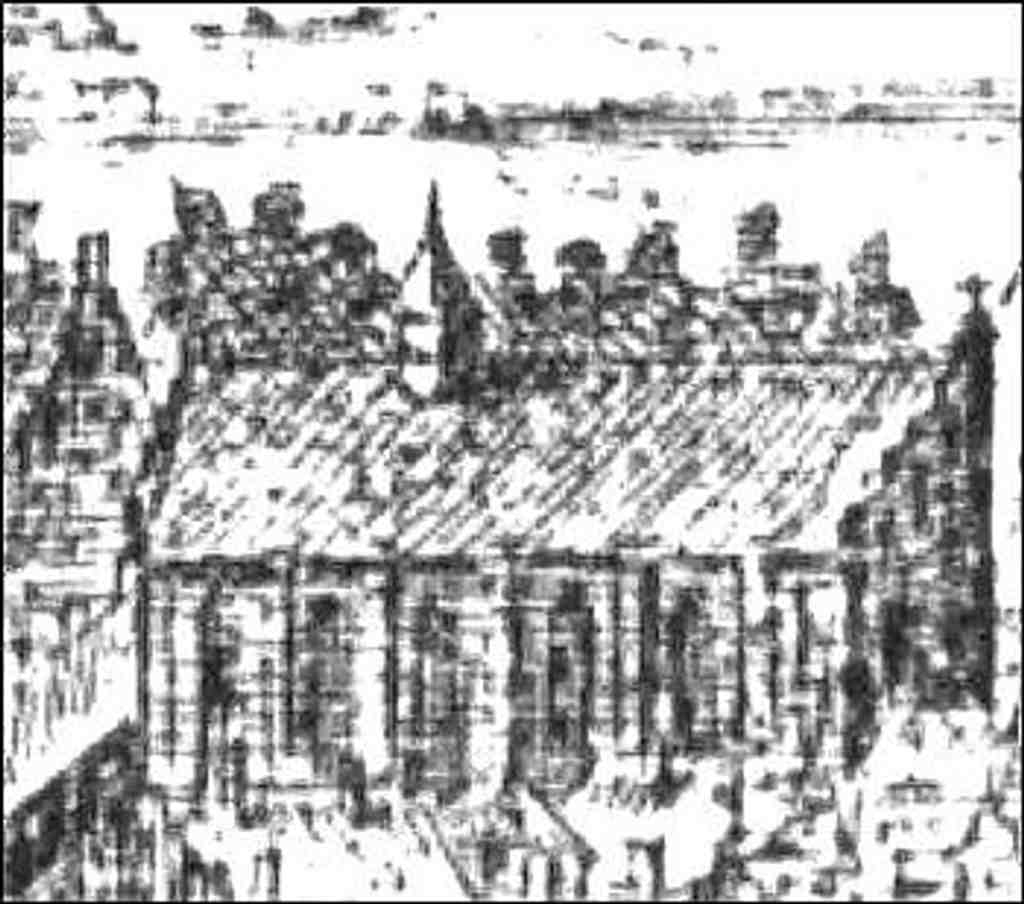
St. Clare's Priory, CopenhagenPhoto: Johan van Wick, Wikimedia Commons, Public domain. Cropped & resized. Look at the image on your screen to spot the original long rectangular stone hall with its steep pitched roof and prominent vertical buttresses, marking exactly what once stood right in front of you.
Welcome to the ghost of Saint Clare's Priory. In fourteen ninety-seven, King John the First and Queen Christina donated the former royal vegetable gardens to establish a monastery for the Poor Clares, a Catholic order of nuns. The Queen chipped in forty Rhenish Guilders, roughly ten thousand U-S dollars today, to get construction moving. By August eleven, fifteen oh five, they consecrated a sprawling complex featuring a dormitory, a refectory for dining, a church, and an infirmary.
You would think royal backing guaranteed smooth sailing. But the Protestant Reformation soon swept through, and public opinion turned against mendicant orders, religious groups that relied entirely on daily charity. The locals nicknamed them the beggar nuns, decided they were an unfair financial burden on top of regular church taxes, and promptly shut their wallets.
By fifteen twenty-seven, the priory was in such deep financial trouble that the abbess resorted to smuggling a chest of money to desperately poor sister nuns in Odense. She hid the cash transfer entirely because she feared the public would openly mock the order if they knew just how broke they really were.
Things went from bad to worse. The city fathers explicitly banned the nuns from collecting alms on the street. The sisters had to rely on friars who were only allowed to beg forty miles outside the city, making food transport a total logistical nightmare. Finally, in fifteen thirty-six, Denmark officially became Lutheran. The Crown seized the property, and the nuns left the order.
The Crown transformed the largest building into the Royal Mint in fifteen forty-one. Today, this street is still called Gammel Mønt, or Old Mint, even though the physical buildings burned to the ground in the great fire of seventeen twenty-eight.
You can explore this historic stretch of street every day from seven AM to six PM. Imagine the lost echoes of this street before we move along to the next site.
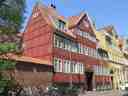
Look to your right to find a striking, red painted timber framed building resting on a black plinth, topped by a prominent triangular gabled dormer. Tap your screen to see a wider…Read moreShow less
Open dedicated page →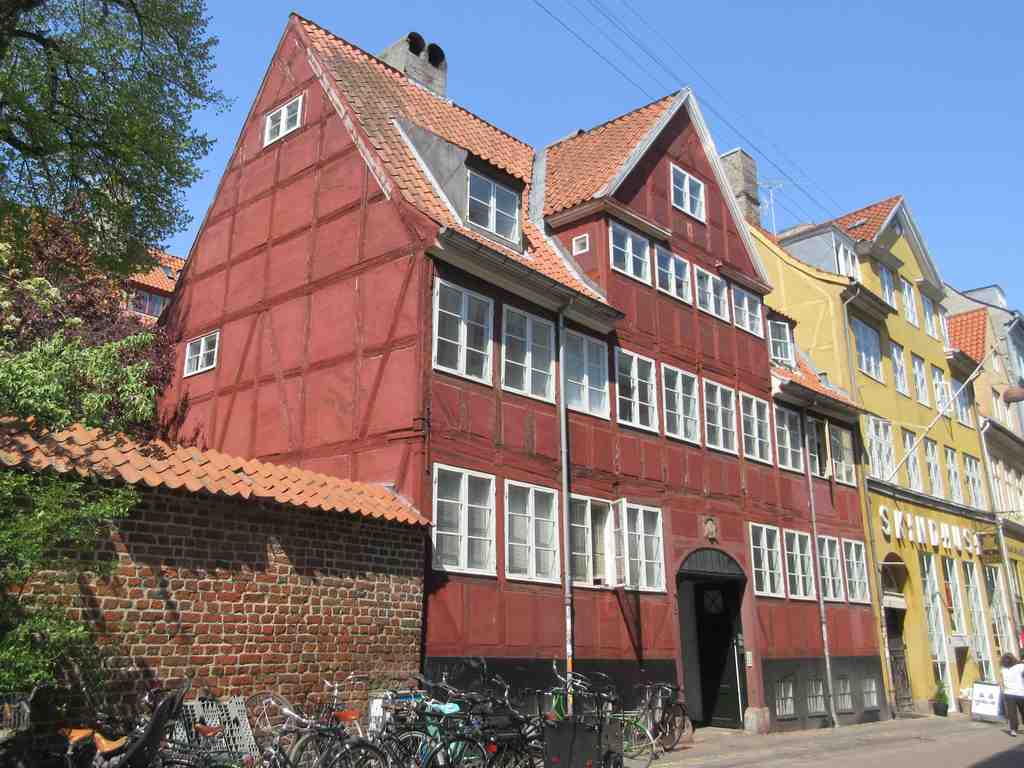
Skindergade 8Photo: Ramblersen2, Wikimedia Commons, CC BY-SA 4.0. Cropped & resized. Look to your right to find a striking, red painted timber framed building resting on a black plinth, topped by a prominent triangular gabled dormer. Tap your screen to see a wider shot of this ten bay facade, a perfect surviving specimen of eighteenth century architectural problem solving.
The year was seventeen thirty-three. Five years earlier, the great Copenhagen Fire of seventeen twenty-eight had wiped out most of this area. The previous building on this exact spot belonged to Poul Andersen Holm, an assistant pastor. Unfortunately for Poul, his theological credentials did not make his roof fireproof. His house burned completely to the ground.
The lot was divided, and a man named Niels Hansen Sandager built the structure you are looking at right now. Niels was clearly proud of his investment. If you check your app, you can see a close up of the keystone above the central arched gateway, bearing the letters N-H-S and the year seventeen thirty-three.
Now, looking at its charming facade, you might think of this as a comfortable home for a single prosperous family. Nineteenth century Copenhagen had a drastically different definition of comfort.
By the eighteen forty census, forty-five people were living inside this single property. Yes, forty-five. It was an absolute hive of master craftsmen. The registry lists tailors, dyers, policemen, and shoemakers all packed together. The building was practically groaning under the weight of humanity. In just one apartment on the second floor, a servant named Iver Nielsen lived with his wife, two caretakers, and three lodging soldiers. You can only imagine the sheer logistical nightmare of coordinating breakfast in that household.
The living arrangements often blended family and business in ways that practically invite disaster. Rewind to the eighteen oh one census, and you will find Isach Lund, a master shoemaker. Isach needed an apprentice. He ended up hiring his wife's fifteen year old brother. Mixing marriage, business, and an adolescent brother-in-law in a cramped eighteenth century apartment usually guarantees a complete breakdown of domestic peace. Fortunately for Isach, apprentices at the time were expected to work gruelingly long hours, so he likely kept the boy too busy cutting leather to cause any serious household drama.
From an engineering standpoint, this building's survival is remarkable. That timber framing you see on the front... the exposed heavy wooden skeleton... gave the structure enough flexibility to handle the daily stress of dozens of heavy footfalls marching up and down the stairs. Meanwhile, two massive brick chimneys in the back yard handled the near constant smoke generated by seven separate households cooking their meals and heating their cramped rooms simultaneously.
Today, Skindergade eight stands as a remarkably preserved monument to the extreme urban density of Copenhagen's past, cleverly disguised in a very polite red package. Once you have taken in this cleverly designed survivor, let us keep walking.
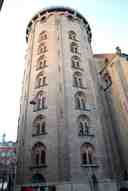
On your right stands a massive cylindrical tower built of light brown brick, featuring columns of deeply recessed arched windows that curve their way up to a wrought-iron viewing…Read moreShow less
Open dedicated page →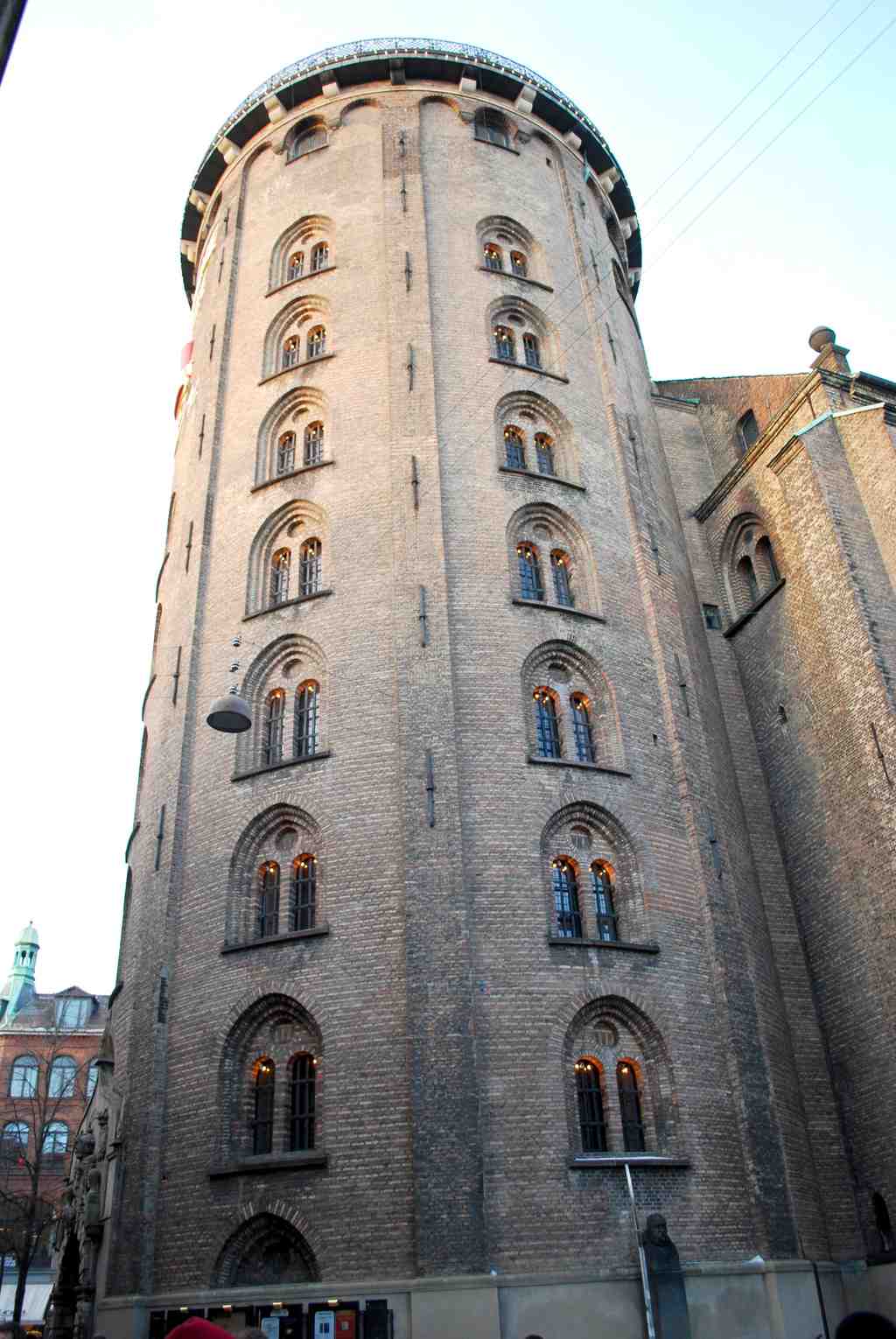
Round TowerPhoto: Erik Christensen, Wikimedia Commons, CC BY-SA 3.0. Cropped & resized. On your right stands a massive cylindrical tower built of light brown brick, featuring columns of deeply recessed arched windows that curve their way up to a wrought-iron viewing platform at the top. Take a look at the image on your device. My digital database seems to have suffered a rather magnificent glitch here, abruptly pivoting from Danish architecture to an Anglo-Saxon king of East Anglia named Rædwald. But since his story of sheer survival is fantastic, we are going to dive into it anyway.
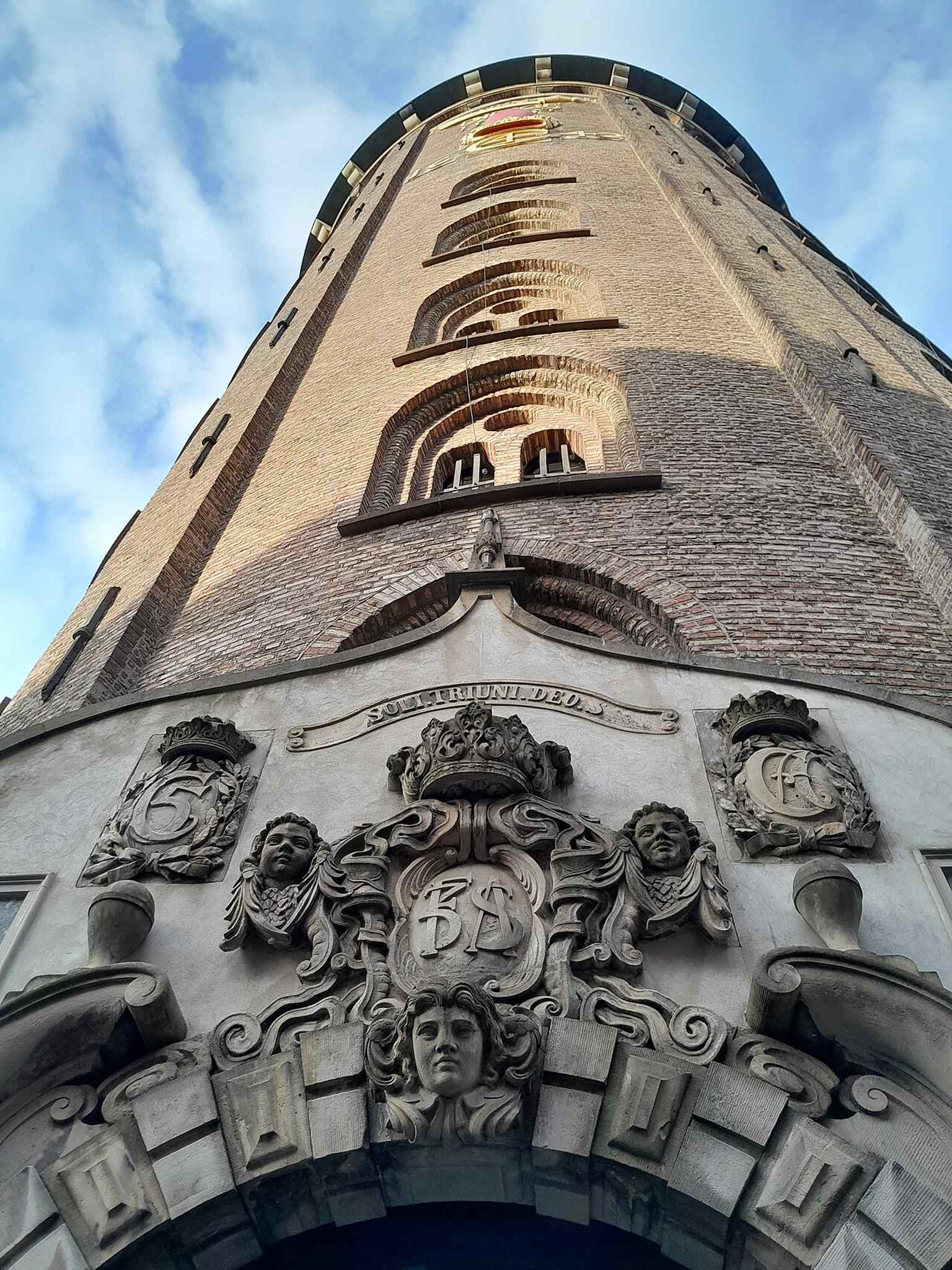
The enduring architectural form of this landmark stands as a testament to historical presence, much like the archaeological evidence from Sutton Hoo continues to fuel speculation about Rædwald's burial or commemoration.Photo: August Dominus, Wikimedia Commons, CC0. Cropped & resized. Rædwald, whose name translates from Old English as 'power in counsel', ruled from around five ninety-nine to six twenty-four. He was a member of the Wuffingas dynasty. Historical details are a bit scarce because Viking invasions in the ninth century destroyed the local monasteries where all the paperwork was kept. But the fragments we do have paint a picture of a man who survived through brilliant, if slightly chaotic, pragmatism.
Early on, Rædwald ruled under the authority of Æthelberht, the king of Kent. Through this political connection, Rædwald became the first king of the East Angles to convert to Christianity, getting baptized sometime before six hundred and five. However, he was a deeply practical man. Not wanting to infuriate his pagan wife or alienate his household, he set up a temple with two altars. One was dedicated to Christ, and right next to it, another was dedicated to the old pagan gods. Just hedging his bets.
His ultimate test of character came when a royal exile named Edwin arrived at his door. Edwin was running from his rival, Æthelfrith of Northumbria, and sought asylum. Æthelfrith sent messengers offering massive amounts of silver to have Edwin assassinated. Rædwald declined. Æthelfrith tried a second and third time, offering even more wealth and promising immediate war if Rædwald refused. The king actually caved and considered handing his guest over, but his pagan queen fiercely intervened. She reminded him that selling a desperate friend for cash was completely dishonorable. Shamed into doing the right thing, Rædwald refused the silver and chose war.
In six sixteen, Rædwald marched his army north to the River Idle. The battle was an absolute bloodbath. Rædwald's son, Rægenhere, was killed in the chaos. Enraged by the terrible loss, Rædwald smashed through the enemy lines himself and killed Æthelfrith, securing a decisive victory.
This triumph made Rædwald the most powerful English king south of the Humber estuary. He was later recognized as a bretwalda, an Old English term meaning 'wide-ruler' or high king. When he died around six twenty-four, historians believe he became the man buried in the famous Sutton Hoo ship-burial, a massive mound excavated in nineteen thirty-nine that contained a whole ship filled with gold, garnets, and symbols of immense imperial power.
This tower is open to visitors every day from ten A-M to eight P-M. Take your time reflecting on that rather unexpected history, and we will catch up at the next location.
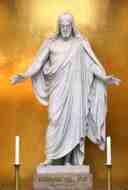
Look to your left, where you will find an eleven-foot-tall white marble statue of a figure in heavily draped robes, standing on a stone base with hands stretched outward. This…Read moreShow less
Open dedicated page →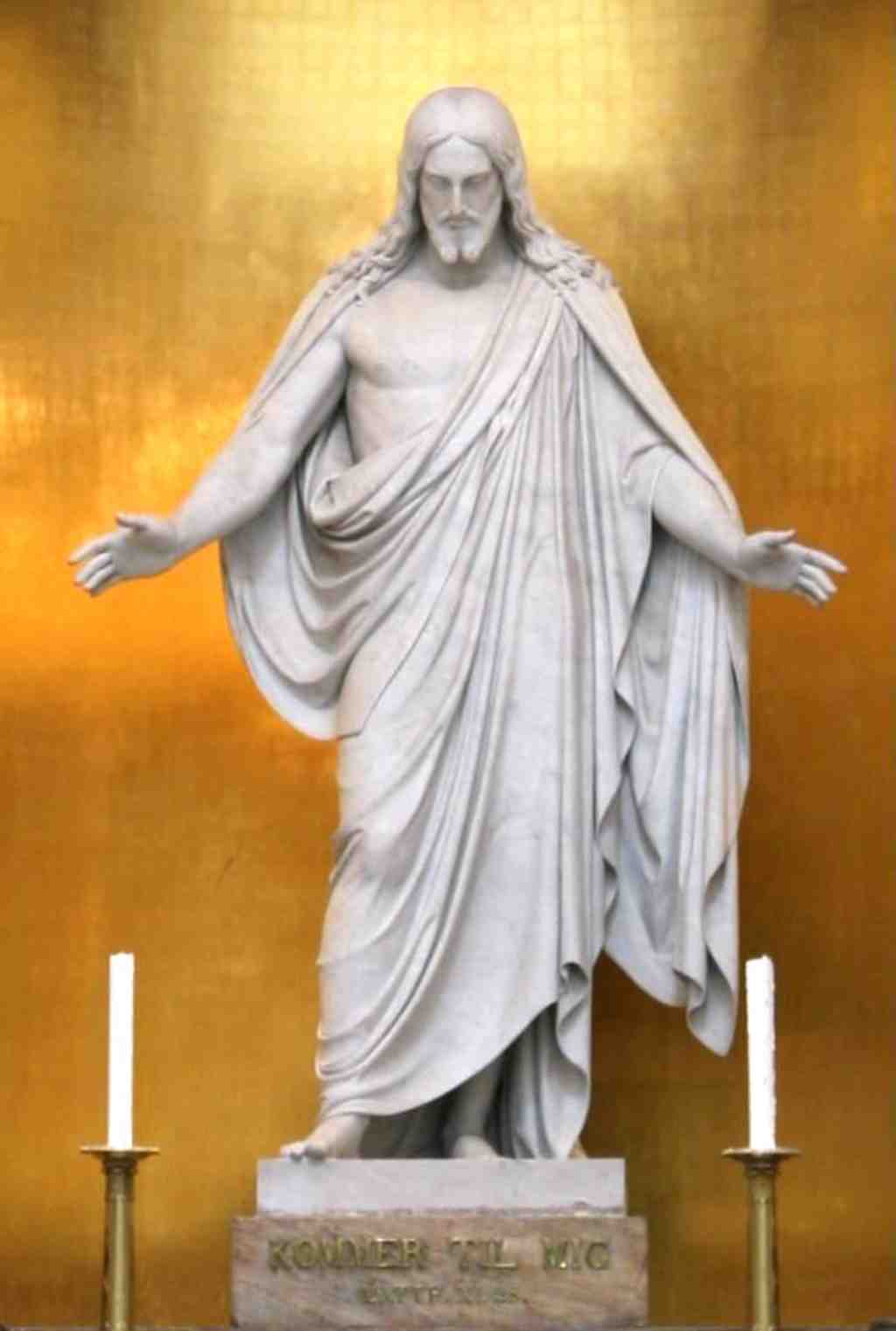
ChristusPhoto: IbRasmussen, Wikimedia Commons, Public domain. Cropped & resized. Look to your left, where you will find an eleven-foot-tall white marble statue of a figure in heavily draped robes, standing on a stone base with hands stretched outward.
This is Christus. It owes its existence to a rather aggressive urban renewal project by the British Royal Navy. In September eighteen oh seven, during the Napoleonic Wars, the British bombarded Copenhagen and burned the Church of Our Lady to the ground. When the Danes finally rebuilt the church, they commissioned their star sculptor, Bertel Thorvaldsen, to design the interior. He was tasked with creating a baptismal font, decorative elements, and statues of Jesus and the apostles. He notably included Paul instead of Judas Iscariot.
Thorvaldsen was a clever problem solver. Marble is unforgiving, and carving it takes a massive amount of time. Take a glance at your app to see his original eighteen twenty-two plaster cast model. Thorvaldsen simply supplied this plaster version for the church's consecration in June eighteen twenty-nine. It bought him four more years to work on the final piece, which was carved from gleaming white Carrara marble from Tuscany and finally swapped in during November eighteen thirty-three.
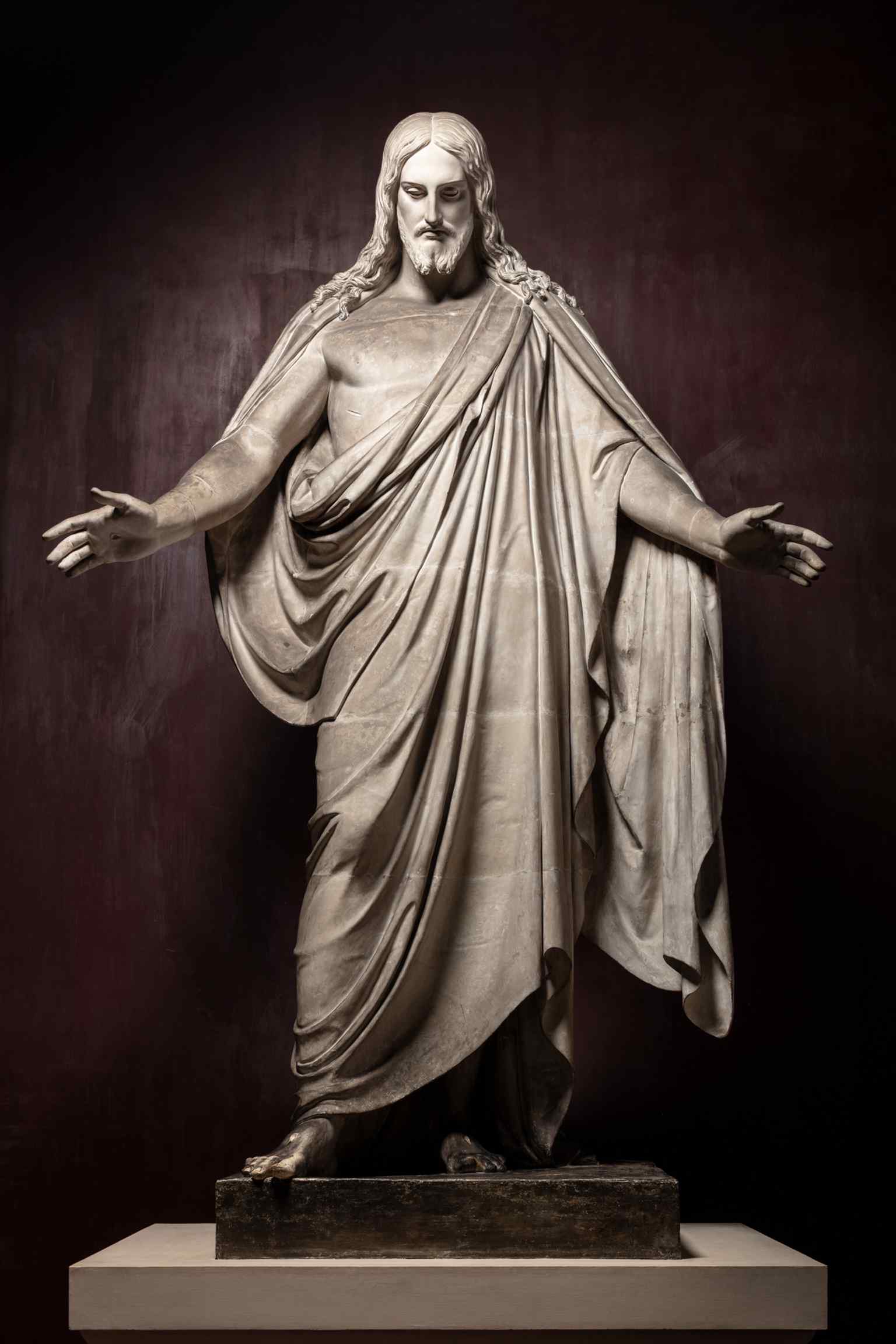
The original plaster cast model of Christus, completed in 1822, displayed in the Thorvaldsen Museum before the marble statue replaced it in the church.Photo: Bertel Thorvaldsen, Wikimedia Commons, CC0. Cropped & resized. The statue depicts the resurrected Jesus. If you look at the base, the Danish inscription reads Kommer til mig, meaning Come unto me. This is a direct nod to the Bible verse Matthew chapter eleven, verse twenty-eight. Thorvaldsen deliberately posed the figure with hands spread open and leaning slightly forward, ensuring the display of the wounds in the hands was impossible to miss.
Now, if you think this design looks familiar, you are completely right. It is one of the most widely reproduced religious sculptures in the world. Its reach is frankly astonishing. You will find replicas everywhere from a hospital in Baltimore, to a church made of thirty thousand white Lego pieces in Sweden, to a cemetery in Texas. You can pull up your screen to see that very unexpected bronze Texas version.
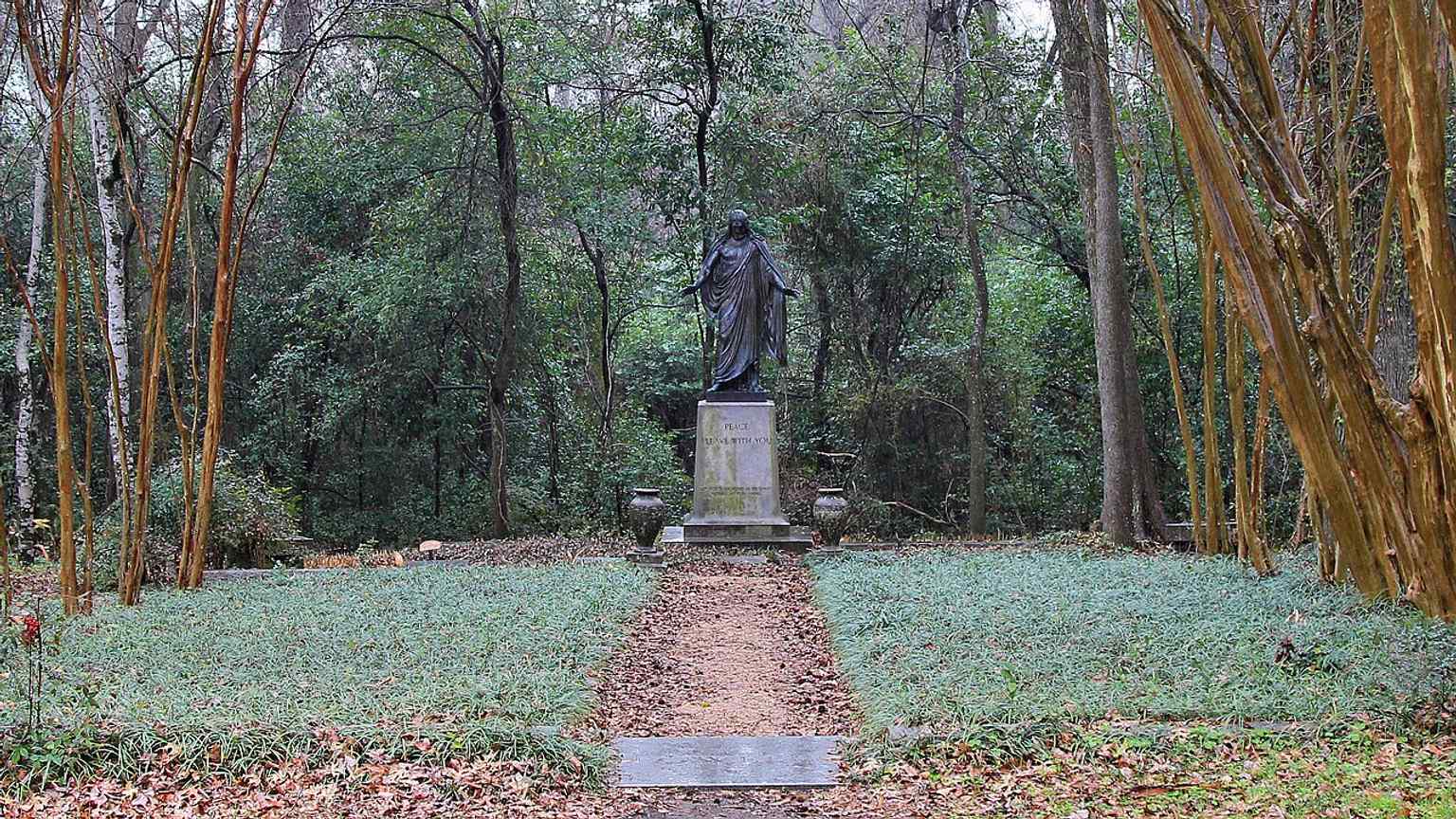
This bronze replica of Christus is located in the Powell Sanctuary at Oakwood Cemetery in Huntsville, Texas, one of the few full-sized copies in the United States.Photo: Larry D. Moore, Wikimedia Commons, CC BY 4.0. Cropped & resized. But the most prolific distributor of the Christus franchise is the Church of Jesus Christ of Latter-day Saints. In the late nineteen fifties, a church leader named Stephen L Richards purchased an exact twelve-thousand-pound marble replica. Moving a six-ton block of delicate Italian marble to Salt Lake City, Utah, in nineteen fifty-nine was a logistical nightmare, but it paid off. They placed it in their North Visitors Center, and it became a central icon. The church loved the impact so much they commissioned more massive replicas for the nineteen sixty-four New York World's Fair and the nineteen seventy Expo in Osaka, Japan.
Imagine shipping an eleven-thousand-pound marble statue from Italy to Japan, storing it in a warehouse for six years, and then putting it on another boat to New Zealand. The shipping manifests alone are enough to make a modern supply chain manager weep.
In April two thousand and twenty, the church officially made the Christus image the central element of their new symbol. From a destroyed church in nineteenth-century Copenhagen to a globally recognized icon, Thorvaldsen's precise, calculated design did exactly what he built it to do. It commands the room, no matter which room in the world it happens to be standing in.
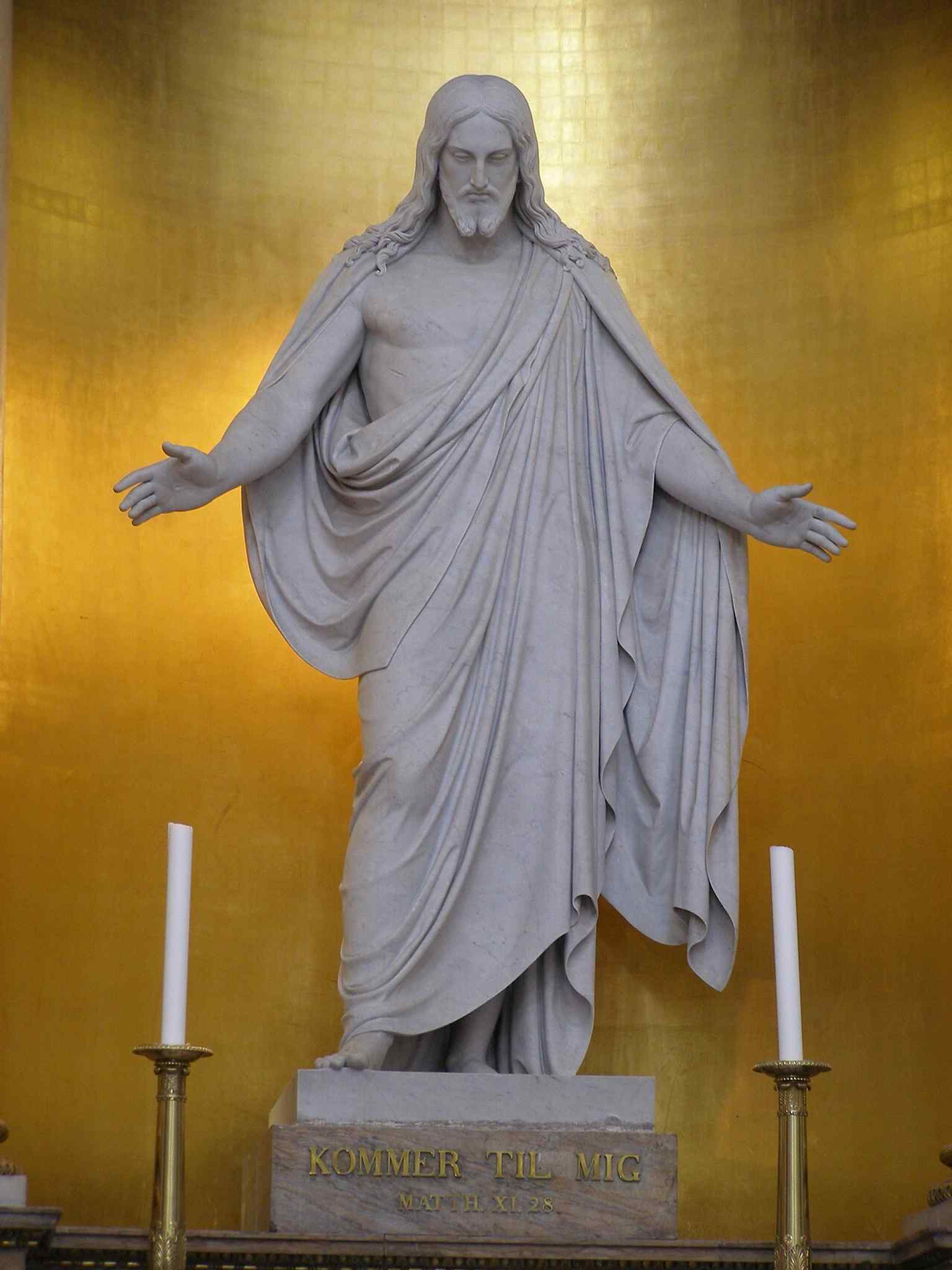
The original 11-foot white Carrara marble statue of Christus by Bertel Thorvaldsen, installed in Copenhagen's Church of Our Lady in 1833 after the church was rebuilt from fire.Photo: Bertel Thorvaldsen, Wikimedia Commons, CC BY-SA 4.0. Cropped & resized. 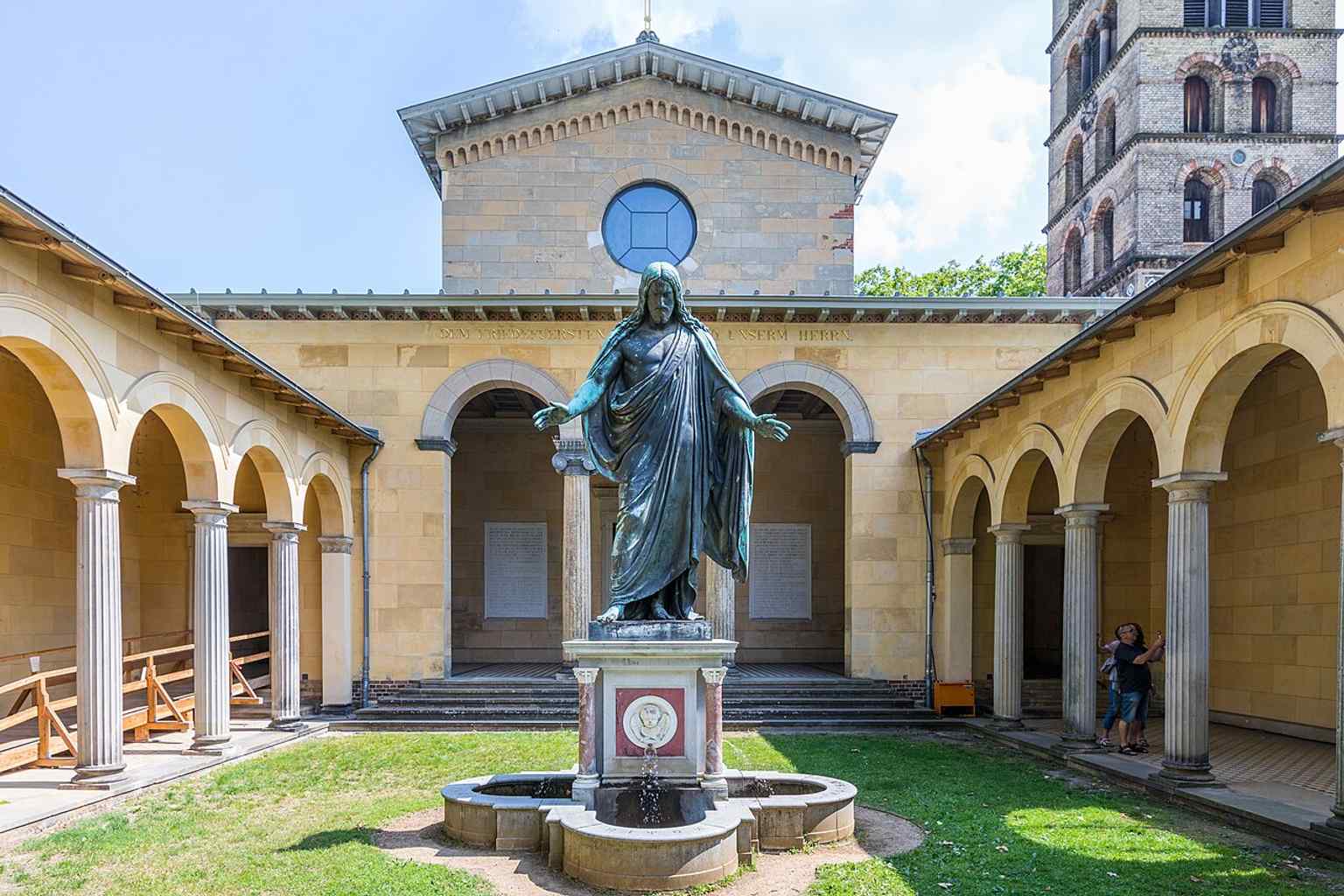
A replica of the Christus statue positioned in front of the Church of Peace in Potsdam, Germany, built between 1845 and 1854.Photo: Raimond Spekking, Wikimedia Commons, CC BY-SA 4.0. Cropped & resized.
Frequently asked questions
How do I start the tour?
After purchase, download the AudaTours app and enter your redemption code. The tour will be ready to start immediately - just tap play and follow the GPS-guided route.
Do I need internet during the tour?
No! Download the tour before you start and enjoy it fully offline. Only the chat feature requires internet. We recommend downloading on WiFi to save mobile data.
Is this a guided group tour?
No - this is a self-guided audio tour. You explore independently at your own pace, with audio narration playing through your phone. No tour guide, no group, no schedule.
How long does the tour take?
Most tours take 60–90 minutes to complete, but you control the pace entirely. Pause, skip stops, or take breaks whenever you want.
What if I can't finish the tour today?
No problem! Tours have lifetime access. Pause and resume whenever you like - tomorrow, next week, or next year. Your progress is saved.
What languages are available?
All tours are available in 50+ languages. Select your preferred language when redeeming your code. Note: language cannot be changed after tour generation.
Where do I access the tour after purchase?
Download the free AudaTours app from the App Store or Google Play. Enter your redemption code (sent via email) and the tour will appear in your library, ready to download and start.
If you don't enjoy the tour, we'll refund your purchase. Contact us at [email protected]
Checkout securely with 






.jpg)


