
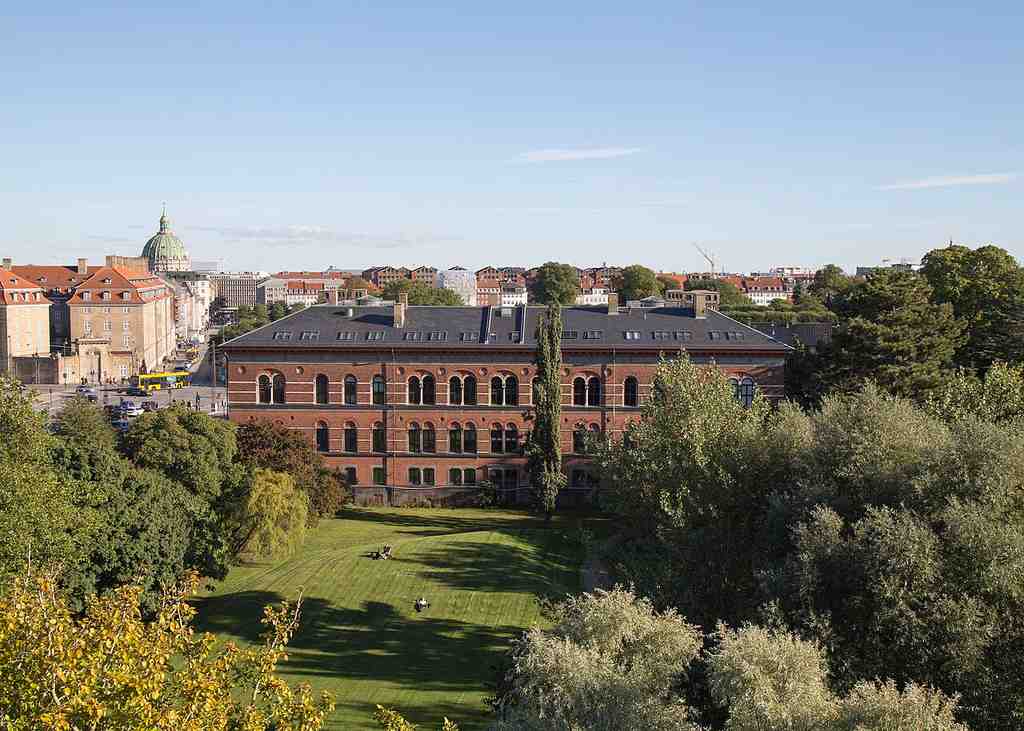
Look to your left for a large, rectangular red brick building defined by a dark sloped roof and a repeating row of arched windows along its middle floor. This is the main headquarters of the Natural History Museum of Denmark. I know we just spent time looking out into space at the Observatory, but this place is all about understanding the very ground we walk on.
The museum as an organization was officially formed in two thousand and four, when the government decided to mash together the national zoological, geological, and botanical collections. For a long time, the official catalog claimed they held roughly fourteen million specimens. Then, in twenty twenty-three, an international team did a thorough recount and realized the actual number was closer to seventeen million. You really have to admire an institution that can casually misplace three million objects.
The roots of this massive hoarding instinct go back four hundred years to a Danish physician named Ole Worm. In the mid sixteen hundreds, he created Museum Wormianum. This was not just the first museum in Denmark, but genuinely one of the earliest museums in the entire world. It was a classic cabinet of curiosities, stuffed with oddities from across the globe. After Worm died, King Frederik the Third absorbed the massive collection into his own Royal Cabinet of Curiosities, and the national obsession with cataloging nature was born.
By the seventeen sixties, this collection process became highly systematic. A naturalist named Peter Forsskål embarked on the first major scientific expedition to Arabia Felix, an area we now know as Yemen, from seventeen sixty-three to seventeen sixty-seven. He spent years meticulously collecting corals, shells, insects, and plants. He managed to successfully describe sixty completely new plant genera and seven hundred new species before he caught malaria and died on the journey. His surviving botanical and zoological collections remain some of the most important items inside these walls today.
The sheer volume of what is preserved here is staggering. We are talking mammoth skeletons, meteorites, dinosaur bones, and countless bizarre deep sea creatures floating in jars of alcohol. They are also responsible for the botanical garden network, which manages about ten thousand living plant species.
If the organization seems slightly in transition right now, it is because they are preparing a massive upgrade. They are constructing a brand new museum building nearby, set to open in twenty twenty-six, designed by Lundgaard and Tranberg Architects. They are finally giving those seventeen million specimens some proper elbow room.
If you want to view the exhibitions, keep in mind they are closed on Mondays, but open from ten in the morning to five in the afternoon the rest of the week, staying open until nine in the evening on Wednesdays.
This institution holds almost four billion years of planetary history under one roof. Consider the immense scale of what is preserved here, then follow your map to our next destination.




