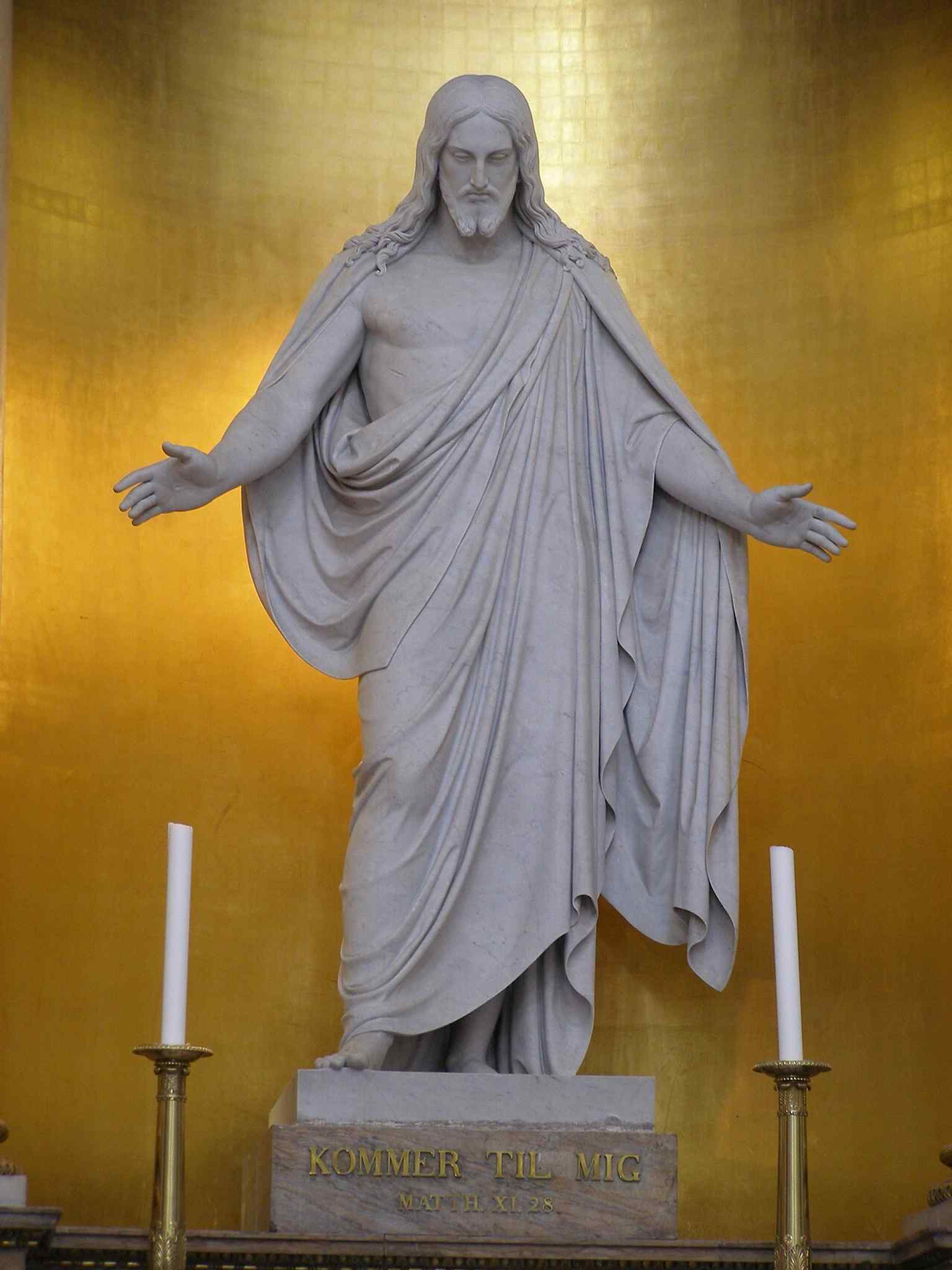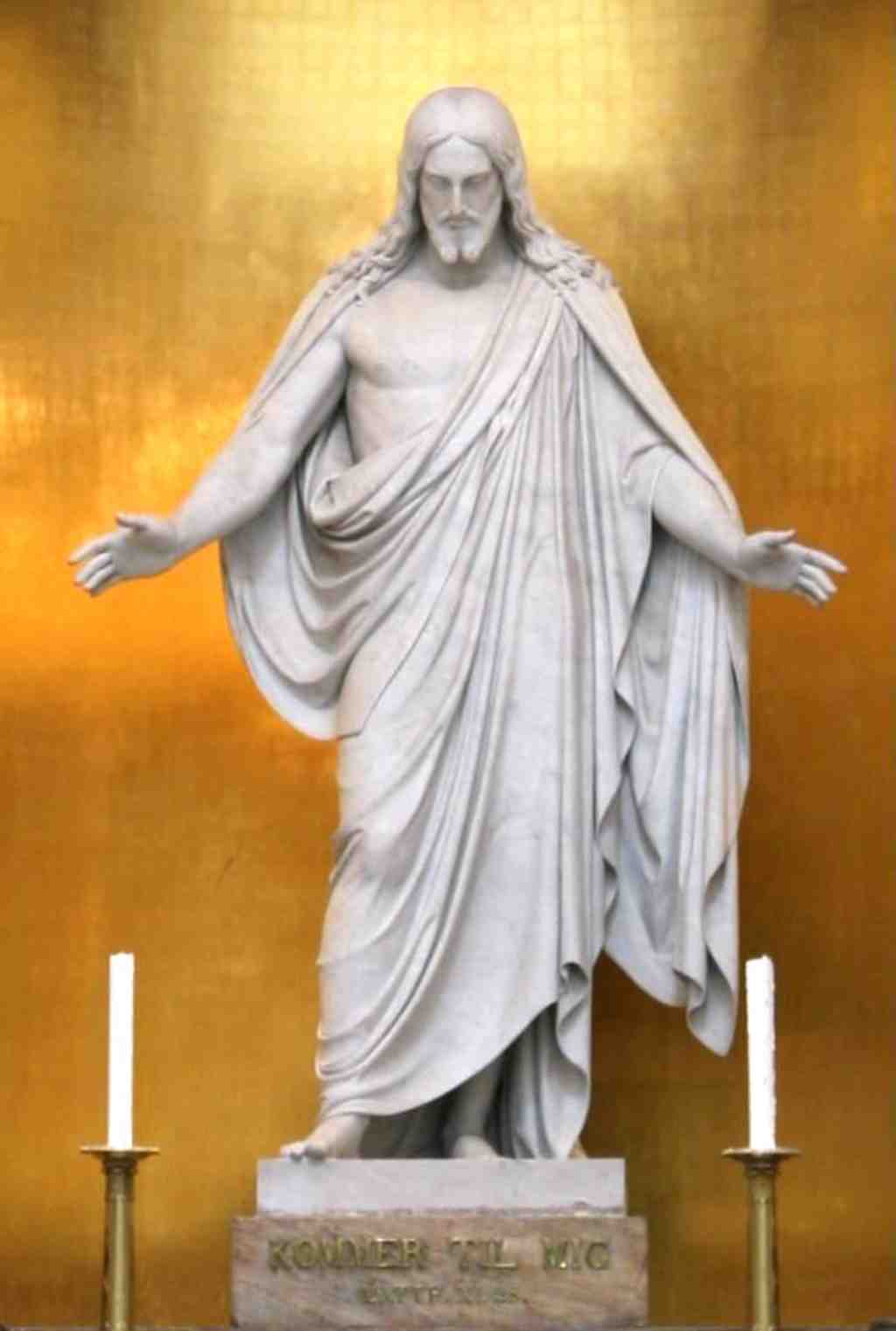
Look to your left, where you will find an eleven-foot-tall white marble statue of a figure in heavily draped robes, standing on a stone base with hands stretched outward.
This is Christus. It owes its existence to a rather aggressive urban renewal project by the British Royal Navy. In September eighteen oh seven, during the Napoleonic Wars, the British bombarded Copenhagen and burned the Church of Our Lady to the ground. When the Danes finally rebuilt the church, they commissioned their star sculptor, Bertel Thorvaldsen, to design the interior. He was tasked with creating a baptismal font, decorative elements, and statues of Jesus and the apostles. He notably included Paul instead of Judas Iscariot.
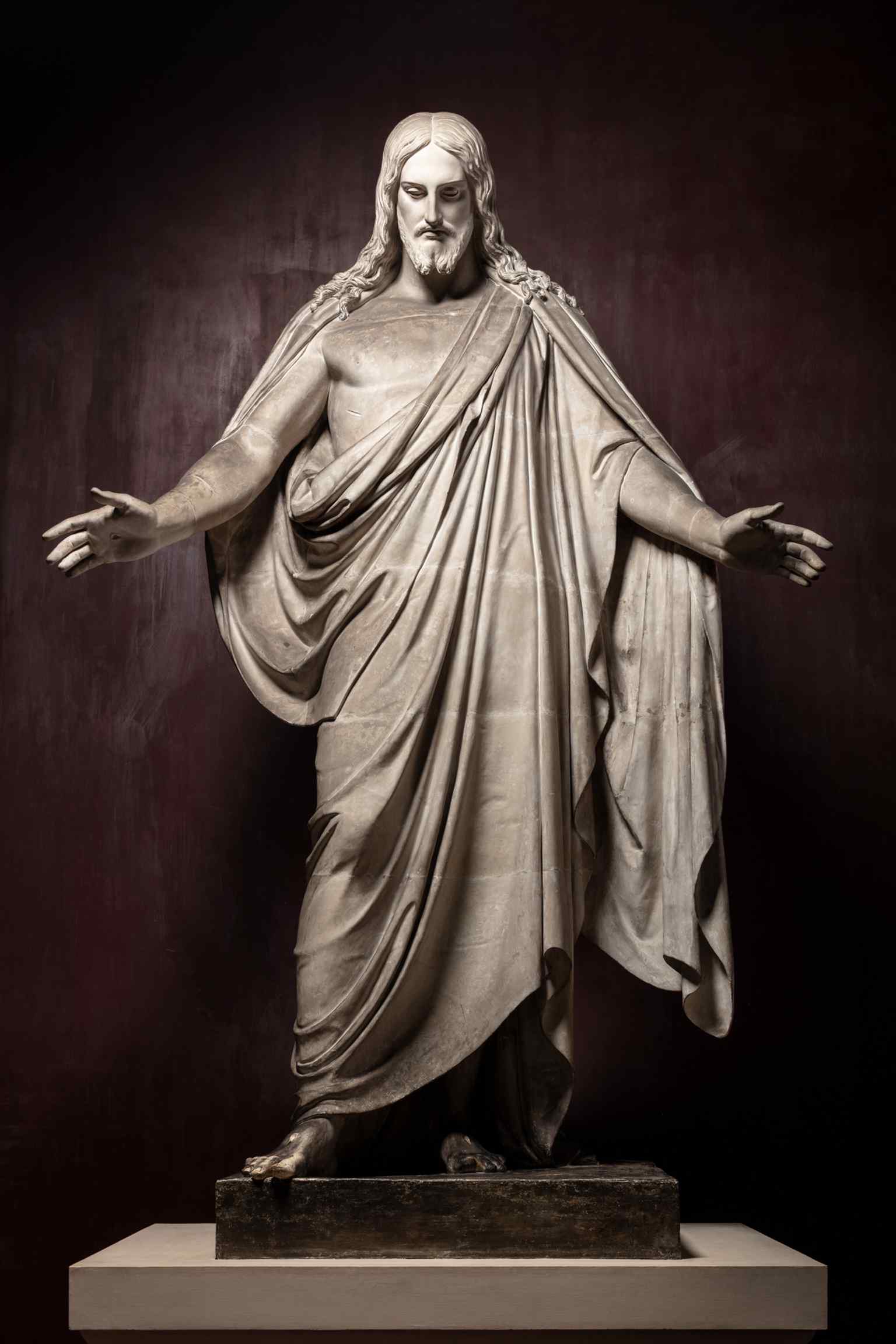
Thorvaldsen was a clever problem solver. Marble is unforgiving, and carving it takes a massive amount of time. Take a glance at your app to see his original eighteen twenty-two plaster cast model. Thorvaldsen simply supplied this plaster version for the church's consecration in June eighteen twenty-nine. It bought him four more years to work on the final piece, which was carved from gleaming white Carrara marble from Tuscany and finally swapped in during November eighteen thirty-three.
The statue depicts the resurrected Jesus. If you look at the base, the Danish inscription reads Kommer til mig, meaning Come unto me. This is a direct nod to the Bible verse Matthew chapter eleven, verse twenty-eight. Thorvaldsen deliberately posed the figure with hands spread open and leaning slightly forward, ensuring the display of the wounds in the hands was impossible to miss.
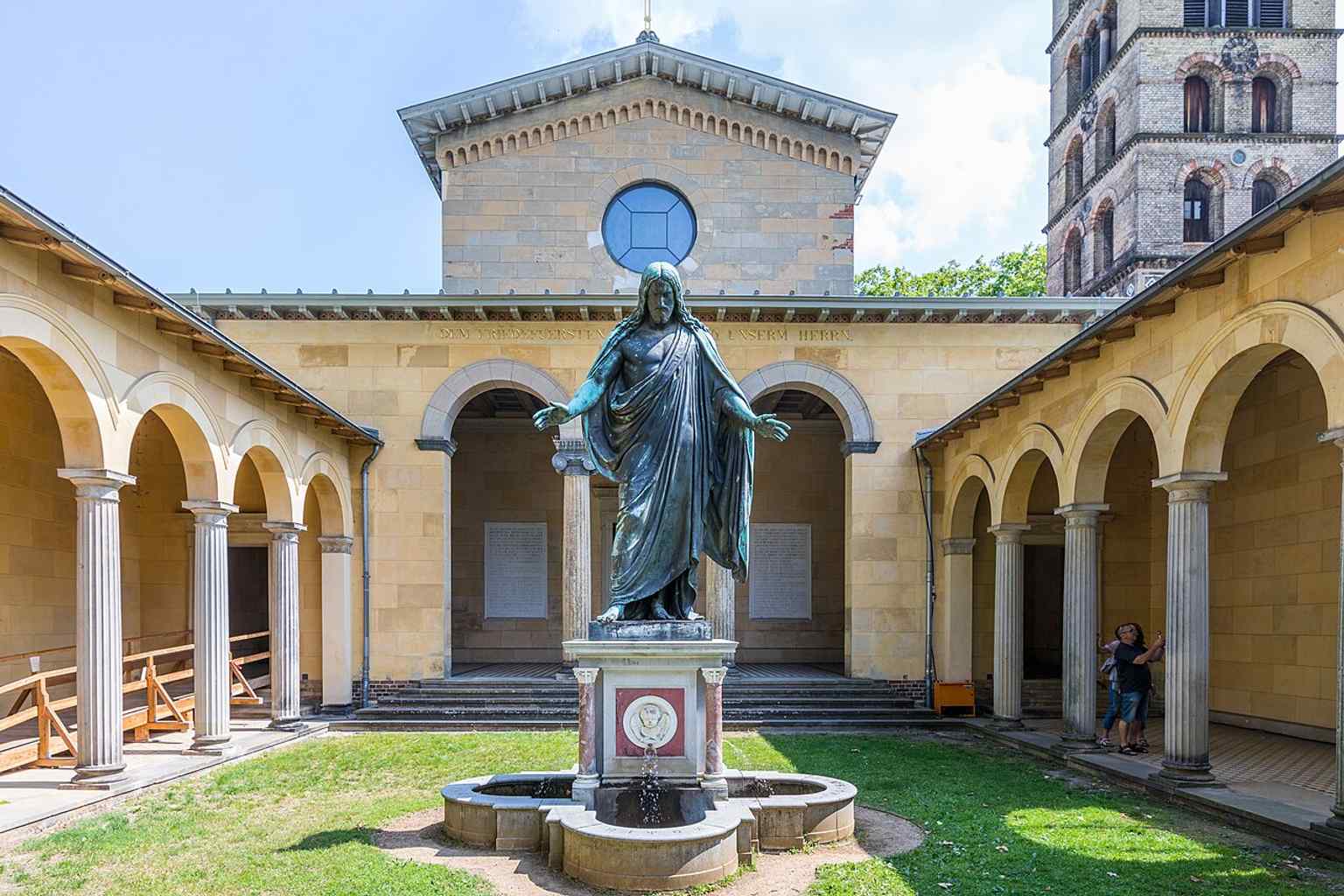
Now, if you think this design looks familiar, you are completely right. It is one of the most widely reproduced religious sculptures in the world. Its reach is frankly astonishing. You will find replicas everywhere from a hospital in Baltimore, to a church made of thirty thousand white Lego pieces in Sweden, to a cemetery in Texas. You can pull up your screen to see that very unexpected bronze Texas version.
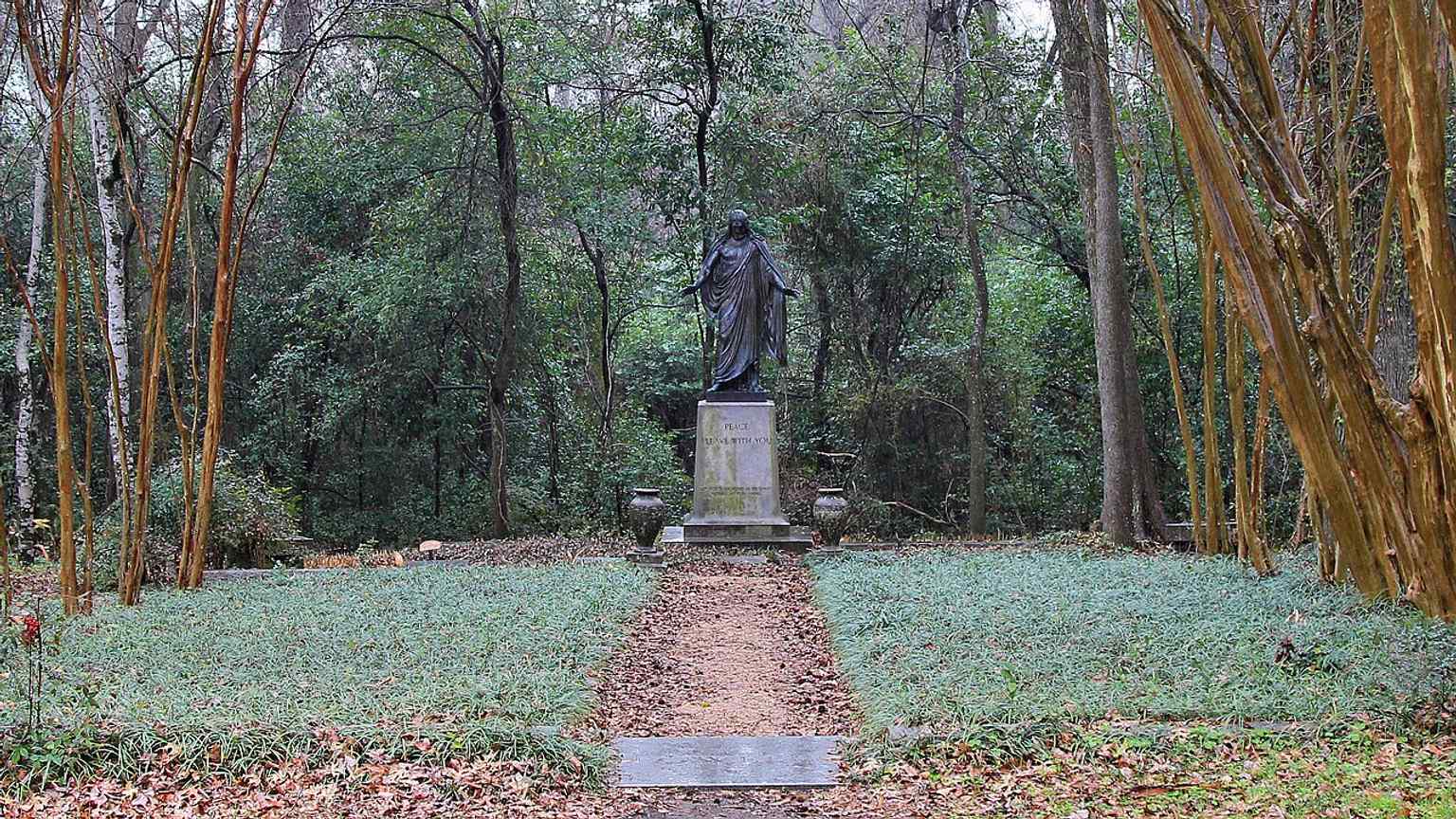
But the most prolific distributor of the Christus franchise is the Church of Jesus Christ of Latter-day Saints. In the late nineteen fifties, a church leader named Stephen L Richards purchased an exact twelve-thousand-pound marble replica. Moving a six-ton block of delicate Italian marble to Salt Lake City, Utah, in nineteen fifty-nine was a logistical nightmare, but it paid off. They placed it in their North Visitors Center, and it became a central icon. The church loved the impact so much they commissioned more massive replicas for the nineteen sixty-four New York World's Fair and the nineteen seventy Expo in Osaka, Japan.
Imagine shipping an eleven-thousand-pound marble statue from Italy to Japan, storing it in a warehouse for six years, and then putting it on another boat to New Zealand. The shipping manifests alone are enough to make a modern supply chain manager weep.
In April two thousand and twenty, the church officially made the Christus image the central element of their new symbol. From a destroyed church in nineteenth-century Copenhagen to a globally recognized icon, Thorvaldsen's precise, calculated design did exactly what he built it to do. It commands the room, no matter which room in the world it happens to be standing in.