
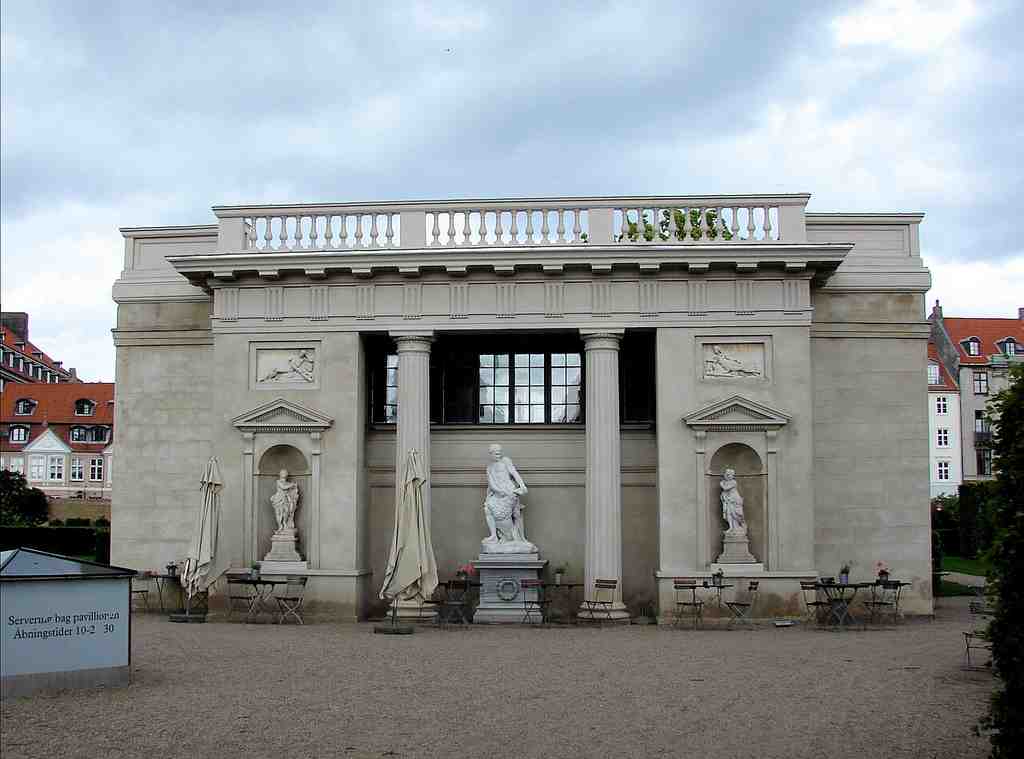
On your left, look for a pale symmetrical building featuring a deep central alcove framed by two stout columns, housing a dramatic stone statue of a man wrestling a lion.
This is the Hercules Pavilion. When King Christian the Fourth built the original structure here in sixteen oh six, he engineered a rather clever trick. He installed hidden acoustic channels in the walls so his guests could enjoy invisible music on the upper floor while the orchestra played out of sight below.
In sixteen seventy-one, King Christian the Fifth upgraded the building into an eremitage, a private retreat where royals could dine without servants eavesdropping. He solved the privacy problem through sheer mechanics, building a dining table that was fully set in the downstairs kitchen and then hoisted up through a trapdoor. An elegant solution.
By seventeen seventy-two, the park had fallen into decay. A royal commission wanted to scrap almost everything, but architect C-F Harsdorff intervened. Pull up your screen to see the classical facade he designed in seventeen seventy-three. Harsdorff carved out that deep central niche specifically to house the Hercules statue, which a previous king had shipped all the way from Florence.
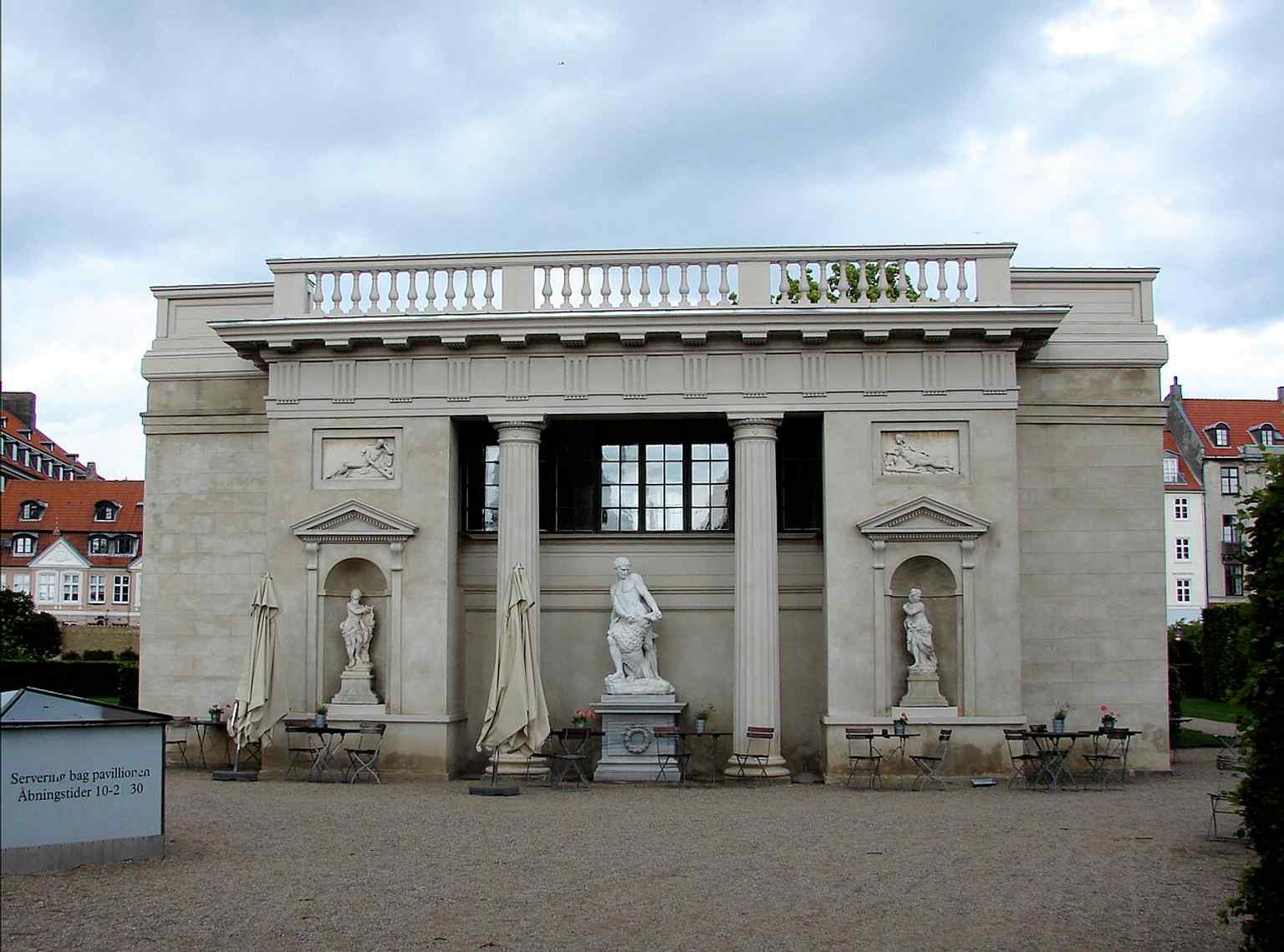
By eighteen ten, the pavilion found its modern calling when a confectioner began serving punch and lemonade to the public. It still operates as a moderately priced cafe today, open from nine in the morning until six or seven in the evening depending on the day.
Take your time admiring the clever architecture. When you are ready to move on, we will head to our next location.





