
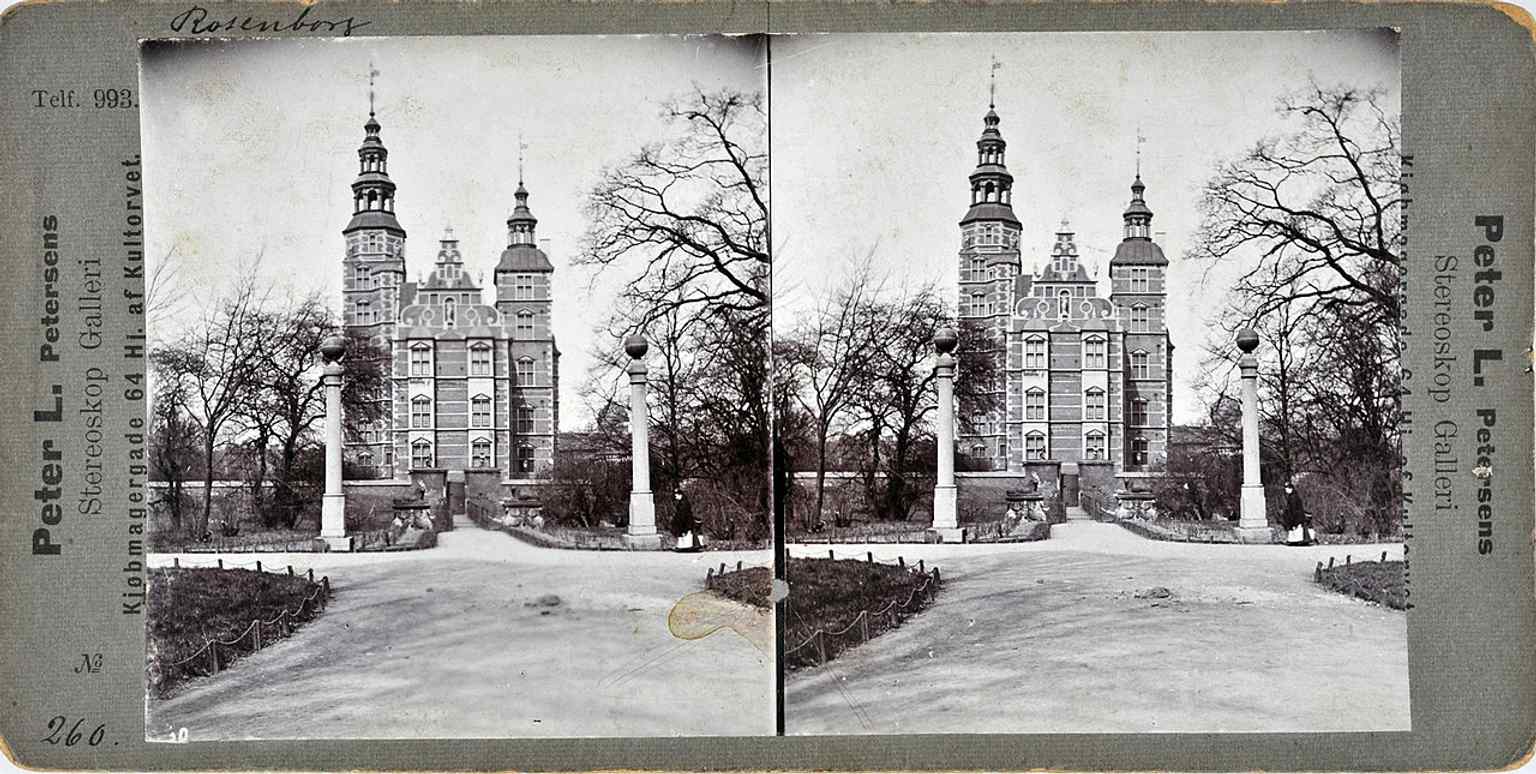
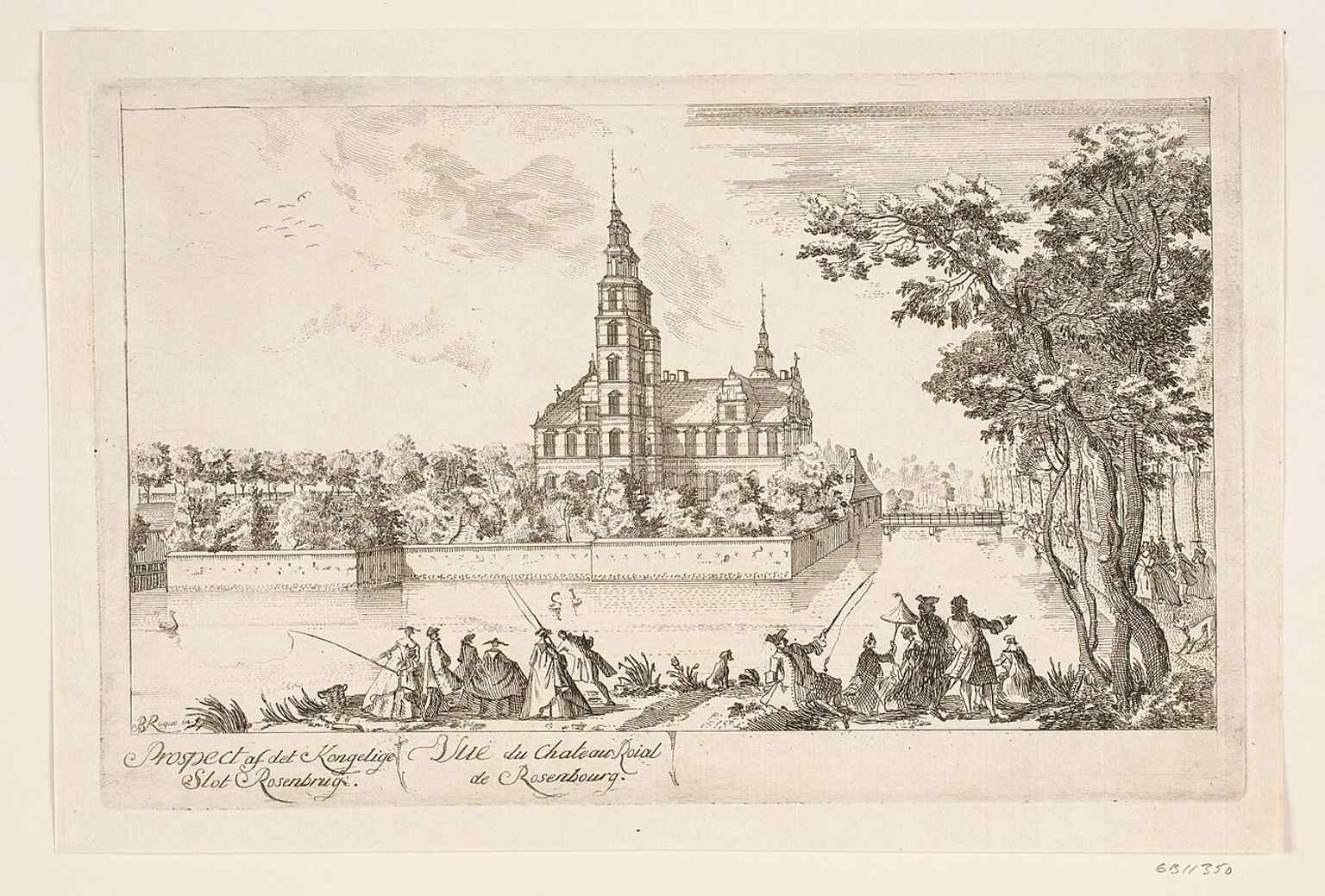
On your right is Rosenborg Castle. Look at those soaring towers and the red brickwork accented with sandstone. This is a masterclass in Dutch Renaissance architecture, a style known for its ornate gables and striking symmetry, which became the standard for Danish buildings of the era. King Christian the Fourth started this project in sixteen oh six. He originally envisioned a modest little hermitage, a quiet getaway. But, as kings tend to do, he got carried away. Over the next twenty-eight years, the building went through four massive expansions until it reached the form you see before you.
If you pull up the before and after image on your app, you will notice that while the gardens have evolved, that distinct architectural profile has remained remarkably untouched over the last century.
Christian the Fourth adored this place. In fact, his attachment was a bit extreme. When he lay dying at another palace, he actually ordered his staff to drag him onto a horse-drawn sled and haul him back to Rosenborg, just so he could end his days in his favorite building.
By seventeen ten, his great-grandson, Frederik the Fourth, decided the castle was outdated. Instead of living here, he repurposed it as a giant storage unit for his royal collections. Because of that practical decision, Rosenborg features some of the most perfectly preserved historical interiors in Europe. Take a glance at your screen to see the stunning crown of King Christian the Fourth, one of the priceless jewels protected inside.
If you want to view the regalia yourself, the museum is open every day from ten A-M to five P-M. Take your time admiring the masonry, and whenever you are ready, we can head to our next stop.







.jpg)