

Buenos Aires Highlights Audio Tour: Scientific and Cultural Path
Beneath the manicured plazas of Buenos Aires lie the fossilized echoes of ancient giants and the lingering ghosts of political defiance. This city is a living archive waiting for a key. Navigate the streets with this immersive self guided audio tour. Uncover the secret narratives hidden behind the walls of the Argentine Museum of Natural Sciences and the quiet domes of the Argentine Association of Friends of Astronomy. Did a forgotten rebellion once shatter the stillness of Avenida Doctor Honorio Pueyrredón? What star charts were buried to hide a scandal that could have toppled the government? Why did an eccentric collector leave a single, unidentified bone behind in the dead of night? Trace the pulse of the metropolis as history collides with your footsteps. Emerge transformed by the shadows and secrets you unearthed. Plug in your headphones and begin the descent into the hidden heart of Buenos Aires now.
Tour preview
About this tour
- scheduleDuration 60–80 minsGo at your own pace
- straighten2.3 km walking routeFollow the guided path
- location_onLocationBuenos Aires, Argentina
- wifi_offWorks offlineDownload once, use anywhere
- all_inclusiveLifetime accessReplay anytime, forever
- location_onStarts at Monument to El Cid Campeador
Stops on this tour
lock_open 3 free previews · 5 unlock with purchase
Look up at the bronze knight astride a rearing horse atop a towering, pale marble rectangular block, his right arm hoisting a tall spear straight into the sky. That is Rodrigo…Read moreShow less
Open dedicated page →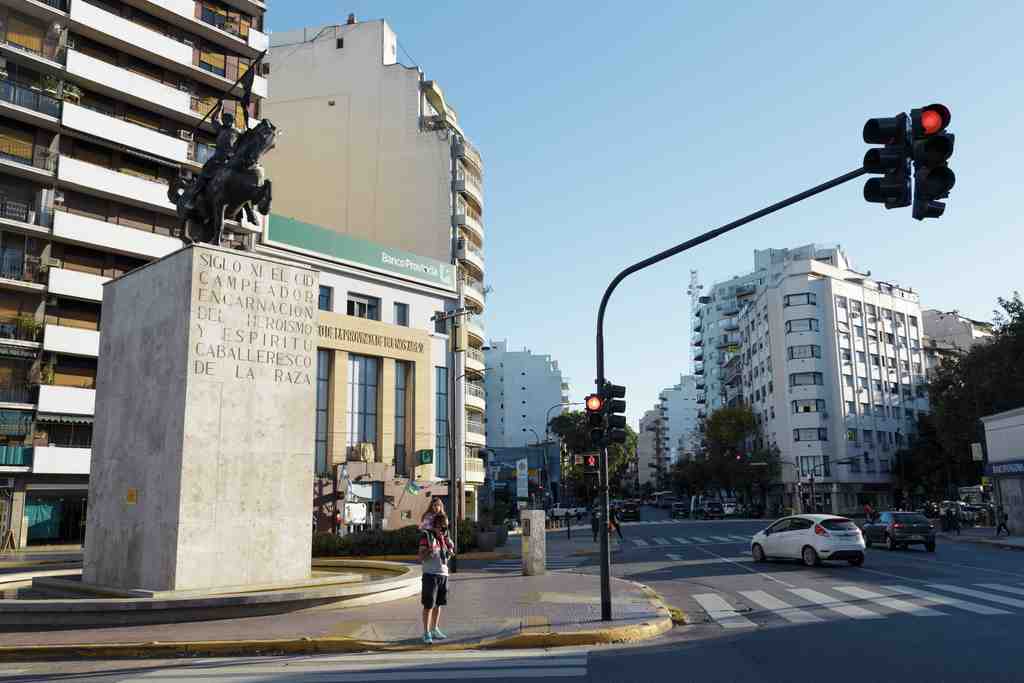
Monument to El Cid CampeadorPhoto: Lara Va, Wikimedia Commons, CC BY-SA 4.0. Cropped & resized. Look up at the bronze knight astride a rearing horse atop a towering, pale marble rectangular block, his right arm hoisting a tall spear straight into the sky. That is Rodrigo Díaz de Vivar, an eleventh-century Castilian knight better known as El Cid.
Now, despite all precise technical measurements proving otherwise, a persistent urban myth designates this very spot as the exact geographic center of Buenos Aires. Locals stubbornly use it as their primary compass, and saying see you at the Cid has been the standard meeting protocol for generations of people crossing between the northern and southern neighborhoods. The actual, mathematically calculated geometric center has shifted over the years to a couple of different addresses nearby, but good luck telling that to anyone who lives here.
This massive bronze sculpture was crafted by American artist Anna Hyatt Huntington. Her philanthropist husband had dedicated his life to Spanish culture, even translating the epic medieval poem of El Cid, which inspired her to pivot from animal sculptures to Spanish heroes.
But the story of this intersection is really about how the landscape is constantly engineered and remolded, balancing rigid municipal planning with grand public art. Take a look at your screen to see the monument back in 1935, resting on its original, majestic Art Deco pedestal designed by architect Martín Noel. Noel was a major figure in the Neocolonial movement, an architectural style that revived early Spanish colonial aesthetics. His pedestal was a towering masterpiece meant to bridge the heritage of two nations.
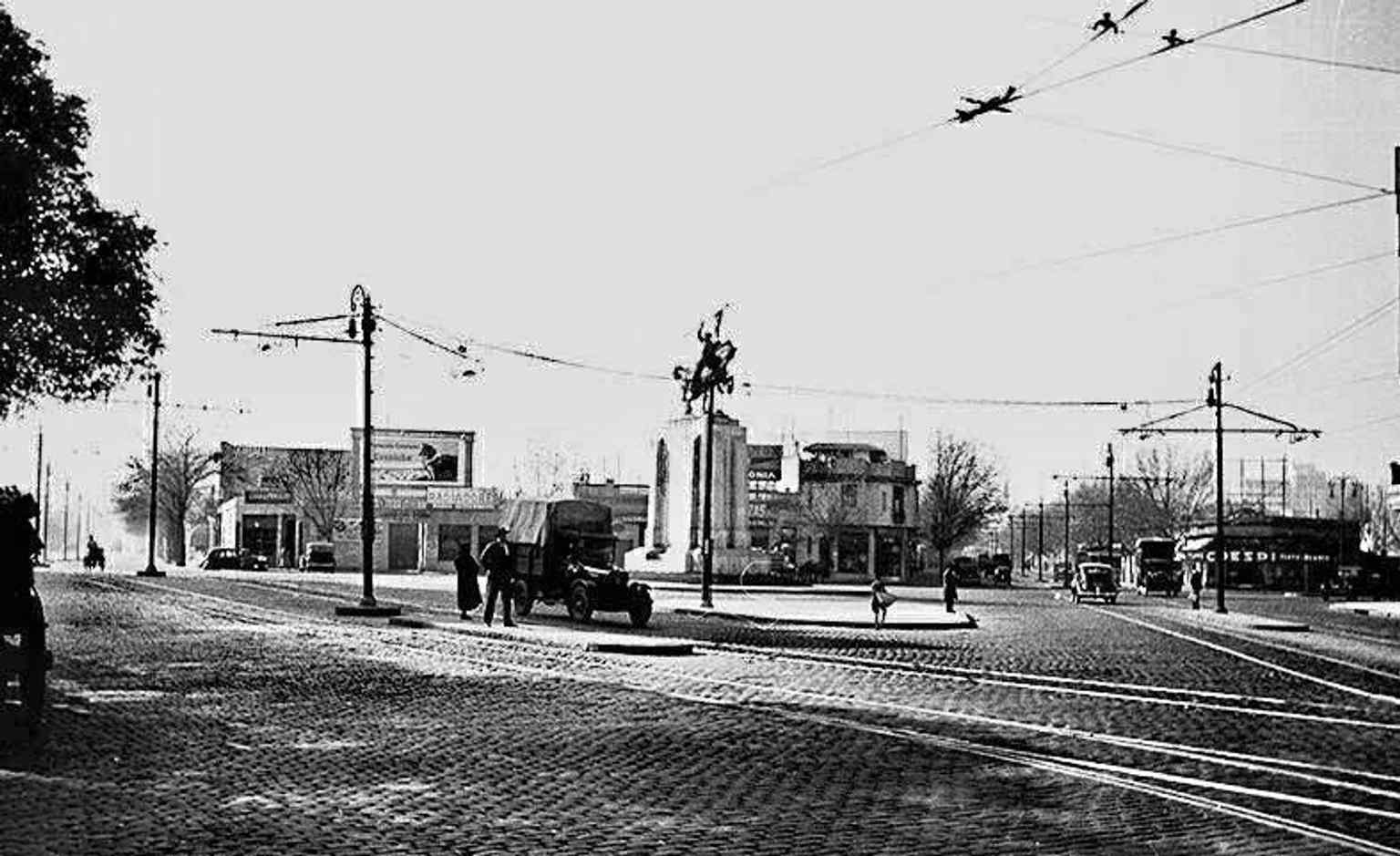
See the monument in 1935, resting on its original, grand Art Deco pedestal designed by architect Martín Noel, which was later replaced in 1960.Photo: Unknown, Wikimedia Commons, Public domain. Cropped & resized. Yet in 1960, progress demanded a new traffic layout. The solution? The city dragged the entire twelve-meter monument a few feet over and completely discarded Noel's elegant pedestal, replacing it with the plain, functional block you see today to accommodate the changing grid.
Over eight decades later, El Cid Campeador continues to watch over Buenos Aires, witnessing everything from the vintage cars of the 1930s to pedestrians wearing masks during the 2021 pandemic. You can check out a comparison of these eras in the app right now.
That tension between preserving cultural identity and paving the way for urban efficiency is still alive. During a 2015 renovation, a passionate local activist group managed to bring soil from the eight Spanish provinces of the Camino del Cid, a historic route following the knight's life, and placed it in an adjacent garden here to honor the monument's roots. Unfortunately, the municipal government soon arrived to finish their renovations and poured a thick layer of cement right over that sacred, imported earth. The activists are still lobbying to have the pavement ripped up.
Since he is stationed right in the middle of a massive public intersection, the good knight is open twenty-four hours a day. Let us leave the geographic myths behind and continue down the avenue, moving from medieval legends to industrial history, as we head toward our next stop at Avenida Doctor Honorio Pueyrredón, just a two-minute walk away.
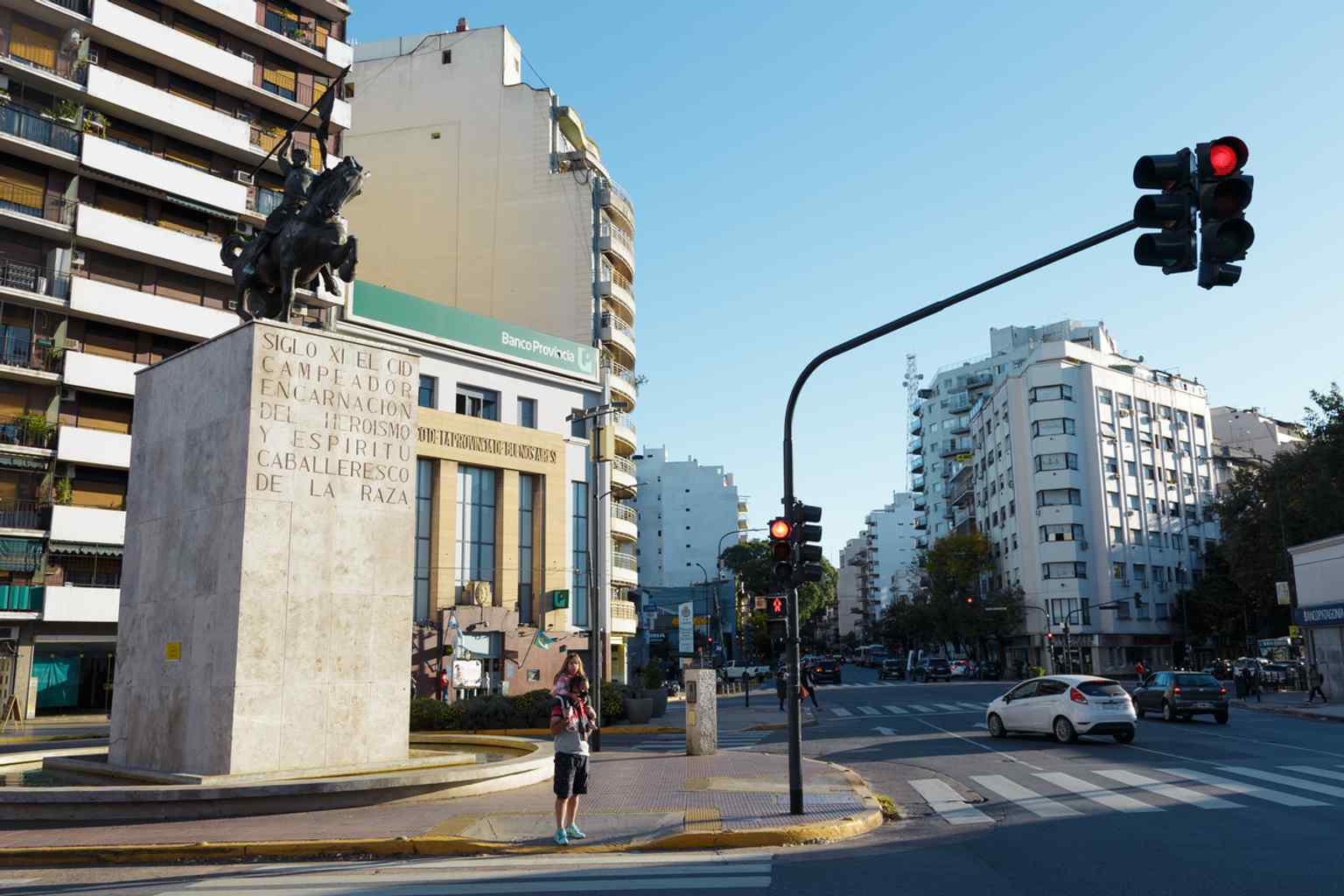
The Monument to El Cid Campeador stands as a modern-day landmark, serving as a vital communication hub where five major avenues intersect.Photo: Lara Va, Wikimedia Commons, CC BY-SA 4.0. Cropped & resized. Look out for the tall black wrought-iron signpost with its classic white lettering and ornate scrollwork standing at the edge of the concrete pathways that weave beneath a heavy…Read moreShow less
Open dedicated page →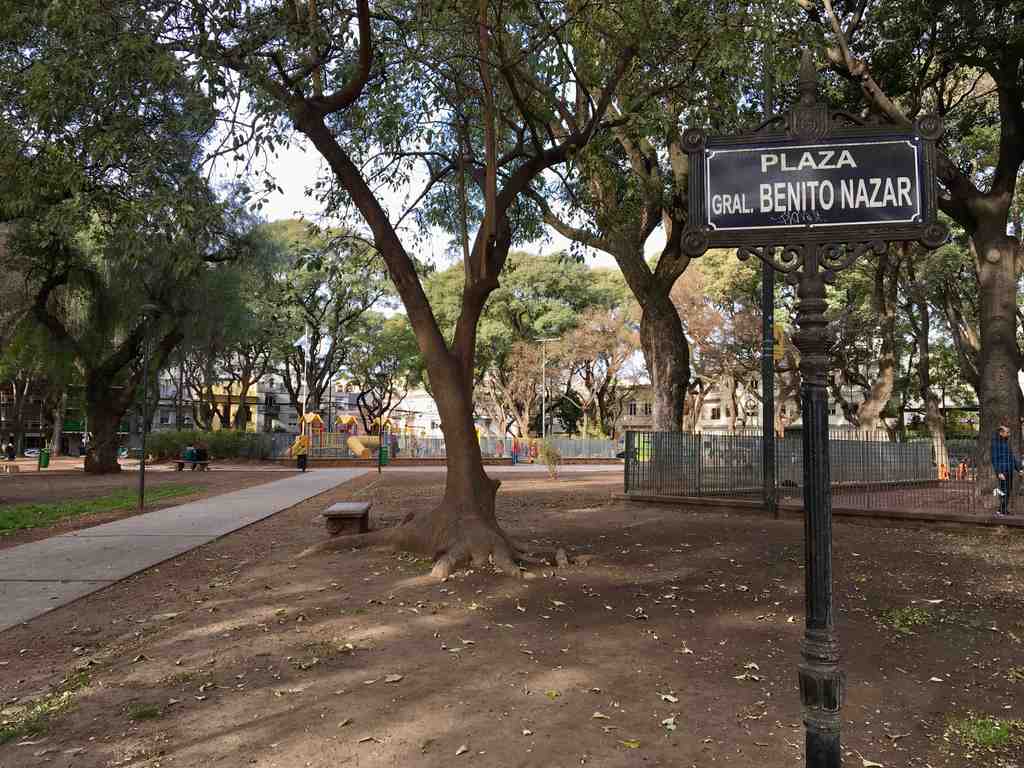
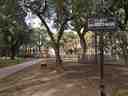
Plaza Benito NazarPhoto: Madamebiblio, Wikimedia Commons, CC BY-SA 4.0. Cropped & resized. Look out for the tall black wrought-iron signpost with its classic white lettering and ornate scrollwork standing at the edge of the concrete pathways that weave beneath a heavy canopy of mature trees.
Welcome to Plaza General Benito Nazar. This patch of green represents a fascinating shift in how cities grow, transforming from private military estates into the shared, breathing spaces of a modern neighborhood.
To understand how this happened, we have to look back to 1849, when General Benito Nazar and his wife bought this vast tract of land for twenty-five thousand pesos moneda corriente, a historic currency roughly equivalent to a few hundred thousand dollars today. Born in 1801, General Nazar was a defining figure in the early Argentine military. He served as an artillery officer at the pivotal Battle of Ituzaingó in 1827 and later shaped the nation's forces as Minister of War and Commander General during the War of the Triple Alliance.
But the General himself did not build this plaza. That civic vision came from his children. In 1911, his daughter María Inés Nazar donated this specific square block to the municipality, part of a coordinated family strategy to cement their father's legacy through public works and schools. At first, the city had a very different idea for this plot. They wanted to turn it into a football field for the neighborhood youth. But local residents pushed back, advocating for a contemplative, garden-style public walk instead. The neighbors won out, and the lush, winding paths you see today were laid out under the direction of the city's parks department.
If you check your app, you can see a close-up of the plaza's central mast. This mast has its own dramatic history of loss and restoration. In 2001, its original bronze commemorative plaque was stolen, leaving the monument completely stripped of context. It sat anonymous for sixteen years until 2017, when local veteran groups and the Rotary Club installed a new plaque, rededicating the space to fallen soldiers to mark the thirty-fifth anniversary of the Malvinas War.
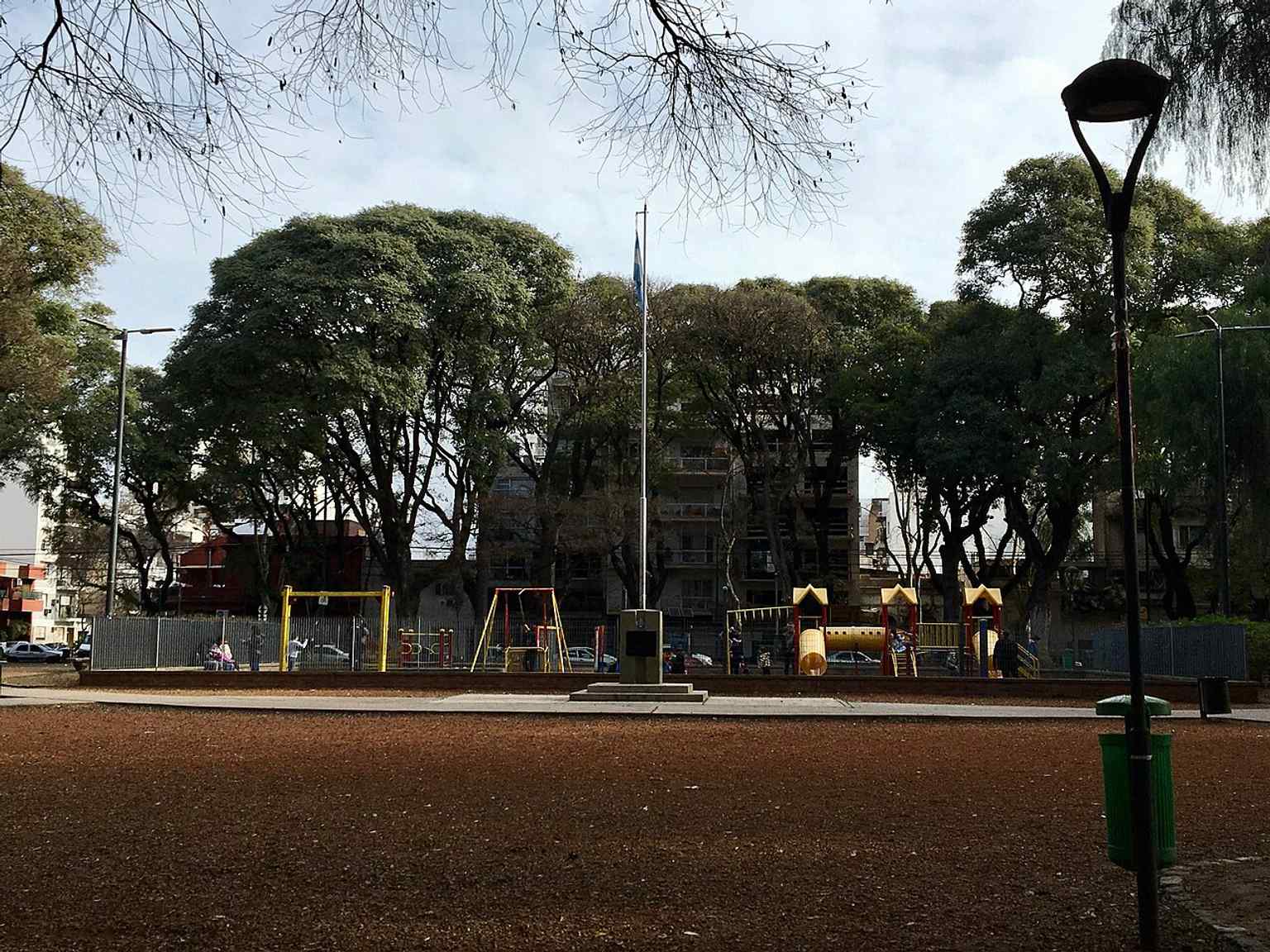
The central mast shown here commemorates the neighborhood's military heritage, with a new plaque installed in 2017 to honor fallen soldiers and mark the 35th anniversary of the Malvinas War.Photo: Madamebiblio, Wikimedia Commons, CC BY-SA 4.0. Cropped & resized. There is a recurring, modern battle over the plaza's name, too. Local historians frequently have to correct city signage that drops the word General from the title. They invoke Cicero's ancient maxim to not lie and dare to tell the truth, arguing that omitting his military rank is a form of historical erasure, undermining the family's exact reason for giving the land away in the first place.
Frankly, name disputes are practically a neighborhood tradition here. Back in the 1880s, Italian cobblers at the nearby National Shoe Factory campaigned to name this entire area San Crispín, after the patron saint of shoemakers. Instead, a local power struggle resulted in the neighborhood being named Villa Crespo to flatter the sitting Intendente, the local mayor at the time. The area's religious identity was then handed over to San Bernardo, simply because it was the name of the factory manager's father. So the cobblers lost on both fronts.
The plaza is open twenty-four hours a day, every day, so you can always find a moment of peace here along the quiet paths.
When you are ready, let us leave the park behind and move towards the busier commercial artery of Ángel Gallardo, which is about an eleven-minute walk away.
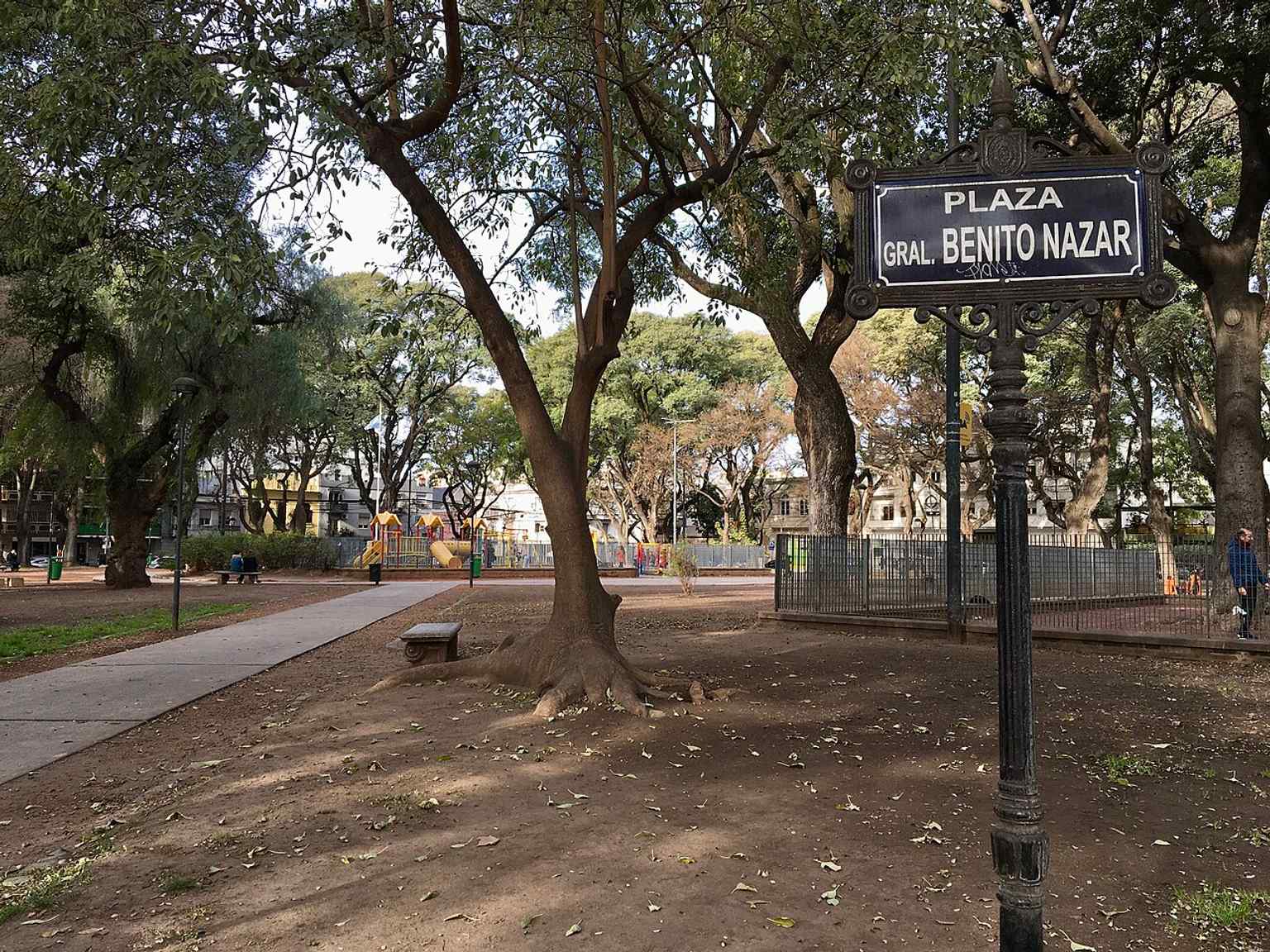
This general view of Plaza Benito Nazar showcases the 'garden-style' public walk, a victory for residents who advocated for lush vegetation over an initial plan for a football field.Photo: Madamebiblio, Wikimedia Commons, CC BY-SA 4.0. Cropped & resized. 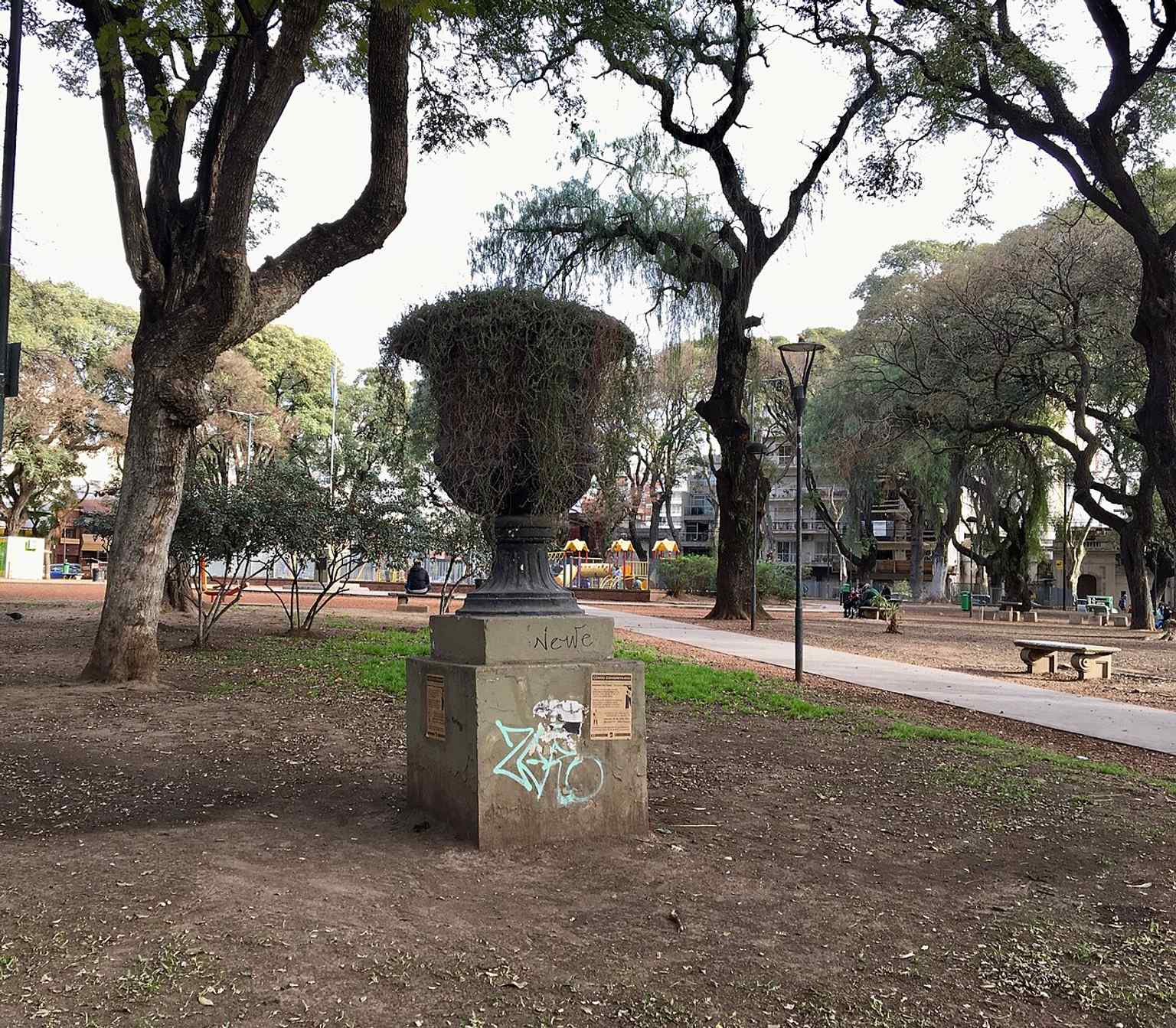
This decorative motif reflects the aesthetic design of the plaza, which was executed under the direction of Carlos Thays' son, prioritizing beauty over organized sports facilities.Photo: Madamebiblio, Wikimedia Commons, CC BY-SA 4.0. Cropped & resized.
Show 5 more stopsShow fewer stopsexpand_moreexpand_less
Look for the prominent entrance sign displaying a blue wave shaped like an infinity symbol alongside a bright yellow sun, attached to the museum's imposing stone exterior. The…Read moreShow less
Open dedicated page →Look for the prominent entrance sign displaying a blue wave shaped like an infinity symbol alongside a bright yellow sun, attached to the museum's imposing stone exterior. The obsession to classify and understand the natural world drove nations to construct these massive temples of knowledge. It was a relentless pursuit of science that transformed scattered collections into monumental institutions meant to anchor a rapidly growing city.
Take a moment to examine the exterior walls of the building itself. If you look closely, you can spot intricate reliefs of native animals like tapirs, flamingos, and sea lions carved directly into the stone. They turn the very architecture into an open book on biodiversity. Inside, even the iron staircases mimic terrestrial snail shells, and the heavy roof brackets take the form of bats with outspread wings.
For three decades, this vision was fiercely guarded by Germán Burmeister, a severe German savant who ran the institution with an iron fist. He was a brilliant encyclopedist of the old guard, meaning he was a scholar who tried to master absolutely every scientific discipline, and he became infamous for his bitter opposition to Charles Darwin's new evolutionary theories. Burmeister despised the younger, Darwin-supporting scientists, sparking intense rivalries that fractured the local academic community. His arch-nemesis, Florentino Ameghino, was so fed up that he helped found a completely separate museum in La Plata just to escape Burmeister's conservative grip. It is a perfect example of how fierce academic obsessions can literally redraw the cultural map of a region, as rival camps built rival institutions.
Burmeister's story ended right inside the walls he fought so hard to control. At the age of eighty-five, while trying to pry open a tall display cabinet, the fierce director tumbled off a double ladder, smashed through the glass, and severed an artery. He succumbed to his injuries a few months later.
But the mission of the museum expanded far beyond those old rivalries. It took about fifteen years to construct the building you see today, and even then, shifting politics and tight budgets meant only a third of the original symmetric design was ever finished. Still, its halls are magnificent. Take a glance at your screen to see the modern mammal hall, where colossal skeletons, like that of an Asian elephant, loom over visitors.
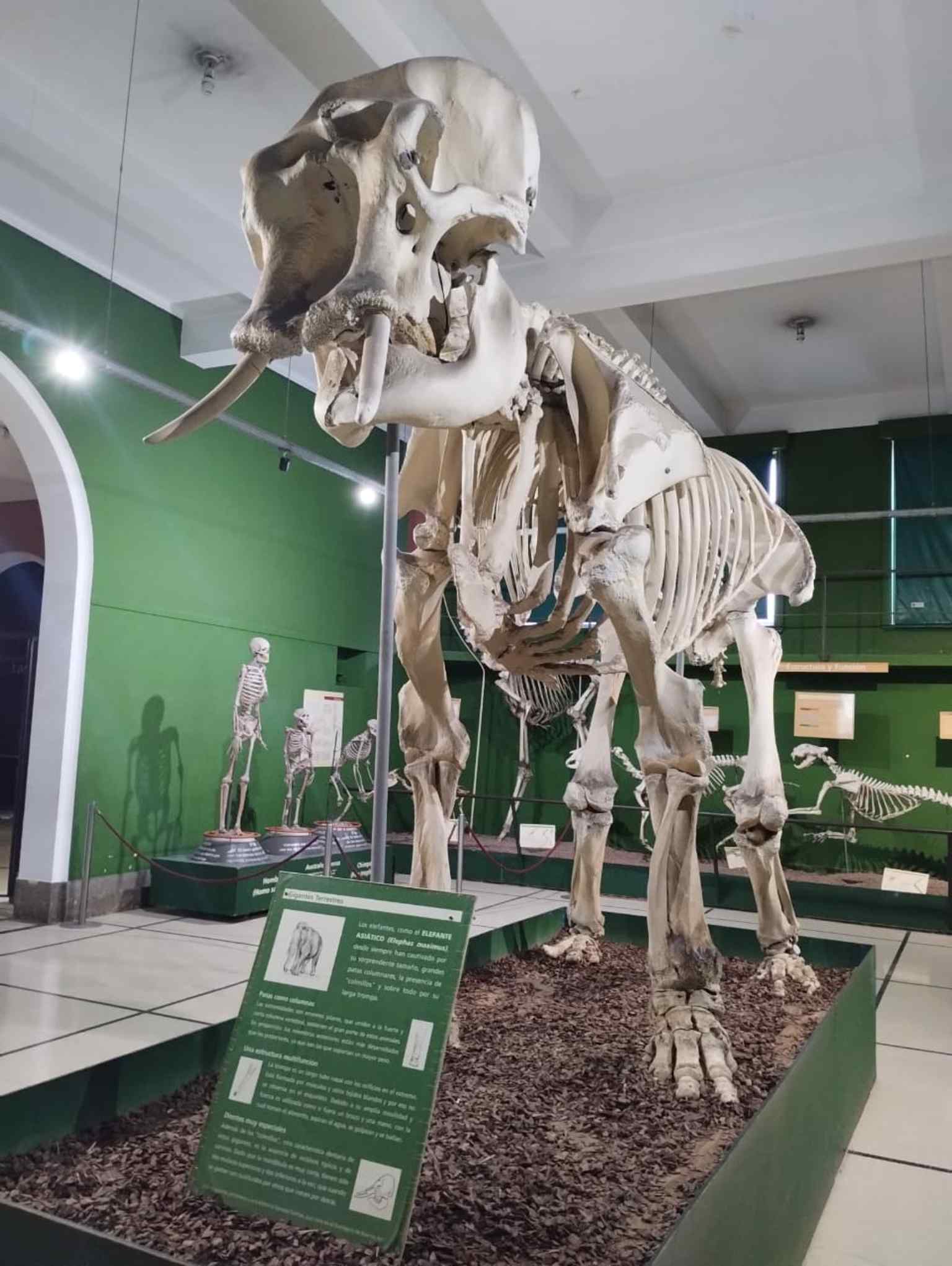
The 'Mamíferos actuales' hall showcases large skeletons, like this Asian Elephant, illustrating the vast diversity of mammals.Photo: WILLYWOSTER, Wikimedia Commons, CC BY-SA 4.0. Cropped & resized. The institution's dedication to discovery eventually pushed its experts to the very edges of the earth. In the late nineteen sixties, a seventy-two-year-old specialist in starfish named Irene Bernasconi led the first all-female scientific expedition to Antarctica. You can check your app to see a museum paleontologist sharing her groundbreaking story today. Bernasconi and her team braved the absolute extremes to gather thousands of specimens, proving that the drive to uncover the unknown knows no bounds of age or gender.
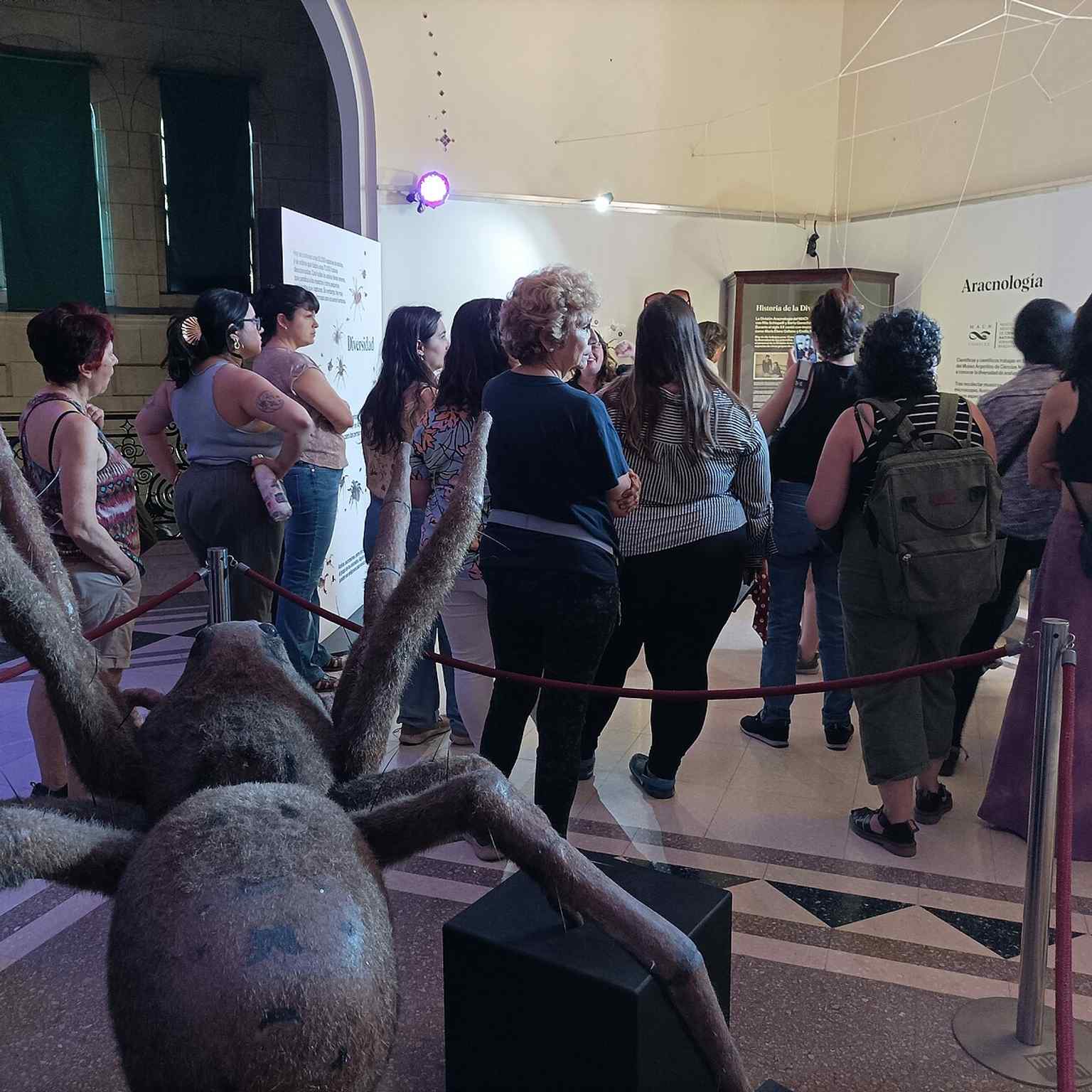
A paleontologist from the museum shares the story of pioneering female scientists like Irene Bernasconi, who led the first all-female expedition to Antarctica in 1968.Photo: 1985Idea, Wikimedia Commons, CC BY-SA 4.0. Cropped & resized. Now, let us step away from this temple of natural history and venture into the actual greenery that surrounds it. Our next stop is Centennial Park, just a five-minute walk from here. Oh, and if you plan to explore the museum's extensive exhibits, keep in mind they are open every afternoon from two to seven, except on Mondays when the doors remain closed.
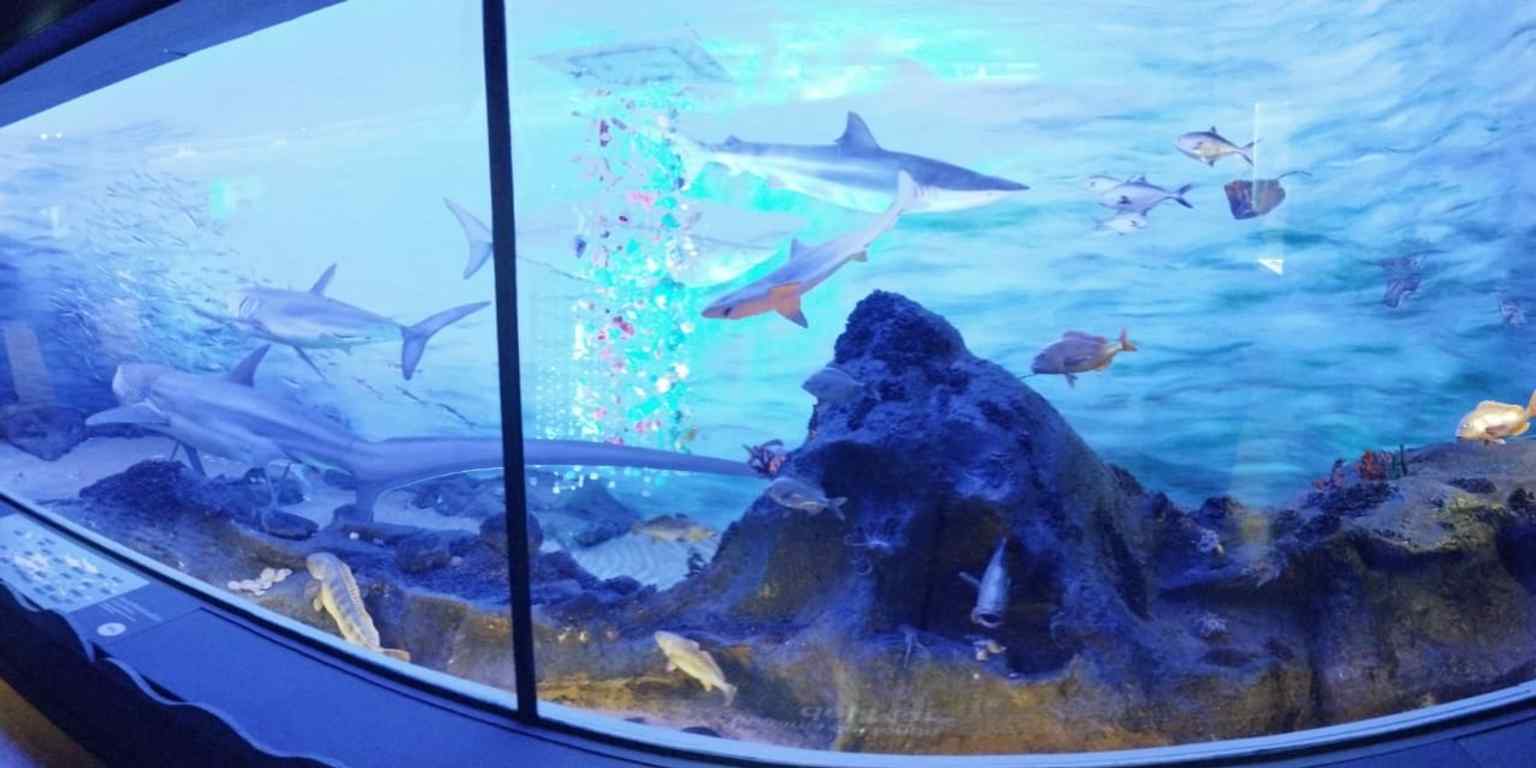
This diorama in the 'Fondo del Mar' hall illustrates the diverse marine life found in the Argentine Sea and its surroundings.Photo: WILLYWOSTER, Wikimedia Commons, CC BY-SA 4.0. Cropped & resized. 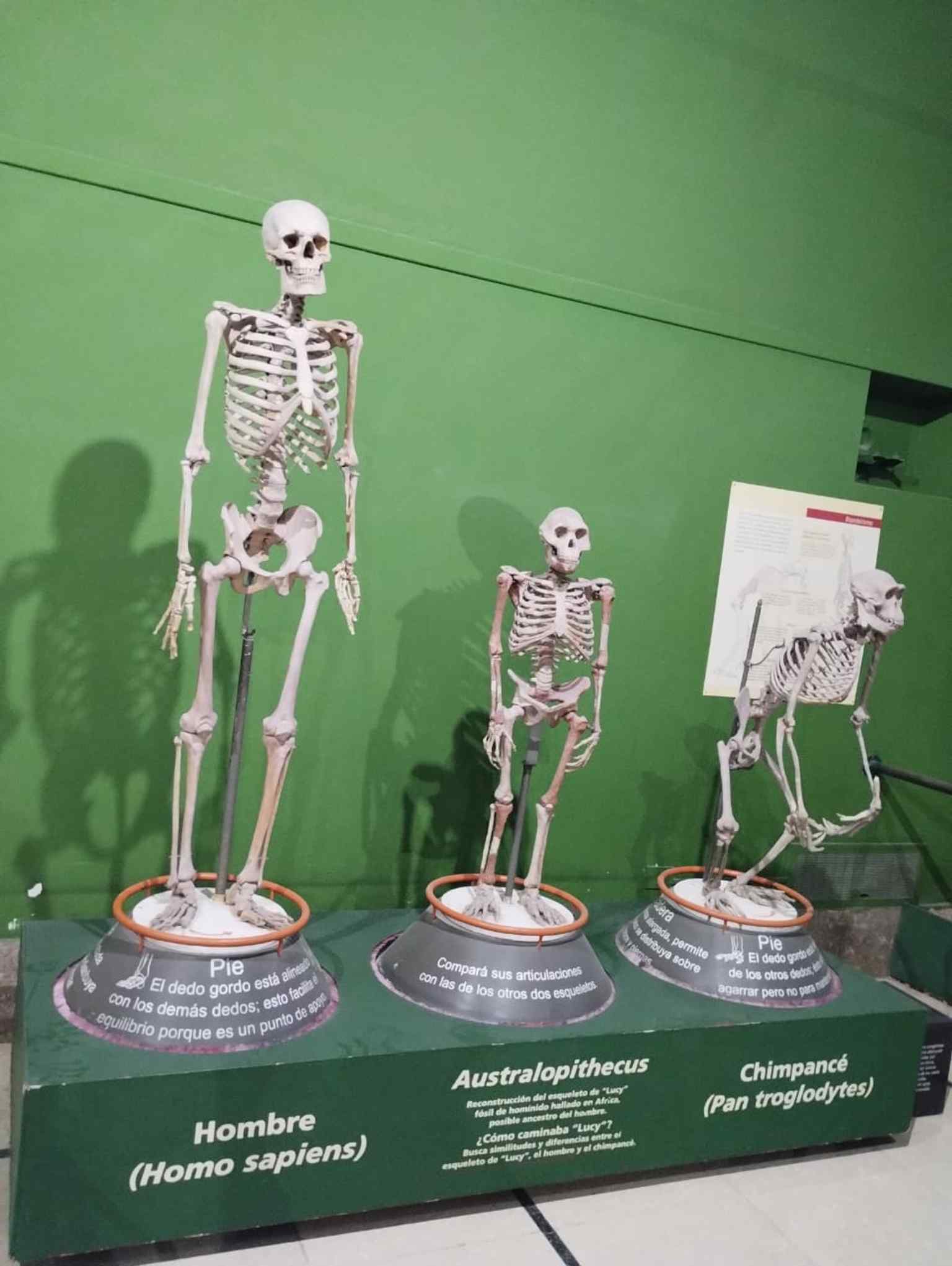
This display of human, Australopithecus, and chimpanzee skeletons in the comparative osteology hall demonstrates evolutionary adaptations through bones and cartilage.Photo: WILLYWOSTER, Wikimedia Commons, CC BY-SA 4.0. Cropped & resized. 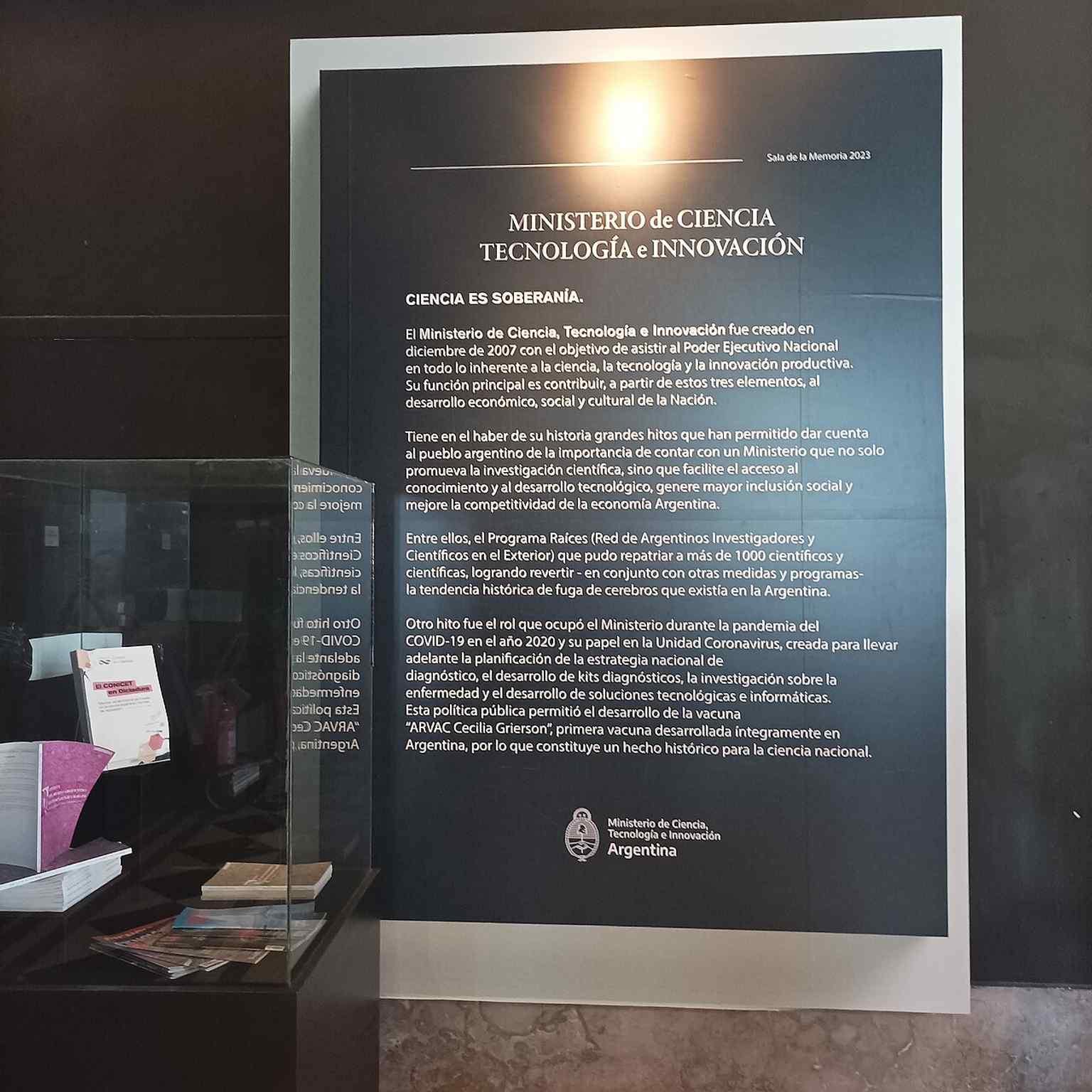
Modern signage like 'Ciencia es soberanía' ('Science is sovereignty') reflects the museum's ongoing commitment to research, conservation, and education for the community.Photo: 1985Idea, Wikimedia Commons, CC BY-SA 4.0. Cropped & resized. 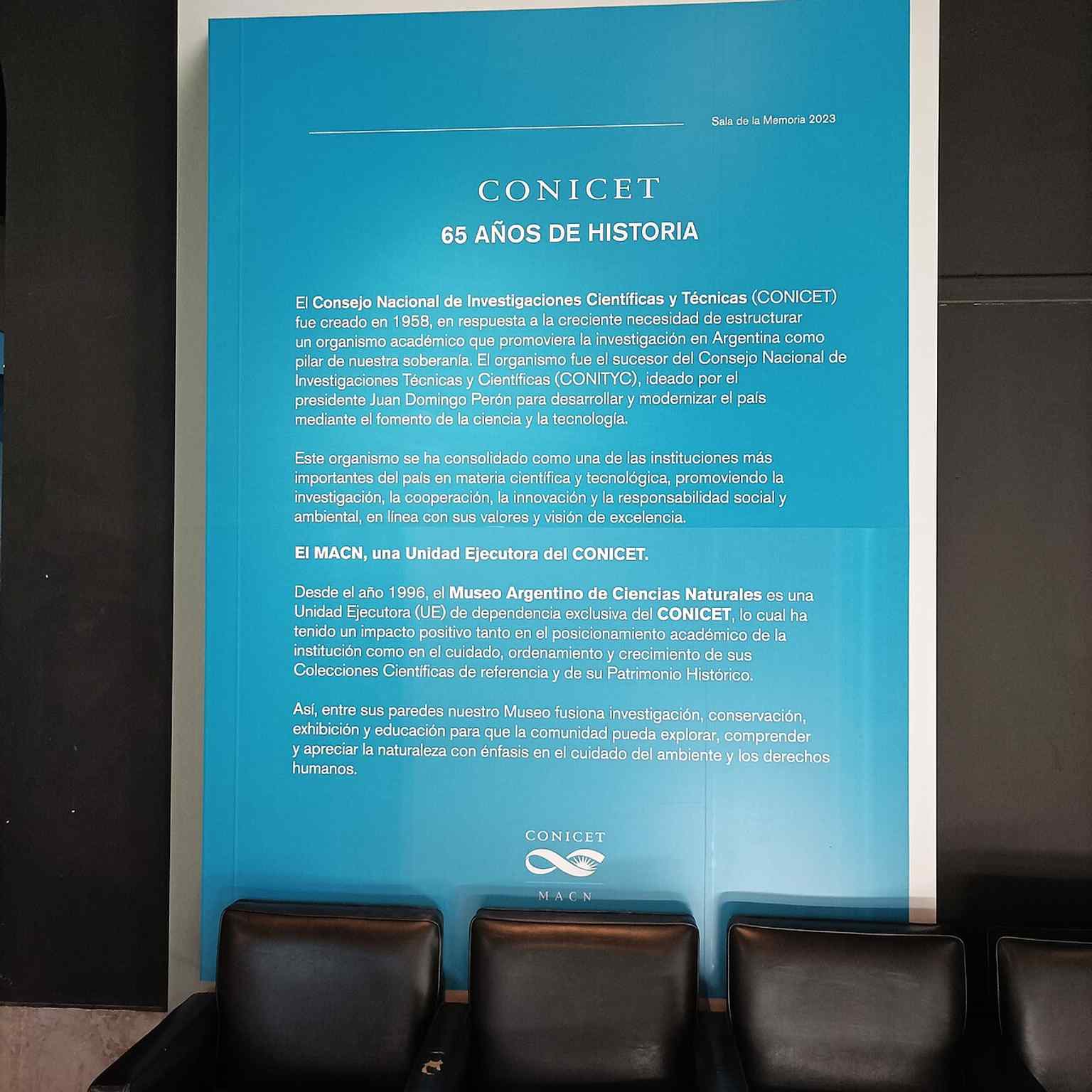
This sign celebrates 65 years of CONICET, highlighting the museum's crucial role as an executive unit of Argentina's National Council for Scientific and Technical Research.Photo: 1985Idea, Wikimedia Commons, CC BY-SA 4.0. Cropped & resized. 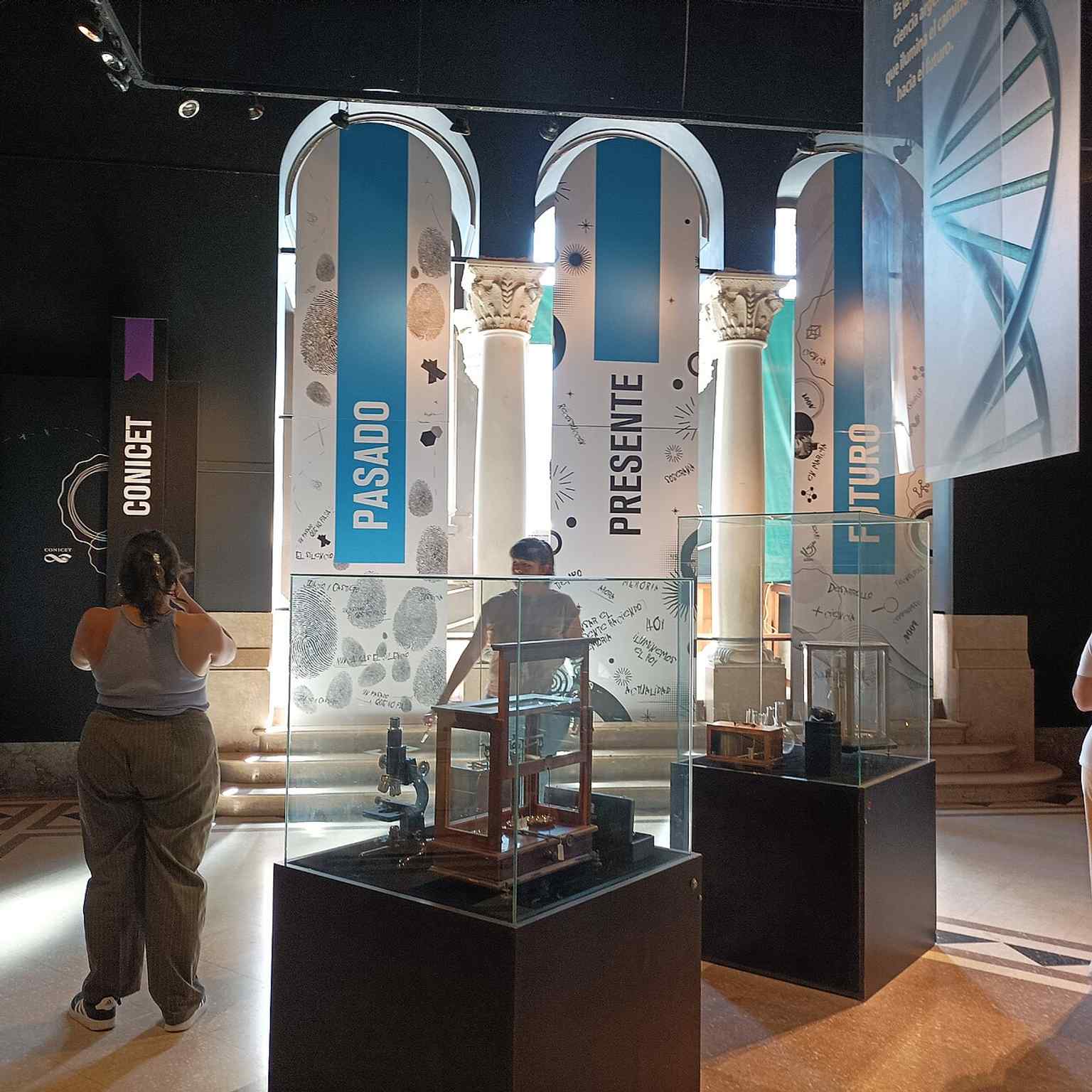
Beyond permanent collections, the museum hosts temporary exhibitions, like this 'Sala por la memoria,' which contribute to its role as a vibrant cultural center.Photo: 1985Idea, Wikimedia Commons, CC BY-SA 4.0. Cropped & resized. 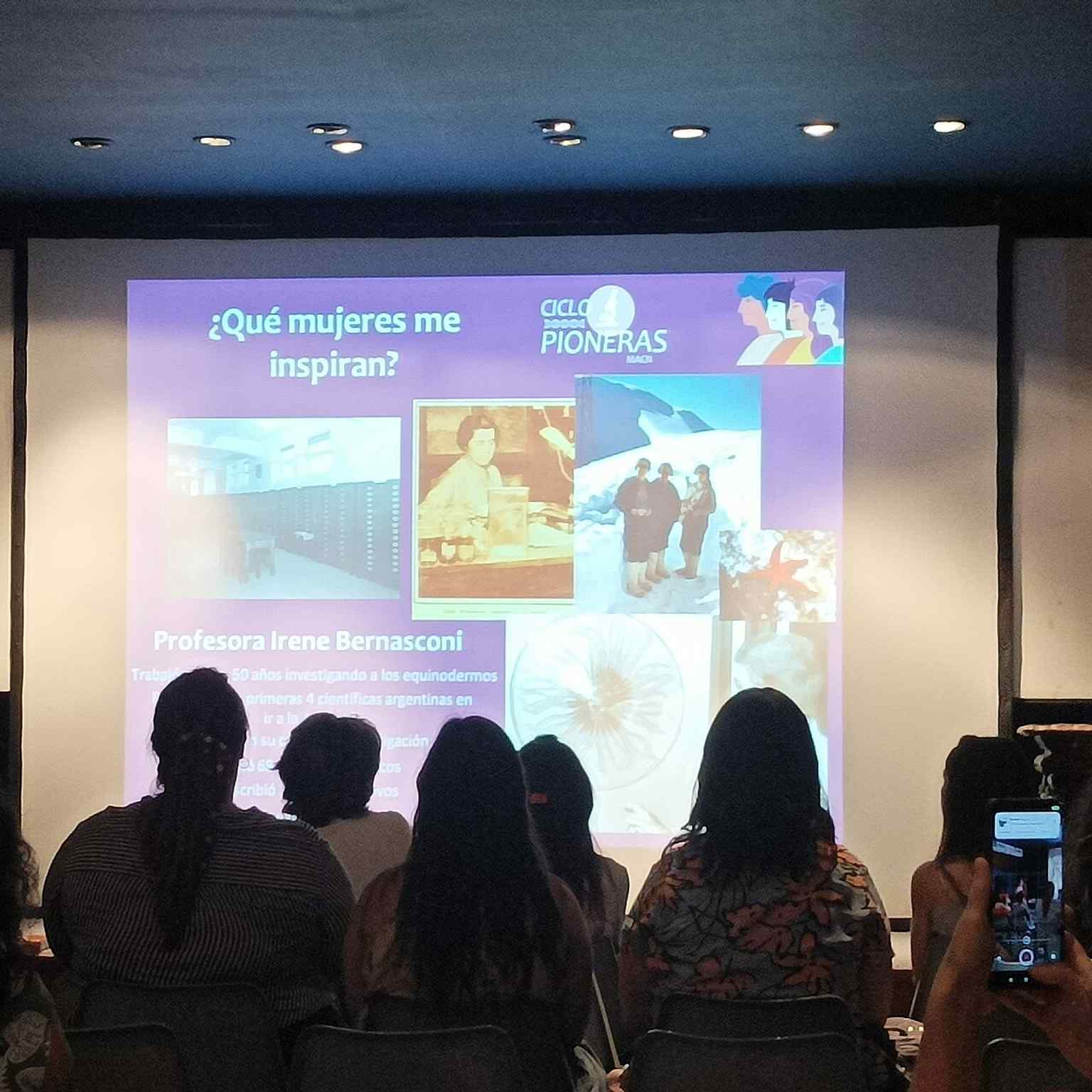
Visitors engage with presentations about figures like Irene Bernasconi, one of 'Las Cuatro de Melchior' who pioneered scientific expeditions to Antarctica.Photo: 1985Idea, Wikimedia Commons, CC BY-SA 4.0. Cropped & resized. On your right is Centennial Park, characterized by its wide, circular artificial lake bordered by a sloping cobblestone embankment, with the modern arching roof of an amphitheater…Read moreShow less
Open dedicated page →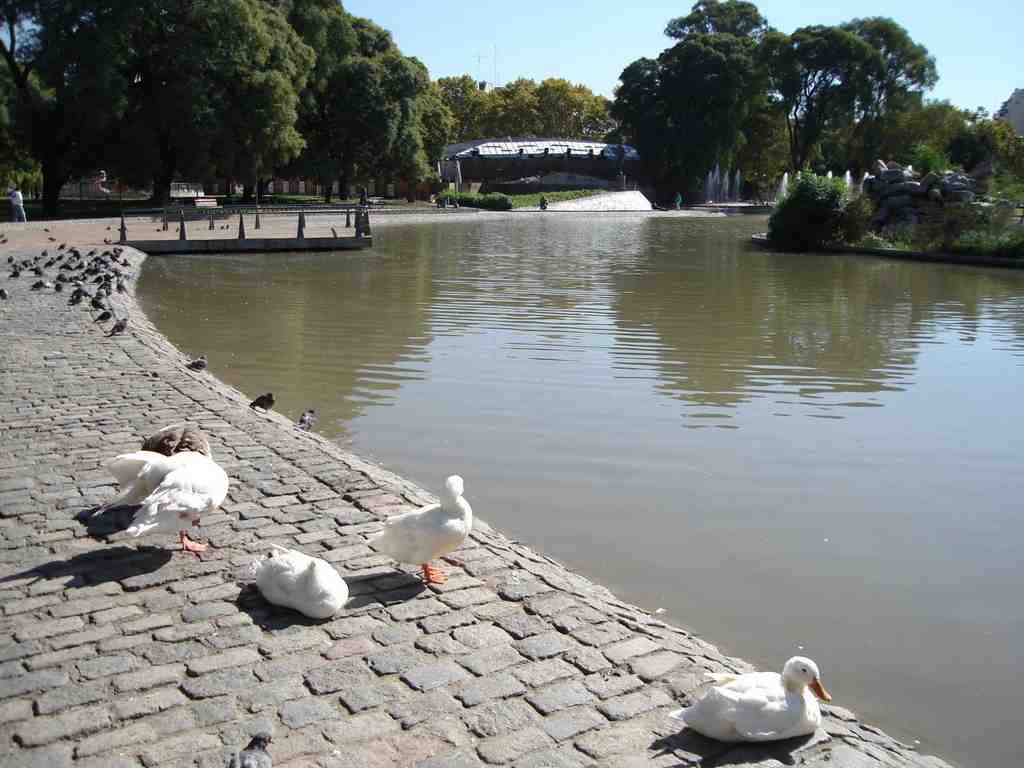
Centennial ParkPhoto: Galio, Wikimedia Commons, CC BY-SA 3.0. Cropped & resized. On your right is Centennial Park, characterized by its wide, circular artificial lake bordered by a sloping cobblestone embankment, with the modern arching roof of an amphitheater visible across the water.
Now, remember earlier at the Cid Campeador monument, where legend claims it marks the very middle of Buenos Aires? Well, the truth is, this massive green space right in front of us holds the title for the true geographic center of the capital.
The park is the brainchild of the renowned French-Argentine architect Carlos Thays. In 1898, the city bought twelve hectares of desolate brick kilns and empty lots, and Thays was tasked with designing a magnificent space for the 1910 centenary of the May Revolution. He delivered a masterpiece of landscape architecture. Local lore even says he modeled the park's unique circular layout and radiating boulevards after the laurel branches that frame the Argentine National Shield.
But like any ambitious civic vision, keeping it pristine has been an ongoing battle of reinvention. Take the lake you see today. If you glance at your screen, you can see the central fountain that was part of a major 2006 renovation. Before that, the story of this water feature was a bit embarrassing. In the late 1970s, a military administration decided to build an artificial lake here. They poured a massive concrete basin, but there was one small problem. The concrete was entirely porous. The water drained out almost as fast as it was pumped in. For nearly two decades, the centerpiece of the park was just a massive, dry concrete crater.
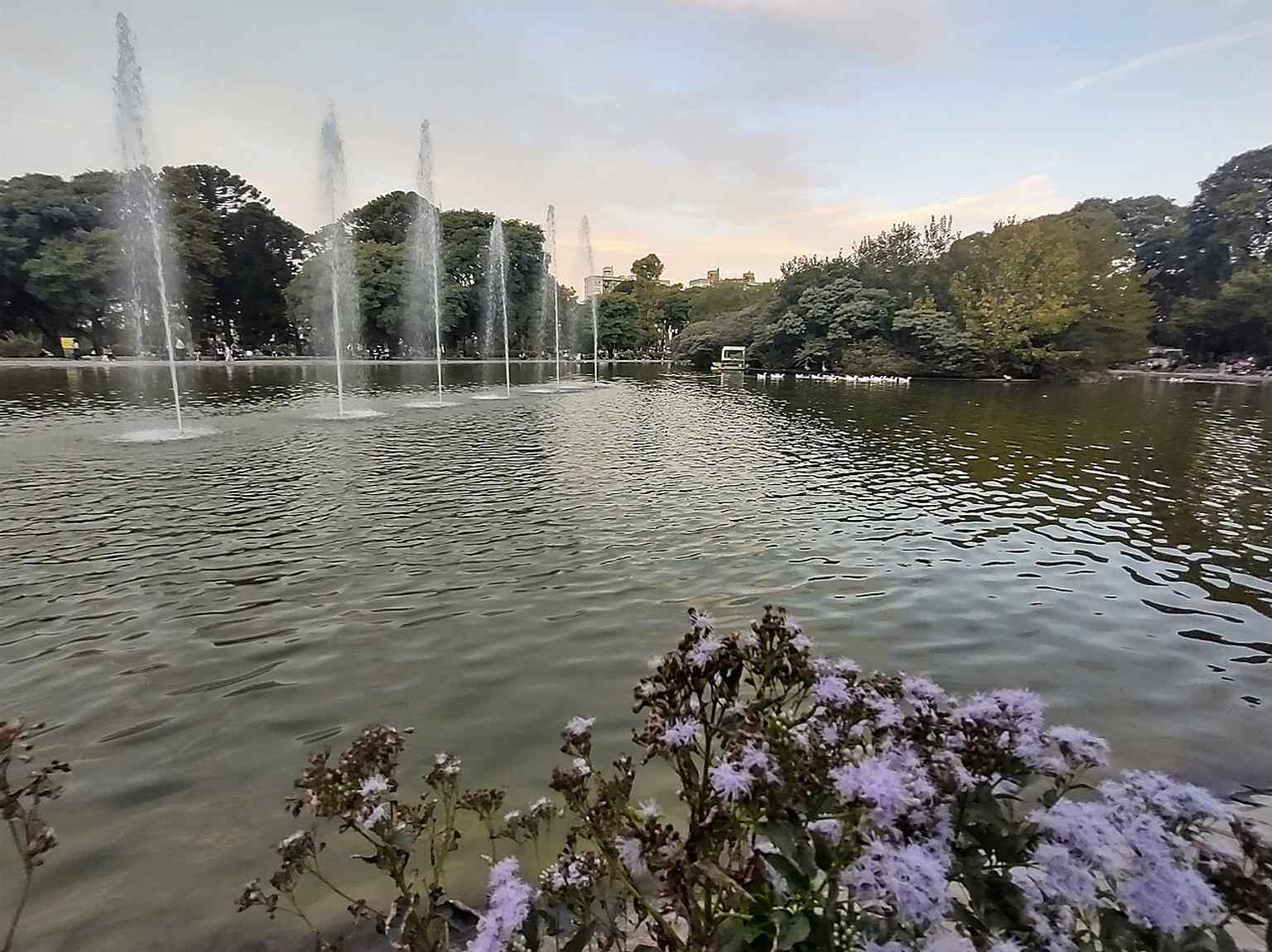
This central fountain is part of the 2006 renovation that aimed to restore the park, introducing a new artificial lake and a biological island with diverse wildlife.Photo: Roberto Fiadone, Wikimedia Commons, CC BY-SA 4.0. Cropped & resized. The park acts as a sort of open-air canvas for the city, constantly reshaped by changing tastes and fortunes. Look at your phone again to see the Victoria Alada, or Winged Victory sculpture. It is a gorgeous bronze replica of an ancient statue that has guarded this space for decades.
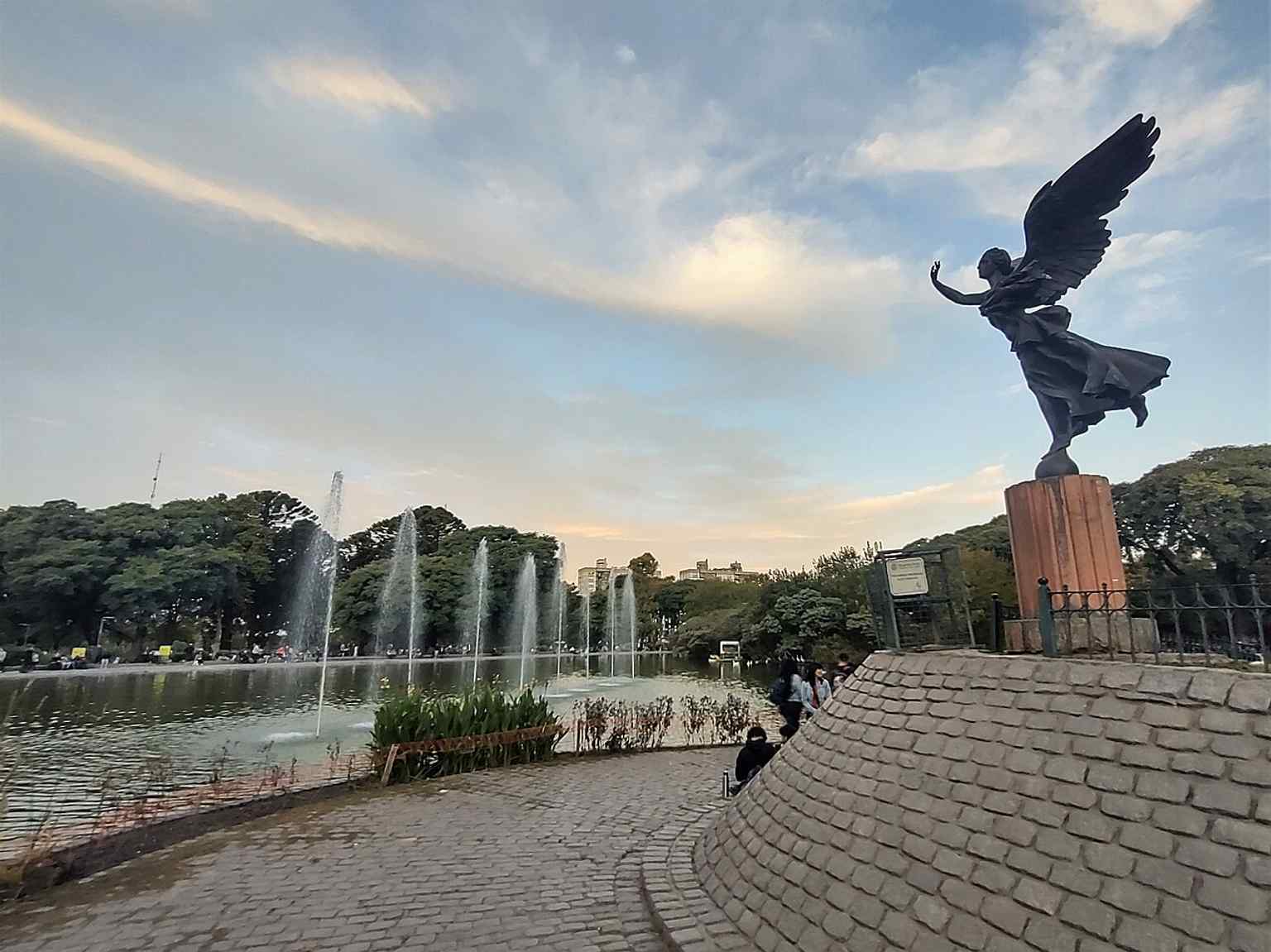
The 'Victoria Alada' sculpture by Eduardo Rubino is a bronze replica of a statue that crowns a monument in Rome. Its original Art Deco pedestal was unfortunately replaced with a modern concrete one when it was moved here in 1980.Photo: Roberto Fiadone, Wikimedia Commons, CC BY-SA 4.0. Cropped & resized. Despite the occasional architectural mishap, the park is deeply intertwined with the pursuit of knowledge, much like the Natural Sciences Museum we just explored. There is even a touch of mystery here. Somewhere in this park, beneath a bust of the famous physicist Madame Curie, lies a buried time capsule. It contains soil from Poland and glass laboratory tubes she actually used. It is scheduled to be opened in 2067, but there is a catch. After the original bronze bust was stolen and the area underwent extensive renovations, the exact location of the capsule was lost. To this day, the public has no idea where it actually is.
As we continue our walk, let your eyes drift up from the sprawling canopy of the tipa and jacaranda trees toward the sky above. We are about to look a whole lot further up, because just a three-minute walk away is the Argentine Association of Friends of Astronomy. Let us head there now.
On your left stands a stark white flat roofed building defined by a recessed entrance with prominent square columns and a large unmistakable satellite dish mounted on its left…Read moreShow less
Open dedicated page →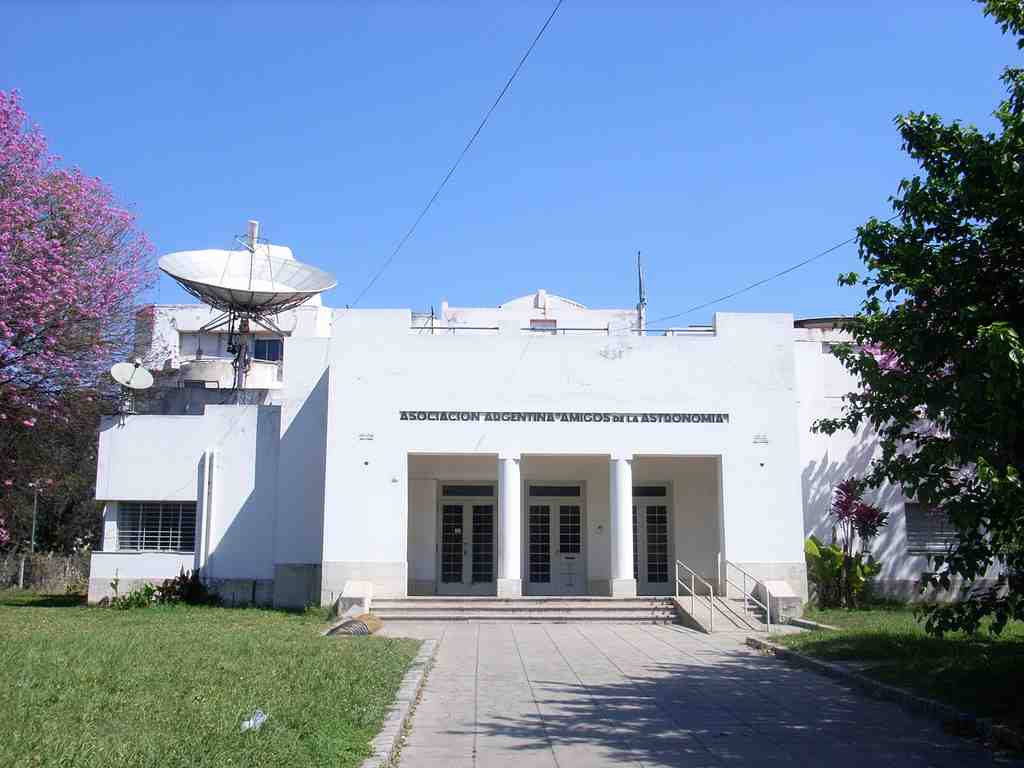
Argentine Association of Friends of AstronomyPhoto: Bostador, Wikimedia Commons, Public domain. Cropped & resized. On your left stands a stark white flat roofed building defined by a recessed entrance with prominent square columns and a large unmistakable satellite dish mounted on its left side.
We explored the natural sciences museum earlier, a place largely shaped by the rigid formal academic vision of Germán Burmeister. But the building in front of you represents a completely different approach to the pursuit of science. This is the Argentine Association of Friends of Astronomy, a place that proves how everyday citizens, armed with curiosity and a vision for their community, can physically transform city spaces into democratic hubs of learning. By securing this land, these amateurs ensured that anyone could come off the street and look up at the rings of Saturn, democratizing the universe for everyone.
It is the oldest amateur astronomy institution in Argentina, founded in 1929, but its origins are wonderfully poetic. Many of the first members were actually professional musicians playing in the Wagnerian Orchestra at the famous Teatro Colón. After spending their days enveloped in the sweeping thunderous symphonies of Richard Wagner, these musicians sought refuge in the absolute silence of the cosmos.
During the early years, they met in private homes or at the orchestra headquarters. They were so devoted that in 1930, when the club faced a financial crisis, their secretary, Carlos Cardalda, saved it with a personal loan of 950 pesos, a sum roughly equivalent to a few thousand dollars today. His quiet dedication kept the doors open.
Take a look at your screen to see the cover of their very first magazine from 1929. This publication became an essential space for amateur scientists. A young Ernesto Sabato, years before he became one of Argentina's most famous literary novelists, used this magazine to publish step by step guides on how to build homemade reflecting telescopes. The club even published his very first book on the subject.
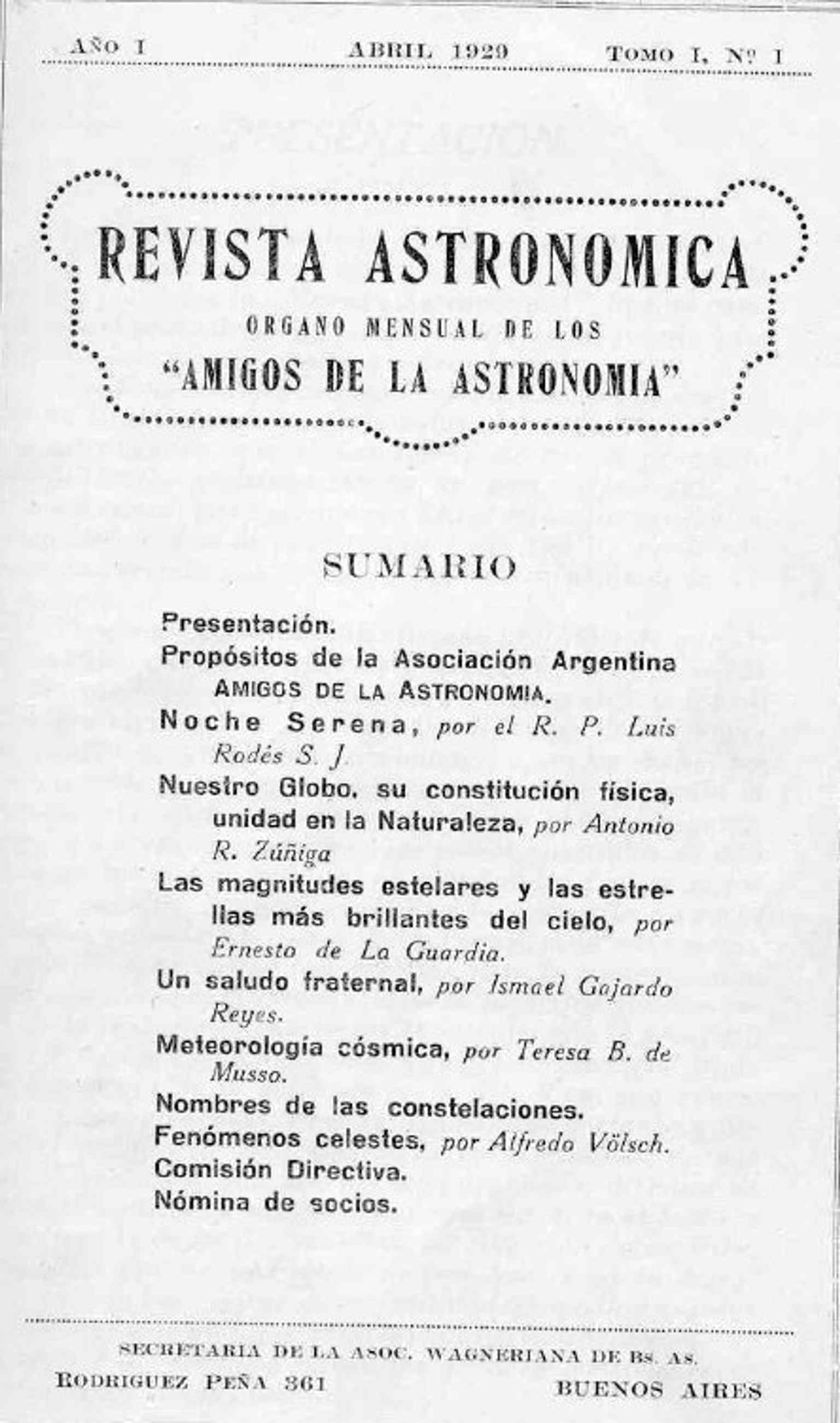
The cover of the first 'Revista Astronómica' from 1929, which published articles by members like Ernesto Sabato and was awarded the Santa Clara de Asís prize in 2006.Photo: Asociacion Argentina de Amigos de la Astronomia., Wikimedia Commons, Public domain. Cropped & resized. In 1944, the club moved into this purpose built headquarters. Their prized possession is the Gautier telescope, a massive instrument brought to Argentina by the French in 1882 for a highly critical mission. The goal was to observe the transit of Venus, watching the silhouette of the planet cross the face of the sun in order to calculate the exact distance between the Earth and the Sun. It was a stressful international effort where a single cloudy day would have ruined a chance that would not come again for over a century. The telescope succeeded, eventually finding a permanent home right under the dome here, still running on its original mechanical clockwork.
If you want to look through those historic lenses yourself, the observatory is open Monday through Saturday evenings from 7 to 11 PM.
As we leave this temple of grassroots knowledge behind, it leaves me wondering. Why do you think musicians, whose lives were filled with overwhelming sound, were so deeply drawn to the silent visual beauty of the night sky? Keep that in mind as we walk about three minutes to our final stop, the Hospital Naval Buenos Aires, where we will trade a dedication to the stars for a reflection on institutions built for duty and care.
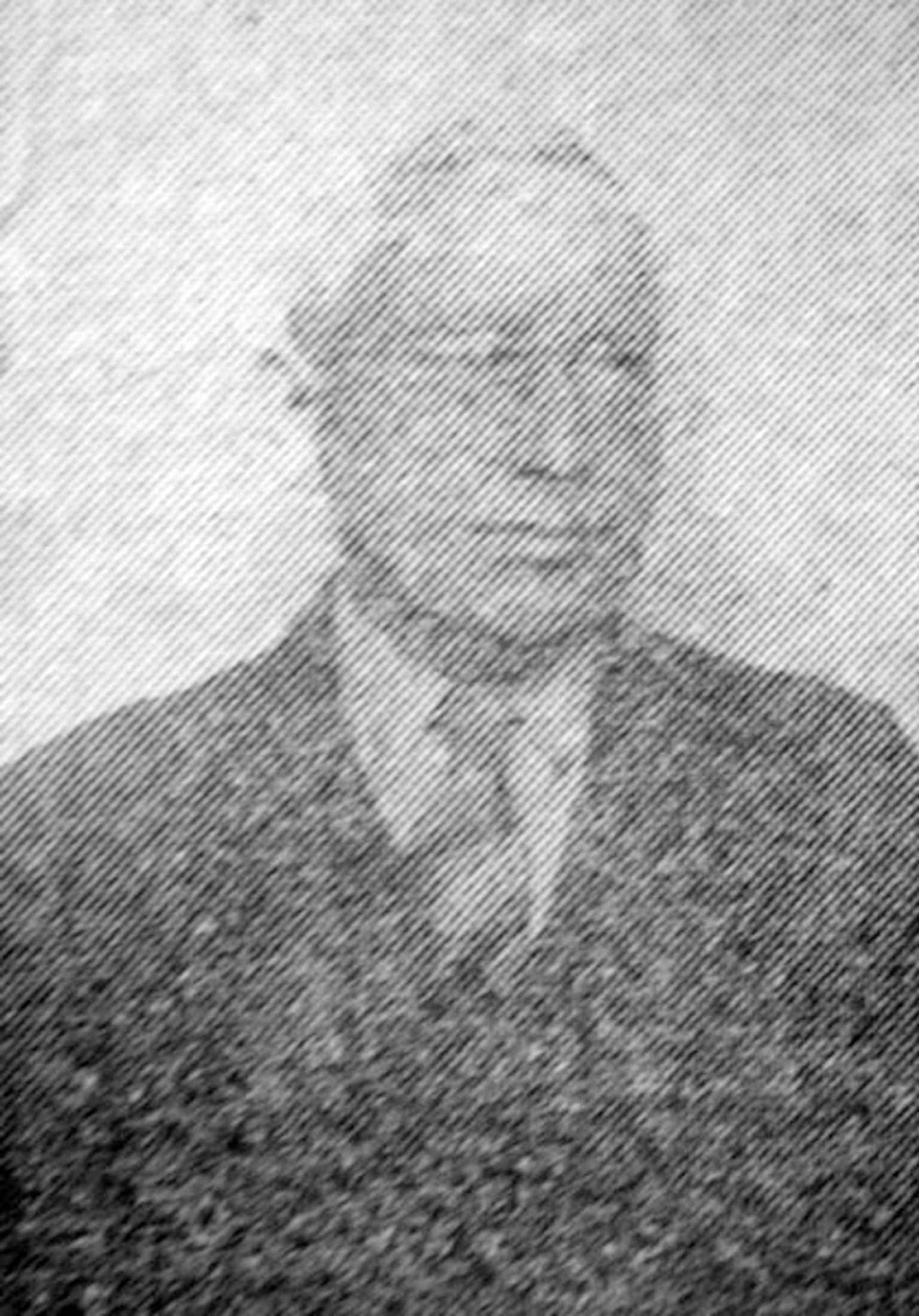
Alfredo Adolfo Völsch, a dedicated amateur astronomer whose article 'Celestial Phenomena' appeared in the very first issue of the 'Revista Astronómica' in 1929.Photo: Unknown authorUnknown author, Wikimedia Commons, Public domain. Cropped & resized.

Frequently asked questions
How do I start the tour?
After purchase, download the AudaTours app and enter your redemption code. The tour will be ready to start immediately - just tap play and follow the GPS-guided route.
Do I need internet during the tour?
No! Download the tour before you start and enjoy it fully offline. Only the chat feature requires internet. We recommend downloading on WiFi to save mobile data.
Is this a guided group tour?
No - this is a self-guided audio tour. You explore independently at your own pace, with audio narration playing through your phone. No tour guide, no group, no schedule.
How long does the tour take?
Most tours take 60–90 minutes to complete, but you control the pace entirely. Pause, skip stops, or take breaks whenever you want.
What if I can't finish the tour today?
No problem! Tours have lifetime access. Pause and resume whenever you like - tomorrow, next week, or next year. Your progress is saved.
What languages are available?
All tours are available in 50+ languages. Select your preferred language when redeeming your code. Note: language cannot be changed after tour generation.
Where do I access the tour after purchase?
Download the free AudaTours app from the App Store or Google Play. Enter your redemption code (sent via email) and the tour will appear in your library, ready to download and start.
If you don't enjoy the tour, we'll refund your purchase. Contact us at [email protected]
Checkout securely with 






.jpg)

.jpg)


.jpeg)
