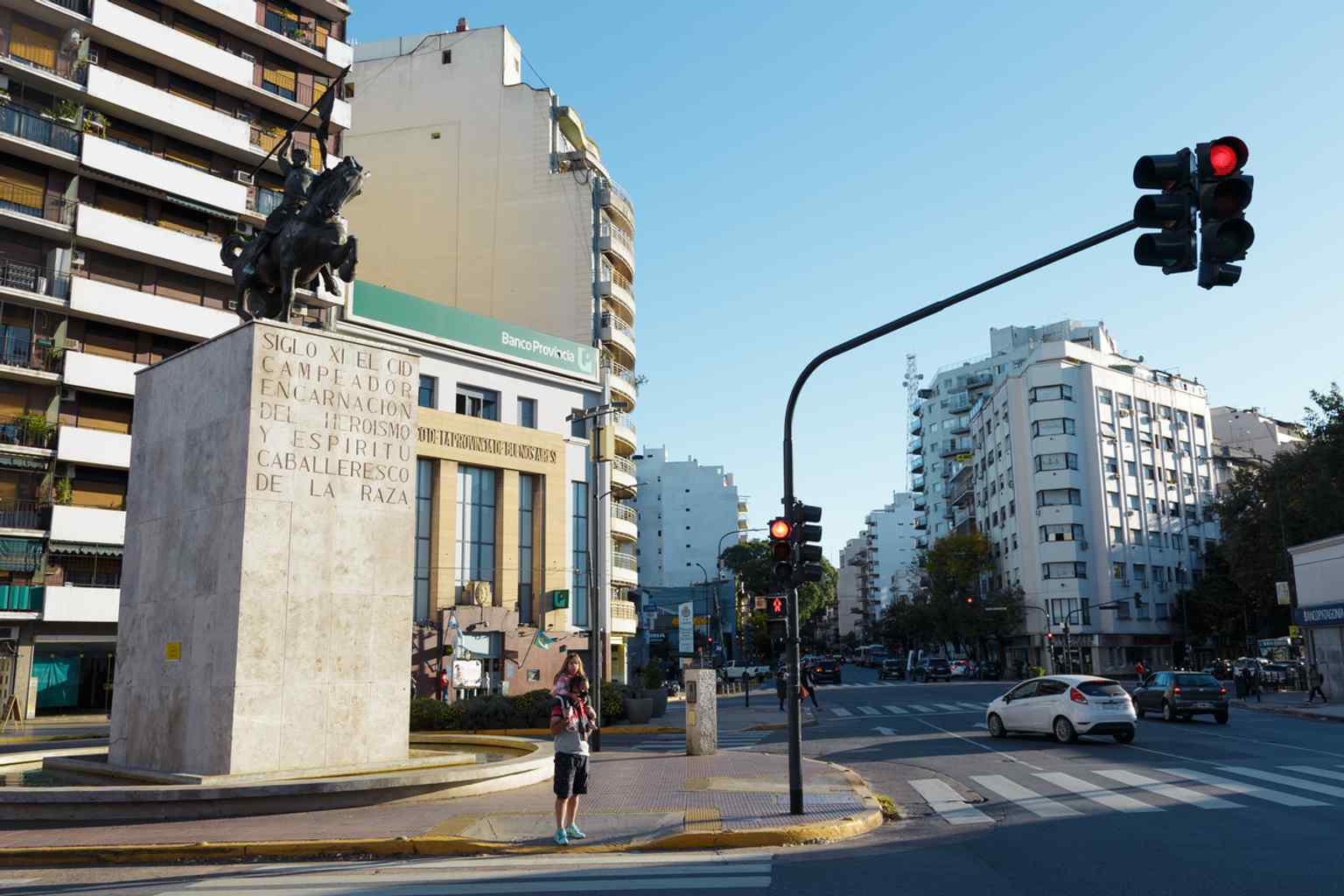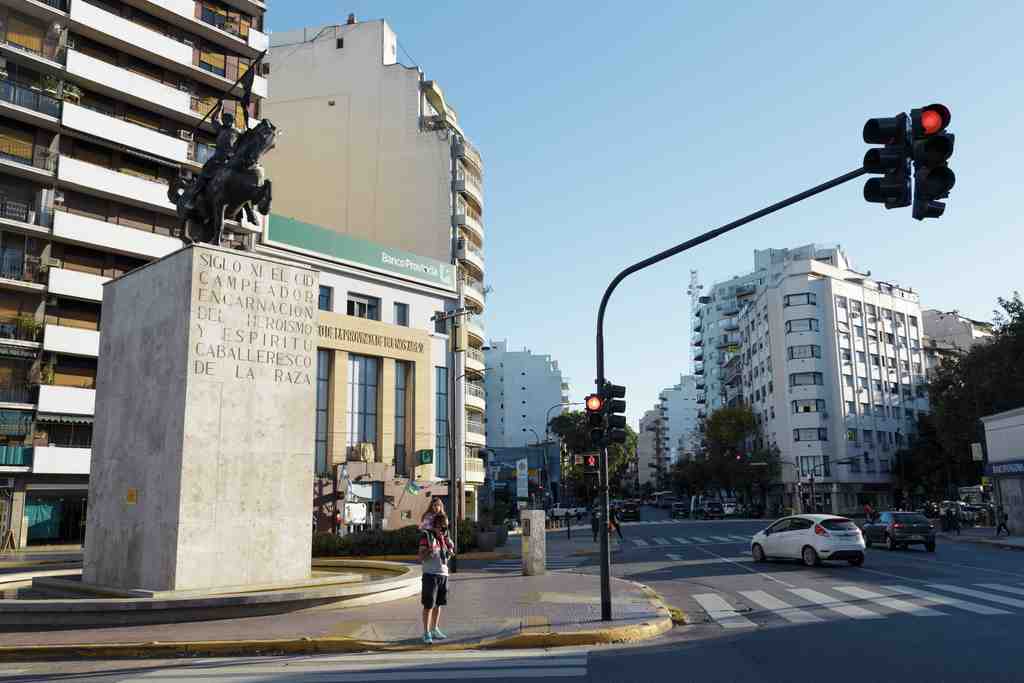
Look up at the bronze knight astride a rearing horse atop a towering, pale marble rectangular block, his right arm hoisting a tall spear straight into the sky. That is Rodrigo Díaz de Vivar, an eleventh-century Castilian knight better known as El Cid.
Now, despite all precise technical measurements proving otherwise, a persistent urban myth designates this very spot as the exact geographic center of Buenos Aires. Locals stubbornly use it as their primary compass, and saying see you at the Cid has been the standard meeting protocol for generations of people crossing between the northern and southern neighborhoods. The actual, mathematically calculated geometric center has shifted over the years to a couple of different addresses nearby, but good luck telling that to anyone who lives here.
This massive bronze sculpture was crafted by American artist Anna Hyatt Huntington. Her philanthropist husband had dedicated his life to Spanish culture, even translating the epic medieval poem of El Cid, which inspired her to pivot from animal sculptures to Spanish heroes.
But the story of this intersection is really about how the landscape is constantly engineered and remolded, balancing rigid municipal planning with grand public art. Take a look at your screen to see the monument back in 1935, resting on its original, majestic Art Deco pedestal designed by architect Martín Noel. Noel was a major figure in the Neocolonial movement, an architectural style that revived early Spanish colonial aesthetics. His pedestal was a towering masterpiece meant to bridge the heritage of two nations.
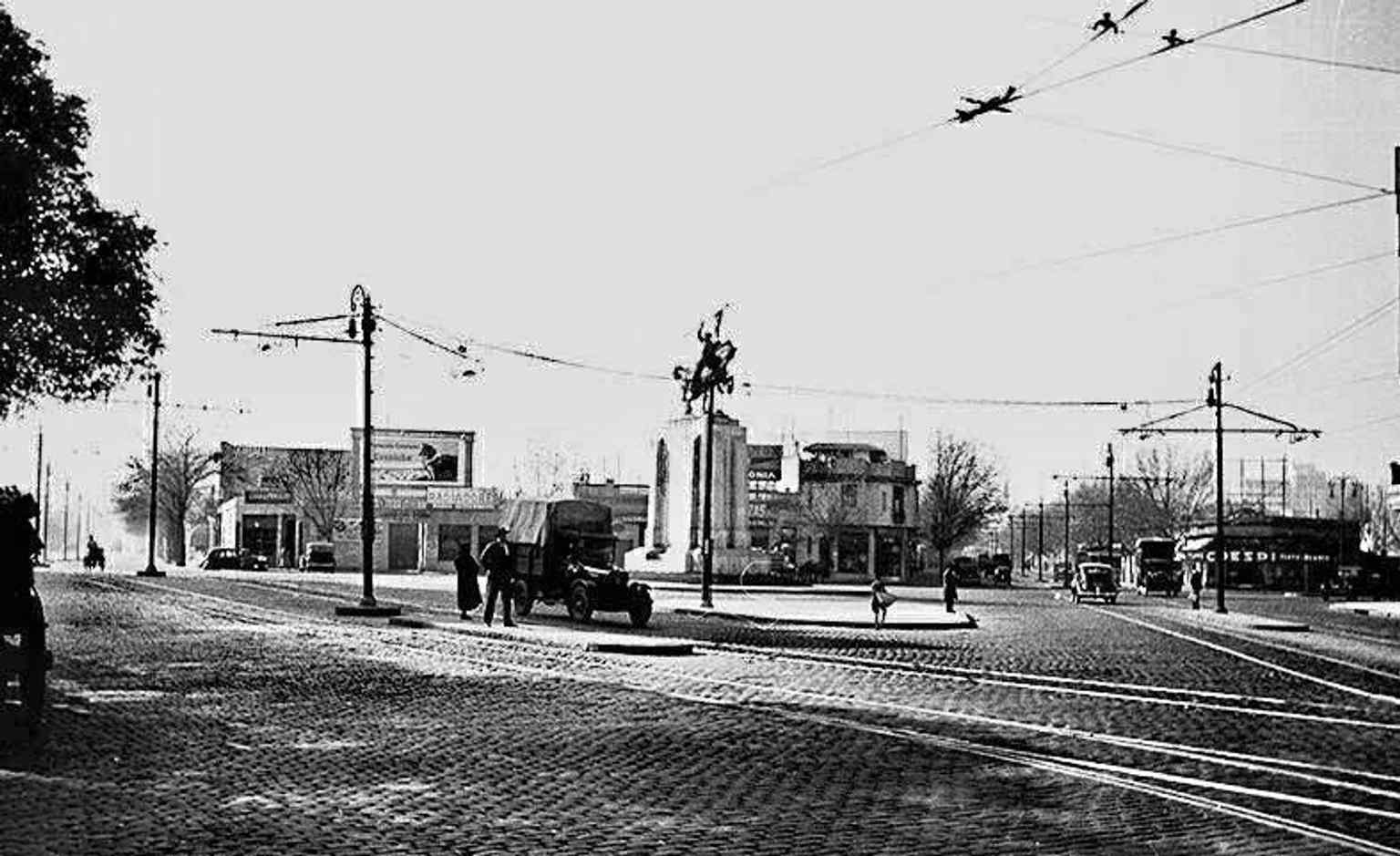
Yet in 1960, progress demanded a new traffic layout. The solution? The city dragged the entire twelve-meter monument a few feet over and completely discarded Noel's elegant pedestal, replacing it with the plain, functional block you see today to accommodate the changing grid.
Over eight decades later, El Cid Campeador continues to watch over Buenos Aires, witnessing everything from the vintage cars of the 1930s to pedestrians wearing masks during the 2021 pandemic. You can check out a comparison of these eras in the app right now.
That tension between preserving cultural identity and paving the way for urban efficiency is still alive. During a 2015 renovation, a passionate local activist group managed to bring soil from the eight Spanish provinces of the Camino del Cid, a historic route following the knight's life, and placed it in an adjacent garden here to honor the monument's roots. Unfortunately, the municipal government soon arrived to finish their renovations and poured a thick layer of cement right over that sacred, imported earth. The activists are still lobbying to have the pavement ripped up.
Since he is stationed right in the middle of a massive public intersection, the good knight is open twenty-four hours a day. Let us leave the geographic myths behind and continue down the avenue, moving from medieval legends to industrial history, as we head toward our next stop at Avenida Doctor Honorio Pueyrredón, just a two-minute walk away.