
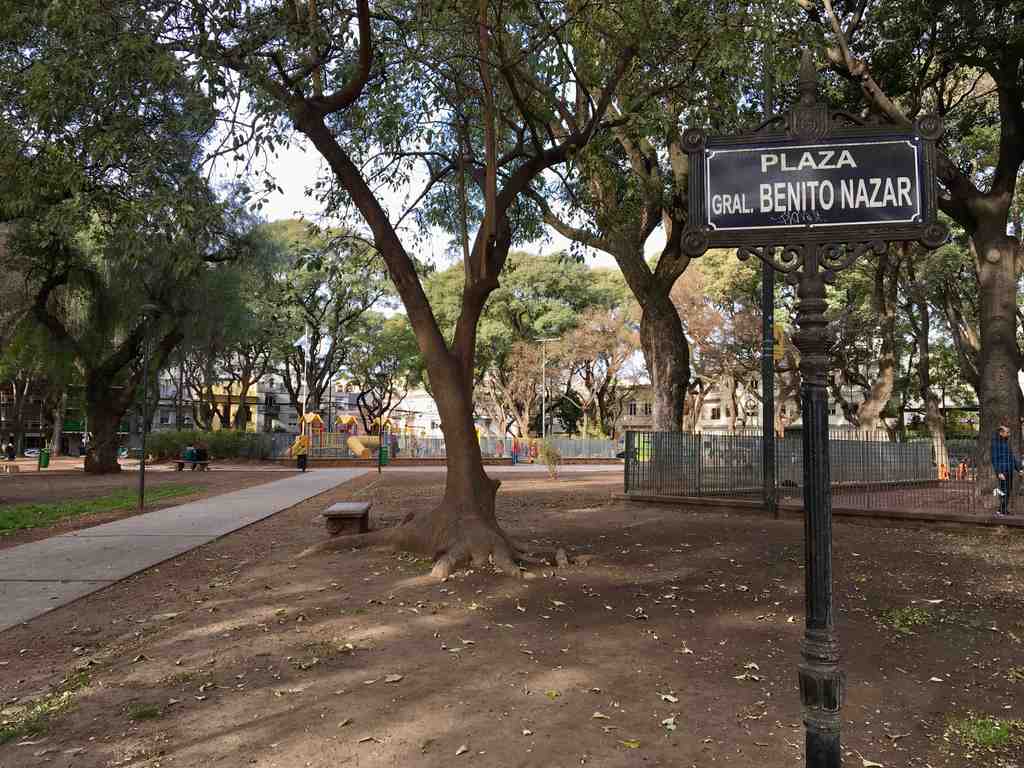
Look out for the tall black wrought-iron signpost with its classic white lettering and ornate scrollwork standing at the edge of the concrete pathways that weave beneath a heavy canopy of mature trees.
Welcome to Plaza General Benito Nazar. This patch of green represents a fascinating shift in how cities grow, transforming from private military estates into the shared, breathing spaces of a modern neighborhood.
To understand how this happened, we have to look back to 1849, when General Benito Nazar and his wife bought this vast tract of land for twenty-five thousand pesos moneda corriente, a historic currency roughly equivalent to a few hundred thousand dollars today. Born in 1801, General Nazar was a defining figure in the early Argentine military. He served as an artillery officer at the pivotal Battle of Ituzaingó in 1827 and later shaped the nation's forces as Minister of War and Commander General during the War of the Triple Alliance.
But the General himself did not build this plaza. That civic vision came from his children. In 1911, his daughter María Inés Nazar donated this specific square block to the municipality, part of a coordinated family strategy to cement their father's legacy through public works and schools. At first, the city had a very different idea for this plot. They wanted to turn it into a football field for the neighborhood youth. But local residents pushed back, advocating for a contemplative, garden-style public walk instead. The neighbors won out, and the lush, winding paths you see today were laid out under the direction of the city's parks department.
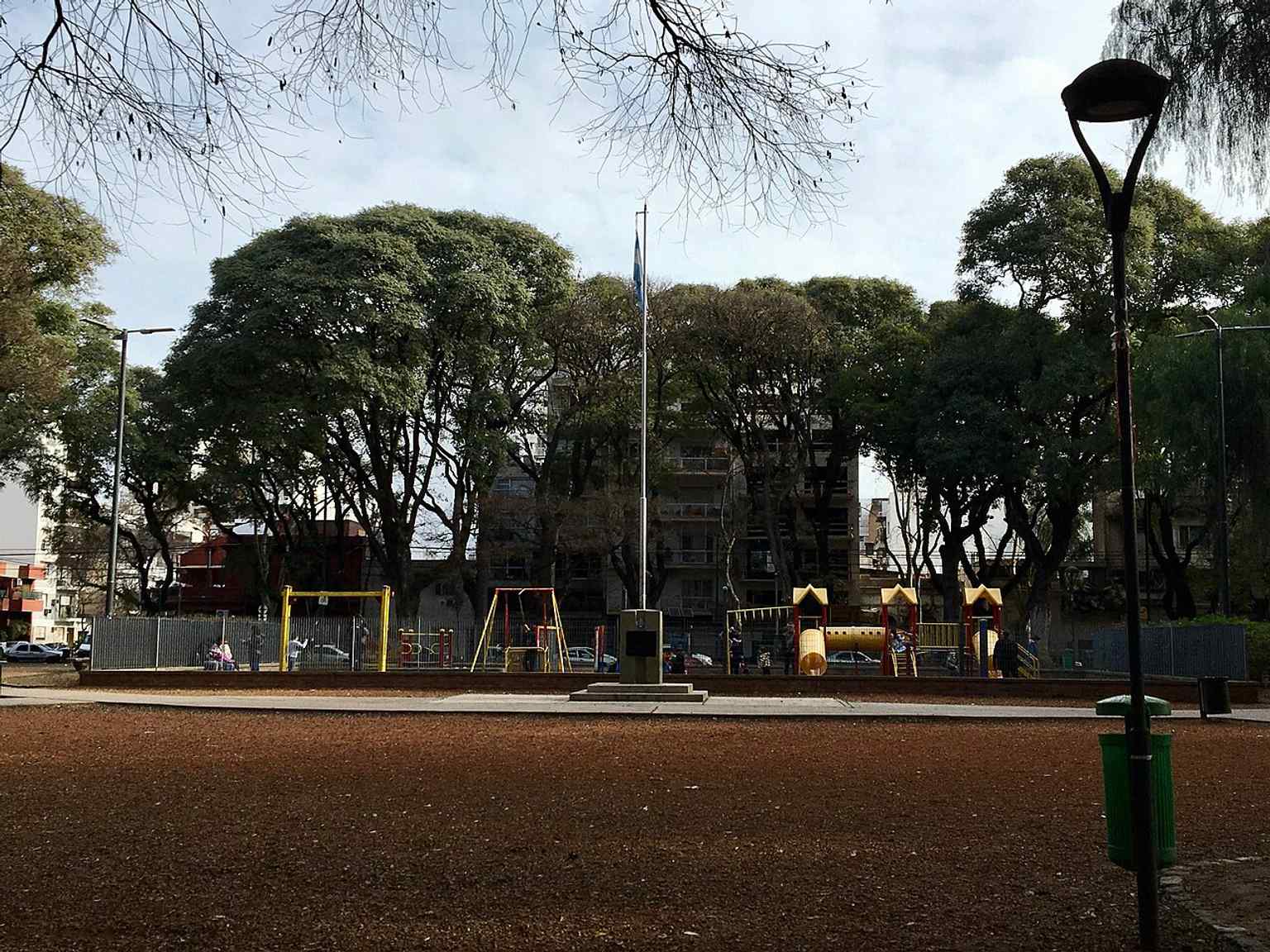
If you check your app, you can see a close-up of the plaza's central mast. This mast has its own dramatic history of loss and restoration. In 2001, its original bronze commemorative plaque was stolen, leaving the monument completely stripped of context. It sat anonymous for sixteen years until 2017, when local veteran groups and the Rotary Club installed a new plaque, rededicating the space to fallen soldiers to mark the thirty-fifth anniversary of the Malvinas War.
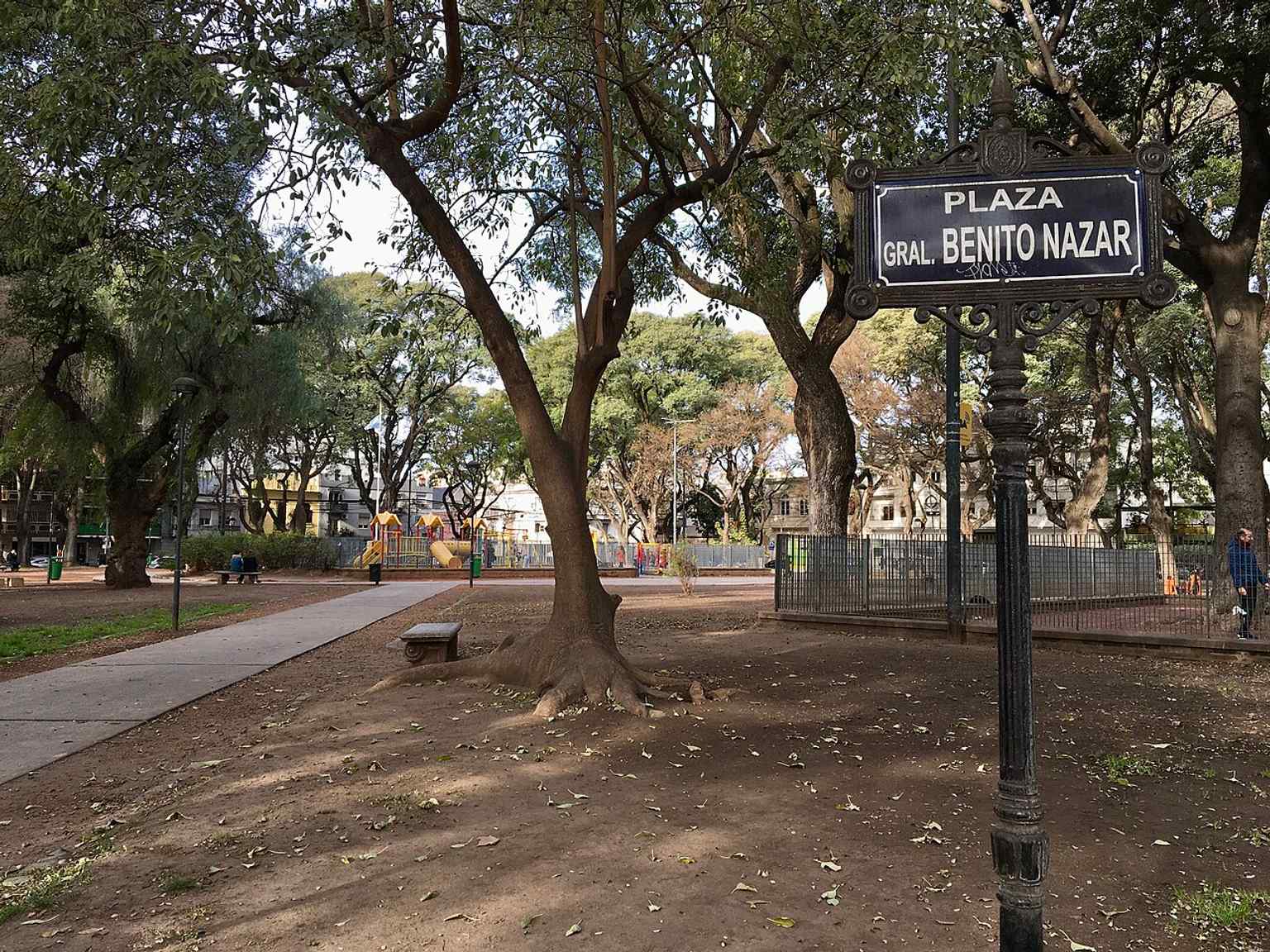
There is a recurring, modern battle over the plaza's name, too. Local historians frequently have to correct city signage that drops the word General from the title. They invoke Cicero's ancient maxim to not lie and dare to tell the truth, arguing that omitting his military rank is a form of historical erasure, undermining the family's exact reason for giving the land away in the first place.
Frankly, name disputes are practically a neighborhood tradition here. Back in the 1880s, Italian cobblers at the nearby National Shoe Factory campaigned to name this entire area San Crispín, after the patron saint of shoemakers. Instead, a local power struggle resulted in the neighborhood being named Villa Crespo to flatter the sitting Intendente, the local mayor at the time. The area's religious identity was then handed over to San Bernardo, simply because it was the name of the factory manager's father. So the cobblers lost on both fronts.
The plaza is open twenty-four hours a day, every day, so you can always find a moment of peace here along the quiet paths.
When you are ready, let us leave the park behind and move towards the busier commercial artery of Ángel Gallardo, which is about an eleven-minute walk away.





.jpg)

.jpg)