
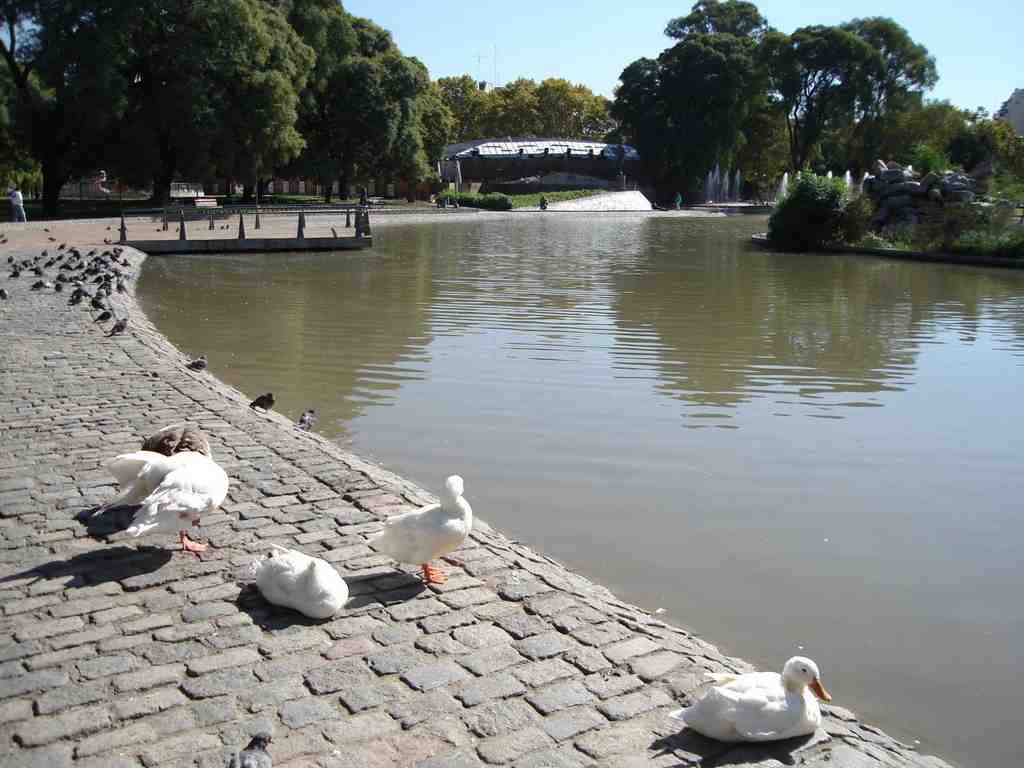
On your right is Centennial Park, characterized by its wide, circular artificial lake bordered by a sloping cobblestone embankment, with the modern arching roof of an amphitheater visible across the water.
Now, remember earlier at the Cid Campeador monument, where legend claims it marks the very middle of Buenos Aires? Well, the truth is, this massive green space right in front of us holds the title for the true geographic center of the capital.
The park is the brainchild of the renowned French-Argentine architect Carlos Thays. In 1898, the city bought twelve hectares of desolate brick kilns and empty lots, and Thays was tasked with designing a magnificent space for the 1910 centenary of the May Revolution. He delivered a masterpiece of landscape architecture. Local lore even says he modeled the park's unique circular layout and radiating boulevards after the laurel branches that frame the Argentine National Shield.
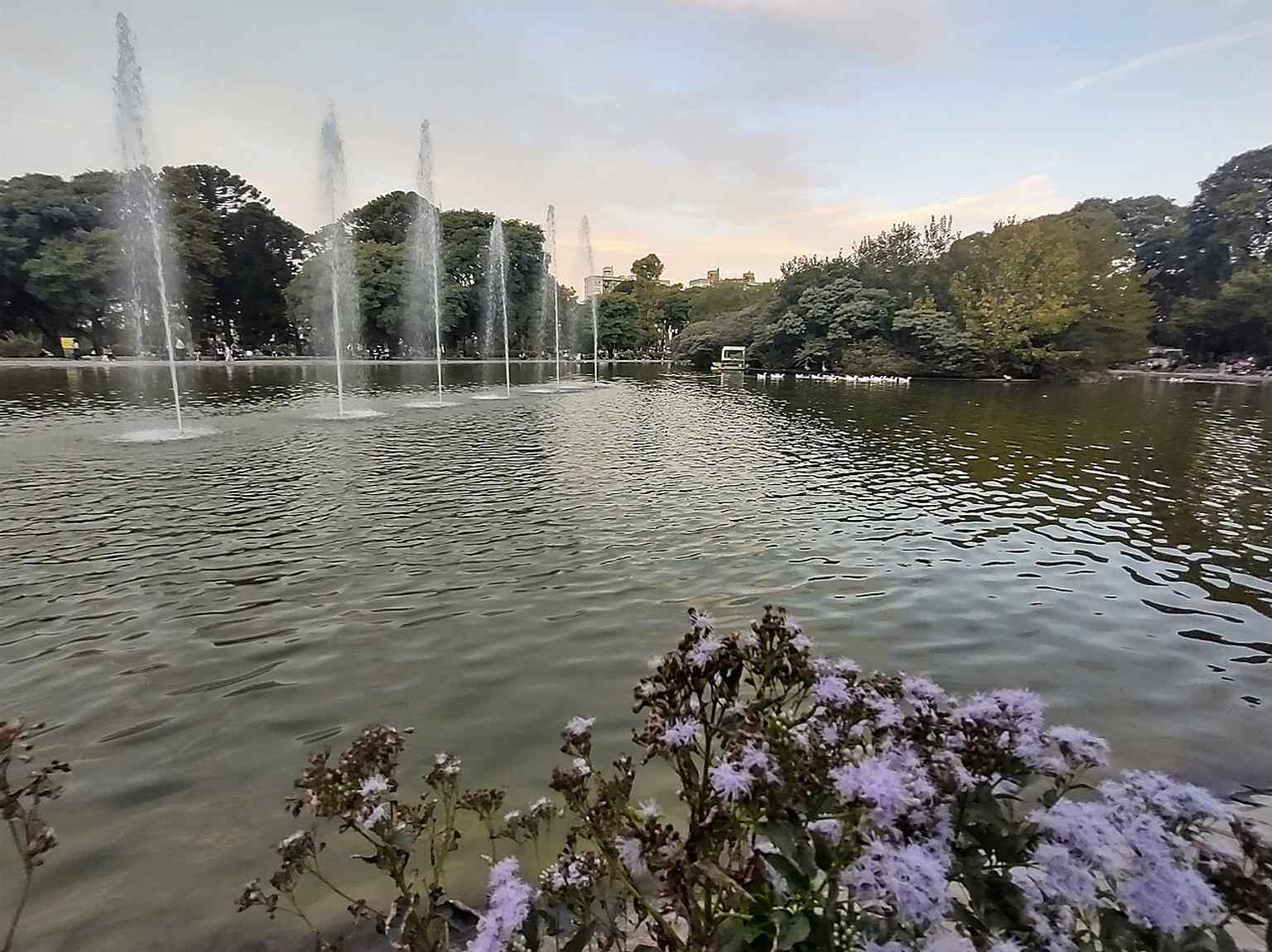
But like any ambitious civic vision, keeping it pristine has been an ongoing battle of reinvention. Take the lake you see today. If you glance at your screen, you can see the central fountain that was part of a major 2006 renovation. Before that, the story of this water feature was a bit embarrassing. In the late 1970s, a military administration decided to build an artificial lake here. They poured a massive concrete basin, but there was one small problem. The concrete was entirely porous. The water drained out almost as fast as it was pumped in. For nearly two decades, the centerpiece of the park was just a massive, dry concrete crater.
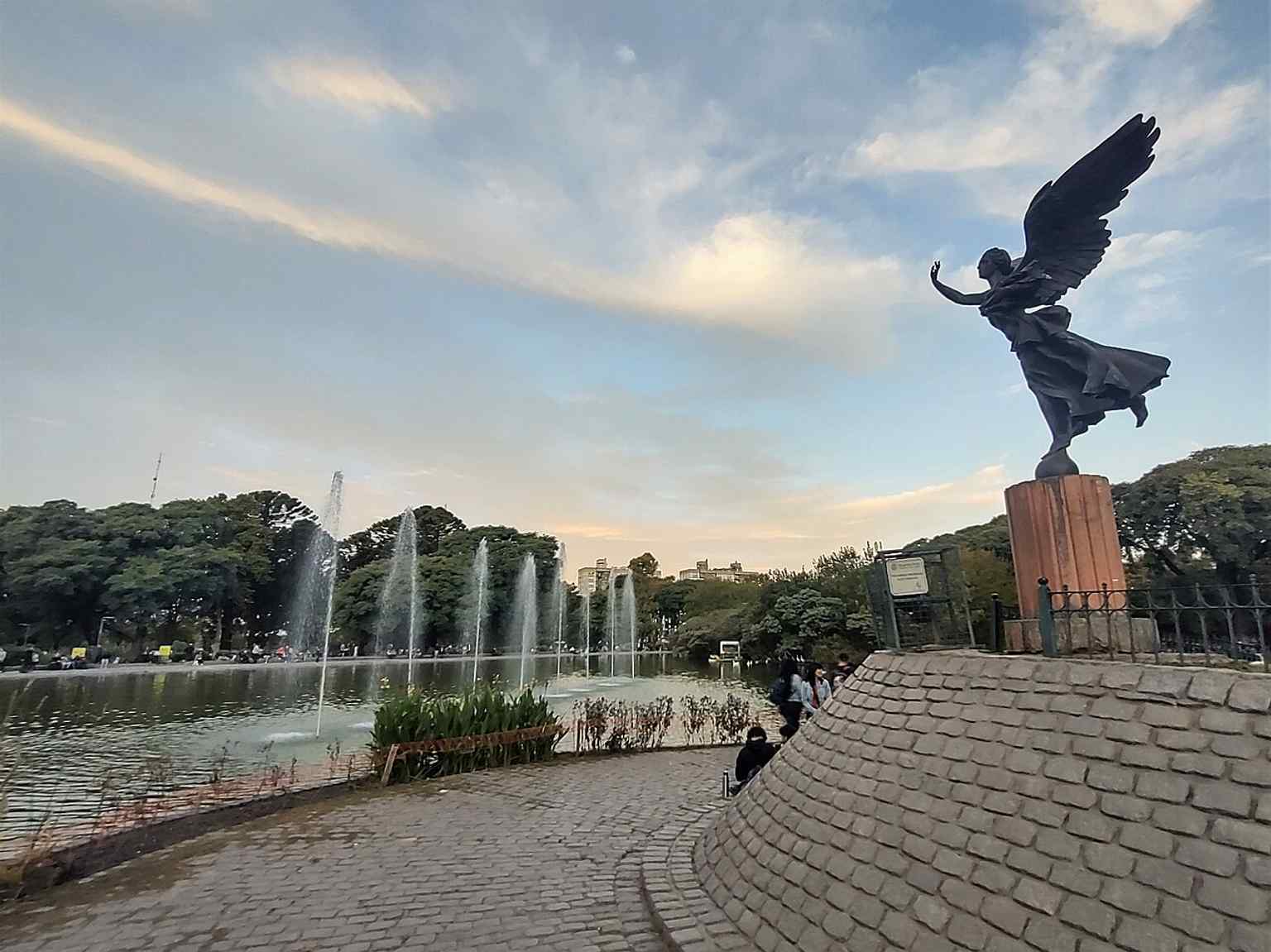
The park acts as a sort of open-air canvas for the city, constantly reshaped by changing tastes and fortunes. Look at your phone again to see the Victoria Alada, or Winged Victory sculpture. It is a gorgeous bronze replica of an ancient statue that has guarded this space for decades.
Despite the occasional architectural mishap, the park is deeply intertwined with the pursuit of knowledge, much like the Natural Sciences Museum we just explored. There is even a touch of mystery here. Somewhere in this park, beneath a bust of the famous physicist Madame Curie, lies a buried time capsule. It contains soil from Poland and glass laboratory tubes she actually used. It is scheduled to be opened in 2067, but there is a catch. After the original bronze bust was stolen and the area underwent extensive renovations, the exact location of the capsule was lost. To this day, the public has no idea where it actually is.
As we continue our walk, let your eyes drift up from the sprawling canopy of the tipa and jacaranda trees toward the sky above. We are about to look a whole lot further up, because just a three-minute walk away is the Argentine Association of Friends of Astronomy. Let us head there now.






