

South Bend Audio Tour: Echoes of Innovation and Heritage
A stolen gavel once vanished in the marble halls of South Bend and the secret never made the front page. Here, grandeur and ghost stories linger behind iron gates and mossy brick. This self-guided audio tour leads through South Bend's famed facades and narrow alleys, sharing histories and scandals you won’t find in the average guidebook. Spin forgotten keyholes, hear courtroom whispers, and explore the shadows next to stained glass. Why did a heated trial at the Robert A. Grant Federal Building nearly overturn a city's fate? What secret inscriptions hide in the stone of the Morey-Lampert House? Whose midnight confession hovered above a cathedral pew for years? Stride from grand colonnades to quiet corners and piece together South Bend’s most gripping moments, scene by scene. Unlock the stories sewn into these walls. Your journey into South Bend’s hidden depths begins now.
Tour preview
About this tour
- scheduleDuration 80–100 minsGo at your own pace
- straighten2.7 km walking routeFollow the guided path
- location_onLocationMishawaka, United States
- wifi_offWorks offlineDownload once, use anywhere
- all_inclusiveLifetime accessReplay anytime, forever
- location_onStarts at Robert A. Grant Federal Building and U.S. Courthouse
Stops on this tour
lock_open 3 free previews · 12 unlock with purchase
In front of you stands a pale limestone block with a dark granite base, tall vertical bands of windows, and carved federal lettering tucked just below the roofline. This…Read moreShow less
Open dedicated page →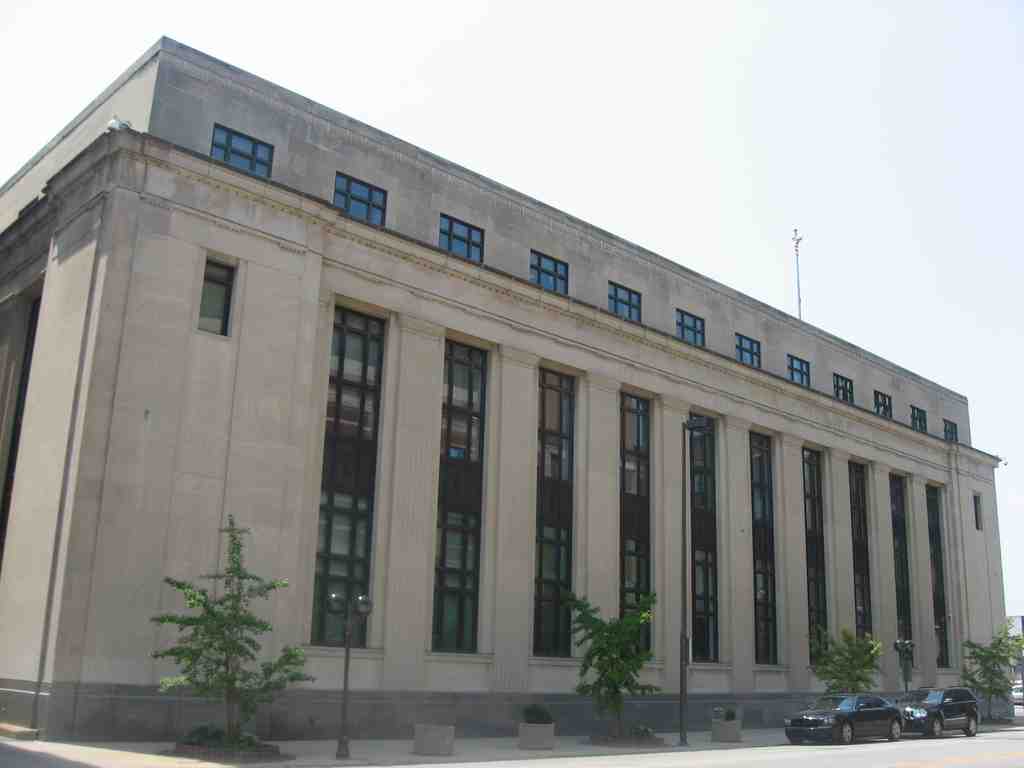
Robert A. Grant Federal Building and U.S. CourthousePhoto: Nyttend, Wikimedia Commons, Public domain. Cropped & resized. In front of you stands a pale limestone block with a dark granite base, tall vertical bands of windows, and carved federal lettering tucked just below the roofline.
This courthouse arrived at a moment when South Bend had outgrown its old federal home. By the late nineteen twenties, the city’s businesses and population were expanding so quickly that the older post office from eighteen ninety-eight could no longer cope. In nineteen thirty, President Herbert Hoover sent Congress a list of public building projects that included one million dollars for a new federal building here in South Bend, roughly the equivalent of about eighteen million dollars today. In the depths of the Great Depression, that was not merely a budget line. It was a declaration that the federal government intended to plant something solid here.
What makes this building especially local is that Washington chose local talent to design it. The firm of Austin and Shambleau won the commission in December of nineteen thirty. Ennis Austin knew federal construction from the inside, having supervised post offices and courthouses for the Treasury Department. N. Roy Shambleau, by contrast, had made his name with Prairie School houses, influenced by Frank Lloyd Wright. Together they produced something rather disciplined and modern: an Art Deco or Art Moderne federal building, stripped of fuss but still full of authority.
Look at the facade and you can see that restraint at work. The granite base anchors the building. Above it, smooth Indiana limestone rises in nearly flat planes. Those shallow pilasters, the flat vertical strips that act like simplified columns, alternate with stacked windows in bronze frames. The style is sometimes called “starved classicism,” which sounds a bit cruel, but it simply means classical architecture put on a strict diet: less ornament, flatter surfaces, cleaner lines. On the screen, the north side repeats that same steady rhythm, bay after bay, like a piece of civic music played without flourish. Construction moved quickly. James I. Barnes and Company of Logansport won the contract, and demolition began in September of nineteen thirty-one. Postmaster John N. Hunter laid the cornerstone in May of nineteen thirty-two, and by the first week of March nineteen thirty-three, the building was ready, a full week ahead of schedule. That efficiency feels almost suspicious in any era, but especially during the Depression.
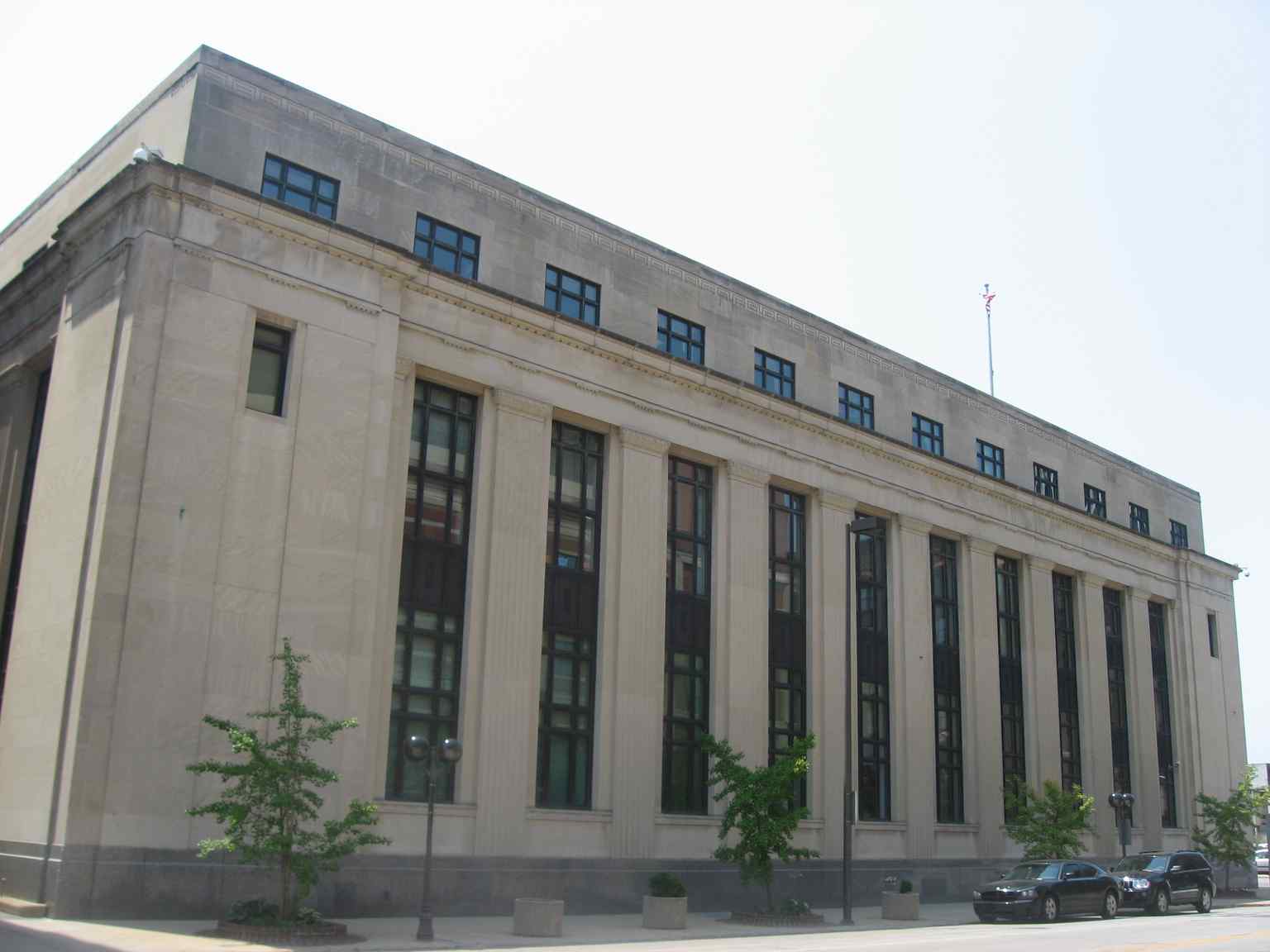
The north side of South Bend’s Robert A. Grant Federal Building, a 1933 Art Deco courthouse that once anchored the city’s federal post office and court system.Photo: Nyttend, Wikimedia Commons, Public domain. Cropped & resized. Inside, the building held two grand spaces: a two-story postal lobby with marble and polished brass, and a walnut-paneled courtroom on the third floor. The post office eventually moved out after roughly half a century, and the building adapted, as good public buildings must, to new federal uses.
It also stood through a rough chapter in local history. In June of nineteen thirty-four, John Dillinger, Baby Face Nelson, and Pretty Boy Floyd robbed a nearby bank and shot several people during their escape. They did not attack this courthouse, but the crime reminded everyone why a secure federal presence mattered in northern Indiana.
In nineteen ninety-two, the building took the name of Judge Robert A. Grant, an Indiana native, Notre Dame law graduate, former congressman, and chief judge who guided the court through the civil rights era. His story, like many human stories, turned more complicated later, when records raised troubling questions about his role in keeping abuse-related Boy Scouts documents sealed in a nineteen seventy case.
And still, the building carries on. Today, these limestone walls house federal justice in a very different age, including cybercrime and phone-hijacking cases that would have baffled its first occupants.
For all its stern dignity, this building tells a deeply human story about growth, power, and adaptation.
When you are ready, continue to the next stop and we shall see another side of South Bend’s character.
On your right stands a seven-story red brick block with wide terra-cotta storefront openings at the base and an ornate seventh-floor crown, marked by unusually old window frames…Read moreShow less
Open dedicated page →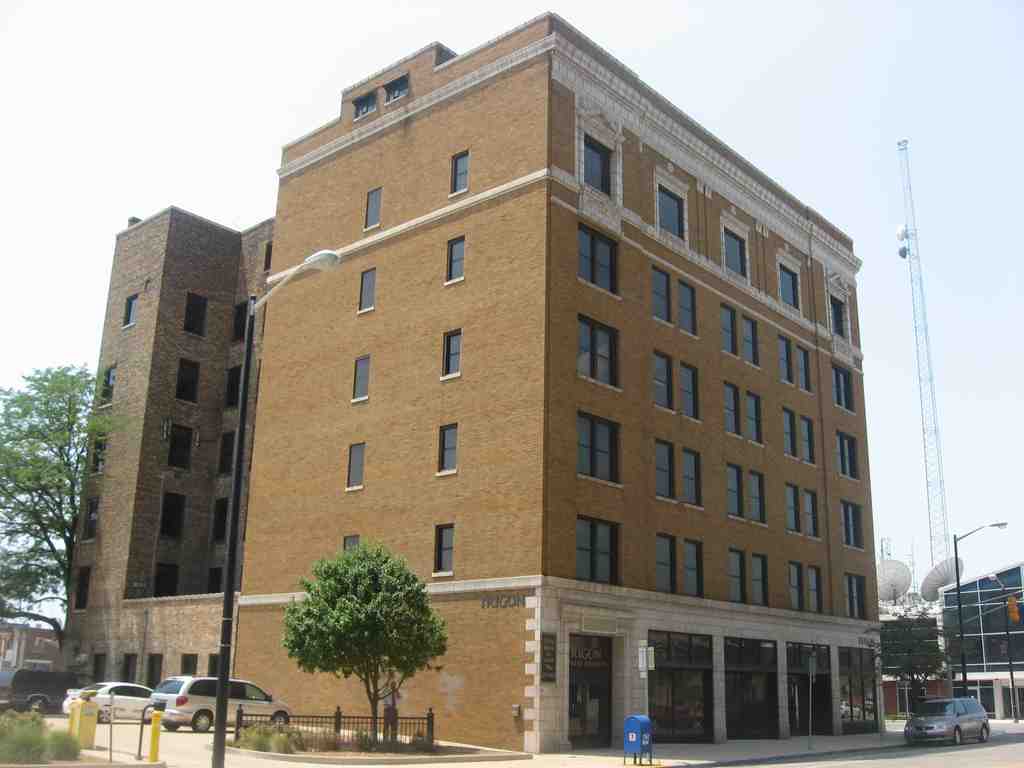
Knights of Pythias LodgePhoto: Nyttend, Wikimedia Commons, Public domain. Cropped & resized. On your right stands a seven-story red brick block with wide terra-cotta storefront openings at the base and an ornate seventh-floor crown, marked by unusually old window frames high at the top.
This lodge opened in nineteen twenty-two, when South Bend’s Crusade Lodge Number Fourteen decided modesty would never do. Its members financed an enormous headquarters and proudly claimed the largest lodge building in the city, and indeed the largest Pythian building in the fraternity’s entire “supreme domain.” The local architects, N. Roy Shambleau and Walter W. Schneider, gave it a clever Chicago School design: think of a classical column stretched upright. The first floor forms the base, wrapped in terra cotta and big display windows. The middle five floors make a plain shaft. Then the seventh floor becomes the capital, the decorative top, dressed in rich terra-cotta trim.
For all that scale, the Knights themselves used only the sixth and seventh floors. They leased the lower floors to shops, offices, and, with delicious irony, the Federal Court and the District Prohibition Office. A private fraternal order ended up housing the law and the dry agents.
In the app, the full height and that handsome top floor become even clearer. Most exterior windows have been replaced over the years, but the seventh floor still keeps its original nineteen twenty-two frames, where the Knights once held their secret meetings.
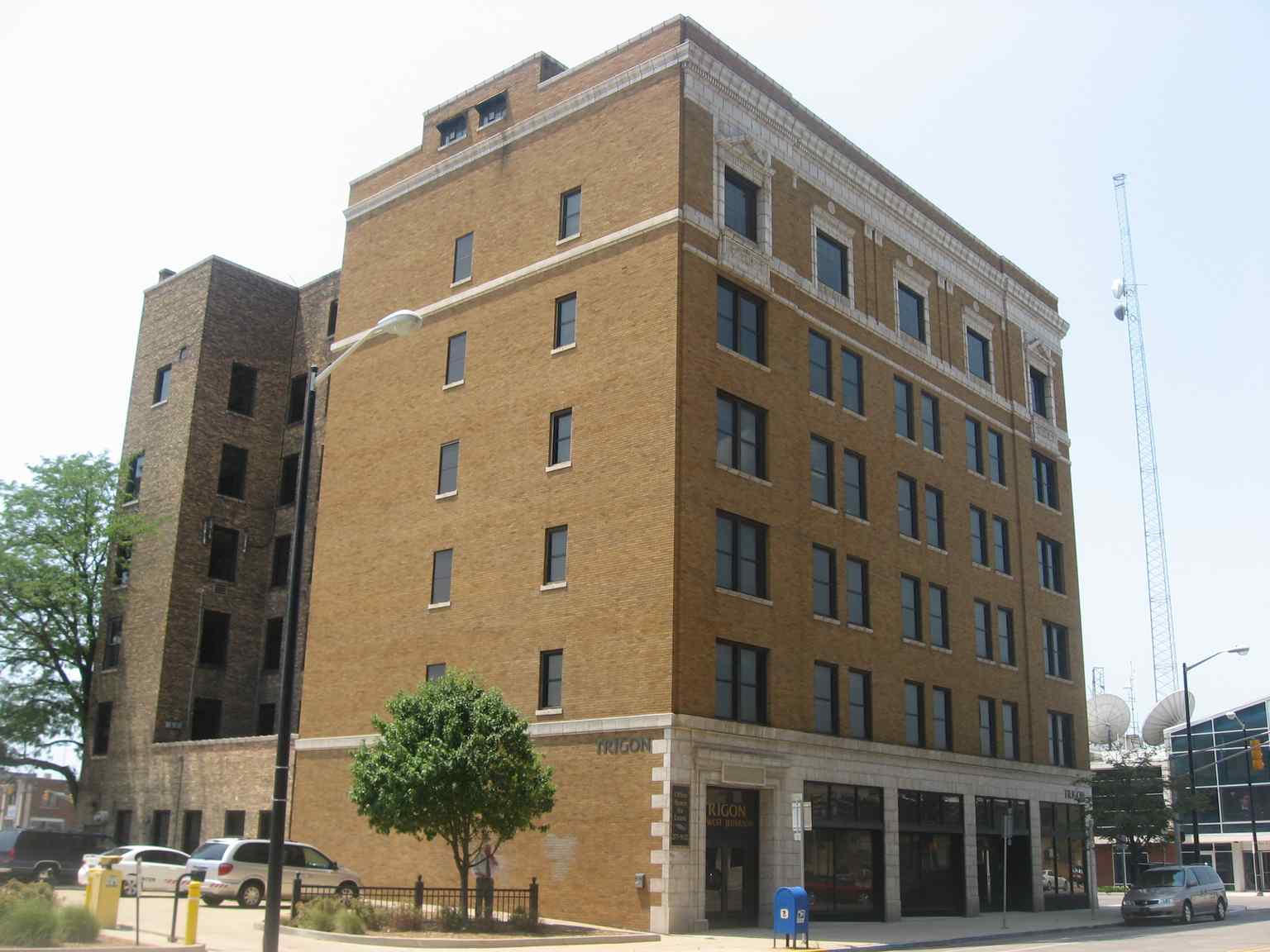
Front and east side of the 1922 Knights of Pythias Lodge, the seven-story brick landmark that once housed the city’s largest lodge building and later the Federal Court and Prohibition Office.Photo: Nyttend, Wikimedia Commons, Public domain. Cropped & resized. Then the debt caught up with them. In nineteen thirty-five, Lincoln National Life Insurance Company foreclosed on a one hundred twenty thousand dollar bond, well over two and a half million dollars today, and the fraternity lost its grand monument.
It is a splendid building, but also a sober lesson in ambition. When you are ready, carry on to the next stop.
On your left stands a three-story red-brick clubhouse trimmed with pale terra cotta, marked by round-arched windows and fan-shaped brickwork spreading above each arch. This…Read moreShow less
Open dedicated page →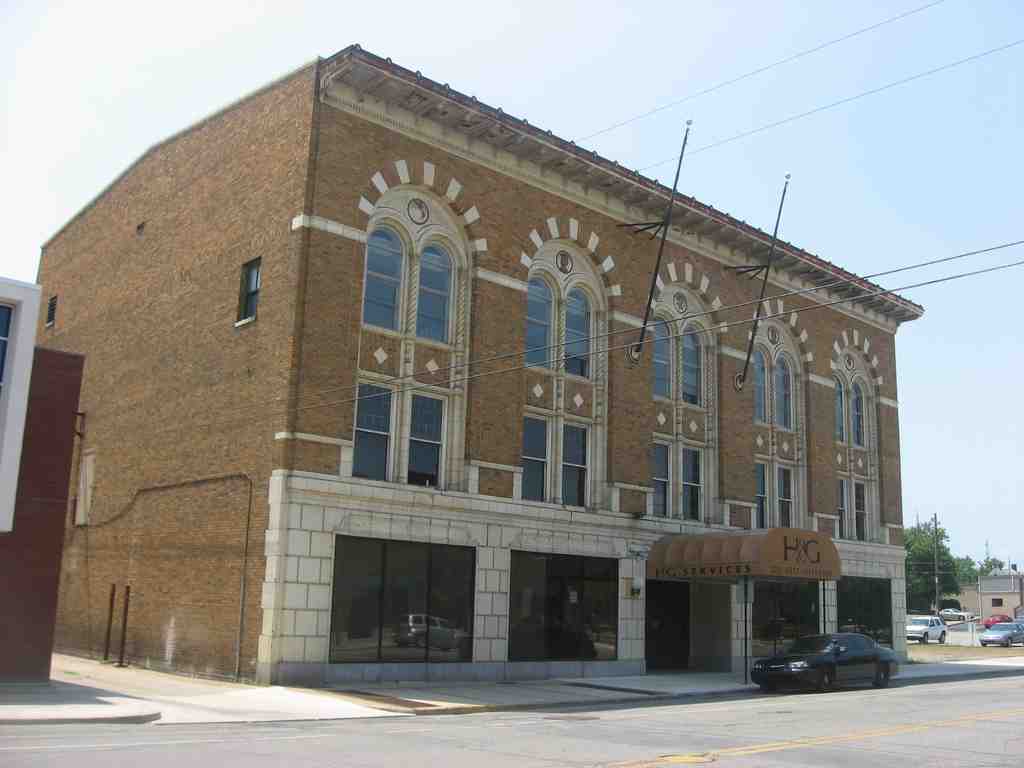
Knights of Columbus-Indiana ClubPhoto: Nyttend, Wikimedia Commons, Public domain. Cropped & resized. On your left stands a three-story red-brick clubhouse trimmed with pale terra cotta, marked by round-arched windows and fan-shaped brickwork spreading above each arch.
This building began in nineteen twenty-four as the South Bend home of the Knights of Columbus, a Catholic fraternal order that wanted something grand and confident for its local headquarters. The Lafayette architects Nicol, Scholer, and Hoffman gave them exactly that in the Renaissance Revival style, borrowing the balance and dignity of older Italian buildings. Those arched openings are the clue: the wedge-shaped bricks around them, called voussoirs, radiate outward like a small sunburst.
In the app, the full facade and side wall work together, giving the club a formal, almost ceremonial presence.
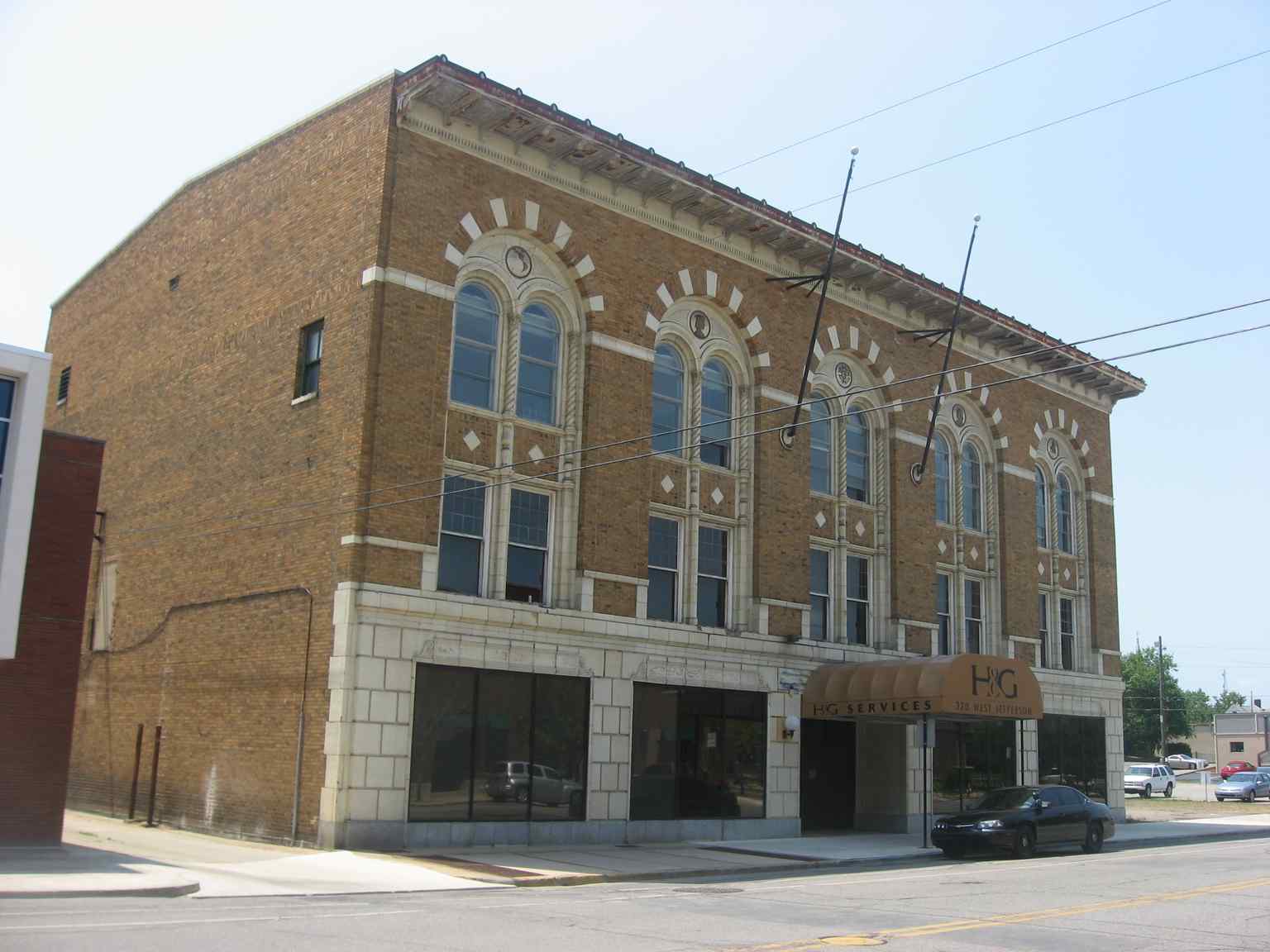
Front and east side of the 1924 Renaissance Revival club, the same building that later hosted the 1936 UAW organizing convention.Photo: Nyttend, Wikimedia Commons, Public domain. Cropped & resized. Its first chapter was festive. The Knights opened the place on New Year’s Eve, nineteen twenty-four, as a polished gathering hall for dinners, meetings, and fraternity life. But in April of nineteen thirty-six, the story shifted dramatically. Union delegates packed into these rooms for the first convention held under the new banner of the International Union, United Auto, Aircraft and Agricultural Implement Workers of America, the U-A-W. Months later, workers at nearby Bendix launched the nation’s first sit-down strike, and American labor history changed course.
The building changed hands in nineteen thirty-nine, when the Indiana Club, a businessmen’s organization founded in eighteen ninety-two, bought it. After foreclosure in nineteen seventy-six, it became Pardner’s Nightclub in the nineteen eighties, even hosting hard rock concerts. Since then, it has stood as both survivor and question mark.
It is a splendid building with an unusually restless past. When you are ready, carry on toward the next stop.
Show 12 more stopsShow fewer stopsexpand_moreexpand_less
On your right stands a shingle-clad house with a broad gambrel roof, a large gable dormer, and a deep front porch framed by fluted Doric columns and brick end piers. This is the…Read moreShow less
Open dedicated page →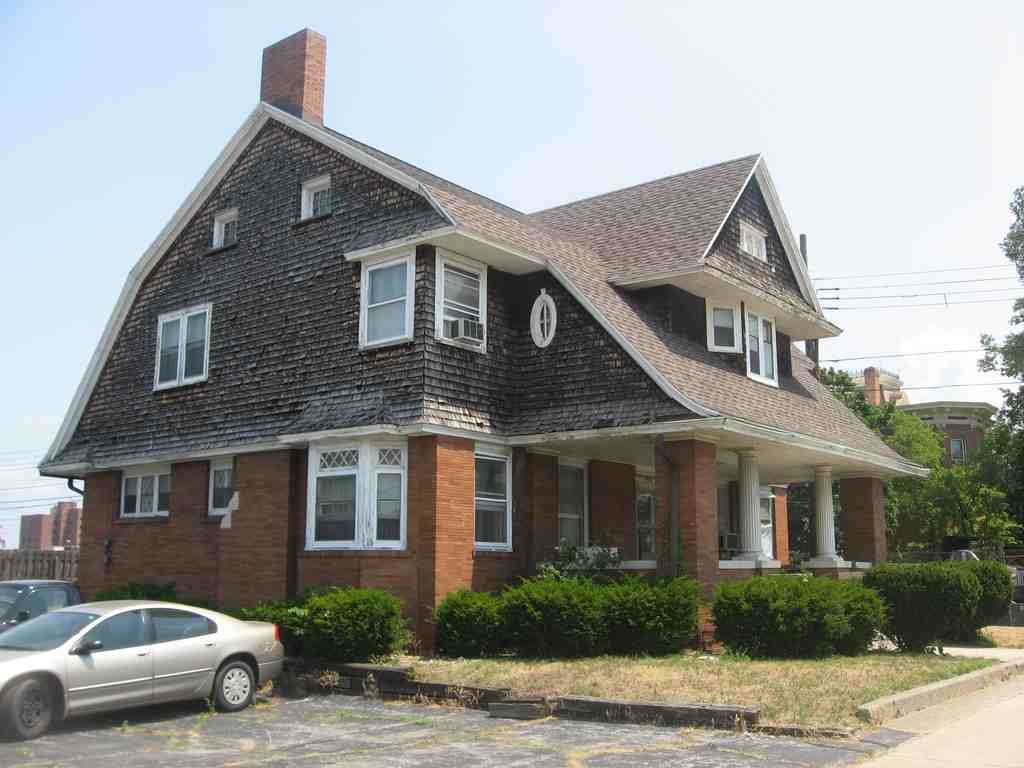
Hager HousePhoto: Nyttend, Wikimedia Commons, Public domain. Cropped & resized. On your right stands a shingle-clad house with a broad gambrel roof, a large gable dormer, and a deep front porch framed by fluted Doric columns and brick end piers.
This is the Hager House, and in nineteen ten the architects Austin and Shambleau gave South Bend a rather confident version of the Shingle Style. That style prizes a continuous skin of wooden shingles, so the house feels less like a stack of parts and more like one sweeping form. The gambrel roof - with two slopes on each side - gives the upper floor extra room, while the porch roof flares gently at the edges in a bellcast shape, a small gesture of grace before you even reach the door. The app shows how those broad surfaces and sturdy classical columns balance elegance with domestic comfort. In nineteen eighty-five, the National Register of Historic Places recognized that quiet distinction. If you want to visit, it generally opens only on Fridays and Saturdays from ten to four.
It is a house that makes dignity feel welcoming.
When you are ready, carry on to the next stop.
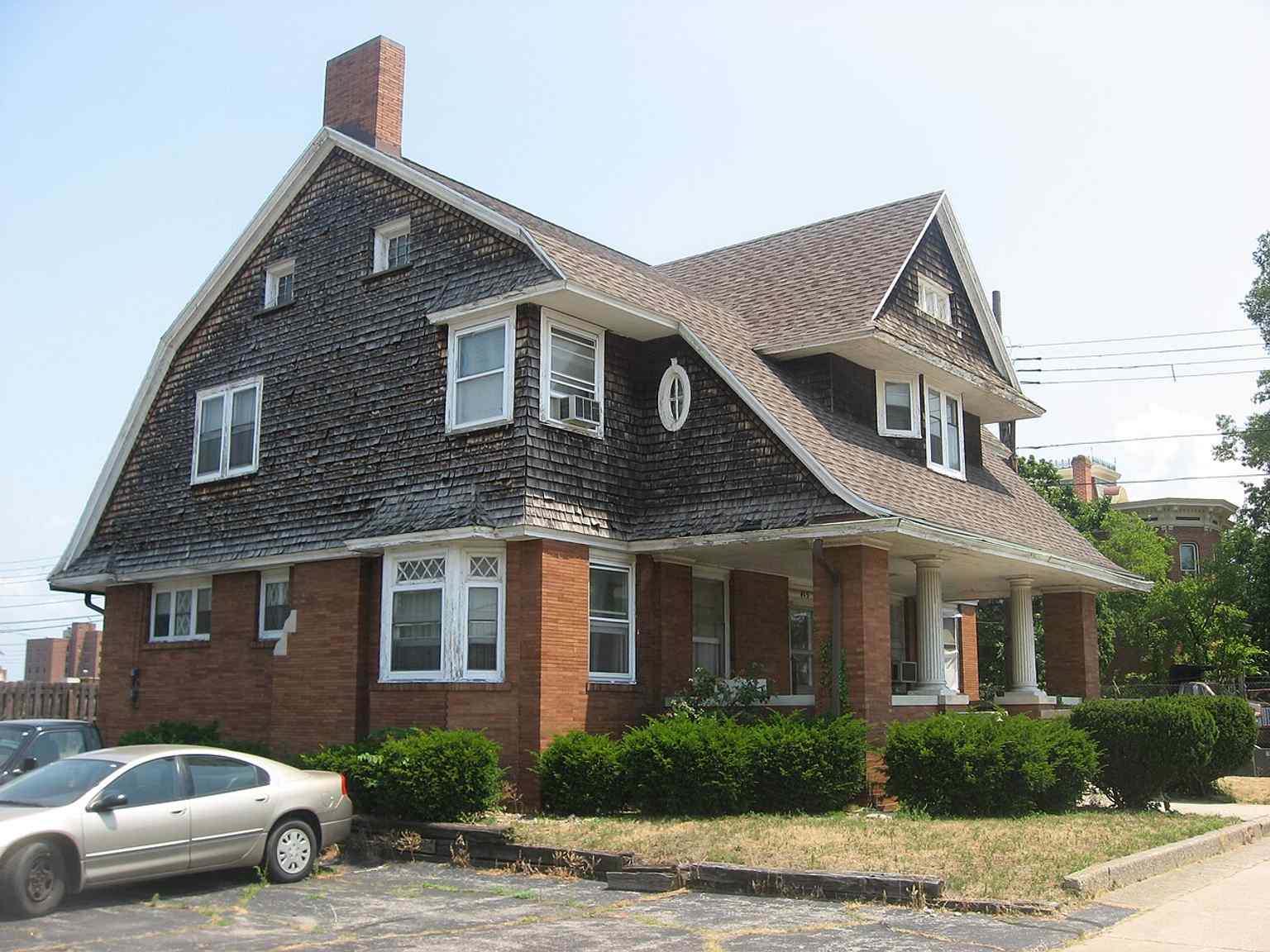
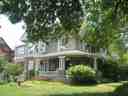
Western and front views of the Hager House, a 1910 Shingle Style home in South Bend that was later listed on the National Register of Historic Places.Photo: Nyttend, Wikimedia Commons, Public domain. Cropped & resized. On your right, look for a tall Queen Anne house with a sandstone ground floor, wood-shingled upper walls, and a round corner tower capped by a pointed conical roof. This is the…Read moreShow less
Open dedicated page →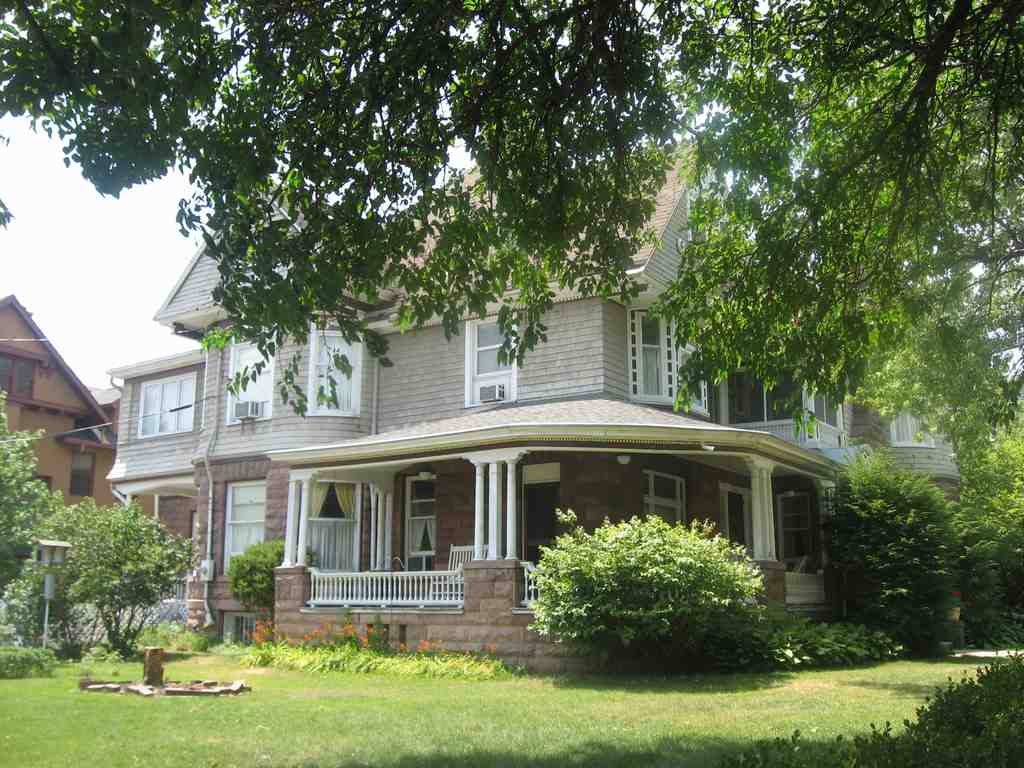
Morey-Lampert HousePhoto: Nyttend, Wikimedia Commons, Public domain. Cropped & resized. On your right, look for a tall Queen Anne house with a sandstone ground floor, wood-shingled upper walls, and a round corner tower capped by a pointed conical roof.
This is the Morey-Lampert House, one of the earliest large mansions in South Bend, and still one of its most memorable. Queen Anne architecture delights in variety rather than neat symmetry, so the house gives you textures, angles, a porch that wraps around, and that tower rising at the corner like a small flourish of theatre. A fuller view on your screen pulls the whole composition together.
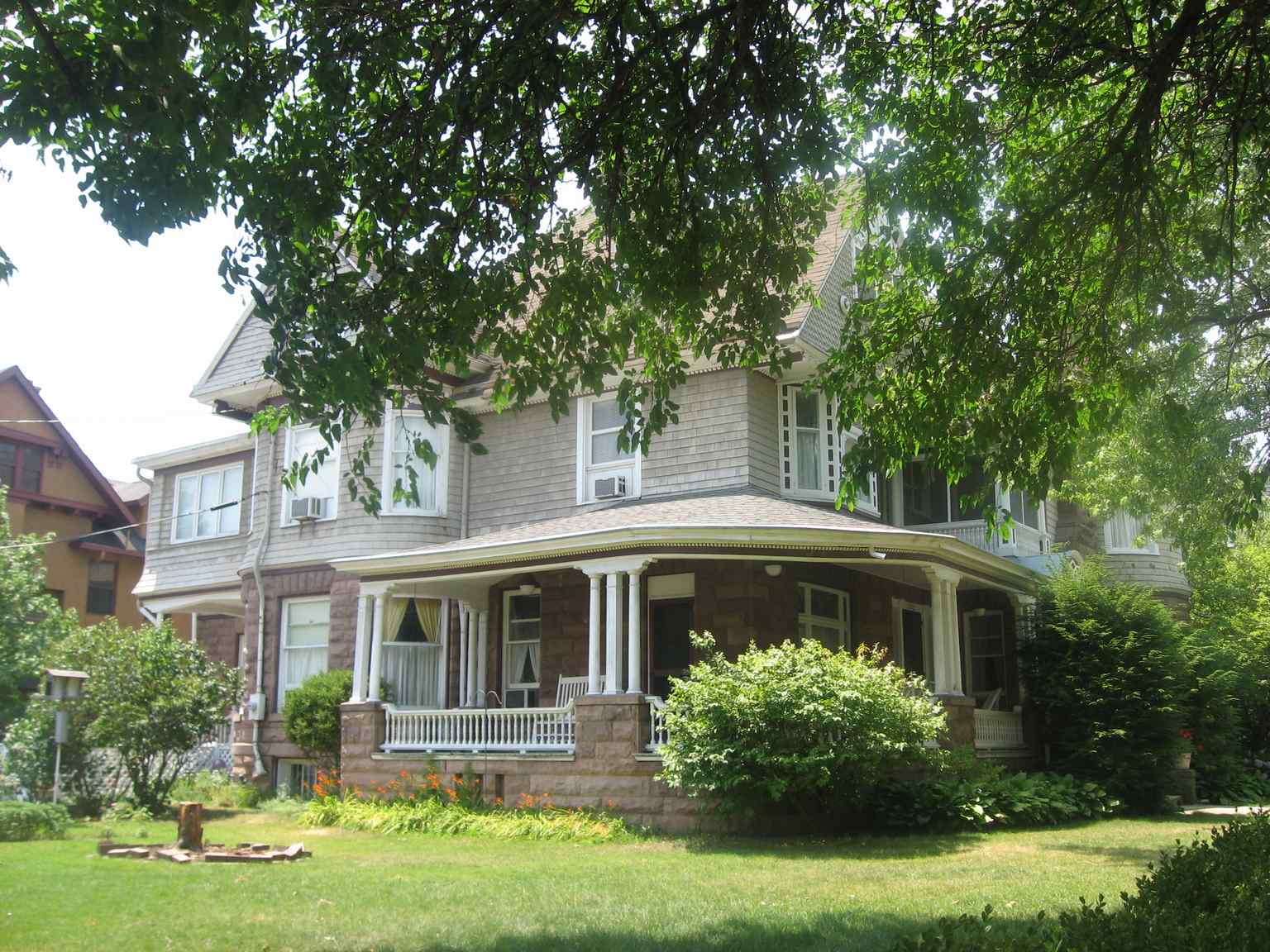
The house’s eastern side and front show the Queen Anne mansion built in 1895 for Dr. George P. Morey and Frances Helen Rose Morey.Photo: Nyttend, Wikimedia Commons, Public domain. Cropped & resized. Doctor George P Morey and his wife, Frances Helen Rose Morey, chose this very plot with care. Frances descended from the Rose family, who had held the land since eighteen fifty-one, so when Morey raised this lavish home here between eighteen ninety-four and eighteen ninety-six, he was doing more than building a mansion. He was honoring his wife's family story.
There is, however, a sadness bound tightly into the house. Frances Helen Rose Morey died on the thirtieth of July, eighteen ninety-six, after living here only a few months. Their daughter Frances Claire also died young. So this splendid residence, completed at immense expense, became a place touched by grief almost as soon as the family settled in.
Doctor Morey himself had lived a full and public life. Born in western New York in eighteen forty-four, he served as a private in the Union Army during the Civil War and later remained active in Grand Army of the Republic gatherings here in South Bend. He also had a practical eye for investment: behind this mansion, on what is now Franklin Place, he developed the Morey House, an apartment building he rented to local doctors and lawyers.
In nineteen oh eight, he gave this house to his daughter Helene Rose Morey and her new husband, William Keyes Lamport, as a wedding present. Lamport became the first managing editor of the South Bend Tribune, then helped found a major advertising firm whose campaigns eventually reached national audiences, including work for Evinrude Outboard Motors. That firm also supported local culture, helping the South Bend Museum of Art acquire works such as Mildred Fischer's Paris Shutters in nineteen fifty-three.
The house later served as offices and then as a bed and breakfast called the Inn of West Washington, allowing guests to experience its rich interior and carved sandstone porch. One treasure remains inside: a stained glass window that won a medal at the Chicago World's Fair in eighteen ninety-three. Doctor Morey paid two thousand eight hundred dollars for it, roughly seventy-four thousand dollars in two thousand fifteen terms, and placed it on the west wall to catch the light.
Its grandeur survives, but what lingers most is the family devotion that shaped it.
When you're ready, continue on to the South Bend Remedy Company Building.
On your left is a two-story brick-and-limestone building shaped like a refined town house, with a round turret capped by a conical roof and a recessed entrance tucked into the…Read moreShow less
Open dedicated page →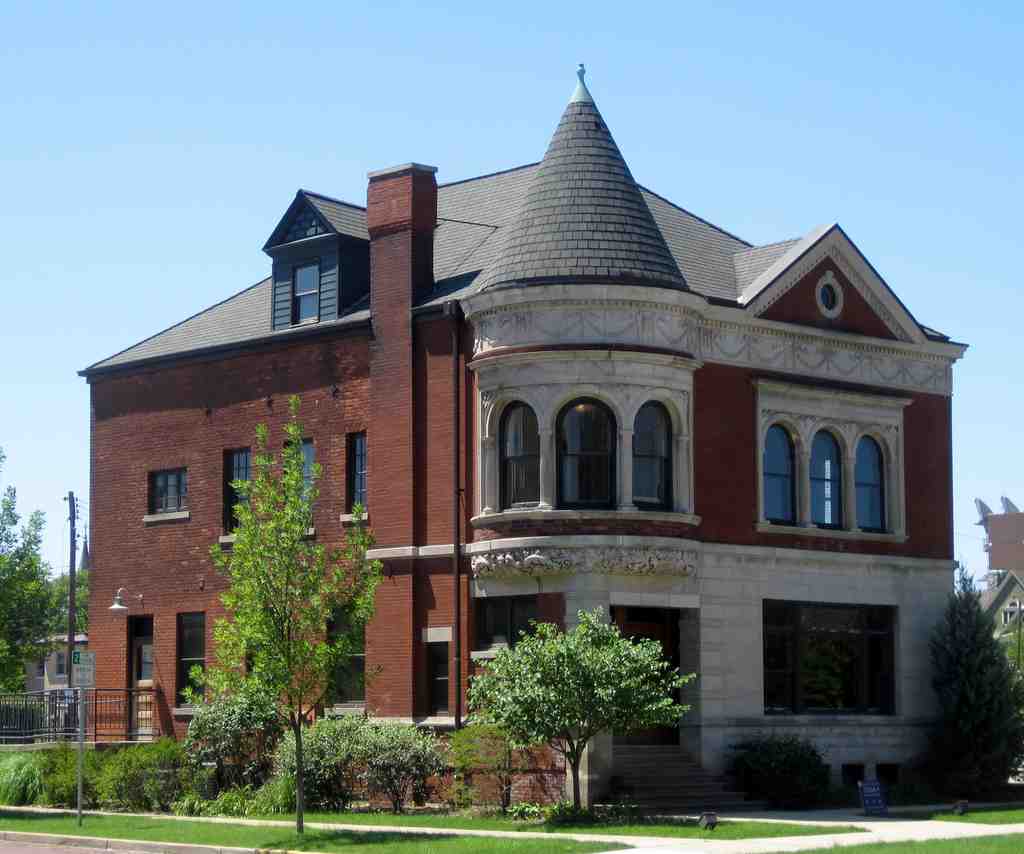
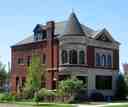
South Bend Remedy Company BuildingPhoto: Teemu08, Wikimedia Commons, CC BY-SA 3.0. Cropped & resized. On your left is a two-story brick-and-limestone building shaped like a refined town house, with a round turret capped by a conical roof and a recessed entrance tucked into the façade.
In eighteen ninety-five, Albert H. Kelley gave South Bend something delightfully sly. He commissioned this place for his South Bend Remedy Company, a mail-order patent medicine firm - meaning packaged cures sold with grand promises - but he dressed the business as an elegant private home. That was quite deliberate. Kelley meant this to appear as the end bay of a row of fashionable houses, though the rest never arrived. The result is wonderfully singular: South Bend’s only commercial building designed to pass as a residence.
Kelley had gambled on that trade in eighteen ninety-two, when he left a secure post at Studebaker Brothers to chase a riskier fortune. His most famous product, Magnolia Blossom, won worldwide attention as a remedy for what advertisements called “women’s complaints.” The exterior sells that illusion of gentility with remarkable care. And the performance continued inside. The upper floor held a large meeting room, and later a remarkably intact nineteen-twenties bathroom survived there, complete with yellow-and-black glazed tile, decorative sinks on chrome legs, original light fixtures, and even the bathtub.
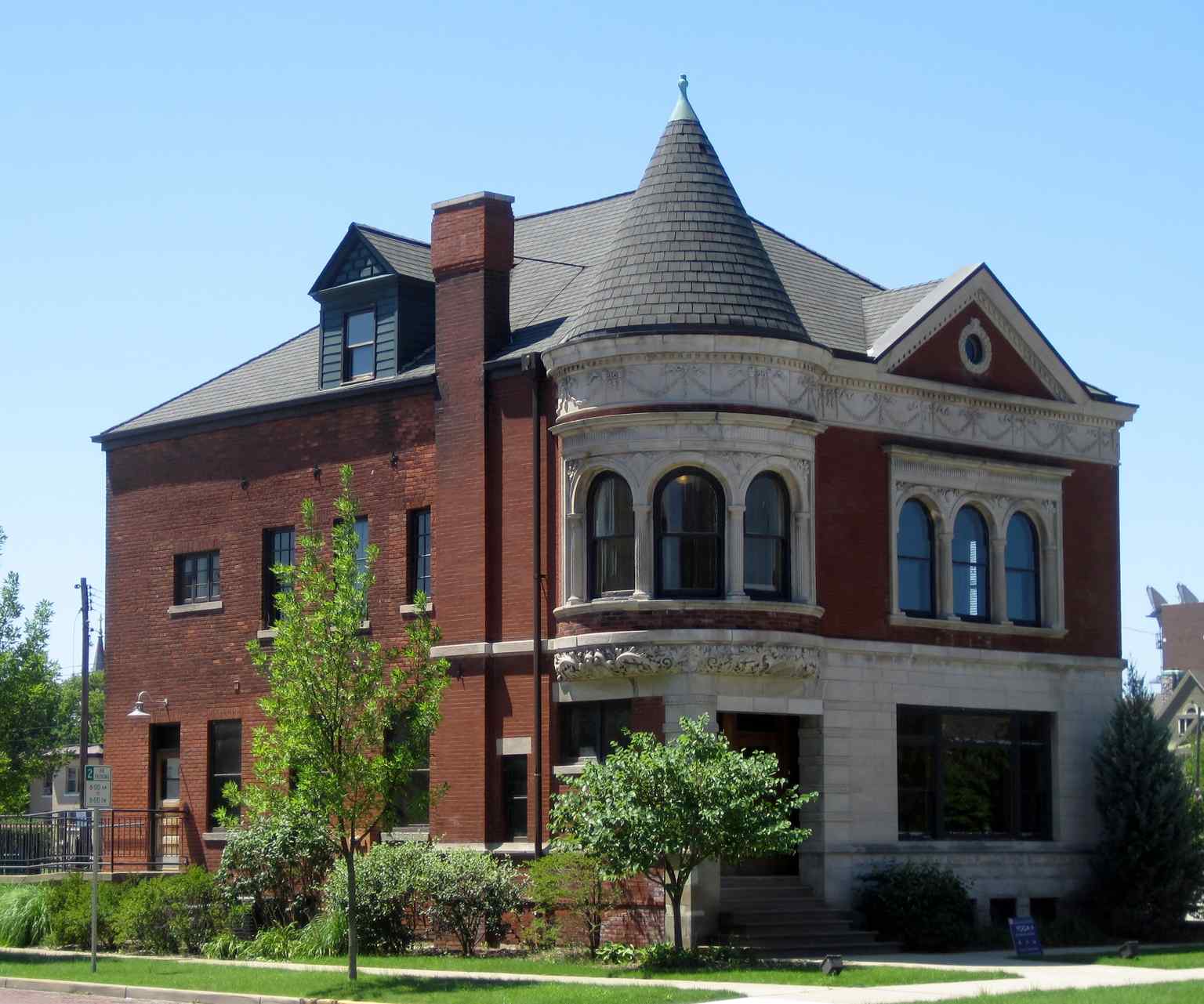
The restored South Bend Remedy Company Building, a rare commercial building designed to look like an elegant home, with its brick-and-limestone façade and distinctive turret.Photo: Teemu08, Wikimedia Commons, CC BY-SA 3.0. Cropped & resized. After Kelley died in nineteen twenty-four, and his son died four years later, the company closed. The building endured by moving twice - first in nineteen eighty-eight, then again in two thousand three. Another image shows the corner where it first stood, long since cleared for the South Bend Tribune. For all its reinventions, this little impostor remains the last survivor of South Bend’s patent-medicine world. When you’re ready, continue on to the next stop.
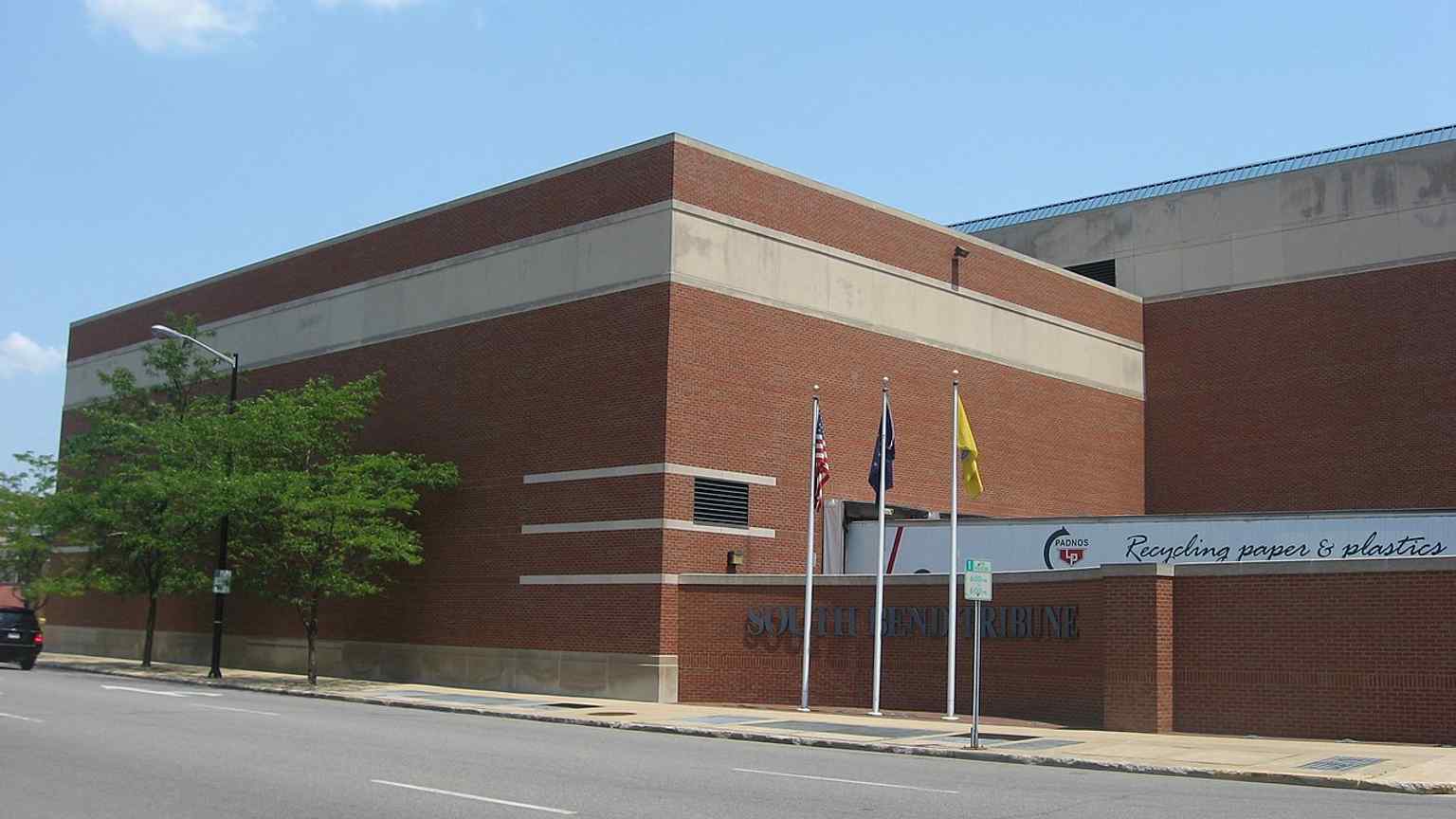
The former Remedy Company site at LaSalle and Lafayette, later occupied by the South Bend Tribune—an important clue to the building’s original corner location before it was moved.Photo: Nyttend, Wikimedia Commons, Public domain. Cropped & resized. On your right, look for a broad red-brick school building rising two to three stories above a raised foundation, with pale limestone trim and the solid, formal mass of an early…Read moreShow less
Open dedicated page →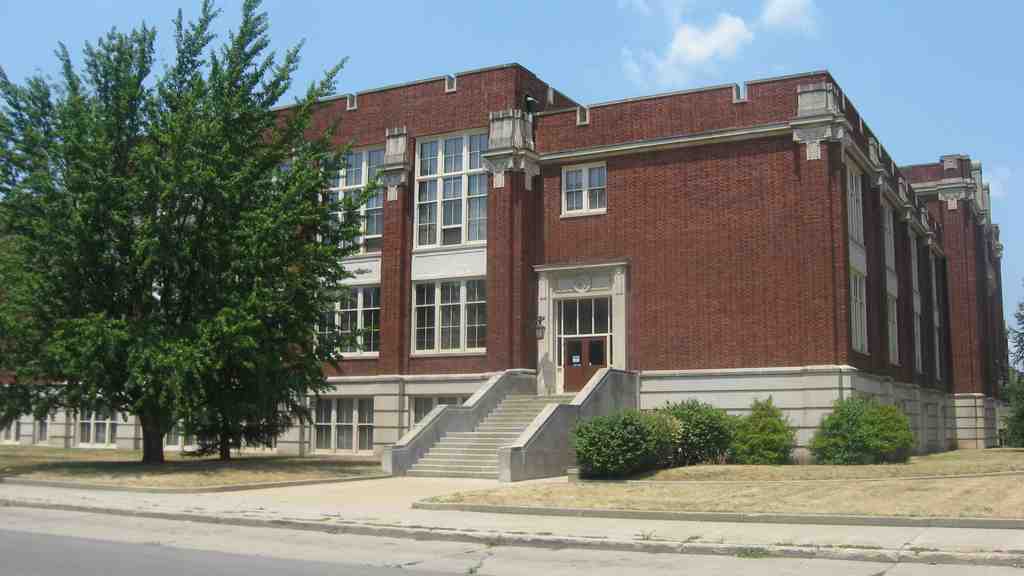
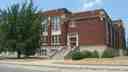
Central High School & Boys Vocational SchoolPhoto: Nyttend, Wikimedia Commons, Public domain. Cropped & resized. On your right, look for a broad red-brick school building rising two to three stories above a raised foundation, with pale limestone trim and the solid, formal mass of an early twentieth-century civic landmark.
This is Central High School and Boys Vocational School, though the story begins much earlier. South Bend’s first official high school building opened in eighteen seventy-two, and its first graduating class numbered only four students: Charles Henry Bartlett, William Mason Green, Ida Ellsworth, and Lillie Spain. From that modest beginning, Central served as the city’s only high school until nineteen thirteen.
The building in front of you took shape between nineteen eleven and nineteen thirteen. A former vocational building followed behind it around nineteen eighteen, and the school absorbed that structure into the main complex in nineteen twenty-eight. In the app, you can pick out the nineteen eleven Berteling Building, the red-brick core that gave the campus its lasting identity.
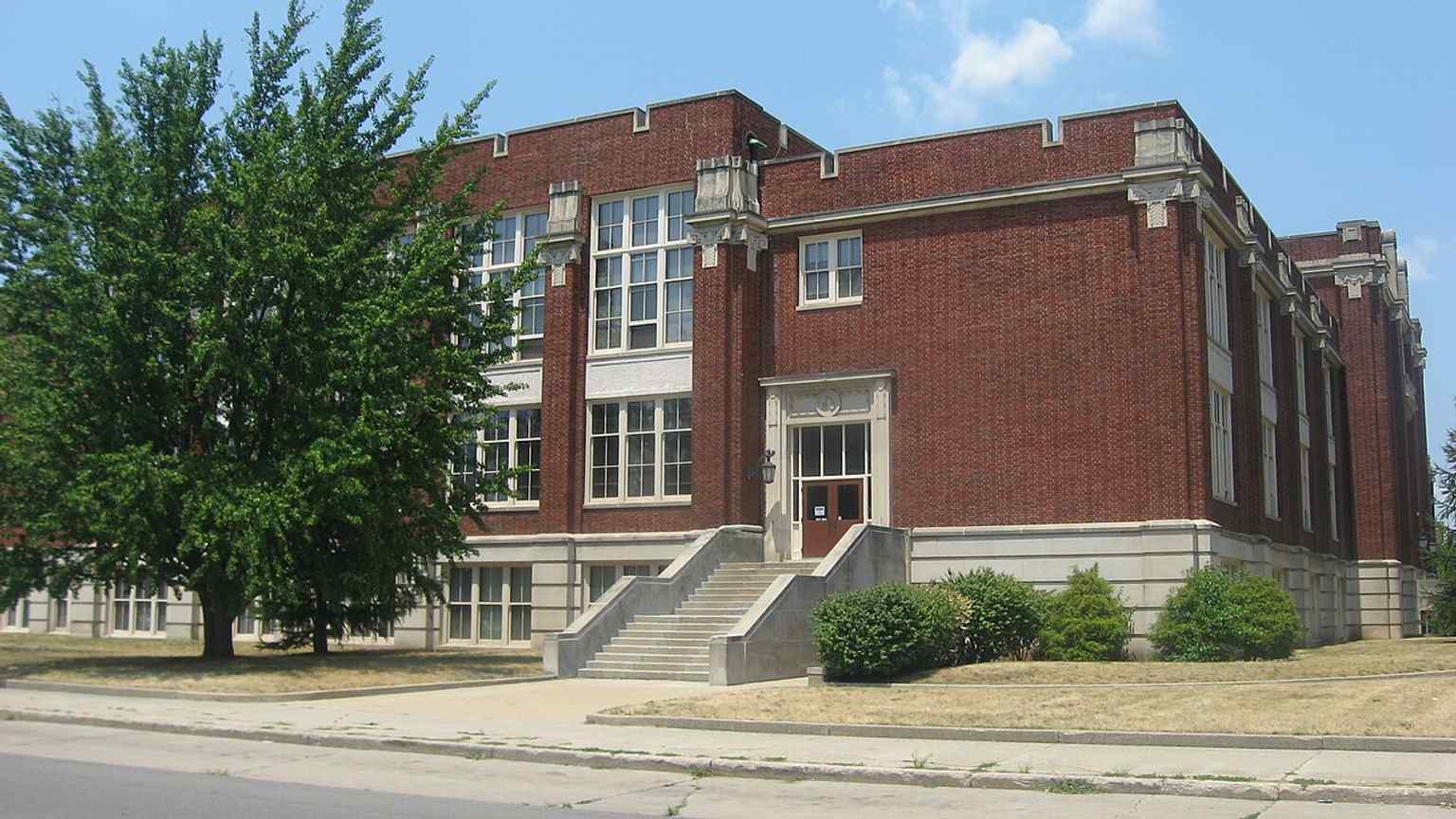
Front and east side of Central High School’s 1911 Berteling Building, the historic red-brick core of South Bend’s former high school complex.Photo: Nyttend, Wikimedia Commons, Public domain. Cropped & resized. By the early nineteen fifties, nearly two thousand students filled these halls. Central earned a reputation for academics, athletics, and something rarer in that era: a more integrated school culture. Graduate Melvin Holmes, class of nineteen fifty-eight, later said that here, “color was secondary.” That is a small sentence with a great deal inside it.
The school also gave girls real athletic opportunity long before Title Nine, the federal law that later required equal access in education and sport. The Girls’ Athletic Association started in nineteen oh-five. Students earned points in field hockey, table tennis, swimming, and volleyball for pins, sweaters, or rings. Water ballet joined the program in nineteen forty-seven, and the girls’ volleyball team did not lose a single match from nineteen forty-eight to nineteen fifty-five.
Then there was John Wooden, long before U-C-L-A made him famous. He coached basketball and baseball here for nine years, ran a tight ship, and when annoyed, reportedly burst out with “My goodness gracious,” which is about as polite as a storm cloud can be. When a few baseball players stopped for ice cream and arrived late, he made the whole team run the bases ten times. Another day, two boys puffed out their cheeks in the spring team photo to mimic tobacco chaws; Wooden gave them a firm scolding, then carried on.
Central closed as a high school in nineteen seventy, later served middle school and adult education, and entered the National Register of Historic Places in nineteen eighty-five. In nineteen ninety-five, developers converted the two hundred and nineteen thousand-square-foot complex into one hundred and six apartments, preserving chalkboards, gym floor lines, and even pool depth markings. The twelve point three million dollar project won multiple preservation awards, which seems only fair for a building that refused to forget what it had been.
If you are curious about the present-day complex, its office keeps weekday hours from nine in the morning to six in the evening and closes on Saturdays and Sundays.
Central’s real achievement was not simply teaching students, but teaching a growing city what it could become. When you are ready, continue on toward the Cathedral of St. James.
On your right, look for the dark stone church with a steep gabled front, pointed Gothic windows, and a great round rose window above the entrance. St. James began in eighteen…Read moreShow less
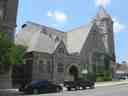
Open dedicated page →On your right, look for the dark stone church with a steep gabled front, pointed Gothic windows, and a great round rose window above the entrance.
St. James began in eighteen sixty-eight as South Bend’s first Episcopal congregation. The church before you took shape in eighteen ninety-four, when Ennis Austin and Wilson Parker designed it in the Gothic Revival style, a nineteenth-century return to medieval forms with pointed arches and a strong upward pull. Both architects had worked for the Tiffany Glass Company, and that gave this place a rare distinction: St. James became one of only two buildings in South Bend with original Tiffany stained-glass windows.
The most famous is the rose window on the east facade, a great circular burst of colour that reportedly appeared first at the World’s Columbian Exposition in Chicago in eighteen ninety-three. Peter Studebaker, treasurer of the Studebaker Brothers Manufacturing Company, gave that window to the church. Two matching Tiffany windows on the north wall, in deep purple and gold, honour Bernadine and Margaret Meyer. In the app, you can see the cathedral and its adjoining parish hall, completed in nineteen twenty, which together entered the National Register of Historic Places in nineteen eighty-five.
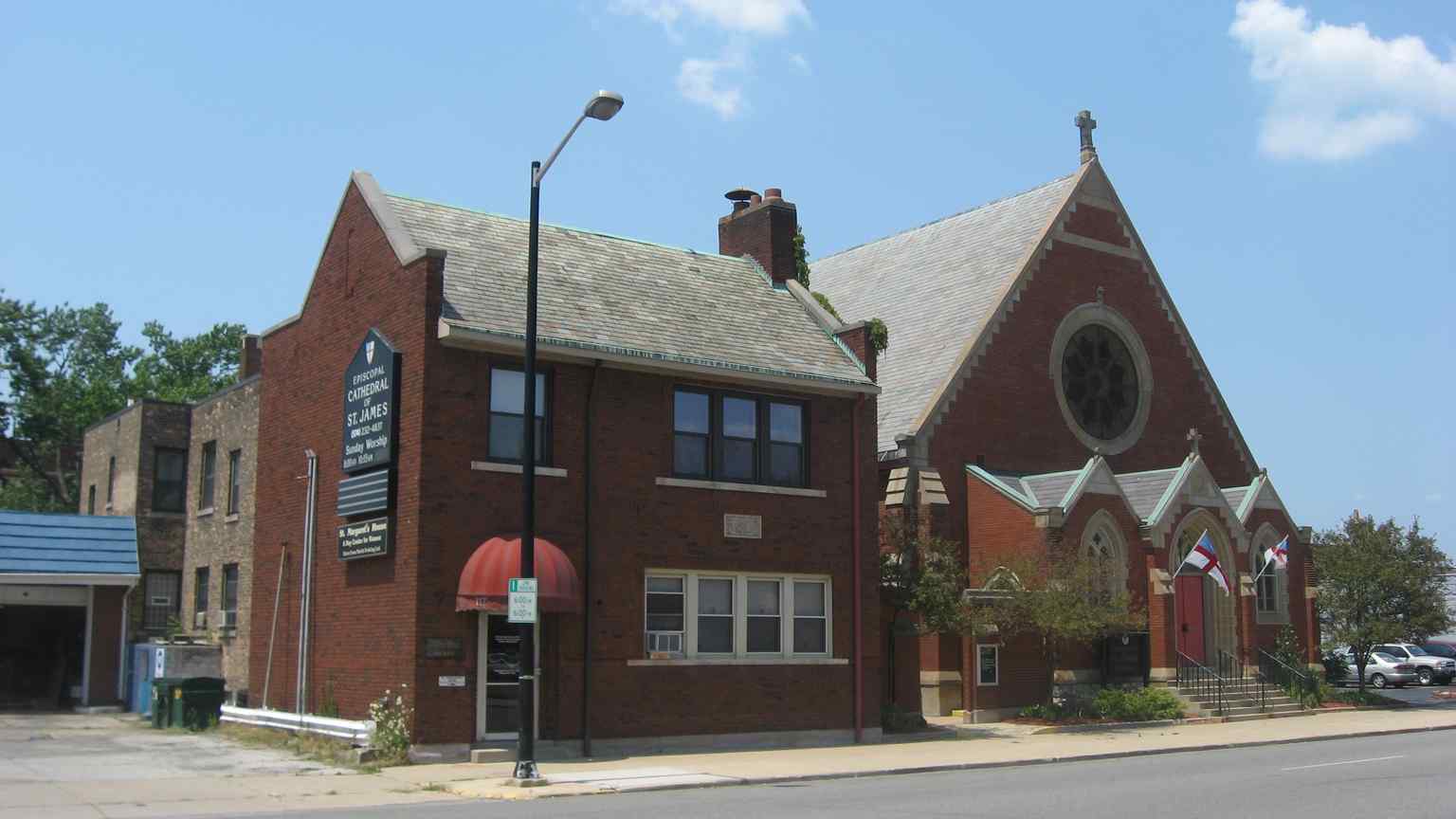
The Gothic Revival front of St. James Cathedral and its parish hall, the 1894 complex later listed on the National Register of Historic Places.Photo: Nyttend, Wikimedia Commons, Public domain. Cropped & resized. St. James became the cathedral, the main church of the diocese, in nineteen fifty-seven. More recently, it stood at the centre of a fierce local debate over L-G-B-T-Q rights. Bishop Edward Little had forbidden same-sex marriages in the diocese, but Bishop Douglas Sparks reversed that policy in twenty sixteen. St. James held its first same-sex wedding the next year. Then, on the sixteenth of July, twenty eighteen, former mayor Pete Buttigieg married Chasten Glezman here. Dean Brian Grantz later admitted he felt terror before the ceremony; reporters stayed outside, security tightened, and more than twenty thousand people watched the livestream. Protesters followed, yet in twenty twenty this lawn also held a major interfaith Black Lives Matter vigil for racial justice.
If you want to come back inside, the cathedral is generally open Tuesday through Friday from nine to one-thirty, and Sunday from eight to noon. St. James stands as proof that even an old cathedral is never merely about the past. When you’re ready, continue on to the I and M Building.
On your left, look for a seven-story Art Deco block with a marble-faced ground floor, pale limestone rising above it, and vertical bands of terra cotta trim framing the center…Read moreShow less
Open dedicated page →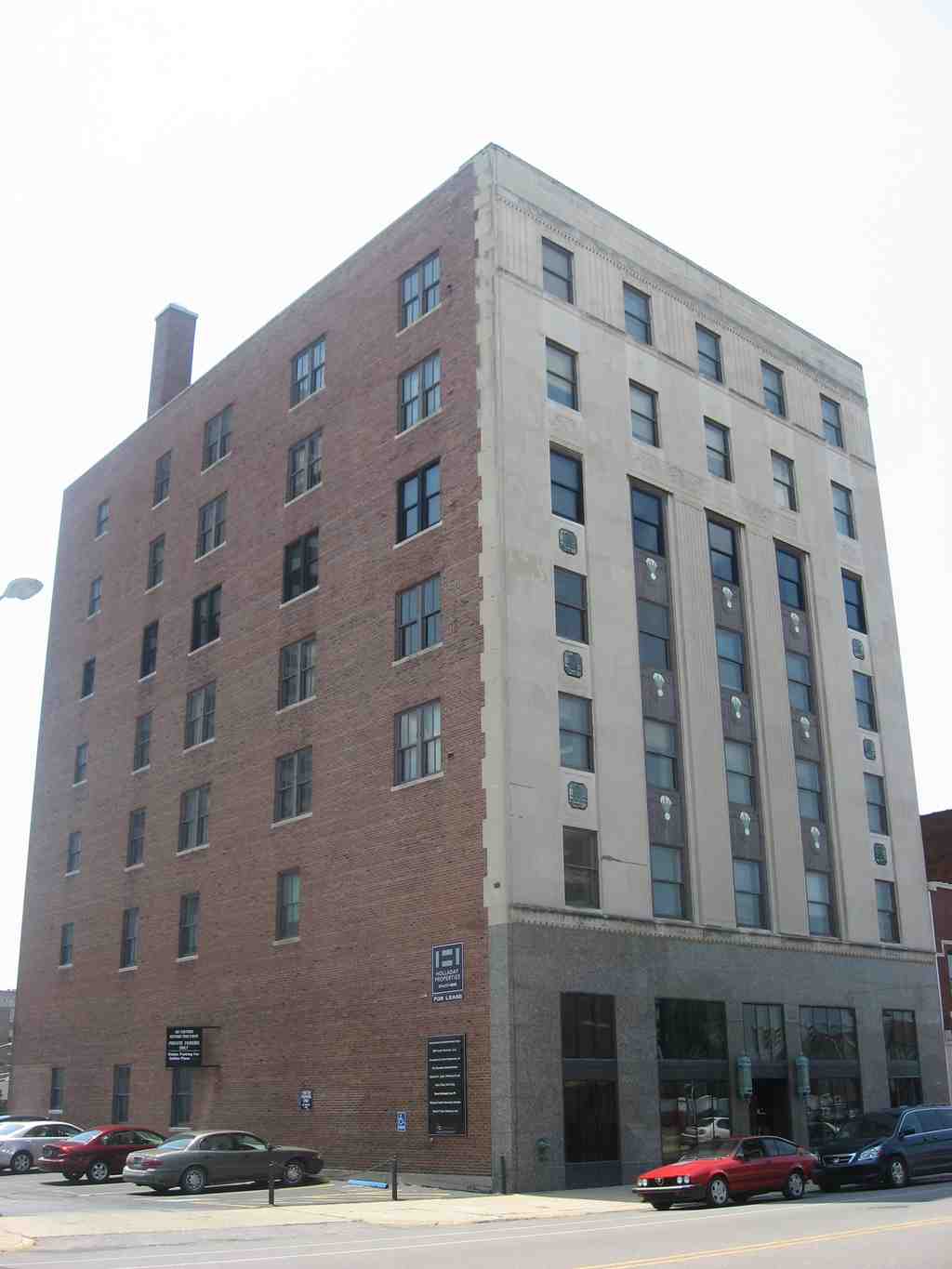
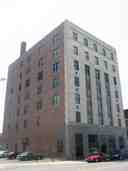
I & M BuildingPhoto: Nyttend, Wikimedia Commons, Public domain. Cropped & resized. On your left, look for a seven-story Art Deco block with a marble-faced ground floor, pale limestone rising above it, and vertical bands of terra cotta trim framing the center windows.
This is the I and M Building, raised in nineteen twenty-nine for the Indiana and Michigan Electric Company at a cost of two hundred and fifty thousand dollars, or roughly four and a half million today. South Bend has only a handful of Art Deco buildings, and this is the purest downtown example of the style: crisp geometry, strong vertical lines, and just enough ornament to make modernity feel grand.
The contrast comes through clearly in the app, from the polished front to the brick sides. Austin and Shambleau designed it, and they knew exactly what they were doing. Ennis Austin had trained under designers connected with Tiffany Glass in New York. Norman Shambleau arrived in South Bend at seventeen, the son of a Canadian carriage-maker, and worked his way up from apprentice. Together, they became the most distinguished architectural firm in northern Indiana, and this was their showpiece.
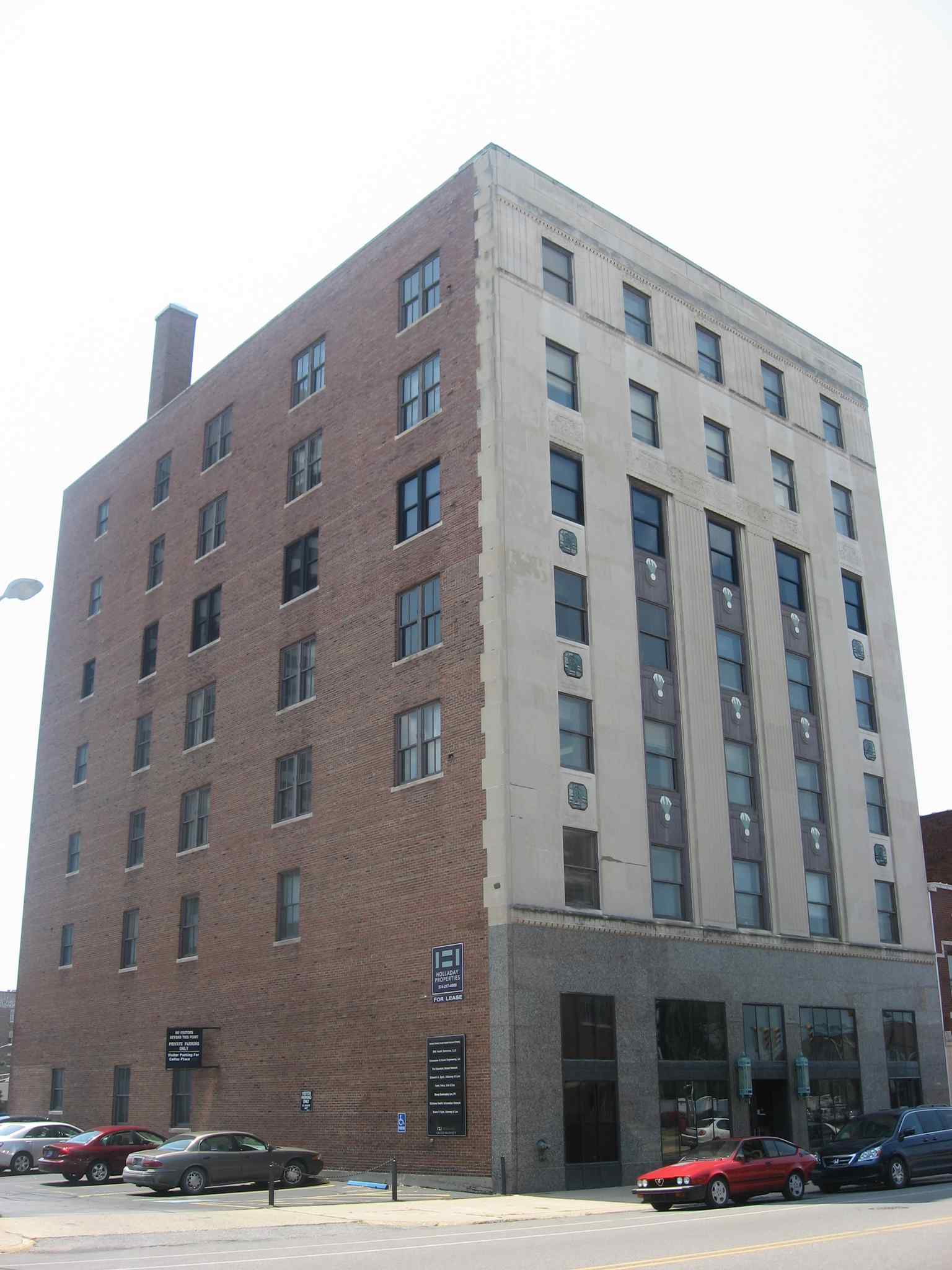
Front and east side of the 1929 I & M Building, the Art Deco headquarters built for the Indiana and Michigan Electric Company and later listed on the National Register.Photo: Nyttend, Wikimedia Commons, Public domain. Cropped & resized. But the clever part is what happened inside. This was not just an office building. The electric company used it as a sales pitch for the future. On the sixth floor, they installed an auditorium for presentations. On the seventh, they staged live kitchen demonstrations, inviting local residents to watch electric appliances perform their quiet little miracles. In the early age of household electricity, that must have felt wonderfully futuristic.
The building later rode through harder decades. It entered the National Register of Historic Places in nineteen eighty-five, then spent a brief and unsuccessful spell as a condominium project before returning to offices. Today, Schurz Communications runs broadband and cloud operations here, which feels fitting: a building created to advertise the technology of nineteen twenty-nine now manages the digital networks of the twenty-first century.
Even now, the old ambition still shows through the stone and bronze.
When you are ready, continue on toward the next tower on the route.
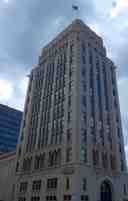
Ahead of you rises a slender twelve-story tower clad in pale terra-cotta and marble, with a stepped Gothic crown and small stone gargoyles perched high on its corners. South Bend…Read moreShow less
Open dedicated page →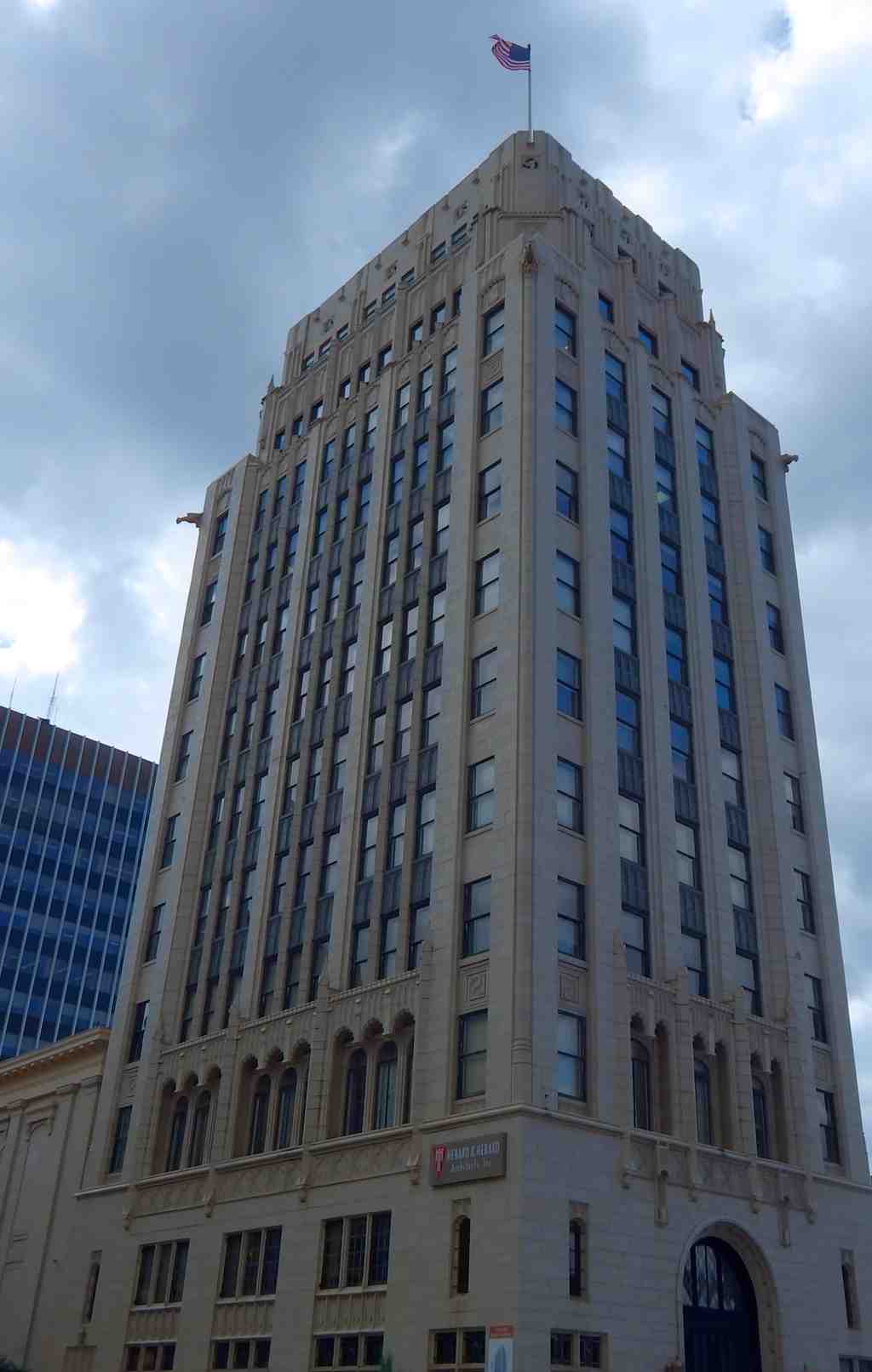
Tower BuildingPhoto: Isslwc, Wikimedia Commons, CC BY-SA 3.0. Cropped & resized. Ahead of you rises a slender twelve-story tower clad in pale terra-cotta and marble, with a stepped Gothic crown and small stone gargoyles perched high on its corners.
South Bend finished this building in nineteen twenty-nine, and the timing could hardly have been more cruel. Architects Ennis Austin and N. Roy Shambleau designed it as only half of a grand pair. Contractors completed this eastern tower just one week before the Wall Street crash, and the financial collapse killed the western twin before it ever rose. That is why this building has two faces: the handsome north and east sides dress themselves in marble and terra-cotta, while the south and west sides remain much plainer, because another tower was meant to attach there. If you want a clearer sense of that unfinished story, have a look at the image on your screen showing the stark west wall.
What survived, though, is remarkable. This is South Bend’s only true example of Skyscraper Gothic, a style that takes the pointed, vertical drama of old Gothic churches and stretches it into a modern high-rise. Around the tenth floor, three stone gargoyles cling to the chamfered, or clipped, corners. They were not merely decorative guardians. They also pushed rainwater away from the walls, which is rather practical for such theatrical little beasts.
At twelve stories, this became the first building to reach South Bend’s legal height limit, and it remained the tallest in the city for more than forty years, until nearby Liberty Tower finally overtook it in nineteen seventy. If you check the fuller exterior view in the app, you can see that proud, narrow rise very clearly.
It opened under another name, for the Building and Loan Association, the oldest institution of its kind in northern Indiana. But local people simply called it “the Tower” so persistently that the company eventually gave in and renamed itself to match the building.
And then, in one of those marvellous urban twists, peregrine falcons adopted the ledges. One abandoned mate, Zeus, even spent time roosting alone on the unfinished side after his partner chose a younger rival.
So this tower stands as both ambition and interruption, a skyline triumph with its missing half still visible. When you are ready, continue on and we shall meet the neighbour that finally surpassed it.
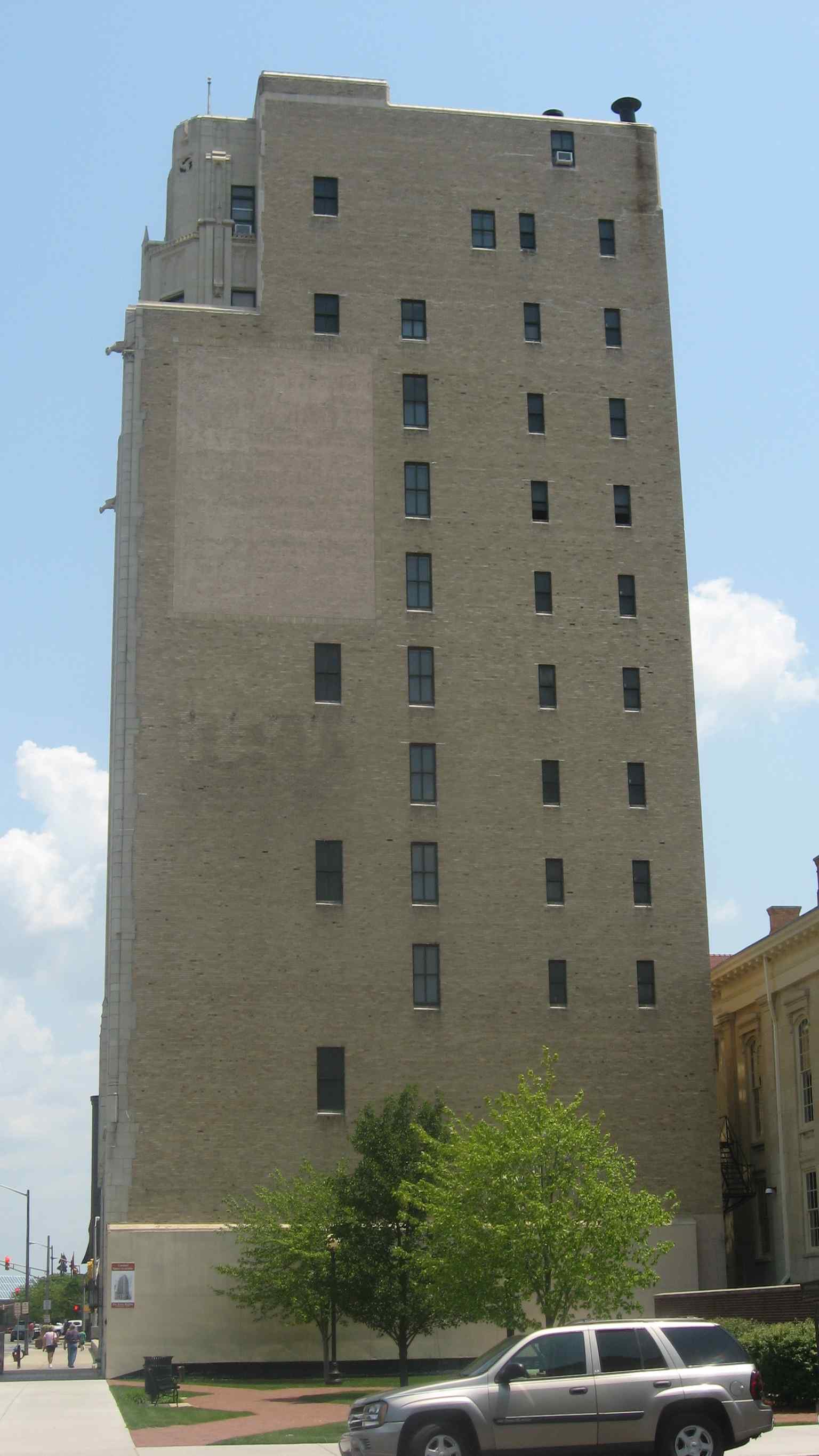
The Tower Building’s plain west facade, the side that was never meant to join a second tower after the 1929 crash.Photo: Nyttend, Wikimedia Commons, Public domain. Cropped & resized. 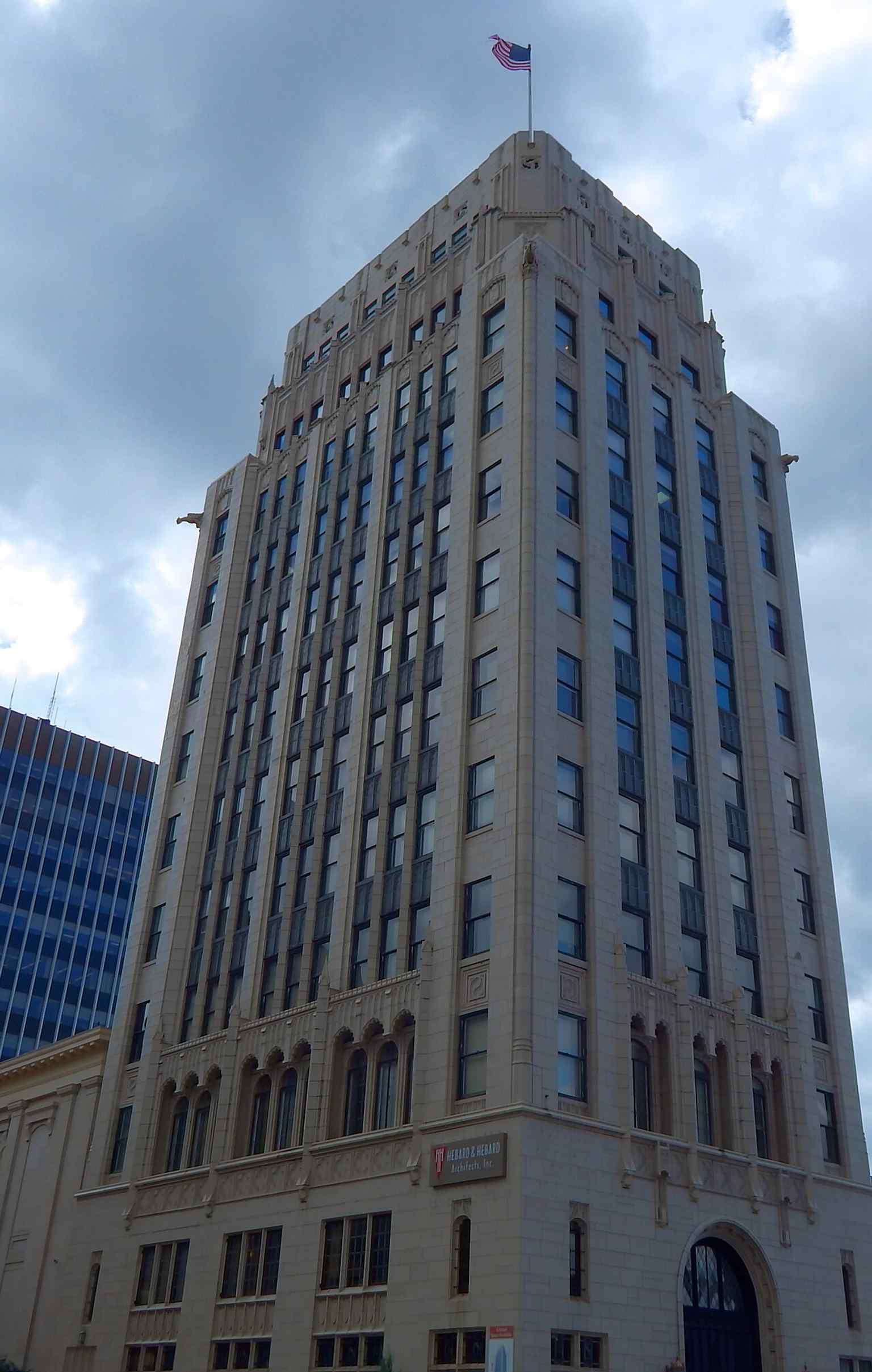
A clear view of South Bend’s historic twelve-story Tower Building, the city’s former tallest building and a rare Skyscraper Gothic landmark.Photo: Isslwc, Wikimedia Commons, CC BY-SA 3.0. Cropped & resized. On your left, look for a tall concrete tower with a slim rectangular profile, a white facade edged in gray and dark teal, and a broad recessed base that opens the building to the…Read moreShow less
Open dedicated page →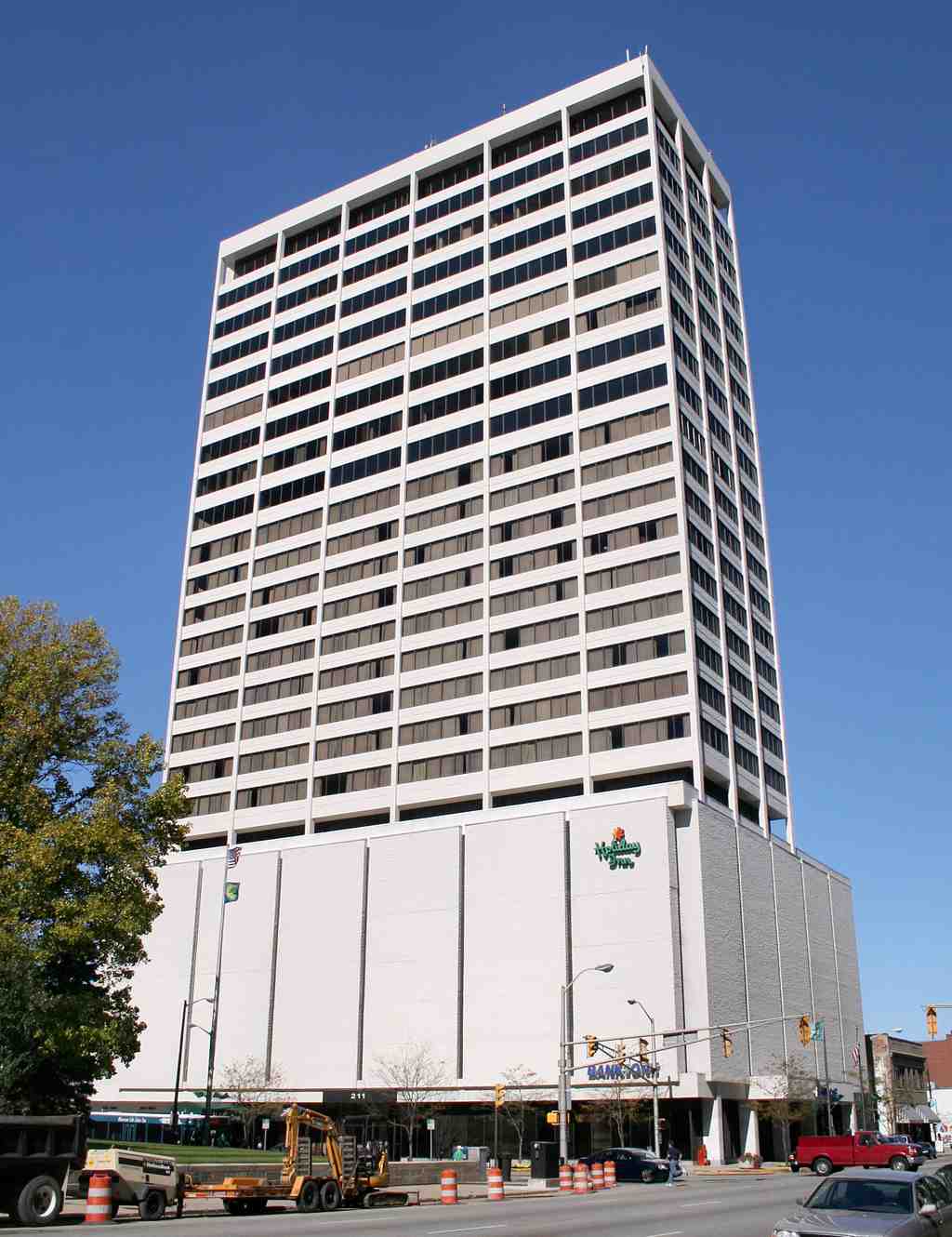
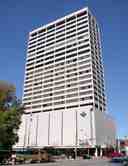
Liberty TowerPhoto: Wikimedia Commons contributor, Wikimedia Commons, Public domain. Cropped & resized. On your left, look for a tall concrete tower with a slim rectangular profile, a white facade edged in gray and dark teal, and a broad recessed base that opens the building to the street.
Liberty Tower marks South Bend’s late twentieth-century leap upward. Crews began work in nineteen sixty-eight, after the old Oliver Hotel came down in nineteen sixty-seven, and they topped out this twenty-five-story skyscraper in nineteen seventy. It first opened as the American National Bank Building, then later took the name Valley National Bank Building. Its style is modernist, meaning the design favors clean lines and function over ornament, and you can feel that discipline in the plain concrete skin.
The building has kept reinventing itself. Today, the Aloft Hotel fills most of the tower, with the W-X-Y-Z Lounge on the first floor. Floors two through eight hold two hundred twenty parking spaces. Before Aloft, a Holiday Inn ran more than one hundred eighty-five rooms here, and the top floor housed the private Summit Club until twenty twelve.
This tower tells a story of ambition, setback, and renewal. When you are ready, continue on to the next stop.
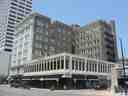
On your left stands an eight-story brick office block trimmed in white terra cotta, with big round-arched top-floor windows and a projecting cornice held by brackets. This is the…Read moreShow less
Open dedicated page →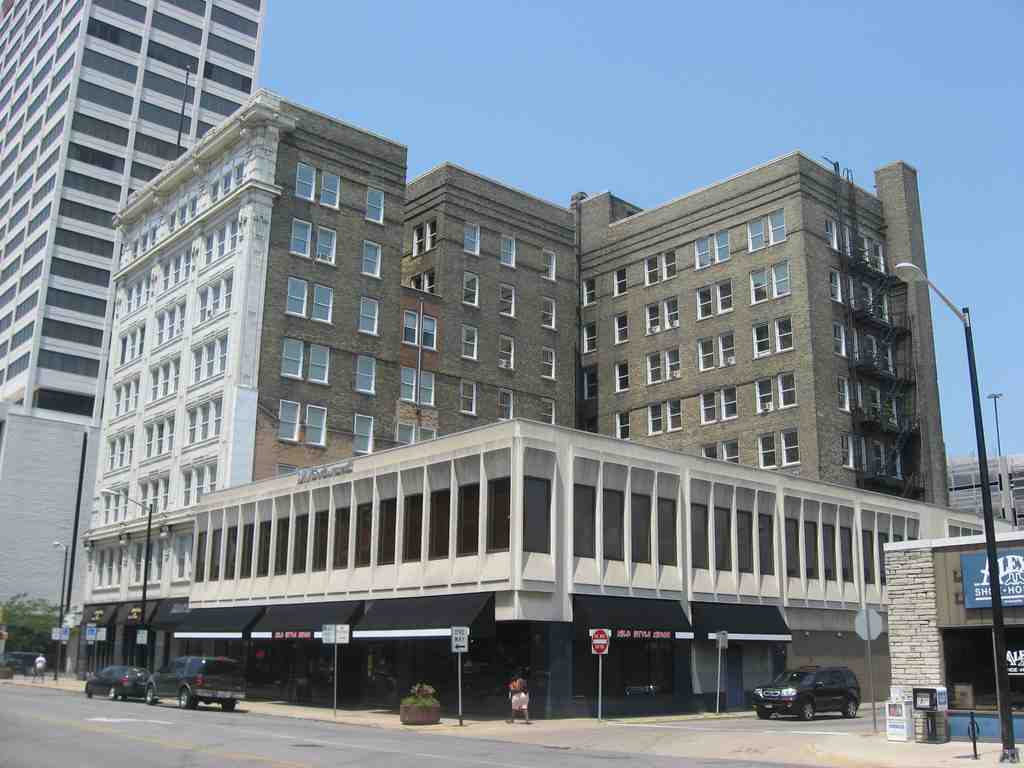
J.M.S. BuildingPhoto: Nyttend, Wikimedia Commons, Public domain. Cropped & resized. On your left stands an eight-story brick office block trimmed in white terra cotta, with big round-arched top-floor windows and a projecting cornice held by brackets.
This is the J-M-S Building, at one hundred eight North Main Street, and it carries the confidence of South Bend in nineteen ten. Architect Solon Spencer Beman designed it in the Commercial style, the practical early skyscraper look used for busy downtown offices, then dressed it with Classical Revival details borrowed from ancient Greece and Rome to give it a little ceremony. John Studebaker, co-founder and later executive of the company that grew into the Studebaker Corporation, commissioned it as a statement in brick and white terra cotta: business, yes, but business with polish.
On the screen, you can see more of its historic massing from the rear and south side. On the fifth of June, nineteen eighty-five, the National Register of Historic Places gave this building its formal place in the national story.
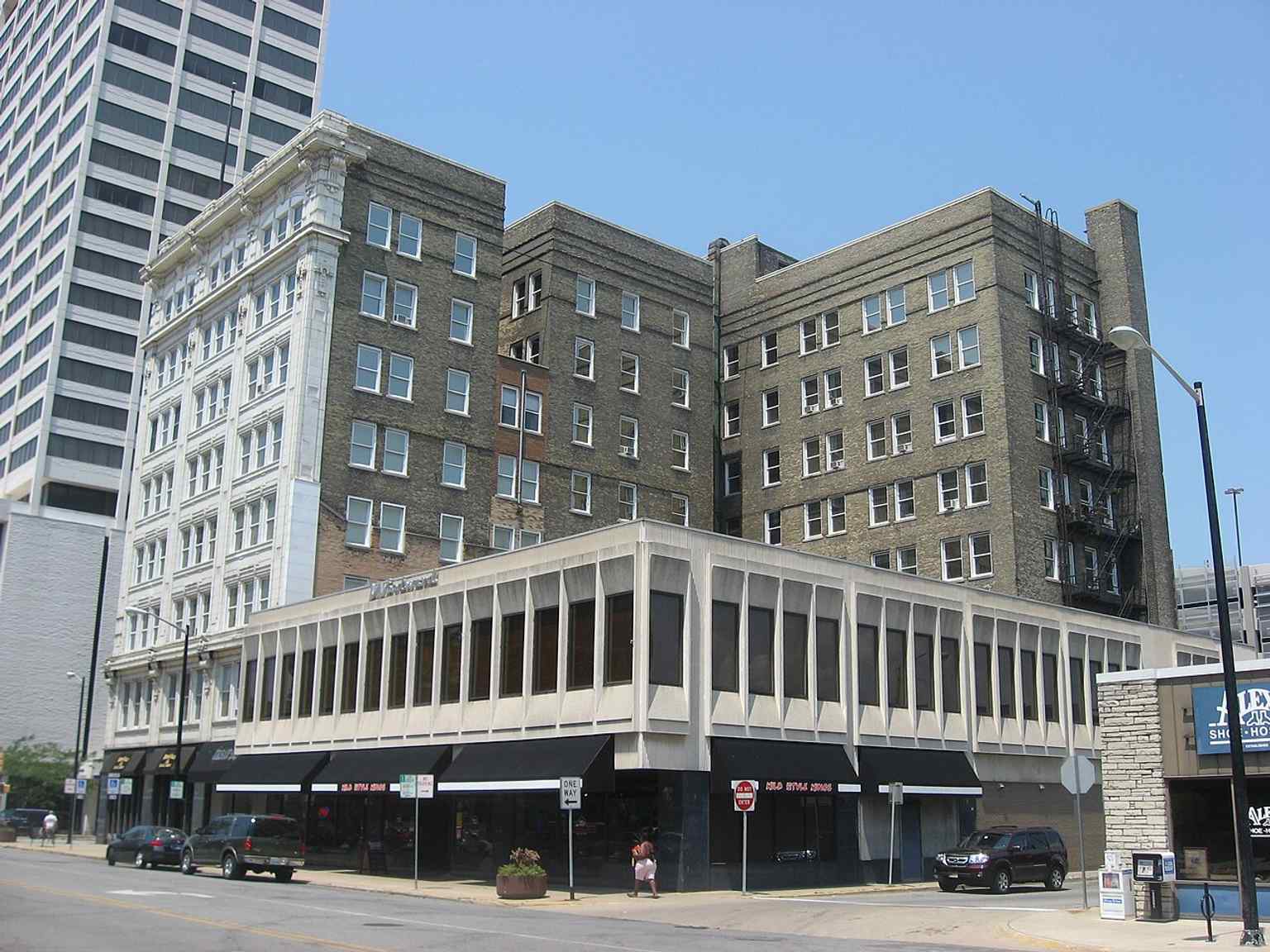
The J.M.S. Building’s 1910 brick and terra cotta rear and south side in South Bend, showing the historic office tower listed on the National Register in 1985.Photo: Nyttend, Wikimedia Commons, Public domain. Cropped & resized. It is a fine reminder that commerce once dressed for the occasion. When you are ready, continue on for the next chapter.
On your left, look for a four-story Indiana limestone facade with broad round arches at street level and tall Corinthian pilasters, flat columns crowned with carved leaves, rising…Read moreShow less
Open dedicated page →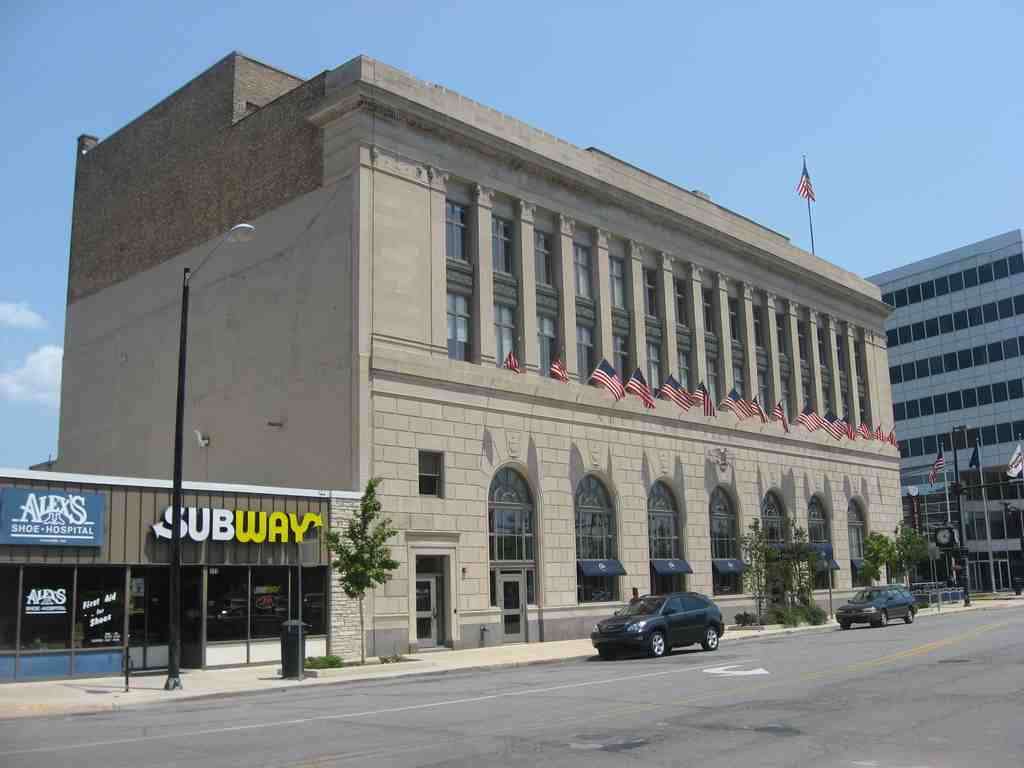
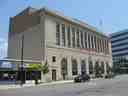
All American Bank BuildingPhoto: Nyttend, Wikimedia Commons, Public domain. Cropped & resized. On your left, look for a four-story Indiana limestone facade with broad round arches at street level and tall Corinthian pilasters, flat columns crowned with carved leaves, rising above a continuous run of windows.
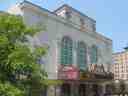
Chicago architects Vitzthum and Burns gave South Bend this Classical Revival bank in nineteen twenty-four, and they meant it to project confidence. Banks of that era often borrowed the language of ancient temples, and this one does it with admirable restraint: sturdy arches below, then an orderly band of windows above, each section divided by those elegant Corinthian pilasters. The app makes it easy to see how firmly the stone and symmetry hold the corner. The All American Bank stayed here until nineteen seventy, so for decades this building stood as a public face of money, trust, and ambition in the city center. In nineteen eighty-five, it entered the National Register of Historic Places. You can admire the exterior here at any hour, any day of the week. It still carries itself with the calm authority of old finance. When you are ready, continue on to the next stop.
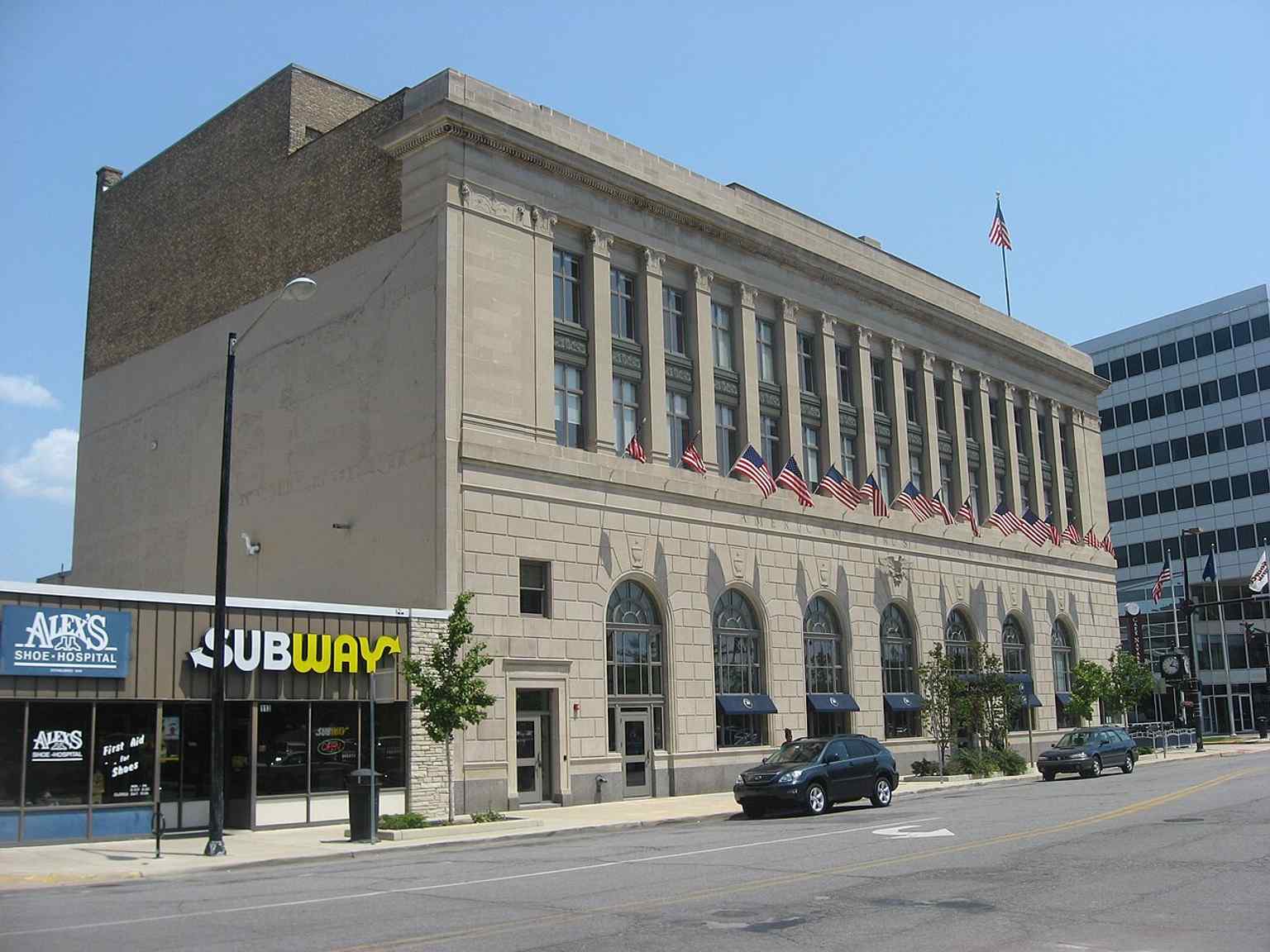
Front and west side of the 1924 All American Bank Building in South Bend, a four-story Classical Revival landmark built from Indiana limestone.Photo: Nyttend, Wikimedia Commons, Public domain. Cropped & resized. On your left, look for a tall rectangular brick theater trimmed with pale terra-cotta ornament, its palace-like front marked by richly carved Spanish Revival detail. This began…Read moreShow less
Open dedicated page →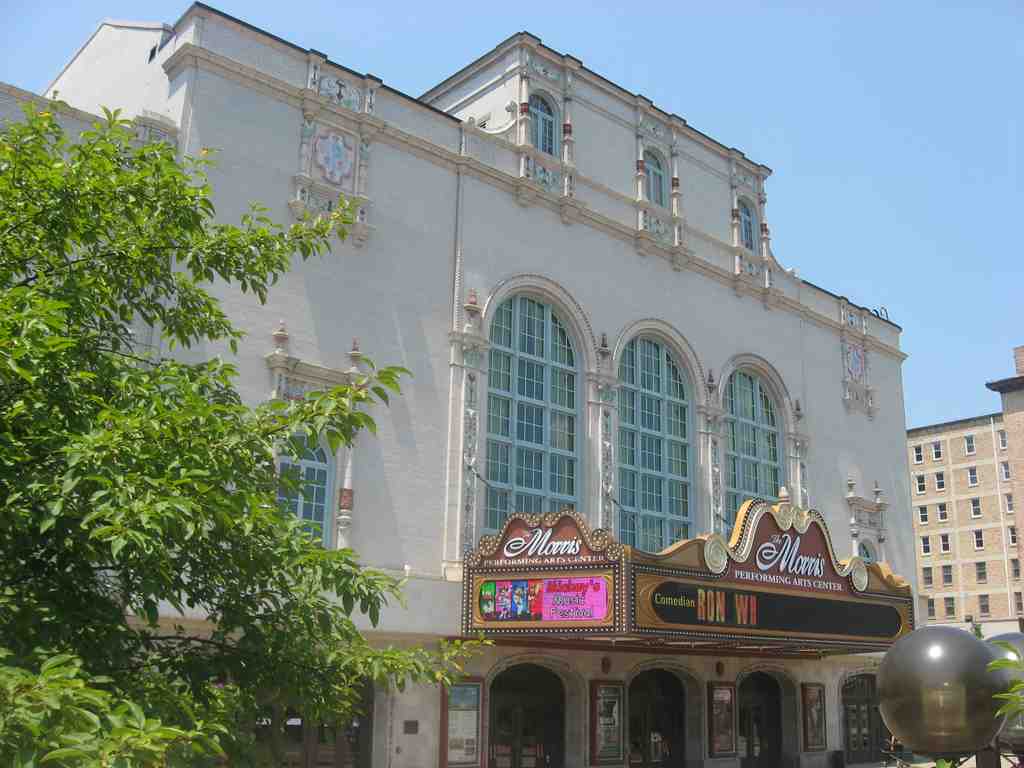
Morris Performing Arts CenterPhoto: Nyttend, Wikimedia Commons, Public domain. Cropped & resized. On your left, look for a tall rectangular brick theater trimmed with pale terra-cotta ornament, its palace-like front marked by richly carved Spanish Revival detail.
This began in nineteen twenty-two as the Palace Theatre, a vaudeville house built beside the neighboring Palais Royale by the Palace Theater Corporation. The Chicago architect J. S. Aroner did something rather clever here: he mixed Spanish Renaissance richness, Baroque drama, Greco-Roman form, and the crisp geometry of early Art Deco, all to create what he called a “little palace” where any citizen could feel like royalty. And that was not just advertising fluff. Inside, the design leaned into rose, blue, and cream, with more than half the seats tucked into the balcony, so even the upper levels felt part of the spectacle.
In its heyday, this place ran continuous vaudeville, with a new act every ten minutes. Imagine the pace of it: traveling Broadway troupes, Harry Houdini, the Ziegfeld Follies, George Burns, one performance snapping into the next. The vintage image lets you see the theater in that earlier Palace era, when South Bend came here for novelty, glamour, and escape.
Then came one of the grandest nights in its history: the fourth of October, nineteen forty, for the world premiere of Knute Rockne: All American. Inside, two thousand four hundred people watched with stars including Ronald Reagan, Bob Hope, and Rudy Vallee. Outside, the crowd swelled to an estimated twenty-four thousand, clogging the streets in hopes of seeing a celebrity step from a car. Local folklore adds another flourish: some say Al Capone used tunnels from the nearby LaSalle Hotel to slip in unseen when he visited his son at Notre Dame. Whether fact or legend, it suits the building’s flair for drama.
Television nearly killed it. In nineteen fifty-nine, falling attendance pushed the board to approve demolition. Then Ella M. Morris stepped in, bought the property, and sold it straight back to the city for one dollar. After a fifteen-thousand-dollar facelift, roughly one hundred and sixty thousand in today’s money, South Bend renamed it the Morris Civic Auditorium in her honor. Restoration between nineteen ninety-eight and two thousand returned much of its splendor, and the theater now serves the South Bend Symphony Orchestra, Broadway tours, concerts, and even local commencements. Staff and ghost-tour regulars will also tell you the basement and upper levels still hold “whispers from the past,” from stray whistles to unexplained taps on the shoulder. The restored exterior is clearer in the screen image.
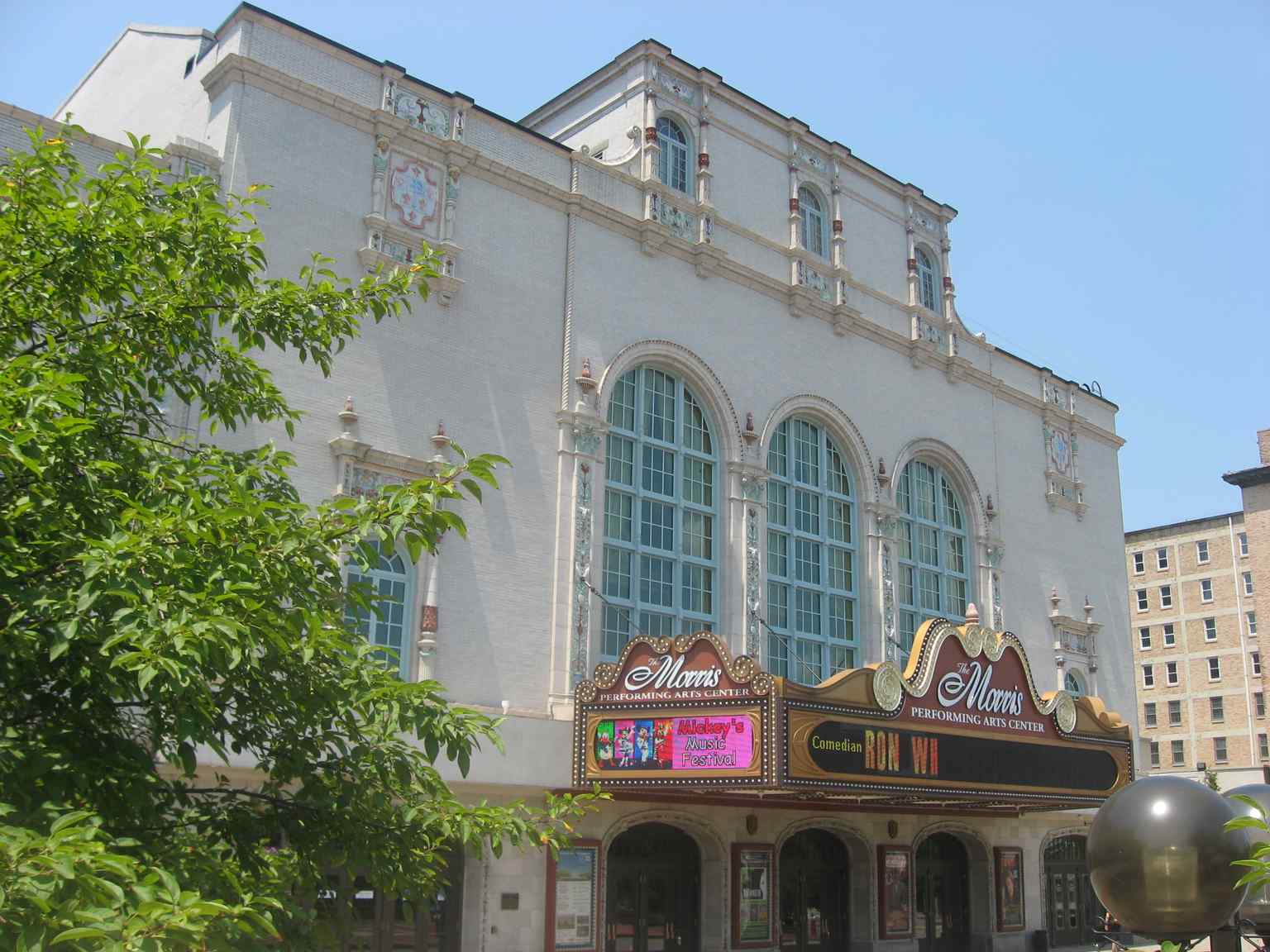
The ornate front of the former Palace Theater, now Morris Performing Arts Center, whose Spanish Renaissance Revival design helped save it from demolition in 1959.Photo: Nyttend, Wikimedia Commons, Public domain. Cropped & resized. For all its reinventions, the Morris still keeps its original promise of shared grandeur, and if you want to step inside another time, public hours generally run from noon to five on weekdays.
When you are ready, continue on toward First Presbyterian Church for our final stop.
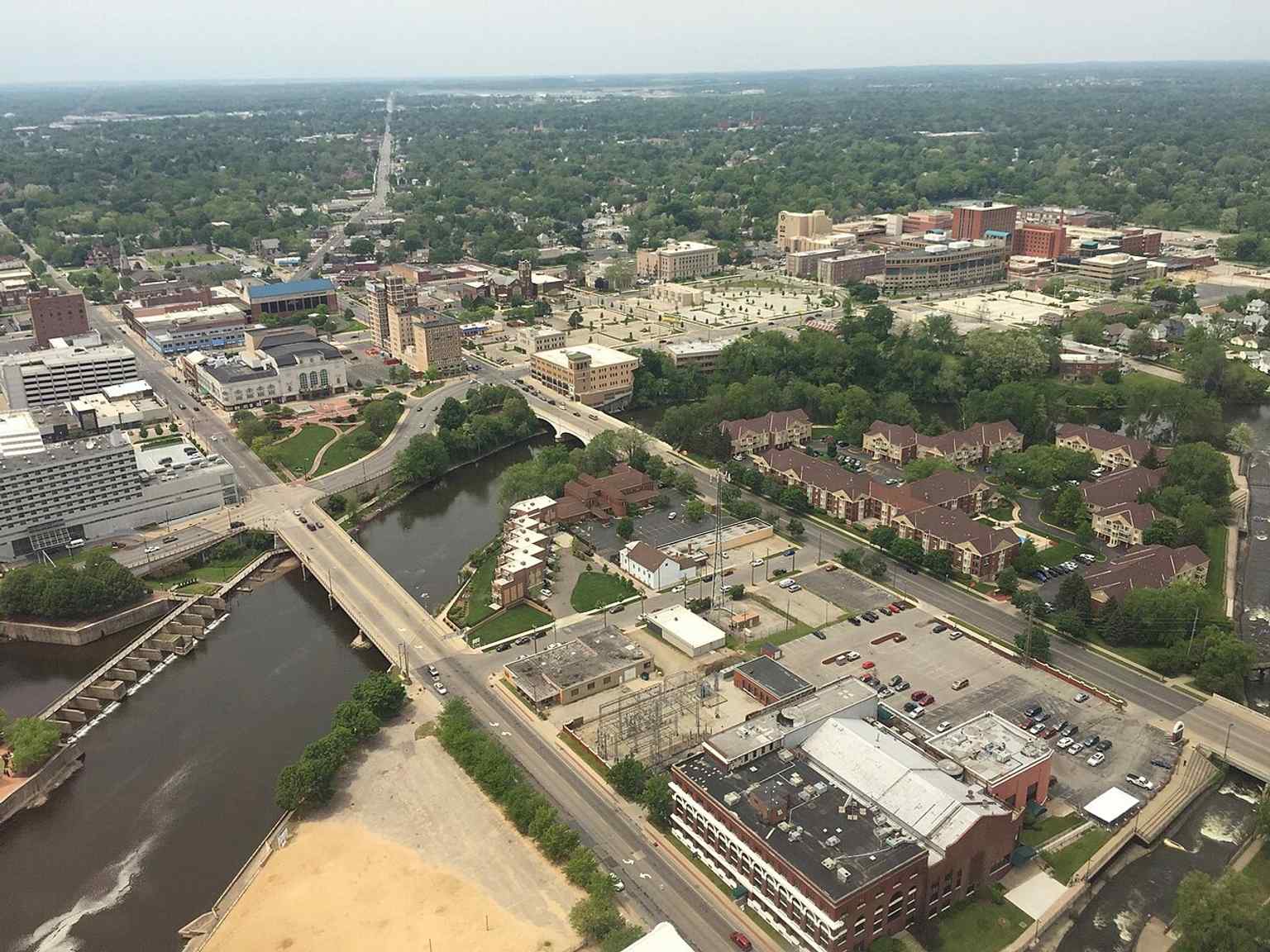
An aerial view of downtown South Bend with the Morris visible among the skyline, highlighting its place beside the neighboring Palais Royale and other downtown landmarks.Photo: Cntrlaltdel33t, Wikimedia Commons, CC BY-SA 4.0. Cropped & resized. On your left stands a rough fieldstone church with a cross-gabled roof, broad limestone-trimmed arches, and a sturdy corner bell tower. This is the former First Presbyterian…Read moreShow less
Open dedicated page →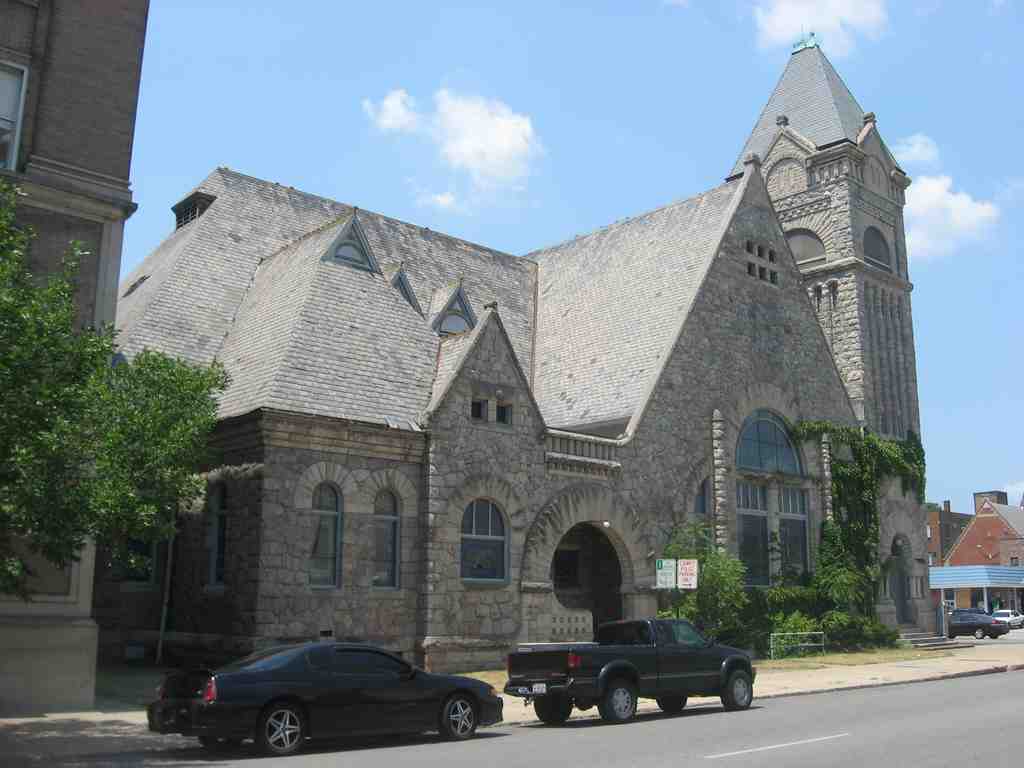
First Presbyterian ChurchPhoto: Nyttend, Wikimedia Commons, Public domain. Cropped & resized. On your left stands a rough fieldstone church with a cross-gabled roof, broad limestone-trimmed arches, and a sturdy corner bell tower.
This is the former First Presbyterian Church, raised in eighteen eighty-eight in the Richardsonian Romanesque style, a weighty, rounded style that delights in thick stone walls and deep arches. It cost about thirty-five thousand dollars to complete, roughly a million dollars in today’s money, and South Bend paid for it in a strikingly equal partnership: one third came from the congregation, one third from industrialist James Oliver, and one third from J. M. Studebaker. Even the gifts inside carried family signatures. Oliver’s children donated the organ, and Grace Studebaker presented a Tiffany Cross.
The great treasure here is the enormous stained-glass window, a Palladian design, meaning a tall three-part window with a dominant center. On your phone, the purple and blue glass glows across the eastern front. On the Lafayette Street side, the glass holds a more intimate secret: the likeness of Reverend George Keller, remembered as the congregation’s first pastor.
Yet the story began long before this stone sanctuary. In eighteen thirty-four, Horatio Chapin and William Stanfield gathered worshippers in a log schoolhouse, and the first nursery took shape, rather charmingly, inside Chapin’s dry goods store. Later, after the congregation moved to its new Colfax Avenue church in nineteen fifty-two, this building carried on with new lives, including a period as the Peoples’ Church. Today, Ambassadors for Christ cares for it and helps preserve some of the finest stained glass left in South Bend.
One final note feels fitting here. In two thousand nine, historians searching for early church records opened a steel strongbox and found mold-damaged handwritten books nearly lost forever. Conservation saved them, including an eighteen forty-eight resolution in which this congregation addressed slavery directly. So the building before you is not merely handsome stone; it is a witness.
If you plan to return, it generally opens Monday through Thursday from eight to four, and on Sunday from eight-thirty to eleven-thirty.
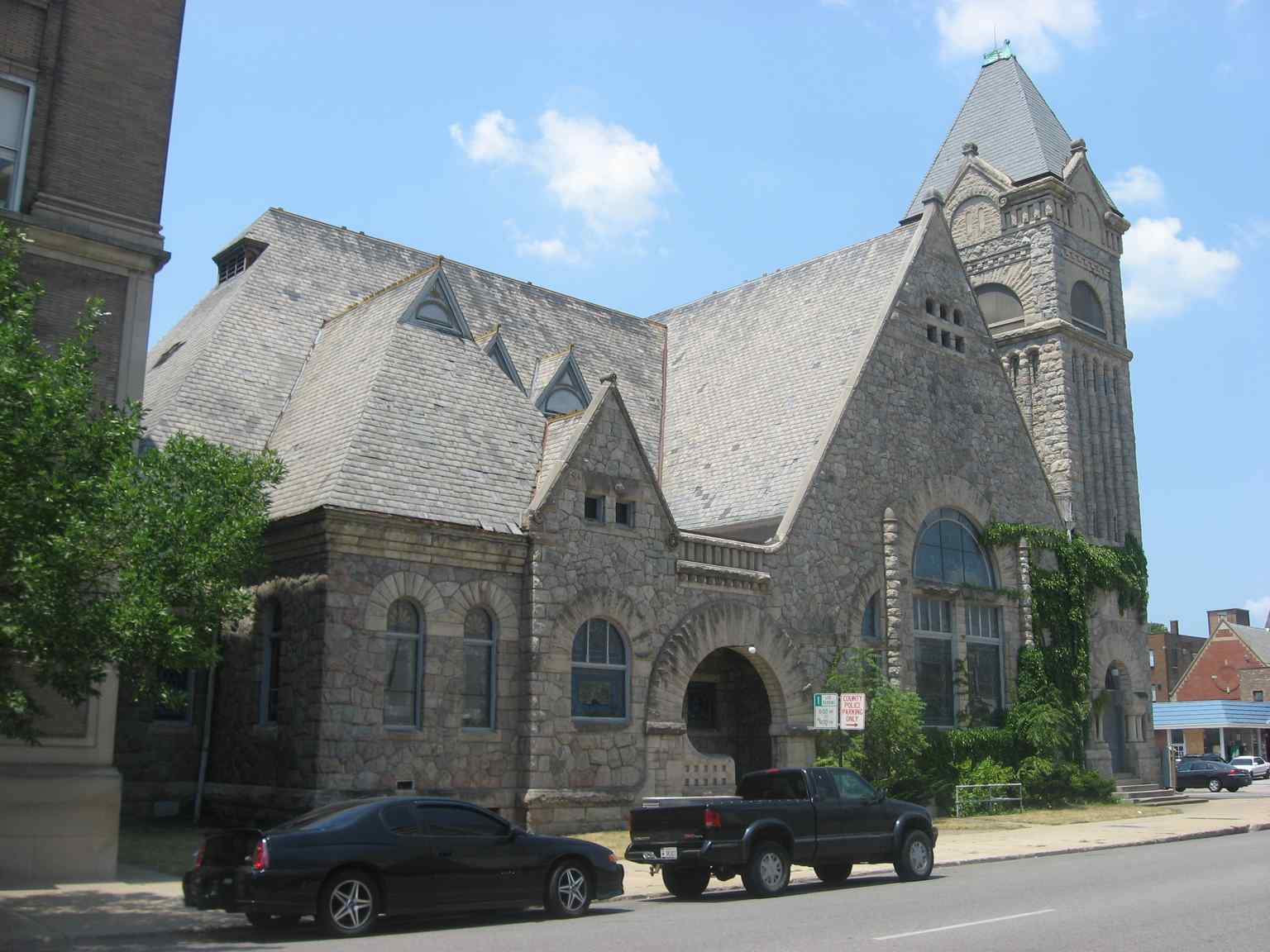
The eastern facade of the 1888 church, home to the famous stained-glass window and corner bell tower described in the tour.Photo: Nyttend, Wikimedia Commons, Public domain. Cropped & resized. 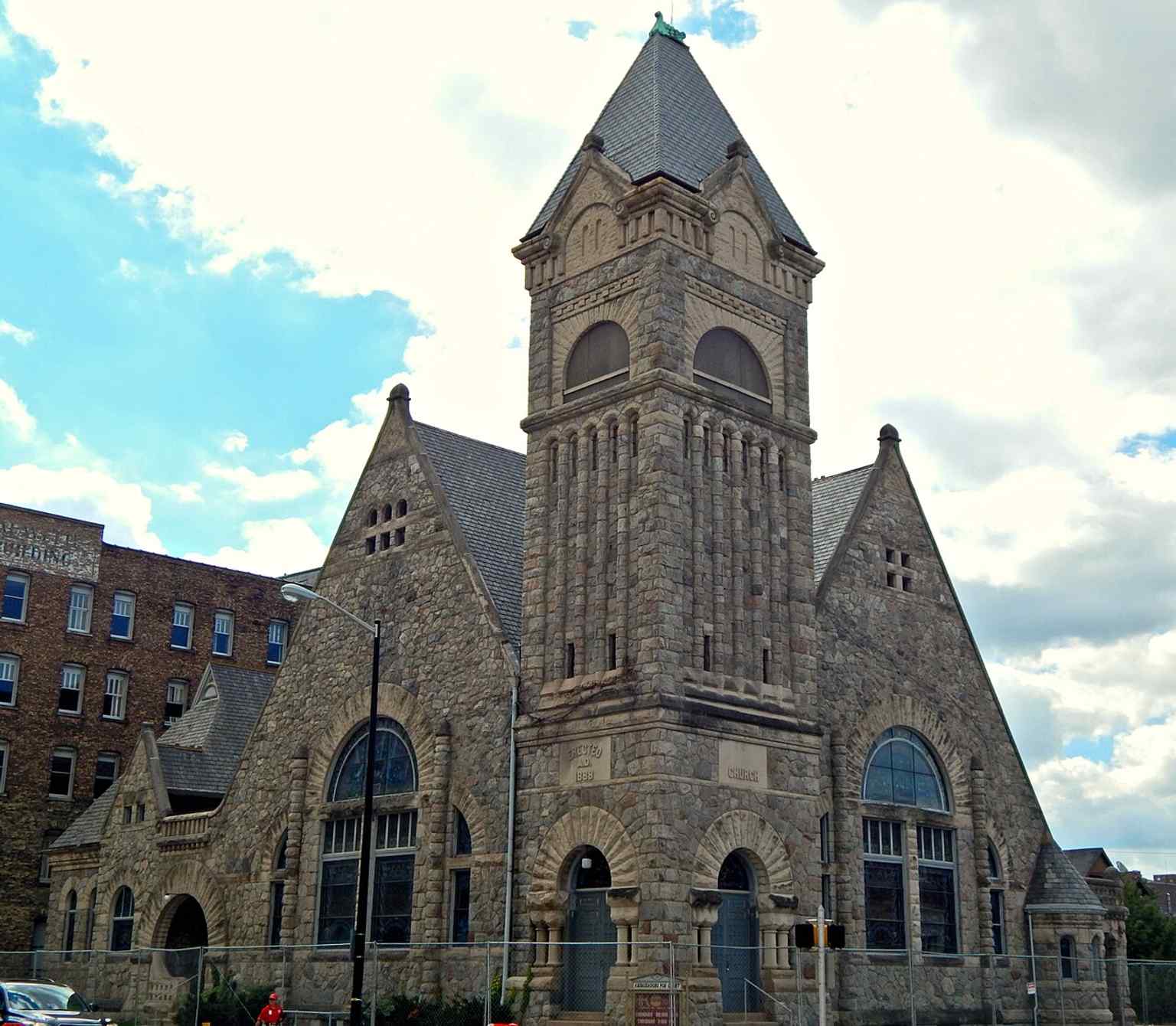
A clear view of the former First Presbyterian Church on Lafayette Street, now preserved as a historic landmark in South Bend.Photo: Isslwc, Wikimedia Commons, CC BY-SA 3.0. Cropped & resized.
Frequently asked questions
How do I start the tour?
After purchase, download the AudaTours app and enter your redemption code. The tour will be ready to start immediately - just tap play and follow the GPS-guided route.
Do I need internet during the tour?
No! Download the tour before you start and enjoy it fully offline. Only the chat feature requires internet. We recommend downloading on WiFi to save mobile data.
Is this a guided group tour?
No - this is a self-guided audio tour. You explore independently at your own pace, with audio narration playing through your phone. No tour guide, no group, no schedule.
How long does the tour take?
Most tours take 60–90 minutes to complete, but you control the pace entirely. Pause, skip stops, or take breaks whenever you want.
What if I can't finish the tour today?
No problem! Tours have lifetime access. Pause and resume whenever you like - tomorrow, next week, or next year. Your progress is saved.
What languages are available?
All tours are available in 50+ languages. Select your preferred language when redeeming your code. Note: language cannot be changed after tour generation.
Where do I access the tour after purchase?
Download the free AudaTours app from the App Store or Google Play. Enter your redemption code (sent via email) and the tour will appear in your library, ready to download and start.
If you don't enjoy the tour, we'll refund your purchase. Contact us at [email protected]
Checkout securely with 






