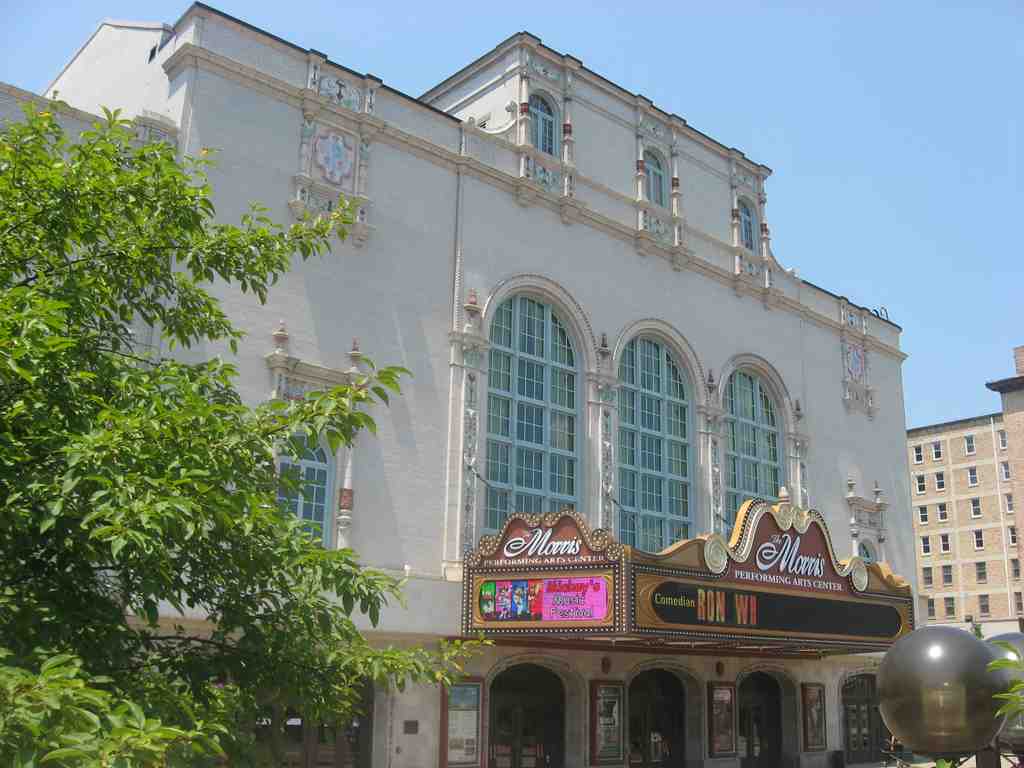
On your left, look for a tall rectangular brick theater trimmed with pale terra-cotta ornament, its palace-like front marked by richly carved Spanish Revival detail.
This began in nineteen twenty-two as the Palace Theatre, a vaudeville house built beside the neighboring Palais Royale by the Palace Theater Corporation. The Chicago architect J. S. Aroner did something rather clever here: he mixed Spanish Renaissance richness, Baroque drama, Greco-Roman form, and the crisp geometry of early Art Deco, all to create what he called a “little palace” where any citizen could feel like royalty. And that was not just advertising fluff. Inside, the design leaned into rose, blue, and cream, with more than half the seats tucked into the balcony, so even the upper levels felt part of the spectacle.
In its heyday, this place ran continuous vaudeville, with a new act every ten minutes. Imagine the pace of it: traveling Broadway troupes, Harry Houdini, the Ziegfeld Follies, George Burns, one performance snapping into the next. The vintage image lets you see the theater in that earlier Palace era, when South Bend came here for novelty, glamour, and escape.
Then came one of the grandest nights in its history: the fourth of October, nineteen forty, for the world premiere of Knute Rockne: All American. Inside, two thousand four hundred people watched with stars including Ronald Reagan, Bob Hope, and Rudy Vallee. Outside, the crowd swelled to an estimated twenty-four thousand, clogging the streets in hopes of seeing a celebrity step from a car. Local folklore adds another flourish: some say Al Capone used tunnels from the nearby LaSalle Hotel to slip in unseen when he visited his son at Notre Dame. Whether fact or legend, it suits the building’s flair for drama.
Television nearly killed it. In nineteen fifty-nine, falling attendance pushed the board to approve demolition. Then Ella M. Morris stepped in, bought the property, and sold it straight back to the city for one dollar. After a fifteen-thousand-dollar facelift, roughly one hundred and sixty thousand in today’s money, South Bend renamed it the Morris Civic Auditorium in her honor. Restoration between nineteen ninety-eight and two thousand returned much of its splendor, and the theater now serves the South Bend Symphony Orchestra, Broadway tours, concerts, and even local commencements. Staff and ghost-tour regulars will also tell you the basement and upper levels still hold “whispers from the past,” from stray whistles to unexplained taps on the shoulder. The restored exterior is clearer in the screen image.
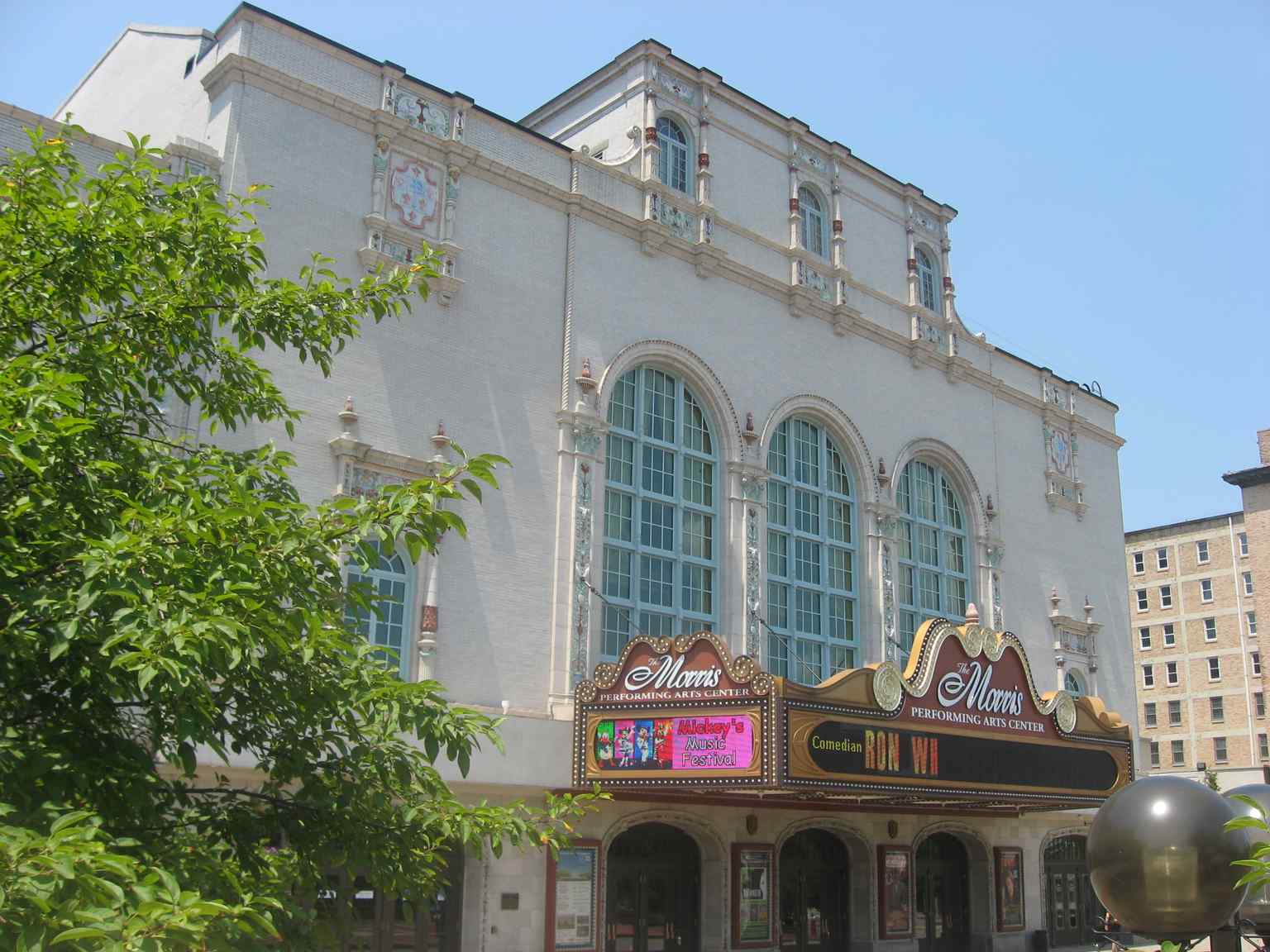
For all its reinventions, the Morris still keeps its original promise of shared grandeur, and if you want to step inside another time, public hours generally run from noon to five on weekdays.
When you are ready, continue on toward First Presbyterian Church for our final stop.