
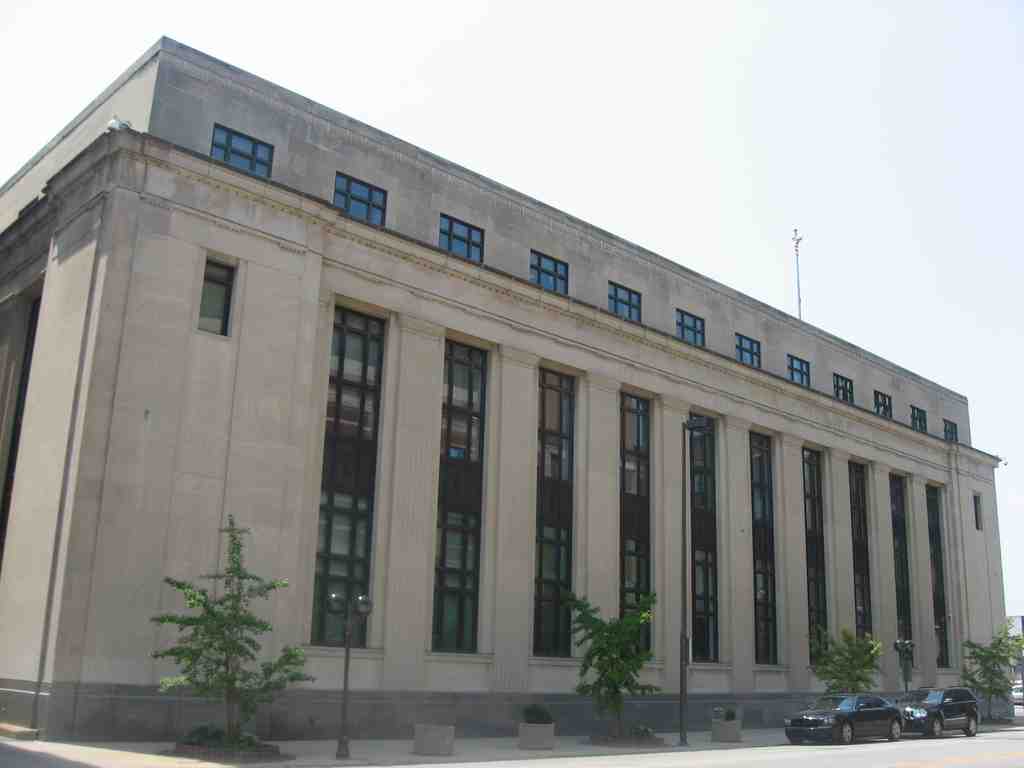
In front of you stands a pale limestone block with a dark granite base, tall vertical bands of windows, and carved federal lettering tucked just below the roofline.
This courthouse arrived at a moment when South Bend had outgrown its old federal home. By the late nineteen twenties, the city’s businesses and population were expanding so quickly that the older post office from eighteen ninety-eight could no longer cope. In nineteen thirty, President Herbert Hoover sent Congress a list of public building projects that included one million dollars for a new federal building here in South Bend, roughly the equivalent of about eighteen million dollars today. In the depths of the Great Depression, that was not merely a budget line. It was a declaration that the federal government intended to plant something solid here.
What makes this building especially local is that Washington chose local talent to design it. The firm of Austin and Shambleau won the commission in December of nineteen thirty. Ennis Austin knew federal construction from the inside, having supervised post offices and courthouses for the Treasury Department. N. Roy Shambleau, by contrast, had made his name with Prairie School houses, influenced by Frank Lloyd Wright. Together they produced something rather disciplined and modern: an Art Deco or Art Moderne federal building, stripped of fuss but still full of authority.
Look at the facade and you can see that restraint at work. The granite base anchors the building. Above it, smooth Indiana limestone rises in nearly flat planes. Those shallow pilasters, the flat vertical strips that act like simplified columns, alternate with stacked windows in bronze frames. The style is sometimes called “starved classicism,” which sounds a bit cruel, but it simply means classical architecture put on a strict diet: less ornament, flatter surfaces, cleaner lines. On the screen, the north side repeats that same steady rhythm, bay after bay, like a piece of civic music played without flourish. Construction moved quickly. James I. Barnes and Company of Logansport won the contract, and demolition began in September of nineteen thirty-one. Postmaster John N. Hunter laid the cornerstone in May of nineteen thirty-two, and by the first week of March nineteen thirty-three, the building was ready, a full week ahead of schedule. That efficiency feels almost suspicious in any era, but especially during the Depression.
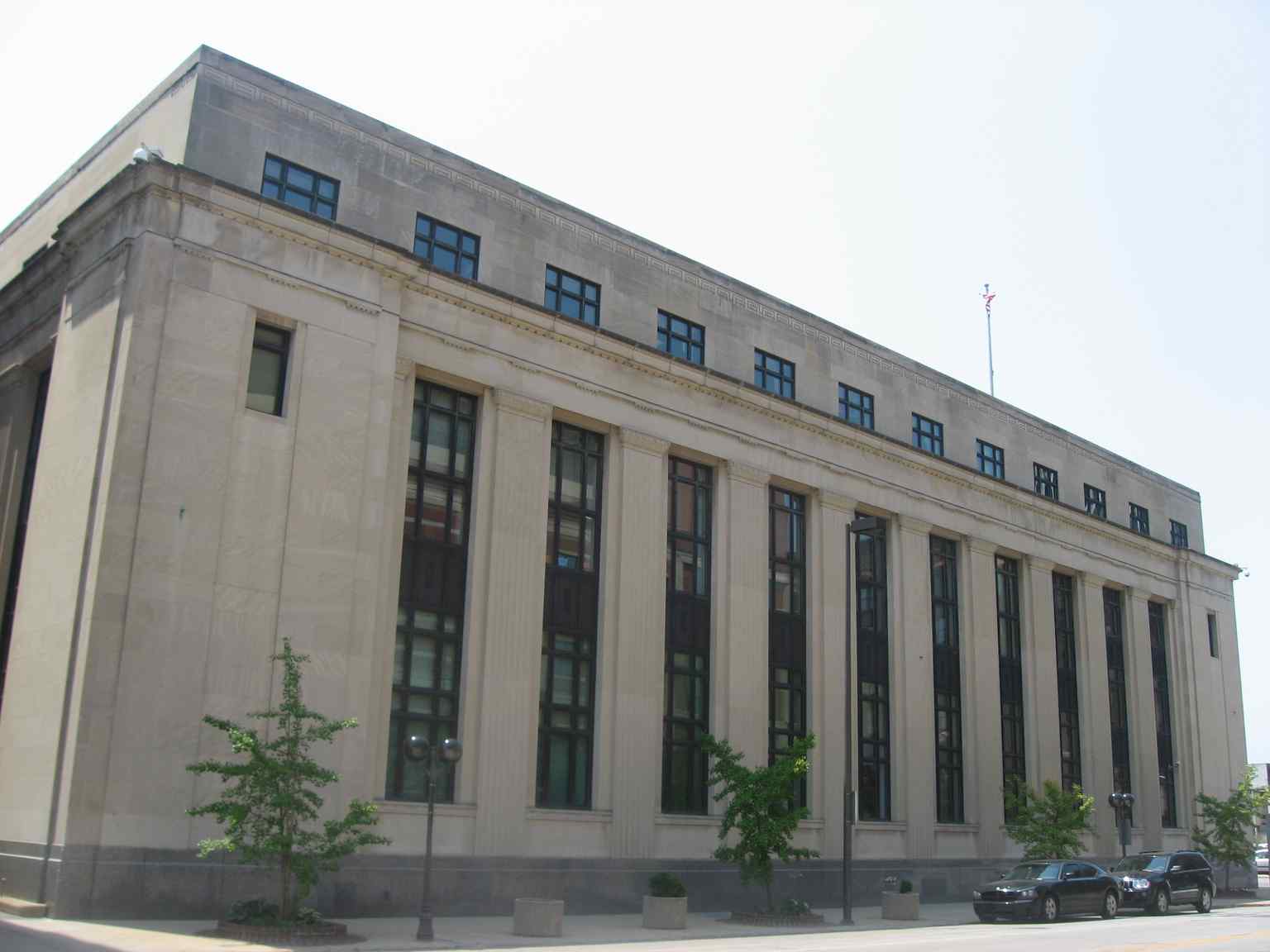
Inside, the building held two grand spaces: a two-story postal lobby with marble and polished brass, and a walnut-paneled courtroom on the third floor. The post office eventually moved out after roughly half a century, and the building adapted, as good public buildings must, to new federal uses.
It also stood through a rough chapter in local history. In June of nineteen thirty-four, John Dillinger, Baby Face Nelson, and Pretty Boy Floyd robbed a nearby bank and shot several people during their escape. They did not attack this courthouse, but the crime reminded everyone why a secure federal presence mattered in northern Indiana.
In nineteen ninety-two, the building took the name of Judge Robert A. Grant, an Indiana native, Notre Dame law graduate, former congressman, and chief judge who guided the court through the civil rights era. His story, like many human stories, turned more complicated later, when records raised troubling questions about his role in keeping abuse-related Boy Scouts documents sealed in a nineteen seventy case.
And still, the building carries on. Today, these limestone walls house federal justice in a very different age, including cybercrime and phone-hijacking cases that would have baffled its first occupants.
For all its stern dignity, this building tells a deeply human story about growth, power, and adaptation.
When you are ready, continue to the next stop and we shall see another side of South Bend’s character.





