
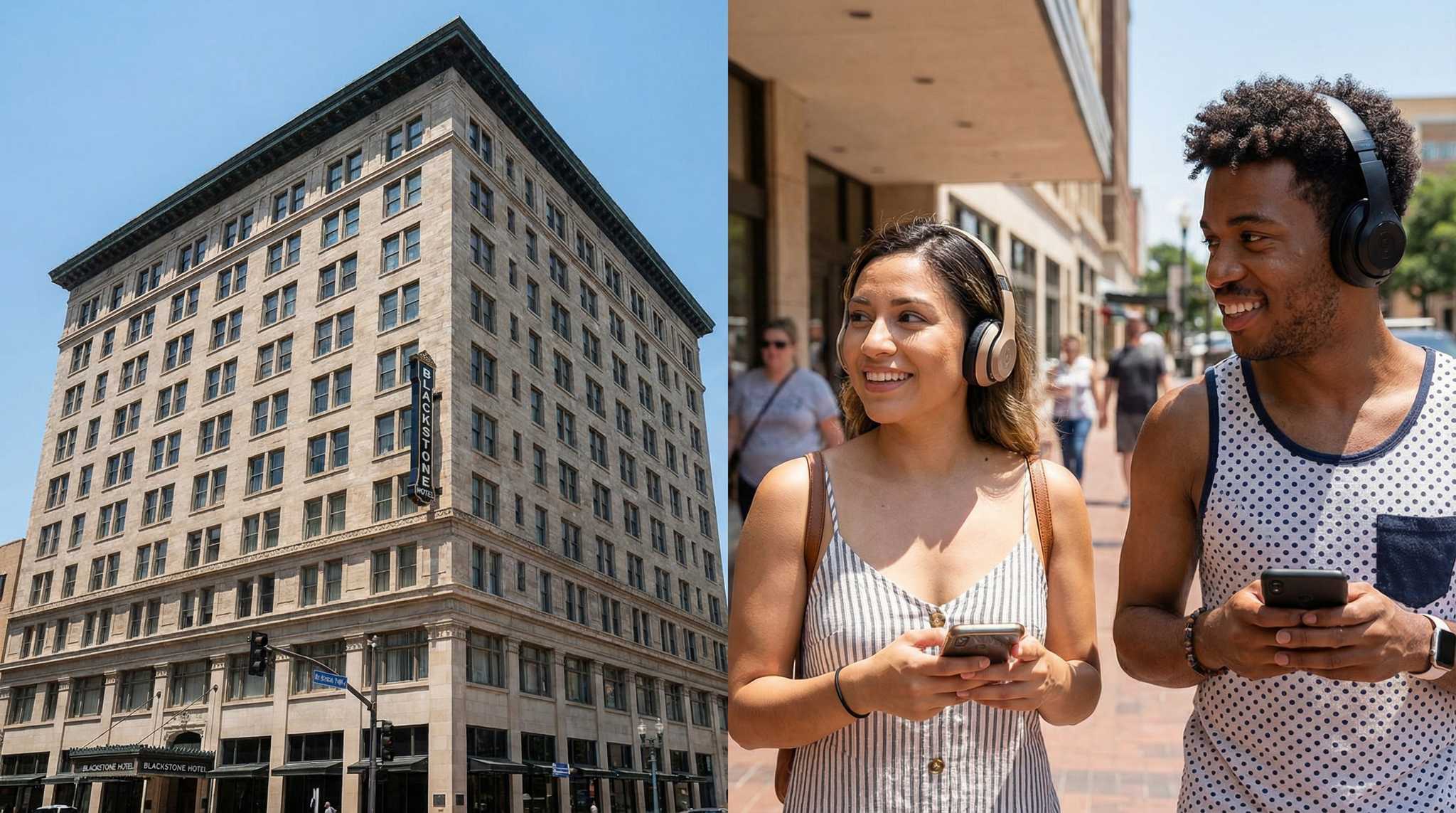
Fort Worth Audio Tour: Stories, Skylines & Spirits of Downtown Icons
Beneath the gleaming skyline of Downtown Fort Worth, secrets echo in marble halls and old hotel corridors. Legends linger where modern ambition and historic intrigue intersect. This immersive self-guided audio tour invites you to peel back the city’s polished surface, tracing untold stories woven through the Texas A&M University School of Law, The Tower, the storied Blackstone Hotel, and hidden corners most visitors overlook. What silent battle for power once shook the very foundation of the courthouse? Who vanished from the upper floors of The Tower on a sweltering summer evening? And why did a notorious conman check into the Blackstone Hotel under a name no one recognized? Walk through shadows and sunlight, past columns and neon, as each step reveals surprising drama and curiosity. Feel the pulse of Fort Worth’s past ignite the streets beneath your feet. Uncover what others miss—begin your journey beyond the obvious.
Tour preview
About this tour
- scheduleDuration 90–110 minsGo at your own pace
- straighten3.5 km walking routeFollow the guided path
- location_onLocationFort Worth, United States
- wifi_offWorks offlineDownload once, use anywhere
- all_inclusiveLifetime accessReplay anytime, forever
- location_onStarts at Fort Worth Central Station
Stops on this tour
lock_open 3 free previews · 10 unlock with purchase
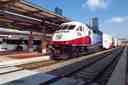
You are standing before a long, open-air transit pavilion defined by sturdy red brick columns that support a corrugated metal canopy, stretching parallel to the rail tracks. Take…Read moreShow less
You are standing before a long, open-air transit pavilion defined by sturdy red brick columns that support a corrugated metal canopy, stretching parallel to the rail tracks. Take a look around. It looks orderly now, doesn't it? Clean platforms, schedules, the hum of idling engines. But if you were standing right here on this corner of 9th and Jones in the late 19th century, you wouldn't be checking a train timetable. You’d be watching your back. This ground, right beneath your shoes, was the heart of "Hell's Half Acre." It was the city's wildest vice district. A chaotic sprawl of saloons, brothels, and gambling halls that acted like a magnet for cowboys driving cattle up the Chisholm Trail. They’d come here to blow their pay, and the local economy was essentially built on sin. But Fort Worth has a habit of shedding its skin. As the city matured, that lawlessness was pushed out, replaced by a thriving African American commercial center that stood here from the Civil War all the way to the 1940s. The station you see today, Fort Worth Central, is the result of a massive push in the 1990s to clean up the air and the traffic. Interestingly, this wasn't the only option. Preservationists wanted to restore the grand 1931 Texas & Pacific Station nearby-a gorgeous Art Deco building. But city planners did the math. The T&P was cut off from the business district by the massive Interstate 30 overhead. They needed a bridge between the skyscrapers and the convention center, so they chose this spot instead. It opened in 2002, initially called the "Fort Worth Intermodal Transportation Center." A bit of a mouthful, right? Locals just called it the ITC. It took until 2019 for the board to realize "Intermodal Transportation Center" sounded more like a textbook chapter than a landmark, so they renamed it Fort Worth Central Station. While the name is modern, the station tries hard not to forget who came before. If you look around, you might spot a set of five brick bas-reliefs-essentially sculptures carved directly into the flat brick surface. These were created by artist Paula Blincoe Collins using local Acme brick. They aren't just decoration; they memorialize the black-owned businesses that once thrived here, like John Pratt, a blacksmith who started his shop in 1865. It’s a way of ensuring that while the buildings are gone, the entrepreneurs aren't forgotten. Inside, there's another nod to the past: Car No. 25. It’s a restored "Crimson Limited" trolley from 1924. Back then, you could zip to Dallas in just over an hour on high-speed electric rails. We think of high-speed rail as a futuristic concept, but we actually had it a century ago before cars took over. Today, this is the busiest Amtrak station in Texas. Trains leave here for Oklahoma City, San Antonio, and even Chicago. But managing a major downtown hub comes with its own intensity. It hasn't been entirely quiet. Recent safety concerns on the platforms serve as a stark reminder that while the architecture changes, the friction of a busy city never fully disappears. Take a look down those steel tracks. They are the reason this city exists, pumping life and commerce into the streets. Just beyond the platform, you might see the outline of an old industrial structure nearby. That is the Santa Fe Freight Building, a relic from the era when goods, not just people, dominated these rails. Let's head that way. We have a five-minute walk to see how that freight history is being rewritten.
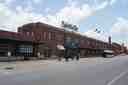
Open dedicated page →Look to your right at that long, two-story rectangular building, distinguished by its stepped roofline parapet and the bright neon Santa Fe sign mounted on the exterior. It…Read moreShow less
Look to your right at that long, two-story rectangular building, distinguished by its stepped roofline parapet and the bright neon Santa Fe sign mounted on the exterior. It stands solid, doesn't it? This structure appeared in 1938. That year wasn't exactly a party. The Great Depression had been grinding the American economy into dust for nearly a decade. While much of the country was paralyzed by economic despair, Fort Worth used federal PWA funds to fuel a surprising building boom. This freight depot was a bit of a defiant gesture against the hard times, a symbol that commerce was still moving, even if it was moving slowly. It cost nearly a hundred and twenty-four thousand dollars to build-which is well over two and a half million in today's money. That was serious cash for a warehouse back then. The design here is quite specific. It represents a style called PWA Moderne. You can think of it as Art Deco on a budget. Classic Art Deco is all about glamour, zig-zags, and gold leaf-the kind of flashiness you see in movies about the Roaring Twenties. PWA Moderne-named after the government's Public Works Administration-stripped all that excess away. It kept the sleek lines and the reinforced concrete but focused on stability and strength. It’s utilitarian, sure, but it has a quiet dignity. The style was popularized by federal projects to project efficiency, and private companies quickly adopted the look. Originally, this was a joint operation between the Santa Fe Railway and the Southern Pacific Company. The ground floor was packed with cold storage for perishable goods coming off the rails, while the railway bosses and division superintendents pushed paper in the offices upstairs. It took up to a hundred workers to build it, though construction was actually delayed by the Little Steel strike in the summer of 1937. But like the neighborhood around it, this building had to figure out how to survive when the trains stopped being the center of the universe. By the mid-nineties, the depot was vacant and crumbling, listed as one of the city's most endangered historic properties. But Fort Worth hates to waste a good foundation. In 2002, developers tried to turn this into the Fort Worth Rail Market. It was an open-air hall with boutique shops, a place called Hot Damn Tamales, and even the city's first vegan spot, Spiral Diner. It sounds charming, but the financials were a disaster. The market bled money-hundreds of thousands in the red-and amidst finger-pointing between merchants and city managers, the whole thing shut down by 2005. The profit margins just weren't there, and the public interest wasn't either. That could have been the end, but reinvention is a habit here. In 2006, the University of Texas at Arlington stepped in. They dropped over a million dollars to overhaul the interior, turning cold storage lockers into classrooms. Since 2007, this depot has served as UTA’s Fort Worth satellite campus, churning out thousands of degrees in everything from business to social work. It is a nice evolution when you think about it. A place built to store perishable freight now stores knowledge, which has a much longer shelf life. As we move to our next stop, consider how buildings, like people, often have to reinvent themselves to survive. We're going to keep with that theme of education and adaptation as we head to the Texas A&M University School of Law, just a four-minute walk from here.
Open dedicated page →To your left rises a massive, rectangular block of tan concrete, defined by narrow vertical slit windows and the maroon lettering of Texas A&M University School of Law mounted…Read moreShow less
To your left rises a massive, rectangular block of tan concrete, defined by narrow vertical slit windows and the maroon lettering of Texas A&M University School of Law mounted above the street-level entrance. If this building feels a bit heavy for a place of higher learning, that is because it was built to hold something much denser than students. This structure at 1515 Commerce Street began its life as a call switching center for Southwestern Bell. The floors were reinforced to support massive, industrial telecommunications equipment, which made them perfect for eventually holding the immense weight of law libraries. That explains the windowless stretches and the utilitarian, office-like corridors inside. It is a prime example of adaptive reuse... taking a corporate shell and filling it with the weight of the law. The school itself has a history of reinventing its identity. It started as a scrappy evening program in Irving called the DFW School of Law, catering to working professionals with a grit that traditional schools often lacked. It later became Texas Wesleyan University School of Law. Then, in a move that shook the Texas legal landscape, Texas A&M University acquired it in 2013 for seventy-three million dollars. For A&M Chancellor John Sharp, this was the culmination of a forty-year ambition to establish a law school that could rival the University of Texas at Austin. Buying a fully operational school allowed them to bypass years of accreditation hurdles. But... the transition was not without its scars. After the purchase, A&M refused to reissue diplomas to graduates from the Texas Wesleyan era, sparking a bitter class-action lawsuit. The plaintiffs pointed out a stinging irony... the university happily boasted about the one hundred and twenty thousand hours of pro bono work those graduates had performed to bolster the school's image, yet refused to recognize them as Aggies. A federal judge eventually dismissed the suit, leaving thousands of attorneys in a strange limbo... graduates of a school that no longer exists in name, but whose physical body is now a top-tier public university. Despite the administrative drama, the work happening inside is profound. The Innocence Project of Texas operates a clinic here, where students engage in gritty investigative work. They were instrumental in the exoneration of Lydell Grant, a man who spent seven years in prison for a murder he did not commit, until the clinic's work on DNA evidence proved his innocence in 2019. You also had figures like the late Judge Joe Spurlock the Second, affectionately known as Father Texas. A founding faculty member, he walked these halls in a cowboy hat and boots, a living caricature of a Texas jurist who helped bridge the gap between the school's humble night-school origins and its current corporate status. Today, this building is the anchor of a massive redevelopment project dubbed Aggieland North. The university plans to eventually replace this adapted corporate shell with a custom-built campus, cementing its dominance in North Texas. Let's continue moving down Commerce Street. As we walk, the scale of the city is about to expand significantly as we approach the Convention Center.
Open dedicated page →
Show 10 more stopsShow fewer stopsexpand_moreexpand_less
On your left stands a grand structure of rough-hewn Texas limestone, distinguished by its twin towers rising toward the sky and a large rose window centered above the arched main…Read moreShow less
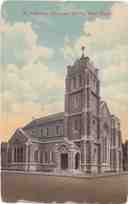
On your left stands a grand structure of rough-hewn Texas limestone, distinguished by its twin towers rising toward the sky and a large rose window centered above the arched main entrance. It looks dignified, doesn't it? But if you were standing right here in the late 1880s, the view-and the reputation of the neighborhood-would have been very different. This cathedral sits on the razor's edge of what used to be Fort Worth’s most notorious district: Hell’s Half Acre. While this church was rising as a symbol of hope, just down the street lay a grid of saloons, gambling dens, and brothels. In fact, one particularly busy establishment operated directly down 11th Street, facing the church doors. A later rector, Father John Robert Skeldon, noted the irony with a bit of a smile. He said the vice district was, and I quote, precisely where the gate of heaven needed to be opened. It’s hard to argue with that logic. The building itself is a product of a shifting population. The original parish was called St. Stanislaus, named for a Polish saint. But as Irish railroad workers flooded the city, the demographics changed. When they built this new structure in the Gothic Revival style-which mimics the pointed arches and height of medieval European cathedrals-the majority voted to rename it for the patron saint of Ireland. The construction was led by a French missionary named Father Jean Marie Guyot. He was a humble man who didn't mind getting his hands dirty. You’d often find him in dusty clothes, hauling stone alongside the masons. He blended in so well that passersby would ask him where to find the priest, not realizing they were talking to him. He had a distinct eccentric streak too. He kept a pet owl that would faithfully perch on his shoulder as he walked through the cathedral gardens. High above you in those towers hang three massive bells. The original, named Patricius, was joined in 1943 by two others: Maria Assumpta and Maria Glorisa. Hoisting them up there was a massive feat of engineering, overseen by Ed Gies, a church worker who served here for forty years. They had to secure heavy bronze castings inside the historic limestone spire without cracking the walls. The cathedral has seen its share of modern drama as well. Hollywood came calling in 1990 to film the comedy Problem Child. While the orphanage exterior was filmed nearby, the sanctuary-the holy area around the altar-provided the backdrop for the movie’s more... chaotic scenes with actors John Ritter and Michael Oliver. And speaking of chaos, the grounds witnessed a truly surreal spectacle in 2019. A naked woman climbed onto the roof of the adjacent St. Ignatius Academy and perched on a stone statue for nearly four hours. Police negotiators eventually had to use a cherry picker to bring her down safely. It’s a strange tapestry of history for a house of worship-from the edge of a red-light district to a Hollywood set. Now, leaving the spiritual behind, we head toward a monument to secular law and order, and then we'll continue to the Eldon B. Mahon United States Courthouse.
Open dedicated page →On your left stands a commanding five-story block of smooth limestone, instantly recognizable by the zig-zagging angle of its vertical windows and the sharp, geometric Art Deco…Read moreShow less
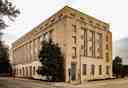
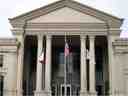
On your left stands a commanding five-story block of smooth limestone, instantly recognizable by the zig-zagging angle of its vertical windows and the sharp, geometric Art Deco carvings above the bronze entrance doors. This building is a masterclass in how to project stability when the world feels like it is falling apart. It was commissioned in 1930, right as the Great Depression began to tighten its grip on the nation. Congress appropriated over one million dollars-roughly twenty-two million today-to get it built. But the real story here isn't just the money; it is the minds behind the masonry. To create this, the government forced a collaboration between two men who occupied completely different stratospheres. On one side, you had Paul Philippe Cret. He was a French-born, Beaux-Arts master based in Philadelphia, famous for designing the Folger Shakespeare Library in Washington D.C. He dealt in grand, classical ideas. On the other side, you had Wiley G. Clarkson. Clarkson was a native Texan, a local workhorse who had already shaped much of Fort Worth's skyline. It was a partnership that theoretically should have clashed. Instead, it produced something brilliant. They created a "Classic Moderne" hybrid. It possesses the strict, logical symmetry of Cret’s classical training-everything is perfectly balanced-but it is clothed in the sleek, streamlined geometry of the Art Deco era. Clarkson and Cret designed it to look like a "solid limestone mass," a psychological anchor for a city reeling from economic chaos. Even the details tell a story; the window spandrels feature moldings with Pueblo Indian motifs, replacing traditional classical scrolls with American geometry. The creativity did not stop at the architecture. Inside, on the fourth floor, are murals painted by Frank Mechau. Now, Mechau was not your typical studio artist. He was a former railroad cowboy and a prize fighter who used his boxing winnings to pay for art school in Europe. A fascinating character. While his work in D.C. caused a national scandal for being too graphic, his murals here, like The Taking of Sam Bass, celebrate the raw "law of the Wild West" without the censorship controversies. Since 2003, this courthouse has borne the name of Judge Eldon B. Mahon. He was a man who lived a life that mirrored the twentieth century-from a West Texas grocery clerk to a bomber pilot in the South Pacific. As a judge, he was known as a pragmatist, a "judge's judge" who preferred common sense to legal gamesmanship. His most defining moment was overseeing Flax v. Potts, the lawsuit to desegregate Fort Worth schools. It was a nineteen-year legal saga. By the eighties, Mahon realized that busing students across town was causing more harm than good, famously writing that the result was "simply not worth the ride." He ended the busing program and eventually declared the district "unitary," effectively ruling that the dual school system had been dismantled "root and branch." It is a place where the weight of the law meets the weight of history. Our next stop is another place of worship, but one with a history of theological rebellion. Let’s head toward St. Andrew's Anglican Church.
Open dedicated page →On your right, spot the gray stone Gothic church with a cross-shaped massing, two mismatched corner towers, and a big pointed-arch entry that looks ready to audition for an…Read moreShow less
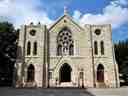
On your right, spot the gray stone Gothic church with a cross-shaped massing, two mismatched corner towers, and a big pointed-arch entry that looks ready to audition for an English village. After the federal courthouse’s hard-edged authority just back there, St. Andrew’s feels like Fort Worth putting on a different kind of uniform... one stitched from persistence. The Episcopal story here starts with a single recorded service in 1860, but the real foothold didn’t arrive until 1875, when missionary bishop Alexander Charles Garrett organized a mission under the Rev. Edwin Wickens. The first services happened in the Tarrant County courthouse on March 17, 1875. Nothing says “holy ground” like a building designed for arguments. And then comes my favorite origin detail: Garrett was fundraising from northeastern Episcopalians, and on a train ride a Connecticut clergyman heard the pitch, pledged $500-about $13,000 today-and asked that the new congregation be named for Andrew the Apostle. A whole church, essentially sponsored by a conversation in a railcar. Fort Worth has always been good at improvising. The cornerstone went down in 1877; parish status followed in 1878. What you’re facing now is the later statement piece: a Perpendicular Gothic Revival design by Sanguinet & Staats, started in 1909 and dedicated May 12, 1912. Notice the gray dolomite stone-quarried in Carthage, Missouri-and those two towers on the northwest and southwest corners, deliberately different, like siblings who refused to coordinate outfits. Inside, the nave-the long central hall where the congregation sits-leads toward the chancel, the area around the altar. A hand-carved wooden rood screen-basically an ornate divider-was made in Italy from Austrian oak. Most stained glass came from Jacoby Art Glass of St. Louis, while the rose window at the east end was made in England, showing Jesus calling Andrew and Peter. St. Andrew’s also became a modern battleground for church identity. In 1983 it joined the newly formed Diocese of Fort Worth, known for theological conservatism. In 1997, rector Jeffrey N. Steenson signed the “First Promise” statement, arguing the Episcopal Church’s authority was “fundamentally impaired.” In 2008, the parish and diocese left the Episcopal Church, aligned briefly with the Anglican Church of the Southern Cone, and later helped found the Anglican Church in North America. Through it all, worship here stayed “low-church”-plainer, less ritual-heavy-and they use the 1928 U.S. Book of Common Prayer. Now... turn your attention toward a site tied to one of downtown’s strangest architectural miscalculations, as we head to Landmark Tower, about a 5 minute walk away.
Open dedicated page →Look to your left for the Cowtown Place parking garage, a six-level structure of concrete and brick that occupies the exact footprint where the skyscraper in your app’s photo once…Read moreShow less
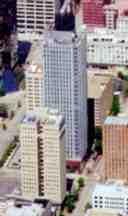
Look to your left for the Cowtown Place parking garage, a six-level structure of concrete and brick that occupies the exact footprint where the skyscraper in your app’s photo once stood. It’s a bit humbling, isn’t it? To look at a parking garage and realize it sits on the grave of what was once the tallest building in the city. You are standing before the ghost of the Landmark Tower. Its story isn't just about architecture; it is a perfect example of Fort Worth’s sheer stubbornness in the face of bad luck. The story begins in 1952. The Continental National Bank wanted a headquarters that screamed success, but construction halted at the fourth floor due to a sudden economic downturn. For four long years, the unfinished steel skeleton was mocked by locals as 'The Stump.' But if there is one thing you can count on in Texas history, it’s that oil money eventually flows again. By 1956, the economy recovered, and the bank, led by men like J.G. Wilkinson, decided to finish what they started. But they had a problem. They wanted to go taller than the original plan, but heavy brick walls would crush the foundation. So, the architect, Preston M. Geren-whose work we saw at the Convention Center-made a radical pivot. He scrapped the brick plans and wrapped the new upper floors in a lightweight aluminum skin-a "curtain wall." This was cutting-edge technology at the time. By reducing the building's "dead load"-which is just engineer-speak for the weight of the structure itself-they were able to shoot up to thirty stories without reinforcing the basement. When it opened in 1957, it was the tallest building in Fort Worth. But the real showstopper was on the roof. They installed a massive, four-sided revolving digital clock. It weighed 77 tons and cost one hundred and ninety-six thousand dollars... which is roughly two million dollars in today's money. That is a lot of cash to spend just to tell people the time. But it worked. It was listed in the Guinness Book of World Records. Two sides flashed the time in white floodlights, and the other two glowed with the letters "CNB"-for Continental National Bank-in neon green. Historian John Roberts remembers staring at it as a kid. That rotating green beacon was visible for miles across the dark Texas prairie, a lighthouse guiding drivers into the city. However, gravity and time are undefeated. The clock’s motor burned out in 1978, and rather than fix it, they just bolted it in place. The bank moved out in the early 80s, and by 1990, the tower was abandoned. It stood vacant for sixteen years. The final blow came in March 2000, when the tornado slammed into downtown. While other buildings were repaired, the Landmark Tower’s narrow design made it too expensive to fix. It became known as the "plywood skyscraper" because of all the boarded-up windows. In 2006, after XTO Energy determined it would cost over sixty million dollars to renovate, they made the hard call. On a rainy Saturday morning, they packed the columns with 364 pounds of explosives. In a matter of seconds, the city’s former giant crumbled into dust. It’s a reminder that even the biggest icons can disappear, making way for the practical necessities of today... like parking. From a building that fell, let's walk toward one that survived and thrived. We are heading to the Blackstone Hotel next, about a five-minute walk away.
Open dedicated page →To your right stands a twenty-three-story tower of buff-colored brick, distinguished by its Art Deco setbacks-those stair-step terraces narrowing toward the top-and intricate…Read moreShow less
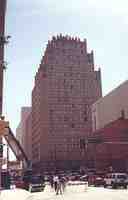
To your right stands a twenty-three-story tower of buff-colored brick, distinguished by its Art Deco setbacks-those stair-step terraces narrowing toward the top-and intricate terracotta ornamentation along the roofline. This is the Blackstone Hotel, a monument to the roaring twenties and the eccentric fortunes of Fort Worth's barons. It opened its doors in October 1929, just weeks before the stock market crashed. It was built by a cattleman named C.A. "Gus" O'Keefe. Gus wanted the tallest, most opulent building in the city to overlook his cattle empire. Sadly, he didn't get to enjoy the view for long; he died on Christmas Eve, just two months after the grand opening. But the hotel lived on, becoming the playground for the city's elite. One of its most famous residents was Sid Richardson, a legendary Texas oilman. During the Great Depression, Richardson lived in the penthouse, paying seven hundred and fifty dollars a month-a sum that would easily top thirteen thousand dollars now. Sid was a bachelor with fluctuating fortunes; sometimes he paid in cash, sometimes he survived entirely on credit. He was known for his homespun wisdom, famously advising friends to "Do right and fear no man; don't write and fear no woman." The Blackstone was the first skyscraper here to embrace Art Deco, a style focused on geometric shapes and vertical lines. Inside, it was a hub of culture. The twenty-second floor housed the studios of WBAP radio. This is where the Light Crust Doughboys played and where the "King of Western Swing," Bob Wills, first broadcast his music. They used a cowbell as their station signal, ringing it on-air to remind listeners of the city's cattle heritage. The hotel also hosted high-stakes political drama. In 1948, the Venetian Ballroom was the site of a tense showdown for Lyndon B. Johnson. He was running for the U.S. Senate against Coke Stevenson in a race tainted by the infamous "Box 13" scandal, where two hundred suspicious votes had suddenly appeared in South Texas to give Johnson the lead. The party committee met right here to decide if those votes were valid. In a nail-biting finish, they voted twenty-nine to twenty-eight to certify the results, effectively launching LBJ's national career. But eventually, the glamour faded. By the 1970s, the once-grand ballroom was hosting a pornographic cinema. In 1979, Olympic gymnast Nadia Comaneci stayed here and called it "awful" and "terrible." To be fair, she was suffering from a severe wrist infection that required surgery at a local hospital during her stay. Despite the pain and the mediocre accommodations, she returned to the competition against doctors' orders and won the gold. The hotel finally went bankrupt and closed in 1982. It sat vacant for nearly twenty years, its basement flooded and its windows boarded up with murals. But just as the city began to reimagine its downtown in the late 1990s, the Blackstone was saved. A twenty-six million dollar restoration brought it back to life, keeping quirks like the "steps to nowhere" in the lobby-a staircase that used to lead to a mezzanine that was walled off decades ago. It was this kind of restoration that paved the way for the district we are walking into now. Let's continue down the street to a place that truly kickstarted the city's nightlife revival.
Open dedicated page →Look to your left at the building combining a vintage 1880s brick facade with a modern structure rising behind it, capped distinctively by a glass geodesic dome on the roof. Back…Read moreShow less
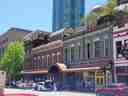
Look to your left at the building combining a vintage 1880s brick facade with a modern structure rising behind it, capped distinctively by a glass geodesic dome on the roof. Back in the early 1980s, Fort Worth was working hard to shuffle off its reputation as just a cow town. While the stockyards were embracing their history, the central business district was looking for a new rhythm. And they found it right here. This building was the Caravan of Dreams. It was a performing arts center that felt like a hallucination in the middle of Texas, financed by billionaire oil heir Ed Bass. Ed Bass and the artistic director, Kathelin Hoffman, had a vision that went far beyond a simple honky-tonk. They wanted a meeting place for the avant-garde... which is just a fancy way of saying experimental, unorthodox art that pushes boundaries. The facility was actually new construction built behind those historic 1880s facades you see, blending the old frontier with something radically new. When it opened in 1983, it was a massive event. The opening celebration featured Fort Worth native Ornette Coleman. Coleman was a titan of free jazz, a style that abandons traditional structures for pure expression. The city was so proud they declared it Ornette Coleman Day and gave him a key to the city. Imagine that night... the complex rhythms of Prime Time, Coleman’s ensemble, spilling out onto Houston Street. But the Caravan was more than a nightclub. It was a creative factory. It housed a 212-seat theater, two dance studios, and a multitrack recording studio. They even ran their own record label here, pressing albums for Coleman and spoken word recordings by counterculture literary figures like William S. Burroughs. It was an international hub. A Turkish playwright named Ferhan Sensoy even wrote about coming here to discuss projects with the management, a testament to how far the Caravan's reputation reached. If you look up at that glass structure on the roof again, that is a geodesic dome... a spherical structure made of interconnected triangles. It housed a rooftop garden filled with hundreds of cacti and succulents. Here is a fun fact. The expertise gained from building that dome and maintaining the garden involved some of the same individuals who would later work on Biosphere 2, that massive science experiment in Arizona designed to simulate a closed ecological system. Over time, the venue shifted gears. The experimental edge softened, and under new management, the nightclub began hosting more mainstream acts like jazz guitarist Peter White and the band Acoustic Alchemy. The wild, artistic fever dream eventually faded, and the club closed its doors in 2001, exactly eighteen years after that first legendary night with Ornette Coleman. Today, the building has reinvented itself again. It now hosts the popular restaurant Reata and the Four Day Weekend comedy theater. It remains a place where people gather to laugh and eat, proving that while the tune might change, the music never really stops. Prepare yourself. The next building was ground zero for the most destructive event in modern Fort Worth history.
Open dedicated page →Look to your left at the towering rectangular structure defined by a geometric grid of blue-tinted glass alternating with stark white horizontal bands. You are looking at City…Read moreShow less
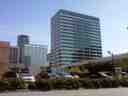
Look to your left at the towering rectangular structure defined by a geometric grid of blue-tinted glass alternating with stark white horizontal bands. You are looking at City Place, but locals of a certain age might still call this the Tandy Center, or even Leonard’s. This site is a perfect example of how this city constantly paves over its past to build something new, only to have the old stories linger in the foundation. It started with Leonard’s Department Store. This wasn't just a shop; it was a lifeline. Back in 1933, during the Great Depression, the banks froze cash flow. So, the owners printed their own money. They called it Leonard’s Scrip. It worked because the community trusted the family behind the counter more than the government. That loyalty ran deep. Years after the store closed, a man known only as Jimmy left a one hundred dollar bill at a museum with a note confessing he had stolen books as a poor child and wanted to finally settle his debt. To get people to the store, the founders, Marvin and Obie Leonard, built the Leonard’s M&O Subway. It was a private underground train system, the only one in the country, which even got a mention in Ripley's Believe It or Not. For forty years, people rode those rattling streetcars from the parking lots. There was a distinct smell of electrical ozone and that sudden, jarring shift from the blinding Texas sun into the dark tunnel that everyone remembers. In the seventies, the RadioShack corporation-then called Tandy-took over. Their boss, Charles Tandy, was a man who lived by the motto, "You can't sell from an empty wagon." He turned this site into a corporate fortress with these twin towers. They added a mall and a famous indoor ice skating rink where generations learned to stay upright on blades. But corporate fortresses aren't invincible. In 2000, the same tornado that damaged The Tower struck here with terrifying force. The glass walls failed completely. Shards rained onto the street. One tenant returned to his office on the 13th floor to find it decimated by the wind. It looked like a bomb site, yet he found his father’s Bible sitting there, untouched amidst the wreckage. The mall eventually died a slow death, becoming a ghost town of trash-strewn corridors before the retail section was demolished. Now, it is shiny office space. But forty-two feet below your shoes, the old subway tunnel still exists. It is sealed off and rotting in the dark. One manager described it as looking like a zombie movie set, silent and eerie. They keep a polished subway car in the lobby as a tribute, but the real history is buried in the dark, just beneath the surface. Let's walk to our final stop, a place dedicated to making sure these kinds of stories aren't forgotten.
Open dedicated page →Look to your left at the library, a modern structure characterized by its warm limestone-colored concrete, low-slung geometric profile, and the expansive glass windows lining the…Read moreShow less
Look to your left at the library, a modern structure characterized by its warm limestone-colored concrete, low-slung geometric profile, and the expansive glass windows lining the street level. It is quiet here now, but this institution was born from the grit of twenty women back in 1892. They met at the home of Jennie Scott Scheuber with a bold idea that required serious capital. They eventually secured the support of Andrew Carnegie, the steel tycoon who funded thousands of libraries. He offered fifty thousand dollars-roughly one point eight million today-but he gave the founding women a piece of dry advice. He suggested they ask the local gentlemen for the "price of a good cigar" to raise the rest. It worked. A local resident named Sarah Gray Jennings even donated the land, stipulating it must always be used for a library. By the Great Depression, the city’s population had swollen so much that the original building was effectively broken. Reading rooms were so packed there were not enough chairs or even light bulbs to go around. In 1933, the board appealed to the Public Works Administration. Four hundred thousand dollars in subsidies finally arrived to build a triangular Art Deco structure-a sum equivalent to nearly nine million dollars now. That is when a professionally trained librarian named Harry Peterson took over, finally organizing the chaos with the Dewey Decimal System. But cities change, and often faster than we would like. That Art Deco gem was eventually demolished for a parking lot in 1990 after the library moved to this site. And this location has seen its own drama. In October 1999, the Central Library celebrated a massive expansion. Less than six months later, the same tornado tore into this brand-new facility, causing over a million dollars in damage. Yet, just like the city itself, the library did not fold. It rebuilt. Today, it houses the municipal archives and the genealogy unit, safeguarding the memories of Fort Worth. It stands as a quiet testament to a place that constantly reinvents itself, weathering financial droughts and literal storms to remain standing. You have reached the end of the tour. Thank you for exploring the resilient heart of Fort Worth.
Open dedicated page →
Frequently asked questions
How do I start the tour?
After purchase, download the AudaTours app and enter your redemption code. The tour will be ready to start immediately - just tap play and follow the GPS-guided route.
Do I need internet during the tour?
No! Download the tour before you start and enjoy it fully offline. Only the chat feature requires internet. We recommend downloading on WiFi to save mobile data.
Is this a guided group tour?
No - this is a self-guided audio tour. You explore independently at your own pace, with audio narration playing through your phone. No tour guide, no group, no schedule.
How long does the tour take?
Most tours take 60–90 minutes to complete, but you control the pace entirely. Pause, skip stops, or take breaks whenever you want.
What if I can't finish the tour today?
No problem! Tours have lifetime access. Pause and resume whenever you like - tomorrow, next week, or next year. Your progress is saved.
What languages are available?
All tours are available in 50+ languages. Select your preferred language when redeeming your code. Note: language cannot be changed after tour generation.
Where do I access the tour after purchase?
Download the free AudaTours app from the App Store or Google Play. Enter your redemption code (sent via email) and the tour will appear in your library, ready to download and start.
If you don't enjoy the tour, we'll refund your purchase. Contact us at [email protected]
Checkout securely with 




