
Logroño Audio Tour: Statues, Stones, and Stories Along the Ebro River
Under Logroño’s watchful lions and beneath a regent’s bronze gaze, a city of legends stirs just beyond the usual crowd. Venture deeper with a self-guided audio tour that pulls back the curtain on battles, rivalries, spectacles, and secrets hidden in plain sight. Why did a peaceful avenue once explode in chaos with the shock of a car bomb? Who is the mysterious playwright whose spirit might still applaud in the night at the Theatre of Bretón de los Herreros? What makes Espartero’s hat an oddly personal source of local pride compared to Madrid? Step between fountains and grand facades, across wide boulevards and timeworn squares. With every stop your footsteps echo with forgotten dramas and untold stories. Feel Logroño changing shape beneath you as history rises from stone and bronze. Ready to meet the heroes, rebels, and ghosts living just beneath the surface? Press play—and let Logroño reveal its hidden heart.
Tour preview
About this tour
- scheduleDuration 90–110 minsGo at your own pace
- straighten3.8 km walking routeFollow the guided path
- location_on
- wifi_offWorks offlineDownload once, use anywhere
- all_inclusiveLifetime accessReplay anytime, forever
- location_onStarts at Monument to Espartero
Stops on this tour
lock_open 3 free previews · 11 unlock with purchase
You can spot the Monument to Espartero by looking for a giant bronze statue of a man on horseback, perched high atop a pedestal in the middle of a fountain, surrounded by four…Read moreShow less
You can spot the Monument to Espartero by looking for a giant bronze statue of a man on horseback, perched high atop a pedestal in the middle of a fountain, surrounded by four powerful bronze lions. Welcome to the heart of Logroño! Right before you stands an impressive spectacle: a statue so grand and sturdy, it would take a superhero to budge it-over 11,000 kilograms of pure bronze! Here, atop this elevated pedestal in the middle of a round fountain, you can see General Baldomero Espartero, not just any general, but a regent of Spain himself, striking a heroic pose while sitting firmly on his horse, hat proudly on his head. Take a moment to listen as the water from the fountain gurgles gently around you. But wait-he’s not alone! Four lions stand guard, each one also made from bronze. Two of them seem relaxed, maybe dreaming of tasty gazelles, while the other two look alert, determined to protect their general at all costs. Espartero’s wife, Doña María Jacinta, was from Logroño herself, and that’s partly why this city became their home-and, eventually, their final resting place. Imagine Espartero, strolling through this very area, not knowing that one day he’d go down in history as the city’s ironclad icon. Now, lean in closer and you’ll spot fourteen words carved in bronze around the edge of the platform. They aren’t just pretty decorations-each one tells you a little something about Espartero: Peace, Prudence, Loyalty, Temperance, Dedication, Homeland, Strength, Victory, Patriotism, Justice, Law, Heroism, Logroño, and Spain. They say a man is known by his words-here, he’s literally surrounded by them. You’ll also see a dedication: “A Espartero,” with a garland that never wilts! How did this piece of art get here? Well, picture a bunch of 19th-century folks, hats and all, coming together on Espartero’s birthday in 1872, laying the first stone with excitement buzzing in the air. This wasn’t just any neighborhood project-it took national fundraising and cost a whopping one hundred thousand pesetas (someone must have emptied quite a few piggy banks for that!). Bronze from old cannons was melted down in Barcelona, and local workshops buzzed with the sounds of saws and hammers until-after more than two decades-the statue was ready for a grand unveiling in 1895. There’s even a little friendly rivalry! Madrid has its own Espartero, but that statue has the general holding his hat in his hand. Here in Logroño, he’s keeping it stylishly on his head-maybe because the sun here is just a bit stronger, or perhaps he didn’t want to mess up his hair for eternity. Either way, you can almost feel the pride radiating from the people of Logroño. Even the lions look a bit smug.
Open dedicated page →To spot Gran Vía Juan Carlos I, look straight ahead for a wide avenue lined with modern buildings and a striking fountain splashing up in the middle-it’s hard to miss with all the…Read moreShow less
To spot Gran Vía Juan Carlos I, look straight ahead for a wide avenue lined with modern buildings and a striking fountain splashing up in the middle-it’s hard to miss with all the buzz of city life swirling around it! Alright, let’s pause for a moment and take a deep breath-can you feel the energy of Logroño humming all around you? Gran Vía Juan Carlos I is like the city’s beating heart, pulsing with life, shops, cafes, happy crowds, and the ever-present aroma of fresh coffee and baked goods drifting through the air. Believe it or not, where you’re standing now used to be rumbling with the sound of train wheels on metal tracks! Until the late 1950s, you’d have to dodge steam engines rather than selfie sticks here. All of that changed in 1958, when Logroño’s first train station disappeared, leaving a gaping space right at the edge of the historic city. Imagine the excitement-and perhaps the panic!-of city planners who suddenly had a giant strip of open land. What to do? In 1955, creative minds, led by Mayor Julio Pernas, dreamed up something completely new: a grand avenue. By 1963, this idea took shape-a bold, straight line 46 meters wide, complete with broad sidewalks and a tree-lined central avenue, splitting the old town’s charm from the modern city’s buzz. Since then, Gran Vía Juan Carlos I has watched Logroño change with the times. Just imagine it in 1999, fountains like the one beside you sparkling under the sun. Or picture the drama in 2001, when the peaceful street was shaken by a car bomb-but, in a twist worthy of a suspense novel, it only damaged a few buildings, sparing the people nearby. Not even controversy could slow this street down-when it was revamped in 2007, the debates were almost as lively as the bustling traffic! So, next time you cross this avenue, remember you’re following the path of old locomotives, city dreams, and stories pulsing right under your feet. Oh, and don’t forget to wave at Gorgorito, the monument nearby-he always appreciates a cheerful visitor!
Open dedicated page →Look ahead for a grand old building with a pale green and pink façade-full of ornate windows and elegant decorations-that proudly says “Teatro Bretón de los Herreros” above its…Read moreShow less
Look ahead for a grand old building with a pale green and pink façade-full of ornate windows and elegant decorations-that proudly says “Teatro Bretón de los Herreros” above its doors. Picture yourself standing here over a century ago; the Theatre of Bretón de los Herreros was the buzzing heart of entertainment in Logroño, where laughter and applause spilled out onto the cobblestone street just like popcorn at a modern cinema. The theater shines with old-world charm, and even today, you might imagine the rustle of elegant dresses and the rumble of carriages stopping at its entrance. In 1902, this grand building was renamed for Manuel Bretón de los Herreros, a beloved Spanish playwright whose comedies could make a stone statue giggle. Some say if you listen closely on a quiet night, you might catch an echo of sprightly dialogue or even a ghostly round of applause-maybe the spirits of past actors still crave an encore! In 1983, Spain decided this local treasure deserved a standing ovation forever, declaring it a Cultural Interest Site. So, whether you’re a fan of old stories or just like pretty buildings, this theater promises a little showbiz magic every time you pass by. Now, who’s ready for a backstage pass to history?
Open dedicated page →
Show 11 more stopsShow fewer stopsexpand_moreexpand_less
Directly ahead, you’ll spot a massive round stone tower attached to a sturdy old wall-just look slightly right of center, and you can’t miss its weathered sandstone blocks jutting…Read moreShow less
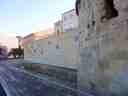
Directly ahead, you’ll spot a massive round stone tower attached to a sturdy old wall-just look slightly right of center, and you can’t miss its weathered sandstone blocks jutting out near the walkway. Welcome to the Cubo del Revellín-the mighty old cannon tower of Logroño! Take a deep breath, and imagine the clash of history right here where you're standing. Nearly 500 years ago, Logroño’s citizens must have heard a sound much like this:. In the spring of 1521, the city faced a gigantic threat: the feared franconavarro army, led by the tough-as-boots General André de Foix, surrounded this spot with thousands of soldiers hoping to break through Logroño’s walls. With stakes as high as castle towers and tension so thick you could slice it with a sword, the whole city became-and I mean this literally-the ‘key to Castile.’ After a week-long siege, with shouts echoing, cannons firing and the hope of Navarra hanging in the air, the citizens of Logroño stood their ground and won. They held firm-no Netflix, no takeout pizza-just bravery and a pile of determination. Their stand made a deep impression on the mighty Emperor Charles V, who decided Logroño needed a serious upgrade in defenses. Enter, the Cubo del Revellín. This curious round tower was built between 1522 and 1524 by the stone-cold master mason Lope de Isturizaga, who was basically the superstar architect for military defenses of his time. Funds came in part from something called a ‘sisa’-a special tax even the city’s priests had to pay, which caused such a fuss the clergy stopped performing church services in protest, putting the town in ‘holy timeout’ until an agreement was found! Charles V sweetened the deal by offering a big chunk of cash seized from his enemies to speed up construction. What makes this spot unique is how it blends old medieval style with fresh ideas-think of it as the original ‘hybrid’ fortress. Where you are now, imagine Logroño buzzing with stonecutters and laborers. The records are so detailed, we even know who chipped away here. In 1524 alone, more than two thousand loads of stone rumbled down Logroño’s streets to finish this job. The Cubo del Revellín was built to resist the latest weapons: full of gun loops for cannons, with a walkway above for defenders to shoot or pour boiling oil (or at least boiling stew) on attackers in the moat below. Clever engineering inside meant they even kept water handy to cool the red-hot cannons. And if you imagine yourself sneaking under the city, there might have been hidden tunnels called ‘listening galleries’-like medieval spy listening posts! These let defenders detect if enemies were secretly trying to dig under the walls. Tense, right? But history never stands still. After the days of cannon fire and sieges, the Cubo survived thanks to its rock-solid build and a dash of luck. Over the centuries, this round tower wore many hats: next to it rose a pelota court, then a cinema, and even apartments grew up attached to its sturdy walls! At one point, a sculptor even carved his workshop’s mark in the old stone above the main gallery. Every generation left a bit of itself here. The city renovated this area in 2006 and expanded it with a modern auditorium in 2010, revealing surprising layers underneath: remains of old walls from before the 1500s, the massive sixteenth-century fortifications, and even a Napoleonic-era wall. Standing here, you’re brushing up against centuries of ingenuity, stubbornness, and creativity. Logroño changed over time, grew up, faced new threats, and kept adapting-always with a twinkle of mischief, like those priests on tax strike! So, as you gaze at these ancient stones, try to imagine the clamor of hammers, the tense hush before a siege, or maybe even the soft hush of a cinema audience decades ago. The Cubo del Revellín is a living time machine, and you, my friend, are standing in the thick of its story! Seeking more information about the context, construction process or the financing? Ask away in the chat section and I'll fill you in.
Open dedicated page →To spot the Parliament of La Rioja, look for an ornate stone doorway framed by columns and shell-shaped carvings, right beside the waving flags of La Rioja, Spain, and the…Read moreShow less
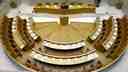
To spot the Parliament of La Rioja, look for an ornate stone doorway framed by columns and shell-shaped carvings, right beside the waving flags of La Rioja, Spain, and the European Union. Now, picture yourself in front of this grand entrance-can you feel the gravity in the air? This isn’t just any building; it’s the beating legislative heart of the entire region! Every few years, as election day arrives, the people of La Rioja head out to vote, their shoes tapping eagerly on the cobblestones, choosing the 33 representatives who will debate, decide, and defend the future of this sun-soaked land. All of them, whether they’re from the Party Popular, the Socialists, Vox, or Unidas Podemos, have one thing in common: a job that’s harder than deciding what Rioja wine to bring to dinner! Inside these sturdy stone walls, important decisions happen-laws are crafted, budgets are debated, and every once in a while, a heated conversation erupts about the best way to represent the people. The Parliament isn’t just about talk, though; it wields the power to shape La Rioja’s schools, roads, and even its festivals. The chamber has its own captain too: the President, a bit like the conductor of a busy orchestra, making sure everyone plays nicely and pays attention. Right now, Marta Fernández Cornago holds that baton, and I hear she can quiet a noisy hall faster than you can say “democracy.” The President’s job is to keep the debates rolling, the work organized, and-very importantly-order the coffee. After all, a sleepy parliament doesn’t make much progress! Of course, sometimes the stakes get even higher. The Parliament gets to choose one very lucky senator to speak up for La Rioja in Madrid. Imagine the tension and excitement when, in September 2023, the representatives gathered, voices echoing off the ancient walls, and finally called out the name of Mar Cotelo Balmaseda. That’s the sound of history in the making! So whether it’s fierce debates, secret alliances, or tired politicians hoping for lunch, this building is where La Rioja’s destiny is shaped-one spirited session at a time. And let’s be honest, even politicians have to agree on one thing: nothing gets done without a strong cup of Rioja coffee! Exploring the realm of the functions, composition of parliament in the eleventh legislature or the senator appointed by the parliament of la rioja? Feel free to consult the chat section for additional information.
Open dedicated page →Look for a grand neoclassical stone palace with three floors, ornate balconies, an impressive central shield above the main entrance, and iron lamps flanking the doorway-it’s…Read moreShow less
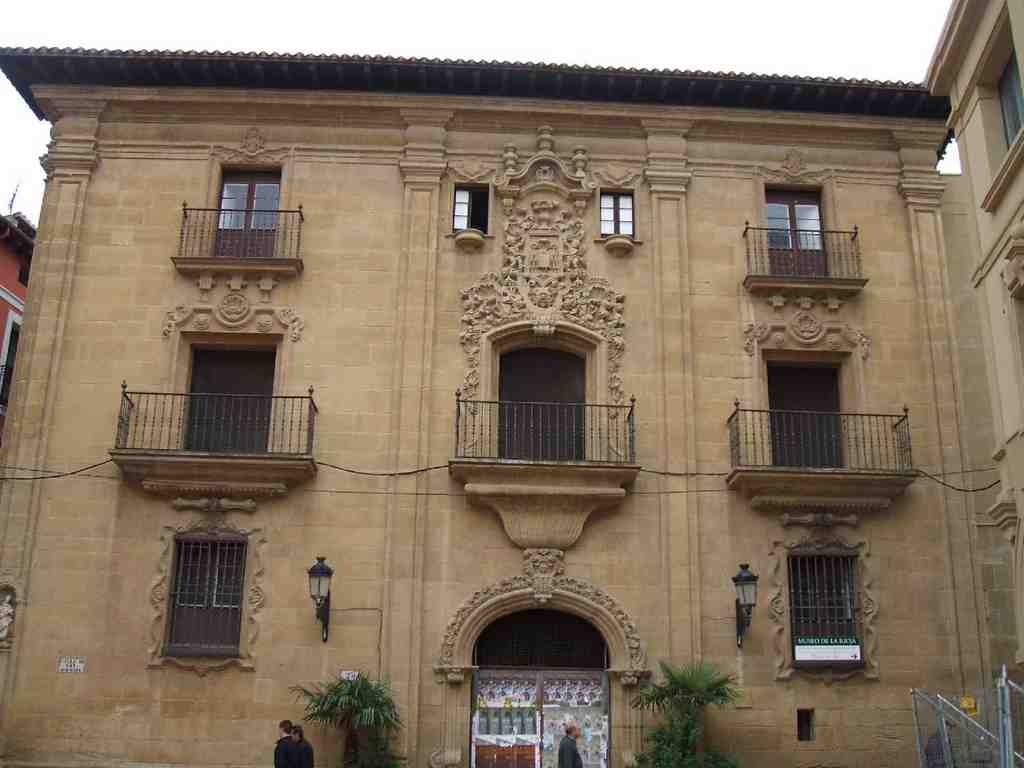
Look for a grand neoclassical stone palace with three floors, ornate balconies, an impressive central shield above the main entrance, and iron lamps flanking the doorway-it’s right in front of you! Welcome to the Museum of La Rioja! If you're wondering how to spot it, just look for that majestic baroque building that seems to say, “I’ve seen it all!” This palace has more stories than your average wine barrel (and that’s saying something in La Rioja). Built in 1752 by Pedro Ruiz de la Porta, who fancied a bit of extra grandeur in his retirement, its centuries-old walls are buzzing with history. Now, picture yourself in the late 1700s-wig-wearing nobles stroll in and out, and the air smells of fresh stone and ink from important documents. Over the years, the building changed hands almost as often as Logroño changes weather. When Pedro Ruiz de la Porta shuffled off this mortal coil, the palace passed to the Martínez de Sicilia family, and later it would become famous as the residence of none other than General Baldomero Espartero. Espartero was a well-known Spanish general, who, after finally waving goodbye to the world of politics, decided this was the perfect retirement pad. Maybe he liked the high ceilings; maybe he just wanted the best view in town! He settled here with his beloved wife, Jacinta Martínez de Sicilia. Although they lived royally, they had no children. When both eventually passed on, the palace went to Vicenta Martínez de Sicilia y Fernánde de Luco, better known as the Marquesa de La Habana-a woman with a title as long as her to-do list. She rented the palace to the state, and from that point, the building transformed more times than a magician’s hat. After a spell as the Government Military headquarters, it was almost turned into the bishop’s official residence. Imagine bishops walking down these storied halls, but alas, it wasn’t meant to be-the bishop never actually moved in! So, the palace did what empty palaces do: become a revolving door for new tenants. Over the next decades, the building played host to a children’s shelter, a savings bank, a business chamber, and even a group of artists-all before anyone realized, “Hey! This place might just be a treasure in itself.” Fast-forward to the swinging 1960s. The place was named a Historic-Artistic Monument, and finally, in 1971, it officially became the Museum of La Rioja. But the adventure wasn’t over! Fasten your seatbelt-here comes the renovation rollercoaster. The museum saw closures, debates, near-empty halls, and even a construction standoff worthy of a spaghetti western. Regional and central government argued about whether to hollow out the historic walls and start anew or simply give it a careful facelift. Let’s just say, those walls have probably heard more dramatic arguments than a family dinner at Christmas. In 2013, after nearly a decade (yes, a decade!) of stops and starts, repairs, and architectural wizardry, the museum reopened-bigger, brighter, and ready to dazzle everyone who walks in. Now, inside, you’ll discover rooms filled with treasures from the 12th to the 19th centuries. Glance around and you’ll see gothic wooden carvings, flamboyant paintings, and ancient archaeological finds-each with their own tantalizing secrets. Don’t miss the museum’s true showstopper: the Tables of San Millán, original panels from a 14th-century altarpiece that once stood in the distant monastery of San Millán de Suso. Pictured on both sides are scenes from the lives of the Virgin Mary, Jesus, and San Millán-imagine all the stories hidden behind those quiet, painted faces. And there’s plenty more-the museum houses everything from contemporary art to the nuts and bolts of La Rioja’s agricultural and domestic life. Every exhibit, whether it’s an ancient Roman artifact, a mysterious medieval sculpture, or a lovingly carved piece of furniture, is part of the region’s rich tapestry. Thanks to the museum’s own expansion, you can now get lost (not literally, don’t worry!) in extra galleries, a library, and an exhibition hall, all humming with the life and times of La Rioja. So, as you stand beneath the palace’s rococo crest and gaze at its stately balconies, remember: this building isn’t just a museum. It’s a living, breathing storyteller full of twists, turns, and enough drama for a whole season of historical soap operas. Ready to step through those doors? Your adventure is just beginning!
Open dedicated page →To spot the Co-Cathedral of Logroño, just look for two soaring twin towers and a grand stone façade rising above the lively Plaza del Mercado - you can’t miss it! Welcome to the…Read moreShow less
To spot the Co-Cathedral of Logroño, just look for two soaring twin towers and a grand stone façade rising above the lively Plaza del Mercado - you can’t miss it! Welcome to the magnificent Co-Cathedral of Santa María de la Redonda! Before we step into its story, just take a moment and listen: That’s the usual soundtrack to this part of town. For centuries, this corner of Logroño has echoed with bells, footsteps of pilgrims, and the quiet whispers of history. Now, picture yourself standing here a thousand years ago. We’re smack in the Middle Ages, and Logroño is just a riverside stop on the mighty Camino de Santiago - yes, the famous pilgrimage route. Pilgrims would cross the Ebro nearby on an ancient bridge built by saints with names that sound like they belong in an epic poem: Santo Domingo de la Calzada and San Juan de Ortega. Where you stand today was once a humble settlement. Imagine dusty travelers, the smell of baking bread from street vendors, and maybe the clanking of a horseshoe as someone passes through the market. The church that first greeted pilgrims here was a small, round, Romanesque building - and that’s actually how this place got its nickname, “La Redonda.” But like all good things, it grew larger and grander as Logroño flourished. By the 15th century, it became a collegiate church, teaming up with another in Albelda, where monks spent their days crafting precious medieval books in a scriptorium that must’ve smelled of ink and old parchment. Fast forward to the 16th through 19th centuries, and you’d see stonemasons at work on what would become the architectural wonder in front of you. The church evolved into its current form, with three lofty naves and a dreamy corridor behind the altar called the ambulatory. Walk around back and you’ll be tracing steps taken by generations before you. Don’t forget to look up: the soaring columns and the branching vaults overhead look just like a forest - a “stone palm grove” sheltering the faithful. But the real attention-grabber is this grand entrance. The twin towers on either side of the main door are more than just a local landmark - they’re practically the fashion trend-setters for church towers all over La Rioja! Their creator, Martín de Beratúa, was inspired by a tower in nearby Haro, and soon enough, everyone wanted a “Matching Twin Towers” look for their church. Move over, New York! Right between the towers is a huge stone altarpiece that acts as the building’s calling card. Step inside, and you’ll stumble upon centuries of religious art: paintings, sculptures, even bits and pieces rescued from churches that no longer exist. One of the brightest gems inside is the Chapel of Our Lady of the Angels, finished in 1756-it sparkles with all the delicate drama of Baroque architecture and bridges the worlds of art and devotion. Now, here’s where things get mysterious. In the ambulatory, hidden behind the main altar, is a little painting on a wooden panel-just a Calvary scene, with Christ, the sorrowful Virgin Mary, John the Evangelist, and Mary Magdalene. Legend has it, this was painted by no less than Michelangelo. Yes, the Michelangelo - although, to this day, people debate its origins. One thing’s for sure: it’s not a copy, as you can spot the artist’s second thoughts in the brushstrokes, with changes to Mary’s arm and the surprising addition of Mary Magdalene breaking the usual symmetry. Let’s not forget Bishop Pedro González, the grand collector, who built his own chapel and traveled all the way to Rome, only to fill his Logroño legacy with precious art, silver busts, and sacred relics. When he set out his grand plan, he even noted where certain treasures should be kept, with the mysterious line: “It is kept in the chests.” Makes you wonder if there are still secrets stashed somewhere, waiting for an Indiana Jones-style discovery. But there’s more to see here, like dazzling panels painted in 1584 by Gillis Congnet, which came a long way from Antwerp via a Parisian art-dealer’s hands. Or the grand, sculpted altarpieces that tell stories through both wood and stone - check out the curious worshiper who peeks through the wall in The Epiphany, or San Pedro brandishing a key that looks more like a medieval sword than anything else. Throughout the centuries, this cathedral has stood tall over Plaza del Mercado, while the city buzzed with social, religious, and cultural life. So whether you believe in miracles or just really good architecture, La Redonda offers a window into the soul of Logroño - and maybe, if you listen closely, the stones might just tell you a secret or two. Now, ready to find out what mysteries the next stop holds? To expand your understanding of the historical introduction, evolution of the architecture of the temple or the art collections, feel free to engage with me in the chat section below.
Open dedicated page →To spot the Monument to Sagasta, just look for a tall bronze statue of a dignified man with a beard and sideburns, standing proudly on a pedestal amidst green trees near the…Read moreShow less
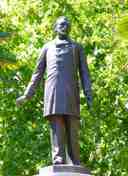
To spot the Monument to Sagasta, just look for a tall bronze statue of a dignified man with a beard and sideburns, standing proudly on a pedestal amidst green trees near the southwest side of Doctor Zubía’s roundabout. Now, let’s step back to the late 1800s. Imagine the city abuzz as José Rodríguez Paterna, the mayor, and the folks of Logroño gathered to honor one of their own: Práxedes Mateo Sagasta. He wasn’t just a regular guy-he was a brilliant political leader, and they wanted everyone to know it. So, they hired Pablo Gilbert to sculpt a life-sized, buttoned-up Sagasta out of bronze-looking every inch like he’s about to deliver a powerful speech. The statue was cast in 1891 and proudly placed on the north side of the Convento del Carmen, a place buzzing with chatter and footsteps from students and townsfolk alike. But oh, the adventures this statue has had! During the dark days of 1938, the statue was moved to the banks of the Ebro river, beside the Franco-Españolas winery. There, under the shadow of war and unrest, tragedy struck. One wild night, someone attacked the statue-it was toppled, its head knocked off and thrown into the river, lost to history. Can you picture a headless Sagasta, lying in the city’s storeroom, waiting for a new look? It’s the kind of story that makes you want to keep your own head down! Luckily, in 1955, a talented local artist named Jesús Infante was called to give Sagasta his head back-literally. For years after that, the statue waited in storage, perhaps dreaming of daylight. Finally, in 1976, it found its new home right here, where it stands tall again, thanks to those determined to preserve local history. And in 2009, to cap it off, the city gave the statue a grand new column, lifting Sagasta high so everyone could see just how important he is in Logroño’s story. Now, whenever you pass by, remember: this monument is standing guard over a tale of resilience, a touch of mischief, and plenty of city pride.
Open dedicated page →To spot the Church of San Bartolomé, just look straight ahead for a grand, sandy-colored stone façade with a dramatic arched entrance covered in rows of ancient sculpted…Read moreShow less
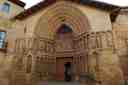
To spot the Church of San Bartolomé, just look straight ahead for a grand, sandy-colored stone façade with a dramatic arched entrance covered in rows of ancient sculpted figures-almost like a giant storybook carved in stone waiting to be read. Now, take a breath and imagine you’re traveling back in time-right here at the oldest church in Logroño, standing proud since the 1100s. Just picture pilgrims, cloaked in heavy robes, trudging by with weary feet along the legendary Way of St. James, stopping to gaze in wonder at this magnificent church. Today, its Romanesque heart and Gothic details give it the feel of a time capsule. If stones could talk, these would have quite a few secrets to spill-like how to fix a roof after a cannonball, or what happens when your tower gets repurposed as a telegraph station (more on that soon!). Notice the arching doorway-it’s not just a door, it’s actually nineteen tiny scenes, each one a chapter in the adventurous, sometimes hair-raising tale of Saint Bartholomew. If you turn your gaze to the far right, you’ll spot the first scene: the saint saving King Polemon’s wild, lunatic daughter. If your own children ever seem a bit lively, just imagine needing an actual saint to calm them down! Next comes a scene at the court, where Bartholomew and a group of maidens are introducing new ideas-evangelizing right under the king’s nose. This was no ordinary dinner party. Now, watch how Bartholomew confronts pagan idols. He’s waving his hand, casting out demons, and converting people on the spot. Some priests aren’t thrilled (maybe they wanted a quieter life?), and soon enough, we see the saint being dragged to the fierce King Astyages. On the left, there’s a gap-a forgotten box where another scene once played before the neighbors built a palace and, well, needed the space. If things seem tough so far, the next scenes crank up the drama. The Saint faces the idol Baldach, the king’s favorite, and for his troubles gets commanded to be flogged, then-brace yourself-tied by all four limbs and skinned alive by the personifications of lust, vanity, and laziness. Forget action movies-these carvings bring the thrills, right down to the detail of Bartholomew later preaching with his own skin thrown over his shoulder. Now that’s commitment to your message! Above these epic vignettes, you’ll see a tympanum featuring Christ the Redeemer. But don’t think this church hasn’t had a few makeovers-back in the 16th century, a stonemason named Pedro de Acha added a little window to brighten the choir inside, proving that even ancient churches need good lighting, especially when the spotlight’s on redemption. Step inside (at least in your imagination) and you’ll find three naves, all split by sturdy, octagonal pillars. Groin vaults criss-cross overhead, casting beautiful shadows across the worn stone. For a while, there was an 18th-century altarpiece painted white and gold, gleaming with the fashion of its day, but over the centuries it vanished-maybe taken during one of the building’s many changes in luck and use. And oh, what changes! In the 1500s, as French cannonballs rained down during a siege, the church tower stood tall (well, mostly tall-the artillery gave it a rather dramatic haircut) as it guarded the city wall and the gate. Rebuilt in solid brick, the new tower shows off hints of Mudejar style-proof that building trends go in cycles. In the 1800s, the tower even hosted an optical telegraph station, sending messages across Spain by semaphore, like an old-school WhatsApp with lots more arm waving. In tougher times, the church had a break from worship and instead stored wood, coal, even wounded soldiers. At one point, there were plans to knock it down and build a theater, but fortunately, the stones refused to budge. Next door, the grand Palace of the Marquises of Monesterio rose in 1751, while the church hunkered down, hosting everything from worker’s clubs to schools and, at one quirky point, a cinema. So, as you stand here, surrounded by whispering stone and centuries of stories, imagine each figure on the porch echoing the lives, dramas, and dreams of the people who passed before you. Not just a church-this is a living story, with a plot twist at nearly every turn. And don’t worry, skinning is no longer on the menu!
Open dedicated page →To spot the Church of Santa María de Palacio, look ahead for a stone church with a towering square bell tower on your left and a striking, steep octagonal spire shooting toward…Read moreShow less
To spot the Church of Santa María de Palacio, look ahead for a stone church with a towering square bell tower on your left and a striking, steep octagonal spire shooting toward the sky on your right. Take a deep breath and imagine you’re wandering into medieval Logroño-dust swirling, merchants calling out their wares, and pilgrims hurrying along the Camino de Santiago. Right here stands the Church of Santa María de Palacio, a place that’s seen everything from royal donations to near disasters! Now, why “Palacio”? Well, in 1130, King Alfonso VII was feeling particularly generous and decided to gift his very own palace-not exactly something you’d find lying around! With that, the first outpost of the Order of the Holy Sepulcher was born in Castile. And because it came straight from a king, the church even gets to flaunt the grand title “imperial”-move over, humble parish churches! The oldest stones beneath your feet date back to the 1200s, and if those stones could talk, they’d whisper stories of knights and monks reshaping half the church over the centuries. And look high above-the iconic crown-shaped spire! That’s no ordinary steeple; it’s an eight-sided, gothic, pointy hat so impressive it’s become the calling card of Logroño. But don’t let that elegant facade fool you; in the 1600s, that spire was so wobbly, city officials nearly tore it down. Picture horses and carts detoured away from the street for fear the whole thing might tumble down at the slightest. Inside, the church is a feast for your senses. Rows of columns rise up, holding beautiful vaults of gothic stonework over three naves and absidal chapels. But brace yourself-because the main altarpiece is absolutely spectacular! Crafted by the master Arnao de Bruselas, it was actually meant for Logroño’s concatedral, but was turned away due to a little too much donor pride… So it found a forever home in this church, and lucky for us! The altarpiece is like a storybook in wood and gold: scenes from Christ’s life, the mysterious figures of the prophets, a whole cast of saints swirling around a family tree known as the Tree of Jesse (think of it as the medieval version of “Who’s Who” of biblical ancestry). At the top, you’ll spot Saint Jerome with a ferocious lion and Saint James the pilgrim-the original travelers! And then there are the treasures: The oldest of all is the sculpture of the Virgin of la Antigua, a sweet-faced figure with an echo of Byzantium in her style, nestled in a gorgeous baroque chapel. And for the locals, nothing is more important than the figures honoring San Bernabé, the city’s patron (to whom locals owe some of their noisiest fiestas), and San Mateo, beloved during the riotous wine harvest festival. It’s as if the very heart of Logroño beats inside these walls. Now, don’t miss that organ! There’s more mystery to it than an unsolved detective novel. No one really knows its original date, and after being zapped with all sorts of modern electrics, it’s more Frankenstein than Bach. Some of the sounds are gone for good, but every Sunday at noon, echoes drift out, filling this imperial nave with music. Even the door has a story: you’ll see the Baroque southern entrance built in 1627, marked by imperial shields and an image of the Assumption. And if you wander around to Rúa Vieja, there’s another entrance, this one celebrating Saint John-a quiet nod to the many ways of entering this spiritual haven. So as the sunlight shines through those gothic points and the ancient stones seem to hum with secrets, imagine centuries of footsteps echoing around you-kings, monks, townsfolk, and travelers-making this church not just a monument, but a living piece of Logroño’s soul. And hey, if you listen closely, maybe you’ll catch the ghostly clink of a king’s keys or the laughter of an organist trying to squeeze a tune out of his cantankerous keyboard. Fascinated by the origin, temple architecture or the altarpiece? Let's chat about it
Open dedicated page →Ahead of you, you’ll see a long stone bridge crossing the river with graceful arches and elegant vintage lamp posts lining its path - just look over the water, and you really…Read moreShow less
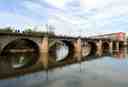
Ahead of you, you’ll see a long stone bridge crossing the river with graceful arches and elegant vintage lamp posts lining its path - just look over the water, and you really can’t miss it! Now, let’s take a journey through time-imagine yourself centuries ago, standing at the very spot where the Stone Bridge of Logroño, or “Puente de Piedra,” stretches across the mighty Ebro River. Close your eyes for a moment and picture the ancient sandstone blending with the shimmer of the water, the echo of footsteps, horses, and pilgrim staffs upon its surface. This is more than just a way across the river; it’s a living symbol, appearing proudly on the city’s coat of arms and welcoming countless travelers on their journey along the Camino de Santiago. Way, way back-so far back, that nobody really knows exactly when-a bridge stood here, helping townsfolk and pilgrims cross the river safely. The first written mention dates all the way to the year 1095. Imagine a medieval world with thick city walls and even three formidable towers defending this crossing, ready to spot any mischief makers from miles away. Over the ages, the bridge saw floods, wars, and repairs, like a medieval action movie starring stone and mortar! By the 1600s, this place was already legendary. People passed stories down about San Juan de Ortega, whose chapel stood on the river’s edge, and who, rumor has it, helped build the original bridge. Pilgrims would have looked up at three solid towers along the length of the bridge. One even had a drawbridge, its wooden chains clanking as it lifted - keeping out would-be invaders and, let’s be honest, probably a few nosy sheep too. Through the centuries, the Stone Bridge became a survivor. It faced natural disasters, like the floods of 1775 that swallowed its arches and swept away a mighty tower. And it played a part in history; during civil war in 1835, soldiers cut an arch to install a new drawbridge for defense. Piece by piece, the towers were lost, but the bridge endured. Then, tragedy struck in 1880, when a temporary wooden crossing collapsed under the weight of soldiers and their equipment. It was a disaster of panic, shouting, and splashing, with many lives lost-even though, heartbreakingly, the water wasn’t deep. The city, shaken to the core, finally sped up a solution-who knew bureaucracy could move faster than a river flood, right? In the years that followed, engineer Fermín Manso de Zúñiga stepped onto the scene. His job? Reinvent the bridge so it would not only survive but thrive! The result is what you see today-a sweeping structure of seven elegant, elliptical arches, reinforced with masonry from the old bridge and stone from quarries in nearby Laguardia. The new bridge opened in 1884 with the city’s own festival of San Bernabé-a moment of cheering, laughter, and new hope echoing across the Ebro. Walk along the bridge now, and notice its clever structure. The widest arches span 31.5 meters, while the sleek stonework rises almost 11 meters from the water at its highest end. Cylindrical pillars act as the legs of a stony giant, bracing against the current. In summer, if the waters drop low enough, you might even spot the remaining feet of the old bridge-ghostly reminders of centuries past, sunbathing for a short while before the river returns. Today, the bridge stays alive with constant change. It’s grown wider with concrete walkways for all the walkers, cyclists, and romantic strollers passing hand in hand. There are sixteen lanterns lighting your path each evening, and-thanks to a recent upgrade-sometimes the arches glow in brilliant colors during special city celebrations, painting the underside with hues of blues, greens, or reds. So, as you gaze across the water, imagine the Stone Bridge as a guardian of stories and a parade of characters: pilgrims in dusty boots, soldiers in heavy armor, townspeople dodging the occasional flood. This crossing has seen the city grow, watched Logroño wake up each morning, and offered a grand entrance to all who come along the Camino. And who knows-tonight, as the sun goes down, maybe it will tell your story next!
Open dedicated page →



Frequently asked questions
How do I start the tour?
After purchase, download the AudaTours app and enter your redemption code. The tour will be ready to start immediately - just tap play and follow the GPS-guided route.
Do I need internet during the tour?
No! Download the tour before you start and enjoy it fully offline. Only the chat feature requires internet. We recommend downloading on WiFi to save mobile data.
Is this a guided group tour?
No - this is a self-guided audio tour. You explore independently at your own pace, with audio narration playing through your phone. No tour guide, no group, no schedule.
How long does the tour take?
Most tours take 60–90 minutes to complete, but you control the pace entirely. Pause, skip stops, or take breaks whenever you want.
What if I can't finish the tour today?
No problem! Tours have lifetime access. Pause and resume whenever you like - tomorrow, next week, or next year. Your progress is saved.
What languages are available?
All tours are available in 50+ languages. Select your preferred language when redeeming your code. Note: language cannot be changed after tour generation.
Where do I access the tour after purchase?
Download the free AudaTours app from the App Store or Google Play. Enter your redemption code (sent via email) and the tour will appear in your library, ready to download and start.
If you don't enjoy the tour, we'll refund your purchase. Contact us at [email protected]
Checkout securely with 




