
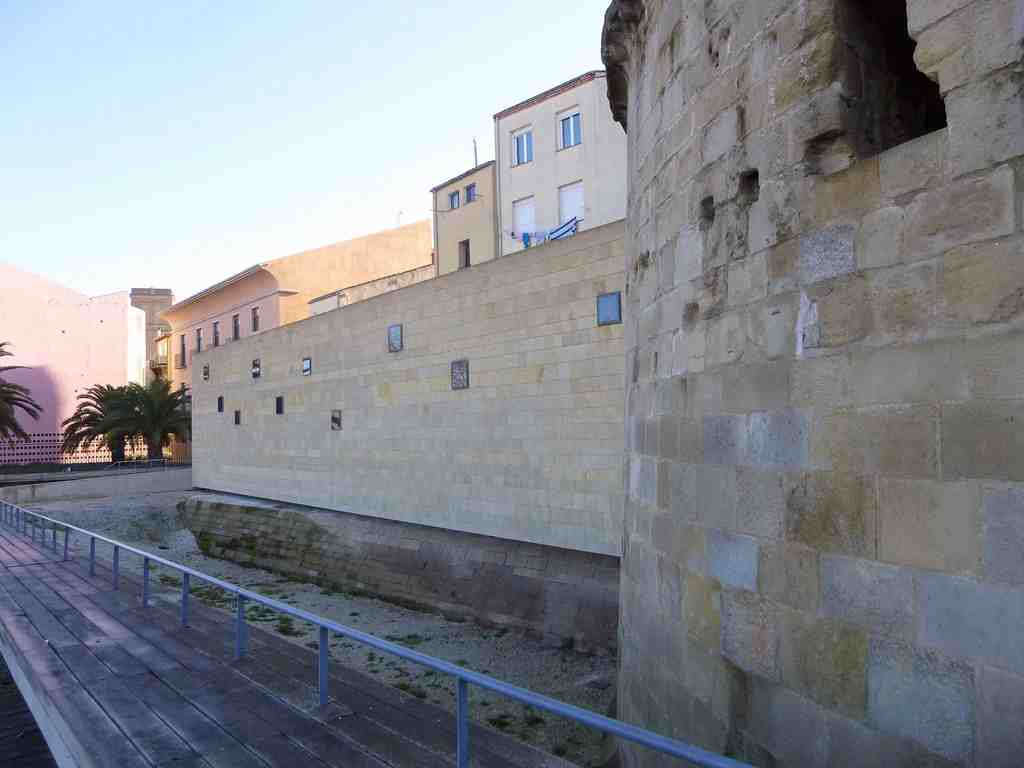
Directly ahead, you’ll spot a massive round stone tower attached to a sturdy old wall-just look slightly right of center, and you can’t miss its weathered sandstone blocks jutting out near the walkway.
Welcome to the Cubo del Revellín-the mighty old cannon tower of Logroño! Take a deep breath, and imagine the clash of history right here where you're standing. Nearly 500 years ago, Logroño’s citizens must have heard a sound much like this:. In the spring of 1521, the city faced a gigantic threat: the feared franconavarro army, led by the tough-as-boots General André de Foix, surrounded this spot with thousands of soldiers hoping to break through Logroño’s walls. With stakes as high as castle towers and tension so thick you could slice it with a sword, the whole city became-and I mean this literally-the ‘key to Castile.’
After a week-long siege, with shouts echoing, cannons firing and the hope of Navarra hanging in the air, the citizens of Logroño stood their ground and won. They held firm-no Netflix, no takeout pizza-just bravery and a pile of determination. Their stand made a deep impression on the mighty Emperor Charles V, who decided Logroño needed a serious upgrade in defenses. Enter, the Cubo del Revellín.
This curious round tower was built between 1522 and 1524 by the stone-cold master mason Lope de Isturizaga, who was basically the superstar architect for military defenses of his time. Funds came in part from something called a ‘sisa’-a special tax even the city’s priests had to pay, which caused such a fuss the clergy stopped performing church services in protest, putting the town in ‘holy timeout’ until an agreement was found! Charles V sweetened the deal by offering a big chunk of cash seized from his enemies to speed up construction.
What makes this spot unique is how it blends old medieval style with fresh ideas-think of it as the original ‘hybrid’ fortress. Where you are now, imagine Logroño buzzing with stonecutters and laborers. The records are so detailed, we even know who chipped away here. In 1524 alone, more than two thousand loads of stone rumbled down Logroño’s streets to finish this job.
The Cubo del Revellín was built to resist the latest weapons: full of gun loops for cannons, with a walkway above for defenders to shoot or pour boiling oil (or at least boiling stew) on attackers in the moat below. Clever engineering inside meant they even kept water handy to cool the red-hot cannons. And if you imagine yourself sneaking under the city, there might have been hidden tunnels called ‘listening galleries’-like medieval spy listening posts! These let defenders detect if enemies were secretly trying to dig under the walls. Tense, right?
But history never stands still. After the days of cannon fire and sieges, the Cubo survived thanks to its rock-solid build and a dash of luck. Over the centuries, this round tower wore many hats: next to it rose a pelota court, then a cinema, and even apartments grew up attached to its sturdy walls! At one point, a sculptor even carved his workshop’s mark in the old stone above the main gallery. Every generation left a bit of itself here.
The city renovated this area in 2006 and expanded it with a modern auditorium in 2010, revealing surprising layers underneath: remains of old walls from before the 1500s, the massive sixteenth-century fortifications, and even a Napoleonic-era wall. Standing here, you’re brushing up against centuries of ingenuity, stubbornness, and creativity. Logroño changed over time, grew up, faced new threats, and kept adapting-always with a twinkle of mischief, like those priests on tax strike!
So, as you gaze at these ancient stones, try to imagine the clamor of hammers, the tense hush before a siege, or maybe even the soft hush of a cinema audience decades ago. The Cubo del Revellín is a living time machine, and you, my friend, are standing in the thick of its story!
Seeking more information about the context, construction process or the financing? Ask away in the chat section and I'll fill you in.




