
Ferrara Audio Tour: Castles, Diamonds, and Renaissance Echoes
A moat splits the heart of Ferrara, circling secrets that have outlived dukes, popes, and revolutionaries. Within these ancient stones, power games once turned deadly and diamond-studded walls silently watched betrayals unfold. This self-guided audio tour weaves you through Ferrara’s hidden corridors and sunlit piazzas, uncovering stories most travelers stride right past. Listen close to uncover the city’s tangled legacies at your own pace. Who plotted a midnight jailbreak from deep inside Estense Castle? What sacred relic vanished from the Cathedral of San Giorgio sparking whispers of conspiracy? Why were the windows of the Diamond Palace built to confuse even the cleverest spy? Wander where political intrigue pulses beneath painted ceilings and scandal echoes on cobbled streets. Every turn brings drama, revelation, and a fresh angle on Ferrara’s ever-shifting story. Sink into the city’s layers now. Ferrara is ready to reveal what the moat could never contain.
Tour preview
About this tour
- scheduleDuration 30–50 minsGo at your own pace
- straighten4.4 km walking routeFollow the guided path
- location_on
- wifi_offWorks offlineDownload once, use anywhere
- all_inclusiveLifetime accessReplay anytime, forever
- location_onStarts at Estense Castle
Stops on this tour
You’re looking for a grand brick fortress with four tall square towers and a moat-just look for the mighty structure dominating the heart of Ferrara, impossible to miss! Alright,…Read moreShow less
You’re looking for a grand brick fortress with four tall square towers and a moat-just look for the mighty structure dominating the heart of Ferrara, impossible to miss! Alright, welcome to the Estense Castle, the superstar of Ferrara! You’re standing right where drama, power, and a touch of royal scandal have played out for over six centuries. Picture this: It’s 1385, and the air is thick with tension. The people of Ferrara have just had enough-another tax rise? No way! Suddenly, there’s shouting in the streets, an angry crowd, and the unfortunate advisor Tommaso da Tortona is dragged away. Let’s just say, his story didn’t have a happy ending. Shocked by how quickly things had gone wrong, Marquis Niccolò II d’Este decides his family needs more than just a good door lock. He hires Bartolino da Novara, a top-notch castle builder, to construct this fort: a brick giant, complete with four powerful towers-one of which, the Lion Tower, was originally part of the city’s own defenses. As you stand here, imagine the deep, defensive moat circling the walls, rickety drawbridges creaking, and guards in shining armor keeping a careful watch. In its early days, this castle was not for fairy tales. It was all about keeping the Este family safe from angry townsfolk and political threats. But as the family grew in wealth and ambition, the castle transformed, spreading from a fortress to a dazzling palace. In the 1400s, Eleonora d’Aragona (the duchess herself-fancy title, right?) had to race through a secret covered passage to hide from attackers. So, the Este court moved in for good, and the place started filling up with art, luxury, and-oh yes-plenty of parties. Picture banquets with endless courses, delicious roasts, sugar sculptures, even musical performances between courses. In fact, the kitchens themselves were legendary, overseen by the famous chef Cristoforo di Messisbugo-a man who could turn a feast into a spectacular show. Imagine the smells of roasting meat and the laughter floating up to the orange trees in the hanging garden above you. But life here wasn’t all fun and games. Down in the dungeons, real secrets linger: the castle’s prisons held high-profile prisoners, including Parisina Malatesta and Ugo Aldobrandino. Their doomed love affair ended in tragedy-ordered to execution by Niccolò III himself. There’s even graffiti scratched into the brick walls down in those dark, echoing cells. Talk about leaving your mark on history! As the Este dukes became sophisticated Renaissance rulers, art and knowledge flourished inside these walls. The famous Camerini d’Alabastro (Alabaster Rooms) displayed masterpieces by Tiziano and Dosso Dossi. The castle kept evolving: after a terrible fire in 1554 and suit of marvelous restorations, the medieval battlements were swapped for elegant marble parapets, and open loggias with sweeping views of the city appeared. The priceless library, noble halls decorated with stories from mythology, and a chapel where the last duchess, Renata of France, worshipped-all layered with history like a cake baked by the most extravagant royal chef. Of course, the winds of change didn’t spare the castle. With the end of the Este dukes in 1597, Ferrara slipped under papal rule, and the grand fortress took on new bureaucratic duties. Busy officials shuffled paperwork where once masked balls swayed under glittering chandeliers. In the last two centuries, the castle dodged total ruin and car parking schemes (yes, seriously!), survived bombings in World War II, and was vibrated by earthquakes strong enough to rattle its towers. Each time, passionate locals brought it back to glory-now housing both temporary and permanent museum exhibits. So, as you stand outside these reddish brick walls, let your imagination wander-four towers that once watched for danger now look down on the daily life of Ferrara, a moat that protected ancient secrets, and windows that have seen everything from royal births to riotous feasts. The Estense Castle isn’t just a building; it’s Ferrara’s memory in stone, with stories tucked away in every shadow. And don’t forget to walk all the way around-you never know which corner might be hiding a memory from centuries ago! Yearning to grasp further insights on the ground floor, nobles' floor or the four towers? Dive into the chat section below and ask away.
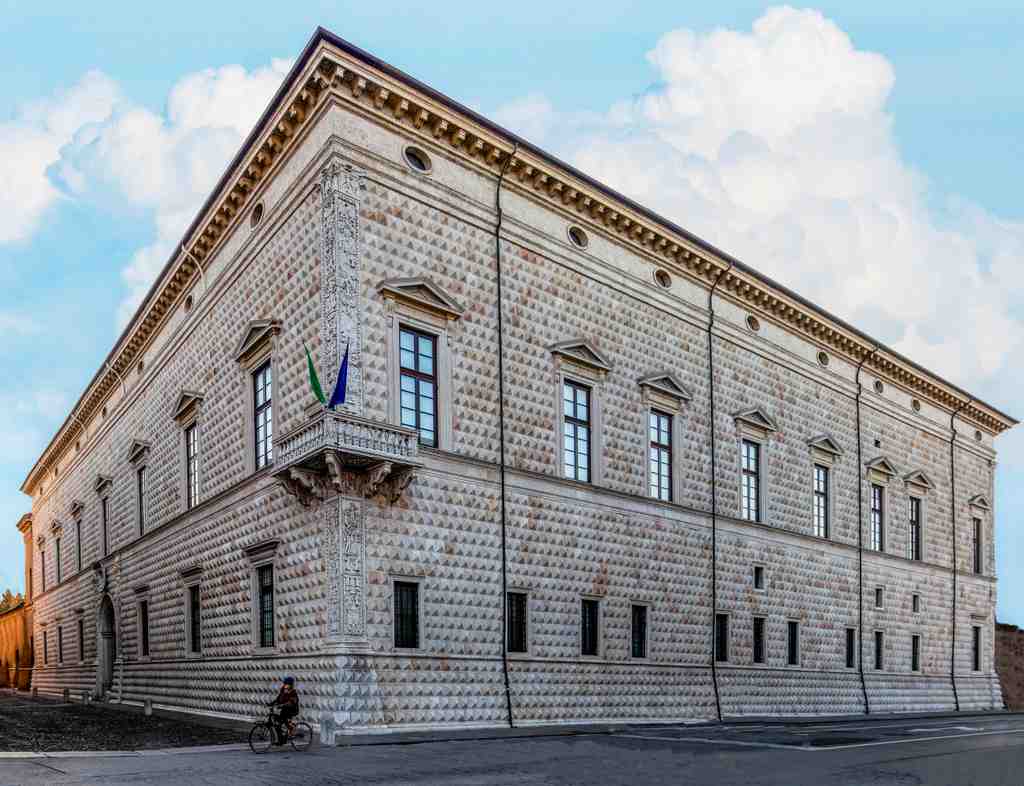
Open dedicated page →In front of you is the Diamond Palace: look for the grand, creamy-colored building with thousands of pointy, gemstone-shaped stones covering its entire surface-it looks as if the…Read moreShow less
In front of you is the Diamond Palace: look for the grand, creamy-colored building with thousands of pointy, gemstone-shaped stones covering its entire surface-it looks as if the building has been carved from a single gigantic jewel! Welcome to the sparkling heart of Ferrara’s Renaissance: the Diamond Palace! And trust me, you don’t have to be a pirate or a jeweler to spot this treasure-just admire that extraordinary façade, where over 8,500 white and pink-tinged marble blocks are cut into shapes that resemble diamonds catching and tossing sunlight in every direction. Imagine the year is 1492, horses clip-clop through the Quadrivio degli Angeli, and the powerful Este family decides their city needs something unforgettable. Enter architect Biagio Rossetti, hired by Sigismondo I d’Este (fancy brother of the Duke), with the dream to make everyone’s jaw drop. Some say Rossetti was inspired by mysterious palaces in Bologna, Cremona, or even faraway Naples-but to this day, nobody’s really sure, and scholars still love to argue about it. You could say the Diamond Palace remains Ferrara’s most dazzling whodunit! When you first look at the palace, it almost feels like you’re standing in front of an elaborate chessboard made for giants. Those “diamond” blocks aren’t just eye-candy-they’re carefully carved and oriented in different directions to catch shadows and sunlight from every possible angle, making the whole place look like it's sparkling, whether you visit at sunrise or sunset! And did you notice the sculpted balcony on the corner? That’s the handiwork of Galasso Alghisi, who popped by in the 1500s for some architectural upgrades-and probably to leave his mark on Ferrara’s glittering history. Now, picture yourself in the Renaissance: grand parties, whispers of intrigue, and the aroma of spiced food wafting through the palace windows. Inside, the Este family lived there on and off-along with their candelabras and even fancier paintings. Between 1586 and 1598, Cesare d’Este and his wife Virginia de’ Medici (yes, she was named after Florence’s famous Medici family-talk about a power couple!) called this palace home. Virginia’s own apartments were decorated with stunning ceiling coffers and painted friezes, most by Giulio Belloni, while the “birthing room” celebrated family hope and new beginnings. Rumor has it, the Duke's books had their very own private room, ornamented with clever allegories and perhaps, the stray cat hiding among the scrolls. But the Diamond Palace has survived more than gossip and parties! It changed hands in 1641, got a bit of a facelift from the Villa family, and its entrance was dressed up with decorative lights-the Renaissance version of “look at me!” Fast forward a few centuries: it became the proud home of Ferrara’s grandest art gallery in 1842, hosting masterpieces from artists like Mantegna and Cosmè Tura, and even surviving bombs in World War II and the big earthquake of 2012. Each time, the palace dusted off and welcomed visitors with timeless elegance. If you’re curious about the inside, you’d find a charming Renaissance courtyard with a marble well, just as stylish as the palazzo’s exterior. Downstairs, fabulous art shows bring Monet, Picasso, Banksy, and many more right into Ferrara-proof that the palazzo keeps sparkling, century after century. Next time you see a diamond ring, you can say, “That’s nice, but have you seen Ferrara’s whole palace of diamonds?” All that’s missing is a dragon guarding the door, but honestly, I think the Este family kept things lively enough! Shall we continue shining our way to the next stop? If you're keen on discovering more about the architecture, exhibition space or the national art gallery, head down to the chat section and engage with me.
Open dedicated page →Directly ahead, at the heart of the square, you'll spot a tall, ornate column rising from a grassy island, crowned by a statue of a man in Renaissance clothing holding a lyre,…Read moreShow less
Directly ahead, at the heart of the square, you'll spot a tall, ornate column rising from a grassy island, crowned by a statue of a man in Renaissance clothing holding a lyre, surveying the scene with a poetic air. Now, imagine this spot more than 500 years ago: instead of the peaceful park in front of you, picture wild excitement and a grand dream of a duke on a mission. Ercole I d’Este, the Duke of Ferrara, wanted to make his city the envy of Italy, so he set out to create a magnificent new square-piazza Nova-right here. At its center, he dreamed of two enormous marble columns topped with his own regal statue. He even arranged for the columns to float down the Po River from Verona on giant rafts. You’d think transporting giant marble pillars would be smooth sailing, but on May 4, 1499, disaster struck: one column tumbled into the river and vanished forever. I guess even the Renaissance had its epic fails! The other column made it here-but instead of triumphantly showing off the duke, it lay abandoned like a forgotten umbrella after a festival, gathering dust while the city's dreams marched on. The poor, lonely column saw Ferrara’s ups and downs. It was shaken by a massive earthquake in 1570-if it had any teeth, it would have chattered. Later, in the 1600s, a spectacular fire left its mark, chipping and burning the marble during a festival gone wrong. But Ferrara’s artists are nothing if not creative: Cesare Mezzogori, a local sculptor, decided to give the wounded column a makeover. He carved it from square to round, and covered it with swirling oak branch motifs. Like putting snazzy wallpaper over a dented wall-and it worked! In 1675, after nearly two centuries of drama, the column finally stood upright where you see it now. The column’s life as a pedestal was just getting started. First came a bronze statue of Pope Alexander VII, waving from above like the world’s holiest parade marshal. But history is never calm! When Napoleon’s French army rolled into Ferrara in 1796, down went the pope and up went a Statue of Liberty-made of plaster, because that’s what revolutions run on. Not to be outdone, the Austrians destroyed that one too. The spot earned a reputation for “blink-and-you’ll-miss-it” statues. In 1810, hoping for something lasting, Ferrara’s leaders plopped a marble Napoleon-crowned, scepter in hand-atop the column. The square was filled with trees and called Piazza Napoleone, but poor Napoléon’s statue lasted barely longer than his empire: four years later the Austrians knocked him down too. All that survived were his head and his globe-holding hand, now tucked away in a Ferrara museum-proof that even emperors lose their heads, sometimes literally. Finally, in 1833, Ferrara decided this column needed a true hero-someone inspiring, safe from the swings of politics. Enter Ludovico Ariosto, the city’s most beloved poet, famous for his dazzling tales and sharp wit. The statue you see was created by the Vidoni brothers, following a design by Saraceni: Ariosto stands tall, crowned with laurel, Renaissance robes swirling, right arm raised as if showing you his instrument-the lyre-in his left hand. Fittingly, the base below reads "A Ludovico Ariosto, The Homeland." The square was renamed Piazza Ariostea, and, since then, it’s been filled with laughter, festivals, and the thundering hooves of horses during the city’s famous Palio races every May. So as you look at Ariosto gazing out across Ferrara, remember-this monument is no ordinary column. It’s a survivor of shipwrecks, earthquakes, bonfires, revolutions, and regime-changes: a witness to centuries of ambition, disaster, and reinvention. And at the top, the poet stands, perhaps wondering which epic story might unfold next right beneath his evergreen laurel!
Open dedicated page →
Show 8 more stopsShow fewer stopsexpand_moreexpand_less
 4
4Urban Planning of Ferrara
Buy tour to unlock all 15 tracksTo spot the landmark, just look ahead at the wide, grassy parkland stretching up to a mighty brick wall topped by bare, wintry trees-those towering walls are the famous city…Read moreShow less
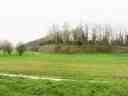
To spot the landmark, just look ahead at the wide, grassy parkland stretching up to a mighty brick wall topped by bare, wintry trees-those towering walls are the famous city fortifications that shape Ferrara’s unique urban landscape. Now, let’s imagine ourselves strolling through the centuries while standing here… Ferrara didn’t just pop out of the ground as the enchanting “City of the Renaissances”-she grew, brick by brick, behind these endless walls that snake through the city. It all started with a tiny Byzantine fort on an island among winding river channels-picture a huddle of muddy soldiers, wary of invaders, peeking out from behind early ramparts. That humble fort became the embryo of Ferrara, thanks to floods, trade-and, of course, the constant fear of “who’s coming next?” The city’s fate took a twist when everyone packed up from a nearby town called Voghenza, which was being battered by barbarian attacks. After a memorable bishop was killed-let’s just say he didn’t get the world’s best Yelp review-everyone decided it was time to move somewhere a bit safer. In a stroke of brilliance, or maybe a roll of the dice, they chose Ferrariola on the riverbank, kicked off some marsh draining, and the great experiment of Ferrara began. As Ferrara battled its way through the medieval ages, it was the walls you’re looking at that shaped everything. The people living inside them saw the city transform from a rough cluster of huts and new churches into a bustling hub of markets, palaces, and-of course-plenty of intrigue. There were times these walls were pressed by armies, threatened with collapse, and even lines of escape during rebellions and mysterious plots. In 1492-when most people were getting lost looking for America-the Duke Ercole I d’Este and his court architect Biagio Rossetti were busy doubling the city’s size. Their solution? A revolutionary town plan called the Addizione Erculea, which was so clever people started calling Ferrara the “first modern city in Europe.” The idea was to weave the roads in perfect harmony, inspired by ancient Roman thinking. You can thank them for Ferrara’s mathematical layout-a grid that really puts my sock drawer to shame. On your right or left, depending on where you’re standing, Old Ferrara clings to its medieval roots, the kind of spots where you’d find secret alleyways, proud cathedrals, and the mighty Castello Estense. March north and you walk right into Renaissance Ferrara: palaces with diamond-shaped stones, sweeping avenues, and those grand intersections where nobles probably debated whether red velvet or gold slippers were the season’s must-have. The atmosphere must have been thick with horse hooves, church bells-and the odd crafty merchant hoping to avoid city taxes. After the Este family packed their bags in 1598-honestly, no hard feelings, they just had bigger fish to fry-the city became part of the Papal States. Shifts in power brought big changes: ghetto walls rose, old neighborhoods fell, and swathes of the city were reimagined or lost forever. Ferrara’s walls might have seemed quieter, but inside the city, the shape kept shifting with each new ruler and idea. The 20th century brought a fresh round of grand city projects-imagine the buzz and clang of construction. The “Addizione Novecentista” saw whole new districts pop up, rationalist-style buildings from Italy’s more modern ambitions rising beside medieval towers. Even today, Ferrara’s neighborhoods, from the old heart to the newer edges, each have their own flavor-eight districts and a string of rural outposts, each with their own quirks and stories. And still, those mighty walls rise up, wrapped in grass and quiet but carrying centuries of tense nights, grand dreams, and the odd argument about who gets the bigger room in the castle. So, as you touch these ancient bricks or stroll along the green banks, let your imagination fill the wide space with rowdy merchants, dashing Renaissance dukes, nervous soldiers, and hopeful city planners-knowing Ferrara’s real genius has always been its ability to adapt, protect, and reinvent itself behind these weathered walls. And just think-with all its changes, Ferrara never lost the knack for surprising the world. Want to explore the foundation of the city, medieval period or the renaissance in more depth? Join me in the chat section for a detailed discussion.
Open dedicated page →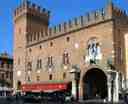 5
5Comune di Ferrara - Palazzo Municipale
Buy tour to unlock all 15 tracksTo spot the Municipal Palace, just look for the impressive medieval brick building with crenellated battlements and a tall tower, facing you across the square, with two grand…Read moreShow less
To spot the Municipal Palace, just look for the impressive medieval brick building with crenellated battlements and a tall tower, facing you across the square, with two grand bronze statues flanking an arched entrance known as the Volto del Cavallo. Alright, you’re standing in front of the mighty Municipal Palace of Ferrara-don’t worry, those statues of Niccolò III and Borso d’Este on either side of the entrance won’t judge your sightseeing skills! Imagine the scene here centuries ago when this place was the bustling heart of power, home to the mighty Este family long before the Castello Estense stole the limelight. The story of this palace begins all the way back in 1245, when its earliest walls rose along the little street called Cortevecchia. Over the next 200 years, city leaders and architects stretched it out, stitched on new bits, and by the late 1400s, it looked a lot like the grand residence you see before you. The palace’s main gate, the Volto del Cavallo, stands dramatically right across from the cathedral. Back in its ducal heyday, you’d have been dodging carriages and catching glimpses of lords and ladies riding through these arches. Now, about those statues-there’s a story worthy of a medieval soap opera. The one on horseback is the Marquess Niccolò III d’Este, lifted high atop a pedestal that might’ve had Roman emperors nodding with approval. His neighbor, the dignified Borso d’Este, is reading out rulings and brandishing his scepter like a judge who really loves drama. These statues were crafted by master sculptors from Florence in the mid-1400s and took years-and plenty of heated debates-to finish. Both statues once vanished in a rather dramatic fashion in October 1796, melted down for bronze to feed the ever-hungry cannons of the French. But Ferrara wasn’t about to let a little thing like war erase its icons. When the 1920s rolled around, the city buzzed with a new energy-much like your phone might when you get a sudden flood of notifications. The community, led by a determined mayor and some very persuasive letters in the local paper, demanded the statues’ return. Enter artist Giacomo Zilocchi, who sculpted the bold bronze copies you see today, based on old sketches, coins, and even bits of theatrical costumes. The city held its breath as the replicas were hoisted up beside the arch in 1927, a triumphant moment for local pride. The façade itself is a tale of transformation. In the 1700s and again between 1924 and 1928, the entrance was refaced in a neo-medieval style to match everybody’s idea of what a ducal palace ought to look like. Each brick, arch, and decorative flourish has survived earthquakes, military occupations, and the kind of renovations that make homeowners everywhere break into a cold sweat. The ostentatious windows, the shield-like crests above, and the striking marble details all speak of a place where art and governance were inseparable. Slip through the main arch and you’d find yourself in the old Ducal Courtyard, now the bustling Piazza del Municipio. Look for those marble windows where Este nobility might have peered out onto the square, and, if you squint, you can just about picture them gossiping about each other’s fashion choices. The grand staircase, built in 1481, sweeps you straight up to what used to be the court chapel, now a venue for conferences and shows. Inside, every room whispers of intrigue and ceremony: there’s the Sala dell’Arengo, wrapped in murals of mythic Ferrara; the dazzling Gold Room, currently napping under a cloak of restoration dust; and the Marriage Hall, home to Flemish tapestries that once set artistic hearts aflutter. Even the Camerino delle Duchesse offers a hint of sibling rivalry, decorated for Eleonora and Lucrezia d’Este-it seems the Este women wanted a bit of luxury too. And just when you think the palace couldn’t hide any more treasures, stroll to the north side and you’ll spot the covered walkway, the via Coperta, a secretive bridge that once let Este nobles scuttle straight to the Castello Estense without braving the public square-or rain showers! So take a moment to breathe in the layers of history here, where powerful rulers once held court, artists battled for commissions, and the city of Ferrara refused to let its proud past slip away-even if they had to recreate it from scratch now and then! Interested in knowing more about the description, ducal courtyard or the interiors
Open dedicated page →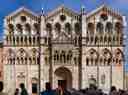 6
6Ferrara Cathedral
Buy tour to unlock all 15 tracksTo spot the Cathedral of San Giorgio, look for a grand white marble façade with three towering gables, rows of arched windows, intricate carvings, and a central entrance flanked…Read moreShow less
To spot the Cathedral of San Giorgio, look for a grand white marble façade with three towering gables, rows of arched windows, intricate carvings, and a central entrance flanked by statues and a detailed canopy with the Madonna and Child. Now, take a deep breath, because you’re about to step into Ferrara’s beating heart across the centuries! Picture the scene: it’s the twelfth century, and this very ground in front of you is lively with craftsmen chiseling marble, townsfolk bustling through the ancient piazza delle Erbe, and-of course-the sounds of hammers echoing as the first stones of the Cathedral are laid. The year is 1135, and thanks to the generosity of a local bigwig named Guglielmo I Adelardi (with a little nudge from an anti-pope, believe it or not), Ferrara sets out to build a cathedral as magnificent as any in Italy. Look up at that façade-see the fierce, proud lions holding up the central portico? And above them, rows upon rows of arches and statues peer down at you, as if the cathedral has its own cheering crowd. Right in the middle, you’ll spot a terracotta Madonna and Child, sculpted in 1427, who seem to keep a protective eye on the town’s hustle and bustle. Now, above that, there’s a sculpted scene with angels, saints, wise old men, and-would you believe-a monster, eagerly gobbling up the souls of the damned in a dramatic Judgment Day. All the while, the archangel Gabriel is up there, weighing souls like he’s at a very dramatic medieval market! But Ferrara’s cathedral isn’t just about grandeur; it’s also Ferrara’s gathering place for some of its wildest traditions and moments of joy and sorrow. Every spring, the Blessing of the Palios takes place here: four painted banners blessed in anticipation of Ferrara’s Palio races. Picture the excitement of the crowd waiting for the bishop’s blessing-think less “horsepower” and more “historic horsepower!” Over the centuries, this cathedral has witnessed nearly everything. In 1177, the altar was consecrated and the people probably thought, “At last! No more dusty construction!” But Ferrara never stands still. The style moved from solid Romanesque-look at the lower part of the front, sturdy as a castle-to soaring Gothic up above, with pointed arches and delicate columns like something out of a fairy tale. They even added a tall campanile (that’s a fancy word for bell tower) in the 1400s, designed by Leon Battista Alberti, which still stands a bit lopsided because, well, Ferrara’s got sandy soil and the ground can be a bit unpredictable. Let’s just say it adds to the charm! Inside, the story keeps unfolding. The air smells of incense and old stone, echoing with music from magnificent pipe organs. Over the years, there have been heroic organists, golden mosaics, and treasures from across Italy. If walls could talk, they’d tell you about ordinations, citywide celebrations, and even the somber echoes of bombings in World War II-when explosions damaged the southern side and the air was filled with thunderous crashes and breaking stone. Ah! And buried within is Pope Urban III, who picked this as his final resting place-so if you suddenly feel very important standing here, now you know why. The cathedral has survived earthquakes, bombings, and centuries of eager restoration. In fact, it was only recently reopened in 2024 after a big restoration due to earthquake damage-so you’re among the first to see the grand new chapter in its story. So go on, take your time and soak it all in. The Cathedral of San Giorgio isn’t just Ferrara’s most important church-it’s like a stone scrapbook of the city itself, packed with drama, history, and a dash of divine mystery. Every sculpture and whisper of sound carries centuries of secrets... and maybe, if you listen carefully, you’ll hear the echo of medieval chants or the distant laughter of a centuries-old festival.
Open dedicated page →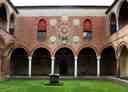 8
8Romei House
Buy tour to unlock all 15 tracksTo spot the Romei House, just look ahead for a striking red-brick courtyard with elegant arches, white columns, and a large, decorative terracotta flower on the wall above - it’s…Read moreShow less
To spot the Romei House, just look ahead for a striking red-brick courtyard with elegant arches, white columns, and a large, decorative terracotta flower on the wall above - it’s impossible to miss if you’re facing the green lawn in front. Let’s pause here in front of the Romei House - though trust me, this is no ordinary house, unless your house also looks like it sprang from a medieval fairy tale and is full of dramatic secrets from Ferrara’s past. Picture yourself in the middle of the 1400s: this grand building was crafted by Giovanni Romei, a wealthy merchant with an eye for style and maybe a bit of a flair for impressing his new bride, Polissena d’Este. The place got a stunning makeover just before their wedding in 1468, so think of it as the ultimate “happily ever after” renovation. But this house wasn’t just about wedded bliss-it soon became tangled in the city’s twists of fate. After Giovanni’s death in 1483, he left the home to the nuns in the neighboring Corpus Domini monastery. Talk about unexpected roommates! For decades, the building blended into the cloistered world next door, but Ferrara never stays the same for long. In the 16th century, Cardinal Ippolito II d’Este, always a fan of grand gestures, ordered renovations that transformed many of the noble floors, decorating ceilings with jaw-dropping frescoes and even a few hidden grotesques-little artistic oddities peeking out if you know where to look! Step into the courtyard, and you’ll see the late gothic style mingling with the new Renaissance mood of Ferrara. Right above you, that big terracotta monogram of Christ would have greeted every guest-a gentle reminder to behave. The interiors will wow you even more: the ground floor glows with gothic decorations and the "Room of the Sibyls," where painted prophetesses stare down from the walls, all clutching scrolls of their prophecies. If you feel judged, remember-every guest since the 1400s has had the same reaction. Upstairs, the noble floor is a time capsule of ancient luxury. Imagine the grand hall, where Cardinal Ippolito’s symbol, a white eagle, pops up as often as your least favorite song on repeat. In what was probably Giovanni Romei’s own study, the wood-coffered ceiling holds intricate paper designs-yes, real paper from the 1400s, miraculously surviving the centuries. And scattered around the loggia, you’ll even find some old-school “graffiti”-everything from poetic quotes to doodles of medieval board games. Who knows, maybe Giovanni was Ferrara’s first game night champion? This house doesn’t just look impressive; it’s a treasure chest. When it turned into a museum in 1952, it gathered rescued art from churches, lost convents, and demolished palaces. Here you’ll find sculptures by Donatello (yes, the real one-not the Ninja Turtle), paintings, and ancient marble busts. Don’t miss the fragments from Ferrara’s destroyed churches-the Madonna with Child sculpture, for example, has survived more property transfers than the average family sofa. There are even bits of a broken statue of Napoleon, once toppled by invading Austrians, which feels like Ferrara’s own epic “ultimate unfriending.” Hidden within the museum’s walls is also an unexpected Roman-style mini-spa: an excavated, sunken bath heated by its own private fireplace. This unexpectedly luxurious feature is the oldest of its kind found in Ferrara. Honestly, finding a place to warm up on a chilly day is the sort of luxury anyone could appreciate-even if the nuns probably never used it for a dance party! Today, Casa Romei is not just a museum but a lively cultural spot. Its main hall hosts concerts and lectures, echoing with modern music atop centuries-old floors. Maybe if you listen very hard, you’ll hear a medieval tune drift out, or perhaps just the whisper of monks, artists, and mysterious guests who’ve crossed this courtyard over six centuries. Talk about a house with stories- and not a bad place for a wedding present, either!
Open dedicated page →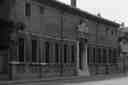 9
9Palazzina Marfisa d’Este
Buy tour to unlock all 15 tracksAhead of you, you’ll see a long, low building made entirely of red brick, with impressive iron-barred windows and a big, ornate stone doorway in the middle-just glance along the…Read moreShow less
Ahead of you, you’ll see a long, low building made entirely of red brick, with impressive iron-barred windows and a big, ornate stone doorway in the middle-just glance along the street, and all those windows lined up will point you right to it! Now, let’s step back in time together, just for a moment. Imagine the street quieting around you-the hum of the city replaced by the whispers of silk and the gentle laughter of courtly life. This is the Marfisa d’Este building, one of Ferrara’s best examples of a 16th-century noble residence… and trust me, this isn’t just any old noble’s house-it’s practically a page ripped from a Renaissance soap opera! Picture the year 1559. Behind these elegant brick walls, a stunning palazzo rises up as part of a massive estate, complete with lush gardens and fanciful buildings. This spot was part of the proud estate of Francesco d’Este, but fate-and family drama-soon handed it over to his daughter, Marfisa d’Este. Now, Marfisa wasn’t your everyday princess. She married not one but two noblemen (separately, not at the same time-that would have really spiced things up!), and after her last marriage, she lived here until her dying day. What’s truly fascinating is Marfisa’s legendary stubbornness. In 1598, when Ferrara was handed over to the Pope and her family packed their silks and jewels for Modena, Marfisa refused to budge. While everyone else was heading for the hills-well, the plains-Marfisa stayed back, fiercely loyal to her beloved Ferrara, determined to keep her home alive. Of course, time has a way of shaking things up. After Marfisa’s death, the palace passed into the hands of the Cybo administration. They ruled here for more than a century, but eventually, the place began to slip into neglect-like a fairy-tale castle falling asleep. For about 150 years, the palace wore all sorts of odd hats, being used for purposes no grand palace would ever dream of. It began to crumble, its glory fading. But don’t worry-every good palace deserves a happy ending! Between 1910 and 1915, great care was taken to restore this unique building. And then, in 1938, the palazzina became a museum-a treasure chest open for the curious. If you could step inside, you’d see room after room bursting with history and surprises: ceilings alive with colorful frescoes, fantastical “grotesque” decorations, and rooms with names like “The Room of Feasts” and “The Red Room,” each one filled with stories, treasures, and a touch of artistic madness. You’d find portraits of Marfisa herself and her family, grand old cabinets, and a fireplace so massive it could almost roast a whole Renaissance ox. Behind the building, in what once was a vast garden, you can imagine musicians playing as sunlight danced across fountains. The garden’s loggia, with painted vines swirling overhead, was once so magical that rumor has it the very first performance of Torquato Tasso’s “Aminta” happened here-think of it as Ferrara’s answer to Shakespeare in the park! And the fountains? Well, after sitting silently for centuries, they finally got their own star: the marble little putto was added in the twentieth century, and now has a proud copy resting in the garden while the original keeps cool inside. So, while it might look calm and collected on the outside, the Marfisa d’Este building hides centuries of drama, defiance, lavish parties, heartbreak, and artistic triumphs-proof that even the quietest walls can tell the wildest stories if you just stop and listen!
Open dedicated page →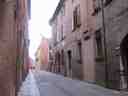 10
10Estense Castle
Buy tour to unlock all 15 tracksTake a look at the row of ancient reddish-brown brick buildings that seem to lean in for a secret meeting above this quiet, narrow street-if you spot the sturdy, fortress-like…Read moreShow less
Take a look at the row of ancient reddish-brown brick buildings that seem to lean in for a secret meeting above this quiet, narrow street-if you spot the sturdy, fortress-like walls with their small barred windows and arched doorway, you’ve found Curtensi Castle peeking out from Ferrara’s medieval heart. Alright, time to crank up our imagination! Picture yourself standing here over a thousand years ago-no cars, no neon lights, just the roar of the Po River nearby and a flutter of soldiers’ capes as they patrol the sturdy walls of the very first Ferrara. This place, the Curtensi Castle-or if you’re feeling fancy, Castello dei Cortesi-began as a Byzantine fortress in the late 500s. It wasn’t just any old stone pile: back then, it guarded the main ferry crossing, standing between the northern invaders and the precious city of Ravenna. Moats circled it, soldiers marched up top, and the whole thing sat just above the floodplain, which is why today you notice the ground under your feet rises ever so slightly above the surrounding streets. Even land in Ferrara knew how to pick the high ground before it was cool. Over time, the city’s destiny changed with the river’s whims and the politics of distant empires. After some dramatic church turf wars (imagine bishops in an epic medieval game of musical chairs), the main religious seat moved right next to this fortress, at the very spot where the river split. Why? Because after poor Bishop Maurelio met his untimely end and Voghenza’s church was destroyed, Ferrara needed a fresh start, and the castrum, as it was known, offered both safety and, well, prime river views. As you stand here, know these alleys, lined with rounded towers and secretive corners, once echoed with the shouts of traders and officers-the military needed food, after all, so suppliers set up shop all along the bank. That’s how Ferrara’s ‘linear city’ grew, a string of neighborhoods hugging the river like pearls on a wire. But Curtensi Castle bore other names too-sometimes Castrum, for its ring of Byzantine towers, or Castello dei Curtensi, for the noble courts who ruled the place. And for extra mystery, there was “Casa del Capitano”, an ancient house nearby just waiting for a new ghost story. Curtensi Castle wasn’t just Ferrara’s muscle; it was the first heartbeat in the city’s long, remarkable story-so as you look around, let your imagination wander up and down these storied bricks and picture the unlikely birthplace of a city. Now, ready for the next adventure?
Open dedicated page →
Frequently asked questions
How do I start the tour?
After purchase, download the AudaTours app and enter your redemption code. The tour will be ready to start immediately - just tap play and follow the GPS-guided route.
Do I need internet during the tour?
No! Download the tour before you start and enjoy it fully offline. Only the chat feature requires internet. We recommend downloading on WiFi to save mobile data.
Is this a guided group tour?
No - this is a self-guided audio tour. You explore independently at your own pace, with audio narration playing through your phone. No tour guide, no group, no schedule.
How long does the tour take?
Most tours take 60–90 minutes to complete, but you control the pace entirely. Pause, skip stops, or take breaks whenever you want.
What if I can't finish the tour today?
No problem! Tours have lifetime access. Pause and resume whenever you like - tomorrow, next week, or next year. Your progress is saved.
What languages are available?
All tours are available in 50+ languages. Select your preferred language when redeeming your code. Note: language cannot be changed after tour generation.
Where do I access the tour after purchase?
Download the free AudaTours app from the App Store or Google Play. Enter your redemption code (sent via email) and the tour will appear in your library, ready to download and start.
If you don't enjoy the tour, we'll refund your purchase. Contact us at [email protected]
Checkout securely with 


