
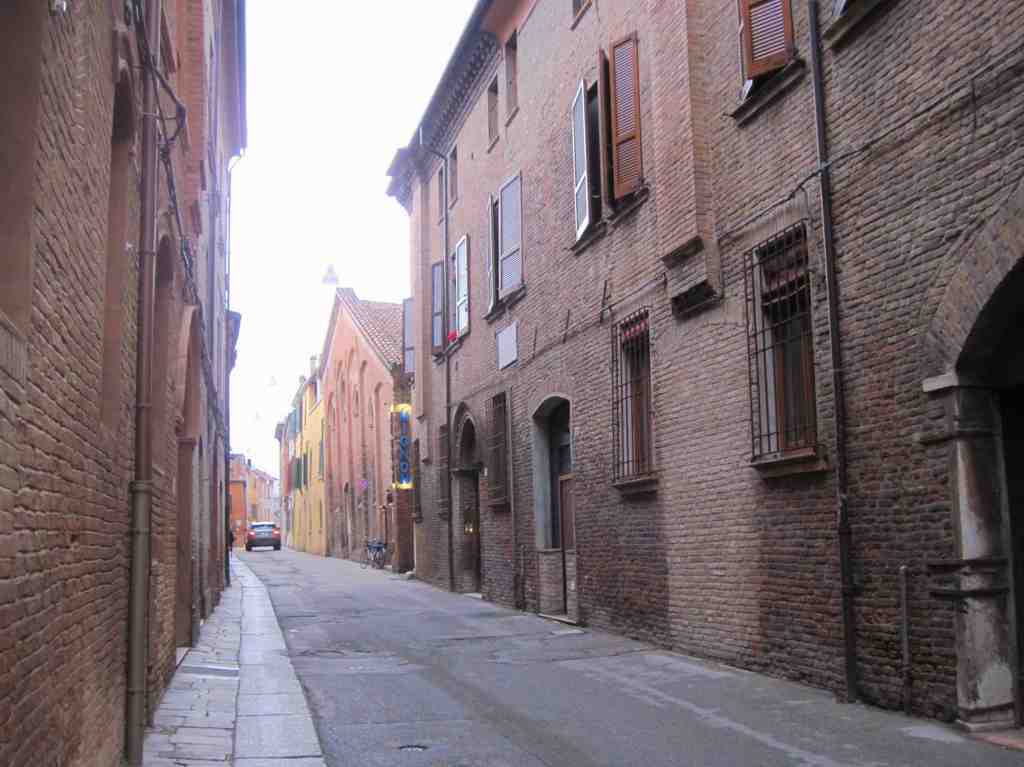
Take a look at the row of ancient reddish-brown brick buildings that seem to lean in for a secret meeting above this quiet, narrow street-if you spot the sturdy, fortress-like walls with their small barred windows and arched doorway, you’ve found Curtensi Castle peeking out from Ferrara’s medieval heart.
Alright, time to crank up our imagination! Picture yourself standing here over a thousand years ago-no cars, no neon lights, just the roar of the Po River nearby and a flutter of soldiers’ capes as they patrol the sturdy walls of the very first Ferrara. This place, the Curtensi Castle-or if you’re feeling fancy, Castello dei Cortesi-began as a Byzantine fortress in the late 500s. It wasn’t just any old stone pile: back then, it guarded the main ferry crossing, standing between the northern invaders and the precious city of Ravenna. Moats circled it, soldiers marched up top, and the whole thing sat just above the floodplain, which is why today you notice the ground under your feet rises ever so slightly above the surrounding streets. Even land in Ferrara knew how to pick the high ground before it was cool.
Over time, the city’s destiny changed with the river’s whims and the politics of distant empires. After some dramatic church turf wars (imagine bishops in an epic medieval game of musical chairs), the main religious seat moved right next to this fortress, at the very spot where the river split. Why? Because after poor Bishop Maurelio met his untimely end and Voghenza’s church was destroyed, Ferrara needed a fresh start, and the castrum, as it was known, offered both safety and, well, prime river views.
As you stand here, know these alleys, lined with rounded towers and secretive corners, once echoed with the shouts of traders and officers-the military needed food, after all, so suppliers set up shop all along the bank. That’s how Ferrara’s ‘linear city’ grew, a string of neighborhoods hugging the river like pearls on a wire.
But Curtensi Castle bore other names too-sometimes Castrum, for its ring of Byzantine towers, or Castello dei Curtensi, for the noble courts who ruled the place. And for extra mystery, there was “Casa del Capitano”, an ancient house nearby just waiting for a new ghost story. Curtensi Castle wasn’t just Ferrara’s muscle; it was the first heartbeat in the city’s long, remarkable story-so as you look around, let your imagination wander up and down these storied bricks and picture the unlikely birthplace of a city. Now, ready for the next adventure?


