
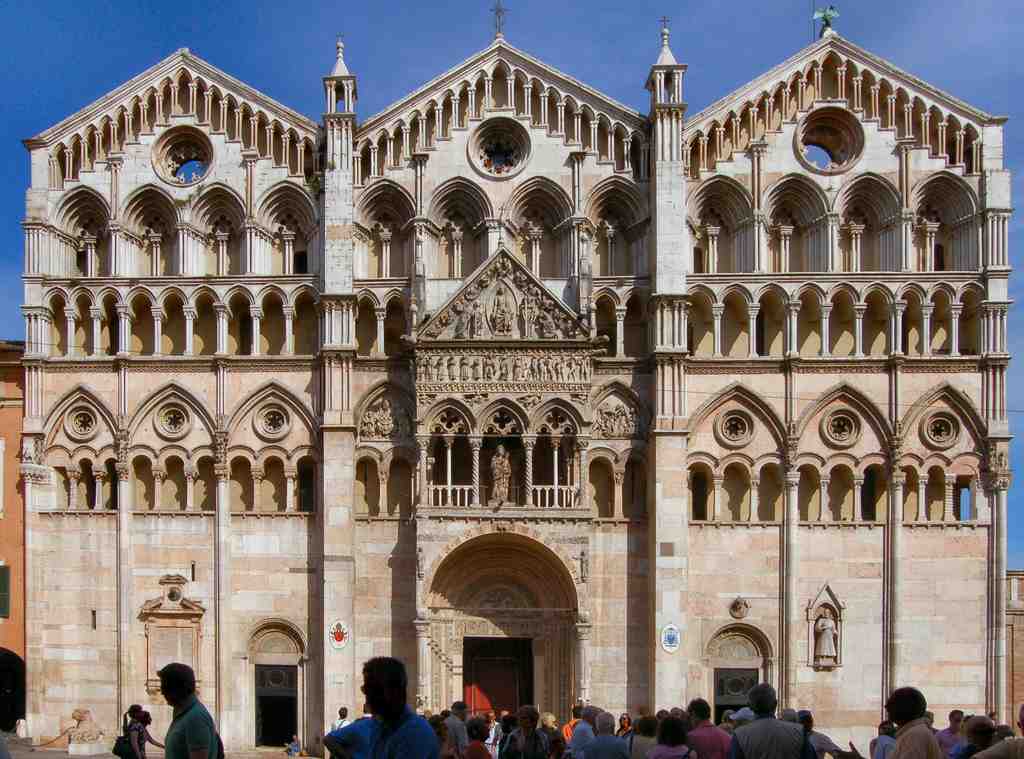
To spot the Cathedral of San Giorgio, look for a grand white marble façade with three towering gables, rows of arched windows, intricate carvings, and a central entrance flanked by statues and a detailed canopy with the Madonna and Child.
Now, take a deep breath, because you’re about to step into Ferrara’s beating heart across the centuries! Picture the scene: it’s the twelfth century, and this very ground in front of you is lively with craftsmen chiseling marble, townsfolk bustling through the ancient piazza delle Erbe, and-of course-the sounds of hammers echoing as the first stones of the Cathedral are laid. The year is 1135, and thanks to the generosity of a local bigwig named Guglielmo I Adelardi (with a little nudge from an anti-pope, believe it or not), Ferrara sets out to build a cathedral as magnificent as any in Italy.
Look up at that façade-see the fierce, proud lions holding up the central portico? And above them, rows upon rows of arches and statues peer down at you, as if the cathedral has its own cheering crowd. Right in the middle, you’ll spot a terracotta Madonna and Child, sculpted in 1427, who seem to keep a protective eye on the town’s hustle and bustle. Now, above that, there’s a sculpted scene with angels, saints, wise old men, and-would you believe-a monster, eagerly gobbling up the souls of the damned in a dramatic Judgment Day. All the while, the archangel Gabriel is up there, weighing souls like he’s at a very dramatic medieval market!
But Ferrara’s cathedral isn’t just about grandeur; it’s also Ferrara’s gathering place for some of its wildest traditions and moments of joy and sorrow. Every spring, the Blessing of the Palios takes place here: four painted banners blessed in anticipation of Ferrara’s Palio races. Picture the excitement of the crowd waiting for the bishop’s blessing-think less “horsepower” and more “historic horsepower!”
Over the centuries, this cathedral has witnessed nearly everything. In 1177, the altar was consecrated and the people probably thought, “At last! No more dusty construction!” But Ferrara never stands still. The style moved from solid Romanesque-look at the lower part of the front, sturdy as a castle-to soaring Gothic up above, with pointed arches and delicate columns like something out of a fairy tale. They even added a tall campanile (that’s a fancy word for bell tower) in the 1400s, designed by Leon Battista Alberti, which still stands a bit lopsided because, well, Ferrara’s got sandy soil and the ground can be a bit unpredictable. Let’s just say it adds to the charm!
Inside, the story keeps unfolding. The air smells of incense and old stone, echoing with music from magnificent pipe organs. Over the years, there have been heroic organists, golden mosaics, and treasures from across Italy. If walls could talk, they’d tell you about ordinations, citywide celebrations, and even the somber echoes of bombings in World War II-when explosions damaged the southern side and the air was filled with thunderous crashes and breaking stone.
Ah! And buried within is Pope Urban III, who picked this as his final resting place-so if you suddenly feel very important standing here, now you know why. The cathedral has survived earthquakes, bombings, and centuries of eager restoration. In fact, it was only recently reopened in 2024 after a big restoration due to earthquake damage-so you’re among the first to see the grand new chapter in its story.
So go on, take your time and soak it all in. The Cathedral of San Giorgio isn’t just Ferrara’s most important church-it’s like a stone scrapbook of the city itself, packed with drama, history, and a dash of divine mystery. Every sculpture and whisper of sound carries centuries of secrets... and maybe, if you listen carefully, you’ll hear the echo of medieval chants or the distant laughter of a centuries-old festival.


