
Athens Audio Tour: Gods, Legends, and the Echoes of Empire
Sun-bleached marble hides secrets in every crack of ancient Athens. Beneath the columns and statues lies a world of rival gods, political upheavals, and unsolved mysteries. This self-guided audio tour puts you in the heart of it all—uncovering hidden stories as you wander from the Erechtheion’s tangled legends to the monumental echoes of the Parthenon and the bustling melting pot of the Ancient Agora. Forget surface facts; discover what most travelers miss. Who sealed a deadly pact on these stones, changing Athens’ fate forever? Why did worshippers whisper forbidden prayers beneath the Parthenon’s sacred roof? Which single olive tree once sparked a bitter rivalry that shaped a city? Let every step transport you deeper into intrigue—past ruins, through reborn markets, along storied avenues. History surges all around, raw and unforgettable. Ready to unlock Athens hidden beneath the sun? Start the journey now.
Tour preview
About this tour
- scheduleDuration 100–120 minsGo at your own pace
- straighten4.1 km walking routeFollow the guided path
- location_on
- wifi_offWorks offlineDownload once, use anywhere
- all_inclusiveLifetime accessReplay anytime, forever
- location_onStarts at Sanctuary of Aphrodite Urania
Stops on this tour
lock_open 3 free previews · 11 unlock with purchase
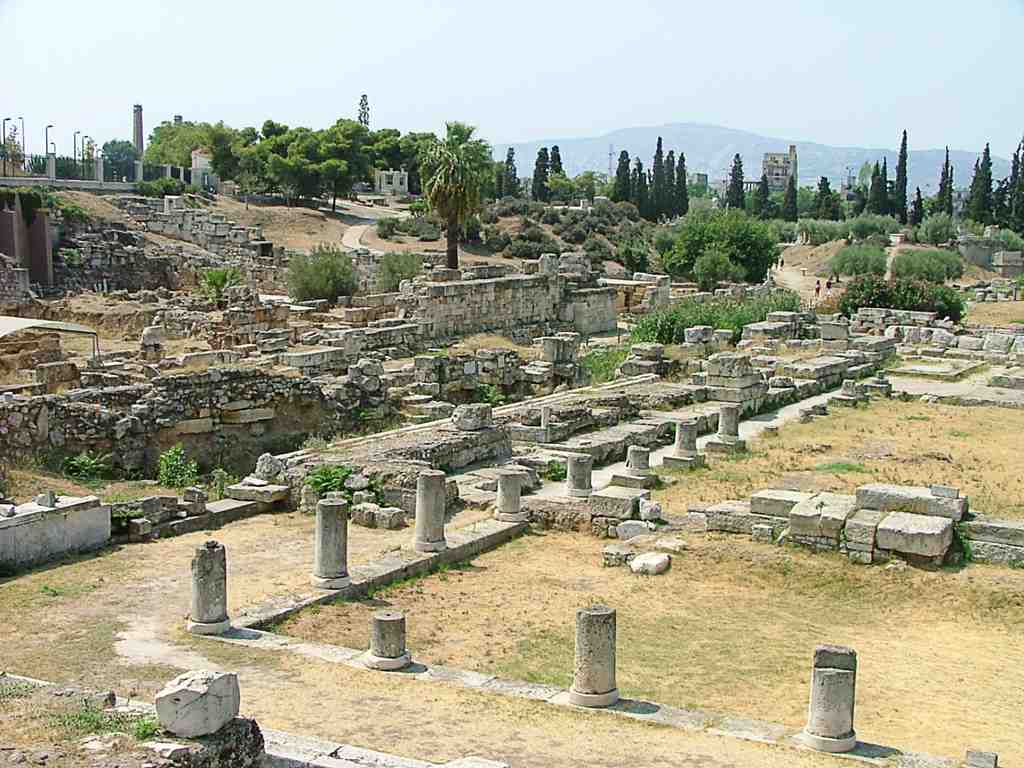
In front of you, you'll see a vast open space dotted with rows of ancient stone columns and low ruined walls, stretching out beneath a scattering of trees-just look straight ahead…Read moreShow less
In front of you, you'll see a vast open space dotted with rows of ancient stone columns and low ruined walls, stretching out beneath a scattering of trees-just look straight ahead and a bit to your left, and you can’t miss the sprawling remains of the Ancient Agora of Athens! Welcome to the beating heart of ancient Athens! Take a moment to imagine yourself some 2,500 years ago. Instead of tourists and scattered stones, you’d be caught in a bustling marketplace packed with merchants peddling everything from figs to perfume, philosophers debating under shady colonnades, and maybe even a few restless goats complaining about the price of olives. All around you, the air would be filled with the buzz of gossip, arguments, and laughter-the very soul of Athenian democracy. The Agora was more than just a market. This was Athens' main stage for public life. You’d find shoppers and senators, slaves and sculptors, all crossing paths between stalls and temples. Some of the most famous buildings in the ancient city once towered here. Over to the north stood the Stoa Poikile, the “Painted Porch,” lined with vibrant artwork and popular for social gatherings-a bit like the ancient version of your favorite café, but with less coffee and more philosophy. Nearby was the Royal Stoa, where lawmakers and magistrates handled the city’s most pressing problems (and probably argued about whose sandals were fancier). On the east side stood the mighty Stoa of Attalos, later rebuilt to house the Agora Museum, now filled with treasures that tell the story of Athens-everything from statues and coins to ancient pottery and even clay whistles that would drive any pet dog wild. There was a library filled with more than just books-the Library of Pantainos had rooms used for all sorts of mysterious purposes-maybe even a secret meeting or two. The Mint clinked out shiny bronze coins, though rumor has it it never got to stamp the city’s famous silver drachmas. The Agora wasn’t just for shopping or laws, either. It pulsed with religious festivals where women-usually kept busy at home-stepped out to lead rituals, offer gifts at shrines, and join the city’s great celebrations. These were the moments when everyone, whatever their class, came together beneath the Attic sky, laughter and music echoing off marble columns. You might even spot an ancient “notice board” at the Monument of the Eponymous Heroes, covered in public announcements and military call-ups-basically, the world's oldest group chat. The Agora also hummed with the clink of chisels and the dust of marble as generations of skilled sculptors set up workshops here, some making statues so stunning that even the snootiest gods would approve. Some of history’s greatest artists, like Phidias, Praxiteles, and Euphranor, shaped marble masterpieces right where you’re standing. Their creations-statues of gods, heroes, and even kitchen utensils-were as much a part of Athenian daily life as sandals or sunburn. Even after wars and time left their mark, the Agora refused to fade into silence. From royal processionals to Roman emperors, from bustling markets to the planting of oak and laurel by queens and kings in the 1950s, the spirit of this place endures. Today, the museum in the Stoa of Attalos stands as a living archive, sharing the Agora’s stories from the glory of Athens to the tiniest coin dropped on ancient paving stones. So, as you walk these ruins, pause and listen-can you hear the echoes? This was Athens’ main stage, where democracy, drama, and daily life unfolded under the Mediterranean sun. It’s no wonder everyone wanted to leave their mark here-even if some just left fig pits and shopping lists. Ready for our next adventure? Ready to delve deeper into the buildings and structures of the classical agora, gender roles in the athenian agora or the marble-workers in the athenian agora? Join me in the chat section for an enriching discussion.
Open dedicated page →
Show 11 more stopsShow fewer stopsexpand_moreexpand_less
Thousands of years ago, this hill wasn’t just a big hunk of stone; it was the supreme court of Athens. The name itself is wrapped in myth: “Ares” comes from the god of war, and…Read moreShow less
Thousands of years ago, this hill wasn’t just a big hunk of stone; it was the supreme court of Athens. The name itself is wrapped in myth: “Ares” comes from the god of war, and “pagos” means rock or hill. According to legend, Ares was actually put on trial right here by the Olympian gods! Talk about feeling judged. His crime? The small matter of killing Poseidon’s son, Alirrothios. Not exactly a family-friendly feud, so even the gods needed a proper spot for courtroom drama. But wait, there’s more! Some say the name comes from the “Erinyes”-those terrifying goddesses of vengeance. Can you imagine lawyers channeling their inner fury? Gives a whole new meaning to ‘courtroom drama.’ Fast forward to 1834: the modern Areopagus was born as Greece’s highest court. These days, the top judges, called Areopagites, don’t make people climb this hill for justice-they give final decisions on Greece’s most important cases in a grand building on Alexandras Avenue. But the spirit of order and unity in law lives on. Even the president of Greece turns to the Areopagus in times of government crisis. If nobody can form a government, it’s sometimes the head of the Areopagus who is trusted to help form one that everyone can agree on. Talk about handling big responsibilities! So, as you gaze at these ancient stones, imagine heated debates, godly glares, and the feeling that history never really leaves a place-it just whispers a little quieter. And be glad you’re not on trial; it’s a lot less stressful to just visit!
Open dedicated page →To spot the Erechtheion, look for a strikingly elegant ancient temple with slender Ionic columns and a famous porch supported by six carved maidens, the Caryatids, standing…Read moreShow less
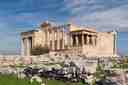
To spot the Erechtheion, look for a strikingly elegant ancient temple with slender Ionic columns and a famous porch supported by six carved maidens, the Caryatids, standing proudly to your left as you face the north side of the Acropolis. Alright, take in the view! You’re standing before one of the Acropolis’s most beautiful and mysterious landmarks-the Erechtheion. Don’t worry about trying to pronounce it perfectly. Even the goddess Athena had trouble getting the hang of these ancient names. This temple might look like it’s got one too many porches and not enough symmetry, but every twist and turn tells a story that’s as tangled as an ancient Greek drama. The air here is charged with centuries of ceremony, rivalry, and maybe just a little sibling rivalry between the gods themselves. Let’s travel back to the age when marble was still being hauled up the slopes of the Acropolis and skilled artisans tapped their chisels, carving out legendary history. It’s the late 5th century BC. Imagine workers bustling around, plans flying between architects whose names we still debate: Philokles? Archilochos? Maybe even Mnesikles or Kallikrates? The city’s leader, Pericles, is guiding Athens through a rare truce in the Peloponnesian War-and what do Athenians build in their downtime? More temples! But the Erechtheion wasn’t just for showing off; it was a house for two old rivals: Athena, the goddess of wisdom, and Poseidon-Erechtheus, an ancient king whose legend was as deep as the city’s own roots. As you look at the unusual design, think of how this temple had to wind its way around sacred spots and rocky outcrops-homes to age-old altars, snake pits (yes, real, wriggling snakes), the tomb of the mythical King Kekrops, and the world’s most legendary olive tree, planted (according to myth) by Athena herself after a… let’s call it a “friendly contest” with Poseidon to decide who would be Athens’s patron. No wonder the Erechtheion isn’t a standard rectangle; it had to make room for a whole mythical menagerie. One of the standout features right in front of you is the Porch of the Maidens or Caryatids, supporting the roof with all the poise of ancient supermodels-except these ladies weren’t just decorative. They may have been inspired by young priestesses or even served as stand-ins for the original “korai” statues destroyed when Persia attacked the city. Each one has her own subtle style, almost as if the sculptor let each maiden have her say (after all, it wouldn’t be Athens without a bit of lively debate). By the way, one of these Caryatids took a quick holiday to the British Museum and never came back. Family reunions have been a little awkward ever since. Unlike other temples with clear lines and a single focus, the Erechtheion was more like a holy attic stuffed with relics and legends. Inside, people worshipped Athena, Poseidon, Erechtheus, Hephaistos, Boutes, and celebrated a collection of victorious war spoils, sacred altars, mysterious wells, and even Zeus’s own altar. It’s the Swiss army knife of ancient temples-full of surprises, from mysterious trident marks, said to be left by Poseidon during his face-off with Athena, to ancient lamps burning day and night in the hands of temple guards. But the strange shape of the Erechtheion helped preserve memories of Athens from the days of the Bronze Age, through fires and invasions, and a series of wild renovations. It’s been a pagan temple, a Christian basilica, a bishop’s palace, even supposedly the residence of the Ottoman guard’s harem (though that claim seems to have more gossip than evidence). As picturesque as it looks today, the Erechtheion has spent nearly as much time under repair as it has standing tall, from cannonballs that knocked down its porches during Greek wars of independence to restoration teams piecing it back together like the world’s trickiest jigsaw puzzle. So, as you stand before those graceful columns and regal maidens, know you’re witnessing the result of centuries worth of creativity, resilience, and maybe just a dash of Athens’s famous competitive spirit. Not bad for a temple that’s defied expectation-and gravity-for over 2,400 years!
Open dedicated page →To spot the Temple of Athena Nike, look for a small, elegant marble building with four slender Ionic columns at each end, perched on a dramatic bastion to your right as you enter…Read moreShow less
To spot the Temple of Athena Nike, look for a small, elegant marble building with four slender Ionic columns at each end, perched on a dramatic bastion to your right as you enter the Acropolis, shining in the sunlight with its creamy Pentelic marble. Imagine the year is 420 BC-the air is buzzing with Greek voices, and you’re standing at the very edge of Athens’ sacred rock. At your feet, the city sprawls towards the shimmering sea, and as you gaze upward, this compact but magnificent temple greets you like a jewel on the Acropolis’ crown. The Temple of Athena Nike isn’t a giant, but what it lacks in height, it makes up for in pure style-built entirely from brilliant white marble, glowing under the Athenian sun, with rows of perfectly carved columns and delicate sculpted friezes wrapping around the top. Every detail was meant to remind the Athenians of victory-something they really needed with the long and exhausting Peloponnesian War still raging against Sparta. Back then, crowds of anxious citizens would have hurried up these steps, carrying their worries and hopes just like you carry your phone. Sometimes a gust of wind would set the stone parapet humming, its walls covered with images of Nikai-goddesses of victory-parading and sacrificing in honor of Athena. To everyone who passed by, these were literally the “wings” of hope, a place open to the sky and visible to all, perfect for summoning the power of divine triumph. There was even a statue of Nike-usually famous for her wings-standing here without them! The story went that Athenians kept her grounded, so victory could never leave their city. Talk about not letting success go to your head! Now, get ready for some ancient drama. The earliest worship here actually started back in the 6th century BC, when a statue showed Athena Nike sitting, holding a pomegranate and a helmet. But then came the big shake-up: during the Persian invasion in 480 BC, the sanctuary was leveled, and nearly all hope was lost. Yet Athenians are nothing if not stubborn-they rebuilt from the ruins, finally finishing this temple during a rare lull in wartime, cleverly reusing whatever money, marble, and patience they could scrape together. You almost have to admire their budgeting skills. For centuries, a powerful priestess-chosen by lottery, no less-watched over the sacred site. But fate is a cruel architect: when the Ottoman Empire took Athens in 1456, the temple’s stones got yanked apart to help build new city defenses. For a long time, the bastion above was stripped bare, left as silent as a dropped helmet. Fast forward to 1834-after Greece's war for independence-with great excitement, archaeologists dug up the scattered temple stones and, in a feat of historical Tetris, put the temple back together. Since then, it’s survived endless repairs and the kind of “makeovers” any marble structure dreads. Peer closely, and you’ll see evidence of its grand decorations-look up and you’ll notice copies of friezes (the real ones are now safe in the museum nearby) showing mythic battles, from Greek horsemen charging into glory to gods like Athena, Zeus, and Poseidon gathering for divine strategy meetings. Some of the most impressive marble panels once showed Nike herself, either fixing or-get this-removing her sandal! Art historians still argue about why, but maybe victory needed to get comfortable. Even the roof tells a story-along the top, carved lion heads once stretched out in a regal row. No one can quite agree what statues stood above the temple, but wild guesses include a bronze tripod, a flying goddess, or even the fearsome Chimera. That’s a real “myth-tery” for another day! Now, as you stand here, the temple carries every scar, legend, and prayer from thousands of years. The next time you remove your shoes, just remember: you’re taking part in a tradition that once marked the threshold of victory and hope-right here in the shadow of Athena Nike. For further insights on the architecture, friezes and parapets or the cornice and cyma, feel free to navigate to the chat section below and inquire.
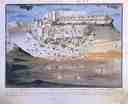
Open dedicated page →To spot the scene of the Fall of the Acropolis, look ahead for a dramatic piece of artwork showing the imposing rocky hill of the Acropolis crowned with ancient temples,…Read moreShow less
To spot the scene of the Fall of the Acropolis, look ahead for a dramatic piece of artwork showing the imposing rocky hill of the Acropolis crowned with ancient temples, surrounded by high defensive walls and tiny figures scrambling all around-almost as if you’ve stumbled right into the middle of a battlefield from centuries past. Now, let’s step straight into the shoes-well, the sandals-of those who stood here in the summer of 1822. Imagine a hot, dusty June morning. The city of Athens sprawls beneath you, quiet but charged with an energy you can almost feel vibrating in the stone. For 366 years, this mighty fortress has sat under Turkish control, its white marble glowing under countless sunrises, flags fluttering where once the Parthenon sparkled under Athenian glory. But on this day, the echoes of liberation are about to ring louder than any anthem. Let’s rewind just a little, to 1821. Athens is under Ottoman rule, and the Acropolis is held tightly by a small Turkish garrison. It all changes when Hurşit Pasha, the Ottoman commander, summons his lieutenant Omer Vrioni away from Athens, dragging most of the Turkish army with him. The town itself is almost abandoned-just enough defenders to close the gates but barely enough to keep guard. Greek revolutionaries, scattered among the nearby islands and mountains, smell opportunity in the dry summer breeze. They surge back, retaking the city streets, and set their sights straight up-toward the hill where the Acropolis stands. Just imagine them, filling the narrow lanes, eyeing that ancient fortress every minute, waiting for their moment. Then, the real siege begins. In November of 1821, Greek fighters try a daring assault, but the fortress holds strong. So, what do you do when you can’t storm a castle? You surround it, of course! And that’s just what the Greeks do, wrapping the Acropolis in a tightening ring, cutting off the wells, blockading every gate. The Turks are trapped, and the noose grows tighter by the day. Winter sets in. Water is scarce. By spring, reinforcements arrive-not just Greeks, but friends from across Europe. Among them: Philhellenes like Olivier Voutier, who helps roll up the cannons to the rocky Pnyx nearby, aiming them straight at these ancient stones. And if you think being on the receiving end of cannonballs was bad, just wait until you hear about the next move: a secret tunnel dug beneath the mighty Third Gate. Constantine Chormovas, an expert in undermining, spends weeks in the darkness, scraping earth and laying explosives. The Greeks offer the Turks a chance to surrender-no dice. Then, on a crackling April day, the tunnel is filled with gunpowder and-kaboom! The gate erupts in fire and stone. The Turks rush to defend the breach, Greeks charge forward, and a brutal clash unfolds, echoing off those marble columns. Even the Philhellenes distinguish themselves with wild courage, fighting shoulder to shoulder for freedom. But the siege grows even harsher. Starvation and thirst spread misery among the Turkish defenders, isolated now in the heart of their beloved Acropolis. All their wells are poisoned, and disease prowls the narrow courtyards, while women and children huddle in fear. By June, desperation outweighs pride. Through the efforts of French and Austrian consuls, negotiations begin. On June 9th, a treaty is signed. The next morning, in a procession led by the city’s archbishop, the Greeks enter the Acropolis at last, reclaiming its stones for the first time since 1456. The Turkish commandant hands over the keys-imagine the thrill, keys that unlock centuries-old doors, passed to the hands of an Athenian bishop who then gives them to Ioannis Vlachos, the Greek military overseer. The Greek flag unfurls over the old walls, while cannons thunder in celebration. But not everything goes smoothly-during the joyous salute, Panagiotis Ktenas, the new Greek commandant, accidentally sets off a cannon, tumbles from the wall, and meets his end in tragic (and slightly slapstick) fashion. His brother, Spyridon, quickly takes his place as the city regroups. Despite the losses-about 200 Greeks lost their lives-the capture of the Acropolis marks the true rebirth of Athens. Those who want to leave are sent safely away; others, Turkish families once so isolated, now choose to stay, calling this rock home, just as Athenians always have. The Acropolis stands tall once again, a symbol of freedom echoing across history, from the marbled ruins at your feet to every stone beneath your shoes. And all this, right where you stand, beneath the warm, relentless Athenian sky. Now, who said history was boring? Fascinated by the the liberation of athens - the beginning of the siege of the acropolis, the evolution of the siege in 1822 or the the fall of the acropolis? Let's chat about it
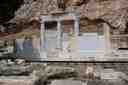
Open dedicated page →To spot the Asclepieion of Athens, look in front of you for a set of white marble ruins tucked right up against the rocky side of the Acropolis hill, featuring two upright columns…Read moreShow less
To spot the Asclepieion of Athens, look in front of you for a set of white marble ruins tucked right up against the rocky side of the Acropolis hill, featuring two upright columns and the remains of ancient walls and blocks. Alright, picture yourself standing here nearly 2,500 years ago-though hopefully with fewer goats and more bathrooms. The air is alive with whispers and shuffling feet, as sick and hopeful Athenians climb this very slope in search of a miracle. Along the southern cliff of the Acropolis, they've built a sanctuary for Asclepius, the healing god, and his helpful daughter Hygieia. People believed these two had the best bedside manner in the ancient Greek world-that, and the ability to cure illnesses that even the best doctors couldn't touch. It all began during the chaos of the Peloponnesian War, when the city was plagued not just by invaders, but by a devastating sickness. Imagine the tension: people desperate for relief-so desperate that a man named Telemachos from Acharnae decided to bring the god of healing straight to Athens from Epidaurus. He founded this Asclepieion, and if ancient records serve us, he even commemorated the event on a marble pillar, the Telemachos Monument. That pillar told an epic story: Asclepius himself arriving, greeted by Telemachos, with the promise of healing for all. Walking through these remains, you'd spot the Doric stoa, once a two-story gallery with 17 chunky Doric columns. In its heyday, it was Athens’ go-to overnight hospital-yes, people slept here hoping to meet Asclepius in their dreams, who would then offer magical cures. It’s the ultimate ‘bedside visit’! The room at the eastern end hid a sacred spring, cut into the rock; its waters were thought to hold otherworldly healing powers. At the western end, a mysterious deep pit, accessed from the second story, waits like something out of a legend. Some say heroes were celebrated here, with sacrifices and whispered prayers by torchlight. On the other side, there was the Ionic stoa, a more elegant space where priests and their guests could dine and relax-sort of a "hospital cafeteria," but with a marble floor and wine instead of Jell-O. As centuries rolled forward, the site shifted with the times: the Romans gave the gateway a facelift, while Christian worship, in its turn, transformed the sanctuary into a basilica. Even later, tiny Byzantine chapels appeared, layering new hopes and prayers onto old stones. And if you’re curious about the priests-plenty of drama there too! At first, they were chosen by lottery every year, but the Romans made it a lifetime gig. Imagine all the rivalry over who got to wear the best healer’s toga. Today, as birds chirp and the sun bakes the marble, just remember: you’re standing on the very ground where Athens once hoped, healed, and dreamed.
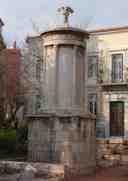
Open dedicated page →To spot the Lysicrates Monument, look just ahead for a small, round, marble building perched on a tall stone base, decorated with slender columns and carvings, standing out right…Read moreShow less
To spot the Lysicrates Monument, look just ahead for a small, round, marble building perched on a tall stone base, decorated with slender columns and carvings, standing out right in the little square among colorful houses. Picture yourself here over two thousand years ago, maybe dodging the odd donkey or a chorus of bards, and suddenly you come upon this very spot-the Monument of Lysicrates. No, it’s not a giant ancient lamp post or the world’s fanciest birdhouse! This is the prize podium of ancient Athens, built in 334 BC by a man named Lysicrates. Imagine him beaming with pride, pointing at the monument and saying, “See that? That’s MY trophy stand!” The cylindrical marble top sits on a muscular stone base, surrounded by six elegant half-columns in the Corinthian style. And way back when, it would have glittered in the sun with a shiny bronze tripod atop-a prize for sponsoring a winning theatrical chorus performance. In ancient Athens, being a sponsor-or choregos-wasn’t just about bragging rights; it was about making drama, song, and festival magic happen. Wealthy citizens like Lysicrates footed the bill for costumes, rehearsals, and chorus members in big competitions. If their team won... boom! First prize was the magnificent bronze tripod, meant to sit where everyone could admire it. But how to show it off so the neighbors would talk? With a monument like this in the Tripodon Street-famous even then for monuments to drama loving philanthropists. The tripods were sometimes perched on tall stone bases, sometimes on column tops, and occasionally decked out in their own fancy little temples, just like this. Stand close and you’ll see the frieze circling the top-can you picture the story it tells? It shows Dionysus, god of theatre and wine, getting the better of a group of unlucky Tyrrhenian pirates. Let’s just say things didn’t end well for those pirates; according to legend, Dionysus turned them into dolphins as punishment. Fast forward to the 17th century-change is in the air, and the monument gets a whole new role! In 1669, French Capuchin monks bought it and wrapped their monastery around it, turning it into a reading room and a library. One monk, Brother Francis, even planted the very first tomato plants in Greece in the monastery gardens right next to you. Suddenly, the monument that once rang with theatrical triumphs is now echoing the quiet rustle of parchment and the murmur of prayers. During the Greek Revolution, the monastery was burned, but the monument itself stubbornly endured, looking down at revolution and fire, refusing to budge. Over the years, the monument’s fame spread like a good bit of Greek gossip. British architects published its likeness, and suddenly “mini-Lysicrates Monuments” began popping up in all sorts of unexpected places: Edinburgh gardens, fancy churches in England, Manhattan, Sydney’s botanic gardens, and even atop a Philadelphia market building. It was the must-have ancient look for anyone who wanted to seem seriously sophisticated. Lord Byron, the celebrity poet, even slept in the attached monastery during his travels-so you’re standing in a place that mingles stories of poetry, drama, faith, botany, and revolution. Now, the bronze tripod that once sparkled overhead is long gone, and instead you see only the decorative marble. But the echo of ancient music, the laughter of victorious choruses, the fire of revolution, and even a whisper of tomato leaves still seem to swirl around this tiny, elegant round temple. Not bad for a neighborhood trophy case, right? And as you stand here, you’re joining a long list of curious visitors-some hoping for glory, others for quiet, some for drama, but all drawn to the story that refuses to fade. You might have come here for a monument, but you’ve found a time machine.
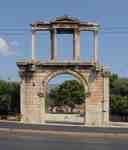
Open dedicated page →Standing before you is the Arch of Hadrian: look for a tall, elegant marble gateway with a single grand arch topped by columns and a small triangular pediment, rising just beside…Read moreShow less
Standing before you is the Arch of Hadrian: look for a tall, elegant marble gateway with a single grand arch topped by columns and a small triangular pediment, rising just beside the busy avenue. Picture yourself in Athens, 1,900 years ago. There’s excitement in the air as locals line the road where you’re standing, eager to lay eyes on the Roman Emperor Hadrian-a man so fond of Athens, he practically tried to outdo the ancient Greeks at their own game! Right where cars now zip by, imagine a bustling parade, the sound of sandals and trumpets, and the glint of sunlight bouncing off fresh marble. Hadrian’s Arch wasn’t just any old entrance; it was the marble VIP gateway to a sparkling new Athens. You’re looking at 18 meters of Pentelic marble, fresh from the same quarries as the Parthenon-though, rumor has it, the arch got a modest batch with a few extra “character marks.” While many Roman triumphal arches were built as boisterous billboards for emperor’s egos, Hadrian’s Gate took on a more refined look: instead of statues of galloping horses and roaring emperors on top, this one stands gracefully simple, its arched opening crowned with Corinthian columns and topped by an airy upper story that feels more like a balcony awaiting a heroic curtain call than a platform for heavy bronzes. Whatever the architectural debate, this much is clear: in 131 AD, Hadrian got the ultimate thank-you gift from the people of Athens. Or maybe from the Panhellenes, a super club made of all Greek cities (the ancient world’s version of Eurovision, except with less singing and more marble). Whoever paid the builder’s bill, they carved not one but two mysterious inscriptions on the arch. Facing the old city and the Acropolis, the words boasted, “This is Athens, the ancient city of Theseus”-a big tribute to the city’s mythical founder. But face the other direction, toward the Temple of Olympian Zeus, and the story flips: “This is the city of Hadrian, not of Theseus.” Talk about splitting the vote! For ages, scholars imagined the arch separated old-school Greek Athens and Hadrian’s brand-new Roman district-a kind of ancient “you are now leaving the historical district” sign. But after some determined digging, archaeologists found the ancient wall was actually a bit further away, so instead of splitting the city, the arch tied it all together, honoring Athens as a place reborn by Hadrian’s hand. Listen to the traffic rolling by now and think about the thousands of years this marble has watched people come and go. The marble’s a bit worn and discolored these days-centuries of weather and pollution can do that-but the arch survives almost at its full, original height. The columns on the lower part have gone missing, possibly out sightseeing, but the structure towers just as it did when Queen Amalia supposedly ordered a cosmetic makeover, having stone screens removed for a clearer view down Amalias Avenue. Now, here’s one more twist: we don’t know for certain if grand statues of Hadrian or Theseus once perched on the arch, waving to the crowds like ancient celebrities, or if there were ever painted reliefs covering the central upper niche. There just isn’t enough evidence left-though that’s probably for the best, or else art historians would still be up there with measuring tapes arguing about it. So, as you stand in Hadrian’s shadow and picture the Roman emperor arriving in a swirl of togas and cheers, take a moment to glance through the archway-one side for mythical Theseus, the other for ambitious Hadrian. Though empires rise and fall, it’s these rare, beautiful monuments that keep the great stories alive, even if they do get caught in a bit of city traffic along the way.
Open dedicated page →

Frequently asked questions
How do I start the tour?
After purchase, download the AudaTours app and enter your redemption code. The tour will be ready to start immediately - just tap play and follow the GPS-guided route.
Do I need internet during the tour?
No! Download the tour before you start and enjoy it fully offline. Only the chat feature requires internet. We recommend downloading on WiFi to save mobile data.
Is this a guided group tour?
No - this is a self-guided audio tour. You explore independently at your own pace, with audio narration playing through your phone. No tour guide, no group, no schedule.
How long does the tour take?
Most tours take 60–90 minutes to complete, but you control the pace entirely. Pause, skip stops, or take breaks whenever you want.
What if I can't finish the tour today?
No problem! Tours have lifetime access. Pause and resume whenever you like - tomorrow, next week, or next year. Your progress is saved.
What languages are available?
All tours are available in 50+ languages. Select your preferred language when redeeming your code. Note: language cannot be changed after tour generation.
Where do I access the tour after purchase?
Download the free AudaTours app from the App Store or Google Play. Enter your redemption code (sent via email) and the tour will appear in your library, ready to download and start.
If you don't enjoy the tour, we'll refund your purchase. Contact us at [email protected]
Checkout securely with 




