
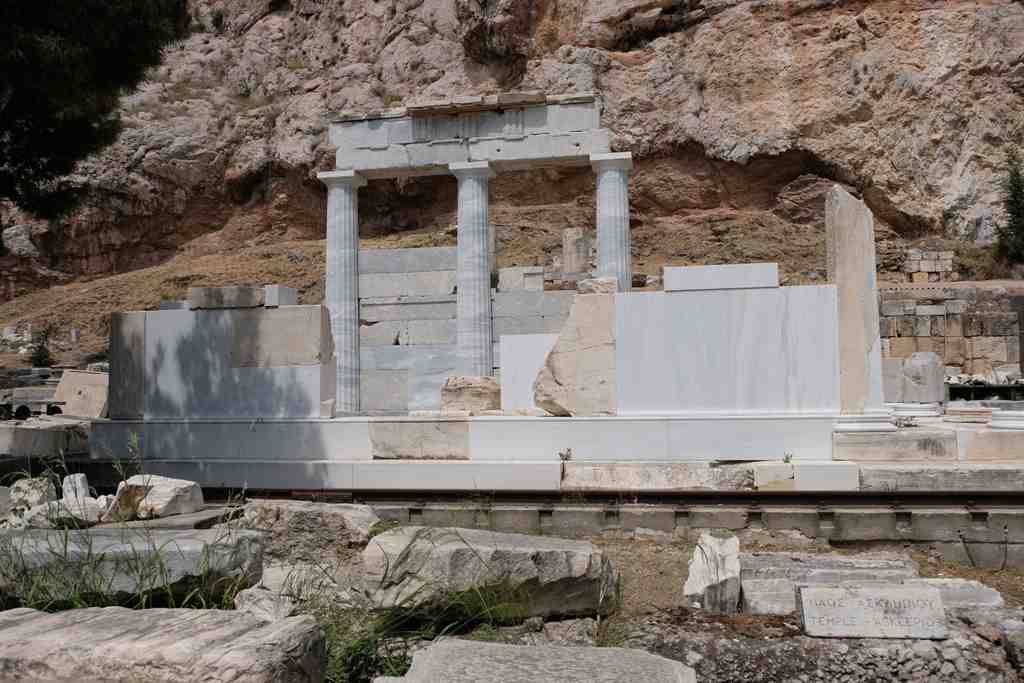
To spot the Asclepieion of Athens, look in front of you for a set of white marble ruins tucked right up against the rocky side of the Acropolis hill, featuring two upright columns and the remains of ancient walls and blocks.
Alright, picture yourself standing here nearly 2,500 years ago-though hopefully with fewer goats and more bathrooms. The air is alive with whispers and shuffling feet, as sick and hopeful Athenians climb this very slope in search of a miracle. Along the southern cliff of the Acropolis, they've built a sanctuary for Asclepius, the healing god, and his helpful daughter Hygieia. People believed these two had the best bedside manner in the ancient Greek world-that, and the ability to cure illnesses that even the best doctors couldn't touch.
It all began during the chaos of the Peloponnesian War, when the city was plagued not just by invaders, but by a devastating sickness. Imagine the tension: people desperate for relief-so desperate that a man named Telemachos from Acharnae decided to bring the god of healing straight to Athens from Epidaurus. He founded this Asclepieion, and if ancient records serve us, he even commemorated the event on a marble pillar, the Telemachos Monument. That pillar told an epic story: Asclepius himself arriving, greeted by Telemachos, with the promise of healing for all.
Walking through these remains, you'd spot the Doric stoa, once a two-story gallery with 17 chunky Doric columns. In its heyday, it was Athens’ go-to overnight hospital-yes, people slept here hoping to meet Asclepius in their dreams, who would then offer magical cures. It’s the ultimate ‘bedside visit’! The room at the eastern end hid a sacred spring, cut into the rock; its waters were thought to hold otherworldly healing powers. At the western end, a mysterious deep pit, accessed from the second story, waits like something out of a legend. Some say heroes were celebrated here, with sacrifices and whispered prayers by torchlight.
On the other side, there was the Ionic stoa, a more elegant space where priests and their guests could dine and relax-sort of a "hospital cafeteria," but with a marble floor and wine instead of Jell-O. As centuries rolled forward, the site shifted with the times: the Romans gave the gateway a facelift, while Christian worship, in its turn, transformed the sanctuary into a basilica. Even later, tiny Byzantine chapels appeared, layering new hopes and prayers onto old stones.
And if you’re curious about the priests-plenty of drama there too! At first, they were chosen by lottery every year, but the Romans made it a lifetime gig. Imagine all the rivalry over who got to wear the best healer’s toga. Today, as birds chirp and the sun bakes the marble, just remember: you’re standing on the very ground where Athens once hoped, healed, and dreamed.




