
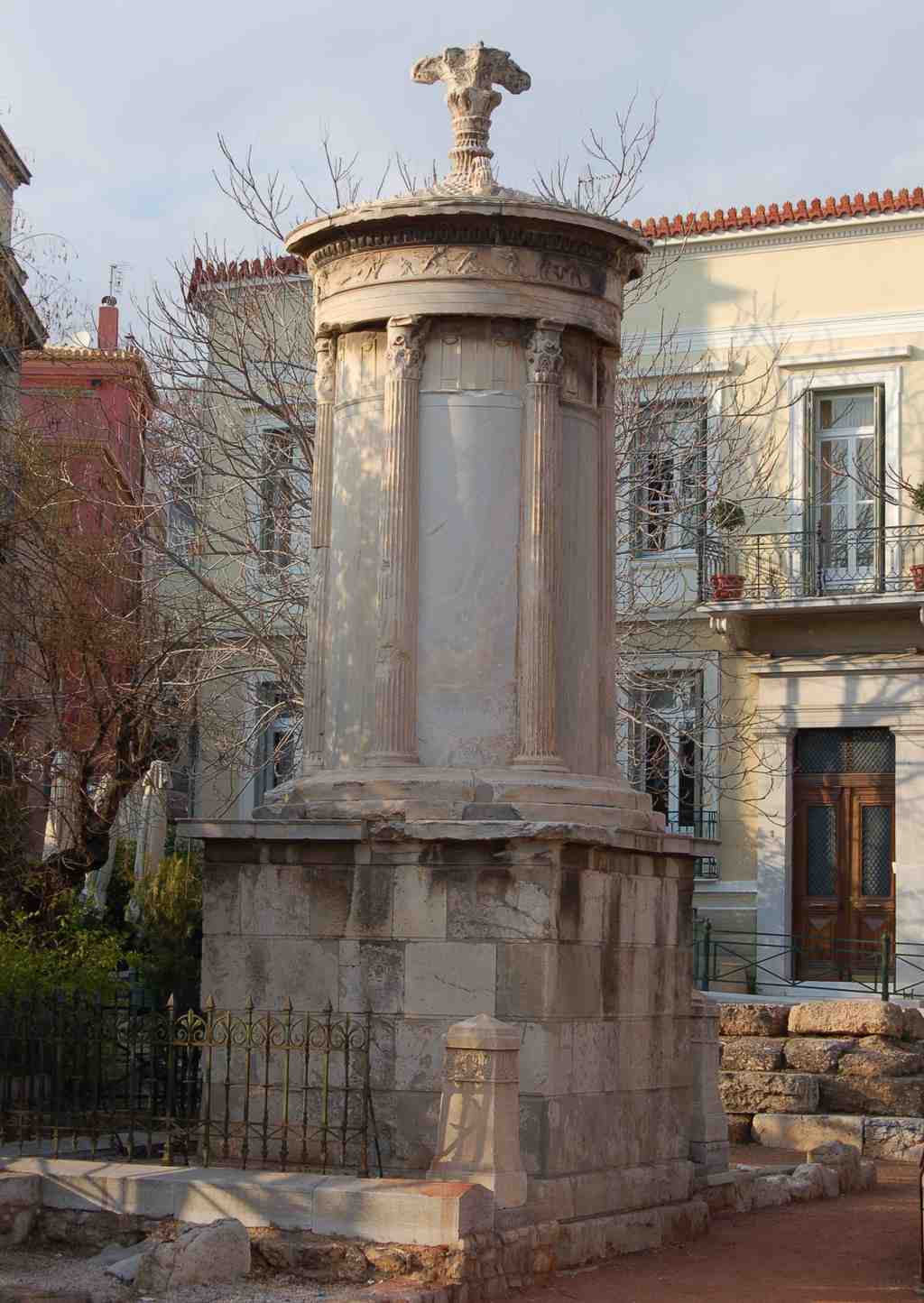
To spot the Lysicrates Monument, look just ahead for a small, round, marble building perched on a tall stone base, decorated with slender columns and carvings, standing out right in the little square among colorful houses.
Picture yourself here over two thousand years ago, maybe dodging the odd donkey or a chorus of bards, and suddenly you come upon this very spot-the Monument of Lysicrates. No, it’s not a giant ancient lamp post or the world’s fanciest birdhouse! This is the prize podium of ancient Athens, built in 334 BC by a man named Lysicrates. Imagine him beaming with pride, pointing at the monument and saying, “See that? That’s MY trophy stand!” The cylindrical marble top sits on a muscular stone base, surrounded by six elegant half-columns in the Corinthian style. And way back when, it would have glittered in the sun with a shiny bronze tripod atop-a prize for sponsoring a winning theatrical chorus performance. In ancient Athens, being a sponsor-or choregos-wasn’t just about bragging rights; it was about making drama, song, and festival magic happen. Wealthy citizens like Lysicrates footed the bill for costumes, rehearsals, and chorus members in big competitions. If their team won... boom! First prize was the magnificent bronze tripod, meant to sit where everyone could admire it.
But how to show it off so the neighbors would talk? With a monument like this in the Tripodon Street-famous even then for monuments to drama loving philanthropists. The tripods were sometimes perched on tall stone bases, sometimes on column tops, and occasionally decked out in their own fancy little temples, just like this. Stand close and you’ll see the frieze circling the top-can you picture the story it tells? It shows Dionysus, god of theatre and wine, getting the better of a group of unlucky Tyrrhenian pirates. Let’s just say things didn’t end well for those pirates; according to legend, Dionysus turned them into dolphins as punishment.
Fast forward to the 17th century-change is in the air, and the monument gets a whole new role! In 1669, French Capuchin monks bought it and wrapped their monastery around it, turning it into a reading room and a library. One monk, Brother Francis, even planted the very first tomato plants in Greece in the monastery gardens right next to you. Suddenly, the monument that once rang with theatrical triumphs is now echoing the quiet rustle of parchment and the murmur of prayers. During the Greek Revolution, the monastery was burned, but the monument itself stubbornly endured, looking down at revolution and fire, refusing to budge.
Over the years, the monument’s fame spread like a good bit of Greek gossip. British architects published its likeness, and suddenly “mini-Lysicrates Monuments” began popping up in all sorts of unexpected places: Edinburgh gardens, fancy churches in England, Manhattan, Sydney’s botanic gardens, and even atop a Philadelphia market building. It was the must-have ancient look for anyone who wanted to seem seriously sophisticated. Lord Byron, the celebrity poet, even slept in the attached monastery during his travels-so you’re standing in a place that mingles stories of poetry, drama, faith, botany, and revolution.
Now, the bronze tripod that once sparkled overhead is long gone, and instead you see only the decorative marble. But the echo of ancient music, the laughter of victorious choruses, the fire of revolution, and even a whisper of tomato leaves still seem to swirl around this tiny, elegant round temple. Not bad for a neighborhood trophy case, right? And as you stand here, you’re joining a long list of curious visitors-some hoping for glory, others for quiet, some for drama, but all drawn to the story that refuses to fade. You might have come here for a monument, but you’ve found a time machine.




