
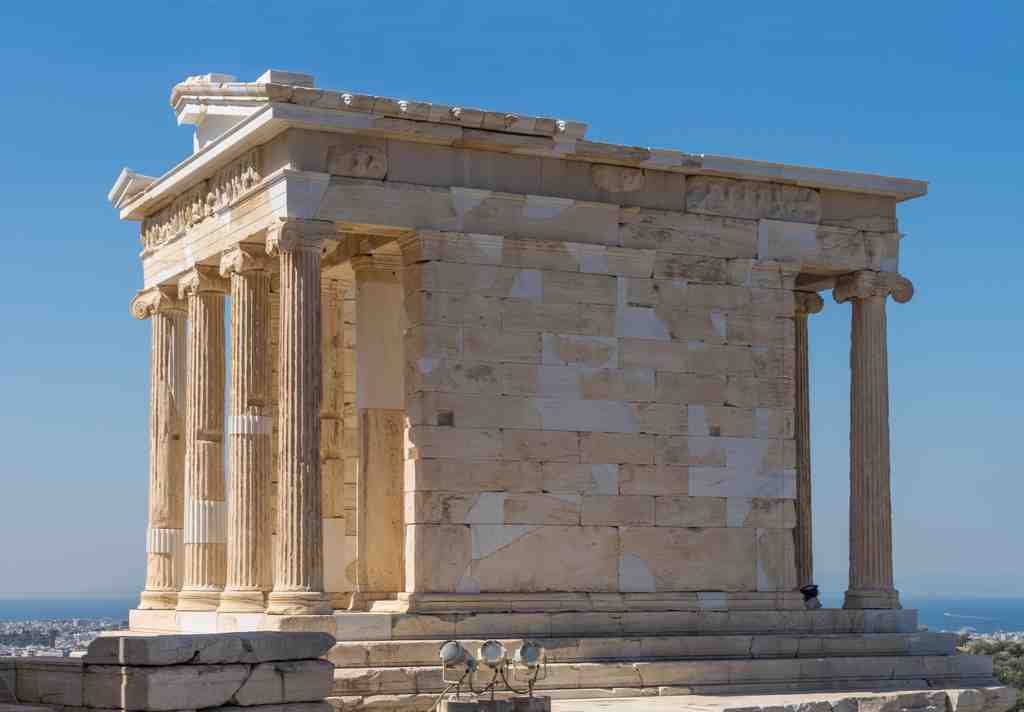
To spot the Temple of Athena Nike, look for a small, elegant marble building with four slender Ionic columns at each end, perched on a dramatic bastion to your right as you enter the Acropolis, shining in the sunlight with its creamy Pentelic marble.
Imagine the year is 420 BC-the air is buzzing with Greek voices, and you’re standing at the very edge of Athens’ sacred rock. At your feet, the city sprawls towards the shimmering sea, and as you gaze upward, this compact but magnificent temple greets you like a jewel on the Acropolis’ crown. The Temple of Athena Nike isn’t a giant, but what it lacks in height, it makes up for in pure style-built entirely from brilliant white marble, glowing under the Athenian sun, with rows of perfectly carved columns and delicate sculpted friezes wrapping around the top. Every detail was meant to remind the Athenians of victory-something they really needed with the long and exhausting Peloponnesian War still raging against Sparta.
Back then, crowds of anxious citizens would have hurried up these steps, carrying their worries and hopes just like you carry your phone. Sometimes a gust of wind would set the stone parapet humming, its walls covered with images of Nikai-goddesses of victory-parading and sacrificing in honor of Athena. To everyone who passed by, these were literally the “wings” of hope, a place open to the sky and visible to all, perfect for summoning the power of divine triumph. There was even a statue of Nike-usually famous for her wings-standing here without them! The story went that Athenians kept her grounded, so victory could never leave their city. Talk about not letting success go to your head!
Now, get ready for some ancient drama. The earliest worship here actually started back in the 6th century BC, when a statue showed Athena Nike sitting, holding a pomegranate and a helmet. But then came the big shake-up: during the Persian invasion in 480 BC, the sanctuary was leveled, and nearly all hope was lost. Yet Athenians are nothing if not stubborn-they rebuilt from the ruins, finally finishing this temple during a rare lull in wartime, cleverly reusing whatever money, marble, and patience they could scrape together. You almost have to admire their budgeting skills.
For centuries, a powerful priestess-chosen by lottery, no less-watched over the sacred site. But fate is a cruel architect: when the Ottoman Empire took Athens in 1456, the temple’s stones got yanked apart to help build new city defenses. For a long time, the bastion above was stripped bare, left as silent as a dropped helmet. Fast forward to 1834-after Greece's war for independence-with great excitement, archaeologists dug up the scattered temple stones and, in a feat of historical Tetris, put the temple back together. Since then, it’s survived endless repairs and the kind of “makeovers” any marble structure dreads.
Peer closely, and you’ll see evidence of its grand decorations-look up and you’ll notice copies of friezes (the real ones are now safe in the museum nearby) showing mythic battles, from Greek horsemen charging into glory to gods like Athena, Zeus, and Poseidon gathering for divine strategy meetings. Some of the most impressive marble panels once showed Nike herself, either fixing or-get this-removing her sandal! Art historians still argue about why, but maybe victory needed to get comfortable.
Even the roof tells a story-along the top, carved lion heads once stretched out in a regal row. No one can quite agree what statues stood above the temple, but wild guesses include a bronze tripod, a flying goddess, or even the fearsome Chimera. That’s a real “myth-tery” for another day!
Now, as you stand here, the temple carries every scar, legend, and prayer from thousands of years. The next time you remove your shoes, just remember: you’re taking part in a tradition that once marked the threshold of victory and hope-right here in the shadow of Athena Nike.
For further insights on the architecture, friezes and parapets or the cornice and cyma, feel free to navigate to the chat section below and inquire.




