
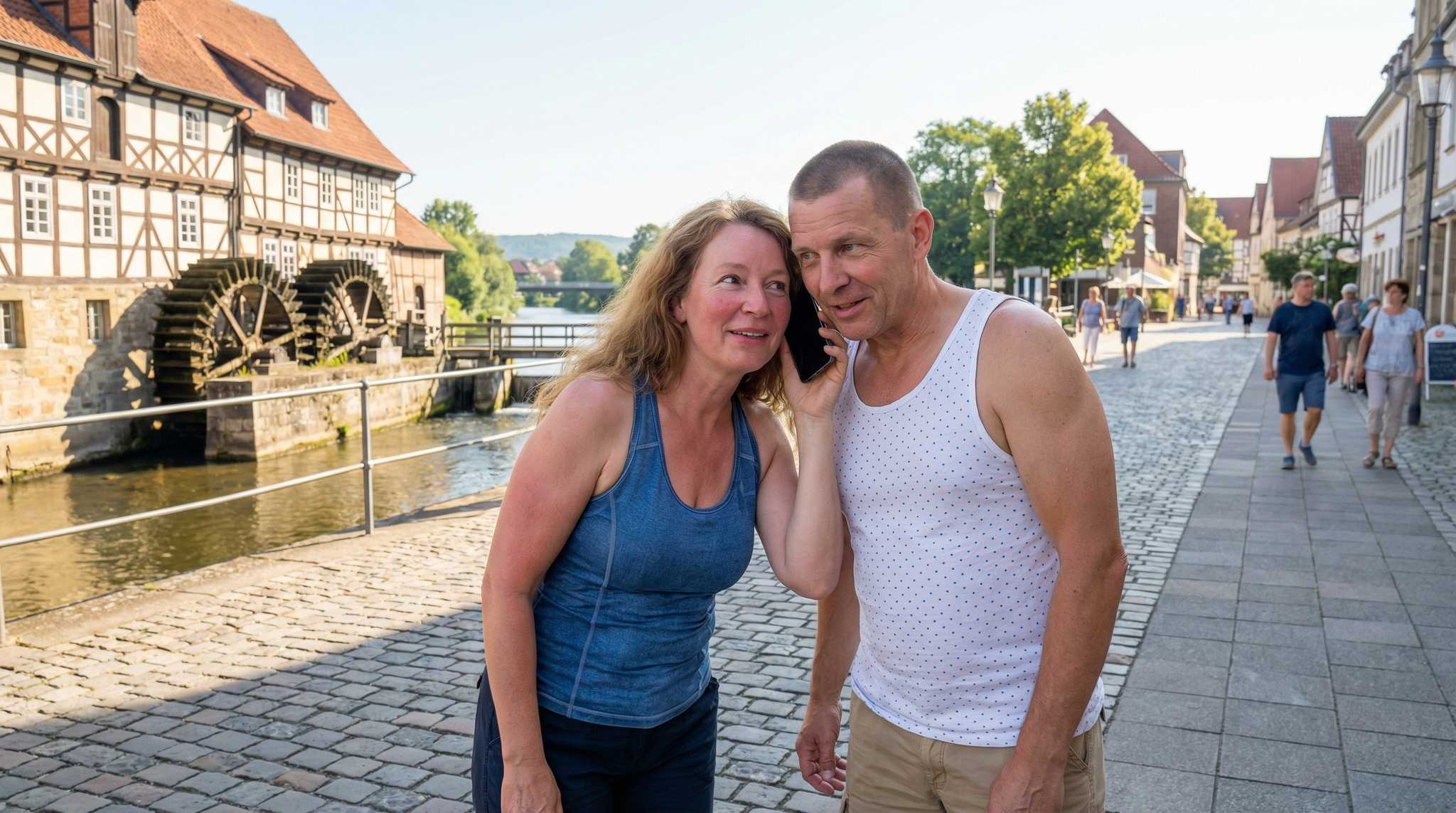
Hamelin Audio Tour: Piper’s Footsteps and Timeless Treasures
Beneath the sunlit stones of Hamelin, shadows of vanished children and silent conspiracies ripple through centuries of cobbled streets. On this self-guided audio tour, trace secrets in Market Church’s stained glass and walk paths once echoing with both rebellion and folklore. Dive deeper into Hamelin than any guidebook, finding stories just out of sight. What hidden message nearly tore the town apart beneath Market Church’s altar? Which painting in Museum Hamelin still leaves historians stumped? Why did a baker’s mistake at Wesermühlen nearly spark a citywide scandal? Move from ancient ritual to whispered legend, each step revealing layers of drama and wonder. Hear the city’s heartbeat in half-forgotten squares and open doors invisible to hurried tourists. Begin where the echoes linger longest. Unlock the true Hamelin, one astonishing secret at a time.
Tour preview
About this tour
- scheduleDuration 40–60 minsGo at your own pace
- straighten1.4 km walking routeFollow the guided path
- location_on
- wifi_offWorks offlineDownload once, use anywhere
- all_inclusiveLifetime accessReplay anytime, forever
- location_onStarts at Pied Piper House
Stops on this tour
lock_open 3 free previews · 5 unlock with purchase
Look for a tall sandstone-and-timber Renaissance house with stepped gables and a carved inscription beam along the corner facing Bungelosenstraße. This is Hameln’s celebrity…Read moreShow less
Open dedicated page →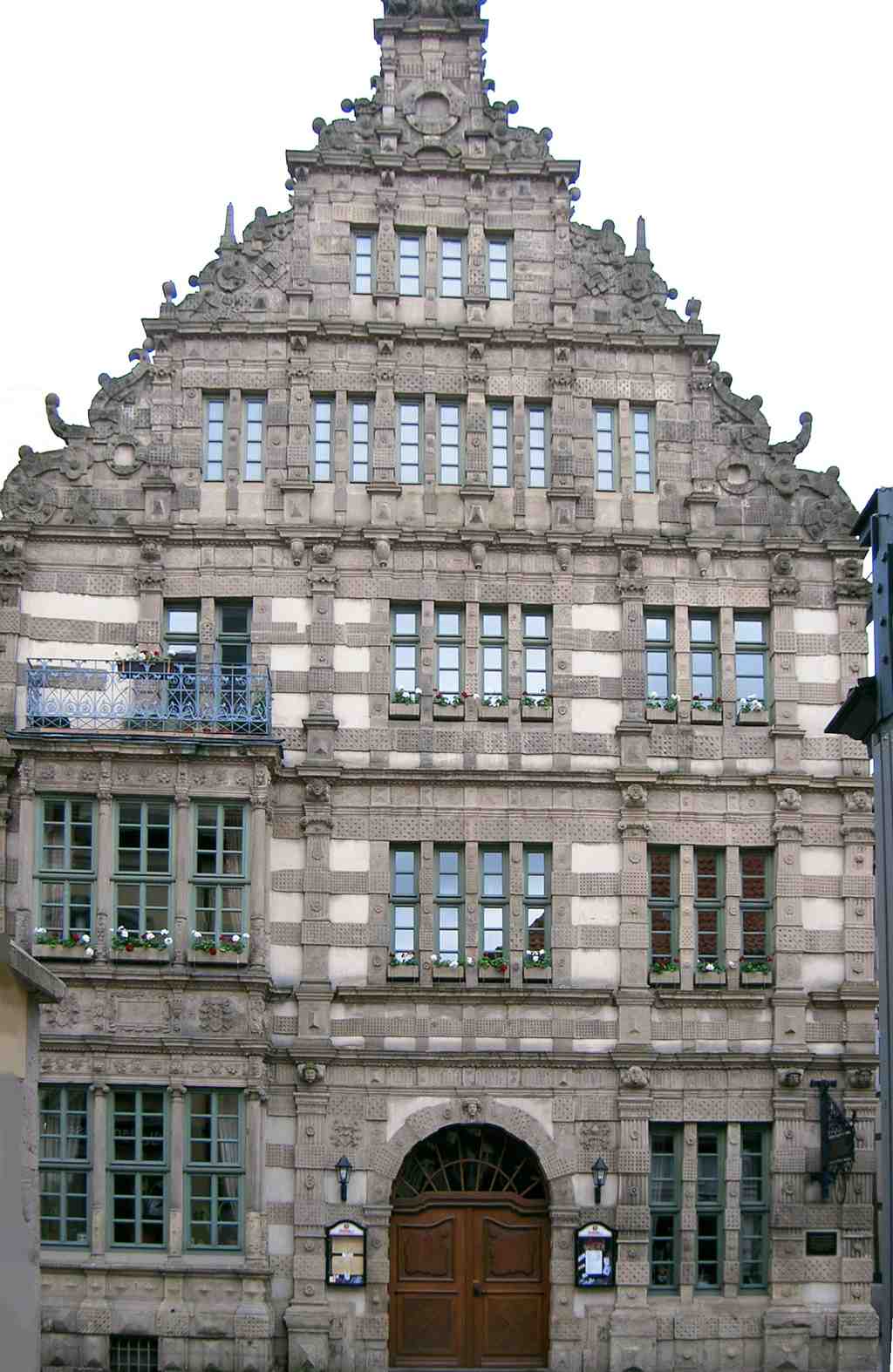
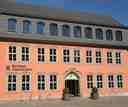
Pied Piper HousePhoto: Beckstet, Wikimedia Commons, CC BY-SA 3.0. Cropped & resized. Look for a tall sandstone-and-timber Renaissance house with stepped gables and a carved inscription beam along the corner facing Bungelosenstraße.
This is Hameln’s celebrity house... the Pied Piper House, or Rat Catcher House. Most visitors arrive hunting the legend, and fair enough: the name comes from an old inscription here that recounts the twenty-sixth of June, twelve eighty-four, when a brightly dressed piper supposedly led one hundred thirty Hameln children away. Local tradition even says he took them out through Bungelosenstraße, a name tied to “drumless,” because music was forbidden there afterward.
But here’s the useful local trick: don’t stop at the story on the surface. Hameln has long used this house as a kind of public memory board, a handsome place to pin its most famous tale. That matters, because cities often choose their identity the same way families choose what stays framed on the mantel.
Now give the façade a good, steady look. It is proud, polished, original... the sort of exterior that suggests a successful owner and not much room for surprise. If you want a closer look at the craftsmanship, glance at the doorway on your screen.
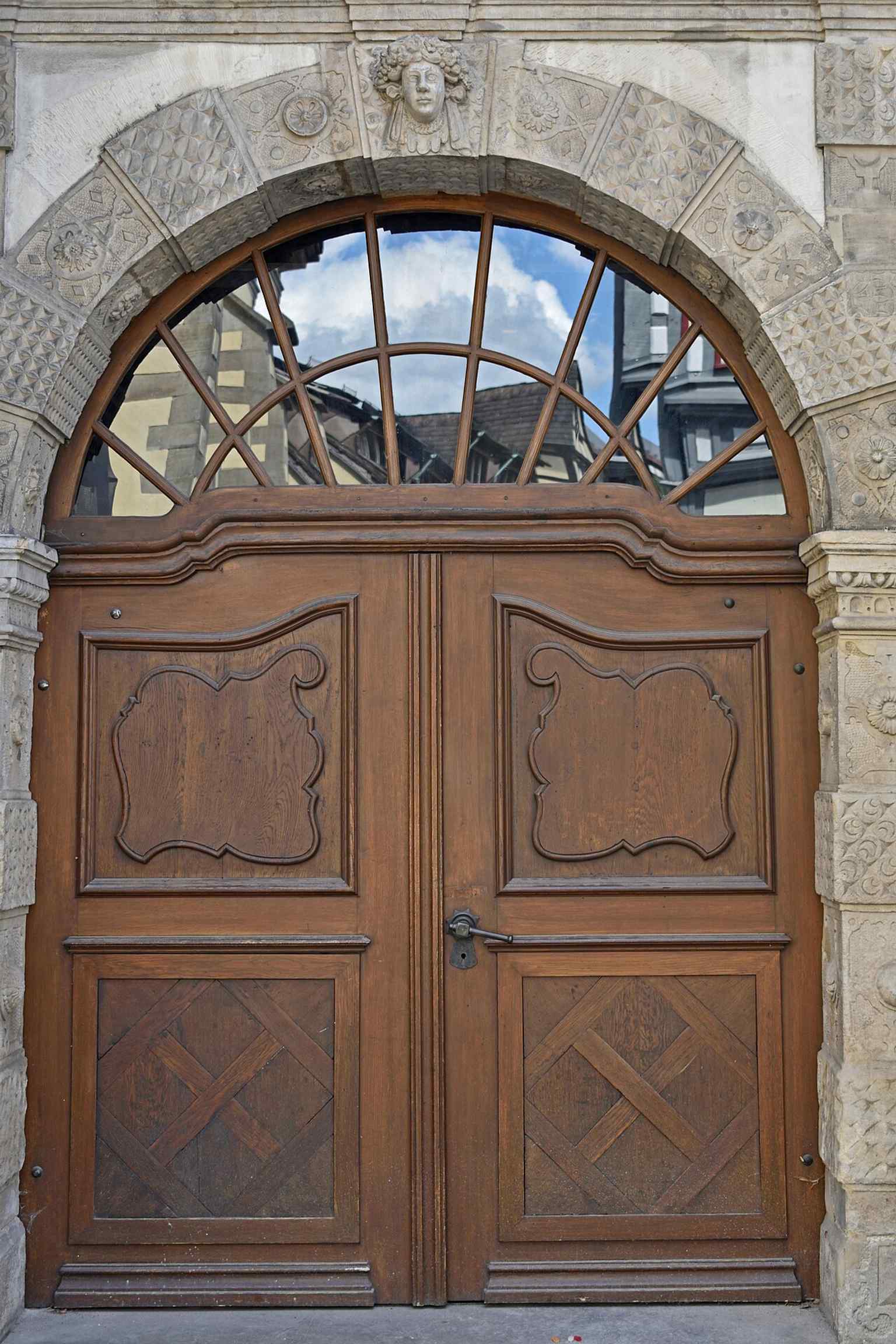
The doorway of the Pied Piper House in Hamelin, a landmark tied to the famous 1284 children’s legend and now part of the city’s historic old town.Photo: Ymblanter, Wikimedia Commons, CC BY-SA 4.0. Cropped & resized. The house began in sixteen oh two or sixteen oh three, when the councilman Hermann Arendes hired master builders Johann Hundertossen or Eberhard Wilkening to create one of Hameln’s grandest Weser Renaissance homes. Later, from seventeen sixty-eight to eighteen oh one, it belonged to Hertz Joseph, a Jewish merchant who sold horses and fodder at local fairs and also lent money. So this famous legend-house also holds a quieter chapter of Jewish everyday life.
And then the building quite literally gave up secrets. In eighteen ninety-nine, innkeeper August Kirchhoff demolished the neighboring house to build a modern hotel and discovered the two buildings shared a wall. Hidden inside were letters, some in German, some in Hebrew. Then, during restoration in nineteen eighty-one, workers found another Hebrew letter in that same wall, plus an old wine bottle and a Hebrew prayer book under the floorboards. Tourists come for one piper; the house hands you a whole archive.
Since nineteen seventeen the city has owned it, and since nineteen sixty-six it has welcomed diners instead of merchants. Behind Hameln’s best-known tale, there is a whole city of quieter evidence waiting to be read. When you’re ready, head on to Volksbank Hameln Stadthagen, about a three-minute walk from here.
On your left stands a pale stone and glass corner building with broad rectangular windows and the red Volksbank emblem set into the facade. This stop tells a Hamelin story that…Read moreShow less
Open dedicated page →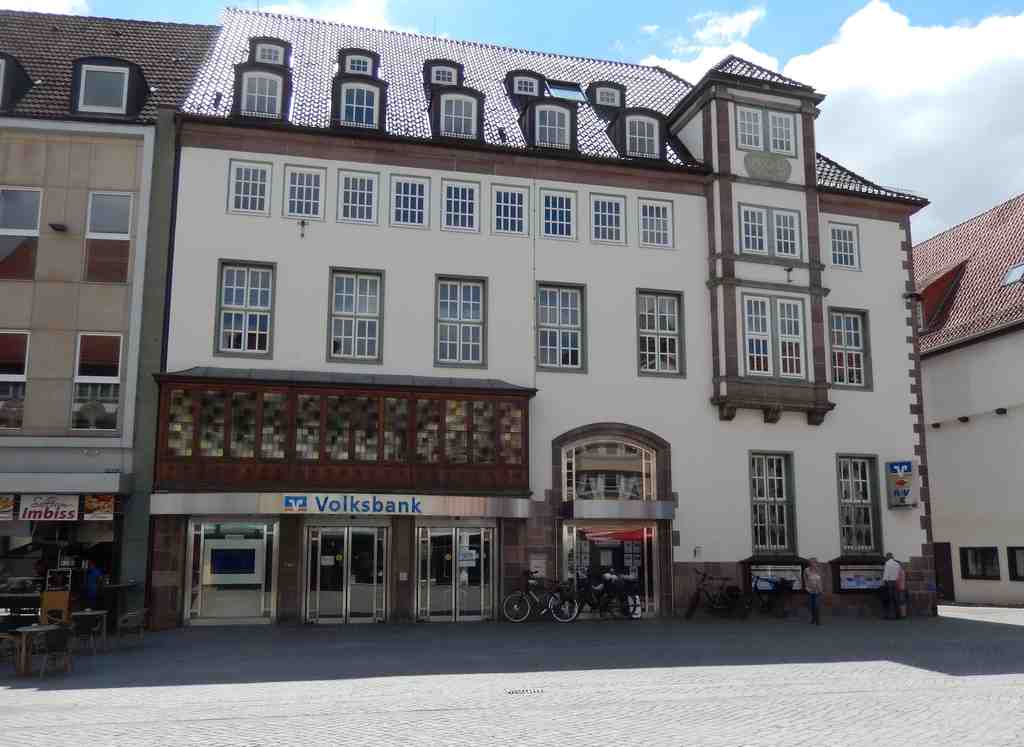
Volksbank Hameln-StadthagenPhoto: Gerd Fahrenhorst, Wikimedia Commons, CC BY 4.0. Cropped & resized. On your left stands a pale stone and glass corner building with broad rectangular windows and the red Volksbank emblem set into the facade.
This stop tells a Hamelin story that does not wear carved beams or medieval ornaments... but it matters just as much. A cooperative bank is not simply a place that handles money. It is a shared institution, owned by its members, where local people pool confidence as well as capital. That is civic trust in practical clothes: neighbors backing a structure that can outlast any one bad year, one shaky market, or one strong personality.
Here in Hameln, that idea took shape on the twenty-fifth of February, nineteen twenty-five. Thirty-three citizens founded the Hamelner Bankverein, a cooperative created for the town’s middle-class residents. Not dukes, not industrial barons... just people deciding that if they organized trust together, they stood a better chance of weathering uncertainty. It is not flashy, I know, but whole towns survive on decisions exactly this plain.
The first office was modest, just a small room at the Pferdemarkt. One year later, the bank moved into the new Handwerkerhaus at Kastanienwall, and it stayed there until March of nineteen fifty-one. Then it moved again, into a new main branch on Osterstrasse. In nineteen forty, the Hamelner Bankverein changed its name to Volksbank Hameln. By nineteen fifty, it already counted more than nine hundred members holding over one thousand shares. That word, member, matters here. In a cooperative, members are not just customers. They are part-owners of the institution.
You may hear terms like board, supervisory board, and representatives’ assembly. Here is the plain-English version. The board runs the bank day to day. The supervisory board oversees it, a bit like a watchful balcony above the stage. And the representatives’ assembly is the body that speaks for the wider membership when the cooperative makes big decisions.
Those decisions kept reshaping the bank as the region changed. It merged with Volksbank Bodenwerder in nineteen seventy, joined with Oldendorfer Volksbank in nineteen eighty-seven, merged again in nineteen ninety-eight to form Volksbank Hameln-Pyrmont, then in two thousand and four joined with Volksbank Stadthagen to become Volksbank Hameln-Stadthagen. In two thousand and sixteen, it merged with Volksbank Bad Münder, gaining another main office there. So this building stands for a very modern kind of local memory: not one grand founding, but layer upon layer of agreements.
And those layers are still shifting. In two thousand and twenty-four, when the branch in Bodenwerder closed, advisers stayed available nearby for customers in Emmerthal. That is the human side of an institution like this. Branches may move, merge, or close, but people still look for the familiar voice across the desk.
Today the bank serves tens of thousands of customers and members, employs hundreds of staff and trainees, and gives back to the region in practical ways. Not every important Hameln story is carved into old stone; some of it lives in systems people build to steady one another.
So here is the question to carry with you: what kind of future does a town create when its strength rests not on one powerful figure, but on dozens, then thousands, choosing to trust together? Hameln endures through places like this as much as through its famous landmarks... and in about two minutes, Museum Hameln will show how the city turns lived experience into shared memory. If you need practical timing, this branch opens on weekday mornings, adds Tuesday and Thursday afternoon hours, and stays closed on weekends.
Look for a pair of pale stone-and-plaster Renaissance houses with tall gables, rows of rectangular windows, and an especially ornate right-hand façade carved like a piece of civic…Read moreShow less
Open dedicated page →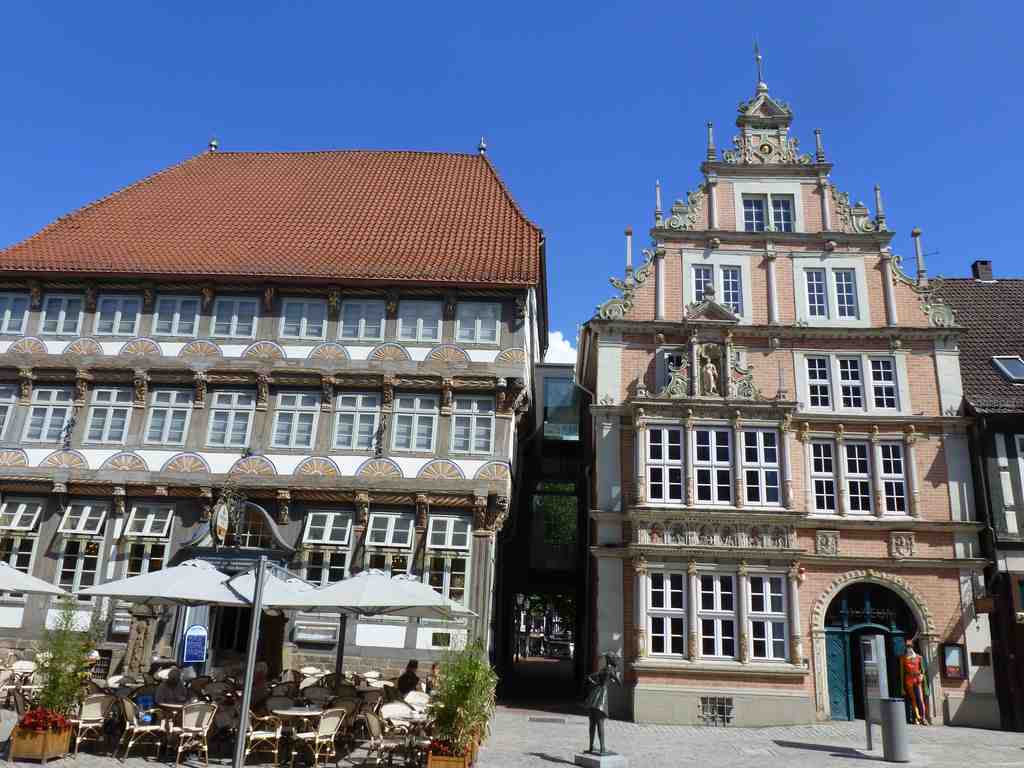
Museum HamelinPhoto: MuseumHameln, Wikimedia Commons, Public domain. Cropped & resized. Look for a pair of pale stone-and-plaster Renaissance houses with tall gables, rows of rectangular windows, and an especially ornate right-hand façade carved like a piece of civic jewelry.
This is Museum Hameln, split between the Leisthaus on the right and the Stiftsherrenhaus on the left, two of the city’s finest buildings from the Weser Renaissance, the local sixteenth- and early seventeenth-century style that loved decorated façades and a little showmanship. Fair warning: this stop is about storytelling itself. A city does not collect itself by magic. People gather the attic finds, the documents, the costumes, the scratched clues, then arrange them so private memory turns into a shared public story. That is what this museum does, very deliberately and very well.
The roots go back to Friedrich Haspelmath, a Hameln-born traveler from seventeen ninety. He picked up objects on his journeys with the appetite of a man who never met a curiosity he did not want to bring home, then displayed them in a tower of the old city defenses. In eighteen ninety-nine, his grandson gave that tower and its contents to the museum association. So the museum began not as a cold official archive, but as one person’s very human habit of saying, “Hold on... this matters.”
The house itself adds another layer. The Wallbaum family lived in the Leisthaus from eighteen twenty-five to nineteen ten. Adolph Wallbaum, one of the last family members here, filled a diary with gloomy remarks about railways and modern youth. In other words, every generation thinks the next one is ruining civilization. Hameln found the family eccentric, but their final decision shaped the city: Adolph and Friederike Wallbaum left this house to the museum association in nineteen ten, and by nineteen twelve the museum had a permanent home.
Inside, the museum now stretches across about one thousand two hundred square meters and tells the story of Hameln and the Weserbergland by era: medieval town life, the Reformation, the boom years of the Weser Renaissance, the fortress period, industry, tourism, and the twentieth century. The Pied Piper has a major section of his own, including what the museum says is one of the world’s largest collections on the legend. There is even a mechanical Pied Piper theater by Otto Steiner, a twelve-minute installation using moving figures, light, and sound to stage the tale like a miniature dream.
And here is the important part: legend stands beside lived history, not instead of it. The hidden Hebrew letters we noticed earlier are exactly the kind of fragile trace museums and archives rescue from silence. Without patient collecting and interpretation, they remain marks in stone; here, clues like that become part of the city’s self-understanding.
The museum had to survive its own disasters too. Staff moved major collections out for safety in nineteen forty-one. American artillery damaged the Leisthaus in April of nineteen forty-five. The city took over the building in nineteen forty-six, with a promise to keep it for museum use, and the collections returned fully in nineteen forty-nine. Then, during the restoration from two thousand eight to two thousand eleven, workers opened up the old structure itself and found archaeological objects in the central hall, turning the building into an exhibit as well as a container for exhibits.
So before you head on, notice the neat trick Hameln pulls here: the museum preserves memory indoors, while the city leaves other pieces of memory standing outside in plain sight. In about a four-minute walk, you’ll meet one of those survivors at Haspelmath Tower, where collecting first took root in stone. If you want to come back inside later, the museum opens Tuesday through Sunday from eleven A-M to six P-M and stays closed on Mondays.
Show 5 more stopsShow fewer stopsexpand_moreexpand_less
On your left stands a squat round tower of rough stone and brick, topped with a conical roof and joined to a surviving section of city wall. This is the Haspelmath Tower, raised…Read moreShow less
Open dedicated page →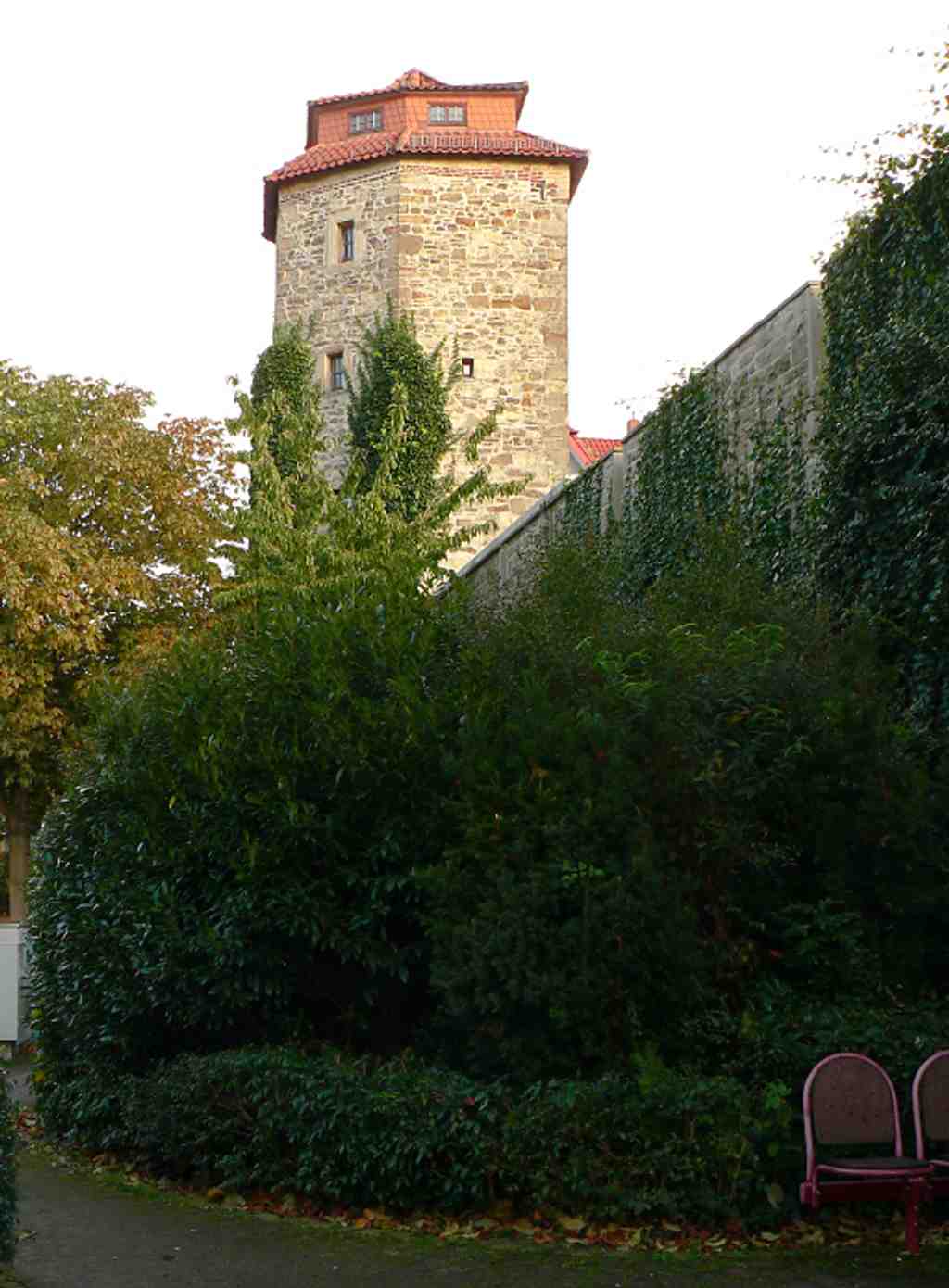
Haspelmath TowerPhoto: Axel Hindemith, Wikimedia Commons, Public domain. Cropped & resized. On your left stands a squat round tower of rough stone and brick, topped with a conical roof and joined to a surviving section of city wall.
This is the Haspelmath Tower, raised around the year fourteen fifty as one of twenty-two towers in Hameln’s medieval defenses. Then came a hard break: in eighteen oh eight, Napoleon the First ordered Hameln’s fortifications destroyed. Most of the ring vanished. Only this tower and the Pulverturm made it through, which is about as close as stone gets to sheer stubbornness.
Now pause a moment and follow the tower’s curve with your eyes... then picture it not as a lone survivor, but as one piece in a full defensive belt around the city. The wall beside it was rebuilt in the nineteen nineties, a careful reminder of what once stood here.
Its second rescue came from a man named Friedrich Haspelmath, a Hameln citizen and veterinarian. He bought the tower, fixed it up, and filled it with objects he gathered on travels through the Mediterranean and farther afield. That made this old guard tower Hameln’s first private museum... a place where military stone began protecting memory instead.
In eighteen ninety-nine, his grandson gave the tower and collection to the local museum association. One small seal from that gift became one of the museum’s earliest recorded objects. During the war, curators moved major parts of the collection to the Bismarck Tower and other places for safety, and in nineteen forty-nine they returned. Since nineteen ninety-two, the artists’ group Arche has used the restored tower as a gallery.
That’s Hameln in a nutshell: what stays standing often survives by learning a new job. From here, the Market Church is about a three-minute walk away.
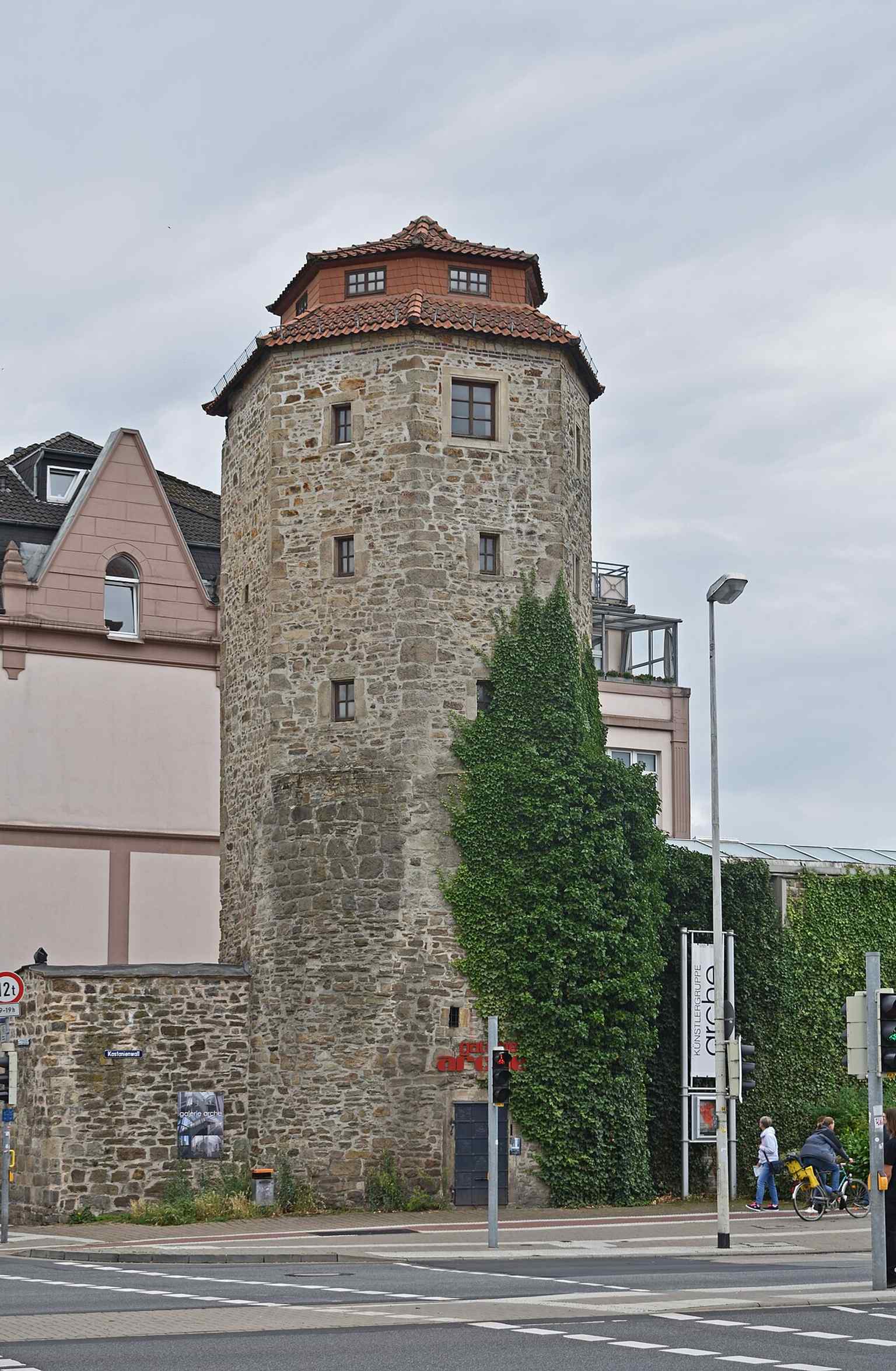
The Haspelmathturm in Hamelin, one of the last surviving towers of the medieval city fortifications, later became the home of the city’s first private museum.Photo: Ymblanter, Wikimedia Commons, CC BY-SA 4.0. Cropped & resized. On your right stands a sandstone church with a tall square tower, pointed Gothic windows, and a broad roofline that marks the heart of Hameln’s old town. This is Saint Nicolai,…Read moreShow less
Open dedicated page →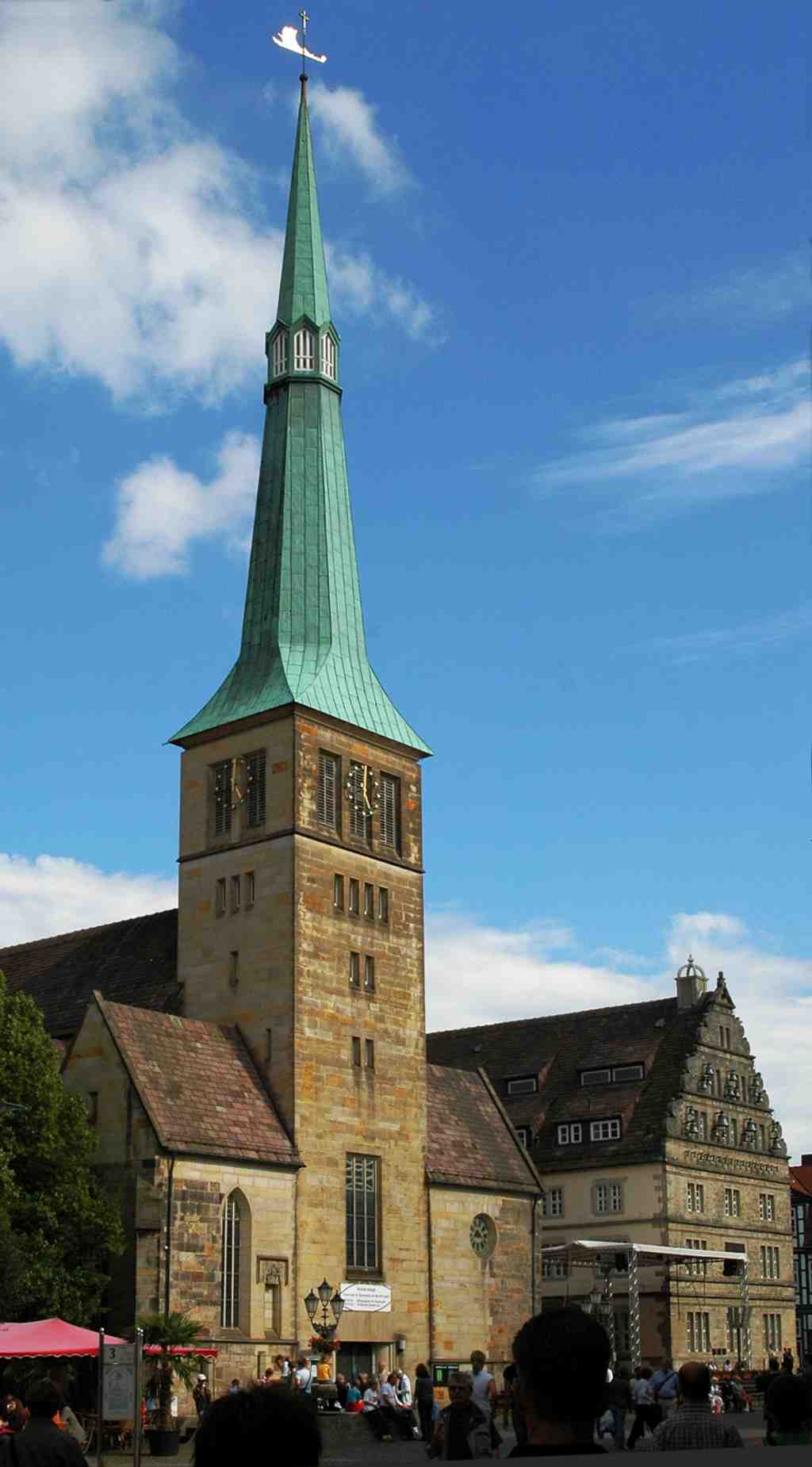
Market ChurchPhoto: Varus111, Wikimedia Commons, Public domain. Cropped & resized. On your right stands a sandstone church with a tall square tower, pointed Gothic windows, and a broad roofline that marks the heart of Hameln’s old town.
This is Saint Nicolai, the Market Church... and here’s the twist in Hameln’s story: even a church did not get to remain only a church. War, fire, shortage, and plain civic stubbornness kept rewriting what this building meant.
Its roots go deep. Builders first raised a small chapel here in the early twelfth century, likely a simple one-aisle church with a west tower. Later they expanded it into a Romanesque basilica - that means a church with a high central hall and lower side aisles - and parts of that older structure still survive in the transept, the cross-arm of the church, with round-arched windows. After a fire around the twelve twenties or twelve thirties, townspeople rebuilt again, then reshaped it into the hall church form you see today, where the main space and side aisles rise to nearly the same height. Hameln kept revising the place the way a family keeps patching a beloved old coat.
If you glance at the image on your screen, you can spot one of the oldest survivors: the north portal relief of Christ blessing, carved around twelve ninety to thirteen ten. That little fragment matters. It is not just decoration. It is proof that this church has lived through more than one version of itself.
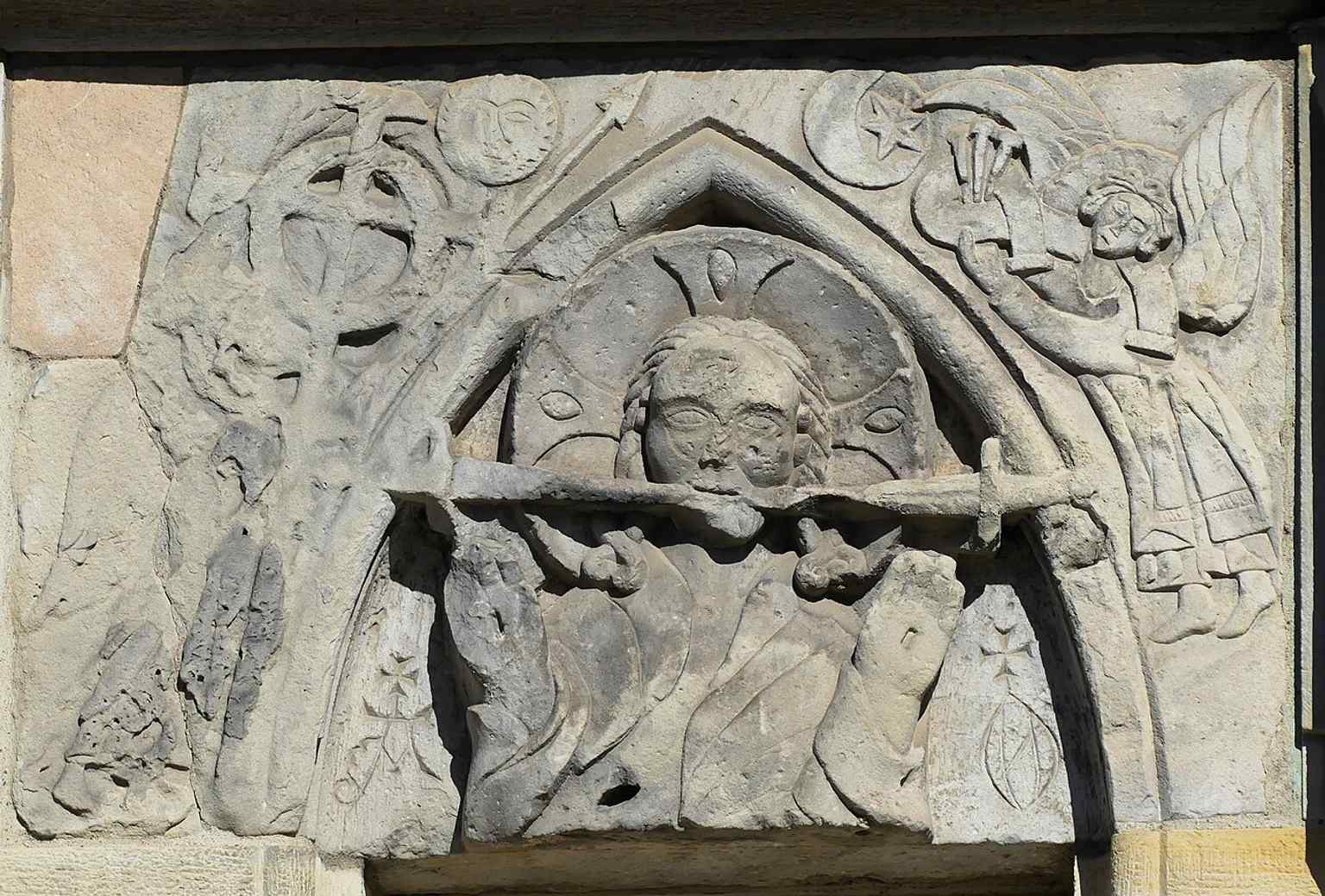
The north portal relief of Christ blessing, a medieval carving from about 1290–1310 that survives on the church’s western side.Photo: Bärbel Miemietz, Wikimedia Commons, CC BY-SA 4.0. Cropped & resized. And then came the hard part. During the Seven Years’ War, people turned the Marktkirche into a hospital, then a magazine - meaning a military storage building - and after the Battle of Minden, victors stacked war booty inside. The English later used it as a flour warehouse. Picture that for a second: a sacred interior filled not with prayer, but with cots, crates, loot, and sacks of flour. Altars, the pulpit, and the organ suffered. Paintings burned. Organ pipes disappeared.
Yet after that, townspeople reclaimed it as their own. Senior Hampe preached here again in seventeen sixty-eight when the renewed church reopened, and many in Hameln called it a Bürgerkirche, a citizens’ church. That phrase changes the whole frame, doesn’t it? Not just a holy building handed down from above, but a place ordinary people actively rebuilt. One of them was Clara Louise Schumachern, who donated the pulpit in seventeen sixty-eight. Her name deserves to stay attached to these stones because she helped turn damage into continuity.
Then history hit again. On the fifth of April, nineteen forty-five, artillery fire set the tower ablaze. It collapsed into the church and the neighboring town hall, and both burned out. For a while the ruin still served the living: in nineteen forty-nine and nineteen fifty, the congregation fitted a temporary emergency church into the east end so worship could continue before full reconstruction began. Architect Eberhard G. Neumann led the rebuild from nineteen fifty-seven to nineteen fifty-nine, giving the church its postwar interior and designing the copper west portal doors that tell the story in metal - Saint Nicholas, the Reformation in fifteen forty-two, the ruined church, and a phoenix rising.
If you look at the tower image in the app, you are seeing a survivor rebuilt so thoroughly that even its exact height remains oddly debated - somewhere between about fifty-two and a bit over sixty meters, depending on whether you count the weather vane. Hameln, apparently, can argue even with a steeple.
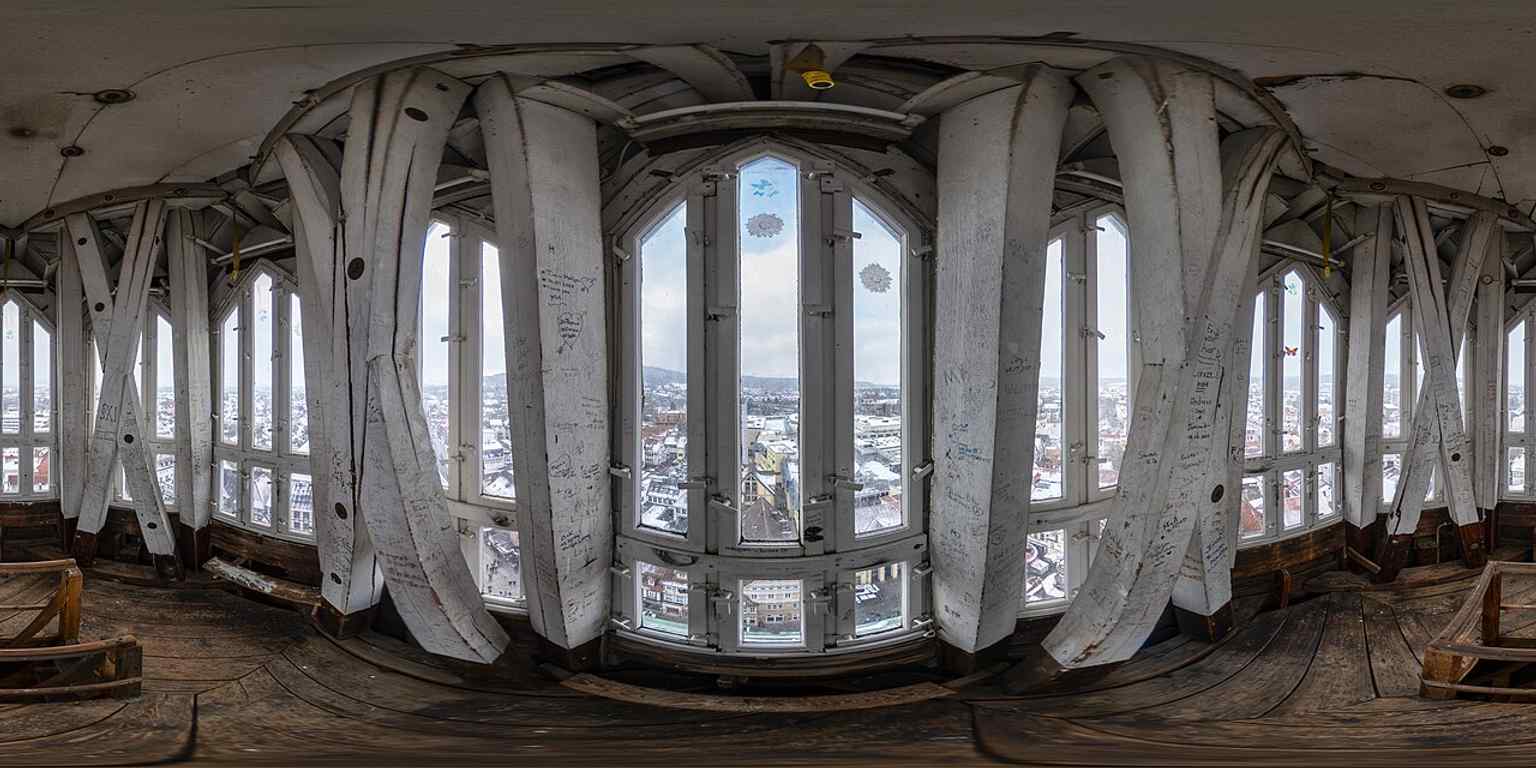
Inside the tower of Market Church — a rare 360° look at the postwar rebuilt landmark that was re-erected after 1945.Photo: Tim Rademacher, Wikimedia Commons, CC BY-SA 4.0. Cropped & resized. That is what makes this place so honest. Buildings can keep their names and silhouettes while their purpose, wounds, and loyalties change again and again. When you’re ready, head on to Sparkasse Weserbergland, about a two-minute walk away. If you plan to come inside here later, the church is generally open from Wednesday through Sunday, from twelve noon to four P-M.
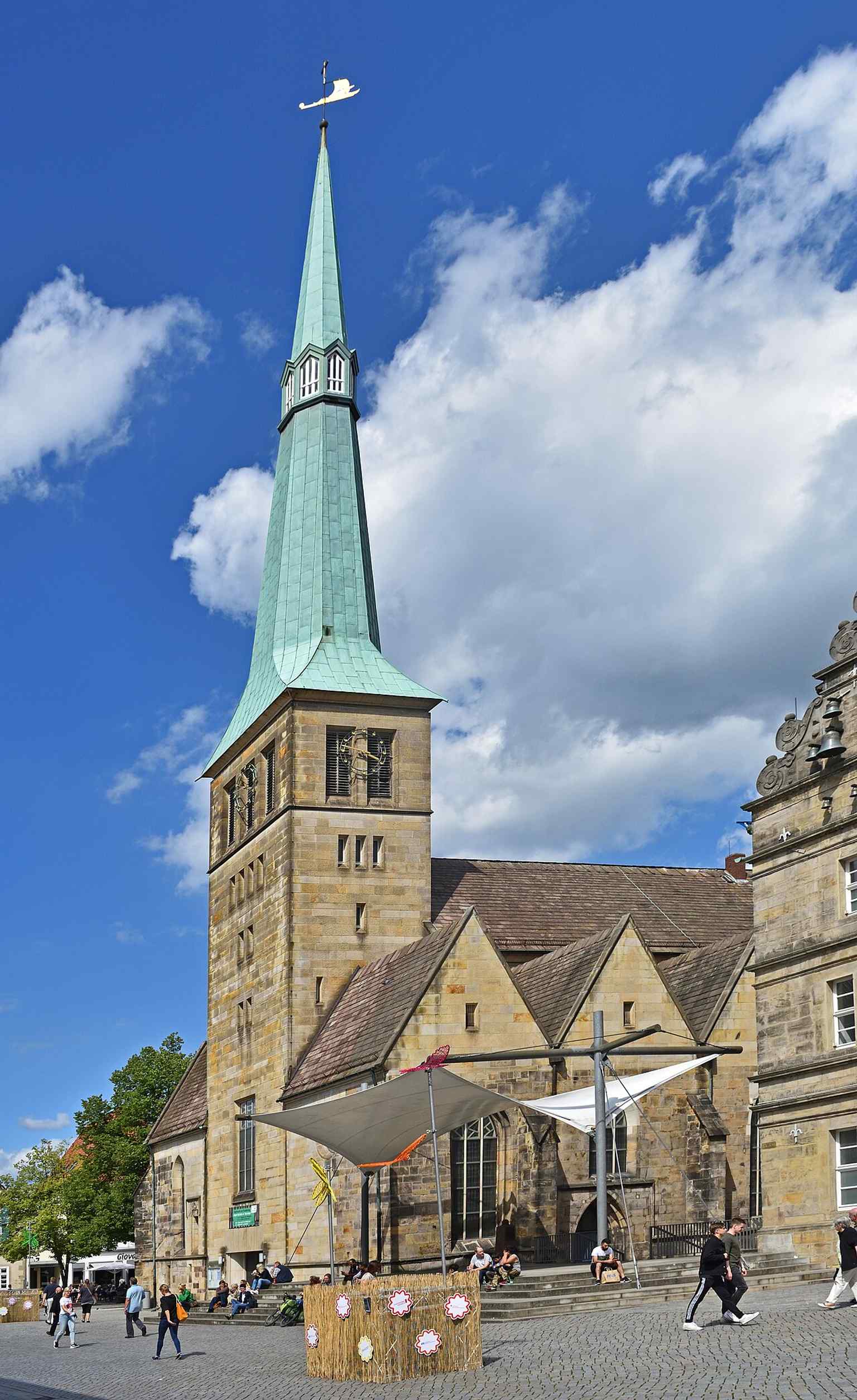
A clear view of Market Church St. Nicolai, the medieval parish church that forms the center of Hamelin’s old town.Photo: Ymblanter, Wikimedia Commons, CC BY-SA 4.0. Cropped & resized. 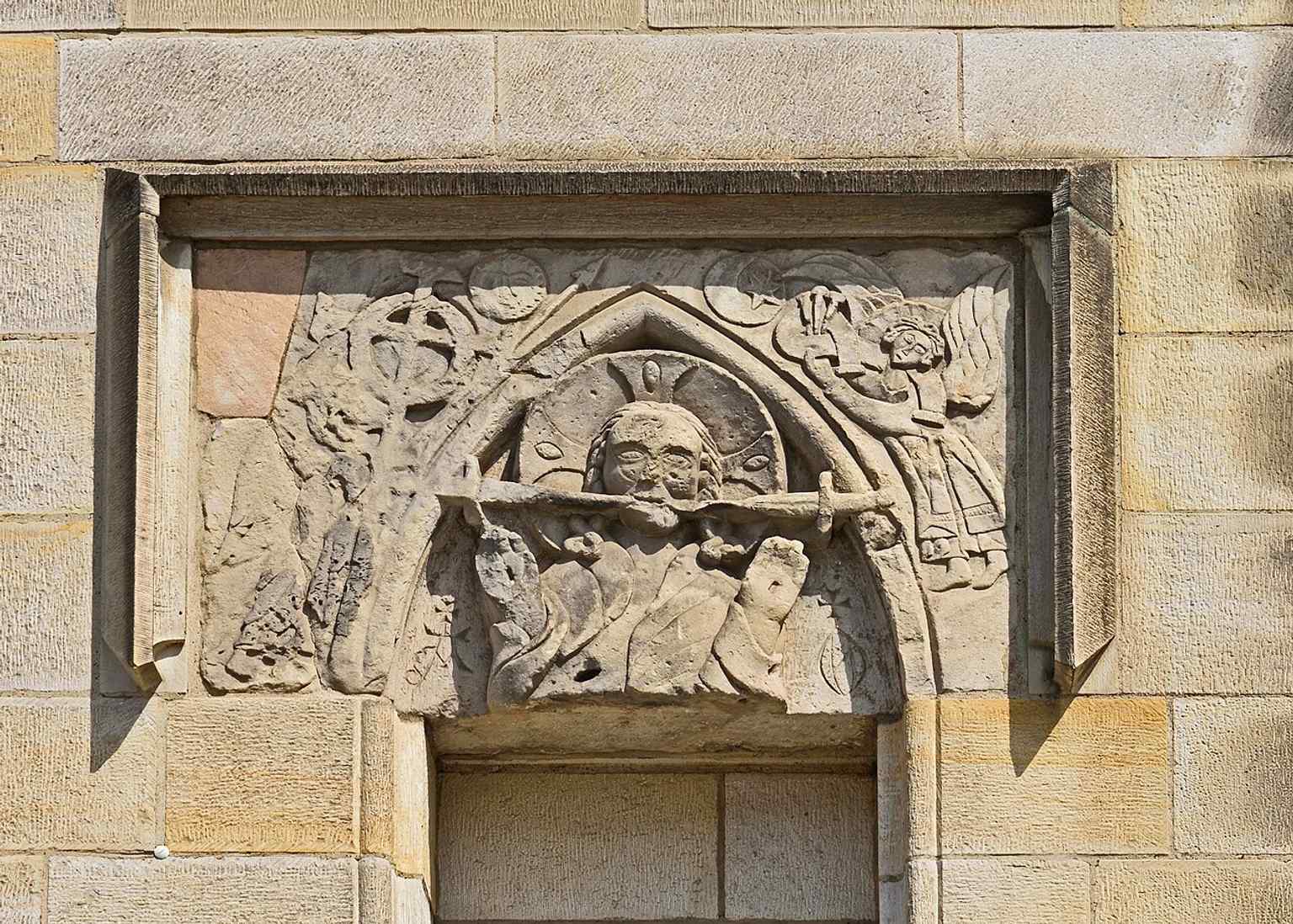
An exterior stone relief on the church, echoing the preserved medieval sculpture around the west and north portals.Photo: Ymblanter, Wikimedia Commons, CC BY-SA 4.0. Cropped & resized. 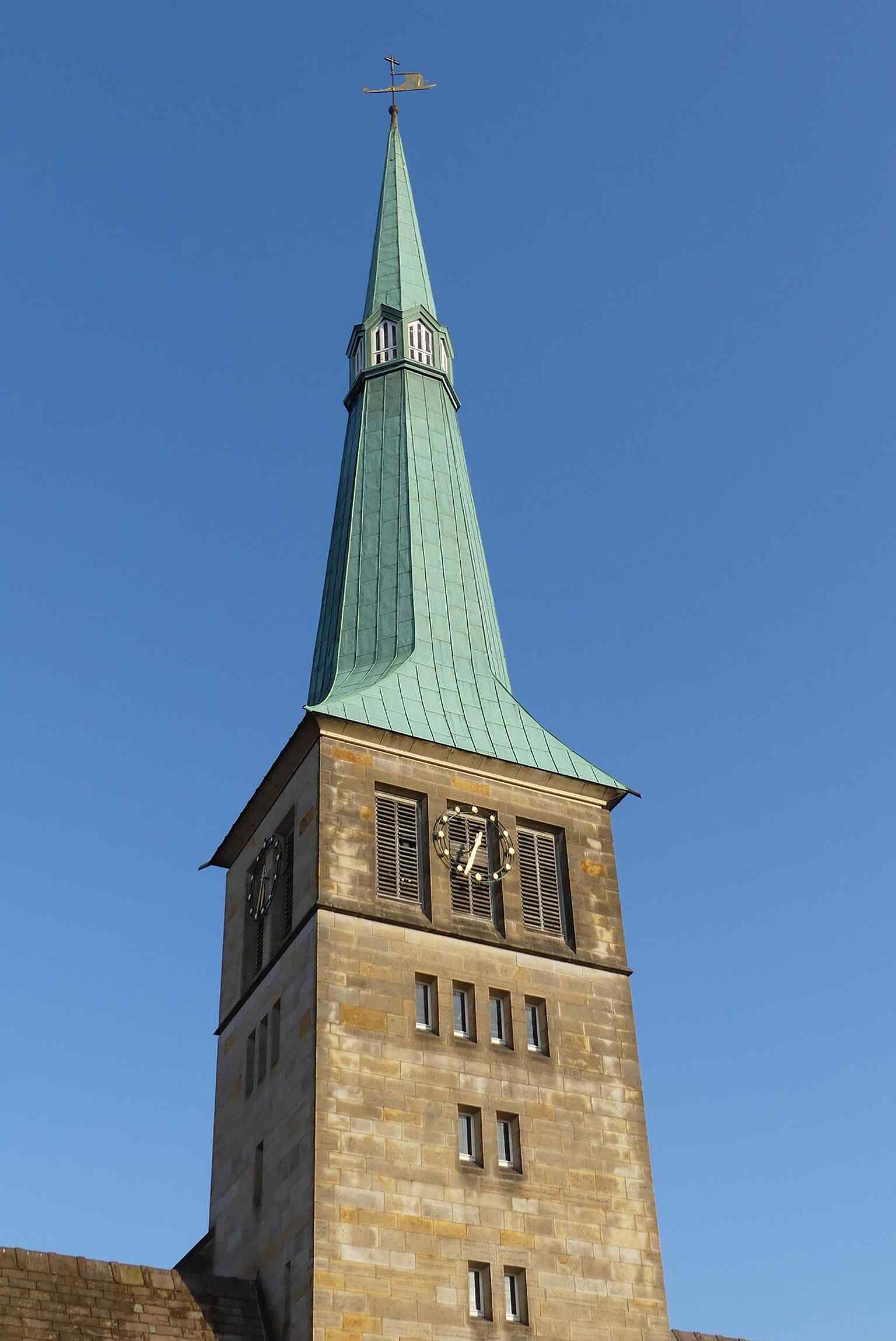
The church tower rising over Hamelin, a rebuilt feature whose exact height is still given differently in the sources.Photo: Bärbel Miemietz, Wikimedia Commons, CC BY-SA 4.0. Cropped & resized. On your left, look for the broad light-colored facade with tall rectangular windows and the red Sparkasse “S” above the entrance. This place tells a very Hamelin kind of story:…Read moreShow less
Open dedicated page →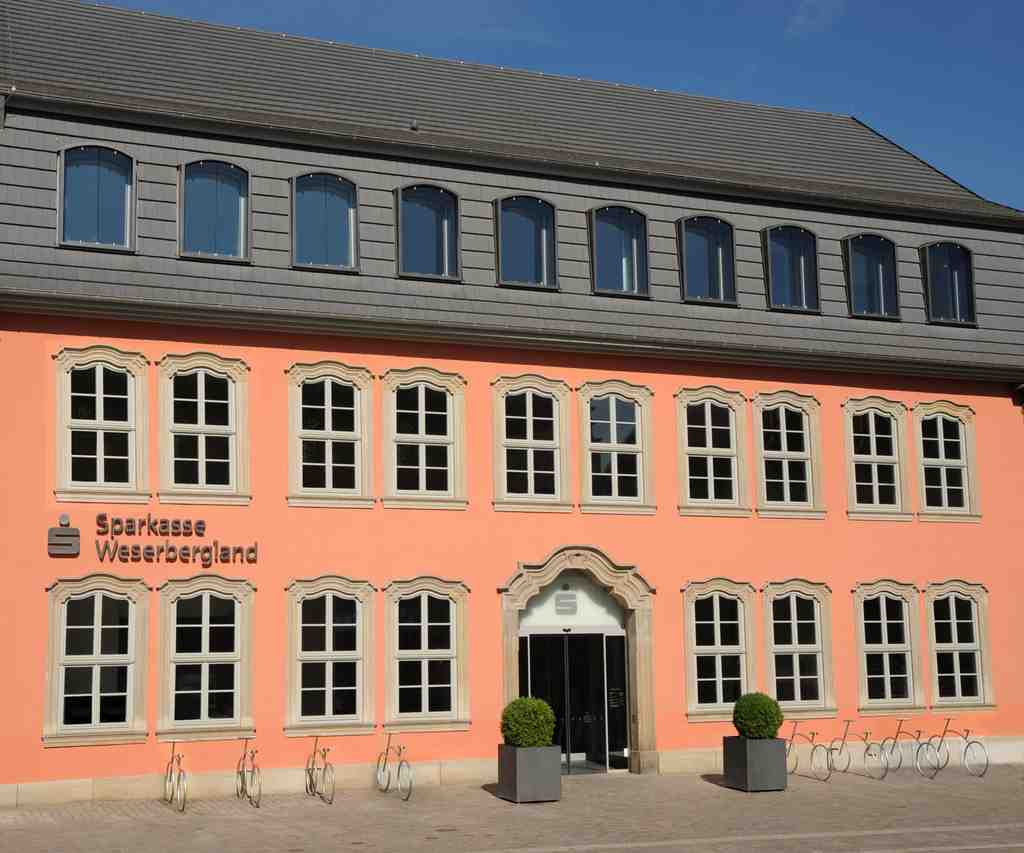
Sparkasse WeserberglandPhoto: Mcwagner, Wikimedia Commons, CC BY-SA 3.0 DE. Cropped & resized. On your left, look for the broad light-colored facade with tall rectangular windows and the red Sparkasse “S” above the entrance.
This place tells a very Hamelin kind of story: not flashy, not mythical, but steady... the kind of institution that keeps a region stitched together while everything around it changes.
Sparkasse Weserbergland did not begin as one neat, tidy bank. In nineteen ninety-nine, it grew out of a merger between the Kreissparkasse Hameln-Pyrmont, founded in nineteen ten, and the Stadtsparkasse Bodenwerder, which had been around since eighteen forty-four. Then Hessisch Oldendorf joined in two thousand. And in two thousand sixteen, this bank merged again with the Stadtsparkasse Hameln to form today’s Sparkasse Weserbergland. That is public finance through merger and continuity in plain terms: one institution inheriting the memory, duties, and trust of several older ones.
The roots go back to the twenty-seventh of September, nineteen ten, when Landrat Graf Pilati announced that the district savings bank would open the next day at the Kreishaus on Pferdemarkt. Two employees started the whole operation, and Sparkassendirektor Fasterling led them. That is how regional infrastructure often begins... not with trumpets, but with a desk, a ledger, and two people trying not to spill the ink.
By nineteen thirty-five, the bank had forty-seven employees, branches across the district, and deposits of twelve million Reichsmarks, a sum worth many tens of millions of euros in modern buying power. Then came the hard lesson. On the twenty-first of June, nineteen forty-eight, the Reichsmark lost its value. Deposits that looked enormous on paper shrank brutally in the currency reform. Money, it turned out, could vanish; trust had to be rebuilt.
This building’s own chapter began in nineteen sixty, when the bank bought Am Markt four, the former clubhouse of the Club zur Harmonie. On the twenty-third of September, nineteen sixty-three, banking moved in here. A social club became a financial headquarters... which is almost funny, if you think about it. People still came to exchange news, hopes, and worries. Only the paperwork got heavier.
Under chairman Friedrich-Wilhelm Kaup, who took over in two thousand two, the bank kept leaning into that public role. It was not a private bank owned by one family or one investor. It operated under public law, backed by a regional association led by the county and nearby towns, and its foundations supported more than eighty local projects in two thousand eleven alone. If the cooperative bank showed how citizens organize help from the ground up, this place shows how that same trust gets scaled across a whole region.
And yet, for all the mergers, laws, and balance sheets, money here was never just numbers. It existed because grain had to be milled, wages paid, and trade kept moving. The next stop, Wesermühlen, makes that older engine of the town visible again. If you need the practical side, this branch usually opens Monday through Friday, with longer hours on Tuesday and Thursday afternoons.
On your left, look for a tall red-brick mill building with a broad gabled front, stacked rows of narrow windows, and the solid, almost castle-like mass of an old industrial house.…Read moreShow less
Open dedicated page →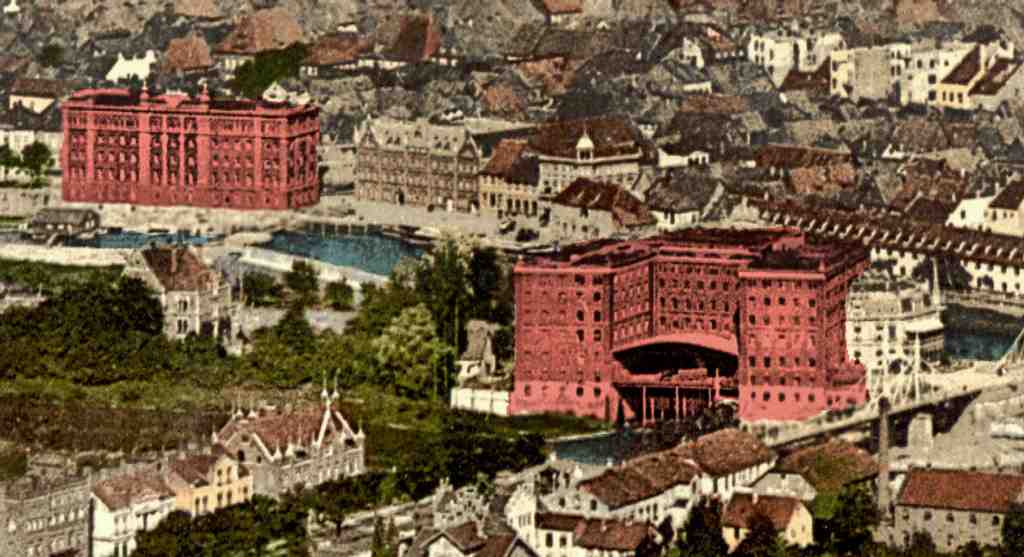
WesermühlenPhoto: Unknown author, Wikimedia Commons, Public domain. Cropped & resized. On your left, look for a tall red-brick mill building with a broad gabled front, stacked rows of narrow windows, and the solid, almost castle-like mass of an old industrial house.
This is the surviving Pfortmühle, the last standing witness of Hameln’s Wesermühlen, a whole family of watermills that worked here from the late thirteenth century onward. The Weser gave the city muscle, food, and wages; it also brought flood, fire, and ruin. Around here, the river was both paycheck and menace... a business partner with a very bad temper.
The mill likely began near the end of the thirteenth century and first turns up in records in the year thirteen forty-five. Back then people called it the Weser Mill, or the Fish Gate Mill. In seventeen forty-five, floodwater from the Weser hit so hard that part of the mill collapsed. Hameln rebuilt it larger that same year, and in seventeen forty-six they raised a memorial stone to mark the disaster and to thank the king of Hanover for helping pay for the recovery. Most visitors never notice where that memory ended up. The stone, about three meters high, no longer stands out here by the mills at all. It waits in the entrance area of the city archive inside the Pfortmühle, as if the city quietly tucked the old wound into its filing cabinet.
Then came fire. In eighteen seventy-two, grain inside the mill heated up on its own and burned the interior out, leaving the place a ruin for years. Friedrich Wilhelm Meyer stepped into that wreckage. He bought the site, rebuilt it in eighteen seventy-eight as a five-story giant with twelve grinding units, and made it one of the largest milling works in the region. If you want a sense of the building’s stubborn presence, take a look at the image in the app. It helps you read this façade not as a quaint old building, but as a machine-house with civic pride.
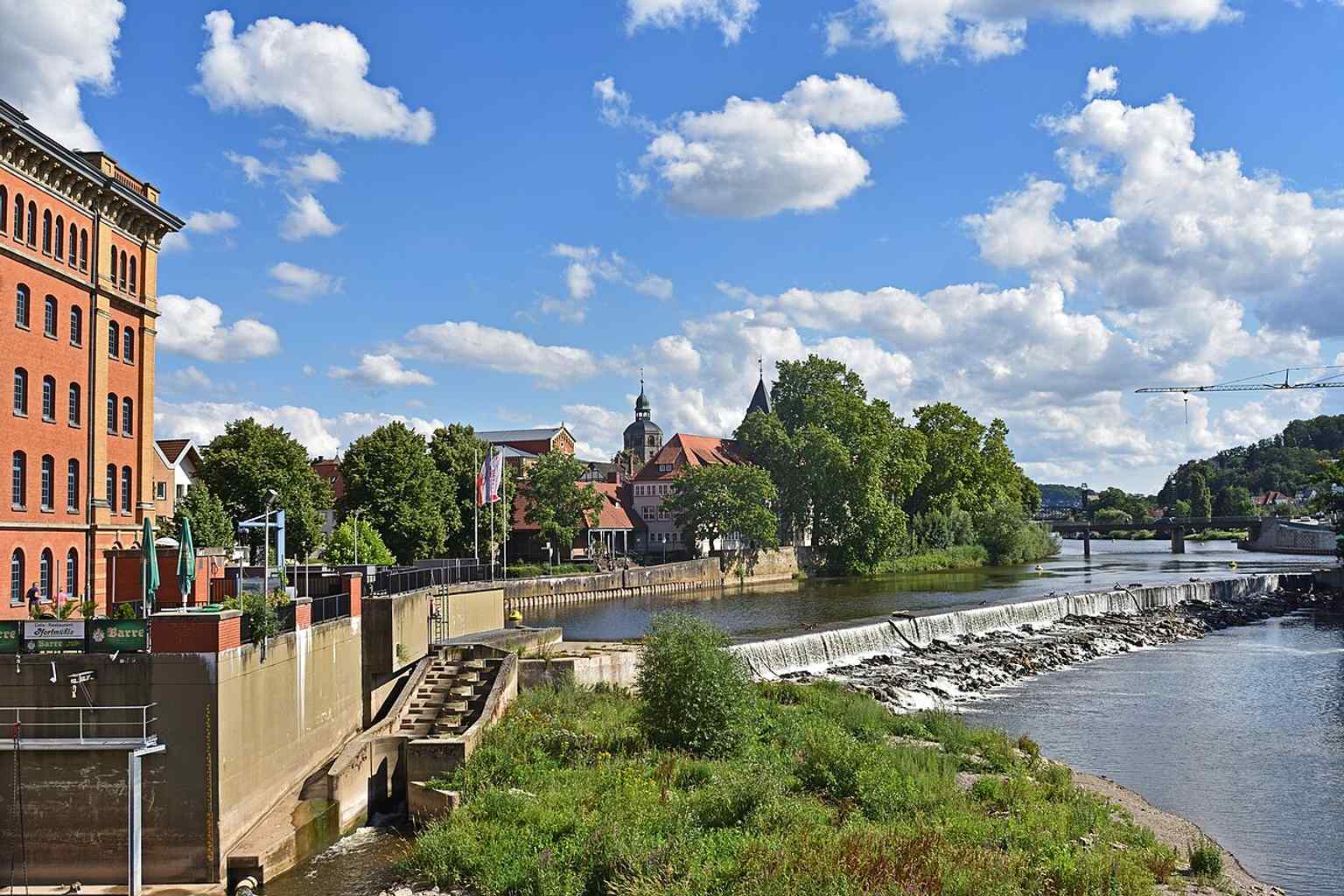
The surviving Wesermühlen building in Hameln — today the historic Pfortmühle site, once part of the river-based milling complex that shaped the city’s industrial waterfront.Photo: Ymblanter, Wikimedia Commons, CC BY-SA 4.0. Cropped & resized. Meyer pushed further. He also owned the Werdermühle on the river island, the other big player in the milling story. In eighteen eighty-six he enlarged that works, and almost immediately disaster struck again. On the morning of the seventh of November, eighteen eighty-seven, the whole city heard a dull blast like thunder. A dust explosion tore through the mill, one wing collapsed, and eleven workers died. Even nearby villages heard it. The river kept moving, indifferent as ever.
This building burned again in eighteen ninety-three, and the structure you see now rose between eighteen ninety-three and eighteen ninety-five. In nineteen twelve, the mill switched to electric power, though a turbine and generator from that change still survive. Later, after the city bought the building in nineteen seventy-five and restored it in nineteen ninety-two, the old mill found a new life with public uses, including the archive.
That may be the real Hameln trick: water knocked things down, people built them back, and then memory found a room inside the rebuilt walls. So let me leave you with this... if your livelihood depended on this river, would you feel gratitude first, or fear?
In about three minutes, we’ll reach the District Court of Hamelin, where the city answers another hard question: once you cannot control every force around you, how do you at least try to govern people?
Ahead of you is a broad modern courthouse of pale concrete and glass, shaped around a tall rectangular stair tower and marked at the top by its solar panels. This is the…Read moreShow less
Open dedicated page →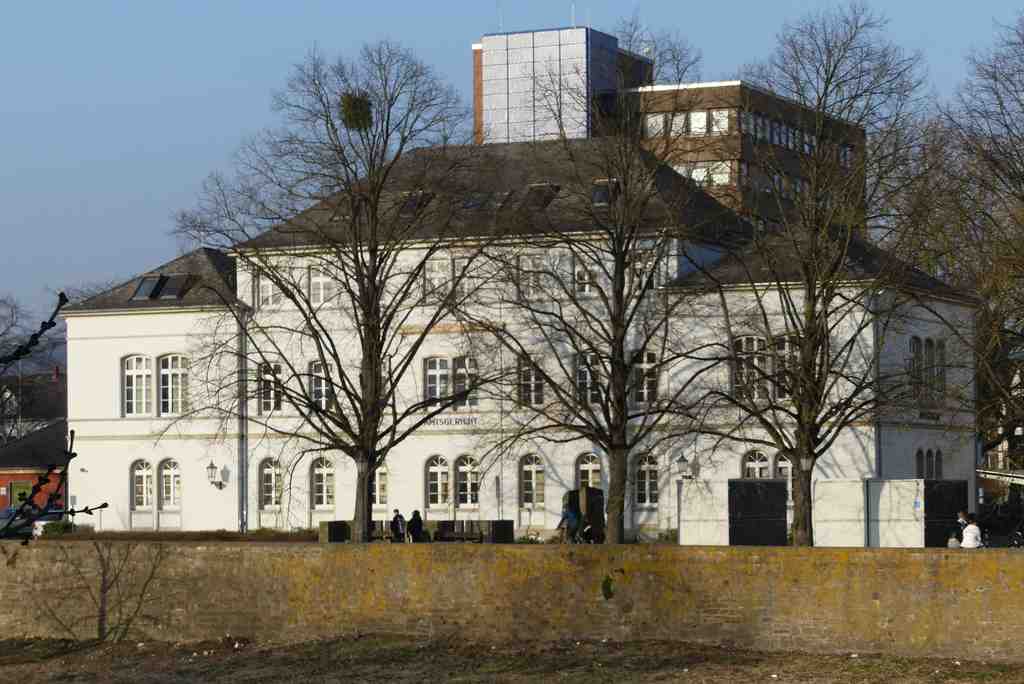
District Court of HamelinPhoto: Bärbel Miemietz, Wikimedia Commons, CC BY-SA 4.0. Cropped & resized. Ahead of you is a broad modern courthouse of pale concrete and glass, shaped around a tall rectangular stair tower and marked at the top by its solar panels.
This is the Amtsgericht Hameln, Hamelin’s local court, where the city makes authority visible instead of leaving it as an idea on paper. An Amtsgericht is the first-level court, the place for everyday justice: criminal cases, civil disputes, family matters, estates, and since nineteen ninety-nine, insolvency cases too - that is, bankruptcy proceedings when debts outrun the ability to pay - not only for Hameln-Pyrmont’s roughly one hundred fifty thousand residents, but also for Springe and Wennigsen.
The building in front of you is newer than the institution inside it. In the late seventeenth century, soldiers of the fortress garrison used this site. After that barracks came down in eighteen twenty, the town put up an Amtshaus here in eighteen twenty-three. It bundled court rooms with a prison, records office, and the court servant’s home. Practical, yes... cozy, not exactly. Over two entrances stood the labels “Amt-Haus” and “Gefangen-Haus,” office on one side, lockup on the other - a plainspoken little lesson in how closely judgment and punishment once sat together.
Then Hameln made a bold move. In eighteen fifty-three, the city paid nine thousand talers toward a new upper court building that cost seventeen thousand five hundred in total - a hefty civic bet, roughly several hundred thousand euros in today’s buying power. When that upper court closed in eighteen seventy-nine, the local court moved into its more grand building. One institution ended, another adapted, and the city kept going. That pattern should sound familiar by now.
The current courthouse opened here at Zehnthof in June of nineteen seventy-seven, after the older complex and prison came down in nineteen seventy-four. If you look at the image in the app, you can see how the tall stair tower gives the whole place its spine. In two thousand and four, workers added a photovoltaic system to that thirty-meter tower, turning a civic landmark into a small public statement about modernization as well.
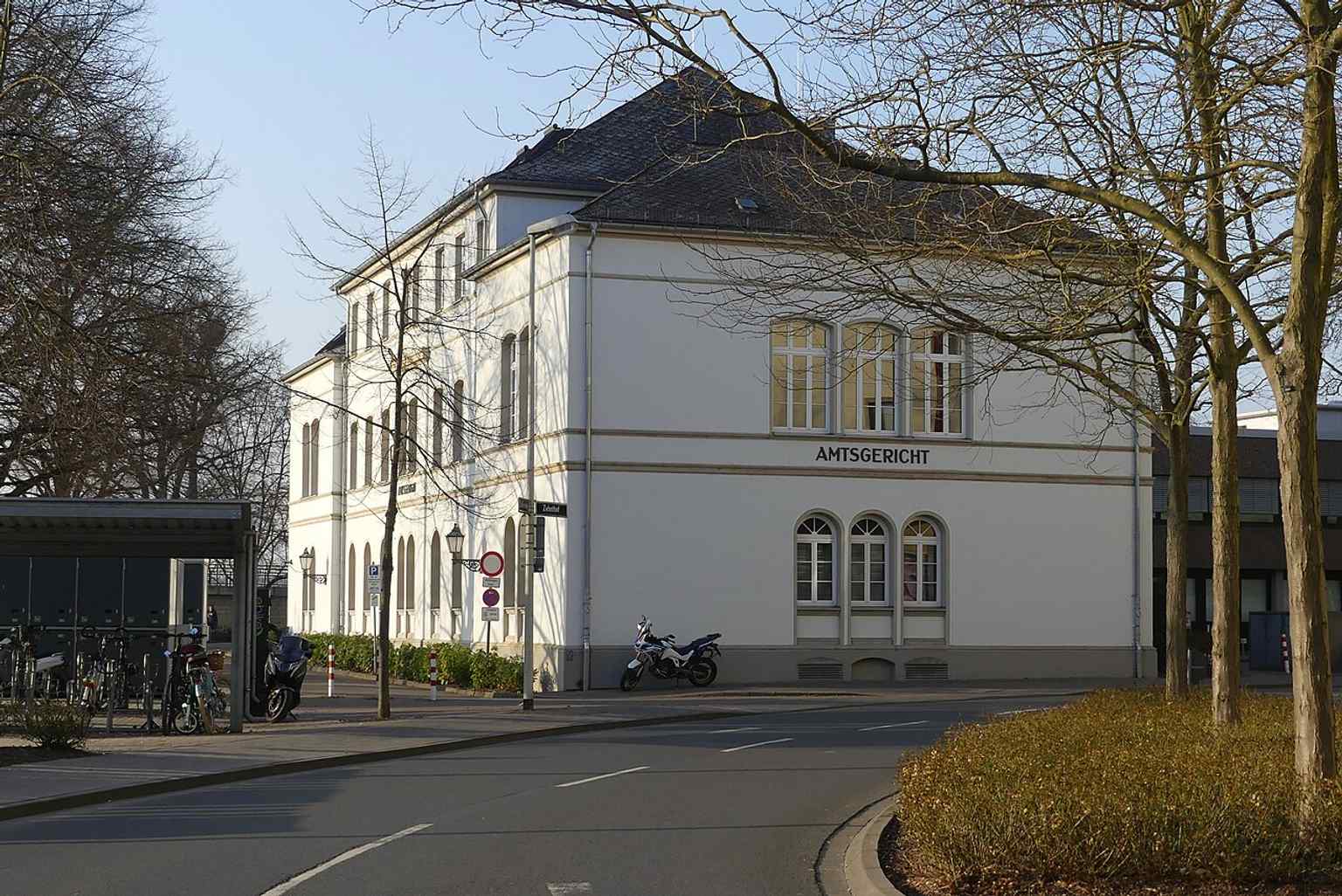
The modern Zehnthof courthouse with its tall stair tower — the 1977 replacement building that later received a solar installation in 2004.Photo: Bärbel Miemietz, Wikimedia Commons, CC BY-SA 4.0. Cropped & resized. Recently, Doctor Simon Schnelle took over as director. He came from Bad Münder and said the court should not merely administer cases, but stand clearly for the judiciary - the branch of government that interprets and applies the law. That feels like the right note to end on. Hamelin may be famous for a tale that charms the ear, but a city stays legible to itself through something steadier: remembered choices, shared trust, and institutions willing to change shape without losing their purpose.
If you need the practical side of justice, the court generally opens Monday through Friday from nine in the morning to noon, and it closes on weekends.
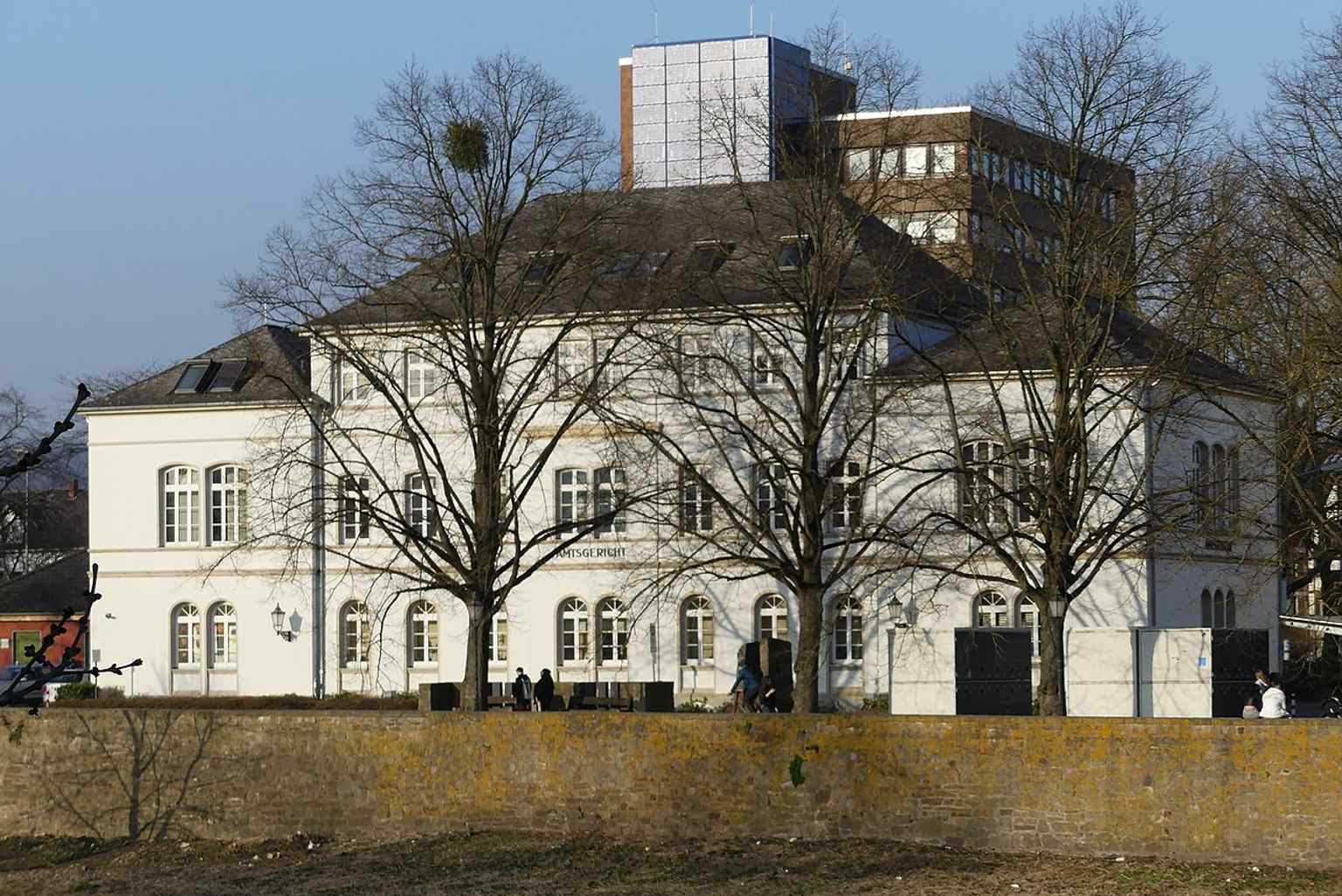
A clear view of the District Court of Hamelin’s contemporary façade, reflecting the post-1970s expansion that made room for the court and its changing workload.Photo: Bärbel Miemietz, Wikimedia Commons, CC BY-SA 4.0. Cropped & resized.
Frequently asked questions
How do I start the tour?
After purchase, download the AudaTours app and enter your redemption code. The tour will be ready to start immediately - just tap play and follow the GPS-guided route.
Do I need internet during the tour?
No! Download the tour before you start and enjoy it fully offline. Only the chat feature requires internet. We recommend downloading on WiFi to save mobile data.
Is this a guided group tour?
No - this is a self-guided audio tour. You explore independently at your own pace, with audio narration playing through your phone. No tour guide, no group, no schedule.
How long does the tour take?
Most tours take 60–90 minutes to complete, but you control the pace entirely. Pause, skip stops, or take breaks whenever you want.
What if I can't finish the tour today?
No problem! Tours have lifetime access. Pause and resume whenever you like - tomorrow, next week, or next year. Your progress is saved.
What languages are available?
All tours are available in 50+ languages. Select your preferred language when redeeming your code. Note: language cannot be changed after tour generation.
Where do I access the tour after purchase?
Download the free AudaTours app from the App Store or Google Play. Enter your redemption code (sent via email) and the tour will appear in your library, ready to download and start.
If you don't enjoy the tour, we'll refund your purchase. Contact us at [email protected]
Checkout securely with 






