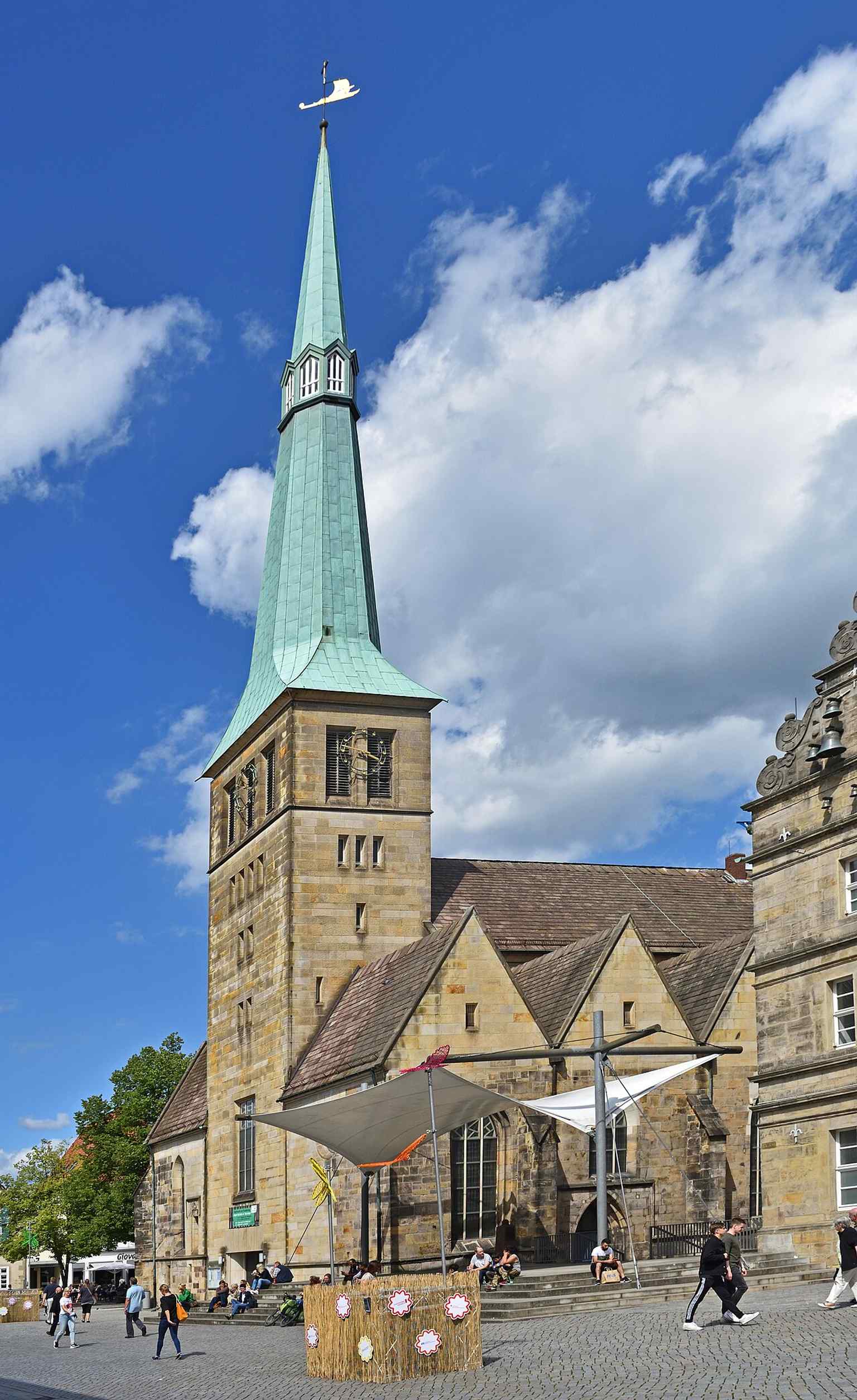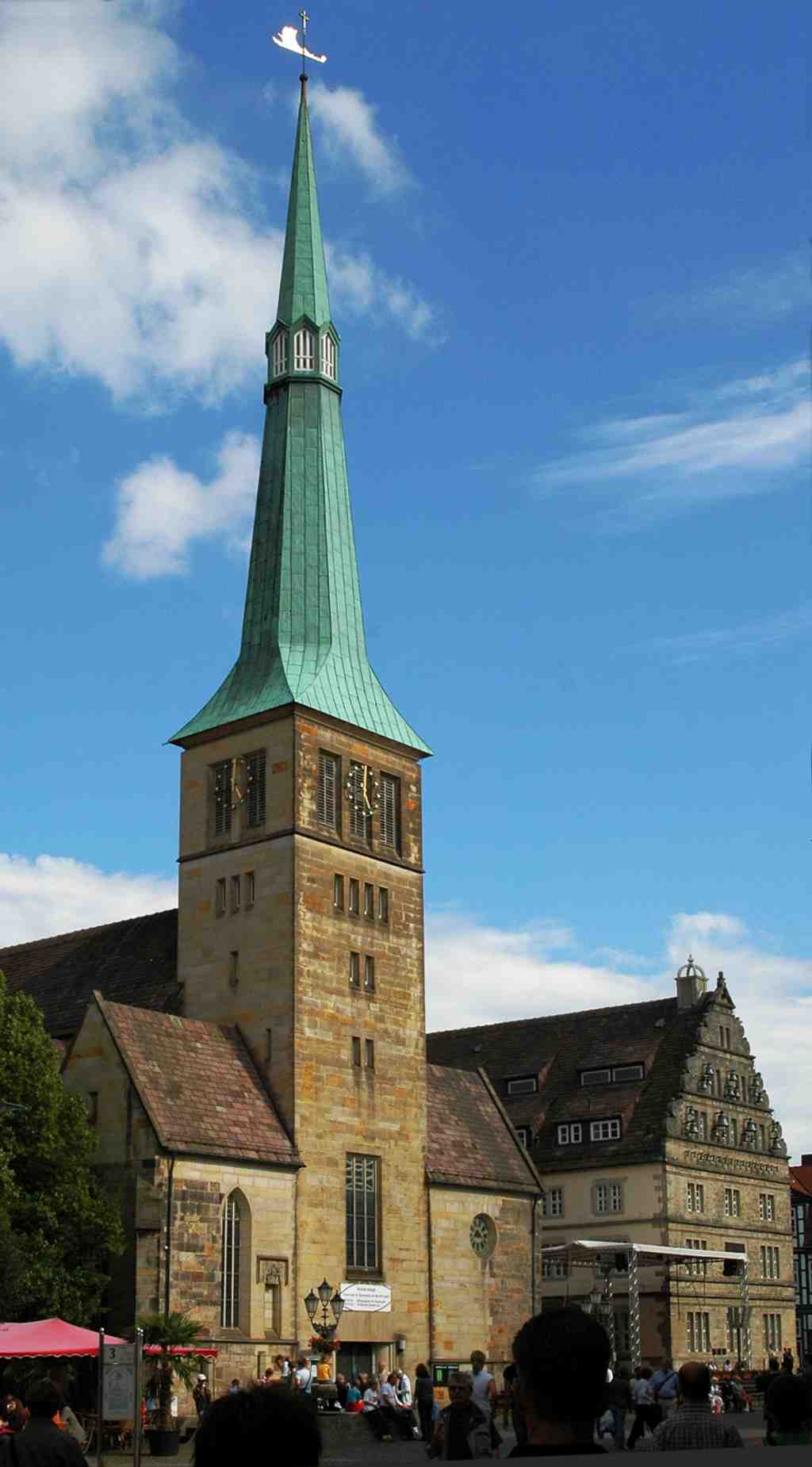
On your right stands a sandstone church with a tall square tower, pointed Gothic windows, and a broad roofline that marks the heart of Hameln’s old town.
This is Saint Nicolai, the Market Church... and here’s the twist in Hameln’s story: even a church did not get to remain only a church. War, fire, shortage, and plain civic stubbornness kept rewriting what this building meant.
Its roots go deep. Builders first raised a small chapel here in the early twelfth century, likely a simple one-aisle church with a west tower. Later they expanded it into a Romanesque basilica - that means a church with a high central hall and lower side aisles - and parts of that older structure still survive in the transept, the cross-arm of the church, with round-arched windows. After a fire around the twelve twenties or twelve thirties, townspeople rebuilt again, then reshaped it into the hall church form you see today, where the main space and side aisles rise to nearly the same height. Hameln kept revising the place the way a family keeps patching a beloved old coat.
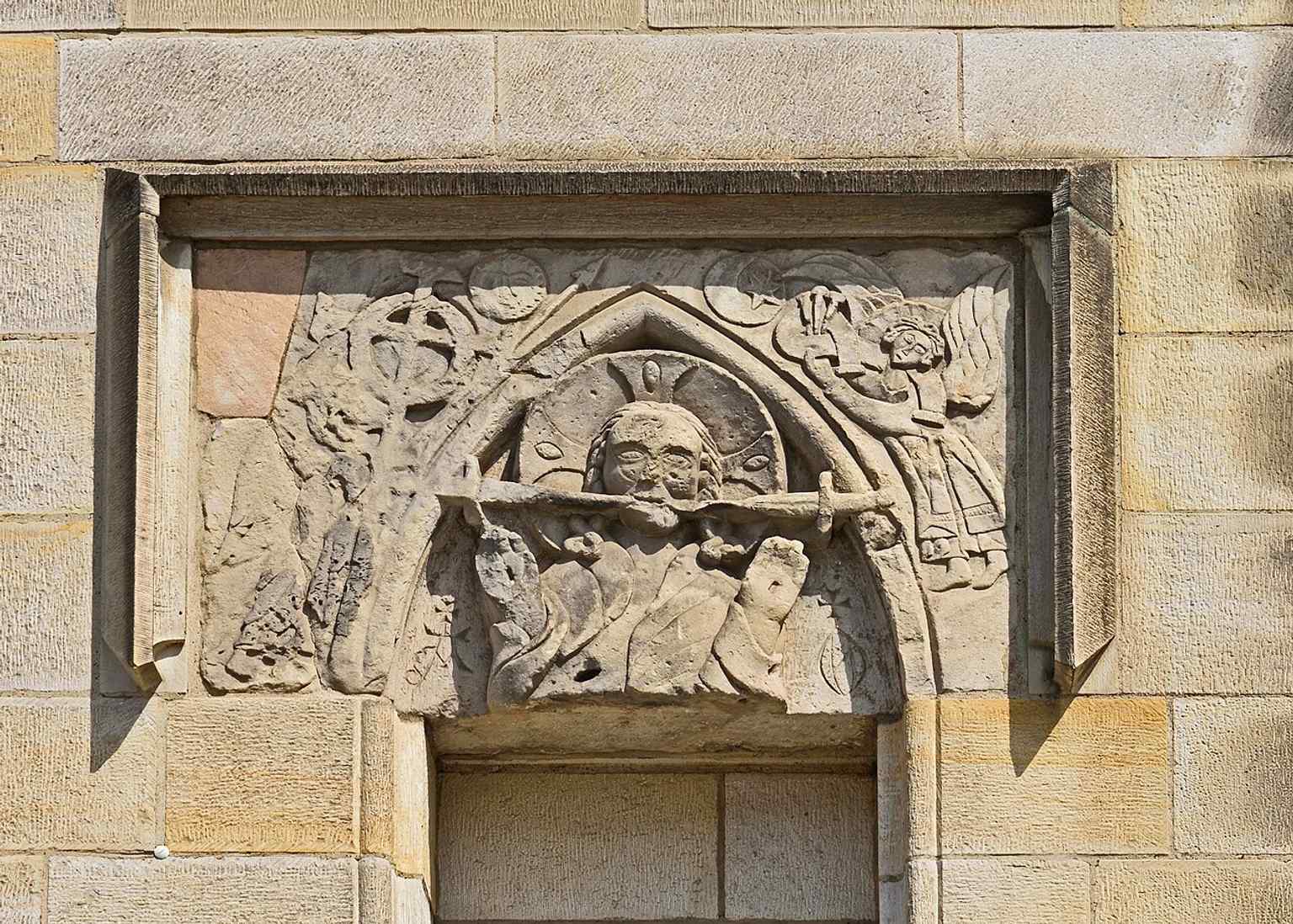
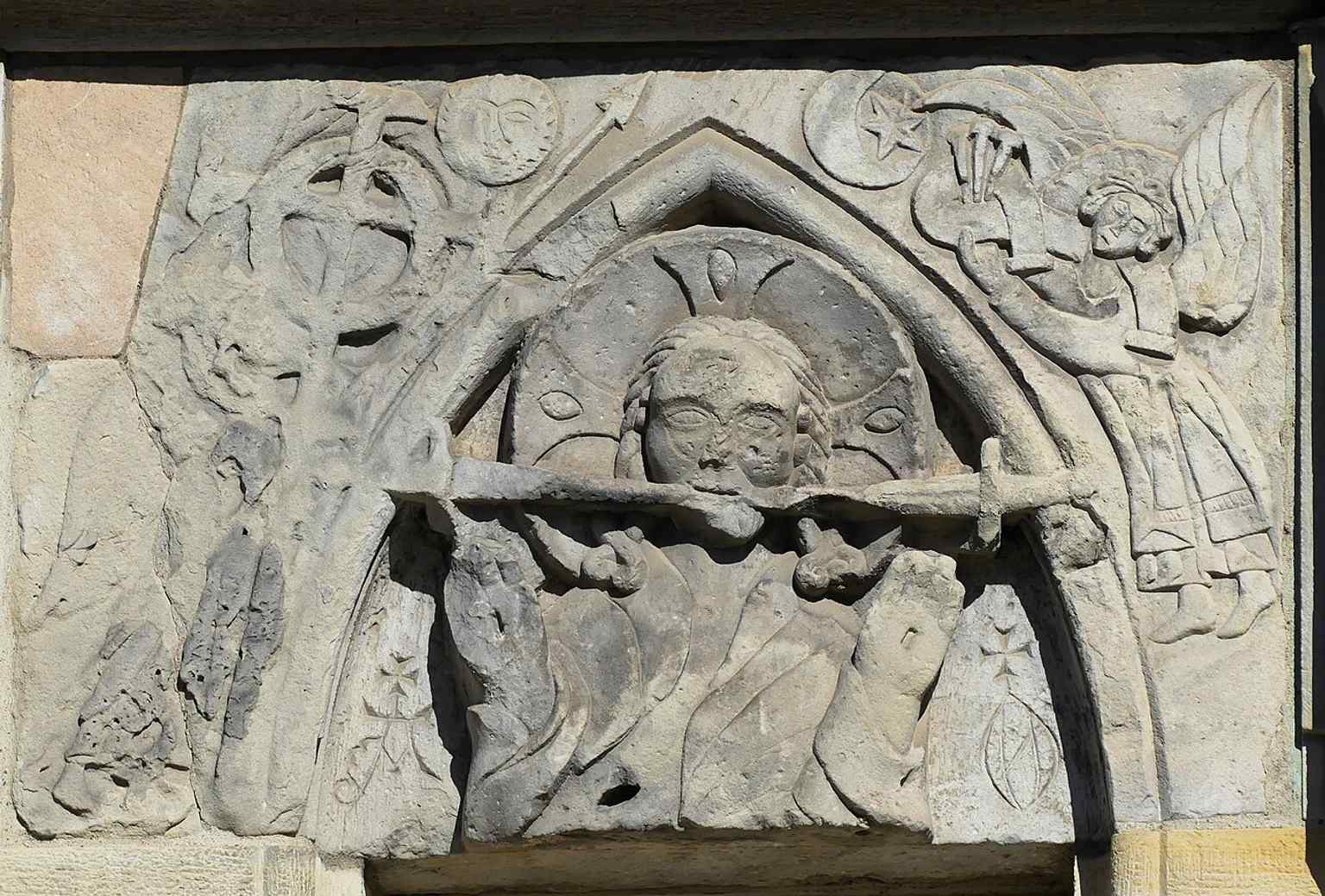
If you glance at the image on your screen, you can spot one of the oldest survivors: the north portal relief of Christ blessing, carved around twelve ninety to thirteen ten. That little fragment matters. It is not just decoration. It is proof that this church has lived through more than one version of itself.
And then came the hard part. During the Seven Years’ War, people turned the Marktkirche into a hospital, then a magazine - meaning a military storage building - and after the Battle of Minden, victors stacked war booty inside. The English later used it as a flour warehouse. Picture that for a second: a sacred interior filled not with prayer, but with cots, crates, loot, and sacks of flour. Altars, the pulpit, and the organ suffered. Paintings burned. Organ pipes disappeared.
Yet after that, townspeople reclaimed it as their own. Senior Hampe preached here again in seventeen sixty-eight when the renewed church reopened, and many in Hameln called it a Bürgerkirche, a citizens’ church. That phrase changes the whole frame, doesn’t it? Not just a holy building handed down from above, but a place ordinary people actively rebuilt. One of them was Clara Louise Schumachern, who donated the pulpit in seventeen sixty-eight. Her name deserves to stay attached to these stones because she helped turn damage into continuity.
Then history hit again. On the fifth of April, nineteen forty-five, artillery fire set the tower ablaze. It collapsed into the church and the neighboring town hall, and both burned out. For a while the ruin still served the living: in nineteen forty-nine and nineteen fifty, the congregation fitted a temporary emergency church into the east end so worship could continue before full reconstruction began. Architect Eberhard G. Neumann led the rebuild from nineteen fifty-seven to nineteen fifty-nine, giving the church its postwar interior and designing the copper west portal doors that tell the story in metal - Saint Nicholas, the Reformation in fifteen forty-two, the ruined church, and a phoenix rising.
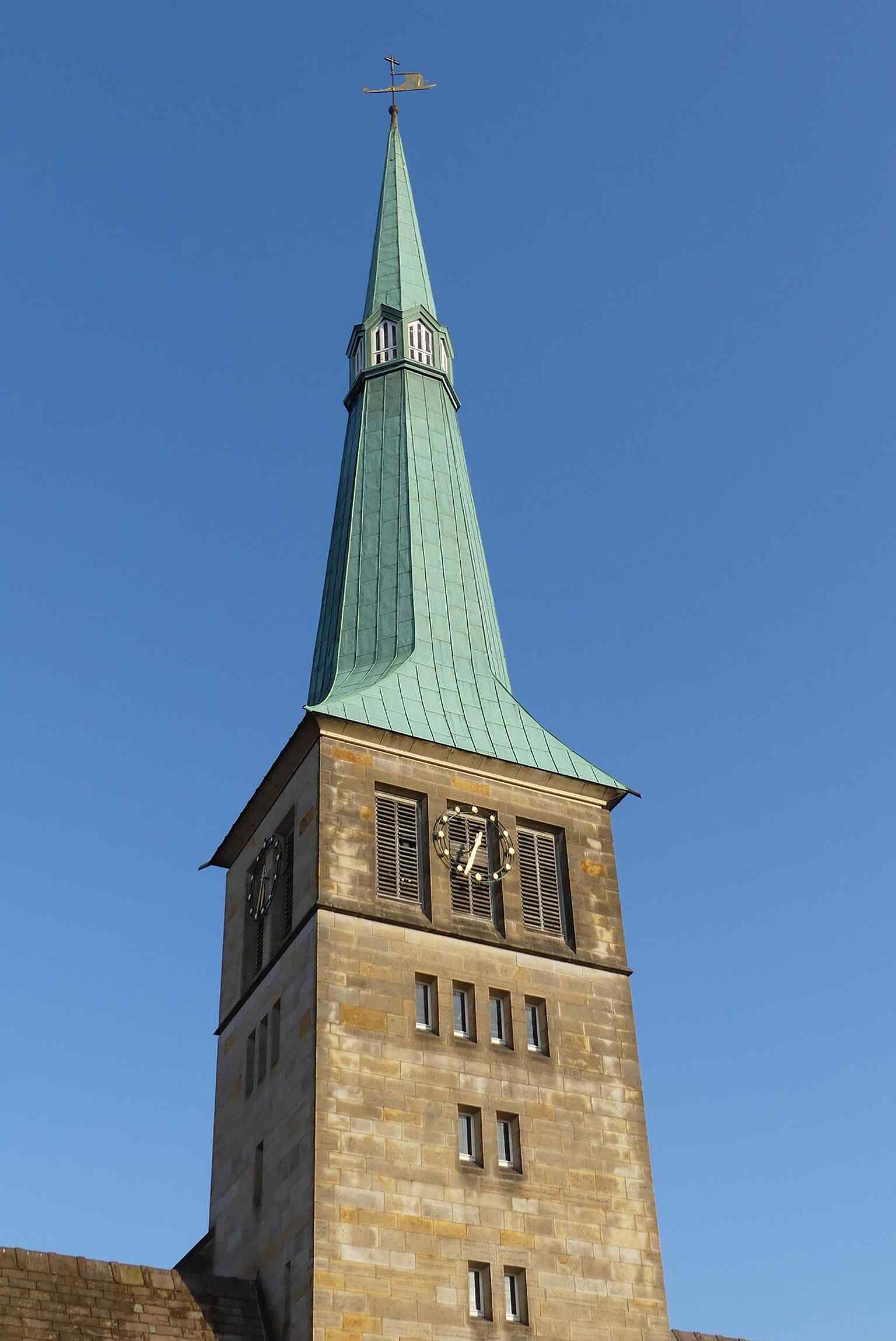
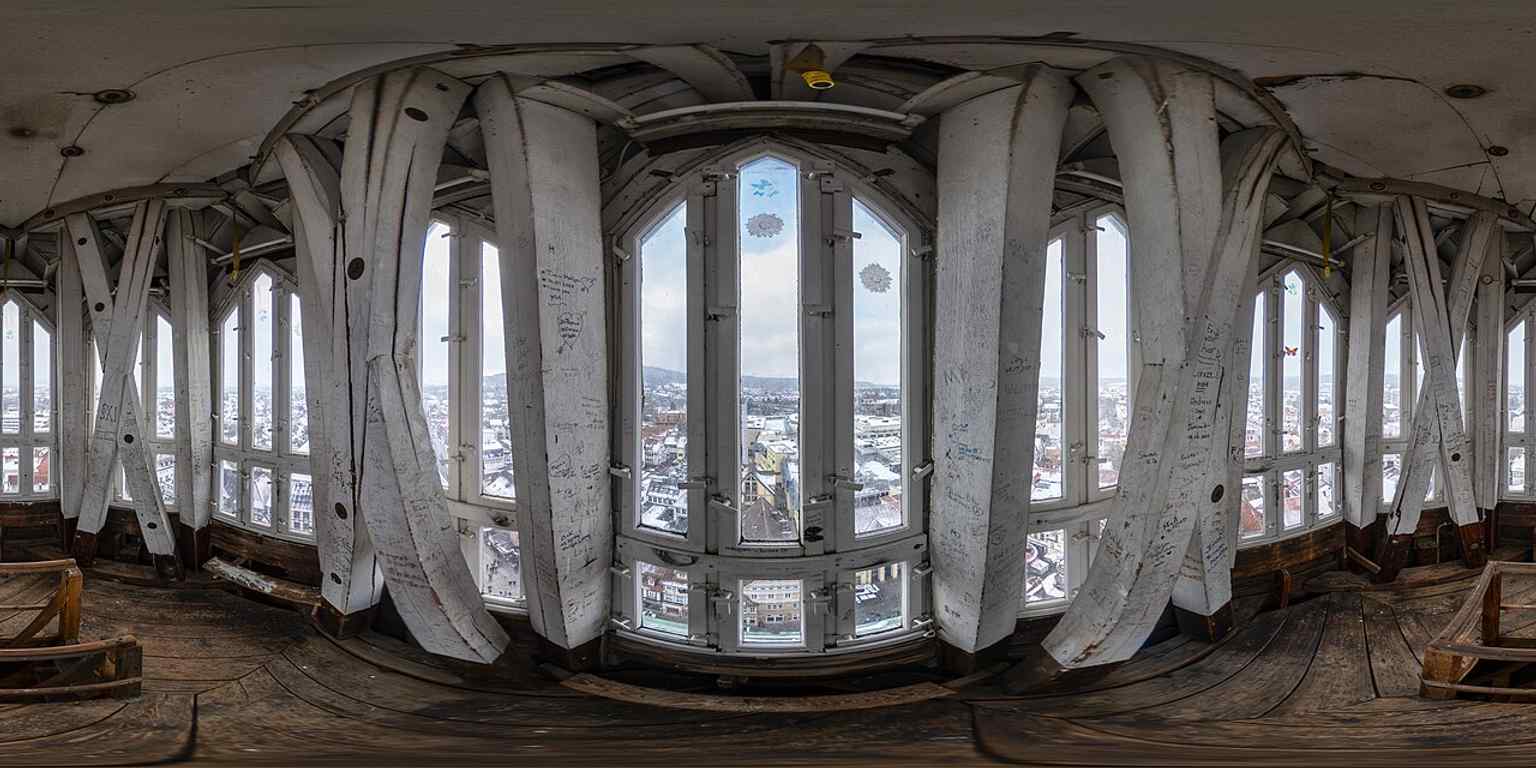
If you look at the tower image in the app, you are seeing a survivor rebuilt so thoroughly that even its exact height remains oddly debated - somewhere between about fifty-two and a bit over sixty meters, depending on whether you count the weather vane. Hameln, apparently, can argue even with a steeple.
That is what makes this place so honest. Buildings can keep their names and silhouettes while their purpose, wounds, and loyalties change again and again. When you’re ready, head on to Sparkasse Weserbergland, about a two-minute walk away. If you plan to come inside here later, the church is generally open from Wednesday through Sunday, from twelve noon to four P-M.