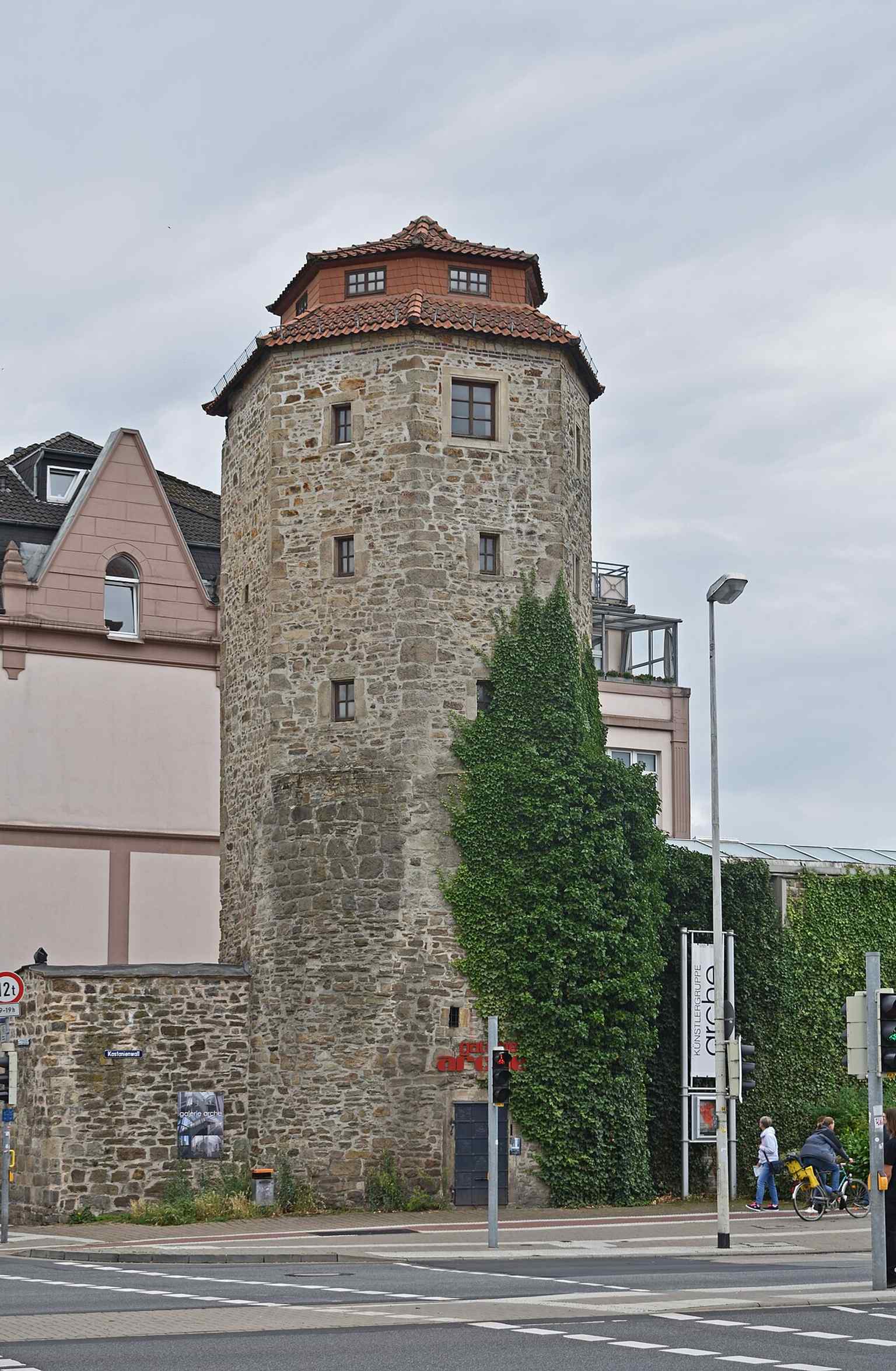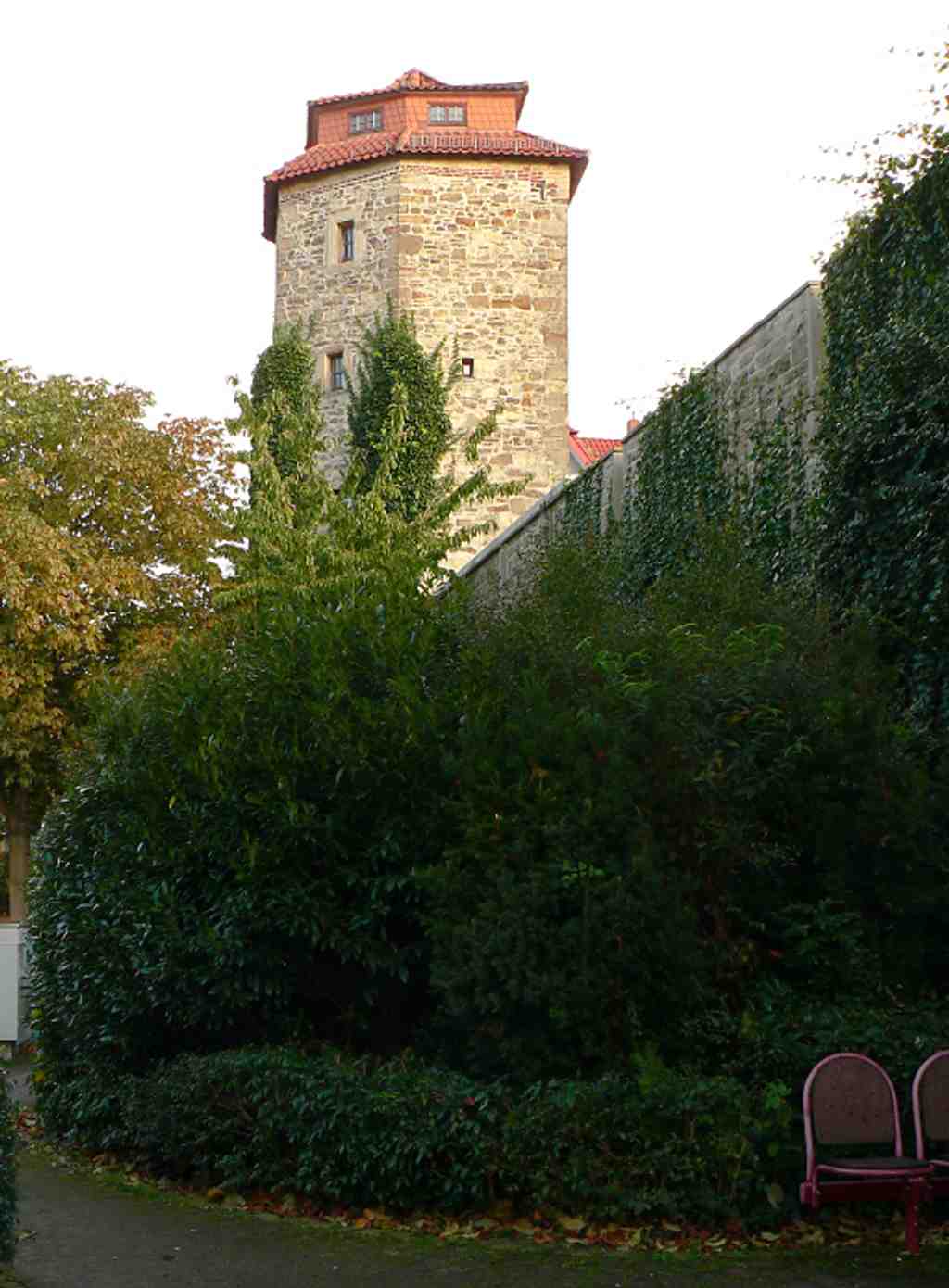
On your left stands a squat round tower of rough stone and brick, topped with a conical roof and joined to a surviving section of city wall.
This is the Haspelmath Tower, raised around the year fourteen fifty as one of twenty-two towers in Hameln’s medieval defenses. Then came a hard break: in eighteen oh eight, Napoleon the First ordered Hameln’s fortifications destroyed. Most of the ring vanished. Only this tower and the Pulverturm made it through, which is about as close as stone gets to sheer stubbornness.
Now pause a moment and follow the tower’s curve with your eyes... then picture it not as a lone survivor, but as one piece in a full defensive belt around the city. The wall beside it was rebuilt in the nineteen nineties, a careful reminder of what once stood here.
Its second rescue came from a man named Friedrich Haspelmath, a Hameln citizen and veterinarian. He bought the tower, fixed it up, and filled it with objects he gathered on travels through the Mediterranean and farther afield. That made this old guard tower Hameln’s first private museum... a place where military stone began protecting memory instead.
In eighteen ninety-nine, his grandson gave the tower and collection to the local museum association. One small seal from that gift became one of the museum’s earliest recorded objects. During the war, curators moved major parts of the collection to the Bismarck Tower and other places for safety, and in nineteen forty-nine they returned. Since nineteen ninety-two, the artists’ group Arche has used the restored tower as a gallery.
That’s Hameln in a nutshell: what stays standing often survives by learning a new job. From here, the Market Church is about a three-minute walk away.