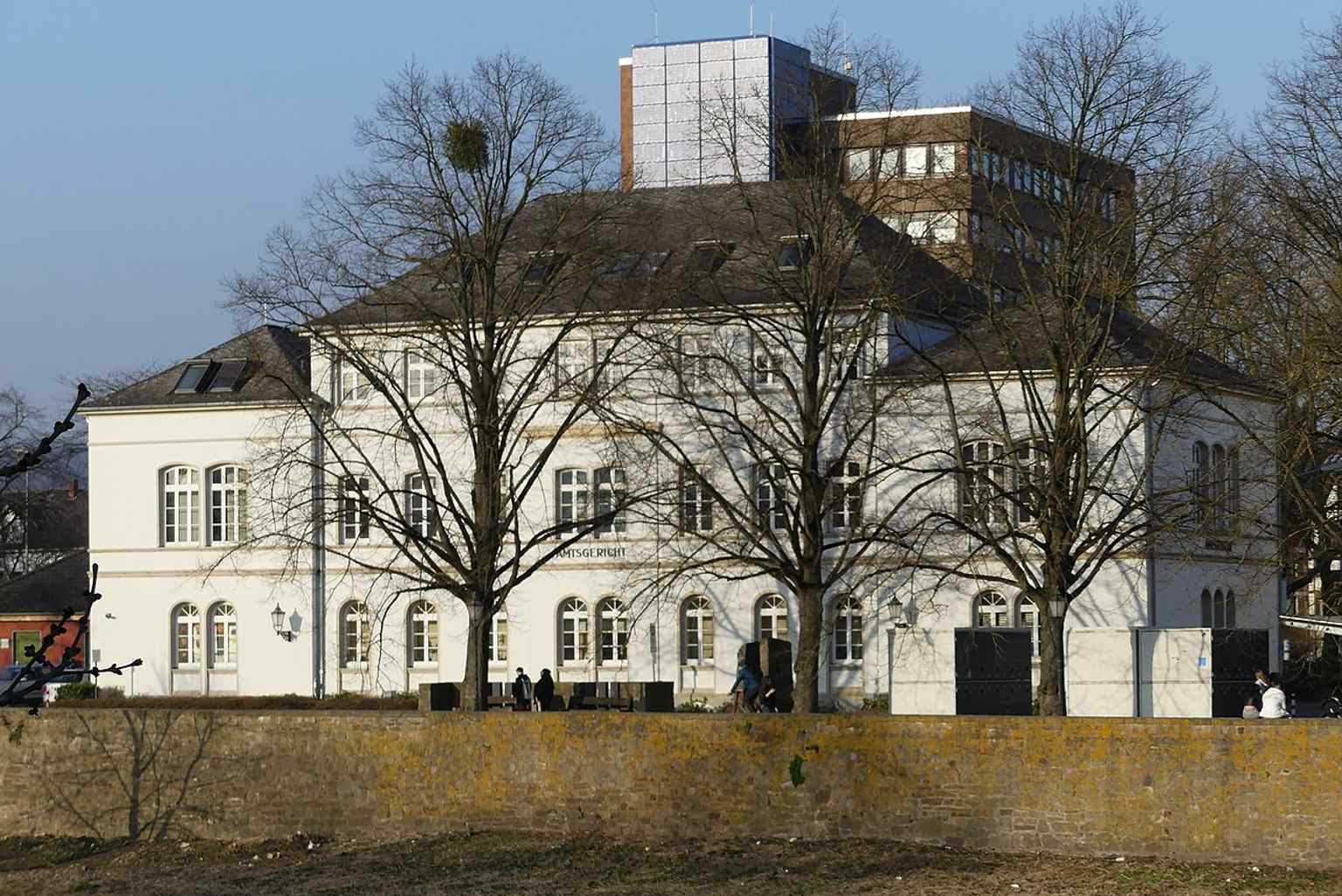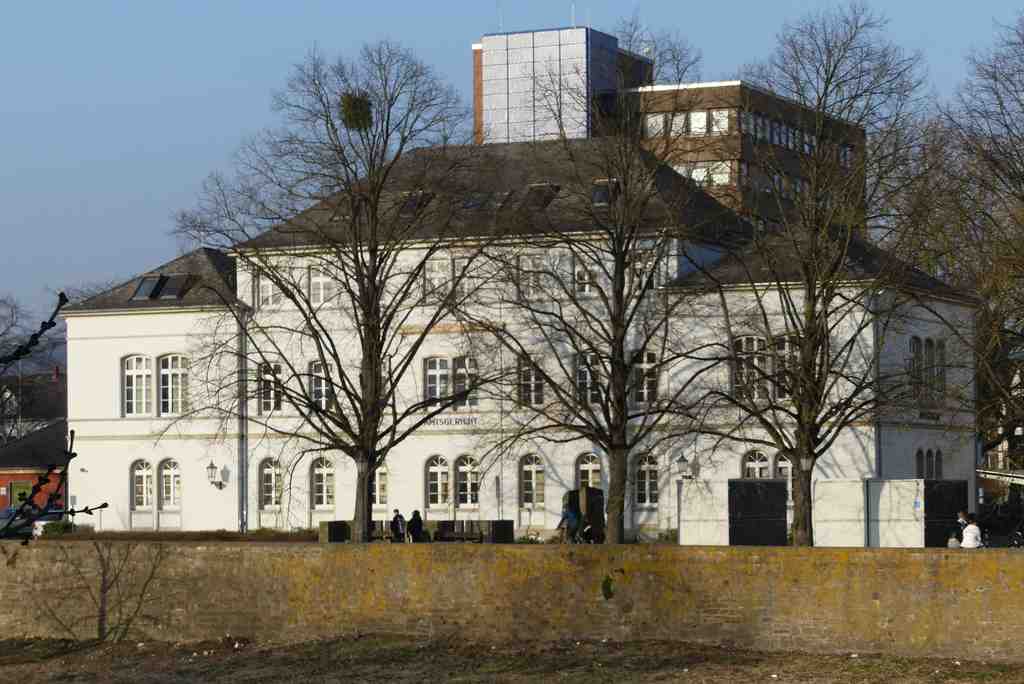
Ahead of you is a broad modern courthouse of pale concrete and glass, shaped around a tall rectangular stair tower and marked at the top by its solar panels.
This is the Amtsgericht Hameln, Hamelin’s local court, where the city makes authority visible instead of leaving it as an idea on paper. An Amtsgericht is the first-level court, the place for everyday justice: criminal cases, civil disputes, family matters, estates, and since nineteen ninety-nine, insolvency cases too - that is, bankruptcy proceedings when debts outrun the ability to pay - not only for Hameln-Pyrmont’s roughly one hundred fifty thousand residents, but also for Springe and Wennigsen.
The building in front of you is newer than the institution inside it. In the late seventeenth century, soldiers of the fortress garrison used this site. After that barracks came down in eighteen twenty, the town put up an Amtshaus here in eighteen twenty-three. It bundled court rooms with a prison, records office, and the court servant’s home. Practical, yes... cozy, not exactly. Over two entrances stood the labels “Amt-Haus” and “Gefangen-Haus,” office on one side, lockup on the other - a plainspoken little lesson in how closely judgment and punishment once sat together.
Then Hameln made a bold move. In eighteen fifty-three, the city paid nine thousand talers toward a new upper court building that cost seventeen thousand five hundred in total - a hefty civic bet, roughly several hundred thousand euros in today’s buying power. When that upper court closed in eighteen seventy-nine, the local court moved into its more grand building. One institution ended, another adapted, and the city kept going. That pattern should sound familiar by now.
The current courthouse opened here at Zehnthof in June of nineteen seventy-seven, after the older complex and prison came down in nineteen seventy-four. If you look at the image in the app, you can see how the tall stair tower gives the whole place its spine. In two thousand and four, workers added a photovoltaic system to that thirty-meter tower, turning a civic landmark into a small public statement about modernization as well.
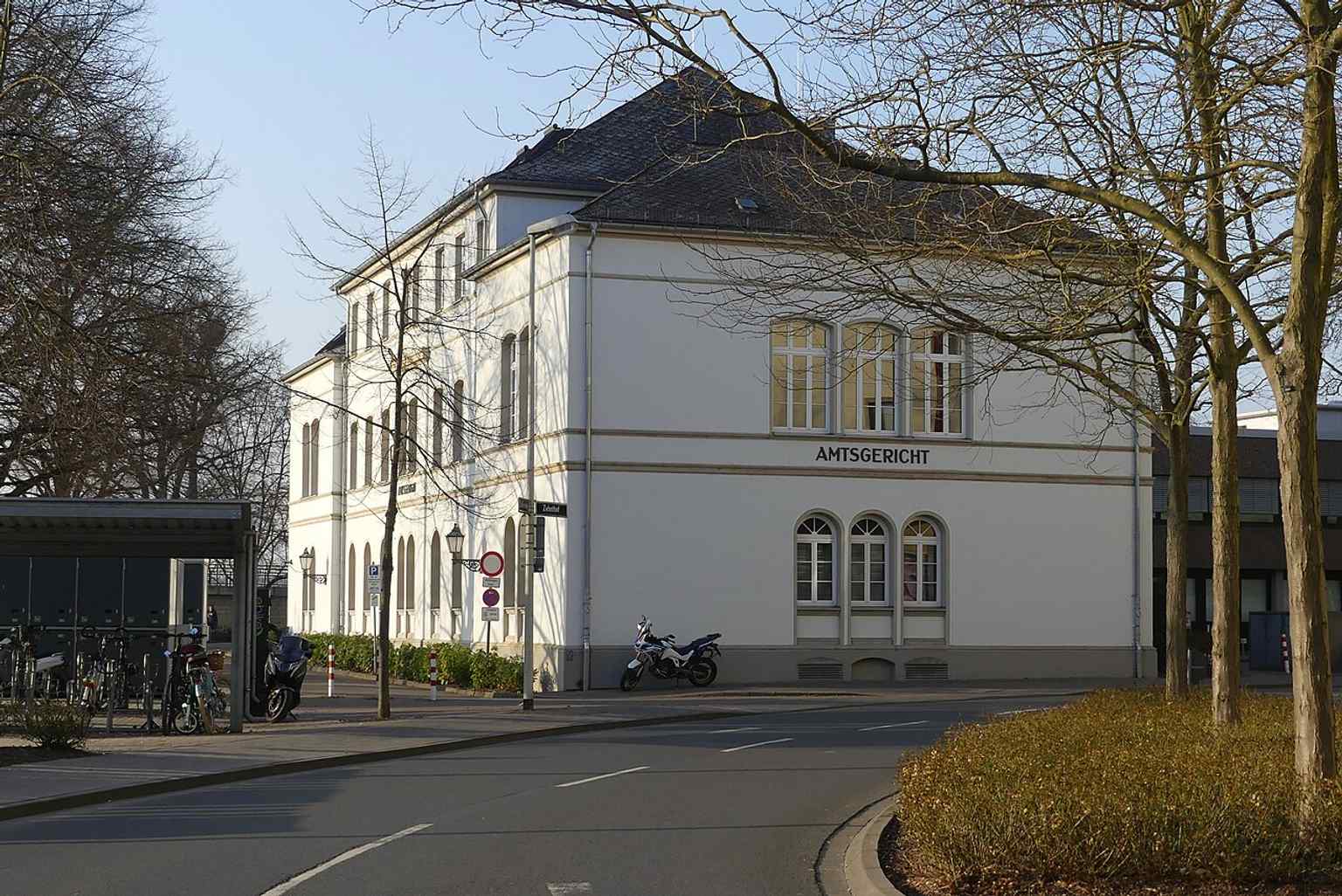
Recently, Doctor Simon Schnelle took over as director. He came from Bad Münder and said the court should not merely administer cases, but stand clearly for the judiciary - the branch of government that interprets and applies the law. That feels like the right note to end on. Hamelin may be famous for a tale that charms the ear, but a city stays legible to itself through something steadier: remembered choices, shared trust, and institutions willing to change shape without losing their purpose.
If you need the practical side of justice, the court generally opens Monday through Friday from nine in the morning to noon, and it closes on weekends.