
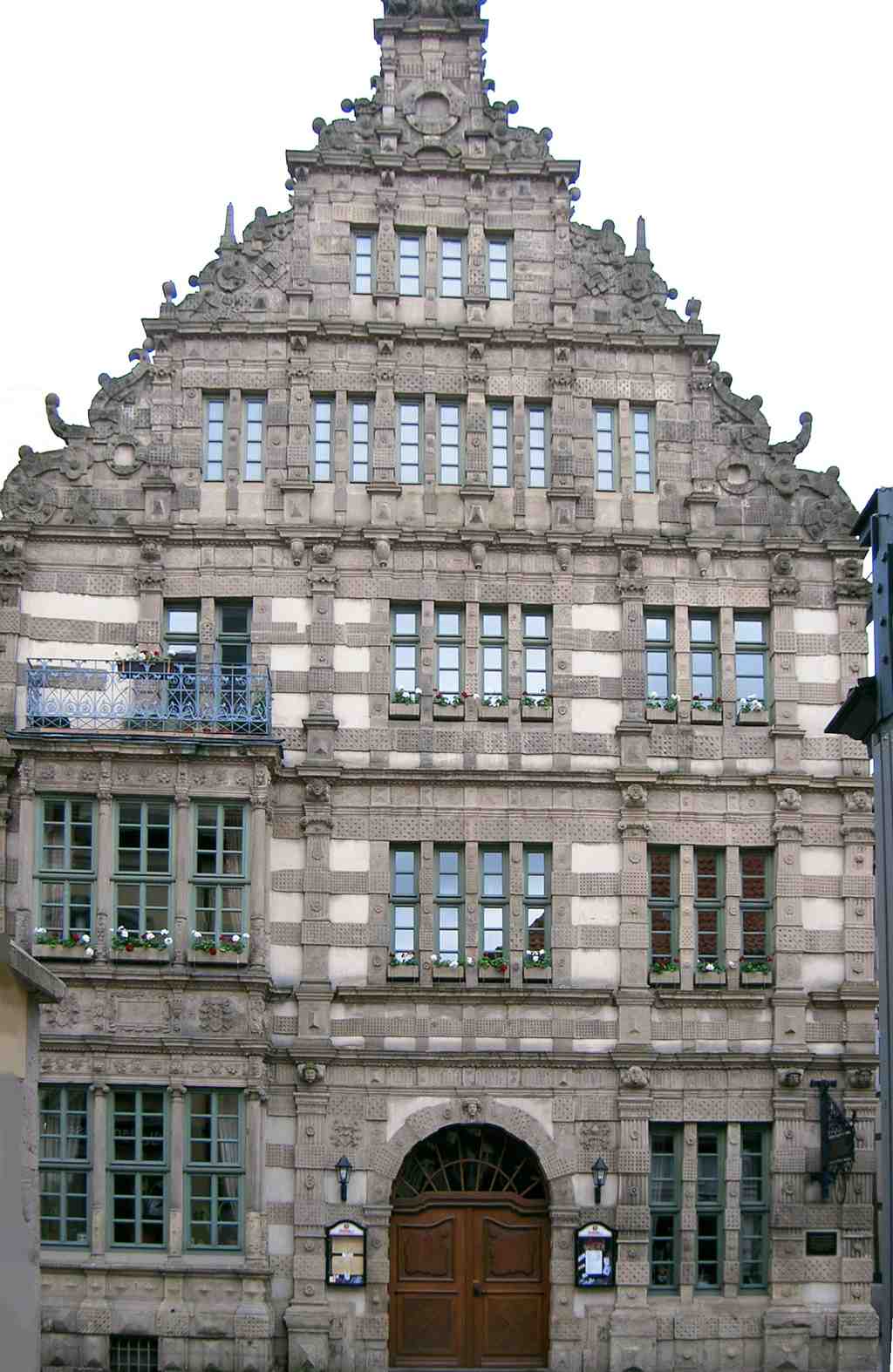
Look for a tall sandstone-and-timber Renaissance house with stepped gables and a carved inscription beam along the corner facing Bungelosenstraße.
This is Hameln’s celebrity house... the Pied Piper House, or Rat Catcher House. Most visitors arrive hunting the legend, and fair enough: the name comes from an old inscription here that recounts the twenty-sixth of June, twelve eighty-four, when a brightly dressed piper supposedly led one hundred thirty Hameln children away. Local tradition even says he took them out through Bungelosenstraße, a name tied to “drumless,” because music was forbidden there afterward.
But here’s the useful local trick: don’t stop at the story on the surface. Hameln has long used this house as a kind of public memory board, a handsome place to pin its most famous tale. That matters, because cities often choose their identity the same way families choose what stays framed on the mantel.
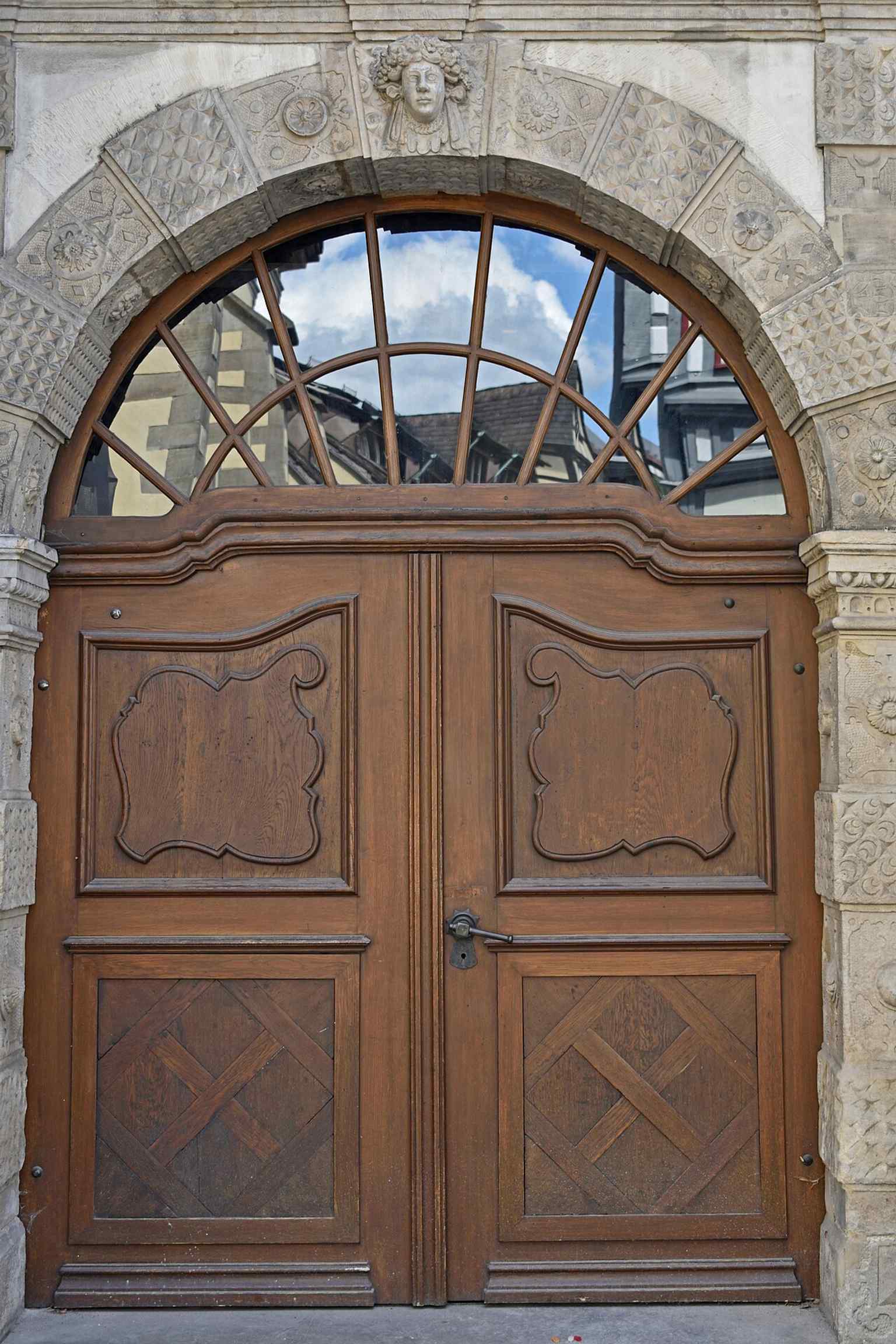
Now give the façade a good, steady look. It is proud, polished, original... the sort of exterior that suggests a successful owner and not much room for surprise. If you want a closer look at the craftsmanship, glance at the doorway on your screen.
The house began in sixteen oh two or sixteen oh three, when the councilman Hermann Arendes hired master builders Johann Hundertossen or Eberhard Wilkening to create one of Hameln’s grandest Weser Renaissance homes. Later, from seventeen sixty-eight to eighteen oh one, it belonged to Hertz Joseph, a Jewish merchant who sold horses and fodder at local fairs and also lent money. So this famous legend-house also holds a quieter chapter of Jewish everyday life.
And then the building quite literally gave up secrets. In eighteen ninety-nine, innkeeper August Kirchhoff demolished the neighboring house to build a modern hotel and discovered the two buildings shared a wall. Hidden inside were letters, some in German, some in Hebrew. Then, during restoration in nineteen eighty-one, workers found another Hebrew letter in that same wall, plus an old wine bottle and a Hebrew prayer book under the floorboards. Tourists come for one piper; the house hands you a whole archive.
Since nineteen seventeen the city has owned it, and since nineteen sixty-six it has welcomed diners instead of merchants. Behind Hameln’s best-known tale, there is a whole city of quieter evidence waiting to be read. When you’re ready, head on to Volksbank Hameln Stadthagen, about a three-minute walk from here.





