
Bastia Audio Tour: Echoes of Palaces, Markets & Sacred Stones
A thunderous canon once echoed across Bastia’s Old Port as rebels staked their claim beneath pastel facades and watchful bell towers. Few travellers truly see the secrets etched into the city’s winding streets and elegant piazzas. With this self-guided audio tour, wander Bastia’s heart and uncover astonishing stories most visitors overlook. Slip beneath cathedral domes and through sunlit squares where history still whispers. Which high-ranking priest vanished without a trace from the Pro-Cathedral of Sainte-Marie? Who dared to challenge the Genoese rulers in a midnight plot on Place Saint-Nicolas? Why was there once a boat moored inside Church of Saint-Jean-Baptiste? Feel Bastia shift around you as stories of intrigue, faith, and rebellion sweep you through hidden alleys and grand monuments. Each stride peels back centuries of drama and mystery. Turn your curiosity into adventure—let the secrets of Bastia’s stones speak to you now.
Tour preview
About this tour
- scheduleDuration 100–120 minsGo at your own pace
- straighten3.7 km walking routeFollow the guided path
- location_on
- wifi_offWorks offlineDownload once, use anywhere
- all_inclusiveLifetime accessReplay anytime, forever
- location_onStarts at Bastia
Stops on this tour
lock_open 3 free previews · 10 unlock with purchase
What makes Bastia so arresting is its setting. The city presses itself between the sea and the mountains at the eastern foot of Cap Corse, on the flank of the Serra di Pignu,…Read moreShow less
Open dedicated page →Welcome to Bastia, a city with a soldier’s name and a merchant’s soul. The name itself comes from the Corsican and Italian word bastia, meaning a fortified post, and that little clue tells you almost everything about its beginning. Bastia grew from strategy first, then trade, then sheer force of character. It is now the administrative capital, or prefecture, of Haute-Corse, and with more than forty-six thousand inhabitants it stands as Corsica’s second-largest town after Ajaccio.
What makes Bastia so arresting is its setting. The city presses itself between the sea and the mountains at the eastern foot of Cap Corse, on the flank of the Serra di Pignu, which rises to nine hundred and fifty-seven metres. Because the slopes fall so sharply, the town developed on a coastal strip only about one and a half kilometres wide. If you glance at the image on your screen, you can see that remarkable compression for yourself: Bastia almost seems tucked between rock and water, as if it had no choice but to become a port. And a port it became, facing Elba and the Italian peninsula, close enough for commerce, influence and ambition to cross the water with ease.
Before there was a city, there was little more than a Pisan chapel dedicated to Saint Nicholas and a fishing harbour linked to the village of Cardu. Then, in thirteen eighty-three, Leonello Lomellini, one of Genoa’s governors on Corsica, founded Bastia with financial backing from the Maona, a consortium of wealthy Genoese investors. He established a stronghold above the harbour, and from that gesture the city divided into two worlds: Terra Nova, the upper fortified town, and Terra Vecchia, the lower town by the port. Another image on your phone shows the citadel’s commanding position beautifully. Bastia did not remain quiet for long. Vincentello d’Istria captured it in fourteen oh five; Genoa recovered it two years later. In the eighteenth century, anger at Genoese taxation spilled into open revolt, and in seventeen forty-five a British fleet bombarded the town. Later, during the brief Anglo-Corsican Kingdom, Bastia even served as the chosen capital instead of Corte. Power kept changing hands, yet the city’s importance only deepened.
The nineteenth century reshaped its shoreline. Authorities pushed ahead with a new port, and in eighteen sixty they destroyed the so-called Lion Rock, which had made entry dangerous. By then Bastia had become the island’s great commercial hinge, the place through which goods, passengers and ideas moved.
Its twentieth-century memories cut deeper. In nineteen thirty-eight, twenty thousand people gathered here for the “oath of Bastia,” publicly affirming their loyalty to France as Italian irredentism grew louder. Then, on the eleventh of November, nineteen forty-two, nearly eighty thousand Italian soldiers landed here. Resistance networks spread through the city, and Bastia endured occupation until the fourth of October, nineteen forty-three, becoming the last Corsican city to be liberated.
So Bastia is not merely a backdrop; it is the key to the island’s northern story.
When you are ready, let us follow that story into the city itself.
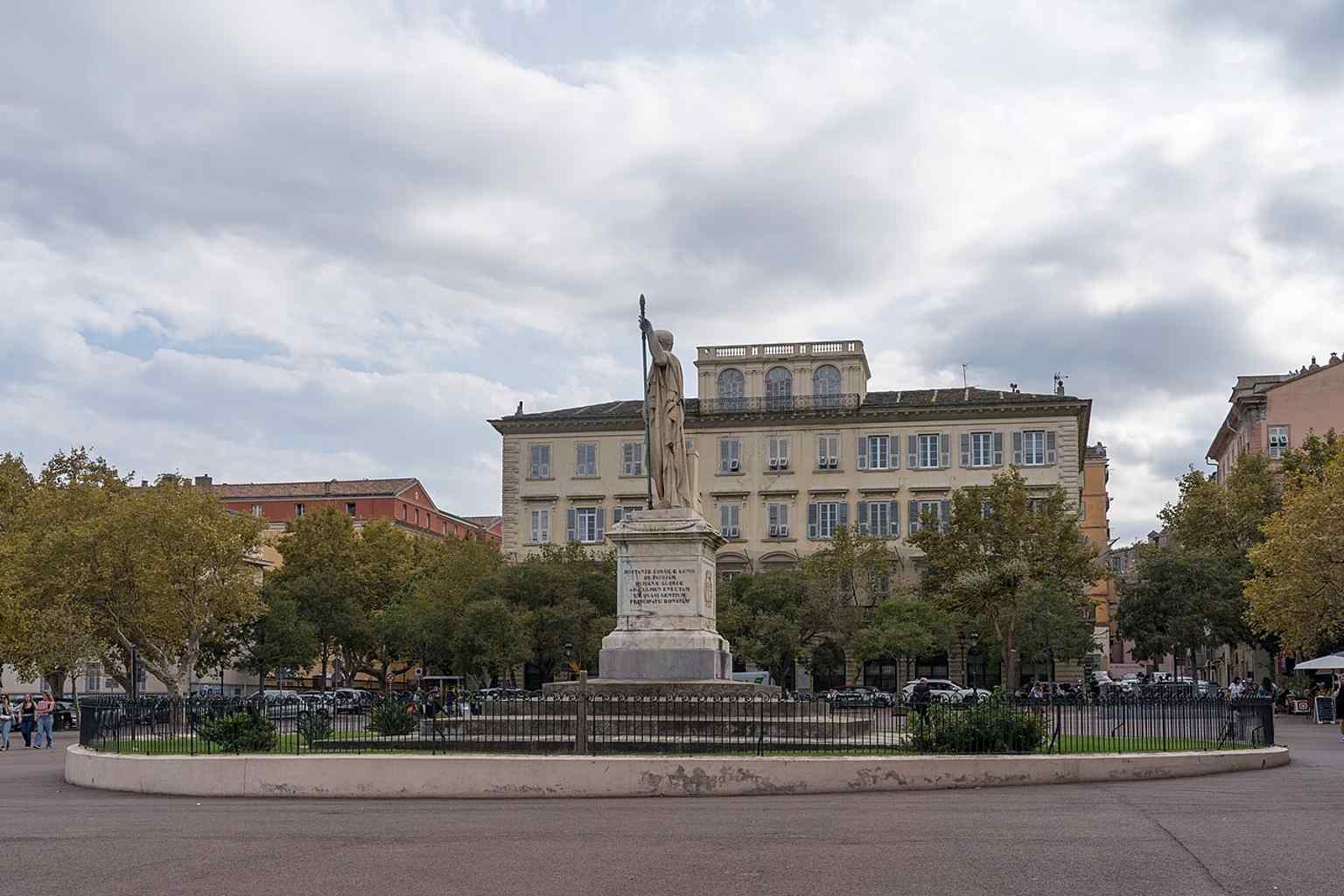
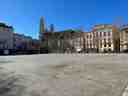
Place Saint-Nicolas, the grand waterfront square that forms the heart of modern Bastia and the city’s main public meeting place.Photo: Alexkom000, Wikimedia Commons, CC BY 4.0. Cropped & resized. 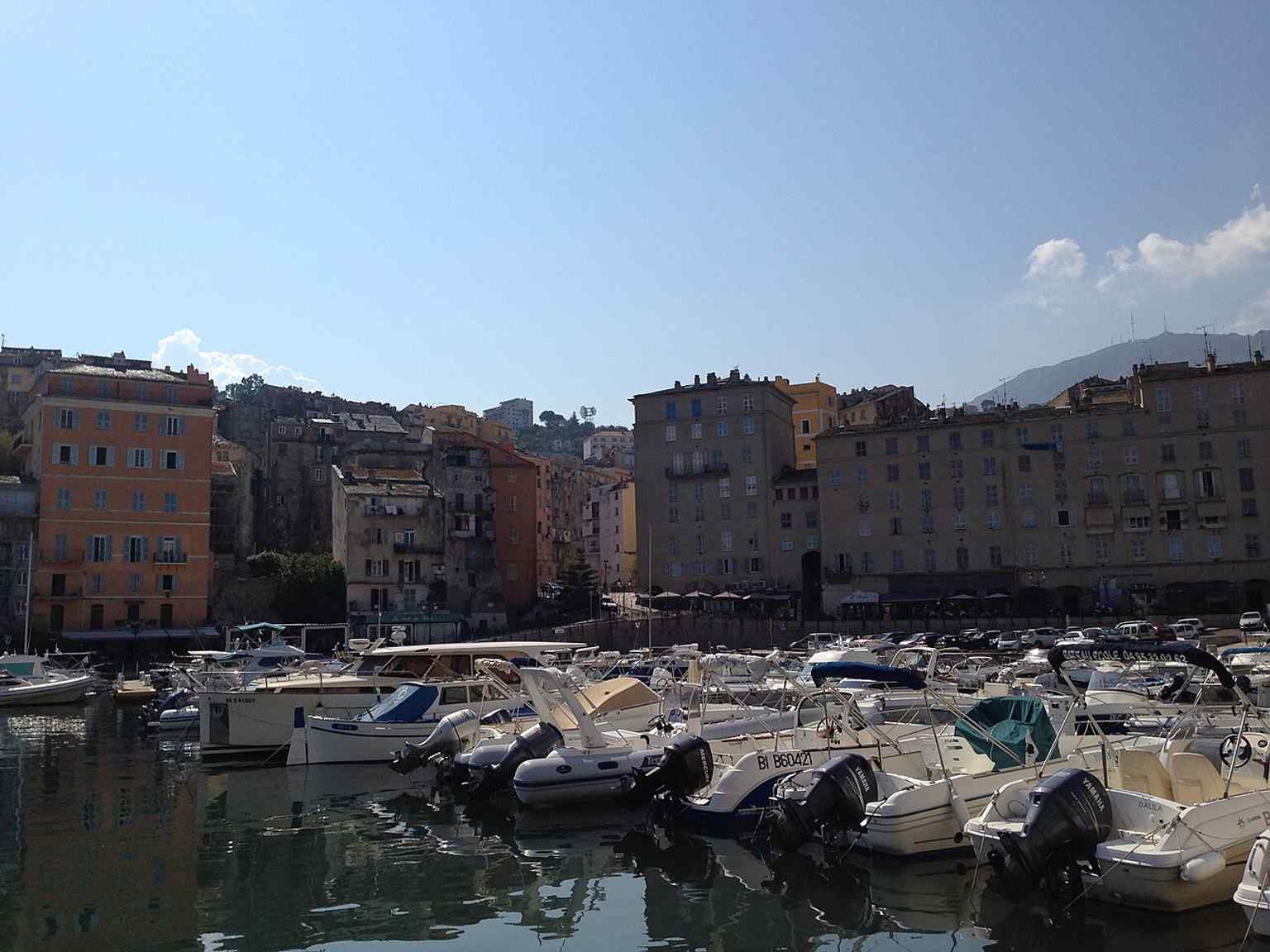
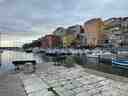
A classic view of the old port of Bastia, illustrating the harbor atmosphere that made the city a Mediterranean trading hub.Photo: AirScott, Wikimedia Commons, CC BY-SA 4.0. Cropped & resized. 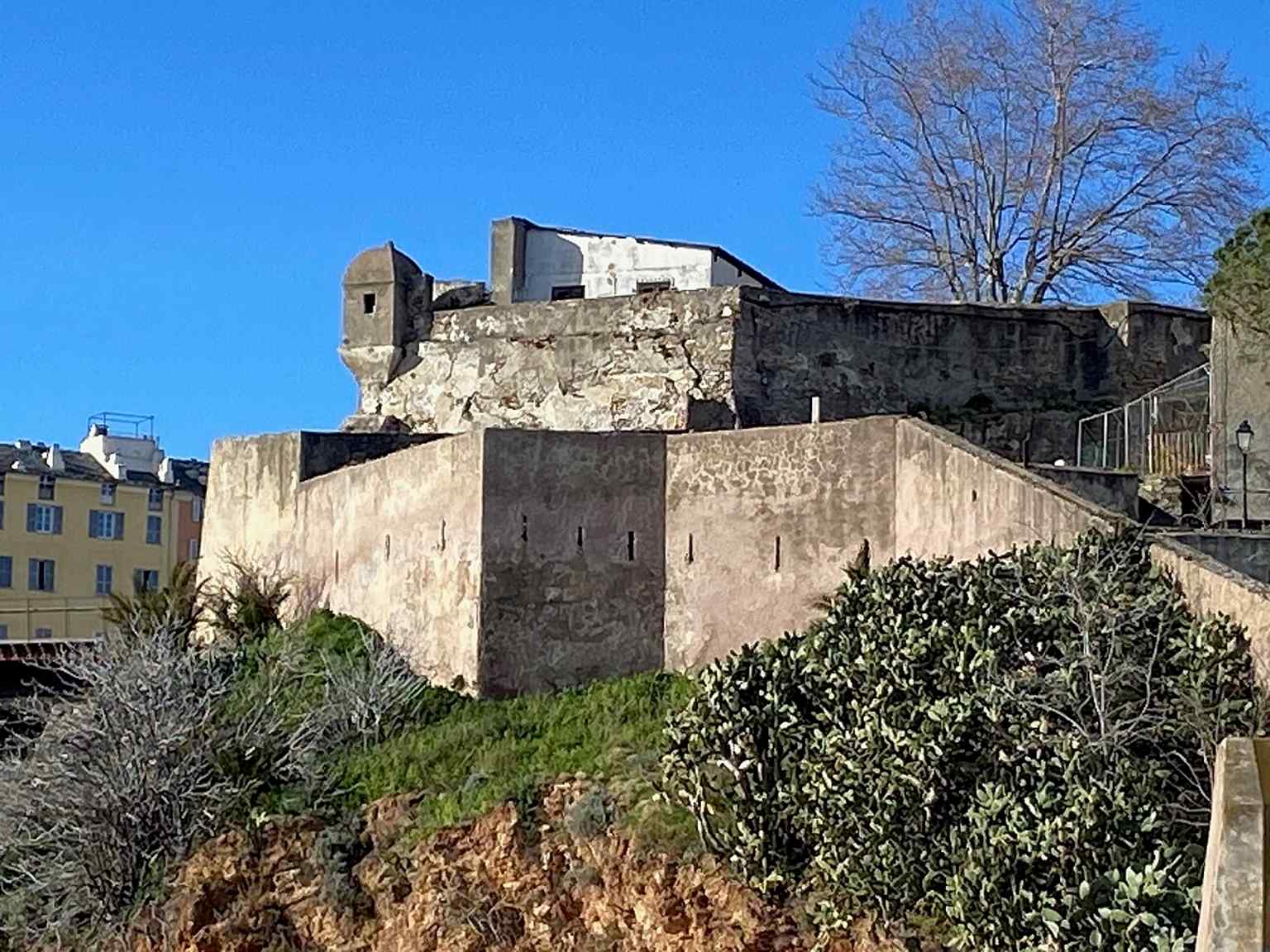
Bastion Santa Maria inside the citadel, one of the defensive works that recall Bastia’s origins as a fortified post.Photo: Cosudibastia, Wikimedia Commons, CC BY-SA 4.0. Cropped & resized. 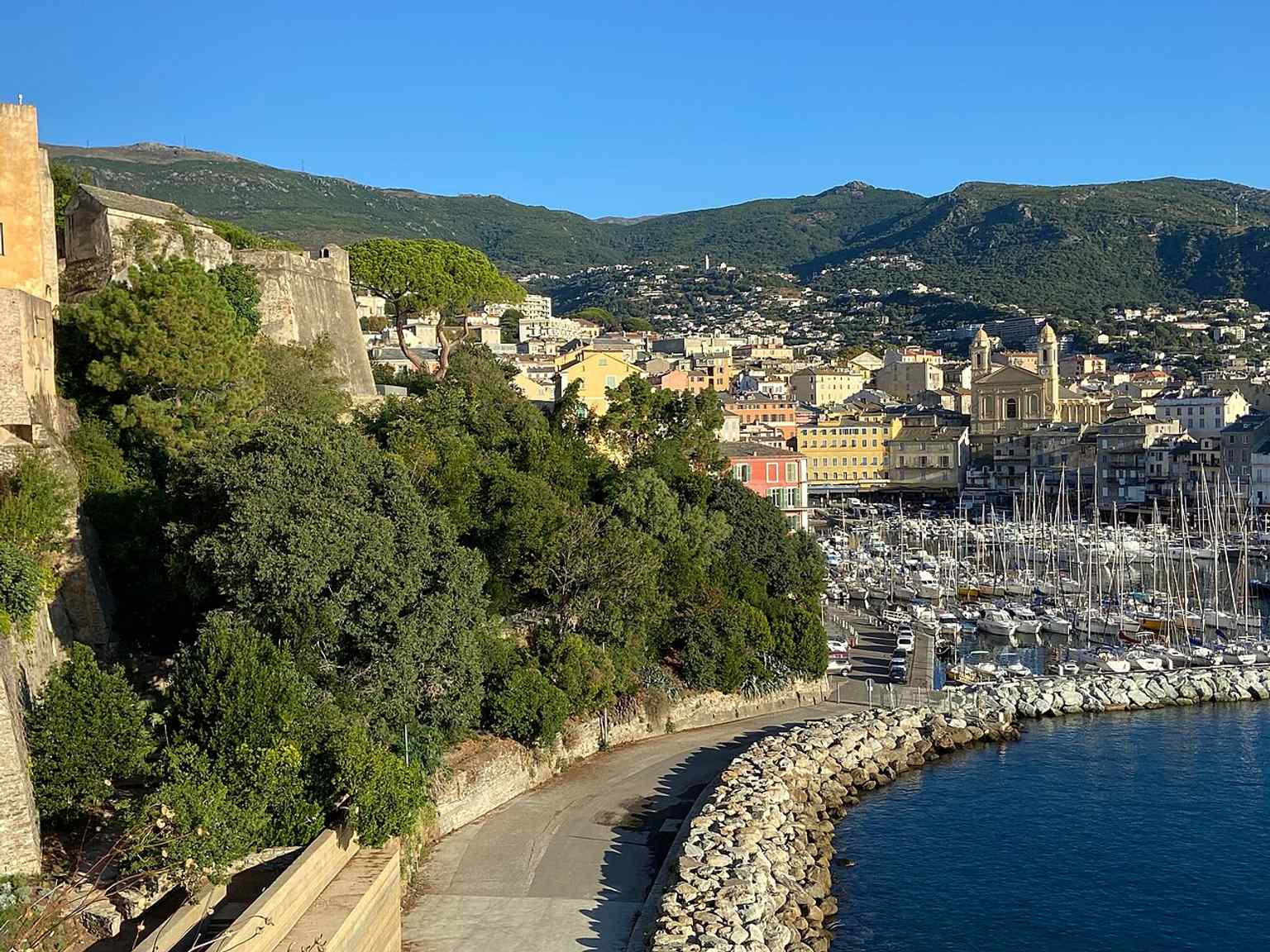
Jardin Romieu above the old port, with layered views over Bastia — a good image for the city’s steep hillside setting between sea and mountain.Photo: Cosudibastia, Wikimedia Commons, CC BY-SA 4.0. Cropped & resized. 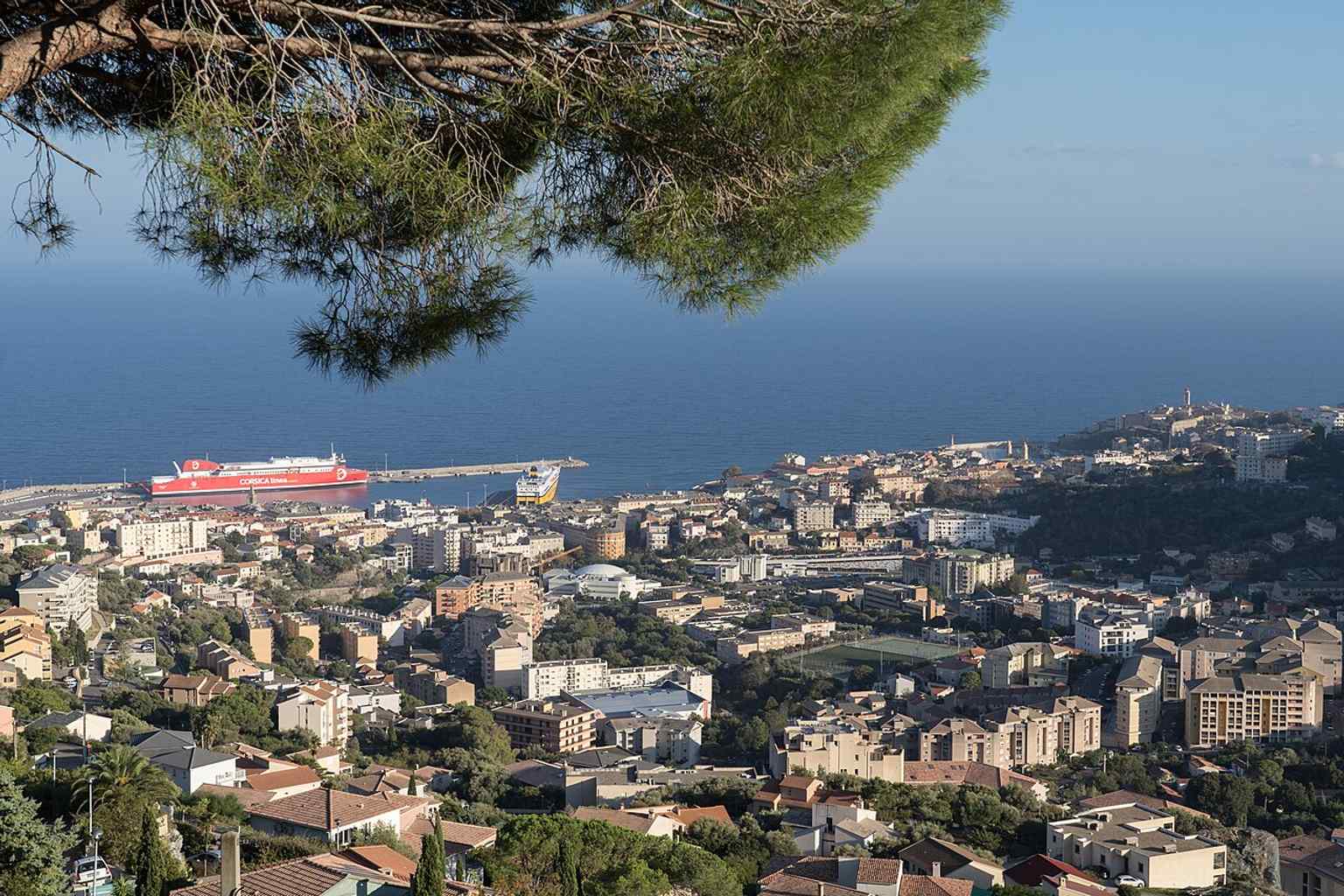
A panoramic view from Ville-di-Pietrabugno showing Bastia squeezed between the coast and the hills, exactly as described in its geography.Photo: Alexkom000, Wikimedia Commons, CC BY 4.0. Cropped & resized. 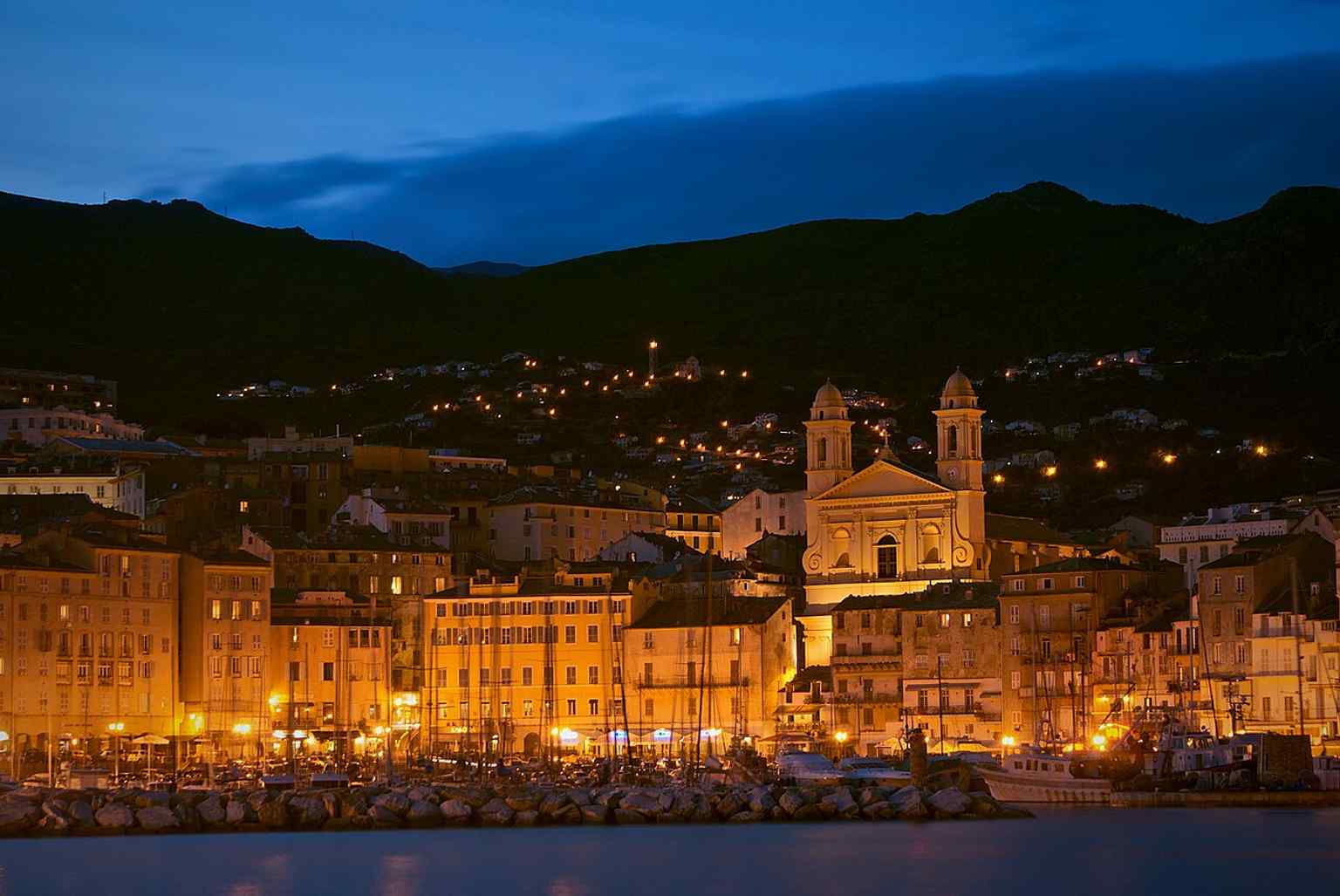
Night view of the old port, where the illuminated waterfront captures Bastia’s lively maritime identity after dark.Photo: Jean-Michel Raggioli, Wikimedia Commons, CC BY-SA 3.0. Cropped & resized. 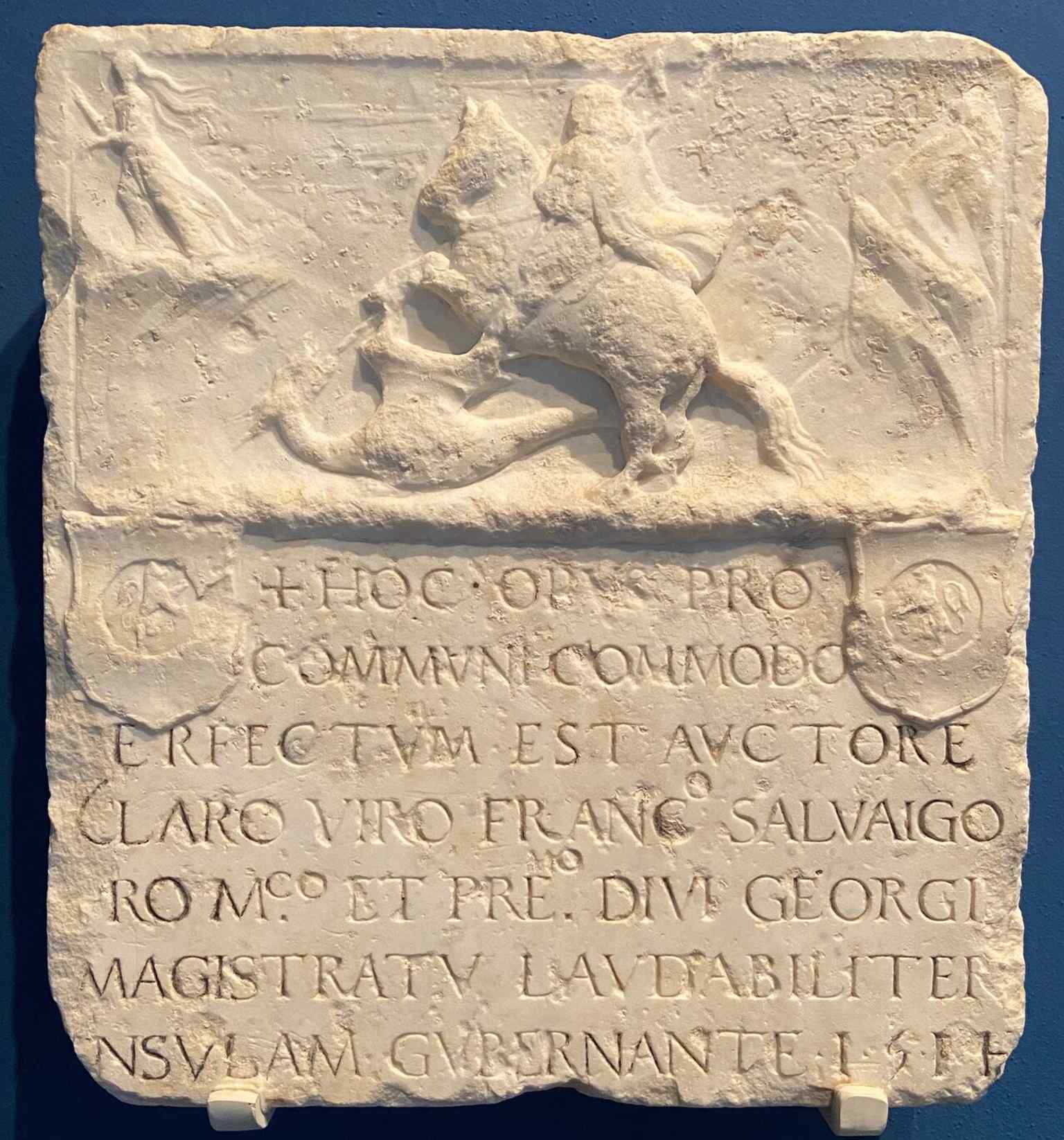
A 1514 fountain plaque in the Musée de Bastia, a tangible reminder of the city’s Genoese past and long urban history.Photo: Cosudibastia, Wikimedia Commons, CC BY-SA 4.0. Cropped & resized. 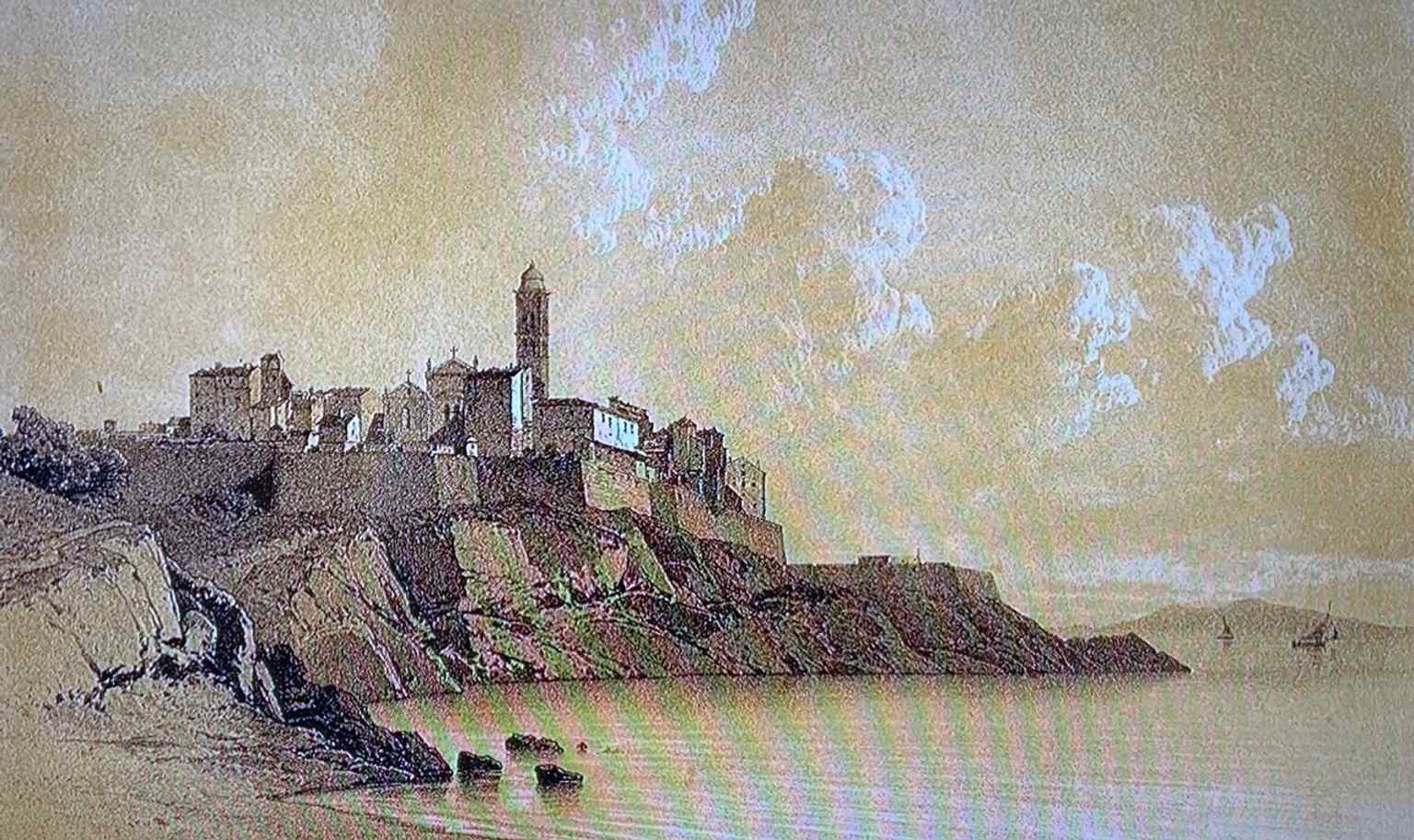
A 1860 lithograph of Bastia from the Musée de Bastia, useful for showing how the city looked before modern expansion.Photo: Cosudibastia, Wikimedia Commons, CC BY-SA 4.0. Cropped & resized. 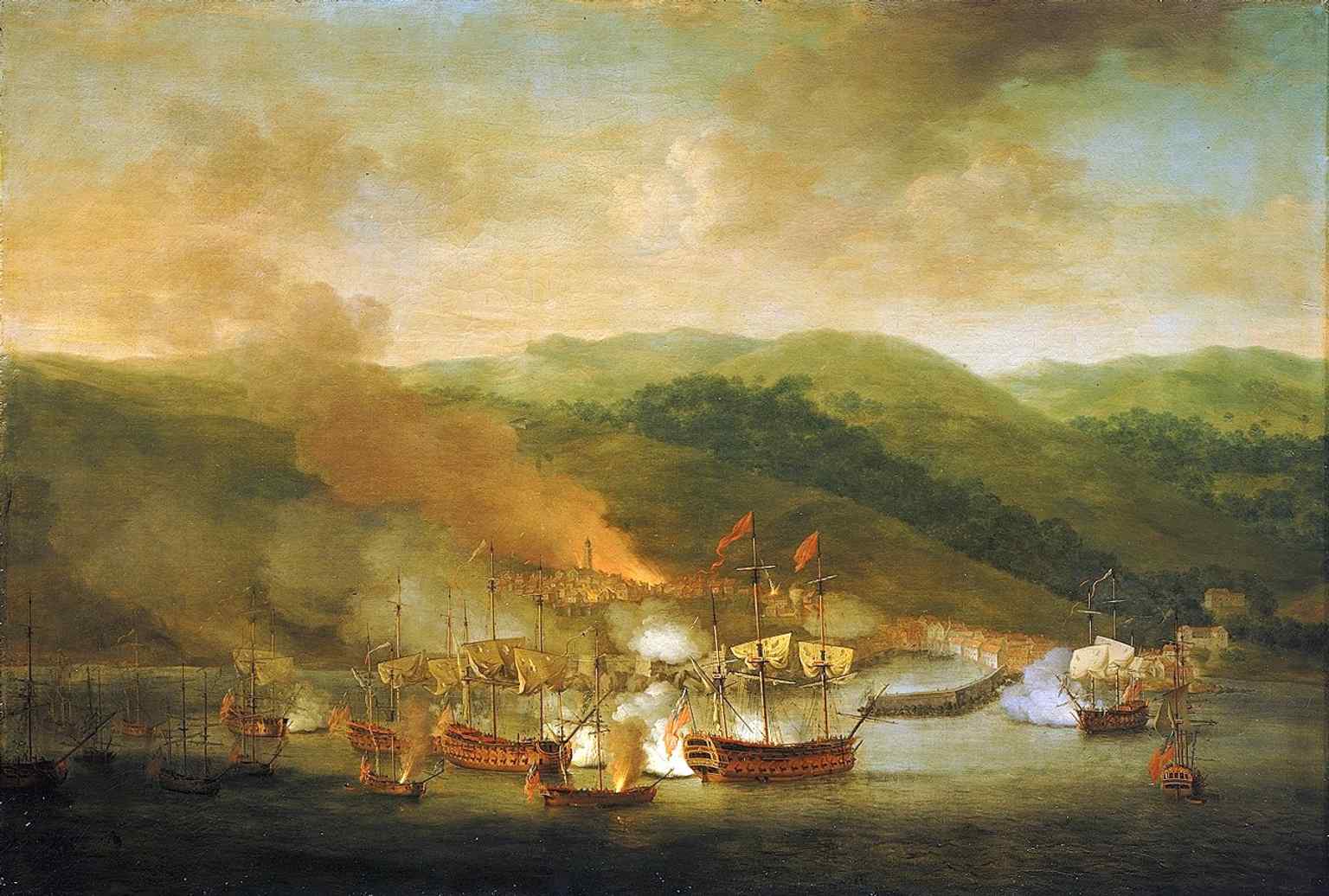
Samuel Scott’s painting of the 1745 bombardment of Bastia, evoking the city’s turbulent wartime history during the 18th century.Photo: Samuel Scott, Wikimedia Commons, Public domain. Cropped & resized. 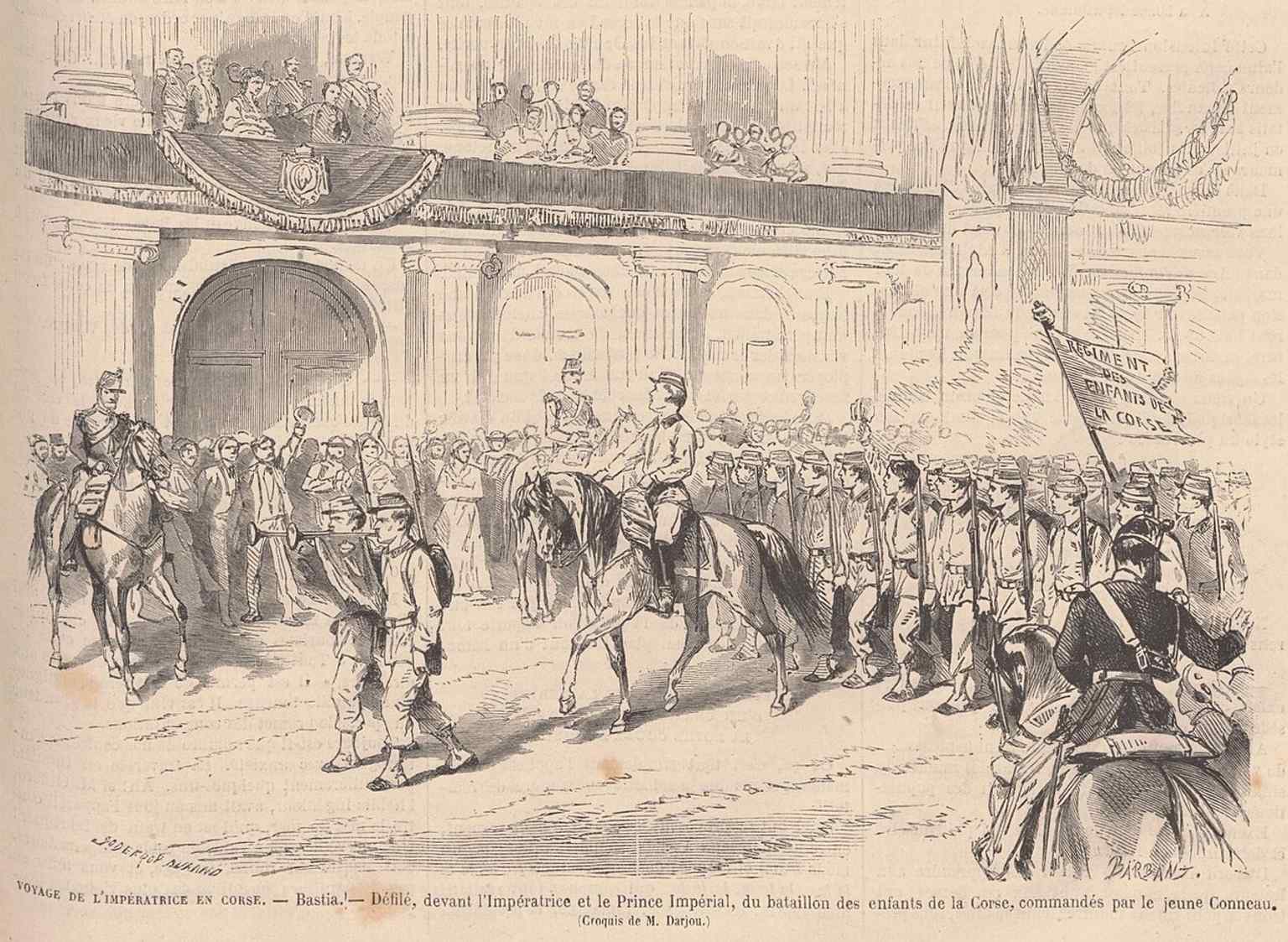
An 1869 illustration of Corsican boys parading in Bastia before the Empress — a glimpse of the city’s role in imperial-era ceremonies.Photo: Godefroy Durand / Alfred Darjou / Charles Barbant, Wikimedia Commons, Public domain. Cropped & resized. 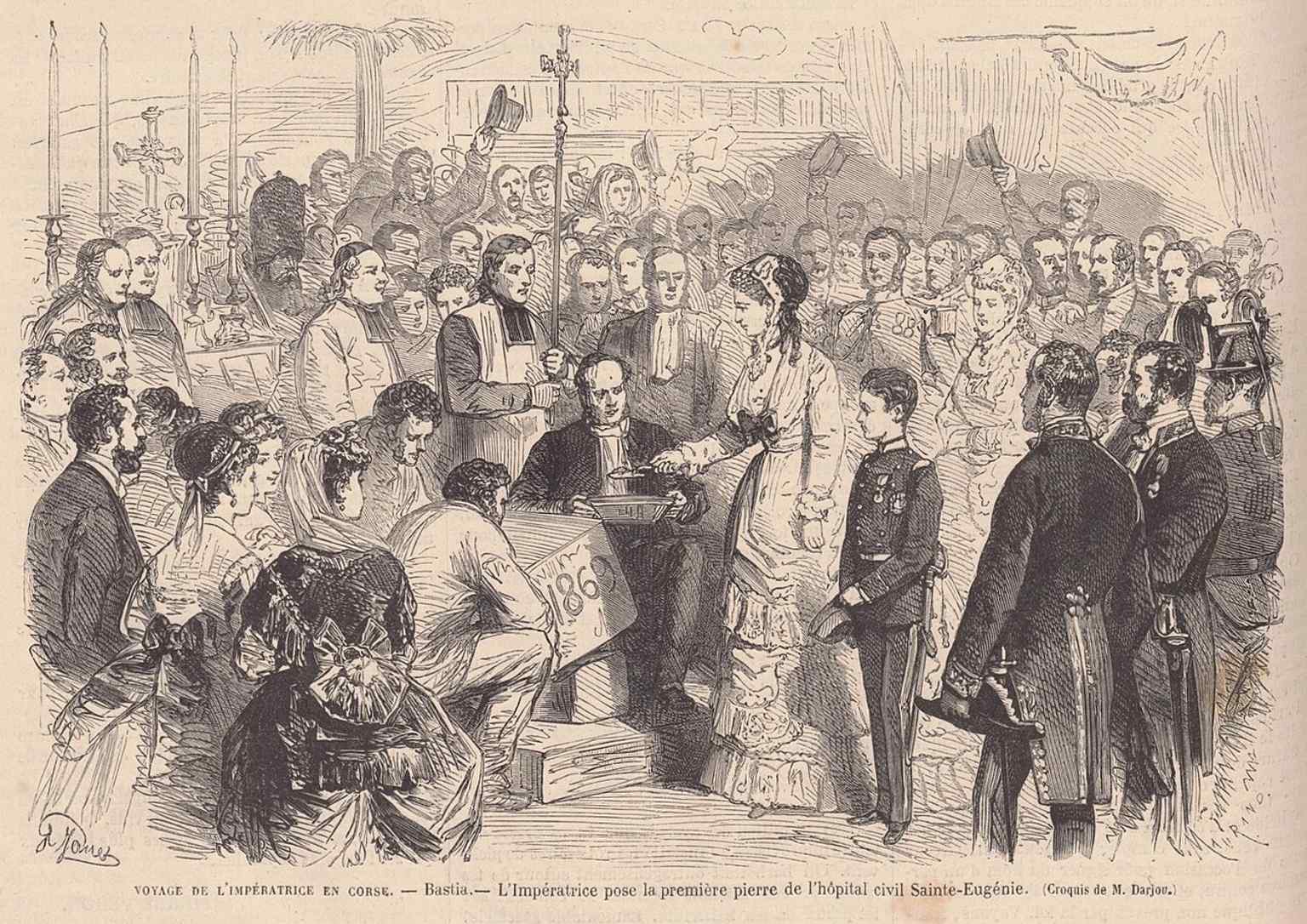
The Empress placing the first stone of Bastia’s civic hospital in 1869, reflecting the city’s 19th-century modernization.Photo: Gustave Janet / Alfred Darjou / Charles Maurand, Wikimedia Commons, Public domain. Cropped & resized. On your right, look for a white concrete building with a sweeping curved corner, stacked balconies, and upper floors that project slightly over the pavement. This is Bastia’s…Read moreShow less
Open dedicated page →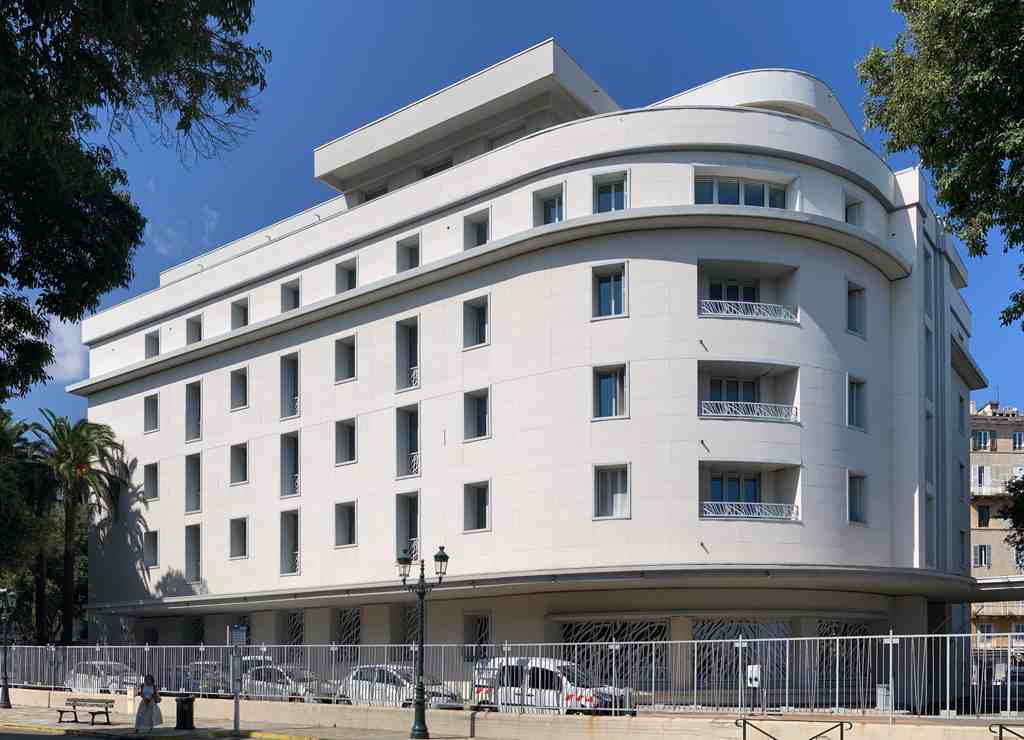
Hôtel de Ville, BastiaPhoto: Chabe01, Wikimedia Commons, CC BY-SA 4.0. Cropped & resized. On your right, look for a white concrete building with a sweeping curved corner, stacked balconies, and upper floors that project slightly over the pavement.
This is Bastia’s Hôtel de Ville, the city hall of today, though the town’s leaders spent centuries searching for a proper home. Their first municipal seat was the Casetta in the fifteenth-century Place du Donjon, where the podestà - the town’s chief magistrate - met with other officials. Even after the French conquest of Corsica in seventeen sixty-eight, that old centre of local power lingered in spirit. Then the Revolution reshaped public life, and Bastia’s elected council began a rather restless existence: the Lazarist convent in eighteen eleven, the Jesuit convent a few years later, Maison Vidau in eighteen thirty-eight, and Pavillon Favalleli in eighteen fifty-four.
By the middle of the nineteenth century, the council wanted dignity, permanence, and a façade equal to its ambitions. It chose an old barracks site on the market square in the old town. If you glance at the historical image in the app, you can see that earlier setting, where Bastia finally gave its civic pride a fixed address. Architect Andrea Scala designed the new town hall in the neoclassical style - meaning calm symmetry inspired by ancient Greece and Rome - and builder Pascal Firbi raised it in neatly cut ashlar stone. It opened in May of eighteen seventy-seven, with a wedding room inside that still hosts civil ceremonies.
Then came war. On the ninth of September, nineteen forty-three, resistance leaders Raoul Begnini and Etienne Léo Micheli seized that town hall. German troops retook it later the same day, but Bastia gained liberation on the fourth of October.
The building before you belongs to the next chapter. Gaston Castel designed it as the Hôtel Impérial, with white concrete panels and that bold curved frontage; it stands on the site of the Hôtel Cyrnos, an Art Nouveau hotel completed in nineteen eleven and destroyed in American bombing in October nineteen forty-three. The state used this building as the sub-prefecture and then the prefecture before the council took it over in nineteen eighty-two. The exterior photo on your screen neatly catches that confident curve.
The offices generally open on weekdays from eight to noon and from half past one to five. Bastia’s city hall tells a quiet story of reinvention, with authority always finding a new shape. When you are ready, continue toward Place Saint-Nicolas and let the square broaden the tale.
Show 10 more stopsShow fewer stopsexpand_moreexpand_less
On your left, look for a broad stone-paved square edged by plane trees and pale masonry façades, with the old town hall’s triangular pediment standing out as its most formal…Read moreShow less
Open dedicated page →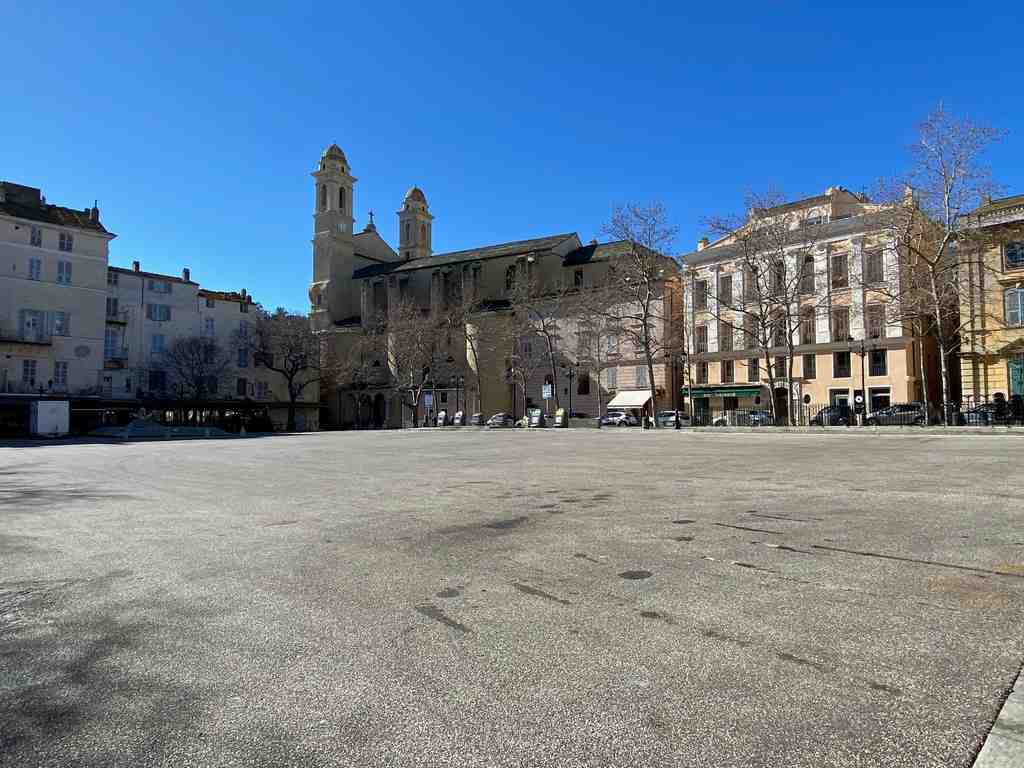
Market SquarePhoto: Cosudibastia, Wikimedia Commons, CC BY-SA 4.0. Cropped & resized. On your left, look for a broad stone-paved square edged by plane trees and pale masonry façades, with the old town hall’s triangular pediment standing out as its most formal marker.
This is Bastia’s old Market Square, known in Corsican as Piazza di u Merca. The word merca is simply a shortened form of mercatu, meaning market, and that plain little name tells you a great deal. For generations, this was one of the city’s busiest hearts, a place of barter, gossip, arguments, greetings, and the sort of news that travelled faster by voice than by letter.
Yet the market did not begin here. Under Genoese rule in the seventeenth century, traders gathered up in the Citadel, at a place called A Chjappa, near what is now the upper part of Rue Saint-Michel. In the eighteenth century, a fish market opened elsewhere. Then, in the nineteenth century, the main market moved again, into the Guadellu district on Rue Vattelapesca, where people called it the New Market. Only in eighteen eighty did the market finally settle here, in this square.
Seven years later, the municipal council planted the plane trees that still give the space its outline. A cast-iron fountain once stood here too, adding a note of ceremony, but that has disappeared. Even so, the square still keeps the feeling of an outdoor room, framed by old stone, civic ambition, and memory.
And memory here has a rather sly streak. Before the market arrived, this ground was not a square at all, but open land and gardens belonging to the Favalelli family. After the French conquest, Count Marbeuf chose this very spot for a wooden theatre in seventeen seventy-four. He did not act from pure love of drama. He had a political purpose. Bastia largely spoke Corsican and leaned warmly toward Italian culture; only a small educated elite used French with ease. Marbeuf hoped French-language performances would teach the language and speed up assimilation. It failed. Bastia’s audiences preferred Italian plays and concerts in other venues, and that preference lingered far into the twentieth century. The Marbeuf theatre finally disappeared in eighteen eighty-one, two years after the opening of the city’s newer theatre.
Around you, the square still reads like a cast of characters. The old town hall, known locally as A Merria Vechja, began life as an army building. The city bought it in eighteen fifty-five, and by the late nineteenth century its façade had acquired the balcony, cornice, and triangular pediment you can see, along with a relief of Bastia’s coat of arms, the little castle that recalls Leonello Lomellini and the fortress that gave the town its name. The building served as the town hall until nineteen eighty-two; now it hosts weddings and civil records. Nearby, Saint-Jean-Baptiste watches over the quarter, and the old Favalelli house still hints at the powerful families who shaped Terra Vechja.
This square reveals Bastia at its most intimate: practical, proud, and quietly theatrical.
When you are ready, continue toward Saint-Jean-Baptiste and let the square’s murmur follow you.
On your right, look for a pale stone Baroque façade shaped like a grand vertical screen, with twin bell towers rising above it and a clock set high at the centre. This is…Read moreShow less
Open dedicated page →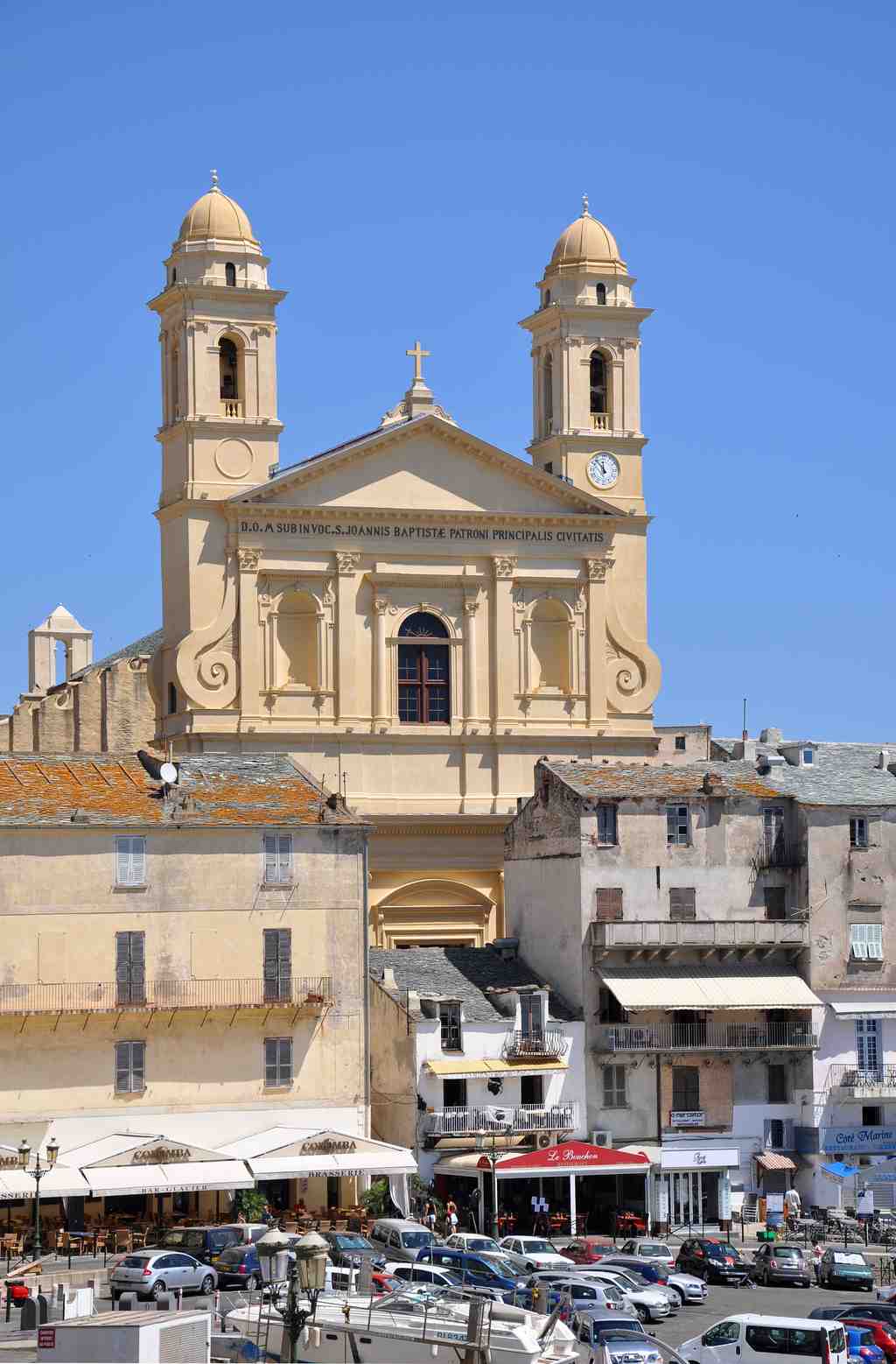
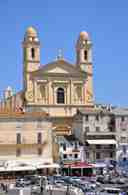
Church of Saint-Jean-Baptiste of BastiaPhoto: User:Amada44, Wikimedia Commons, CC BY 3.0. Cropped & resized. On your right, look for a pale stone Baroque façade shaped like a grand vertical screen, with twin bell towers rising above it and a clock set high at the centre.
This is Saint-Jean-Baptiste, or San Ghjuvà in Corsican, the great church of Terra Vechja and, in fact, the largest church in all Corsica. It stands exactly where Bastia’s lower town needed it most: between the market and the Old Port, close to the lives of traders, sailors, fishermen, and families whose world revolved around the water. In the Genoese period, Bastia split itself in two for worship as well as geography. Up in Terra Nova, people belonged to Sainte-Marie. Down here in Terra Vechja, they came to Saint-Jean-Baptiste.
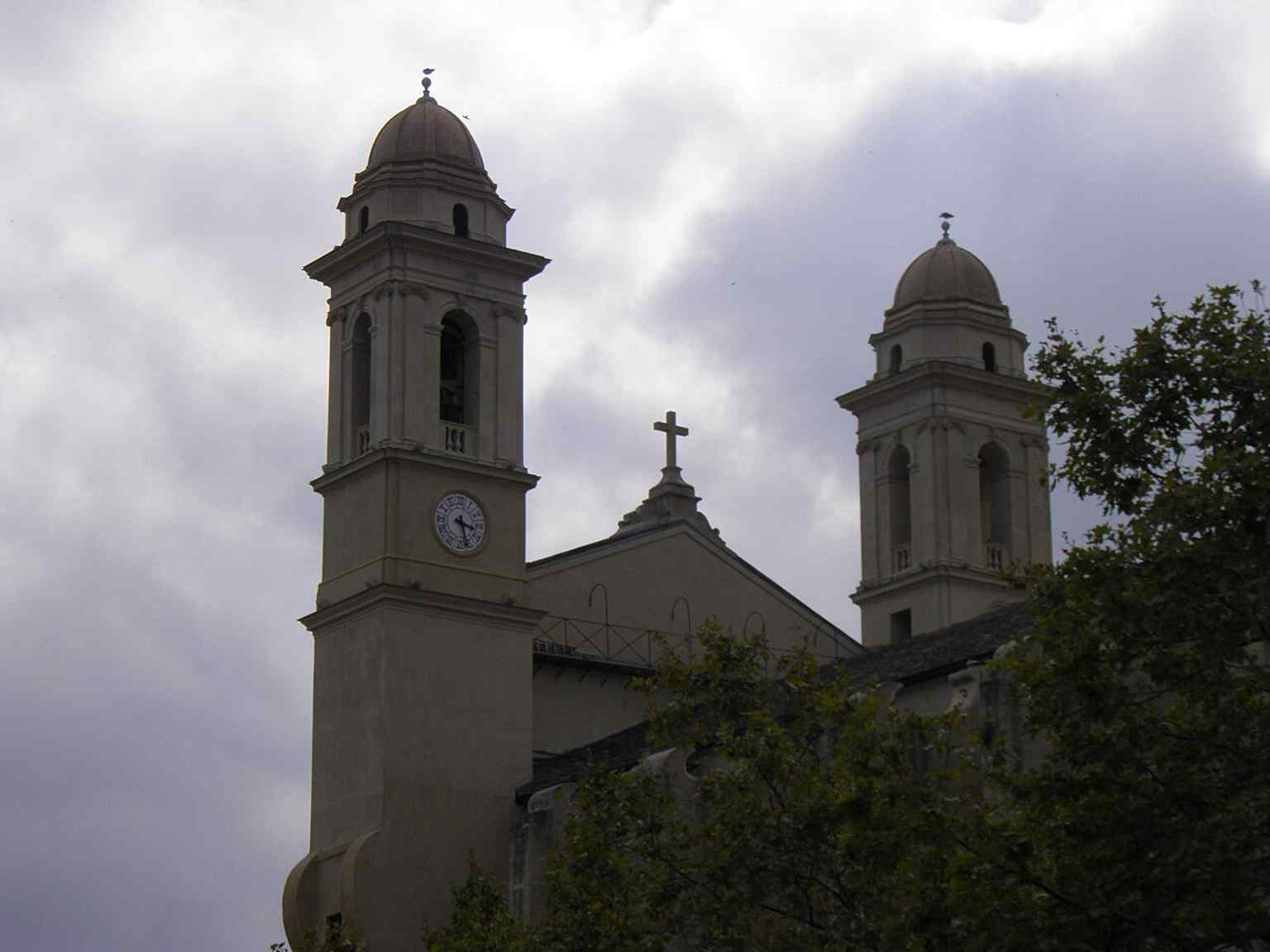
The church you see began its long rise in sixteen thirty-six, on the site of an older church, and the work continued for thirty years until sixteen sixty-six. That slow making matters, because it explains the lovely little puzzle in front of you. The façade belongs to the seventeenth century and speaks the language of the Baroque: drama, movement, and a sense that stone itself has learned how to perform. But the towers are younger. The one on the left arrived in eighteen ten, thanks to the Swiss master mason Tomaso Quadri. The right-hand tower came later still, in eighteen sixty-four, designed by Paul-Augustin Viale. So this church did not appear all at once; it gathered itself over generations.
That layered growth gives Saint-Jean-Baptiste a rather human quality. It kept changing as Bastia changed. If you fancy it, have a quick look at the before-and-after image from the Old Port; the church stays recognisably itself while the harbourfront around it quietly slips from one era into another. Inside, the central hall of the church, called the nave, became especially rich in the nineteenth century, when much of the decoration was remade. If you glance at the image on your screen, you can see how opulent that interior became. In the choir, the space around the high altar, painters and gilders worked in stages: Fausto Rossi began the restoration in the early eighteen hundreds, Giovan Battista Vicini handled the gilding, and when Rossi died mid-project, Luigi Giordani finished the campaign. Later artists transformed it again, and above the high altar an oval medallion opens like a window into heaven, with angels seeming to hover in an oculus, a round opening, above the sanctuary.
Interior view of the nave, where the richly decorated church space reflects the 19th-century restorations described in the source.Photo: Gzen92, Wikimedia Commons, CC BY-SA 4.0. Cropped & resized. This was never just a grand church; it was a working church for a port community. The sailors had their own chapel, facing the fishermen’s chapel across the nave, as though the two brotherhoods still acknowledge one another in silence. The high altar gleams with polychrome marble, meaning many-coloured stone, crafted in sixteen ninety-four by Honoré Pellé, a French artisan working in Genoa. There is a pulpit of richly coloured marble from seventeen eighty-one, and an exceptional organ gallery carved in seventeen forty-two by the Bastiais craftsman Giovanbattista Terrigo.
Outside these walls, the church kept its hold on local imagination. On the eve of Saint John’s feast, Bastia lights the fucarè, a great fire at the Old Port. And one of the city’s best-loved songs, U Campanile di San Ghjuvà, celebrates this very bell tower and the life gathered around it. France recognised the church as a historic monument in two thousand.
If you want to look inside later, the church generally opens every day from eight in the morning until seven in the evening.
San Ghjuvà is Bastia in stone: devotional, maritime, and quietly theatrical.
When you are ready, continue on and let the old town reveal its next secret.
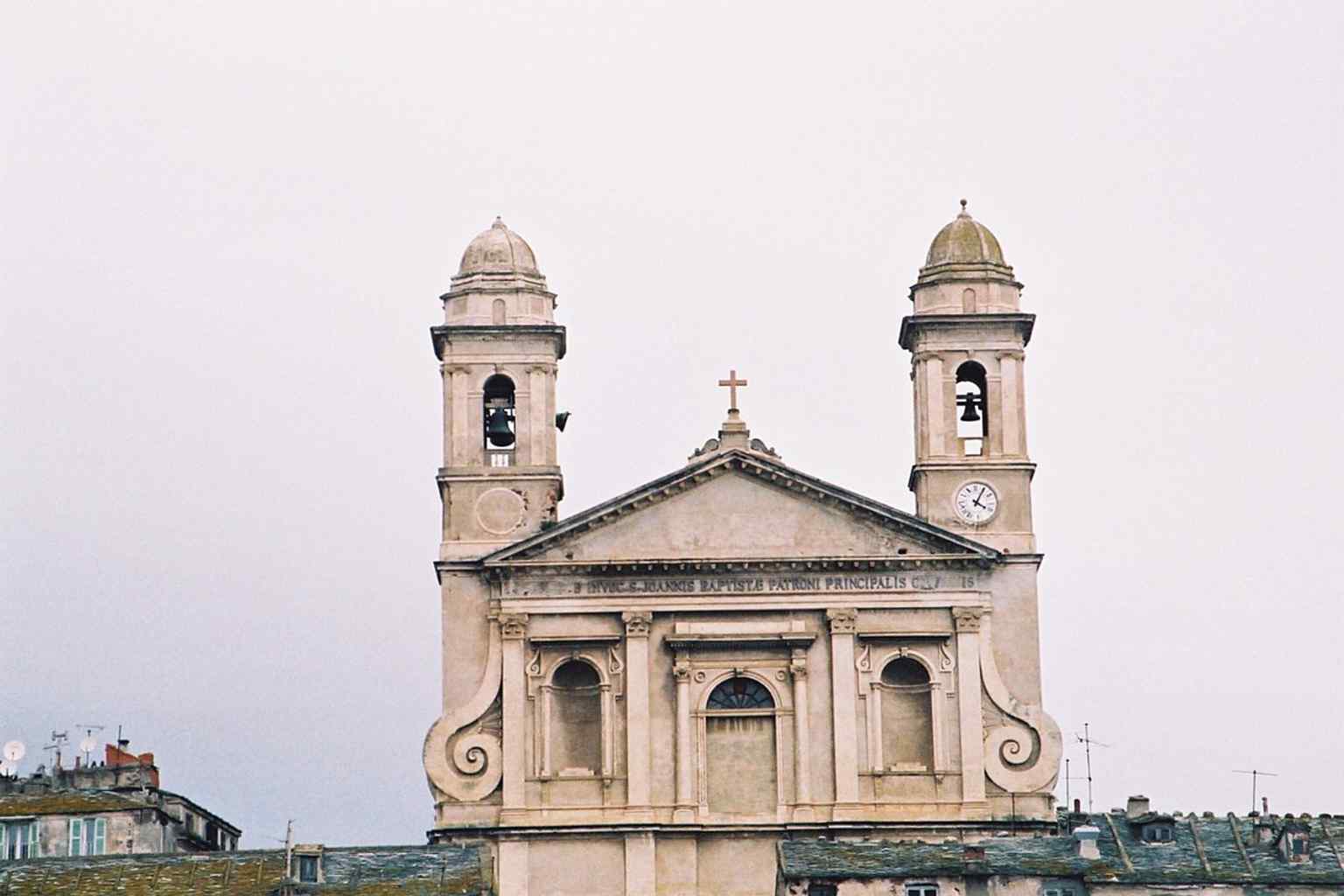
A clear street-level view of Saint-Jean-Baptiste, the largest church in Corsica, showing its Baroque façade in the heart of Bastia’s Terra Vechja district.Photo: Greudin, Wikimedia Commons, Public domain. Cropped & resized. 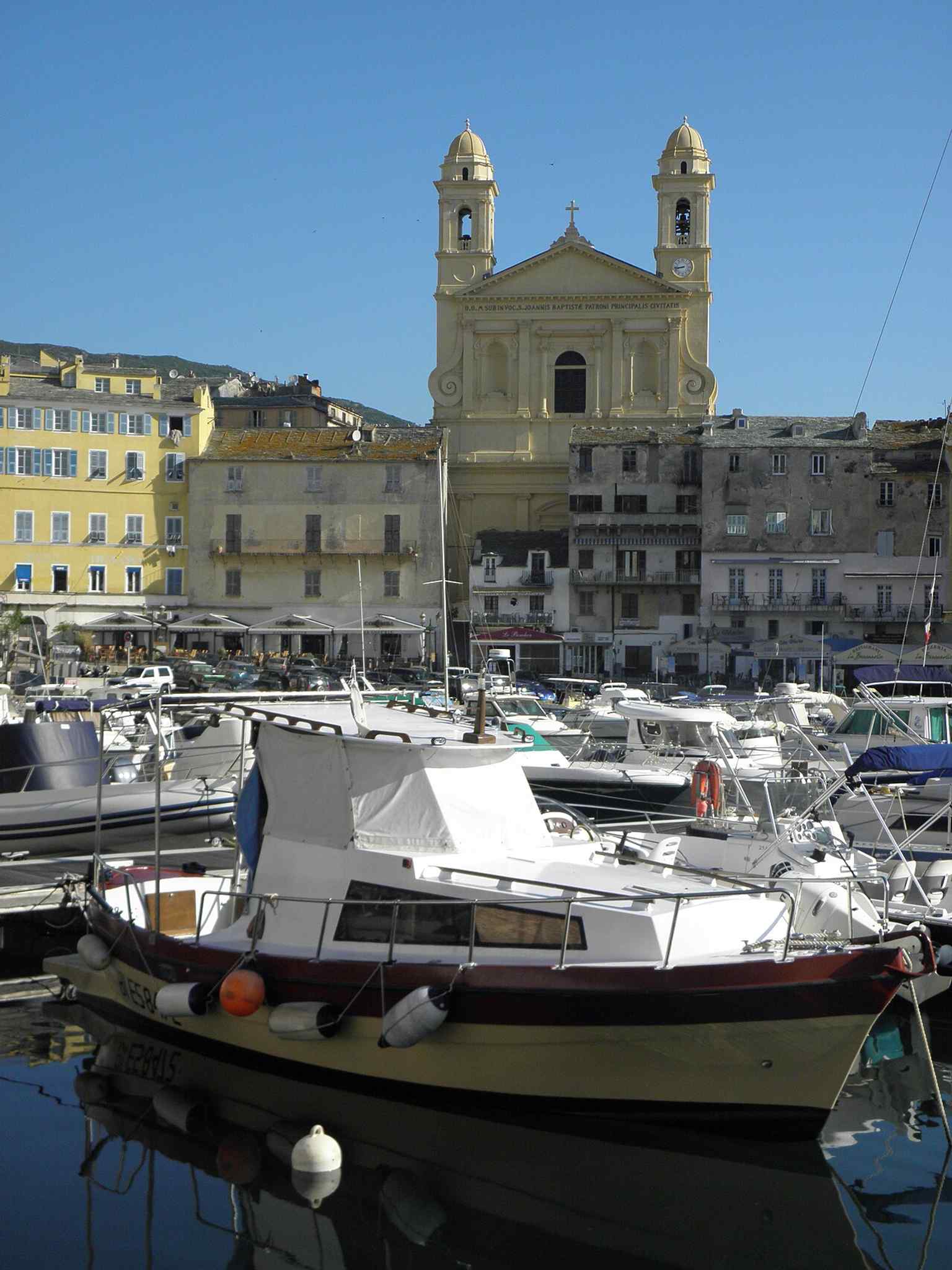
The church rising over Bastia’s old port, echoing the 19th-century view of Saint-Jean-Baptiste with its single earlier bell tower.Photo: ROCHAT PATRICE, Wikimedia Commons, CC BY-SA 3.0. Cropped & resized. 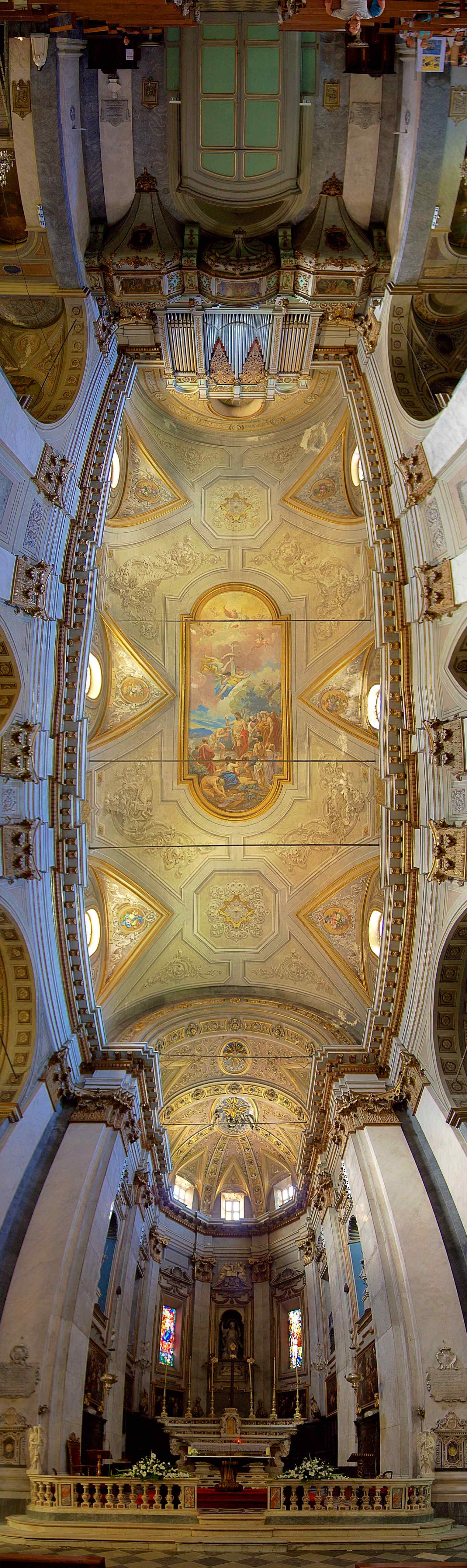
A full vertical view that emphasizes the church’s twin bell towers, added later than the 17th-century building itself.Photo: Nicolas Servoles, Wikimedia Commons, CC BY-SA 3.0. Cropped & resized. 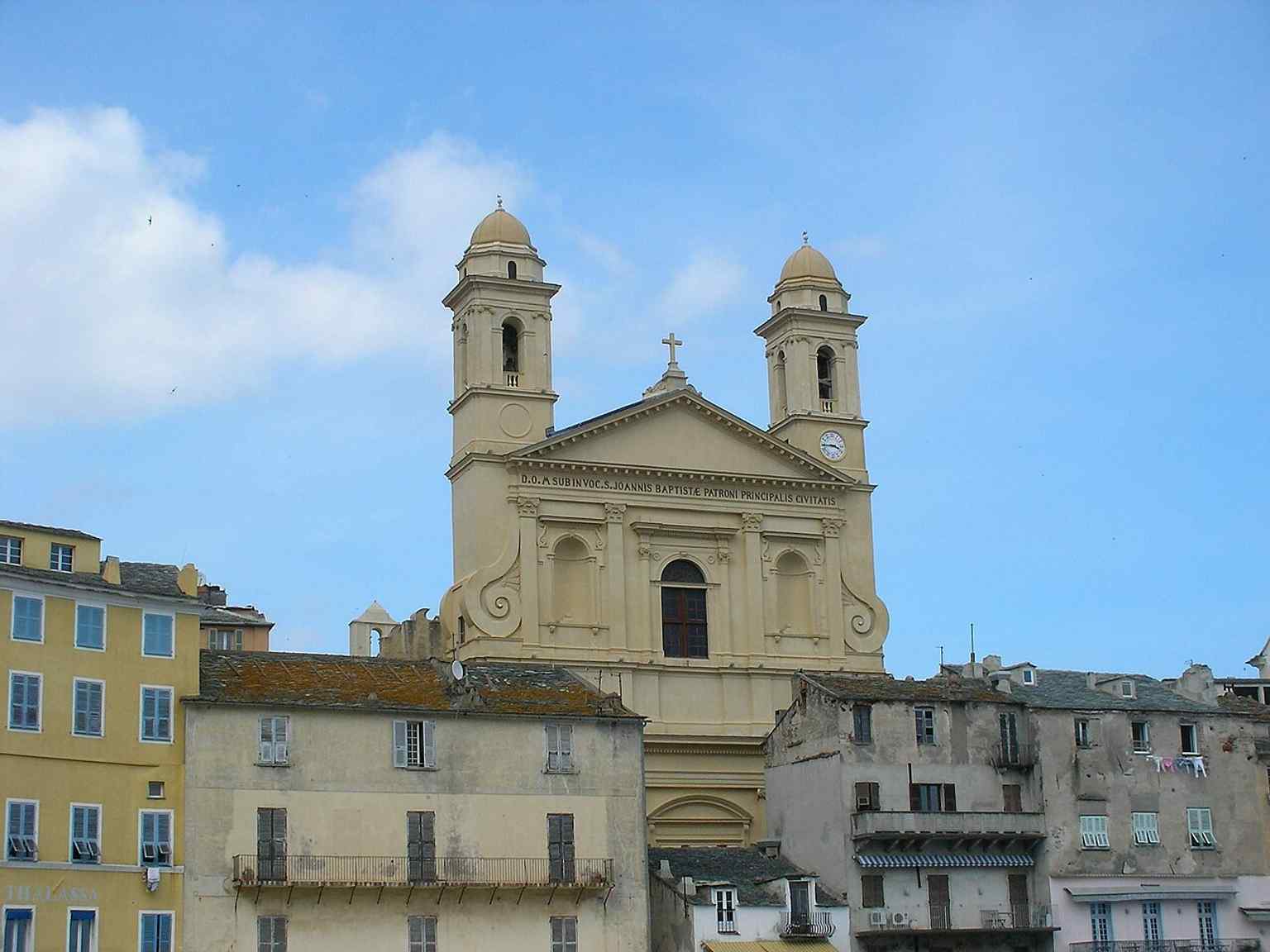
Another interior angle highlighting the ornate furnishings and side chapels used by Bastia’s sailors’ and fishermen’s confraternities.Photo: Gzen92, Wikimedia Commons, CC BY-SA 4.0. Cropped & resized. Look for a modest pale façade with tall rectangular openings and a simple street-level entrance marked by the name Arte Mare. This stop tells a very Bastia story, because Arte…Read moreShow less
Open dedicated page →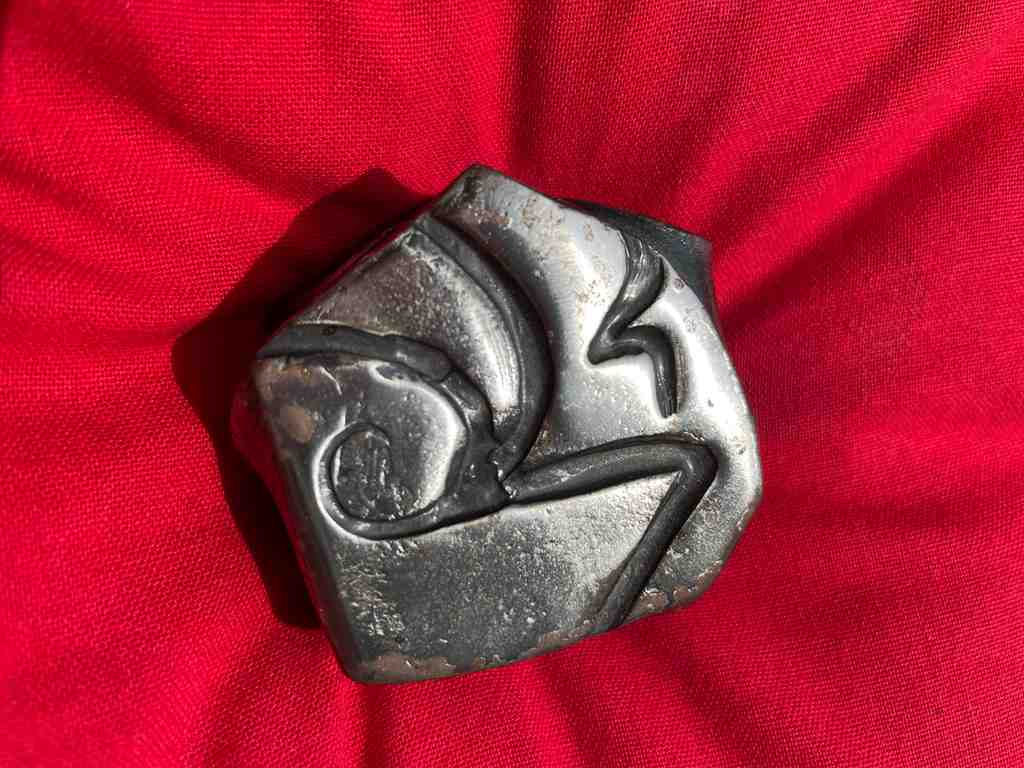
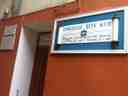
Sea ArtPhoto: Paola Arrivabene, Wikimedia Commons, CC BY-SA 4.0. Cropped & resized. Look for a modest pale façade with tall rectangular openings and a simple street-level entrance marked by the name Arte Mare.
This stop tells a very Bastia story, because Arte Mare is not simply a place or a title: it is a declaration. In nineteen eighty-two, during the Riacquistu, the Corsican cultural reawakening that pushed the island to reclaim its language and artistic voice, a group of passionate film lovers founded a festival here in Bastia. They first called it U festivale di u filmu di e culture mediterranie, the festival of Mediterranean cultures on film. The timing matters. That same year, the University of Corte opened, France Three Corse launched its regional branch, and France Inter began regional broadcasts that pointed toward Radio Corse Frequenza Mora. All at once, Corsica was speaking more loudly in its own name, and Arte Mare joined that chorus through cinema.
The first edition arrived with remarkable confidence: seventeen films in competition, eighteen invited guests, a retrospective devoted to the Taviani brothers, and even a week focused on Moroccan cinema. According to its organisers, it is among the oldest festivals in Corsica. That is rather lovely, because it began not with grandeur, but with conviction.
Its life has not been perfectly smooth, which somehow suits a Mediterranean festival. After the first three editions, it closed for three years. In nineteen eighty-eight, it returned and carried on without interruption until nineteen ninety-nine. That year, after an edition devoted to Morocco, the festival also hosted the first concert in France by Emir Kusturica and the No Smoking Orchestra. Then disagreements split the organisers, and the festival stopped again.
In two thousand and one, after a one-year pause, it came back under a broader name: U festivale di u filmu e di l’arte mediterranie. Film remained at its heart, but the ambition widened into a celebration of mixed arts, where cinema could meet music, literature, and visual art. Since then, the association Arte Mare has carried it forward, and it has even launched other festivals, including Histoires en mai, devoted to history books and historical fiction, and Cine Donne, a festival of films by women.
Each October, over eight days, Arte Mare now presents around eighty films: features, shorts, documentaries, fiction, even animation. Screenings spread through Bastia, from the municipal theatre to Alb’Oru, the Noir et Blanc gallery, cinemas, and libraries. Throughout the year, it also partners with Le Régent for monthly Mediterranean screenings. Since twenty eighteen, part of the programme has travelled to Ajaccio, and another partnership links it to the open-air cinema U Murianincu.
The prizes reveal its character. There is the Grand Prix Arte Mare for a Mediterranean feature, a public prize, an R-C-F-M Petru Mari prize for music and soundtrack, awards for Corsican fiction and documentary, and one called Hors les Murs, meaning outside the walls, judged by inmates at the Borgo remand prison. That detail gives the festival a particular moral grace: cinema here reaches beyond the usual audience. It also awards the Prix Ulysse, a literary prize honouring both a major body of work and a first Mediterranean novel.
At forty years old in twenty twenty-two, after the pandemic years when streaming platforms filled the silence of closed cinemas, Arte Mare felt more defiant than ever.
Arte Mare reminds Bastia that the Mediterranean is not an edge of the map, but a conversation.
When you are ready, continue on toward the synagogue, where another layer of Bastia’s identity quietly comes into view.
On your right, look for a modest pale-stone ground-floor façade with a simple rectangular entrance, its restrained historic frontage marked as the synagogue of Beth Meir. Its…Read moreShow less
Open dedicated page →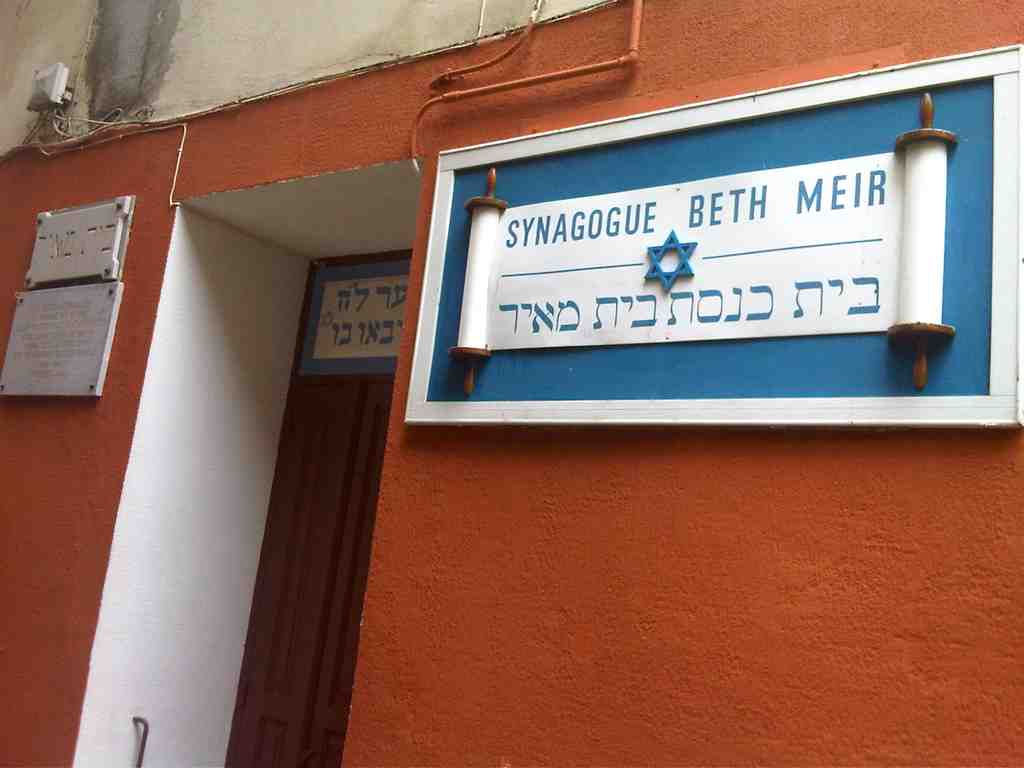
Synagogue of Bastia Beth MeirPhoto: Wikimedia Commons contributor, Wikimedia Commons, CC BY-SA 4.0. Cropped & resized. On your right, look for a modest pale-stone ground-floor façade with a simple rectangular entrance, its restrained historic frontage marked as the synagogue of Beth Meir.
Its discretion is part of its meaning. This synagogue does not announce itself with grandeur; it keeps faith in the intimate scale of the old town. Beth Meir, founded in nineteen thirty-four at number three rue du Castagno, grew from exile, survival, and a very stubborn choice to remain.
The story begins far from Bastia. During the First World War, Jewish families of Algerian and Moroccan origin were living in Tiberias and Aleppo, then part of the Ottoman Empire. Some held French citizenship through colonial-era legal arrangements, and when they refused to serve alongside the Germans, the Ottoman authorities expelled them in the summer of nineteen fifteen. They left through Beirut and Jaffa on two American ships, endured a rejected stop in Crete, and finally reached Ajaccio on French vessels on the fourteenth of December, nineteen fifteen. There were seven hundred and forty-four refugees, including about two hundred children.
Ajaccio received them with remarkable solidarity. The prefect, Monsieur Henry, the mayor, Monsieur Pugliesi-Conti, and the Alliance Israélite Universelle organised shelter in the former Catholic seminary. Children went to school. Rabbi Jacob Aknine of Tiberias led worship. Yet tensions grew inside the refugee group, and in February nineteen sixteen about one hundred and eighty Moroccan Jews moved here to Bastia, settling in the new port docks and in the citadel.
Here, they met another community already in place: the Turchinos, around one hundred and fifty Jews who had fled Constantinople in the eighteen nineties and chosen Bastia, the island’s great commercial port. Together they built firmer foundations. They formed the Jewish religious association of Bastia, named Salomon Bensamoun chief rabbi, and improvised a larger synagogue in a room at the docks. The nearby community of Livorno sent a Sefer Torah, a handwritten scroll of the first five books of the Bible, the heart of synagogue worship.
Many refugees sailed back toward Palestine on the fourth of August, nineteen twenty, but not all. Some families stayed in Corsica. Others returned later, having found hardship and violence there. Then came Rav Meir Toledano. His younger brother had briefly taken refuge here and spoke so warmly of Bastia that Toledano arrived in nineteen twenty-four with his wife and children and gave this synagogue its decisive impulse. He named it Beth Knesset Beth Meir, honouring Rabbi Meir, one of the great sages of the Mishnah, the foundational written collection of Jewish oral teaching.
Behind this modest frontage lies an apartment adapted for prayer. It was never designed as a synagogue, yet its Pisan-style rooms offered a striking sacred space, especially the double barrel-vaulted ceilings painted by Guy-Paul Chauder. The main prayer room opens onto a women’s room and a beth midrash, a house of study, with a welcoming hall and kitchen completing the whole.
During the Second World War, even under Italian and German occupation, no French Jew in Corsica was deported to the Nazi extermination camps. Men from Bastia were interned at Asco, and families in southern Corsica endured restrictions, but Prefect Paul Balley helped protect the community. That memory still shapes the island’s reputation as an island of the righteous.
Beth Meir remains quiet for much of the year, yet it endures as a precious sign of belonging in Bastia’s historic heart.
When you are ready, continue on toward Saint-Charles-Borromée, carrying this small, steadfast story with you.
Ahead of you rises a pale stone Baroque façade in two stacked tiers, set above a broad monumental stair and crowned by a triangular pediment with great curling volutes. This is…Read moreShow less
Open dedicated page →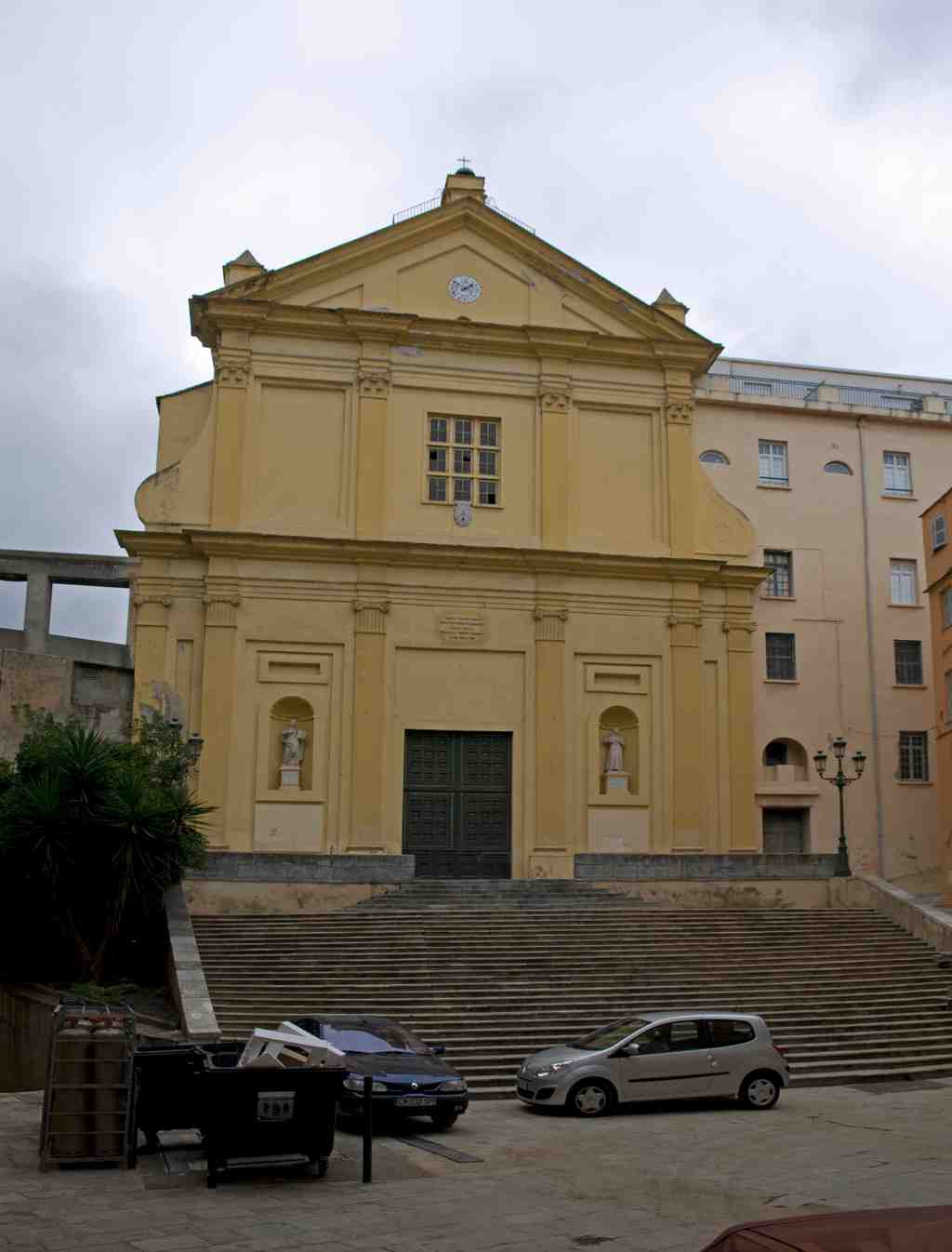
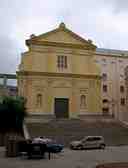
Church of Saint-Charles-Borromée in BastiaPhoto: Ymblanter, Wikimedia Commons, CC BY-SA 4.0. Cropped & resized. Ahead of you rises a pale stone Baroque façade in two stacked tiers, set above a broad monumental stair and crowned by a triangular pediment with great curling volutes.
This is San Carlu, the Church of Saint-Charles-Borromée, and in Bastia it carries a quiet distinction: many consider it the first Baroque church in all Corsica. Its face follows the Jesuit style made famous by the Church of the Gesù in Rome. Notice the strong vertical pilasters, the narrower upper level, and, beside the entrance, the statues of Saint Francis Xavier and Saint Ignatius of Loyola. If you want to take in the full composition, have a glance at the image on your screen. The story begins with the Jesuits, the Society of Jesus, founded by Ignatius of Loyola in fifteen forty. He wanted priests who could teach as well as preach, so he insisted on a long education, ten years of study, before they were fully formed. In fifteen fifty-two and fifteen fifty-three, he sent two Jesuits to Bastia, Father Silvestro Landini and Father Emanuel Gomes. They came to spread the faith, certainly, but also to educate poorer families. By sixteen oh one, the first lessons had begun near this very site.
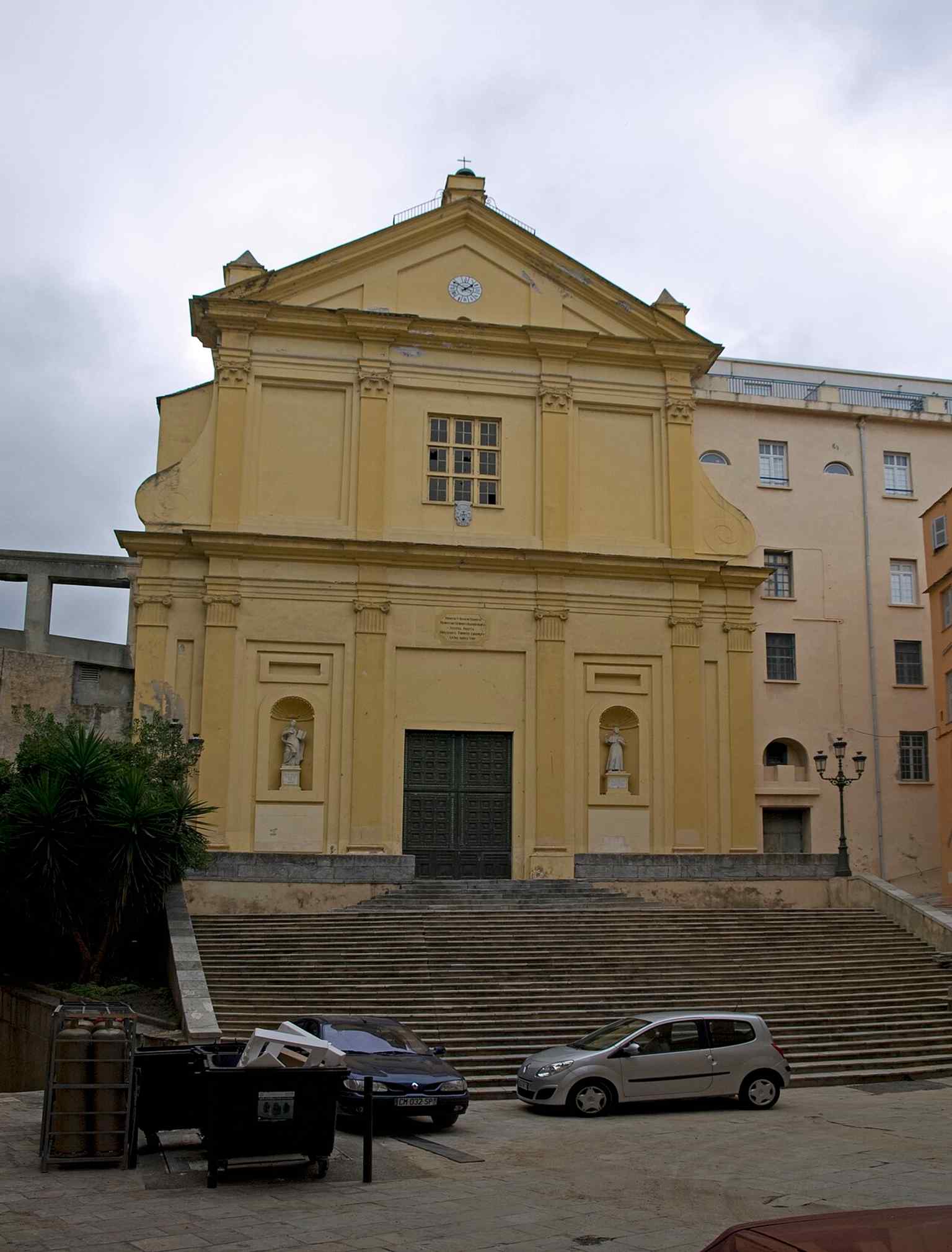
The baroque façade of Saint-Charles-Borromée in Bastia, the city’s first church in the Jesuit style, recognizable by its monumental stairway.Photo: Ymblanter, Wikimedia Commons, CC BY-SA 4.0. Cropped & resized. Then the place grew into a full Jesuit complex. Builders started the college and church in sixteen twelve and finished in sixteen thirty-five. At first, the church honoured Saint Ignatius himself. The adjoining college never lost its educational purpose; today it survives as the Simon Vinciguerra school, often described as one of the oldest colleges in Corsica.
Its name changed because politics changed. After the Jesuits were expelled in seventeen sixty-nine, the building passed to the confraternity of San Carlu, a religious brotherhood, and the church took the name of Saint Charles Borromeo. Inside, the seventeenth-century stucco decoration still survives. There is even a deliciously telling detail: a ceiling medallion once showed Saint Ignatius in black, but after the Jesuits were forced out, the confraternity altered the clothing so the figure could pass as Saint Charles instead.
This church has also heard the harder sounds of history. In eighteen fourteen, enemies of Napoleon gathered here under Frédien Vidau and Salvatore Viale. A Committee of Public Safety met inside and proclaimed Corsica’s break with France, calling for the return of the Anglo-Corsican kingdom. Later, in nineteen seventy-one, the church opened another chapter: the first Mass in the Corsican language was celebrated here, sung in paghjella, the island’s rich traditional polyphonic chant.
If you hope to go inside, the church is usually open only on Sunday mornings, from nine until noon. San Carlu keeps Bastia’s faith, learning, and rebellion folded into one splendid façade. When you are ready, continue on toward U Puntettu, where the city opens itself in another way.
Look for a tight cluster of tall stone-and-plaster houses packed into a wedge of narrow lanes, with the sweeping Romieu staircase as its unmistakable marker. This is U Puntettu,…Read moreShow less
Open dedicated page →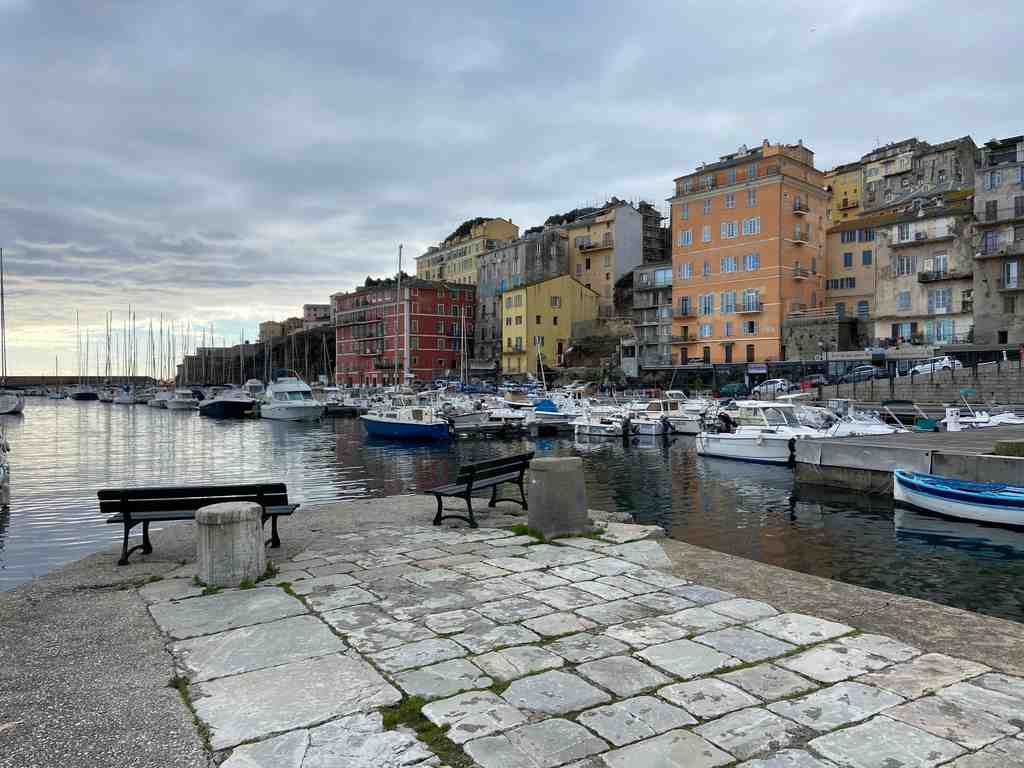
The PointPhoto: Cosudibastia, Wikimedia Commons, CC BY-SA 4.0. Cropped & resized. Look for a tight cluster of tall stone-and-plaster houses packed into a wedge of narrow lanes, with the sweeping Romieu staircase as its unmistakable marker.
This is U Puntettu, the “little bridge,” a name borrowed from a small bridge that once crossed the Guadellu River before the waterway was channelled into the Old Port. The quarter sits in a narrow seam between the harbour and the Citadel, and that position explains everything about it. When the Genoese secured Terra Nova, the fortified upper town, in the fourteenth century, the lower district of Terra Vechja grew below it, and U Puntettu became one of its most intimate pieces.
No one can say exactly when the first houses appeared here, which only adds to its quiet allure. What we do know is that wealthy Bastia families left their mark. The imposing Palazzu Rinesi-Romieu rose here in the nineteenth century for the Rinesi, an important merchant family; later, a Rinesi daughter married Romieu, a master cutler from Langres, and the name changed with the marriage. Nearby stood the Casa Montesoro, another merchant family residence, and the Casa Bonavita, linked to descendants of Joseph Bonavita, who became a general under Louis the Fifteenth.
Then there is the Romieu staircase itself, designed in the nineteenth century by the Bastia architect Paul-Augustin Viale. Its ramp, stairway, and garden gained historic monument protection in two thousand and seventeen. Writers noticed this quarter too: Sebastianu Dalzeto made U Puntettu famous in Pesciu Anguilla, the first novel ever written in the Corsican language.
Small in scale, U Puntettu carries an astonishing weight of memory.
When you are ready, continue upward toward the Governors’ Palace, where Bastia’s story grows even more commanding.
In front of you stands a pale stone fortress-palace with a broad rectangular facade, a massive round tower, and a small bell turret perched above the roofline. This is the Palais…Read moreShow less
Open dedicated page →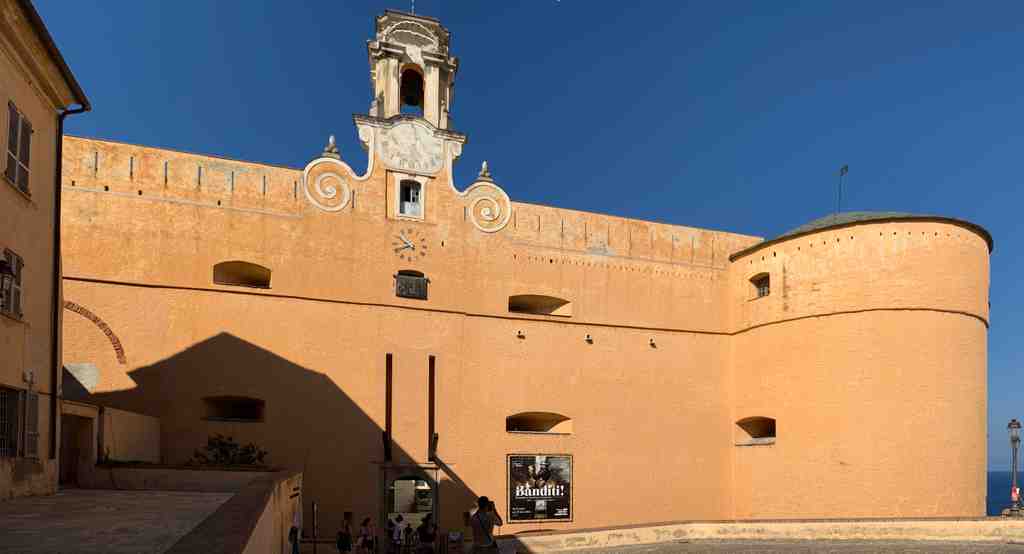
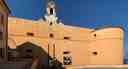
Governors' PalacePhoto: Chabe01, Wikimedia Commons, CC BY-SA 4.0. Cropped & resized. In front of you stands a pale stone fortress-palace with a broad rectangular facade, a massive round tower, and a small bell turret perched above the roofline.
This is the Palais des Gouverneurs, the Governors’ Palace, and in a very real sense Bastia begins here. In the thirteen eighties, the Genoese governor Leonello Lomellini chose this rocky spur above the shore near the cove of Ficaghjola and the little fishing harbour of Portu Cardu for a simple reason: control. He wanted a fortified place close to the sea, where trade could be watched and reinforcements from Genoa could land quickly if trouble came. That first stronghold was called the bastia, and the whole city eventually borrowed its name.
The early years were anything but calm. In thirteen ninety-three, Count Arrigo della Rocca seized the fort. It passed through other hands, including Vincentellu d’Istria, until Genoa took it back in fourteen thirty-seven. For a long while it remained a modest fortification, but the city around it began to gather strength. In fourteen seventy-six, Antonio Tagliacarne, a builder from Levanto in Liguria, raised a cluster of houses beside it. That became the first nucleus of Terranova, the new town, set apart from Terravecchia by the old port below.
What you see now carries layer upon layer of those changes. The great round tower is the Torrione. Thickened walls and projecting bastions, those outward-thrust defensive bulges, turned the place into the core of the citadel. If you glance at your screen, the close-up of the arrow slits makes that military purpose wonderfully plain. A century after the first fort rose here, the governors moved in properly. The palace became residence, law court, barracks, archive, and chapel all at once. In the east wing sat the sala maggiore, the great hall where the governor received visitors and presided over the election of Bastia’s chief magistrate, the podestà, and the city’s Nobles Twelve. Even the vaults carried a message: carved keystones showed Saint George killing the dragon, symbol of the Genoese authority that governed Corsica.
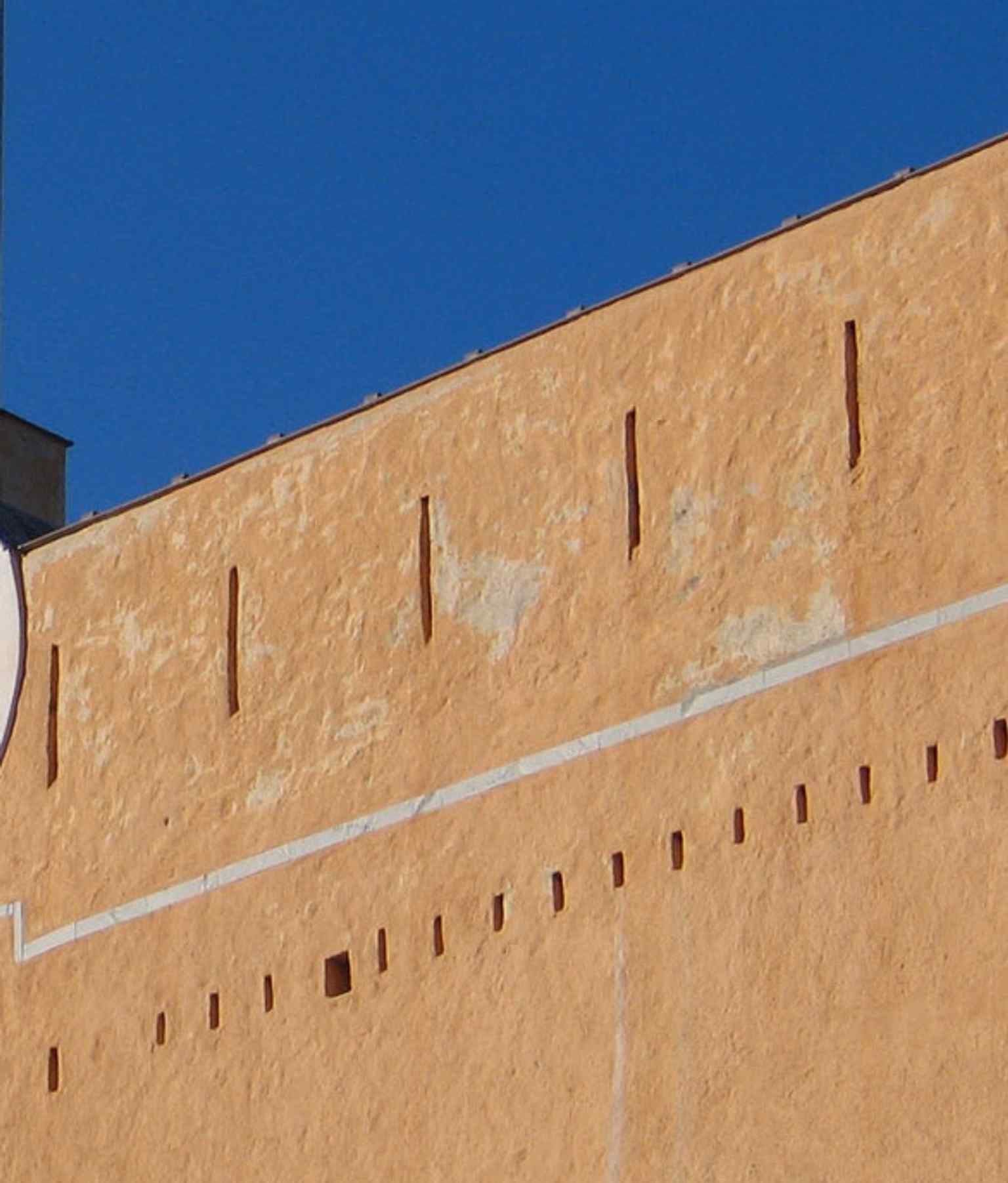
Arrow slits on the Governors' Palace facade — a reminder that this was once a Genoese fortress, not just a museum.Photo: Bastiacommunication, Wikimedia Commons, CC0. Cropped & resized. But power here always had a shadow. Under your feet lay the prison cells, fourteen of them in the early nineteenth century, each with its own name. One cell for women was called Il Panno. Another, more chillingly, was called Inferno. In eighteen twelve, three hundred Roman priests who refused Napoleon’s oath were confined here. One of them described the stench, the insects, and the water leaking from the cisterns; he said the lowest cells, below sea level, felt like the antechamber of hell.
After the French annexation in seventeen sixty-eight, the palace changed character again. Government offices moved elsewhere. Later it served as a barracks, then Caserne Watrin. During the German occupation, retreating troops mined and destroyed the west and north wings. If you like, have a look at the before-and-after image in the app; it quietly shows how the palace’s presence has shifted through the twentieth century. What survived became a museum of Bastia, a far gentler destiny for a place born as a fortress. If you want to come back inside, it is open every day from nine in the morning until five in the afternoon.
More than any other building in Bastia, this palace tells you that the city was first an act of defence, and only then a home.
When you are ready, continue on toward Sainte-Marie, where the story turns from government to faith.
Look to your left for a pale stone church front arranged in two tiers, capped with sharp triangular pediments, and marked by a tall bell tower rising beside it. This is…Read moreShow less
Open dedicated page →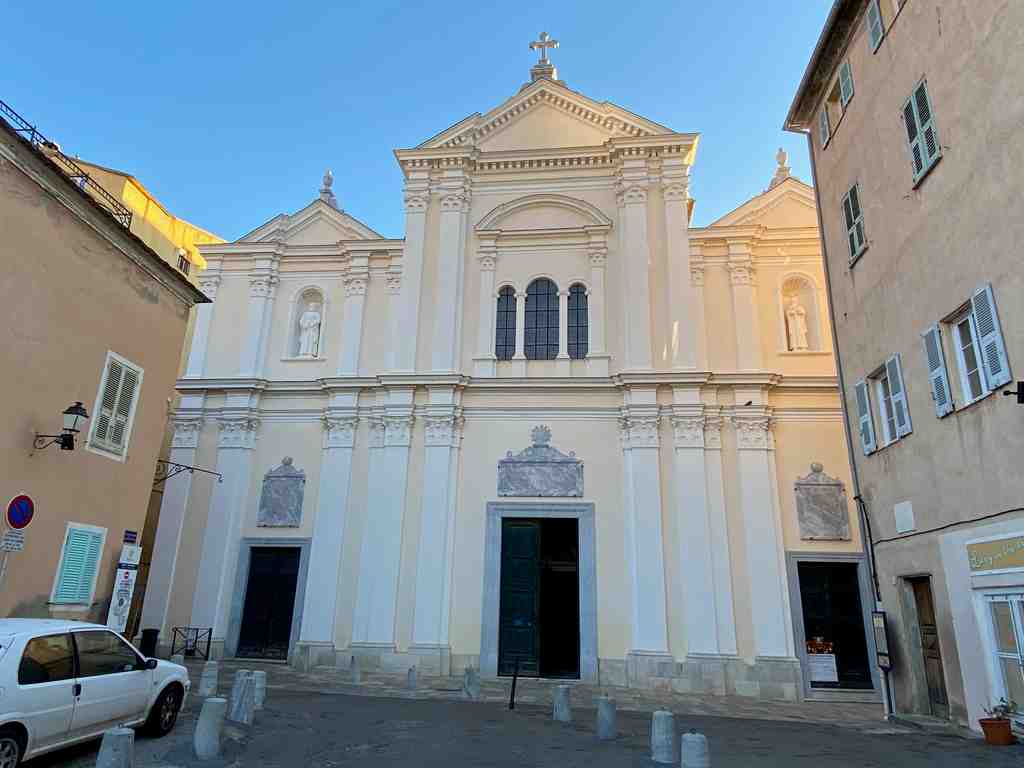
Pro-Cathedral of Sainte-Marie de BastiaPhoto: Cosudibastia, Wikimedia Commons, CC BY-SA 4.0. Cropped & resized. Look to your left for a pale stone church front arranged in two tiers, capped with sharp triangular pediments, and marked by a tall bell tower rising beside it.
This is Sainte-Marie, or in Corsican, Santa Maria, and for centuries it stood at the very centre of Bastia’s authority. From fifteen seventy until eighteen oh two, it served as the seat of the diocese of Mariana and Accia, before that diocese was attached to Ajaccio. Yet the church carried more than a bishop’s weight. People here considered it the most prestigious church in all Corsica, because this is where governors handed over power. The departing governor placed the keys and the sceptre of the Kingdom of Corsica on a silver tray and presented them to his successor. Inside the choir, the space around the main altar, two thrones faced one another: the bishop on one side, the governor on the other. Faith and government, eye to eye.
Its story begins with Bastia itself. In thirteen eighty, the Genoese governor Leonello Lomellini raised a fortress on this promontory to protect ships landing in the natural inlet below. That stronghold gave the town its name. As houses gathered around the walls, the upper town, Terra Nova, needed its own parish church. Builders began one here in fourteen eighty-nine and called it Santa Maria della Consolazione, later also Santa Maria l’Arrimbata, “the leaning” or “the braced” Saint Mary, because it rested against the rock.
That first church did not enjoy a peaceful life. French invasions and war scarred Bastia in the middle of the sixteenth century, and by fifteen sixty-three the building threatened to collapse. So in sixteen oh four, Bishop Geronimo del Pozzo launched the church you see now. Even then, it did not come easily. In sixteen eleven, the vaults over the three aisles collapsed. The project survived because a Bastia sea captain, Giovanni Pasquale Corso, died in Seville in sixteen twelve after making a fortune in the spice trade between America and Spain, and left a generous legacy to finish the work. By sixteen nineteen the main structure stood complete, and in sixteen twenty-five Bishop Giulio del Pozzo consecrated it.
The façade before you has changed more than once. The earliest front was baroque, a dramatic style full of movement and ornament, but later builders reshaped it in the eighteenth century, adding triangular pediments and statue niches. The bell tower rose in sixteen twenty, and the forecourt took shape in sixteen sixty-six.
If you go inside, the reward is lavish. The church has three long aisles, richly dressed in gold and marble. After a cholera epidemic in eighteen sixty-six spared the city, Bastia’s people paid to beautify the interior with white Carrara marble, grey-blue marble from Corte, red Levanto marble, and green Bevincu stone. You will also find gilded stucco by Francesco Marengo, painted vault decoration completed in eighteen thirty-five, seven bishops’ hats hanging high above the choir, and a silver Virgin shaped from donations given by Bastia’s own families.
Sainte-Marie feels less like a parish church than a stage where Bastia declared who held power, and why. If you would like to step inside, it generally opens from eight A-M to six P-M, and on Sundays until noon; when you are ready, continue on to Sainte-Croix for the final chapter nearby.
On your left, Sainte-Croix appears as a pale stone church with a plain rectangular façade, a deep dark doorway, and papal emblems carved above the entrance. Its exterior keeps…Read moreShow less
Open dedicated page →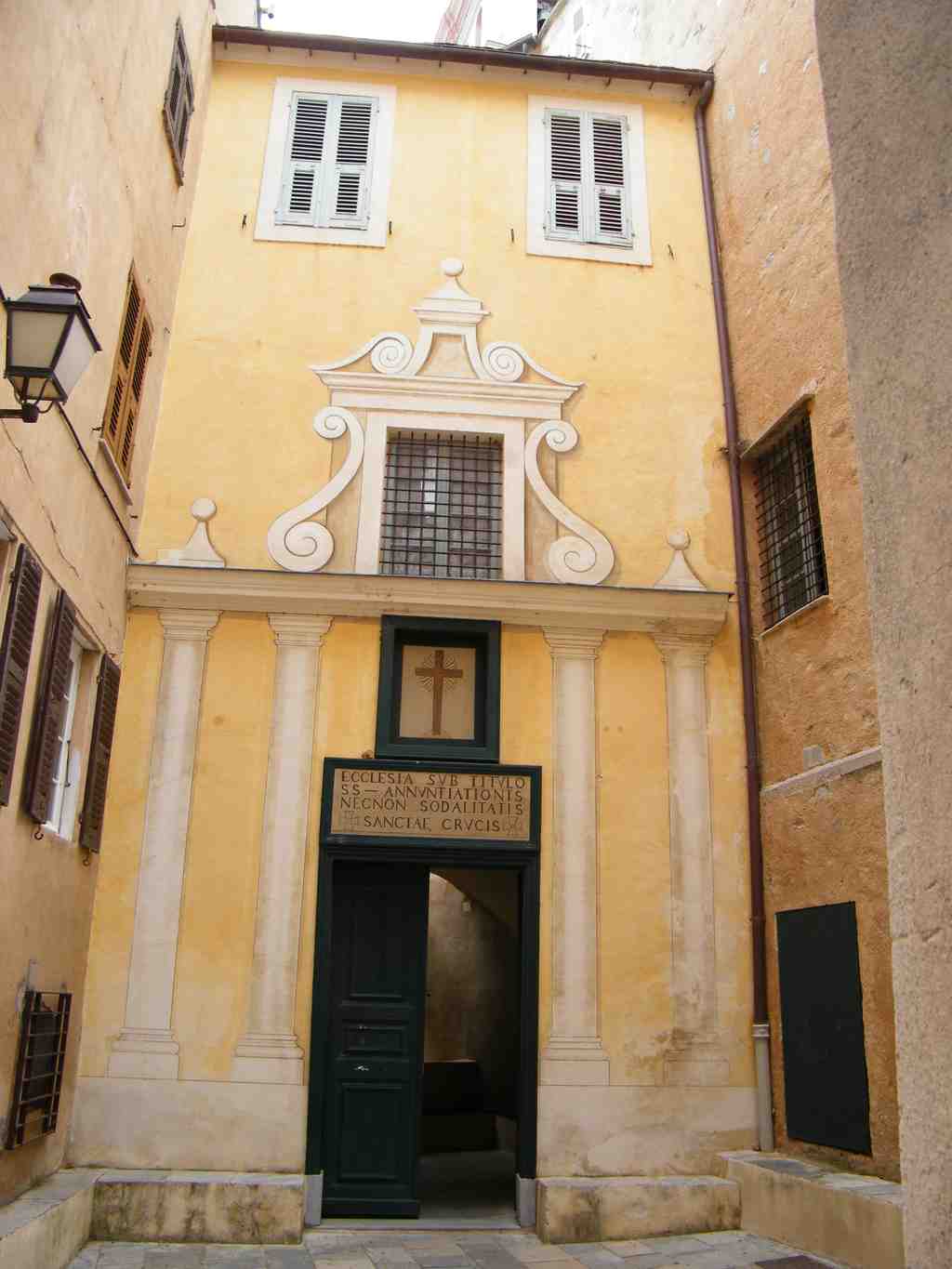
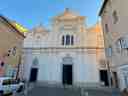
Church of Sainte-Croix in BastiaPhoto: Jll2b, Wikimedia Commons, CC BY-SA 3.0. Cropped & resized. On your left, Sainte-Croix appears as a pale stone church with a plain rectangular façade, a deep dark doorway, and papal emblems carved above the entrance.
Its exterior keeps its secrets rather well. From out here, you might never guess that this is one of the most visited monuments in Bastia, or that behind this restrained front lies one of the most sumptuous interiors in Corsica. That contrast is part of its charm: a modest face, and within, a small explosion of gold.
Sainte-Croix belongs to the old Citadel, the upper town once known as Terra Nova. In Genoese Bastia, the city split in two for worship as well as daily life: the upper town answered to Sainte-Marie, while the lower town turned to Saint-Jean-Baptiste. Here in the heights, the confraternity of Sainte-Croix, a lay religious brotherhood, became the most important in the district, and in fact the oldest in Bastia. From the early fifteenth century, its members did far more than pray. Next door they ran the Genoese hospital, caring for the poor, the disabled, and abandoned children. It is a rather moving detail, I think: devotion here had practical hands.
With papal permission, the confraternity raised its first chapel in fifteen forty-two on land belonging not to Bastia, but to Saint John Lateran in Rome, the pope’s own cathedral. That link still announces itself above the door. The inscription proclaims the bond with the Lateran, “mother and head” of all churches. If you glance up, those papal signs, the tiara and the keys of Saint Peter, are quietly declaring a very grand connection indeed.
The church you see now took shape around sixteen hundred, replacing the earlier, smaller chapel. Later, in eighteen eighteen, workers cut away a huge rock that once occupied the forecourt and laid a pebble mosaic in the Genoese manner, using stones brought from Miomu. If you look at the image on your screen, you can catch that courtyard character more clearly. But the true marvel waits inside. Sainte-Croix became famous for its gilded stucco decoration in the Genoese barocchetto style, a lighter, more playful branch of baroque, close to rococo. Between the seventeen fifties and the seventeen seventies, Corsican and Ligurian craftsmen covered the walls and vault with curling leaves, flower garlands, shells, and angelic figures. The principal masters included Tomaso Mencacci, Matteo Vacca, and Antonio Firpo. Over the high altar hangs an Annunciation painted in sixteen thirty-three by the Florentine artist Giovanni Bilivert, and on the vault another Annunciation appears in a ceiling medallion by Bastia’s own Saverio Farinole, framed as if four little angels are carrying it aloft.
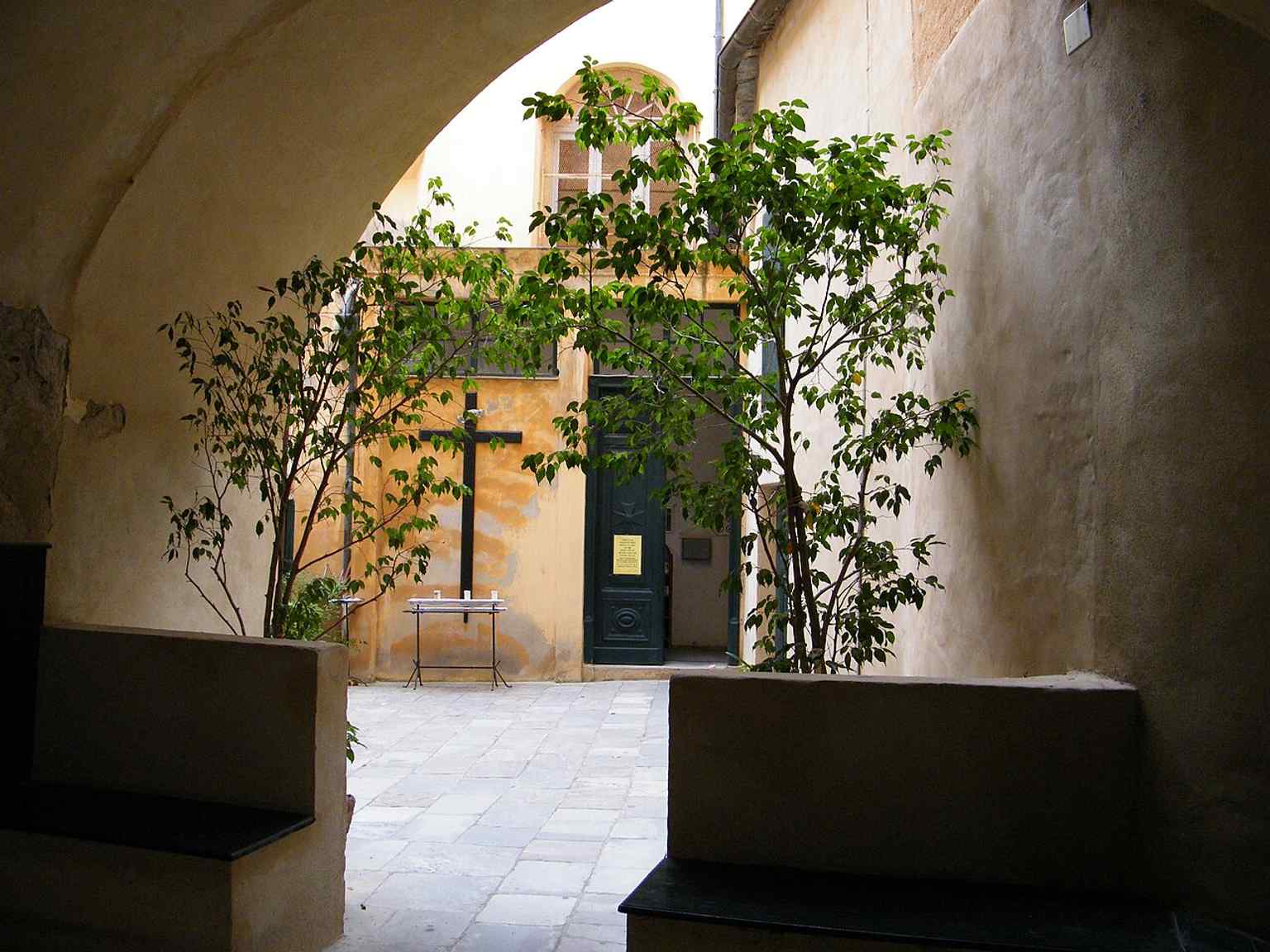
The church’s entrance courtyard in Bastia’s historic citadel, part of the 1931 listed monument.Photo: Jll2b, Wikimedia Commons, CC BY-SA 3.0. Cropped & resized. And then there is the figure that gives this church its particular aura: the Black Christ, known here as U Cristu Negru, the miraculous crucifix. Legend says two anchovy fishermen, Camugli and Giuliani, found it at sea in fourteen twenty-eight. Bastia still honours it every year on the third of May. Have a look at the app image for that dark, arresting face. Since nineteen thirty-one, Sainte-Croix has held protected historic status, which feels entirely fitting for a place that has guarded faith, charity, and splendour in one breath. If you plan to go inside, it generally opens from eight in the morning until half past five Monday to Saturday, and it is closed on Sunday.
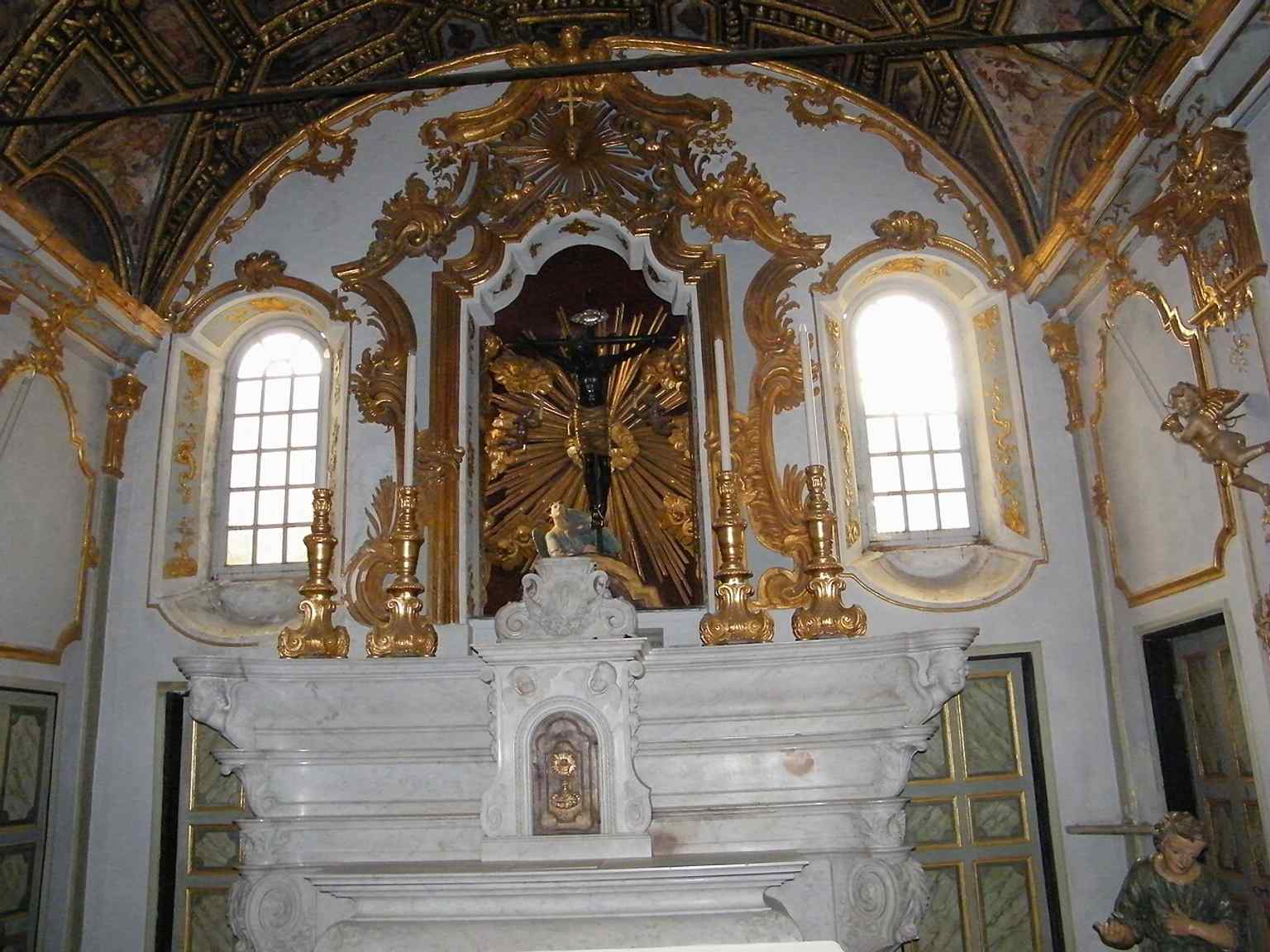
The Black Christ of Sainte-Croix, the miraculous crucifix honored every year on 3 May in Bastia.Photo: Jll2b, Wikimedia Commons, CC BY-SA 3.0. Cropped & resized.
Frequently asked questions
How do I start the tour?
After purchase, download the AudaTours app and enter your redemption code. The tour will be ready to start immediately - just tap play and follow the GPS-guided route.
Do I need internet during the tour?
No! Download the tour before you start and enjoy it fully offline. Only the chat feature requires internet. We recommend downloading on WiFi to save mobile data.
Is this a guided group tour?
No - this is a self-guided audio tour. You explore independently at your own pace, with audio narration playing through your phone. No tour guide, no group, no schedule.
How long does the tour take?
Most tours take 60–90 minutes to complete, but you control the pace entirely. Pause, skip stops, or take breaks whenever you want.
What if I can't finish the tour today?
No problem! Tours have lifetime access. Pause and resume whenever you like - tomorrow, next week, or next year. Your progress is saved.
What languages are available?
All tours are available in 50+ languages. Select your preferred language when redeeming your code. Note: language cannot be changed after tour generation.
Where do I access the tour after purchase?
Download the free AudaTours app from the App Store or Google Play. Enter your redemption code (sent via email) and the tour will appear in your library, ready to download and start.
If you don't enjoy the tour, we'll refund your purchase. Contact us at [email protected]
Checkout securely with 






%20(1).jpg)


%20(2).jpg)

%20palazzu%20di%20i%20guvernatori%20di%20Bastia.jpg)

