
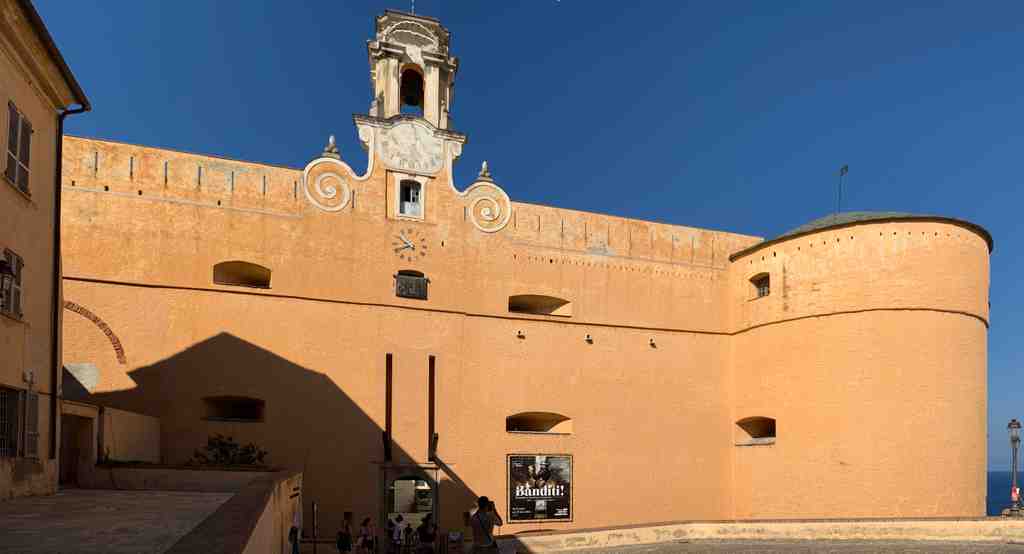
In front of you stands a pale stone fortress-palace with a broad rectangular facade, a massive round tower, and a small bell turret perched above the roofline.
This is the Palais des Gouverneurs, the Governors’ Palace, and in a very real sense Bastia begins here. In the thirteen eighties, the Genoese governor Leonello Lomellini chose this rocky spur above the shore near the cove of Ficaghjola and the little fishing harbour of Portu Cardu for a simple reason: control. He wanted a fortified place close to the sea, where trade could be watched and reinforcements from Genoa could land quickly if trouble came. That first stronghold was called the bastia, and the whole city eventually borrowed its name.
The early years were anything but calm. In thirteen ninety-three, Count Arrigo della Rocca seized the fort. It passed through other hands, including Vincentellu d’Istria, until Genoa took it back in fourteen thirty-seven. For a long while it remained a modest fortification, but the city around it began to gather strength. In fourteen seventy-six, Antonio Tagliacarne, a builder from Levanto in Liguria, raised a cluster of houses beside it. That became the first nucleus of Terranova, the new town, set apart from Terravecchia by the old port below.
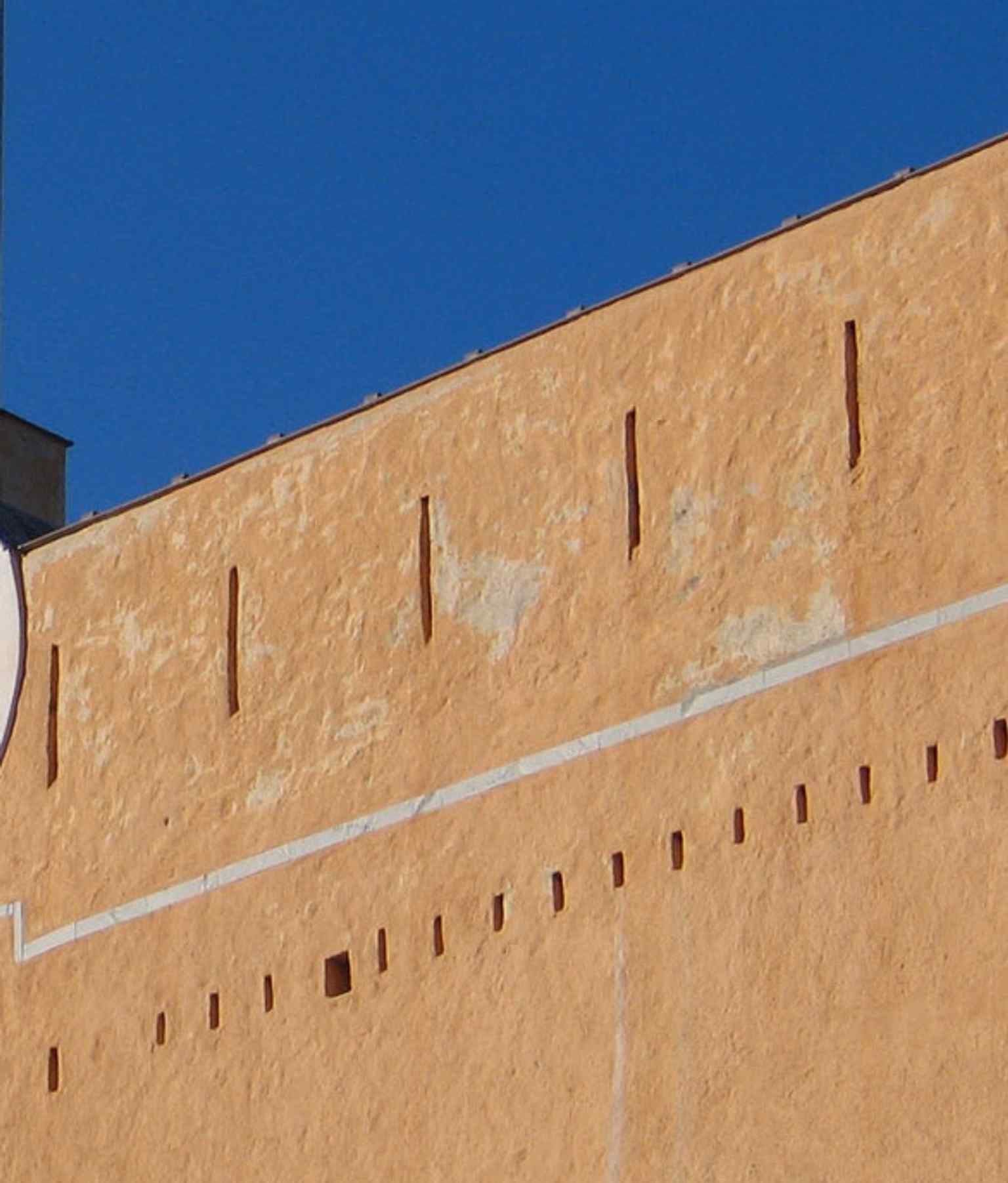
What you see now carries layer upon layer of those changes. The great round tower is the Torrione. Thickened walls and projecting bastions, those outward-thrust defensive bulges, turned the place into the core of the citadel. If you glance at your screen, the close-up of the arrow slits makes that military purpose wonderfully plain. A century after the first fort rose here, the governors moved in properly. The palace became residence, law court, barracks, archive, and chapel all at once. In the east wing sat the sala maggiore, the great hall where the governor received visitors and presided over the election of Bastia’s chief magistrate, the podestà, and the city’s Nobles Twelve. Even the vaults carried a message: carved keystones showed Saint George killing the dragon, symbol of the Genoese authority that governed Corsica.
But power here always had a shadow. Under your feet lay the prison cells, fourteen of them in the early nineteenth century, each with its own name. One cell for women was called Il Panno. Another, more chillingly, was called Inferno. In eighteen twelve, three hundred Roman priests who refused Napoleon’s oath were confined here. One of them described the stench, the insects, and the water leaking from the cisterns; he said the lowest cells, below sea level, felt like the antechamber of hell.
After the French annexation in seventeen sixty-eight, the palace changed character again. Government offices moved elsewhere. Later it served as a barracks, then Caserne Watrin. During the German occupation, retreating troops mined and destroyed the west and north wings. If you like, have a look at the before-and-after image in the app; it quietly shows how the palace’s presence has shifted through the twentieth century. What survived became a museum of Bastia, a far gentler destiny for a place born as a fortress. If you want to come back inside, it is open every day from nine in the morning until five in the afternoon.
More than any other building in Bastia, this palace tells you that the city was first an act of defence, and only then a home.
When you are ready, continue on toward Sainte-Marie, where the story turns from government to faith.





%20palazzu%20di%20i%20guvernatori%20di%20Bastia.jpg)