
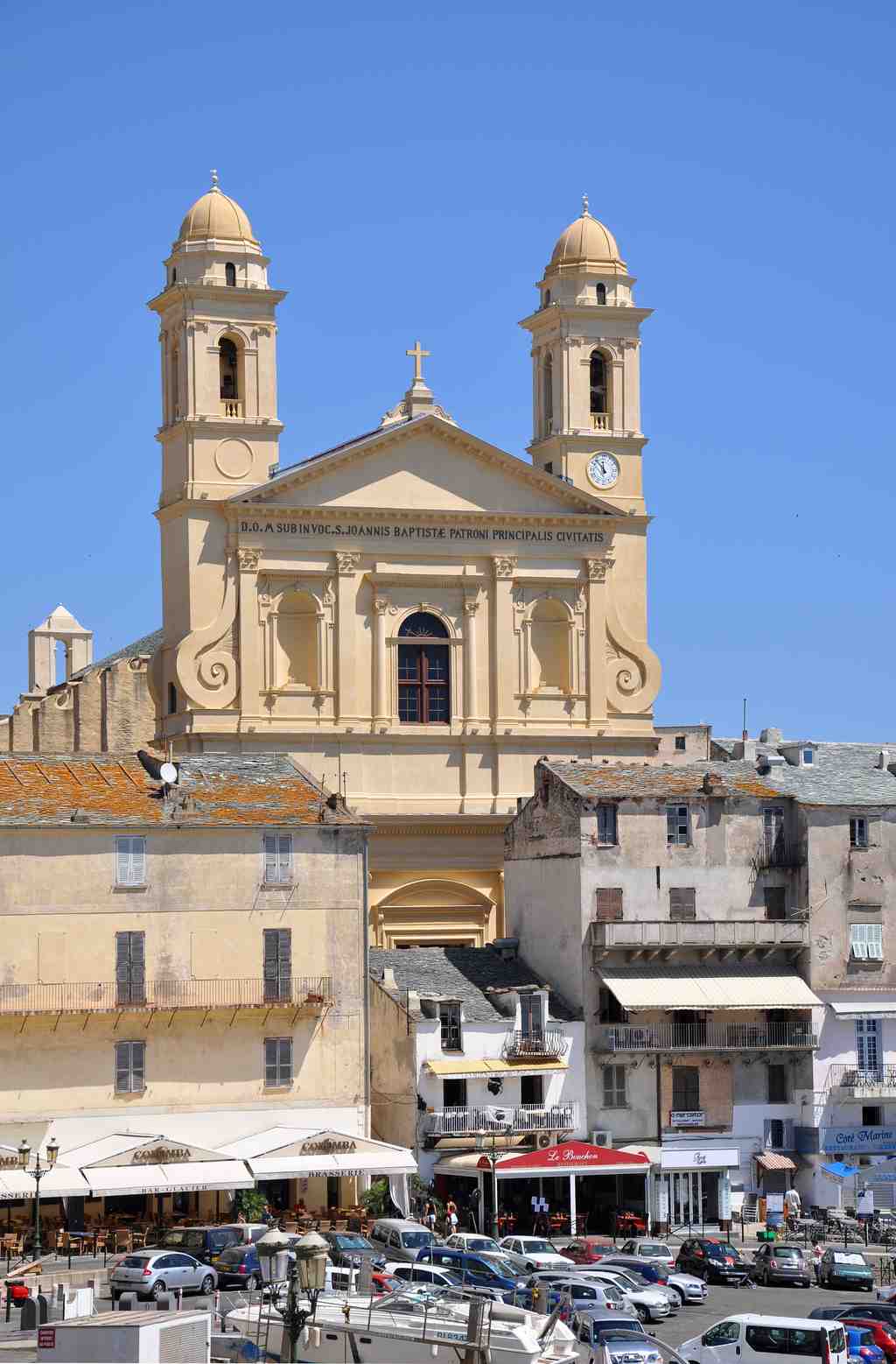
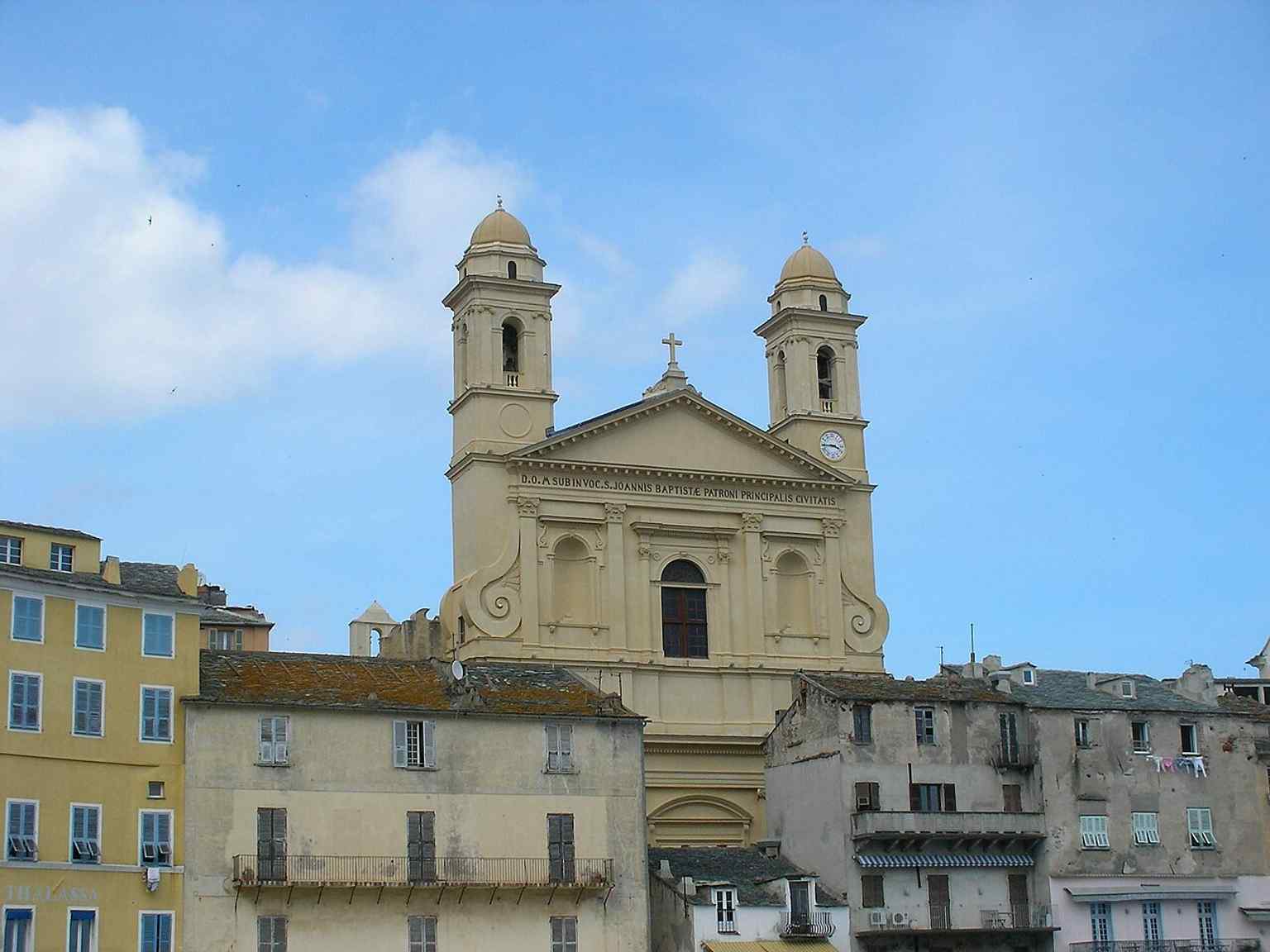
On your right, look for a pale stone Baroque façade shaped like a grand vertical screen, with twin bell towers rising above it and a clock set high at the centre.
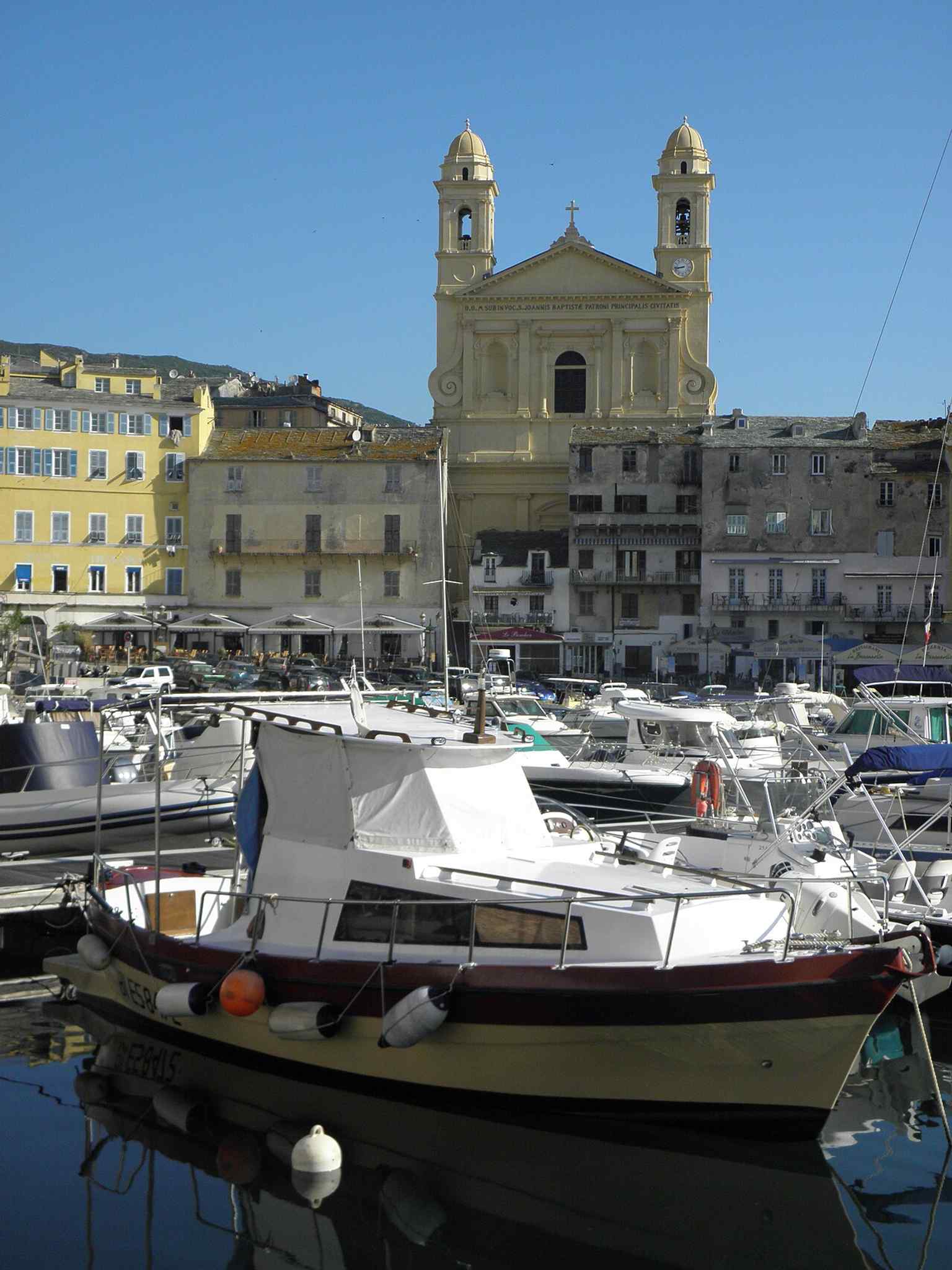
This is Saint-Jean-Baptiste, or San Ghjuvà in Corsican, the great church of Terra Vechja and, in fact, the largest church in all Corsica. It stands exactly where Bastia’s lower town needed it most: between the market and the Old Port, close to the lives of traders, sailors, fishermen, and families whose world revolved around the water. In the Genoese period, Bastia split itself in two for worship as well as geography. Up in Terra Nova, people belonged to Sainte-Marie. Down here in Terra Vechja, they came to Saint-Jean-Baptiste.
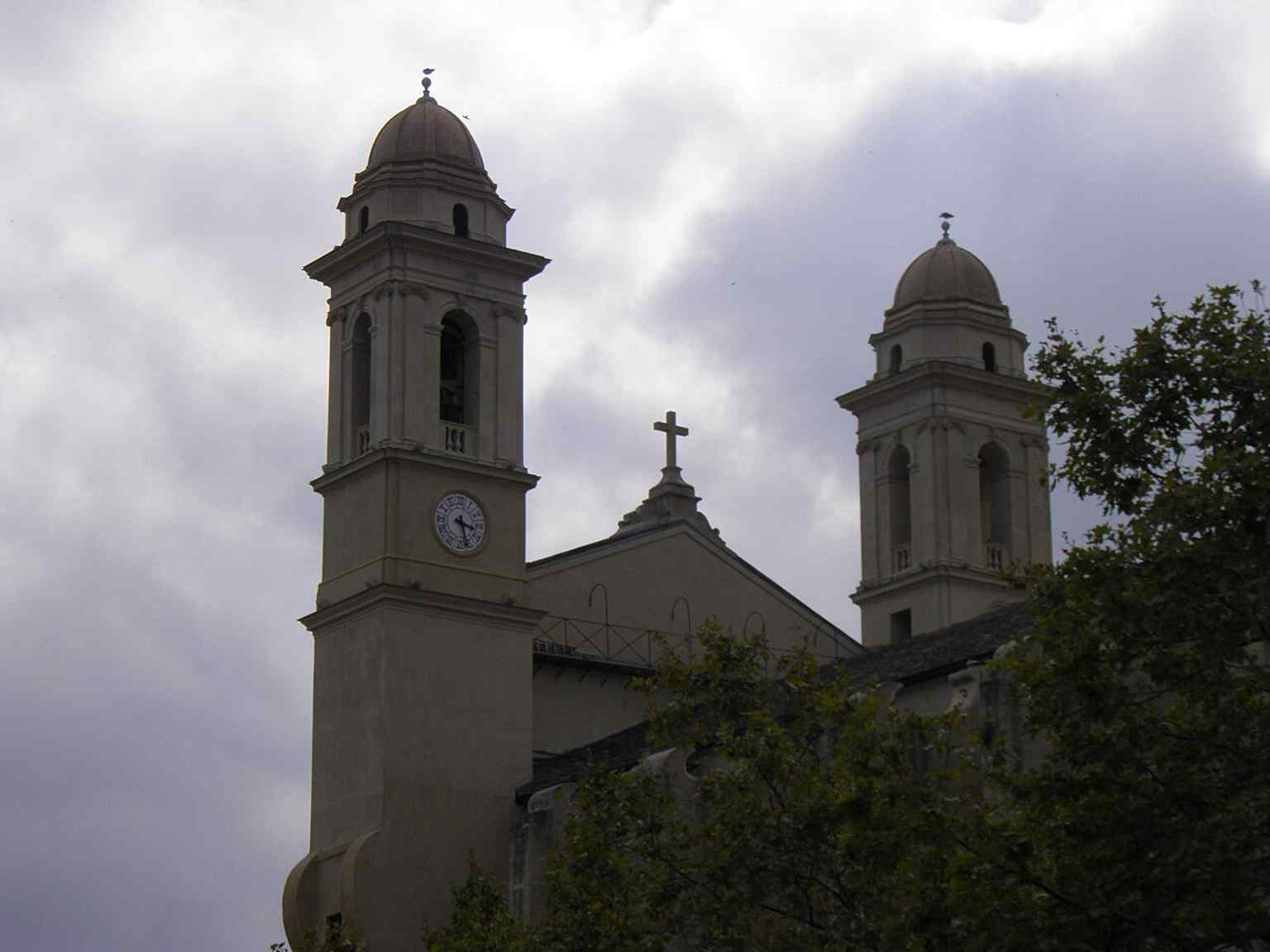
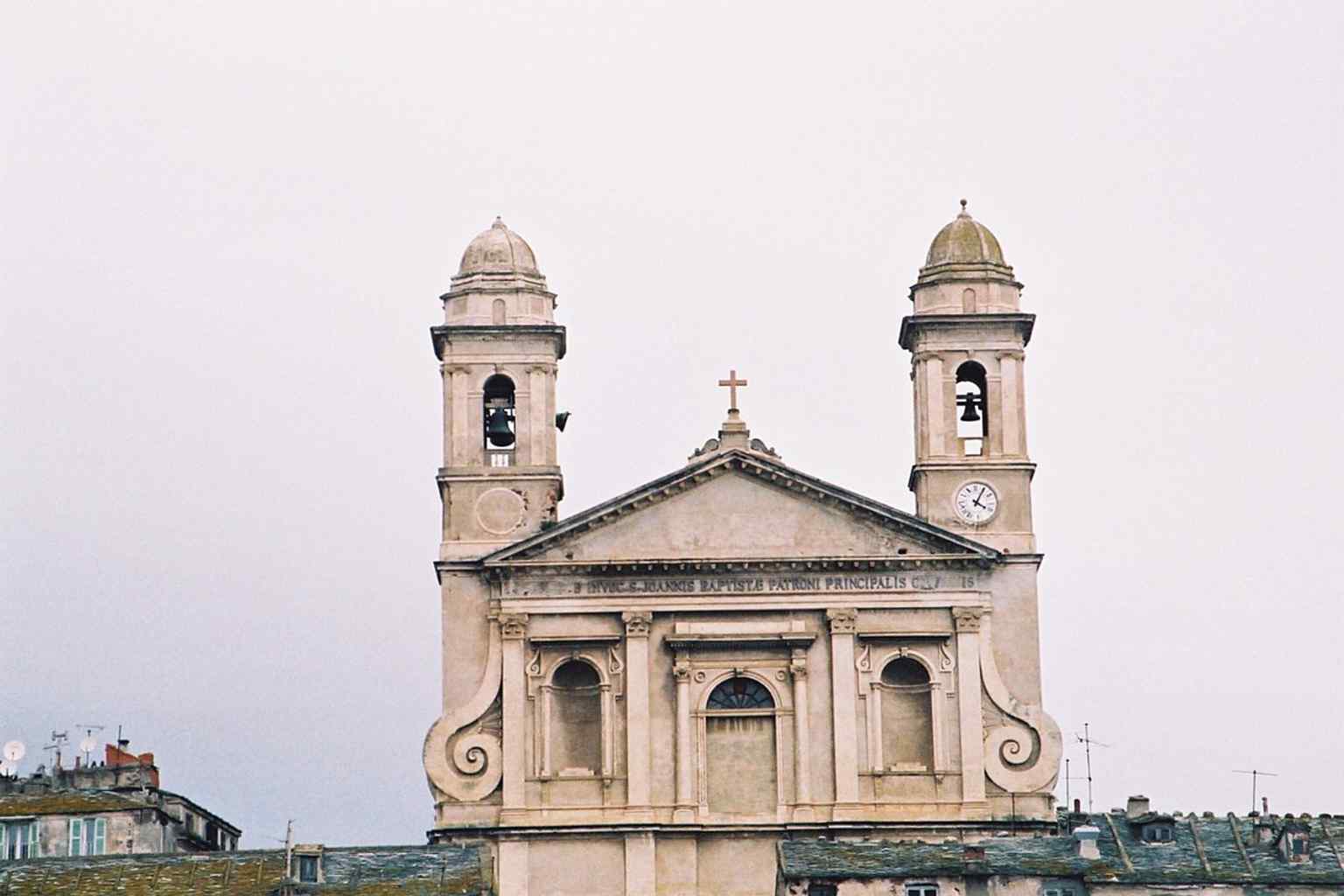
The church you see began its long rise in sixteen thirty-six, on the site of an older church, and the work continued for thirty years until sixteen sixty-six. That slow making matters, because it explains the lovely little puzzle in front of you. The façade belongs to the seventeenth century and speaks the language of the Baroque: drama, movement, and a sense that stone itself has learned how to perform. But the towers are younger. The one on the left arrived in eighteen ten, thanks to the Swiss master mason Tomaso Quadri. The right-hand tower came later still, in eighteen sixty-four, designed by Paul-Augustin Viale. So this church did not appear all at once; it gathered itself over generations.
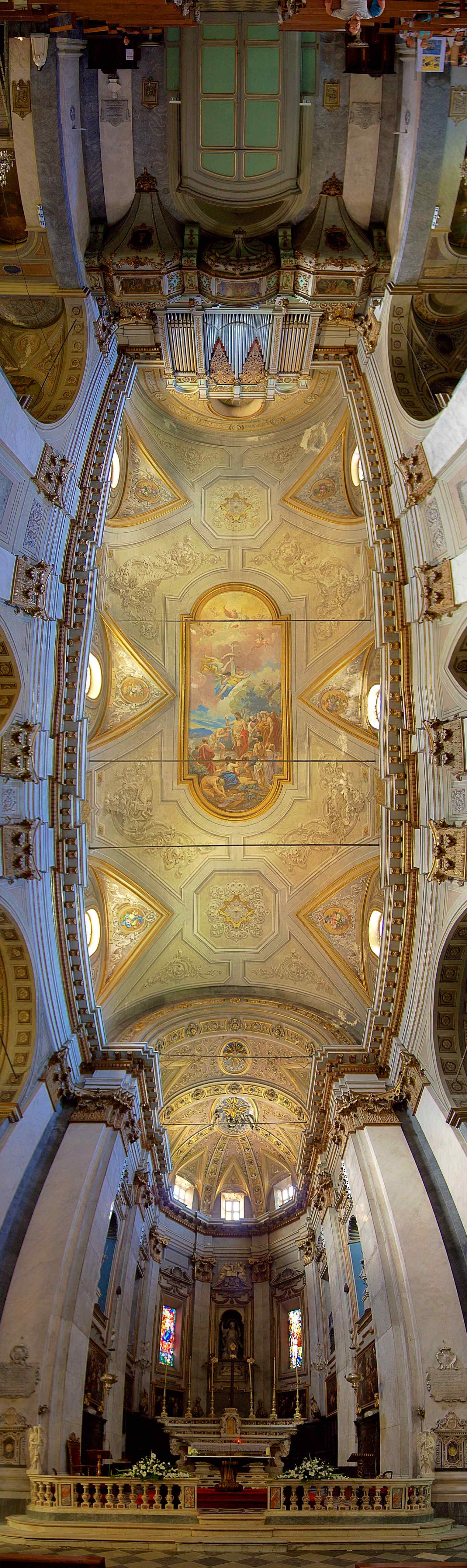
That layered growth gives Saint-Jean-Baptiste a rather human quality. It kept changing as Bastia changed. If you fancy it, have a quick look at the before-and-after image from the Old Port; the church stays recognisably itself while the harbourfront around it quietly slips from one era into another. Inside, the central hall of the church, called the nave, became especially rich in the nineteenth century, when much of the decoration was remade. If you glance at the image on your screen, you can see how opulent that interior became. In the choir, the space around the high altar, painters and gilders worked in stages: Fausto Rossi began the restoration in the early eighteen hundreds, Giovan Battista Vicini handled the gilding, and when Rossi died mid-project, Luigi Giordani finished the campaign. Later artists transformed it again, and above the high altar an oval medallion opens like a window into heaven, with angels seeming to hover in an oculus, a round opening, above the sanctuary.
This was never just a grand church; it was a working church for a port community. The sailors had their own chapel, facing the fishermen’s chapel across the nave, as though the two brotherhoods still acknowledge one another in silence. The high altar gleams with polychrome marble, meaning many-coloured stone, crafted in sixteen ninety-four by Honoré Pellé, a French artisan working in Genoa. There is a pulpit of richly coloured marble from seventeen eighty-one, and an exceptional organ gallery carved in seventeen forty-two by the Bastiais craftsman Giovanbattista Terrigo.
Outside these walls, the church kept its hold on local imagination. On the eve of Saint John’s feast, Bastia lights the fucarè, a great fire at the Old Port. And one of the city’s best-loved songs, U Campanile di San Ghjuvà, celebrates this very bell tower and the life gathered around it. France recognised the church as a historic monument in two thousand.
If you want to look inside later, the church generally opens every day from eight in the morning until seven in the evening.
San Ghjuvà is Bastia in stone: devotional, maritime, and quietly theatrical.
When you are ready, continue on and let the old town reveal its next secret.





%20(1).jpg)


%20(2).jpg)