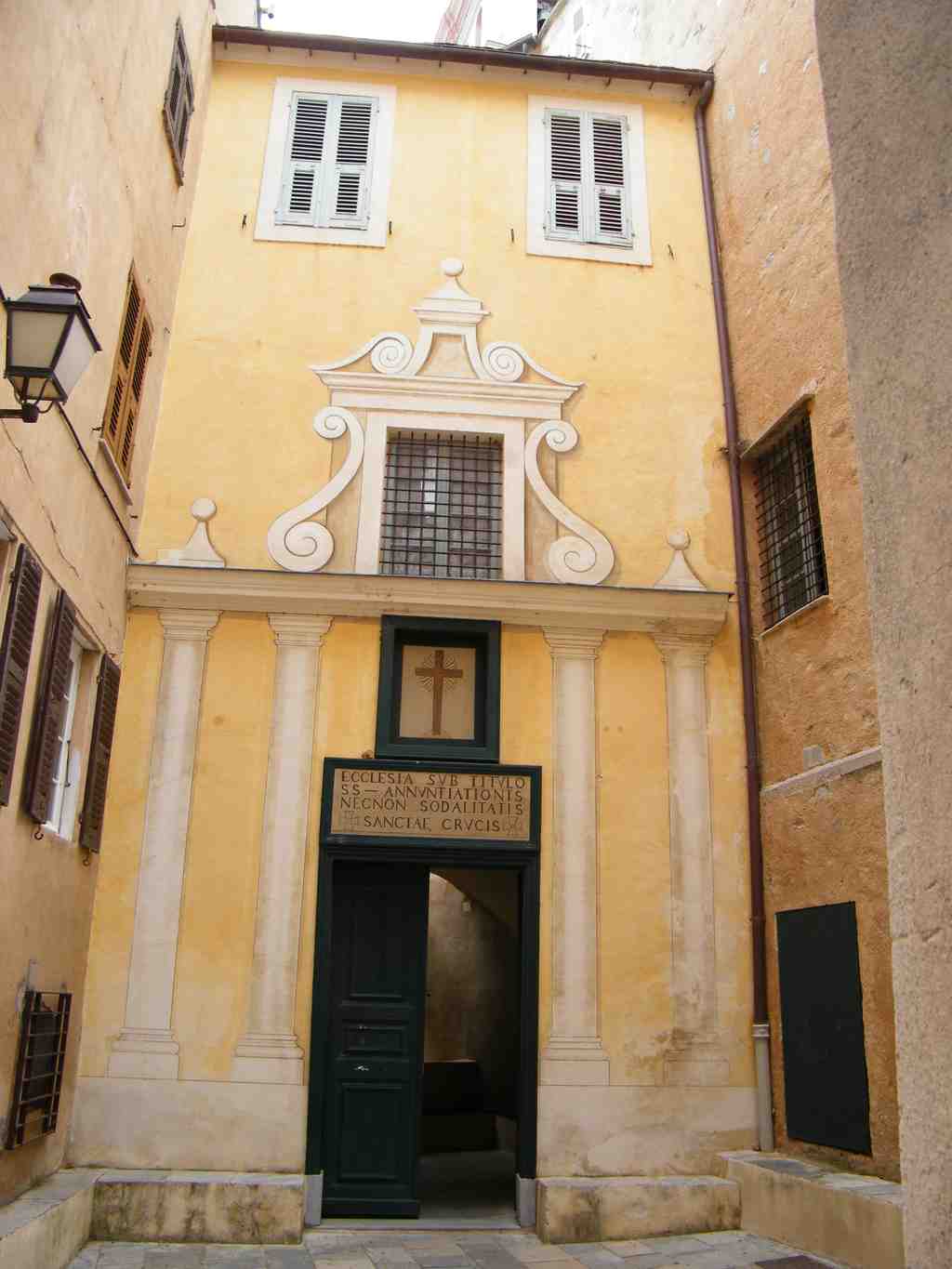
On your left, Sainte-Croix appears as a pale stone church with a plain rectangular façade, a deep dark doorway, and papal emblems carved above the entrance.
Its exterior keeps its secrets rather well. From out here, you might never guess that this is one of the most visited monuments in Bastia, or that behind this restrained front lies one of the most sumptuous interiors in Corsica. That contrast is part of its charm: a modest face, and within, a small explosion of gold.
Sainte-Croix belongs to the old Citadel, the upper town once known as Terra Nova. In Genoese Bastia, the city split in two for worship as well as daily life: the upper town answered to Sainte-Marie, while the lower town turned to Saint-Jean-Baptiste. Here in the heights, the confraternity of Sainte-Croix, a lay religious brotherhood, became the most important in the district, and in fact the oldest in Bastia. From the early fifteenth century, its members did far more than pray. Next door they ran the Genoese hospital, caring for the poor, the disabled, and abandoned children. It is a rather moving detail, I think: devotion here had practical hands.
With papal permission, the confraternity raised its first chapel in fifteen forty-two on land belonging not to Bastia, but to Saint John Lateran in Rome, the pope’s own cathedral. That link still announces itself above the door. The inscription proclaims the bond with the Lateran, “mother and head” of all churches. If you glance up, those papal signs, the tiara and the keys of Saint Peter, are quietly declaring a very grand connection indeed.
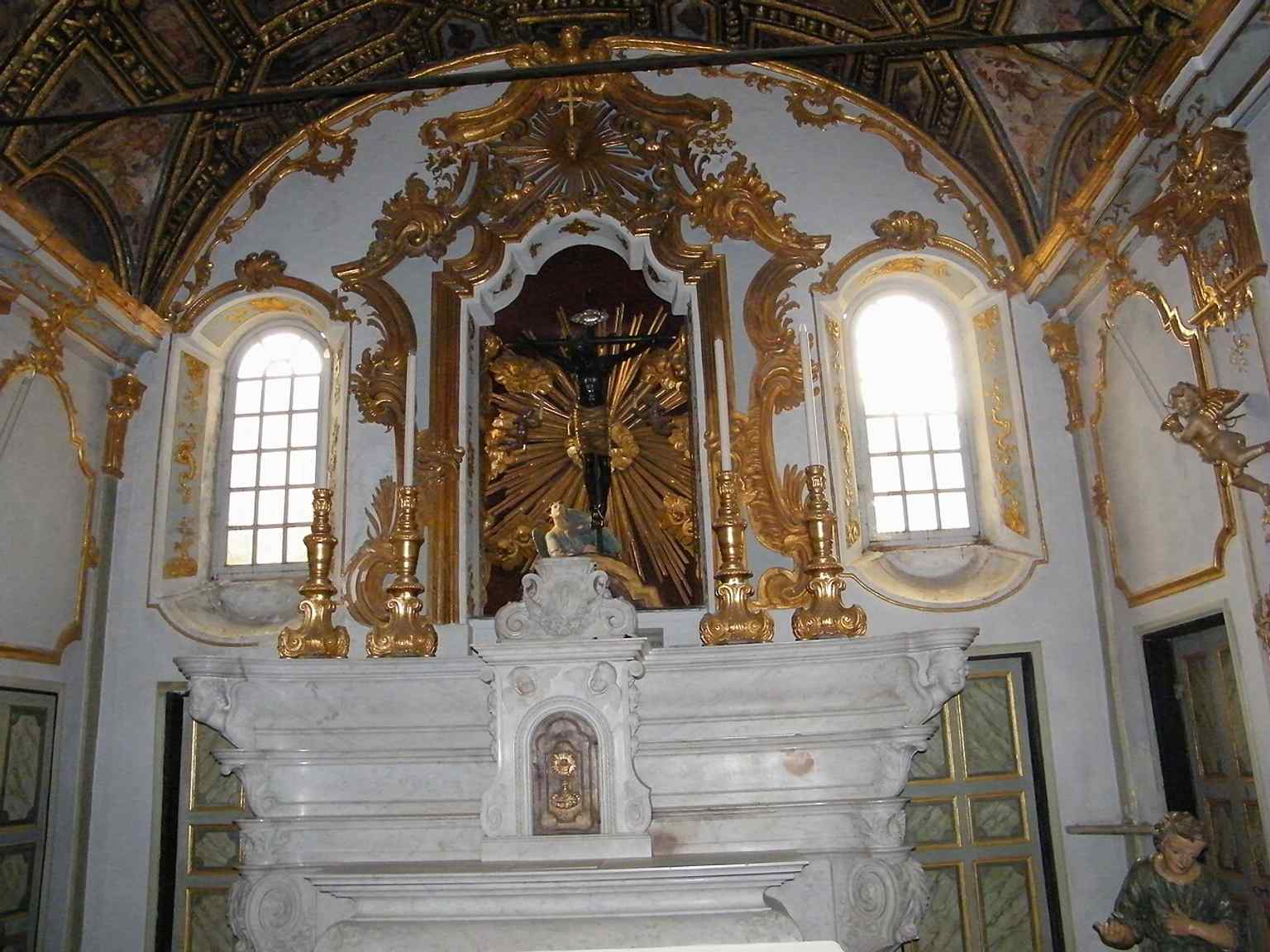
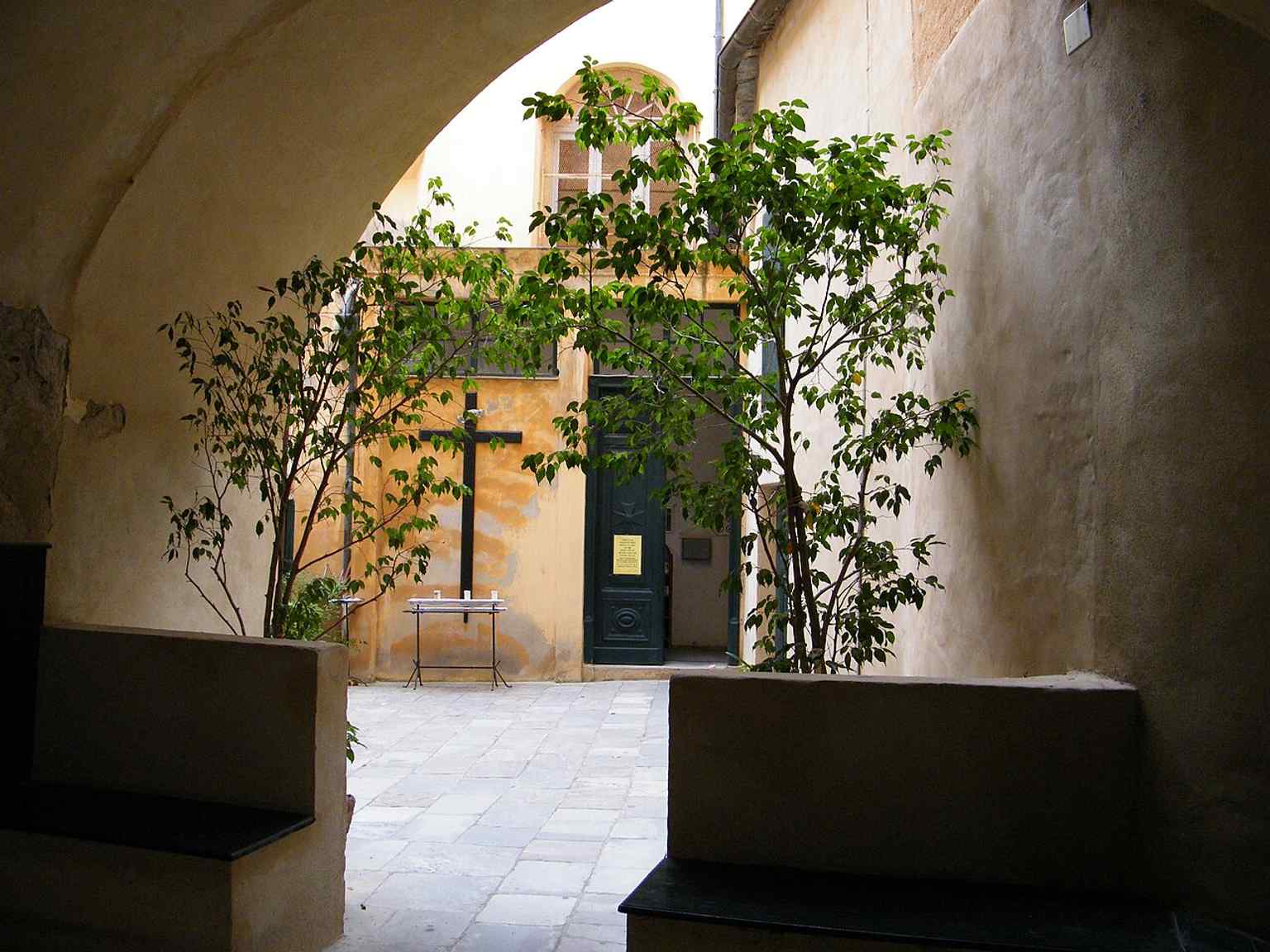
The church you see now took shape around sixteen hundred, replacing the earlier, smaller chapel. Later, in eighteen eighteen, workers cut away a huge rock that once occupied the forecourt and laid a pebble mosaic in the Genoese manner, using stones brought from Miomu. If you look at the image on your screen, you can catch that courtyard character more clearly. But the true marvel waits inside. Sainte-Croix became famous for its gilded stucco decoration in the Genoese barocchetto style, a lighter, more playful branch of baroque, close to rococo. Between the seventeen fifties and the seventeen seventies, Corsican and Ligurian craftsmen covered the walls and vault with curling leaves, flower garlands, shells, and angelic figures. The principal masters included Tomaso Mencacci, Matteo Vacca, and Antonio Firpo. Over the high altar hangs an Annunciation painted in sixteen thirty-three by the Florentine artist Giovanni Bilivert, and on the vault another Annunciation appears in a ceiling medallion by Bastia’s own Saverio Farinole, framed as if four little angels are carrying it aloft.
And then there is the figure that gives this church its particular aura: the Black Christ, known here as U Cristu Negru, the miraculous crucifix. Legend says two anchovy fishermen, Camugli and Giuliani, found it at sea in fourteen twenty-eight. Bastia still honours it every year on the third of May. Have a look at the app image for that dark, arresting face. Since nineteen thirty-one, Sainte-Croix has held protected historic status, which feels entirely fitting for a place that has guarded faith, charity, and splendour in one breath. If you plan to go inside, it generally opens from eight in the morning until half past five Monday to Saturday, and it is closed on Sunday.