
Plzeň Audio Tour: Timeless Tales from the Heart of Bohemia
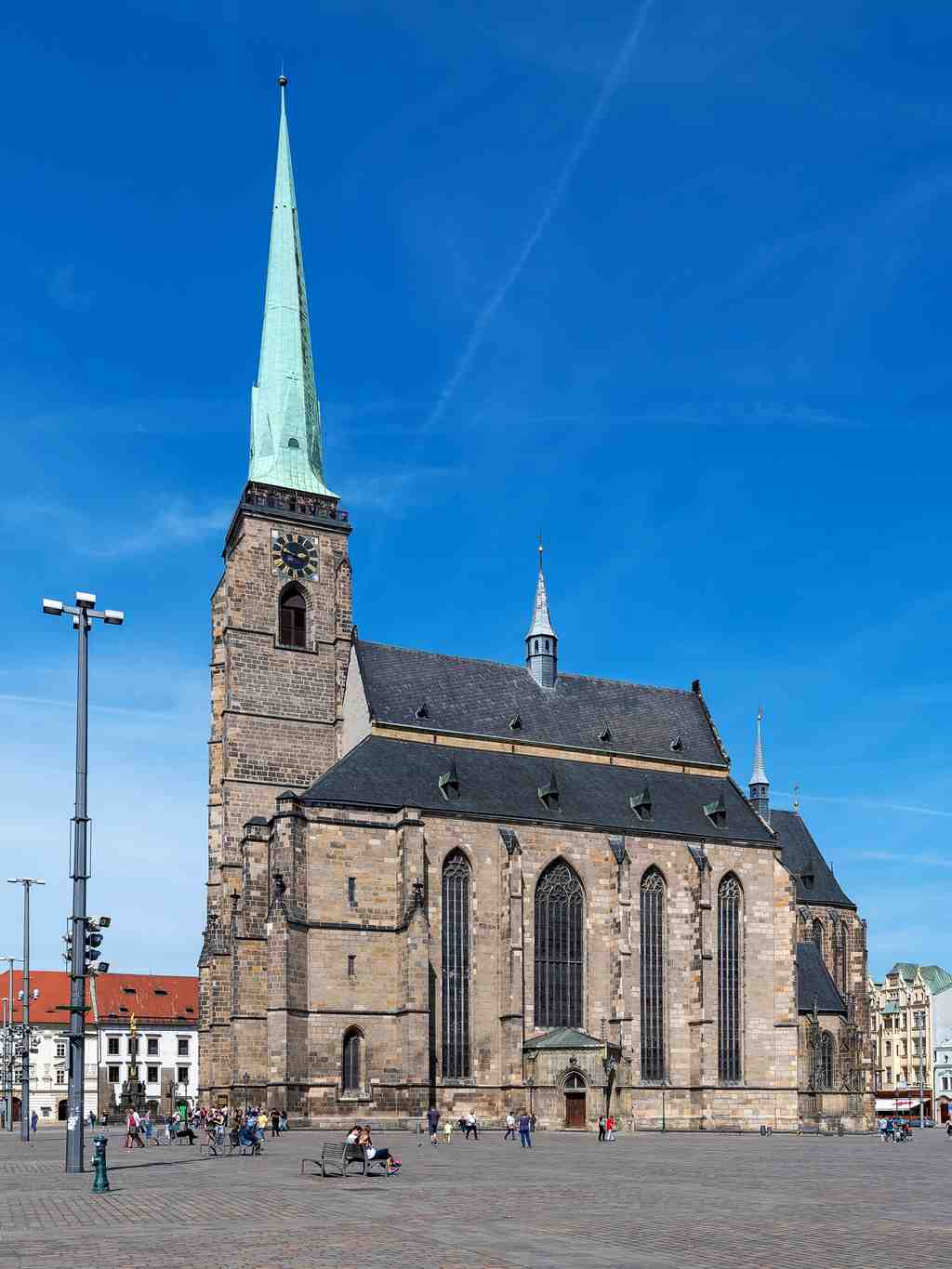
A single stone tower rises over Plzeň’s rooftops, its shadow hiding centuries of secrets and silent revolution. This is no ordinary city walk—this is your self-guided audio tour through Plzeň, leading down alleys and into grand halls where stories linger just out of sight. Uncover hidden tales that most visitors stroll past. Who rang the alarm from St. Bartholomew’s tower during the city’s darkest midnight? What cryptic codes are carved into the Franciscan Monastery’s ancient walls? And why did one scandalous meeting at the Měšťanská beseda nearly change Plzeň’s destiny forever? Move from sunlit squares to cloistered chapels, feeling the city’s heartbeat with each step. See grand cathedrals, rebel hideouts and stages for secrets unfold. This journey opens the city’s closed doors, revealing drama and wonder at every turn. The heart of Plzeň is waiting. Press play and uncover what the shadows conceal.
Tour preview
About this tour
- scheduleDuration 40–60 minsGo at your own pace
- straighten2.5 km walking routeFollow the guided path
- location_on
- wifi_offWorks offlineDownload once, use anywhere
- all_inclusiveLifetime accessReplay anytime, forever
- location_onStarts at Pilsen Municipal Transport Companies
Stops on this tour
You’re looking for a tall, yellow building with lots of windows and a modern glass elevator attached to its side, standing proudly by the riverside among more modern blocks - you…Read moreShow less
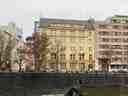
You’re looking for a tall, yellow building with lots of windows and a modern glass elevator attached to its side, standing proudly by the riverside among more modern blocks - you can spot it best from the opposite bank, just across the stone embankment and rows of bare trees. Welcome to the headquarters of Pilsen Municipal Transport Companies! Imagine yourself surrounded by the gentle rush of the river Radbuza at your feet, the hum of city trams in the distance, and the undeniable sense of movement that has kept Plzeň running for over a century. This grand building isn’t just where buses, trams, and trolleybuses are scheduled - it’s the heart of public life in Pilsen, as crucial to the city as a conductor to an orchestra. Let’s rewind to the late 19th century, when electricity was the newest craze, and Plzeň’s public transport was just a twinkle in the eyes of inventors. Enter František Křižík, a true Czech legend who rolled up his sleeves and built an electric railway between 1896 and 1899. His vision was bold - trams running not just through Plzeň, but far beyond its borders. Imagine the hiss of steam, the clang of hammers, and the shouts of workers as new tracks were laid out and the future began to roll in. What stands before you now is more than just an office - it’s a living witness to this electric dream. In the 1920s, the city needed a building powerful enough to harness this growing energy, both literally and figuratively. By 1926, after a bit of architectural tug-of-war (the original design called for an even grander, five-story palace!), the company settled for the solid, elegant block you see now. There’s a little secret in the basement: a hydroelectric power plant, still humming away, first fitted with a Francis turbine and now with a Kaplan turbine since the 1980s. The project to improve the river’s flow and tame its unpredictability led to this surprising blend of transport and electricity, where the sound of flowing water is part of the company’s soundtrack. Over the years, the company evolved with the city’s ever-changing needs-splitting off its power plant division, mixing and matching transport modes, and re-naming itself more times than a chameleon at a disco. Today, it keeps the city moving on 46 routes with 326 vehicles that together clock more than 14.8 million kilometers in a year! Trams in brilliant yellow, trolleybuses in leafy green, and buses in cherry red make the fleet look like moving stripes of the Pilsen city flag. And they’re not just about getting people from A to B. PMDP brings you the Plzeňská karta, a chip card that isn’t just a bus pass - it opens library doors, gets you into sports venues, lets you pay for parking, and even syncs with your football season ticket. Need a ride but don’t want to own a car? They run a small carsharing fleet called Karkulka - and if you’d rather travel in style, why not rent a historic tram car and roll through the city like a vintage VIP? They also care for Pilsen’s senior citizens with the cheerful Senior Expres, and since 2017, the city’s very streetlights, parking lots, and traffic signals have fallen under their bright, watchful eye. So next time a tram slides by, think of this yellow building by the river, bustling like a beehive, full of planners, engineers, and dreamers who have kept Plzeň on the move for more than a hundred years-making sure every ding of a bell and every flash of a ticket machine is right on time. If you listen closely, you might just hear the city’s heartbeat flowing right through here.
Open dedicated page →In front of you stretches a wide and lively street lined with colorful old buildings and bustling shops-just glance straight ahead along the gentle curve where the tram wires…Read moreShow less
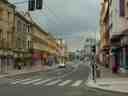
In front of you stretches a wide and lively street lined with colorful old buildings and bustling shops-just glance straight ahead along the gentle curve where the tram wires zig-zag overhead and you’ll know you’re on Americká. Let’s take a stroll through time-right here, where the hum of traffic and the clatter of trolleybuses mix with the laughter from the shops, you’re standing on the city’s pulse: Americká. But don’t get too attached to the name, because this street has had more identity crises than a soap opera character! Since 1868, it’s been called “Stodolní” (thanks to the barns that once dotted its edge), then Jungmannova, Bahnhofstraße, Moskevská, Wilsonova, Stalinova, and even Třída Ludvíka Svobody. Each name echoes a different moment in history and politics-locals lovingly tease that it’s the “Street of Political Mishaps.” If you ever feel indecisive, just remember this street and you’ll feel better! Now, imagine early 20th-century Plzeň: horses and carriages rattling by, grand new buildings going up. In 1913, the grand Wilson Bridge opened right here, the city’s last great stone bridge, sturdy enough to outlast rulers and regime changes-though the bridge itself shuffled names more times than most people change haircuts. Swing your gaze around and you’ll spot architectural treasures. There’s the “Mrakodrap,” Plzeň’s oldest skyscraper, built in 1924-a trio of buildings meant to capture that soaring American spirit, brainchild of Hanuš Zápal. And the old Elektra cinema (later Kino Moskva), once the largest in Czechoslovakia, where the famous Finále film festival wowed locals year after year. Cross the street, and you’ll see secession-era details-like on the former Imperial District Office, its elegant Art Nouveau flourishes standing proud. Lively as it is now, Americká’s seen it all: celebration, occupation, protest. In ’45, the city cheered the arrival of the US Army, now commemorated by a special memorial. The buildings on your right, mostly from the 1920s and 30s, watch as waves of shoppers replace the streetcars of earlier eras. A modern touch? The once-bustling TESCO, built as OD Prior in the ‘60s, now awaiting a new chapter. So as the trolleybuses rush by and locals zip into shops, you’re walking through a timeline-one that keeps changing its mind, but always feels unmistakably Plzeň. And remember: here on Americká, the only thing constant is change.
Open dedicated page →Just ahead, you’ll spot Měšťanská beseda by its pale green neorenaissance façade, crowned with a striking onion-shaped golden dome and lively painted panels above its windows-just…Read moreShow less
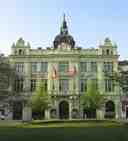
Just ahead, you’ll spot Měšťanská beseda by its pale green neorenaissance façade, crowned with a striking onion-shaped golden dome and lively painted panels above its windows-just look straight ahead between the trees, framed by buildings on either side. Now, let’s take you inside the story of this magnificent place… Imagine arriving in Pilsen in 1901, when Měšťanská beseda first opened its elegant doors. You would have heard the lively sounds of music, laughter, and the gentle clink of glasses from the famous art nouveau café inside. The air would be heavy with excitement-a new center for the city’s social life had just been born! Believe it or not, the name “Měšťanská beseda” didn’t originally belong to the building, but to a club of forward-thinking townsfolk, founded in 1862. By the late 1800s, they decided they needed a grander house for their cultural dreams, so they held a competition. Out of 24 designs, Alois Čenský’s vision won, securing this prime, if a little cramped, spot in Kopecký Park. The club demolished the old state building (which once held a financial office and a Czech school, if you fancied a lesson!) and, faster than a waiter can serve Czech coffee, local builder František Kotek completed the place in just over a year. Standing before you, its front is a real showstopper-symmetrical, with two side wings and a glorious golden onion dome in the center. Feast your eyes on the allegorical paintings above the windows-they almost seem to dance as they tell stories of concert, lecture, unity, and nobility. Above, the Czech lion stands proudly-after decades of being removed and replaced, it finally returned to its rightful perch during the most recent restoration. If you look closer, you might spot names of great Czech heroes like Palacký, Havlíček, Smetana, and Neruda, spelled in gold above the third floor windows. The entrance, with its glass panels and a small awning, invites you toward tales of waltzes, protests, secret meetings and smoky debates. The story of the building is a real rollercoaster. During World War I, the air here must have crackled with patriotism. In 1918, as Czechoslovak independence was declared, city leaders gathered in the halls for secret negotiations. Meanwhile, the puppet theatre next door performed a cheeky play called “How Kasparek Buried Austria,” openly mocking the fallen empire! But fate wasn’t always so kind. During the Second World War, things took a darker turn. In January 1945, the building echoed with worried footsteps as young men born in 1927 were registered for forced labor in Polish mines. After 1948, new owners modernized it so thoroughly, they just about put the “ow” in “renovation”-art nouveau decorations vanished under latex paint and plastic panels. Yet in the 1990s and early 2000s, a major restoration returned the building to its original beauty-right down to its stucco faces, painted walls, and the noble lion once again roaring above the main entrance. Inside, a maze of halls and salons awaits: there’s the atmospheric secession café, a favorite spot for writers, actors, and maybe a daydreaming president or two. The grande ballroom, with its glowing chandeliers, has seen everything from masked balls to weighty political speeches-the ghosts of composers and poets practically dance in the air. You might even imagine yourself stepping into a concert, the golden script above the stage reading “Pilsen for itself.” Throughout history, famous visitors graced these spaces: President Masaryk strolled the halls in 1921, and the legendary inventor František Křižík once witnessed his own name honored here. In modern times, the city ensured everyone can enter-including those who need wheels, rather than just swing shoes. So, as you gaze up at this jewel of Pilsen, imagine the years of applause, secretive whispers, and joyous laughter that have bounced off these walls-because in Měšťanská beseda, every echo tells a story.
Open dedicated page →
Show 11 more stopsShow fewer stopsexpand_moreexpand_less
 4
4Franciscan monastery
Buy tour to unlock all 18 tracksLook ahead for a creamy baroque façade topped with ornate statues and a dramatic arched gate; behind it rises a stone tower and a mix of red-tile rooftops-this is the Franciscan…Read moreShow less
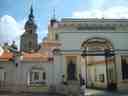
Look ahead for a creamy baroque façade topped with ornate statues and a dramatic arched gate; behind it rises a stone tower and a mix of red-tile rooftops-this is the Franciscan Monastery, just through the open, inviting entrance. Welcome to the Franciscan Monastery! Take a good look at those ancient walls, because you’re now standing before one of the oldest stories in Plzeň-this monastery and the Church of the Assumption were founded way back around the year 1300, just as Plzeň itself was coming to life. Imagine the city then, a jumble of wooden homes in the shadow of these very stones, with monks shuffling about, their sandals echoing on vaulted stone corridors. The story here is like a dramatic saga with more plot twists than a telenovela! Not long after being built-by around 1380-the friars found themselves thrown out in 1419, thanks to the fiery preaching of a certain Václav Koranda. But, as in all good stories, they made their grand return just a year later, probably muttering, “Did you miss us?” under their breath. Just when they settled in, the monastery was battered during the Hussite siege in 1433-1434. Picture flames licking at those old stones, smoke curling into the sky, the sound of axes against doors, and the determined friars holding tight to their faith. Restoration took half a century, financed by generous gifts-a sort of medieval “crowdfunding.” But twists kept coming: in 1618, during Mansfeld’s siege, the place was battered again. Let’s just say if monasteries could talk, this one would have a raspy voice! As you look at the façade, you might notice the mixture of Gothic bones and Baroque beauty. The grand tower at the end of the 16th century, and later, the elaborate Chapels of the Holy Trinity and St. Anthony, were the work of Italian baroque architect Jakub Auguston and his nephew-a family business of making churches fancier! By the early 18th century, the monastery’s western front was entirely Baroque and sporting all the drama and glamour that style could muster. Step inside (well, in your imagination for now): the church boasts a triple nave, divided by big, unadorned pillars, ending in a five-sided choir that’s been here since the 1300s. Picture the main altar glittering in 1696 Baroque fashion, with a copy of a Rubens painting that looks like it’s just one cherub short of flying off the frame. And tucked away is the “Franciscan Madonna,” carved from wood around 1420, perhaps the only resident here who truly never left! But the monastery isn’t just a church-it’s a little city of rooms! Cloisters form a peaceful, square courtyard-imagine monks bent over manuscripts in a small scriptorium or preaching from a lavishly carved pulpit built in 1543. If these walls could blush, they’d remember the restoration efforts after centuries of fires, wars, and reformations that cut the community smaller and smaller. Then came April 1950, and a new chapter: during communist “Action K,” the monks were evicted, the place transformed into first a youth home, then a museum, its spiritual heart pausing for decades. But like a stubborn friar in a storm, the monastery survived. Post-1989, the building was given back to the Church and beautifully restored throughout the 1990s, its Gothic bones and Baroque face polished for a new era. Today, part of the monastery is the Museum of Sacred Art, while the rest still hums with quiet religious life, home to the diocese and a handful of monks. So while the battles are gone, the spirit lingers. Take a breath, listen for the whispered prayers of centuries past, and know you’re standing in a spot where Plzeň’s history chose to make itself unforgettable! Wondering about the church of the assumption of the virgin mary, monastery cloister or the chapter hall and chapel of st. barbara? Feel free to discuss it further in the chat section below.
Open dedicated page →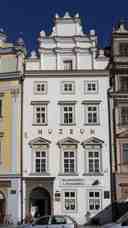 5
5Museum of West Bohemia in Pilsen - Ethnical Museum
Buy tour to unlock all 18 tracksTo spot the Ethnographic Museum of the Pilsen Region, look for a narrow, grand white building with a highly decorative, tiered gable roof-almost like a wedding cake wearing fancy…Read moreShow less
To spot the Ethnographic Museum of the Pilsen Region, look for a narrow, grand white building with a highly decorative, tiered gable roof-almost like a wedding cake wearing fancy hats-standing out proudly right on the east side of Republic Square, with big golden letters spelling “MUZEUM” across its face. Now, take a deep breath and step with me through the portal of time, right here in front of this storied museum! Imagine the square bustling long ago: the clip-clop of horses’ hooves, the hopeful shouts of market sellers, and the air full of roasted chestnuts. This building-part of the historic Gerlach House-was almost demolished in the early 20th century. Can you believe it? In a stroke of luck, a band of local history lovers (think modern superheroes, but with more bowler hats and fewer capes) saved it just in time! They dreamed of filling it with treasures from everyday life in Pilsen and the wider region, from the 15th all the way to the 20th century. The museum officially opened its creaky doors in 1915, but its full story had only just begun. With the first director, Ladislav Lábek, at the helm, the place flourished for 44 years. Lábek and his team scoured the countryside, collecting everything from peasant costumes and elegant city clothes to sturdy kitchen pots, game boards, and even the entire interior of a 19th-century pharmacy (which, rumor has it, contained enough herbal remedies to cure almost anything-except perhaps heartbreak or a sudden lack of strudel). Time wasn’t always kind, though. During World War II, the museum suffered under a German-appointed administrator, with priceless items whisked away as “gifts” for the occupying powers. But the spirit of Pilsen is nothing if not resilient! After the war, people from the area came together, dusted off the old exhibits, and brought life back into these walls. Later, under communist rule in 1948, the museum was merged with others-picture collections from local industry, fine art, and even a proposal for a “museum of feudalism” (which sounds less thrilling than it probably was). Through all of this, the heartbeat of the Ethnographic Museum kept thumping bravely on. Today, the museum is a treasure trove of more than 77,000 items, making it one of the largest collections of its kind in the whole country. You can find re-creations of burgher homes from centuries ago, humble rural cottages, and rows upon rows of folk costumes that seem ready to leap off their mannequins and dance. There’s even a parade of local customs: from spring celebrations where villagers carried “Smrtka” out of the village, to lively Easter fairs and magical Christmas workshops. And while the museum is currently closed for renovations-don’t worry, it’s just getting another shot of Pilsen’s magic and history, funded by regional and national partners-its collections still reach far beyond these walls: on display in other museums, churches, puppet theaters, and maybe, just maybe, in the hidden corners of those who once donated a piece of their daily lives for all to see. So when you stand here, let your imagination walk through time-between humble kitchens, festive streets, and the spirited hearts of the people who made Pilsen what it is today. Who knows? Maybe your own story will end up here someday. Seeking more information about the history of the museum, present or the research room of the ethnographic department? Ask away in the chat section and I'll fill you in.
Open dedicated page →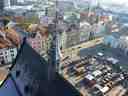 6
6Náměstí Republiky, Plzeň
Buy tour to unlock all 18 tracksJust ahead, you’ll see a huge, open square surrounded by colorful historic facades and overlooked by the tall spire of St. Bartholomew’s Cathedral-if you spot lots of bustling…Read moreShow less
Just ahead, you’ll see a huge, open square surrounded by colorful historic facades and overlooked by the tall spire of St. Bartholomew’s Cathedral-if you spot lots of bustling market stalls and people, you’re right in the heart of Republic Square. Alright, welcome to the beating heart of Plzeň! Imagine yourself standing in one of the biggest city squares in all of Europe; it’s like someone laid out a giant picnic blanket for the whole city, measuring a whopping 139 by 193 meters! It’s been here since medieval times-so, if you feel like your footsteps might echo through the centuries, you’re not far wrong. This rectangle of history hasn’t always looked quite like this though; it started off even bigger, gobbling up nearly a seventh of the original city space. Now, it’s the centerpiece, surrounded by an elegant crowd of townhouses, the imposing city hall, and the majestic bishop’s residence, all watching over every festival, proclamation, and occasional wedding photo shoot. Take a scan around-the St. Bartholomew’s Cathedral towers protectively over the locals and visitors alike, the gothic roof shadowing tiny market stalls selling everything from honey cake to hand-knit mittens. And what are those curious, shiny shapes gleaming at the corners? Look closer, they’re not lost zoo animals! They’re modern fountains, sculpted as a greyhound, a camel, and an angel, playful symbols from the city’s coat of arms since 2010. But Republic Square doesn’t just stop at art: in its northwest corner, you’ll spot an ornate plague column topped with a Madonna-a testament to more anxious times in the 17th century, when prayers for protection were just as common as laughter on market days. And if you hear the telltale ding-ding of trams or the hiss of bus doors, you’re not lost; the square is still surrounded by the city’s busy life, knitting together Plzeň’s old soul with today’s rhythm. Not bad for a spot that used to be the city’s living room, dance floor, and, occasionally, drama stage!
Open dedicated page →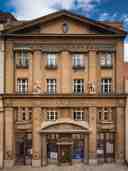 7
7Pilsen City Library
Buy tour to unlock all 18 tracksLook for an elegant stone building with a grand arched entrance and sculpted figures perched above, right under the bold “KNIHOVNA MĚSTA PLZNĚ” sign across its façade. Welcome to…Read moreShow less
Look for an elegant stone building with a grand arched entrance and sculpted figures perched above, right under the bold “KNIHOVNA MĚSTA PLZNĚ” sign across its façade. Welcome to the Pilsen City Library! Take a deep breath and let your imagination wander-picture this building standing proudly since 1914, originally a home for an Anglo-Austrian bank. If you look up, you'll see the façade decked out with intricate details and statues, including mighty cornucopias symbolizing prosperity-because what is more abundant than a library’s treasure trove of stories? Crafted by architect Ludwig Tremmel and adorned by sculptor Otokar Walter, this monument certainly likes to stay classy. But back in the late 1800s, the library was hardly glamorous. Imagine stacks of books locked tight in a wooden cabinet, shuffled around from one creaky Plzeň building to another. From schools to museums to even sharing walls (and smells) with a rowdy tavern, the library always seemed to be on the move. At one stop, readers had to brave a cold, dark, and not-so-welcoming entrance-hardly a book lover’s paradise! In its early days, if you wanted a book, chances are you were a stern professor or an eager student. But Plzeň’s passion for reading grew so rapidly that by 1916, the library boasted over 17,000 books and 40,000 checkouts, with lines out the door. It didn’t even cost a crown-under Pavel Nebeský’s watchful eyes, books became free to anyone with a thirst for knowledge! Through the years, wars rolled in, fires of history burned, and book collections swelled. The library weathered every storm, sometimes losing a room or two to occupying forces-imagine one day the comfy reading nook suddenly flies a new flag and becomes “German Only.” Even in these hard years, nothing could stop the shuffle of pages and the sharing of stories. In fact, during World War II, the demand for youth and educational books soared. The library kept on ticking-even as staff had to swap their desks for war jobs, or as the space itself was carved up for different purposes. With every decade, the library kept expanding-not just its walls but its reach. In the 1950s, you would have spotted a mighty yellow bibliobus zipping through towns and villages, bringing borrowed adventures to places with no library at all. If the townsfolk missed the mobile library, they missed out on the only film nights, book readings, and political debates in miles! At last, in 1960, the library settled into this grand Art Nouveau seat, purpose-fit and beautifully renovated for the city’s growing readership. The inside boasts glass sculptures that once made it all the way to a world expo in Brussels and wall frescos hidden away during tougher political times-rediscovered and celebrated only decades later. If you look closely at the tiles at the building’s foot, you’ll catch works by the sculptor and painter Jaroslav Votlučka decorating your path. They’ve lovingly restored the ornate façade as recently as 2004-today, this place gleams not just with history, but with stories old and new. Now, the Plzeň City Library is far more than shelves and silence. Every citizen, Czech or foreign, young or old, scholar or dreamer, can browse everything from classic novels and children’s tales to e-books, music CDs, films, comic books, and even board games. There’s free Wi-Fi, digital readers, and computers for everyone. Special clubs nurture young writers, cultural centers ring with events and readings, and even those who can’t leave home get books delivered straight to their door. And yes, the new bibliobus still tours the town-though I promise it’s less squeaky than before! So as you stand here, listen to the city buzz and imagine: behind those doors, 150 years of stories are waiting, just for you. Exploring the realm of the present, moving the library or the administrators and directors? Feel free to consult the chat section for additional information.
Open dedicated page →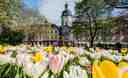 8
8Study and Research Library of the Pilsen Region
Buy tour to unlock all 18 tracksTo spot the Study and Research Library of the Pilsen Region, just look for the elegant, historic building with a distinctive tower rising in the middle, set right behind a…Read moreShow less
To spot the Study and Research Library of the Pilsen Region, just look for the elegant, historic building with a distinctive tower rising in the middle, set right behind a colorful carpet of tulips and leafy trees-it’s impossible to miss as it stands proudly in Smetanovy sady. Now, let’s step into the story of this remarkable library-though don’t worry, you won’t need a library card to hear this tale! Imagine you’re standing here in the heart of Pilsen, the soft breeze carrying the scent of spring flowers, the gentle murmur of turning pages echoing around you. This quiet building with its stately clock tower hasn’t always been filled with books and eager readers. In fact, its roots trace all the way back to the 18th century! Once upon a time, this very spot housed a Dominican monastery, completed and consecrated in 1714. It must have been quite something back then-think brown-robed monks strolling quietly through arched corridors, maybe pausing to share the ancient secrets of bookmaking over a mug of very weak medieval tea. But, as fairy tales often go, the peace didn’t last forever. In 1782, the monastery’s fate was changed by the so-called Josephine reforms, which swept away monasteries across the Habsburg Empire. Suddenly, this building found itself seeking a new purpose-first as a philosophical institute and a gymnasium, and then, as the world changed, even as military quarters during World War I. Imagine the same stone walls echoing with boots and orders instead of whispered prayers! By 1919, it had become a boarding house for poor tenants; you can almost picture the laundry flapping out the windows and the lively bustle of a community making do after the storms of war. As the decades rolled on, the building played host to all sorts of enterprises-shops, workshops, perhaps even the odd bakery. But in 1950, a whole new chapter began. With the founding of new universities in Plzeň, the city desperately needed a place for young minds to study and dream. Enter the State Study Library, which set up shop right here and began gathering a dazzling range of books-including treasures from the city’s historical museum. The dusty corners were swept clean, the halls rang with the soft thuds of books arriving, and a new future unfolded. Today, under the elegant title of the Study and Research Library of the Pilsen Region, the library is a marvelous treasure chest-a public library where everyone from curious children to determined researchers can hunt for knowledge. Its collection? Well, let’s just say if you tried reading all two million documents, you’d still be here when the tulips next blossom! Within its walls, you’ll find old prints that date back centuries, special collections from regional celebrities (who knew Pilsen had so many bookish stars?), and even some of the oldest books from the nearby Franciscan monastery-187 incunabula and over 3,500 antique tomes. But this isn’t a library stuck in the past. In the 1990s it boldly jumped into the future with library automation, creating its own cutting-edge system before switching in 2002 to the Aleph system and fully embracing the internet age. Now, fancy borrowing an e-book or returning your books at midnight? The library’s got you covered with smart book drop-off boxes spread all over the city-like a secret society for late-night readers. That’s not all! If you wander inside, you’ll find specialists ready to help track down rare information, a dazzling range of foreign book collections, music to borrow, and even services for readers with visual impairments. Want to join an online lecture? Explore exhibitions? Sip coffee under Baroque arches? This library’s your place. So, next time you lose yourself in a good book, remember-you’re just another chapter in this wonderful building’s ever-evolving story. Now, shall we move on before you’re tempted to start alphabetizing the flower beds out here?
Open dedicated page →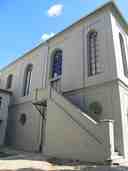 9
9Great Synagogue
Buy tour to unlock all 18 tracksTo spot the Old Synagogue in Pilsen, look for a tall, rectangular, softly grey building with elegant arched windows and a staircase running up the outside, tucked away in a…Read moreShow less
To spot the Old Synagogue in Pilsen, look for a tall, rectangular, softly grey building with elegant arched windows and a staircase running up the outside, tucked away in a courtyard just off Smetanovy Sady. Now that you’re standing before Pilsen’s Old Synagogue, let’s step back in time and imagine the scene in 1857: cobblestones echoing underfoot, city officials in their finest hats, and a crowd buzzing with anticipation as the foundation stone for this remarkable building was placed with great ceremony. The excitement was electric, for the Jewish community-after centuries of banishment and hardship-was finally being recognized here in Plzeň. Rabbi Angelus Kafka gave a heartfelt speech, and hidden deep in the foundations, a copper-engraved document was placed, bearing the names of the emperor, his family, city leaders, and those who dreamed up this sanctuary of hope. Built between 1857 and 1859, the Old Synagogue is the oldest preserved in Plzeň and a masterpiece of neo-Romanesque style, designed by architect Martin Stelzer and built by Wenzel Wiesner. If it looks taller than you expected, that’s because it’s an impressive 12 meters high-high enough for the sound of prayers and music to soar, don’t you think? Step closer in your mind, and imagine sunlight streaming through those arched windows, glinting off the delicate patterns of the wooden coffered ceiling, and casting a warm glow over the two women’s galleries perched on columns above you. But wait, the story has a plot twist! As Plzeň grew into a powerhouse of industry in the 19th century, the Jewish community blossomed from just forty-one families into a flourishing center of culture and faith. Eventually, the Old Synagogue couldn’t handle the crowds-cue the dramatic arrival of the Auxiliary Synagogue, its neighbor just next door, built in 1875 and boasting a then-revolutionary heating system. That meant in winter, prayers stayed toasty, without the rabbis ever needing to juggle with kettles of hot soup! This entire courtyard filled with life back then: there was not just the Old and Auxiliary Synagogues but a caretaker’s house connected via a mysterious passageway, and community events that drew everyone together. But time changed everything. The opening of the much larger Great Synagogue in 1893 stole the limelight-and the crowds-leaving the Old Synagogue quiet, its paint peeling and benches gathering dust… until less friendly times arrived. In 1939, members of the antisemitic movement Vlajka attempted to destroy it with bombs, but by what must have felt like a miracle, the plot failed, and the Old Synagogue survived. After decades of neglect, the building found new life after 1989. Its rafters were cleared, exhibitions filled its halls, and then, in the massive "10 Stars" project, hundreds of skilled hands carefully restored the wooden ceilings, intricate stonework, and old stairwells from 2010 to 2014. Funds poured in from across Europe, like a modern fairy tale of international cooperation. When the Torah returned to its place in 2014, the synagogue became the only one of the ten “star” sites in the Czech Republic where both services and public exhibitions continue year-round. Today, the building hums with life-a sanctuary, a museum, and a place of remembrance. Upstairs, you’ll find galleries filled with stories: one traces the journey of Jewish culture through the Pilsen region, while another gently explains every tradition, celebration, and challenge in the Jewish lifecycle. If the Old Synagogue could talk, it would be bursting with tales of hope, resilience, laughter, sorrow, and above all-a sense of belonging. Not bad for a “retired” building hidden away down a quiet path, wouldn’t you say? So take a moment to listen to the whispers of history around you. After all, every stone, every echo, and every ray of sunlight here tells a story.
Open dedicated page →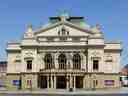 10
10Josef Kajetán Tyl Theatre
Buy tour to unlock all 18 tracksYou’ll spot the Josef Kajetán Tyl Theatre right in front of you, an extravagant cream-colored Neo-Renaissance building topped with a green copper dome and classical statues…Read moreShow less
You’ll spot the Josef Kajetán Tyl Theatre right in front of you, an extravagant cream-colored Neo-Renaissance building topped with a green copper dome and classical statues perched dramatically above the entrance. It’s hard to imagine now, but picture Plzeň in the late 1700s-no grand theatre, just actors squeezing their sets and costumes into echoing halls above taverns with names like U zlatého orla and U bílé růže, entertaining locals squeezed shoulder-to-shoulder by candlelight. The Czech language first pirouetted in these makeshift venues in 1818, and for years, the city hopped from one creaky stage to another-like a never-ending game of musical chairs. Finally, in 1832, Plzeň got its very first true theatre, tucked into the corner of Riegrova street. You can still imagine the swirl of velvet and the pluck of strings as patrons filed in, proud as ever. But Plzeň’s hunger for spectacle couldn’t fit into just one modest stage. The theatre was forever being patched, stretched, annexed-the town even bought the building next door for more dressing rooms (in 1867, a bold move for any city, I’d say). By the 1890s, the place was bursting at the seams like an actor in a costume two sizes too small. Something grander was desperately needed. The solution? A public contest for a brand-new theatre. It was a real architectural drama: Antonín Balšánek, who’d later design Prague’s grand Municipal House, submitted a design so conservative it only nabbed fourth place. But city leaders thought the winning entries looked a bit too “Viennese” (imagine: “Too much waltzing, not enough Czech drama!”), so Balšánek’s vision won the role. By 1902, Plzeň’s crown jewel theatre opened its doors to a rapt audience, unveiling Libuše with all the pomp you’d expect for an opening night. But wait-before the final curtain could rise here, the old theatre only just had its swan song: Smetana’s The Bartered Bride rang out on its very last night. What an encore! The theatre you see today, looming above you, is a masterclass in Neo-Renaissance elegance-balconies, statues, and ornate windows, all watched over by two classical muses. Inside, the main hall can seat 444 fans of opera, ballet, and drama. And if you’re worried about missing out on anything from Shakespeare to Smetana, don’t be: three different performance venues now make this the busiest cultural hub in town. Surprisingly, Balšánek also brought the artistry of painter Augustin Němejc to the stage curtain itself, where painted figures preside high above every show. This stage has seen its share of stars: the ballet here is among the best in the country, with dancers and musicians of national renown stretching and leaping into the spotlight. International tours have taken Plzeň’s troupe everywhere from Switzerland to Prague’s famous National Theatre. In the orchestra pit, bows and reeds have coaxed the music of Mahler and Strauss into the night, and the novels of Czech playwrights have echoed from this stage to a chorus of applause. With every reimagining-like the opening of the brand-new theatre and the Little Scene nearby, and major refurbishments in the 21st century-this place has managed to keep itself a step ahead of the city’s ever-changing rhythm. There’s always a little opening-night magic in the air, ready to whisk you off to worlds where anything is possible. So, take a bow! This is more than brick and mortar; it’s the star of Plzeň’s grandest productions.
Open dedicated page →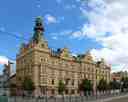 12
12Faculty of Law, University of West Bohemia
Buy tour to unlock all 18 tracksTo spot the Faculty of Law, look for a large, grand building in neo-Renaissance style with ornate gables, decorative stonework, and a striking tower topped by a green dome, right…Read moreShow less
To spot the Faculty of Law, look for a large, grand building in neo-Renaissance style with ornate gables, decorative stonework, and a striking tower topped by a green dome, right ahead of you near the tram lines. Now, let’s imagine ourselves back in Pilsen at the start of the 20th century, when this majestic building first appeared in the city’s bustling street life. The year is 1905: horses clop along the wide avenue and the smell of fresh pastry drifts from a nearby cafe. Back then, this wasn’t a faculty at all-it was built as the proud headquarters of the Pilsen Chamber of Commerce. Picture dignitaries in top hats and long coats climbing those elegant steps, the sound of wooden doors creaking open as business deals were struck inside. Decades later, after the echoes of wartime and the shuffle of new political winds, the building took a wild career turn-becoming, believe it or not, the office of the Regional Committee of the Communist Party. If these stone walls could talk, imagine the stories they’d share from those days: secret meetings, hurried footsteps, and the rustle of important papers. Eventually, destiny knocked on the heavy doors again, and in 2005, the Faculty of Law moved in, making this impressive building its home. Since then, it’s been buzzing with aspiring lawyers, passionate professors, and the low hum of academic debate. But this Law Faculty’s story isn’t just about the building itself! It’s one of the youngest of its kind in the country, founded in 1993 when the Czech Republic decided it needed another training ground for bright legal minds. And what a training ground it is-offering everything from three-year bachelor’s programs to rigorous PhD research, covering every legal specialty you can imagine. At one point, there was even a Department of Forensic Studies, with students poring over criminal psychology and medical mysteries, like a scene straight out of a detective novel. Still, this faculty’s journey wasn’t always as smooth as the polished stairs in the hallways. In the late 2000s, the halls shook with whispers-there was a scandal, involving plagiarism and exam shenanigans that threatened to topple the reputation of the whole school. Media descended; Pilsen’s Law Faculty became the talk of the Czech academic world. But just like a determined courtroom lawyer, the school fought its way back. By 2013, it was climbing the national rankings again, especially known for how many of its grads successfully found jobs-over 98%! This faculty has seen its fair share of big names, too-renowned judges, senators, and even ministers of justice walked these halls as both teachers and students. You might say if you shake the right hand in the corridor, you’re bound to meet someone who shapes the country’s laws. So as you stand outside, take in the grandeur, but listen for the faint sound of debate drifting through those windows, where tomorrow’s legal legends are hashing out the future of the Czech Republic. Being a lawyer may be serious business, but rumor has it… they still argue about who gets the last pastry in the student café! For a more comprehensive understanding of the study, list of deans or the residence, engage with me in the chat section below.
Open dedicated page →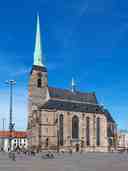 13
13Cathedral of St. Bartholomew
Buy tour to unlock all 18 tracksIf you look ahead across the large open square, you'll spot an enormous Gothic cathedral with tall, narrow windows and the highest church tower in the country-just follow the…Read moreShow less
If you look ahead across the large open square, you'll spot an enormous Gothic cathedral with tall, narrow windows and the highest church tower in the country-just follow the spire pointing dramatically to the sky! Now that you’re standing before St. Bartholomew’s Cathedral, take a deep breath and let your imagination soar. Picture the scene here more than 700 years ago: the very foundation of this city being laid, and, right here on Republic Square, plans drawn up for a grand church that would one day make the whole of Plzeň stare up in awe. According to legend, the original church of St. Bartholomew sprang to life alongside the city itself, around 1295. The first stone was probably set as the sound of a medieval market buzzed through the square, the scent of freshly baked bread and horses in the air. Fast forward a few decades to after 1342. The townsfolk-no doubt with plenty of sweat, calluses, and probably quite a lot of medieval grumbling-began building this mighty gothic three-nave beauty. And here’s a fun twist: its gigantic tower, rising to a neck-craning height of 102.26 meters, is officially the tallest church tower in the Czech Republic. That’s right, you’re standing in its shadow! Try not to get dizzy if you look up. Just imagine climbing all 299 spiral steps-your calves would be complaining for days. But this cathedral is more than a vertical marvel; it’s full of juicy medieval drama. At first, it was just a humble offshoot of the All Saints’ Church in Malice. The patronage kept being passed around like a hot potato-once the Czech king, then King Henry of Carinthia, and in 1322, finally snatched by the mysterious German Knights. There were disputes, schemes worthy of a medieval soap opera, until the knights ultimately gained control-only to hand it over to the city in 1546. Imagine the whispered arguments, the clanging armor, the ceremonial handovers. Its design, though, is where things get especially intriguing. What was meant to be a twin-towered west front only ended up with one completed steeple. (The other was abandoned-apparently, even Gothic architects had to compromise when aesthetics and budgets clashed!) Walk around outside and you’ll notice the sides are lined with powerful stone buttresses and fantastically pointy Gothic windows; inside, ribbed vaults arch so high, they almost scrape the clouds-well, it feels like it! The building itself has survived fires, lightning strikes, storms-more than one episode of the roof flying off! In 1835, firefighters dashed through these very doors as a bolt from the heavens set the top of the tower ablaze. Yet each time, the people of Plzeň rebuilt, renewing the church and adding their own touches over the centuries. Don’t miss the Šternberk Chapel, added in the early 1500s as a family tomb for the powerful Šternberk clan. Sculptures, colorful windows, hidden nooks-inside, the air is thick with history (and, if you’re a ghost hunter, maybe a spooky trace of the past). Did you know the main altar holds the famed Plzeň Madonna, a treasure carved around 1390? Or that the stately stone walls have heard not just liturgies but also centuries’ worth of spirited debates about religious customs, some of which survived against all odds. So as you look up at this towering cathedral, imagine the centuries pressing down upon it: noble and royal intrigue, passionate townsfolk, clangs of hammers, and the gentle hush of prayers echoing through the stone. St. Bartholomew’s has seen storms, war, and peace-and it stands here, still watching over the heart of Plzeň. Maybe if you listen closely, you’ll hear echoes of its past in the wind. And if you do attempt the climb to the top, be sure to wave at the clouds for me! Eager to learn more about the development of the construction, location and architectural description or the decoration of the temple? Simply drop your inquiries in the chat section and I'll provide the details you need.
Open dedicated page →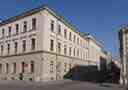 14
14Regional Court in Pilsen
Buy tour to unlock all 18 tracksTo spot the Regional Court in Pilsen, look for a grand, elegant cream-colored building with rows of tall windows, sturdy stonework along the bottom, and delicate decorations close…Read moreShow less
To spot the Regional Court in Pilsen, look for a grand, elegant cream-colored building with rows of tall windows, sturdy stonework along the bottom, and delicate decorations close to the roofline-it's right on the corner, stretching impressively up Veleslavínova Street. Now, let’s step into the shoes of history! Picture yourself standing here at the bustling crossroads of centuries, where the air tastes just a bit like respect-and maybe a hint of nervousness, if you’ve ever had to face a courtroom. The Regional Court in Pilsen has been handing out its decisions for over 170 years. But it wasn’t always the stately home of justice that you see in front of you. This very spot first echoed with the footsteps of Dominican monks. Their old monastery used to stand here until it was replaced by what you could call the “justice palace” of Pilsen. Back in 1850, the court’s staff was small enough to squeeze onto a tram, stationed in just a couple of floors in the town hall. But like an overstuffed bookshelf, those court offices grew more and more crowded. By 1892, the judges were feeling a bit claustrophobic, and the top brass decided it was time for a bigger home-something fit for serious work, but hopefully not as drafty as the old monastery hospital. The final site was chosen with a twist of drama: this block was practically the last place in Pilsen where you could still find a fragment of the ancient city walls-along with an old hospital, a chapel, and a semi-circular bastion. In April 1900, the first stone was laid with flair, and by 1902 the judges, clerks, and all their legal tomes were officially in residence. The building, though, sparked heated debate. Some locals grumbled that its solid, fortress-like style was a bit too severe, and that history was losing another chunk. But the city’s architects saw it differently: to them, it was a bold leap forward, an anchor for a modern era. For decades, the halls rang with the important questions of the day-plus, if you listened around lunchtime, probably some grumbling about the cafeteria. As Pilsen kept growing, so did the court’s entourage. By the 1960s, it wasn’t just home to the regional court, but also several district courts, prosecutors, and notaries-nearly a whole legal village! At one point, there was even a prison in the back, though that closed in 1955, making room for even more gavels. Not to be outdone by past legends, one half of the building is still protected as a cultural monument, preserving the smell of old paperwork and the whisper of historical secrets. Today, the Regional Court in Pilsen oversees cases for a huge swath of western Bohemia. These are not only appeals from local courts, but also high-stakes commercial battles, major crimes, and even the wild world of intellectual property. In fact, it’s the heavyweight of justice for twelve district courts in the area. So, when you pass by, imagine the flurry of passionate speeches, worried defendants, and relieved winners that have swept through these halls. And if you feel like the building is sizing you up, don’t worry-it’s just doing its job! Welcome to the end of our tour-and the start (or end!) of many important stories in Pilsen.
Open dedicated page →
Frequently asked questions
How do I start the tour?
After purchase, download the AudaTours app and enter your redemption code. The tour will be ready to start immediately - just tap play and follow the GPS-guided route.
Do I need internet during the tour?
No! Download the tour before you start and enjoy it fully offline. Only the chat feature requires internet. We recommend downloading on WiFi to save mobile data.
Is this a guided group tour?
No - this is a self-guided audio tour. You explore independently at your own pace, with audio narration playing through your phone. No tour guide, no group, no schedule.
How long does the tour take?
Most tours take 60–90 minutes to complete, but you control the pace entirely. Pause, skip stops, or take breaks whenever you want.
What if I can't finish the tour today?
No problem! Tours have lifetime access. Pause and resume whenever you like - tomorrow, next week, or next year. Your progress is saved.
What languages are available?
All tours are available in 50+ languages. Select your preferred language when redeeming your code. Note: language cannot be changed after tour generation.
Where do I access the tour after purchase?
Download the free AudaTours app from the App Store or Google Play. Enter your redemption code (sent via email) and the tour will appear in your library, ready to download and start.
If you don't enjoy the tour, we'll refund your purchase. Contact us at [email protected]
Checkout securely with 


