
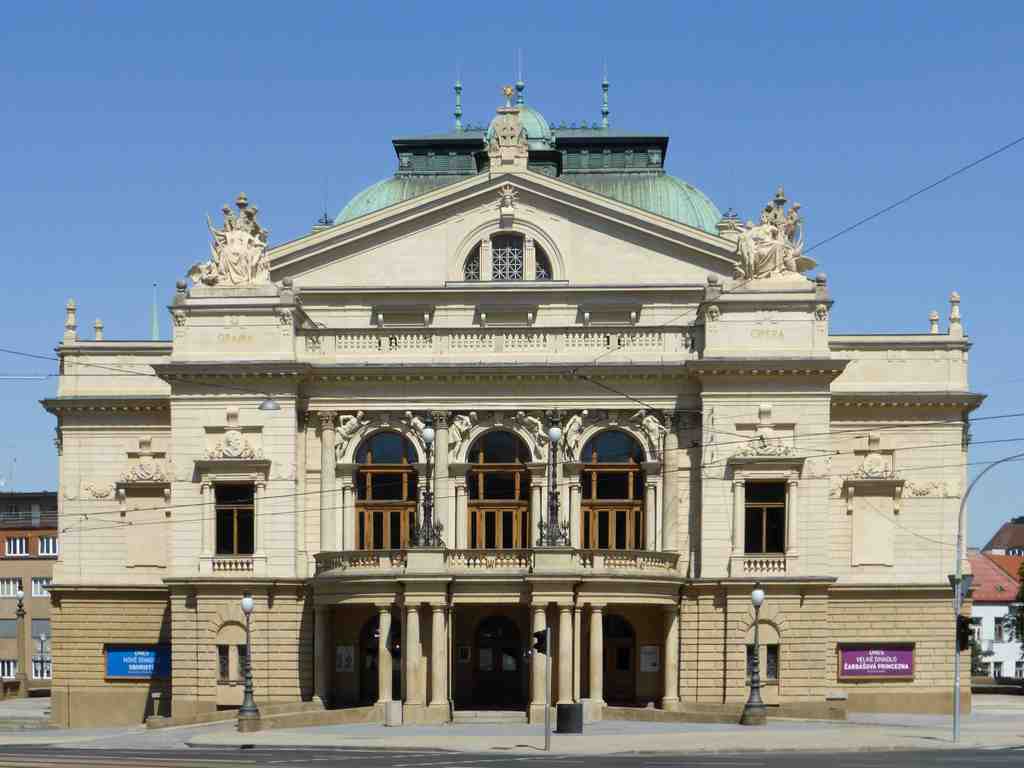
You’ll spot the Josef Kajetán Tyl Theatre right in front of you, an extravagant cream-colored Neo-Renaissance building topped with a green copper dome and classical statues perched dramatically above the entrance.
It’s hard to imagine now, but picture Plzeň in the late 1700s-no grand theatre, just actors squeezing their sets and costumes into echoing halls above taverns with names like U zlatého orla and U bílé růže, entertaining locals squeezed shoulder-to-shoulder by candlelight. The Czech language first pirouetted in these makeshift venues in 1818, and for years, the city hopped from one creaky stage to another-like a never-ending game of musical chairs. Finally, in 1832, Plzeň got its very first true theatre, tucked into the corner of Riegrova street. You can still imagine the swirl of velvet and the pluck of strings as patrons filed in, proud as ever.
But Plzeň’s hunger for spectacle couldn’t fit into just one modest stage. The theatre was forever being patched, stretched, annexed-the town even bought the building next door for more dressing rooms (in 1867, a bold move for any city, I’d say). By the 1890s, the place was bursting at the seams like an actor in a costume two sizes too small. Something grander was desperately needed.
The solution? A public contest for a brand-new theatre. It was a real architectural drama: Antonín Balšánek, who’d later design Prague’s grand Municipal House, submitted a design so conservative it only nabbed fourth place. But city leaders thought the winning entries looked a bit too “Viennese” (imagine: “Too much waltzing, not enough Czech drama!”), so Balšánek’s vision won the role. By 1902, Plzeň’s crown jewel theatre opened its doors to a rapt audience, unveiling Libuše with all the pomp you’d expect for an opening night.
But wait-before the final curtain could rise here, the old theatre only just had its swan song: Smetana’s The Bartered Bride rang out on its very last night. What an encore!
The theatre you see today, looming above you, is a masterclass in Neo-Renaissance elegance-balconies, statues, and ornate windows, all watched over by two classical muses. Inside, the main hall can seat 444 fans of opera, ballet, and drama. And if you’re worried about missing out on anything from Shakespeare to Smetana, don’t be: three different performance venues now make this the busiest cultural hub in town. Surprisingly, Balšánek also brought the artistry of painter Augustin Němejc to the stage curtain itself, where painted figures preside high above every show.
This stage has seen its share of stars: the ballet here is among the best in the country, with dancers and musicians of national renown stretching and leaping into the spotlight. International tours have taken Plzeň’s troupe everywhere from Switzerland to Prague’s famous National Theatre. In the orchestra pit, bows and reeds have coaxed the music of Mahler and Strauss into the night, and the novels of Czech playwrights have echoed from this stage to a chorus of applause.
With every reimagining-like the opening of the brand-new theatre and the Little Scene nearby, and major refurbishments in the 21st century-this place has managed to keep itself a step ahead of the city’s ever-changing rhythm. There’s always a little opening-night magic in the air, ready to whisk you off to worlds where anything is possible.
So, take a bow! This is more than brick and mortar; it’s the star of Plzeň’s grandest productions.




