
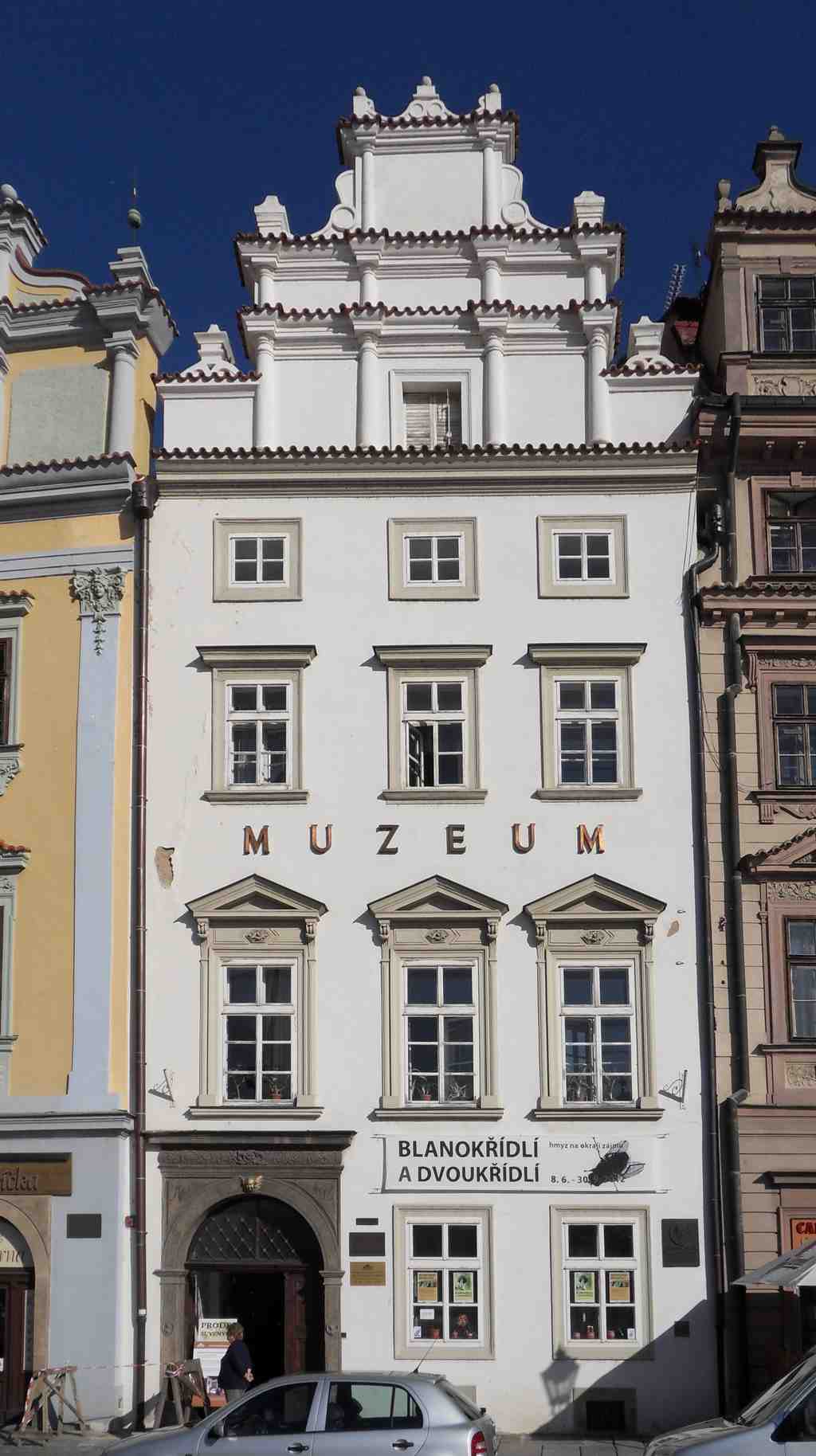
To spot the Ethnographic Museum of the Pilsen Region, look for a narrow, grand white building with a highly decorative, tiered gable roof-almost like a wedding cake wearing fancy hats-standing out proudly right on the east side of Republic Square, with big golden letters spelling “MUZEUM” across its face.
Now, take a deep breath and step with me through the portal of time, right here in front of this storied museum! Imagine the square bustling long ago: the clip-clop of horses’ hooves, the hopeful shouts of market sellers, and the air full of roasted chestnuts. This building-part of the historic Gerlach House-was almost demolished in the early 20th century. Can you believe it? In a stroke of luck, a band of local history lovers (think modern superheroes, but with more bowler hats and fewer capes) saved it just in time! They dreamed of filling it with treasures from everyday life in Pilsen and the wider region, from the 15th all the way to the 20th century.
The museum officially opened its creaky doors in 1915, but its full story had only just begun. With the first director, Ladislav Lábek, at the helm, the place flourished for 44 years. Lábek and his team scoured the countryside, collecting everything from peasant costumes and elegant city clothes to sturdy kitchen pots, game boards, and even the entire interior of a 19th-century pharmacy (which, rumor has it, contained enough herbal remedies to cure almost anything-except perhaps heartbreak or a sudden lack of strudel).
Time wasn’t always kind, though. During World War II, the museum suffered under a German-appointed administrator, with priceless items whisked away as “gifts” for the occupying powers. But the spirit of Pilsen is nothing if not resilient! After the war, people from the area came together, dusted off the old exhibits, and brought life back into these walls. Later, under communist rule in 1948, the museum was merged with others-picture collections from local industry, fine art, and even a proposal for a “museum of feudalism” (which sounds less thrilling than it probably was). Through all of this, the heartbeat of the Ethnographic Museum kept thumping bravely on.
Today, the museum is a treasure trove of more than 77,000 items, making it one of the largest collections of its kind in the whole country. You can find re-creations of burgher homes from centuries ago, humble rural cottages, and rows upon rows of folk costumes that seem ready to leap off their mannequins and dance. There’s even a parade of local customs: from spring celebrations where villagers carried “Smrtka” out of the village, to lively Easter fairs and magical Christmas workshops.
And while the museum is currently closed for renovations-don’t worry, it’s just getting another shot of Pilsen’s magic and history, funded by regional and national partners-its collections still reach far beyond these walls: on display in other museums, churches, puppet theaters, and maybe, just maybe, in the hidden corners of those who once donated a piece of their daily lives for all to see. So when you stand here, let your imagination walk through time-between humble kitchens, festive streets, and the spirited hearts of the people who made Pilsen what it is today. Who knows? Maybe your own story will end up here someday.
Seeking more information about the history of the museum, present or the research room of the ethnographic department? Ask away in the chat section and I'll fill you in.




