
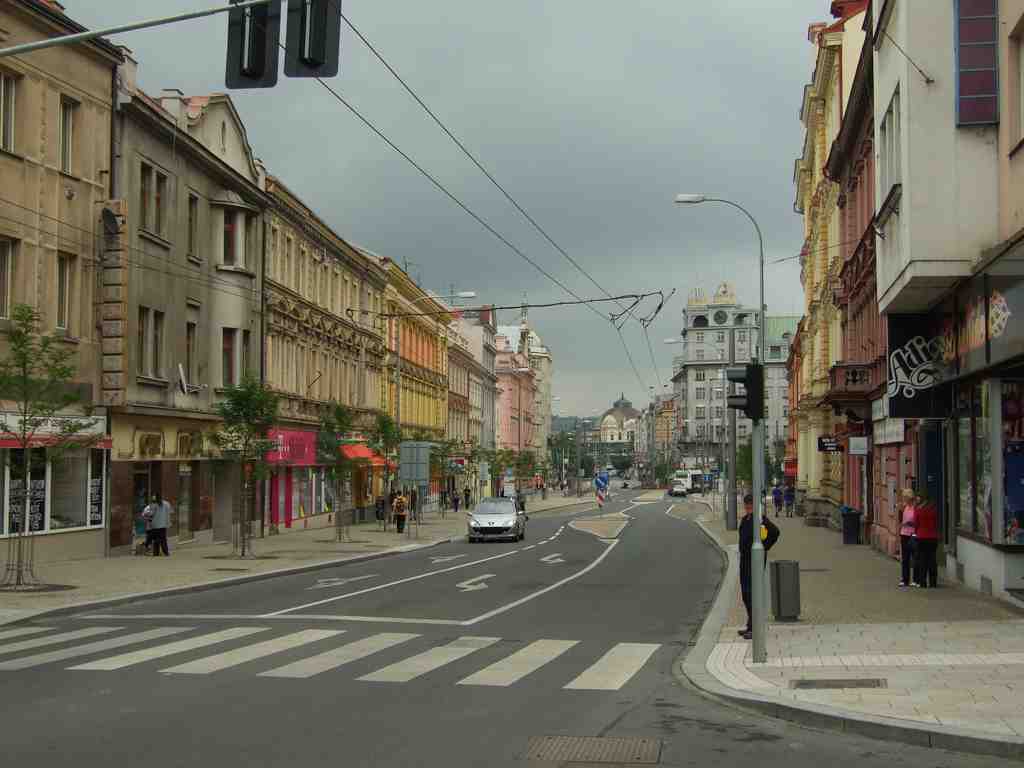
In front of you stretches a wide and lively street lined with colorful old buildings and bustling shops-just glance straight ahead along the gentle curve where the tram wires zig-zag overhead and you’ll know you’re on Americká.
Let’s take a stroll through time-right here, where the hum of traffic and the clatter of trolleybuses mix with the laughter from the shops, you’re standing on the city’s pulse: Americká. But don’t get too attached to the name, because this street has had more identity crises than a soap opera character! Since 1868, it’s been called “Stodolní” (thanks to the barns that once dotted its edge), then Jungmannova, Bahnhofstraße, Moskevská, Wilsonova, Stalinova, and even Třída Ludvíka Svobody. Each name echoes a different moment in history and politics-locals lovingly tease that it’s the “Street of Political Mishaps.” If you ever feel indecisive, just remember this street and you’ll feel better!
Now, imagine early 20th-century Plzeň: horses and carriages rattling by, grand new buildings going up. In 1913, the grand Wilson Bridge opened right here, the city’s last great stone bridge, sturdy enough to outlast rulers and regime changes-though the bridge itself shuffled names more times than most people change haircuts.
Swing your gaze around and you’ll spot architectural treasures. There’s the “Mrakodrap,” Plzeň’s oldest skyscraper, built in 1924-a trio of buildings meant to capture that soaring American spirit, brainchild of Hanuš Zápal. And the old Elektra cinema (later Kino Moskva), once the largest in Czechoslovakia, where the famous Finále film festival wowed locals year after year. Cross the street, and you’ll see secession-era details-like on the former Imperial District Office, its elegant Art Nouveau flourishes standing proud.
Lively as it is now, Americká’s seen it all: celebration, occupation, protest. In ’45, the city cheered the arrival of the US Army, now commemorated by a special memorial. The buildings on your right, mostly from the 1920s and 30s, watch as waves of shoppers replace the streetcars of earlier eras. A modern touch? The once-bustling TESCO, built as OD Prior in the ‘60s, now awaiting a new chapter.
So as the trolleybuses rush by and locals zip into shops, you’re walking through a timeline-one that keeps changing its mind, but always feels unmistakably Plzeň. And remember: here on Americká, the only thing constant is change.




