
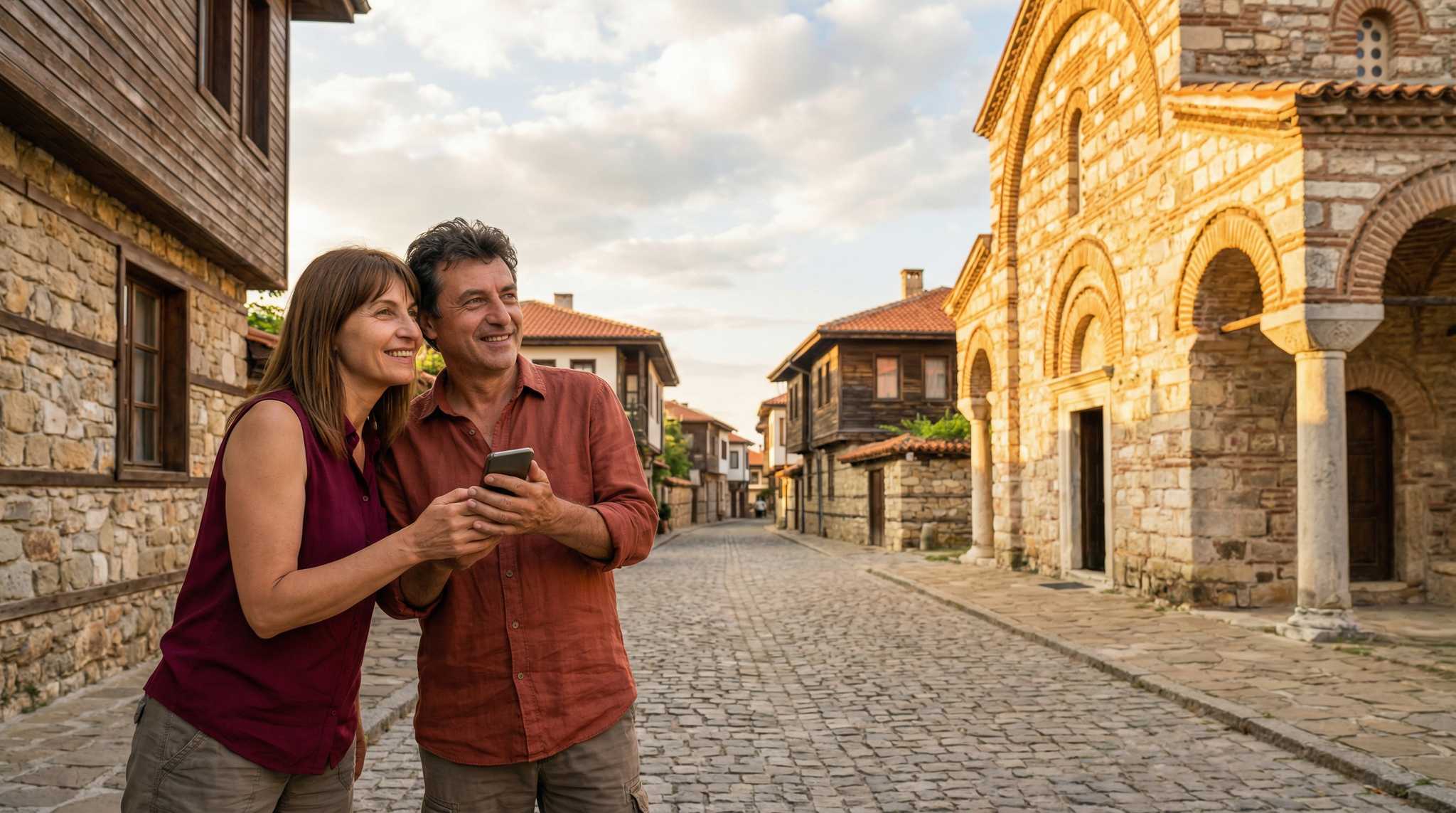
Nesebar Audio Tour: Echoes of Faith and Medieval Marvels
Crumbling arches and sun-bleached stones whisper secrets in Nesebar, a city older than memory and twice as mysterious. Cobbled lanes not only connect ancient churches—they unravel centuries of vanished rebellions and lost loves beneath your feet. This self-guided audio tour leads through Nesebar’s tangled streets and iconic sanctuaries, revealing stories that most visitors never hear. Discover the hidden dramas and strange tales behind the city’s sacred facades. What was smuggled through the shadows of the Church of Christ Pantocrator during a midnight siege? Why do locals still argue about a forbidden icon at the Church of Saint Paraskevi? What curious object once vanished from the altar of the Holy Archangels Michael and Gabriel, leaving whispers in its wake? Move through sunlit squares and cool chapels as history peels back its layers. Experience Nesebar with the eyes of a time-traveler, chasing echoes and revelations with every step. Press play. Let Nesebar’s ancient stones reveal what they have guarded for centuries.
Tour preview
About this tour
- scheduleDuration 40–60 minsGo at your own pace
- straighten0.8 km walking routeFollow the guided path
- location_on
- wifi_offWorks offlineDownload once, use anywhere
- all_inclusiveLifetime accessReplay anytime, forever
- location_onStarts at Church of St Stephen, Nesebar
Stops on this tour
lock_open 3 free previews · 5 unlock with purchase
In front of you stands a compact brick-and-stone church with three rounded eastern apses, trefoil-shaped gables, and patterned masonry brightened by small ceramic plaques.…Read moreShow less
Open dedicated page →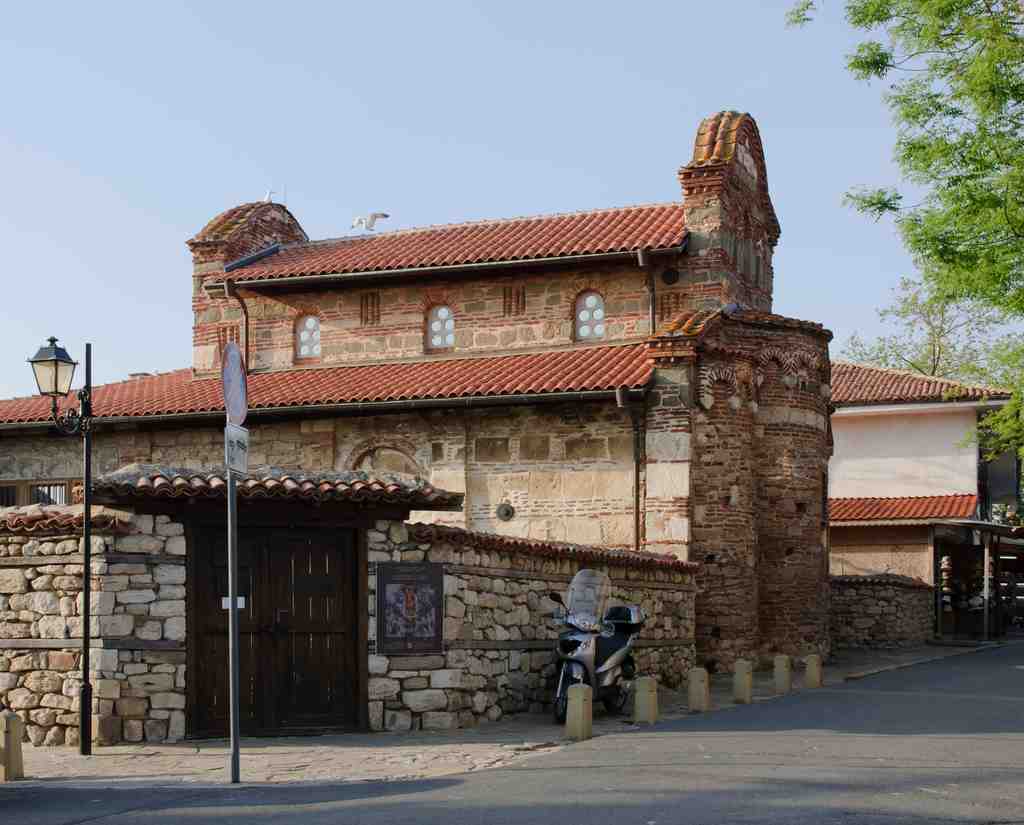
Church of St Stephen, NesebarPhoto: MrPanyGoff, Wikimedia Commons, CC BY-SA 3.0. Cropped & resized. In front of you stands a compact brick-and-stone church with three rounded eastern apses, trefoil-shaped gables, and patterned masonry brightened by small ceramic plaques.
Welcome to the Church of Saint Stephen... though most visitors never suspect that this church began with another name, dedicated first to the Holy Mother. That quiet change tells you something important about Nesebar. In old Mesembria, today’s Nesebar old town, sacred places rarely stay fixed; they grow, shift, and keep carrying meaning as the town changes around them.
This church began in its eastern end, probably in the eleventh century. Later builders pushed it westward, removed an older wall, and added a narthex, the entrance space before the main hall. It served as the cathedral church of the local metropolitan center, and now it lives on as a museum within the UNESCO World Heritage site.
If you can, linger on the outside a moment. Notice how the stone and brick refuse a strict pattern, and how the middle apse rises higher than the two beside it. The exterior feels restrained... and that makes the painted interior even more astonishing. On your screen, you can peek inside and see how the walls bloom with images from nearly every surface.
Those paintings are not one single voice. An inscription above the south door dates a major repainting to fifteen ninety-nine, and scholars can trace three painters at work: two in the eastern main hall, and a third in the western part. Later still, the eighteenth century added scenes of the Last Judgment in the narthex, and the church kept its painted iconostasis, the icon screen before the altar, along with a carved throne and pulpit.
By the nineteen nineties, those murals were in real danger, a reminder that fragile color can fade if a church is left unattended.
So hold onto that date above the door, fifteen ninety-nine. Here, a wall can preserve memory as clearly as ink. Next, in about one minute, we’ll walk to the Church of Saint John Aliturgetos, where sacred identity meets interruption. If you want to return inside later, this museum is generally open daily from nine A-M to five P-M.
On your left stands a red-brick-and-stone church ruin, cross-shaped in outline, with striped walls cut into shallow arched recesses and dotted with pale stone cubes. On this…Read moreShow less
Open dedicated page →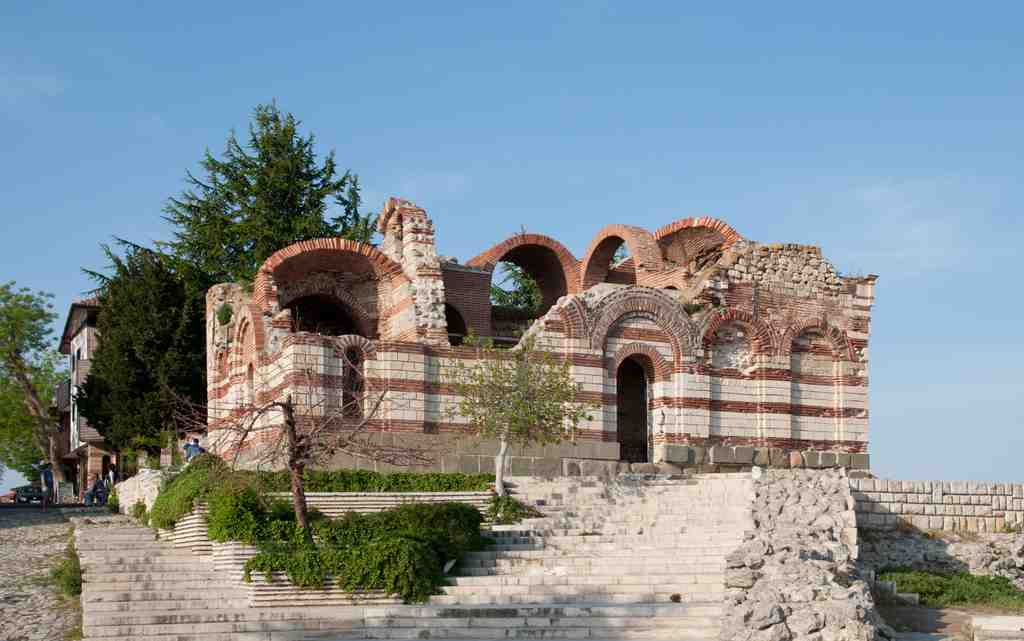
Church of St John AliturgetosPhoto: MrPanyGoff, Wikimedia Commons, CC BY-SA 3.0. Cropped & resized. On your left stands a red-brick-and-stone church ruin, cross-shaped in outline, with striped walls cut into shallow arched recesses and dotted with pale stone cubes.
On this narrow peninsula, churches gather so closely that nearly every wall seems to remember an older act of devotion. And yet this one, raised in the fourteenth century, is famous for a painful paradox: it was never consecrated. The name Aliturgetos comes from Greek and means “not consecrated.” In Orthodox Christianity, consecration is the blessing that makes a church fully ready for worship... so this building has always stood in a strange in-between state, visibly sacred, officially unfinished.
Legend says one of the builders fell from the structure and died, and that death is often given as the reason the church was never consecrated, though some records suggest services may have happened here anyway. That uncertainty became part of its identity.
If you check the image on your screen, you can see the careful skin of the church: brick and stone arranged in geometric patterns. Its plan is cruciform, meaning cross-shaped, with three apses, the rounded altar ends, and a narthex, the entrance hall. Even its two side entrances, from north and south, are unusual.
Then the nineteen thirteen Chirpansko earthquake shattered its future. The shell you see today survived, but badly wounded. In the 2010s, preservation teams and international partners stabilized the ruin and protected its medieval details. UNESCO later became part of that long, uneven rescue.
So tell me... if the formal blessing never came, can centuries of memory make a place holy anyway? When you’re ready, the Church of Christ Pantocrator is about a three-minute walk away. This site is open all day, every day.
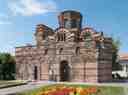
Look for a compact red-brick-and-stone church with a tall octagonal dome and richly patterned walls, marked by bands of arches and small turquoise ceramic circles. This is the…Read moreShow less
Open dedicated page →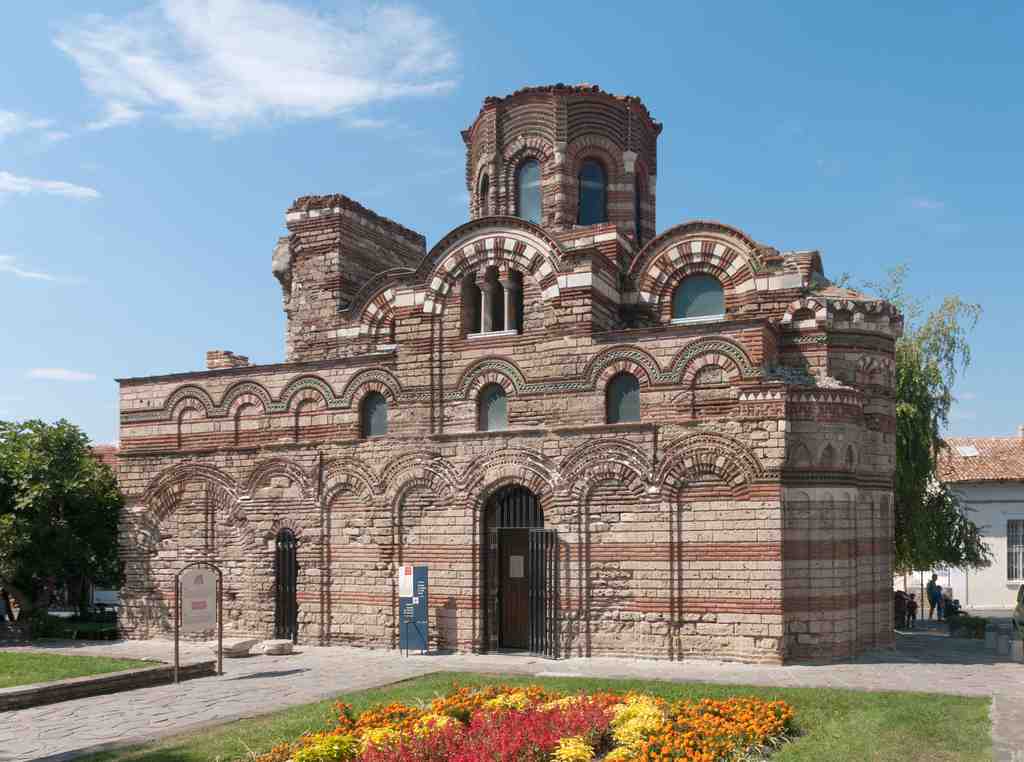
Church of Christ Pantocrator, NesebarPhoto: Chrumps, Wikimedia Commons, CC BY-SA 4.0. Cropped & resized. Look for a compact red-brick-and-stone church with a tall octagonal dome and richly patterned walls, marked by bands of arches and small turquoise ceramic circles.
This is the Church of Christ Pantocrator, one of the most finely preserved medieval churches in Nesebar... and one of the most argued over. Its very date slips a little through historians’ fingers. Scholar Robert Ousterhout placed it in the middle of the fourteenth century, while writer Jonathan Bousfield tied it to the reign of Tsar Ivan Alexander, between thirteen thirty-one and thirteen seventy-one. That contested chronology is more than an academic puzzle. It tells you what kind of city Mesembria, later Nesebar, had become: a place passed back and forth between Bulgaria and Byzantium, where power shifted often enough that even a church’s date remained debated.
And yet the building itself speaks with remarkable confidence. Notice the opus mixtum brick-and-stone patterning. That simply means the builders alternated rows of brick with carved stone, turning structure into ornament. The result is almost musical to the eye... red bands, pale bands, red again. If you glance at the image on your screen, you can see how the whole church wears that pattern like embroidery on cloth.
The church follows a late Byzantine cross-in-square plan, a design where a square body holds a cross-shaped interior beneath the dome. Above you, that dome has eight sides and once rested on four columns inside, now lost. There is also a bell tower rising over the entrance hall, or narthex, though part of it has fallen away. Beneath that small entrance hall, a medieval tomb lies hidden under the floor, as if one more life remains folded into the church’s memory.
The east end, with its apse, is the most lavishly dressed. Look closely and you may spot blind arches, which are arches built into the wall only for decoration, not as openings. Between them run four-petaled floral motifs, triangles, and those striking ceramic disks. On one wall, the brickwork even forms swastika shapes. In the medieval world, long before that symbol was poisoned in modern times, builders used it here as a sign of the sun. Ousterhout thought the stacked arches looked almost like an aqueduct, and once you hear that, it is hard not to see the comparison.
If you open the detail image, the reddish surface becomes even clearer, almost like skin stretched over centuries of care and repair. That matters, because this church is not just admired; it is actively protected. Since nineteen twenty-seven, the Bulgarian state has guarded it as a national antiquity. It also stands within Ancient Nesebar, part of the UNESCO World Heritage Site. Recent conservation plans led to emergency work funded in twenty twenty-three, because even a monument that looks intact still needs tending.
Today the church serves as an art gallery. In local heritage records, it even carries an overlapping name, Pantokrator Church, Saint Nicholas, a small reminder that sacred places here rarely belong to only one chapter.
So here is the quiet wonder of this stop: even the date remains unstable, yet the beauty does not. When you’re ready, we’ll continue about one minute to the Church of Saint John the Baptist. If you want to return later, the gallery here generally opens daily from nine in the morning until eight in the evening.
Show 5 more stopsShow fewer stopsexpand_moreexpand_less
On your left, look for a compact cross-shaped church of rough stone, crowned by a low dome and edged with small red brick details around the windows and entrance. This is Saint…Read moreShow less
Open dedicated page →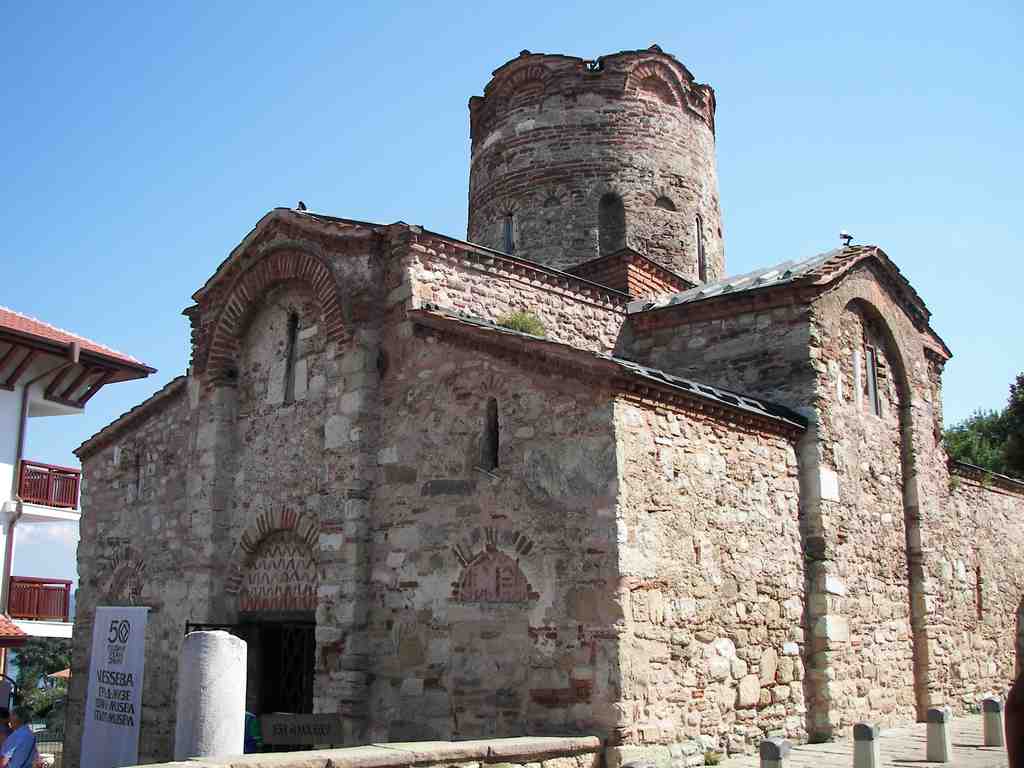
Church of Saint John the Baptist, NesebarPhoto: www.vacacionesbulgaria.com, Wikimedia Commons, CC BY-SA 4.0. Cropped & resized. On your left, look for a compact cross-shaped church of rough stone, crowned by a low dome and edged with small red brick details around the windows and entrance.
This is Saint John the Baptist, one of the best preserved churches in Nesebar... and one of its deepest secrets lies underground. The church you see now took shape in the eleventh century, built in a cruciform plan - that means its body forms a cross - with four heavy pillars inside holding up the dome. Its walls are plain, almost stubbornly simple, without the rich outer decoration we saw elsewhere. That simplicity gives it a kind of quiet strength.
Now pause for a second and really take in its compact, solid form. If you peek at the app image, you can see that sturdy, almost sheltering shape especially clearly. Then imagine another church resting directly beneath it.
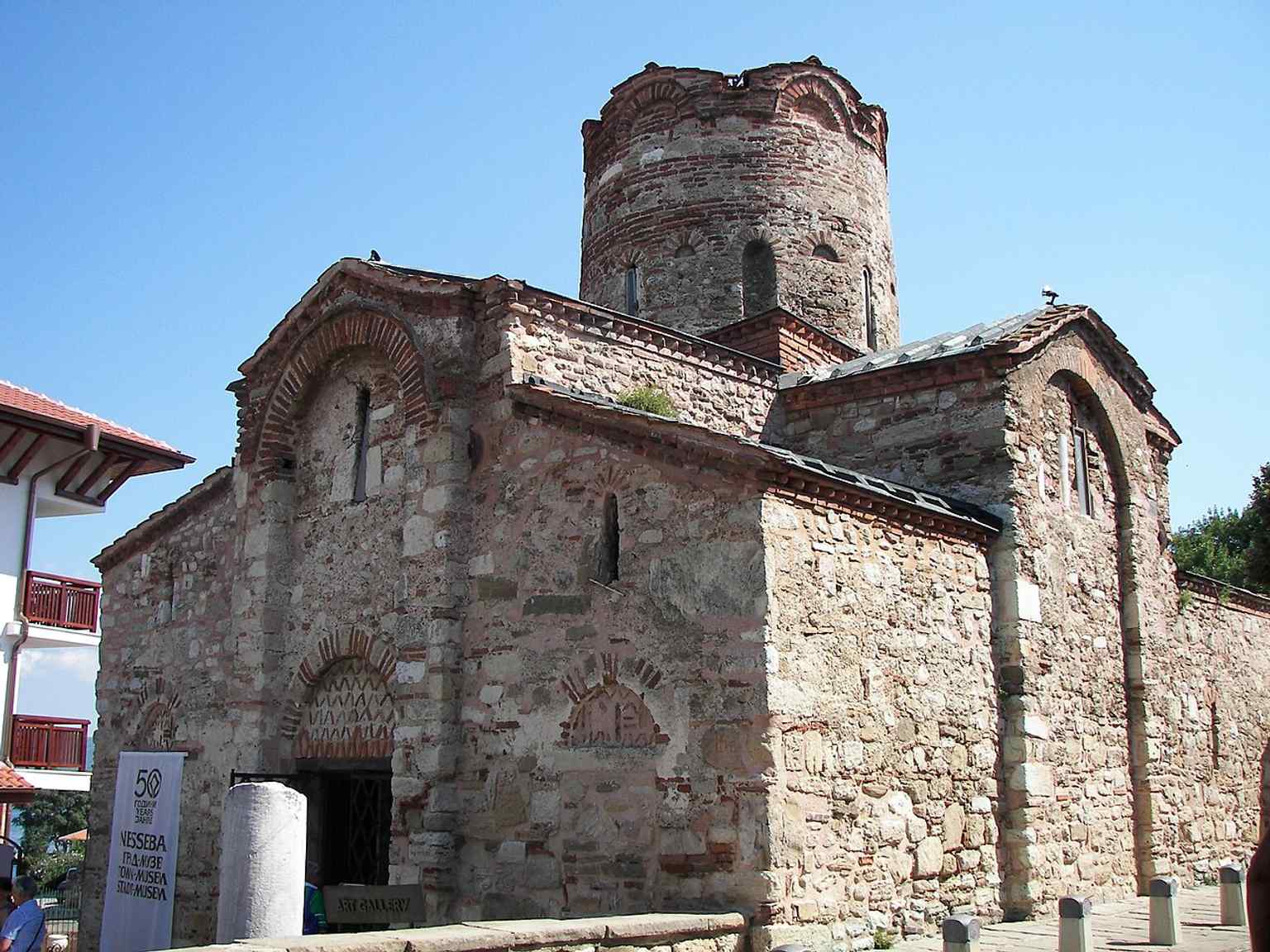
The rugged stone exterior of St. John the Baptist in Nesebar, a rare survivor from the 11th century church built over even older foundations.Photo: www.vacacionesbulgaria.com, Wikimedia Commons, CC BY-SA 4.0. Cropped & resized. In two thousand twelve and two thousand thirteen, restorers and archaeologists made a remarkable discovery: under the medieval floor, they found the foundations of an earlier Christian basilica from the sixth century. Suddenly this was no longer just one church from one age. It became worship built upon worship, a sacred place with centuries pressed into the same patch of ground. Inside, the team even marked the older basilica’s outline in the floor, almost like drawing memory back into view.
And people kept returning here, leaving traces of themselves. A fourteenth-century donor portrait survives on the south wall, giving us the faint face of someone who once paid for beauty here. Later worshippers added more: paintings from the sixteenth and seventeenth centuries, including a fragment of Saint Marina on a southeastern column. The walls became a layered conversation across time.
Even now, the care is difficult. UNESCO, the United Nations Educational, Scientific and Cultural Organization, noted humidity, leaks around the dome, moisture low in the walls, and repairs that did not always help. The town is still seeking better protection for the paintings.
So let this one stay with you: if a basilica sleeps beneath this church, how many other stories in Nesebar lie just below the surface? When you’re ready, the Church of the Holy Saviour is about a one-minute walk away. If you want to return another time, this church generally opens daily from ten thirty to two, then from two thirty to seven.
On your left, look for a low brick-and-stone rectangle, partly sunken into the ground, with a simple tiled roof and a small arched entrance. The Church of the Holy Saviour…Read moreShow less
Open dedicated page →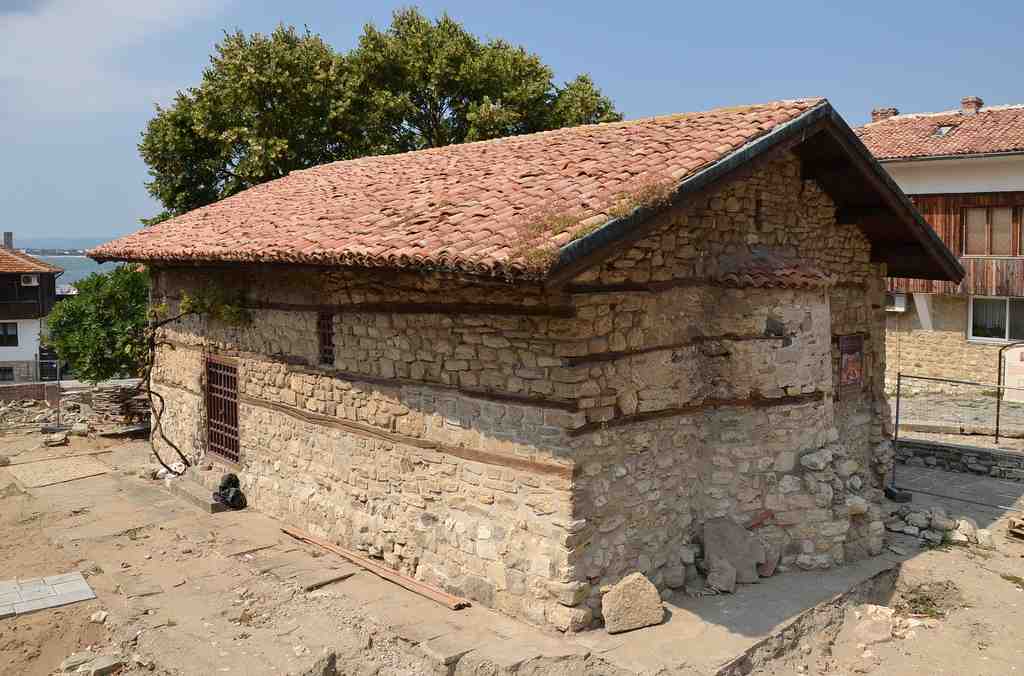
Church of the Holy Saviour, NesebarPhoto: Pudelek, Wikimedia Commons, CC BY-SA 3.0. Cropped & resized. On your left, look for a low brick-and-stone rectangle, partly sunken into the ground, with a simple tiled roof and a small arched entrance.
The Church of the Holy Saviour teaches one of Nesebar’s quietest truths: the smallest buildings sometimes carry the heaviest hearts. A local man named Theodokis paid for this church in sixteen oh nine, and most people pass without noticing the clue he left behind. Above the south entrance, a donor inscription names Theodokis and Metropolitan Kiprian. That tiny line changes everything. Suddenly this is not just an old church. It is one person’s act of care. Heritage accounts treat it as a rare surviving church project from that year.
Its low, half-buried shape was deliberate, not poor. Under Ottoman rule, Christians worked within tight restrictions, so builders made new churches modest and discreet. If you glance at the image in the app, you can see how quietly this one settles into the ground.
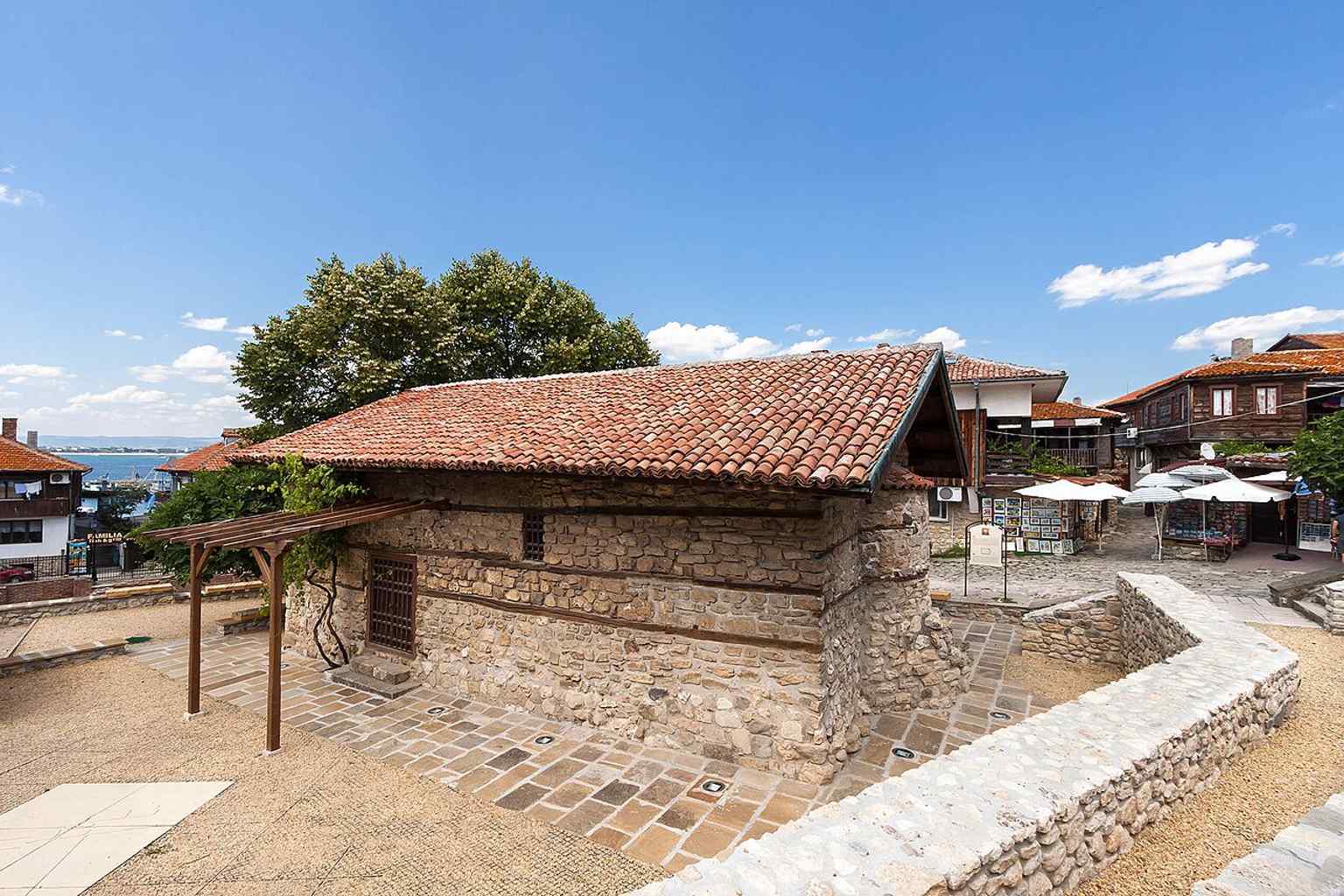
The modest 17th-century Church of the Holy Saviour in Nessebar, built in 1609 under Ottoman rule and partly buried to fit local restrictions.Photo: IzoeKriv, Wikimedia Commons, CC BY-SA 4.0. Cropped & resized. But inside...
the plain shell gives way to a world of color. An unknown Nesebar painter covered the single nave, the main hall, with scenes from the life of Christ and the Virgin Mary. In the apse, the rounded end of the sanctuary, he painted the Virgin Platytera, Mary in prayer, immense in meaning inside this tiny room. Beneath those scenes stood full-length saints: Spyridon, John the Baptist, Constantine and Helena, Anastasia, Catherine, Matrona, Marina. We saw another unusually datable moment in Nesebar’s painted story at Saint Stephen, with its campaign of fifteen ninety-nine. Here, the early seventeenth century answers back in a smaller, more intimate voice.
And there is an older sorrow here too. Local memory says the Byzantine princess Mataissa Cantacuzina Paleologina died in Nesebar in fourteen forty-one. Later, people moved either her tombstone, or even her coffin, here to protect her memory. Her memorial now rests in the Archaeological Museum, and this deconsecrated church lives on as a museum itself. One name survives in stone, another in legend, and both refuse to let the city forget; if you want to step inside, it usually opens daily from ten thirty to two and from two thirty to seven, and the Church of the Holy Archangels Michael and Gabriel is about a one-minute walk from here.
On your left stands a roofless brick-and-stone church, striped with red brick bands and patterned with shallow arches that hold little ceramic rosettes. This church carries more…Read moreShow less
Open dedicated page →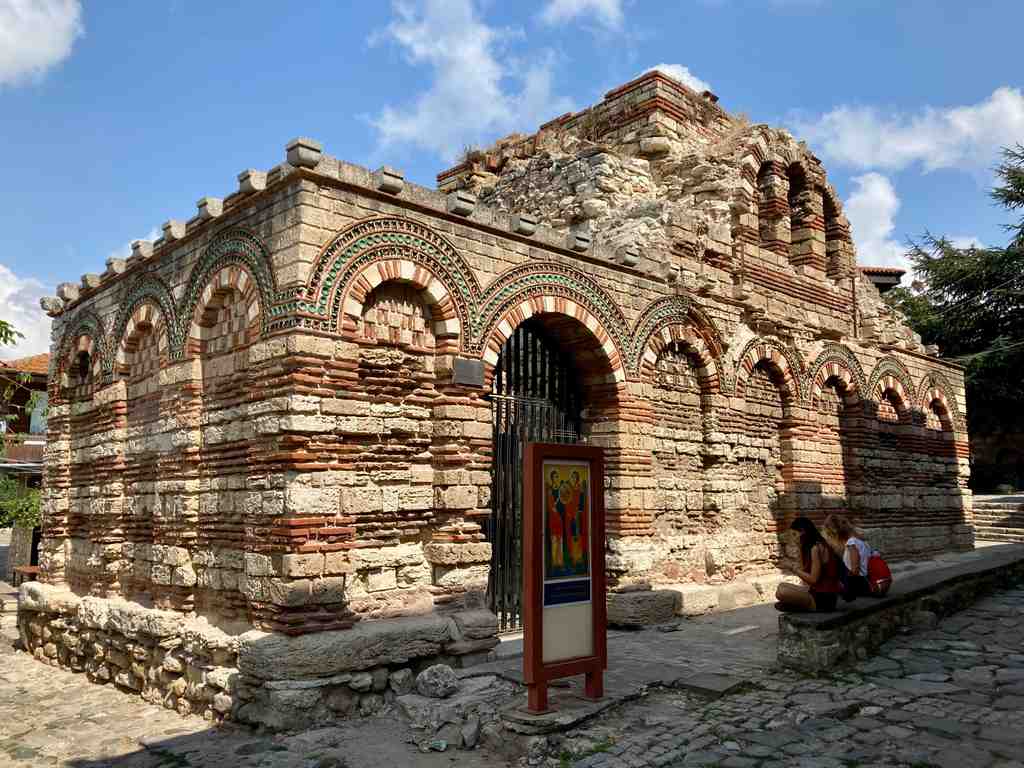
Church of the Holy Archangels Michael and Gabriel, NesebarPhoto: Dudva, Wikimedia Commons, CC BY-SA 4.0. Cropped & resized. On your left stands a roofless brick-and-stone church, striped with red brick bands and patterned with shallow arches that hold little ceramic rosettes.
This church carries more than its own sorrow. Standing near the coast on the northern side of the peninsula, it feels like a witness to everything fragile in Nesebar... faith, stone, memory, even the shoreline itself.
No one can date it with complete certainty. Because it closely resembles Christ Pantocrator, many scholars place it between the early thirteenth and early fourteenth century. Guidebook writer Jonathan Bousfield even links it to the reign of Tsar Ivan Alexander. But that uncertainty matters. In those years, Nesebar kept passing between Bulgarian and Byzantine rule, so this church belongs to a city with shifting masters and no simple label.
Even in its broken state, it still speaks clearly. It began as a single main hall for worship, with three altar endings at the back, a dome above, and a rectangular bell tower rising over the entrance hall, or narthex. Its builders used the local mixed masonry style: rows of brick alternating with carved stone in a careful pattern. If you study the walls, you can still trace the rich outer decoration Nesebar loved so much: connected blind arches, curved gables high on the sides, and those bands of colored ceramic circles and rosettes. If you want, the image on your screen shows an older drawing from eighteen twenty-nine, when the silhouette still looked fuller.
And this is where the story widens. In the early twenty-tens, UNESCO and the International Council on Monuments and Sites sounded an alarm about the whole old town, warning that poor restoration, uncoordinated building work, and tourism pressure were damaging Nesebar’s authenticity. One report even singled out this church for construction and mural work that had not gone through the usual national approvals. So this ruin is not only a medieval survivor. It became part of a modern warning about how easily heritage can be harmed while people claim to protect it.
Still, people kept trying. In two thousand fourteen, the municipality began a conservation project here with support from the Leventis Foundation, starting with emergency reinforcement because the church needed stability before anything else. An expert returned in two thousand sixteen and confirmed the foundation would continue funding. A larger restoration bid failed in two thousand twenty-one after program money ran out. Then, in two thousand twenty-three, Bulgaria’s Ministry of Culture financed new emergency work through the Museum Ancient Nessebar.
That is the real tenderness of this place: survival here is not finished, not guaranteed. These churches are not only old. They are still at risk, still asking for care.
When you’re ready, continue about one minute to the Church of Saint Paraskevi.
On your right, look for a small brick-and-stone church with a simple pitched roof, a five-sided apse at the far end, and rows of shallow decorative arches pressed into its walls.…Read moreShow less
Open dedicated page →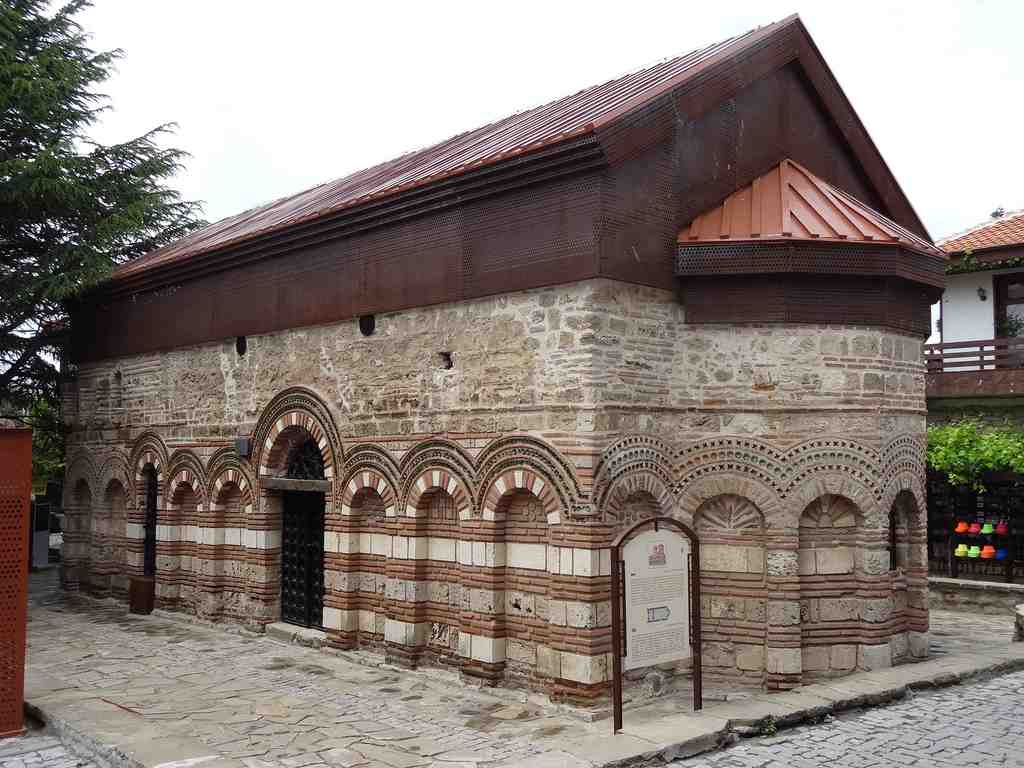
Church of Saint Paraskevi, NesebarPhoto: Cherubino, Wikimedia Commons, CC BY-SA 3.0. Cropped & resized. On your right, look for a small brick-and-stone church with a simple pitched roof, a five-sided apse at the far end, and rows of shallow decorative arches pressed into its walls.
Saint Paraskevi keeps part of her story hidden. Some scholars place this church as early as the tenth century, but most date it to the thirteenth or fourteenth century, because its shape and details resemble churches in Veliko Tarnovo, the medieval Bulgarian capital. Writer Jonathan Bousfield even links it to the reign of Tsar Ivan Alexander, from the thirteen thirties into the thirteen seventies, when Nesebar passed back and forth between Bulgarian and Byzantine rule. Even the dedication remains uncertain: nobody can say for sure which Saint Paraskevi this church honored. So before you even step into its meaning, you meet uncertainty... not a gap in the story, but part of it.
What survives still speaks clearly. This was a single-hall church, with a five-sided altar end and a western entry space. It once carried a dome, and a bell tower rose above the front section, but both are gone now. The walls, though, still remember how richly dressed the building used to be. Two tiers of blind arches - shallow arches made for beauty, not for passage - ran across the outside. Their borders held little colored ceramic rosettes, and the brickwork formed playful patterns: fish bones, suns, checks, zigzags. If you open the detail image in the app, you can catch that handmade rhythm more closely.
But this stop matters most because it learned how to hold loss. In nineteen fifty-eight, people demolished the Church of Saint George the Elder elsewhere in old Nesebar. Pieces of its painted walls survived. Instead of letting those fragments disappear into storage or silence, curators brought them here. Saint Paraskevi became the first public home for an exhibit called “Surviving murals from lost Nesebar churches,” and it also took in rescued paintings from Saint Clement. That changed the meaning of this place. It stopped being only a wounded medieval church and became a keeper of other churches’ last voices.
You can feel that in the building itself. It is not an active church now; it serves as an art gallery and museum space. In two thousand fourteen, Todor Mihaylov, Elitsa Andreeva, Emilia Kaleva, and Aleksandra Vadinska helped restore it with visible modern steel and weathered metal details instead of pretending to rebuild a perfect medieval original. Some people welcomed that honesty. Others thought the new roof intruded too much. Even repair, here, became part of the argument about how memory should look.
If you glance at the exterior photo on your screen, you can see that tension for yourself: ancient masonry below, modern intervention above. And maybe that is fitting. This church has never offered a neat ending.
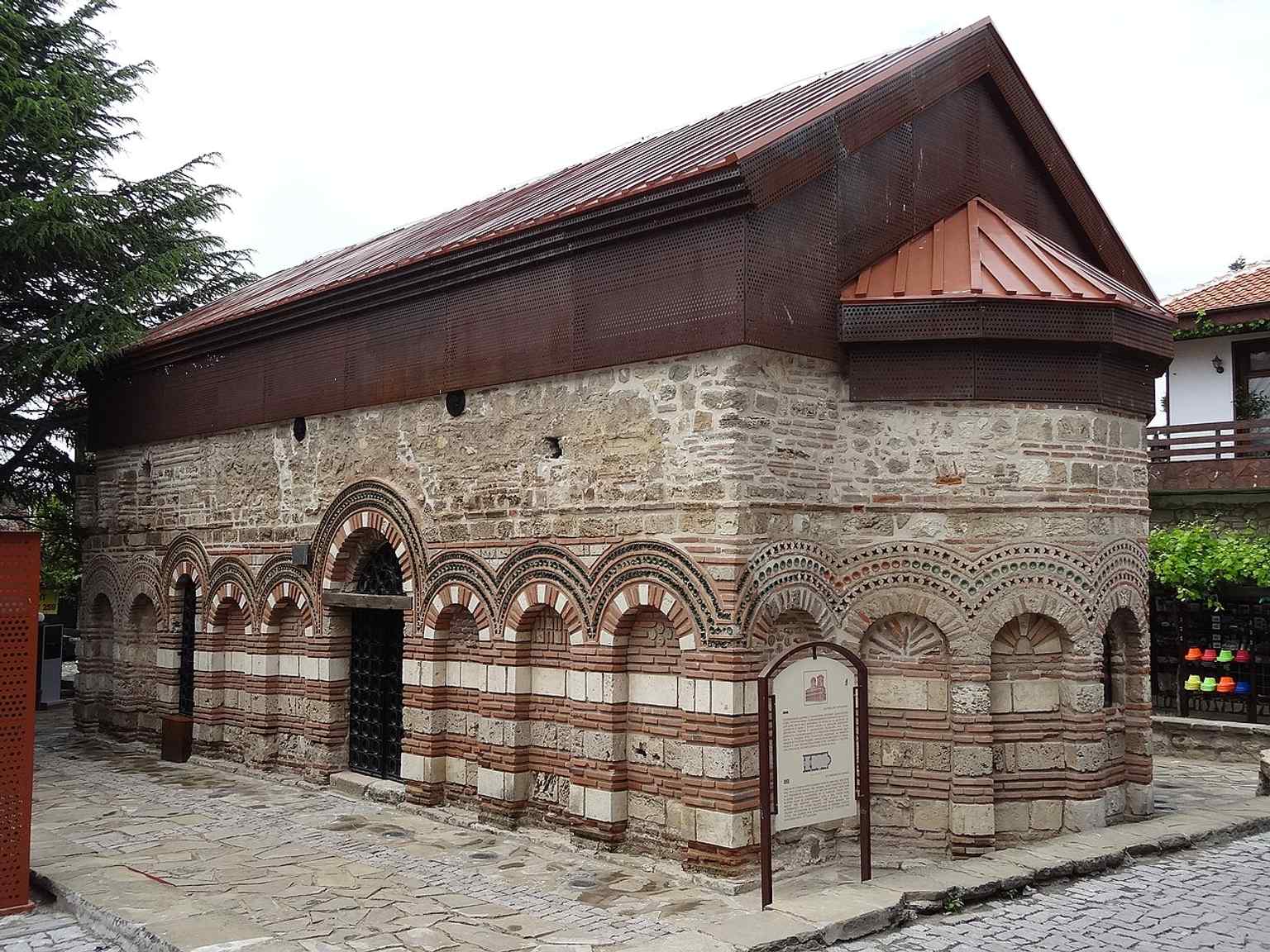
The restored church exterior in Nesebar, showing the medieval brick-and-stone walls that once carried richly decorated blind arches.Photo: Cherubino, Wikimedia Commons, CC BY-SA 3.0. Cropped & resized. When a mural leaves its own church so it can survive somewhere else, what deserves our loyalty most deeply: the painting itself, or the vanished walls that once held it?
Saint Paraskevi is not only a church to admire. It is a shelter for the voices of churches already lost. From here, continue to the Church of Saint Theodore, about a five-minute walk away. If you want to return inside Saint Paraskevi another time, it generally opens daily from ten thirty A-M to two P-M, then from two thirty to seven P-M.
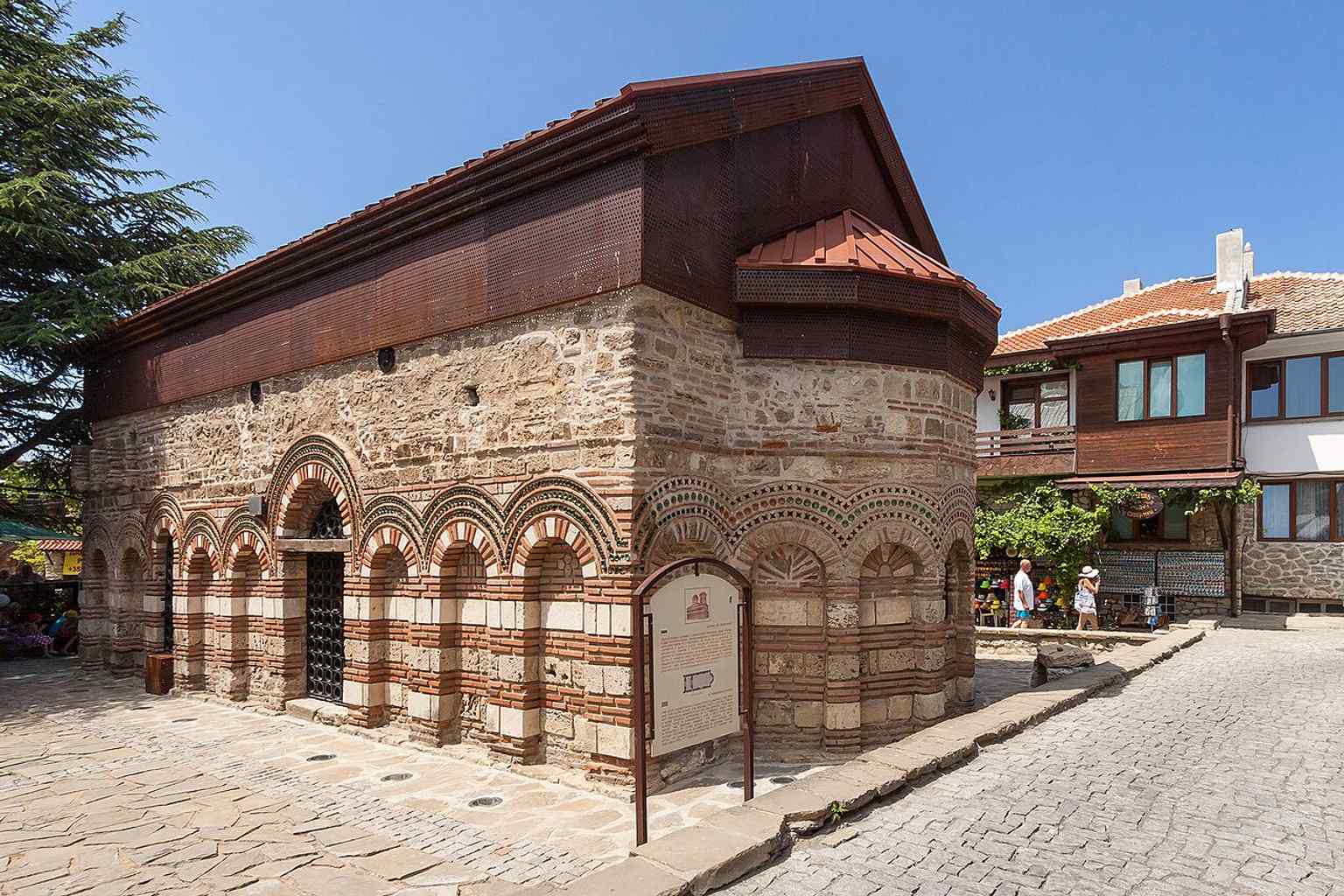
A clear view of the Church of Saint Paraskevi’s façade, a small but important UNESCO-listed monument in Old Nesebar.Photo: IzoeKriv, Wikimedia Commons, CC BY-SA 4.0. Cropped & resized. On your left is a small brick-and-stone church with a plain rectangular body, a rounded apse at the back, and shallow blind arches filled with zigzag masonry. This is the Church…Read moreShow less
Open dedicated page →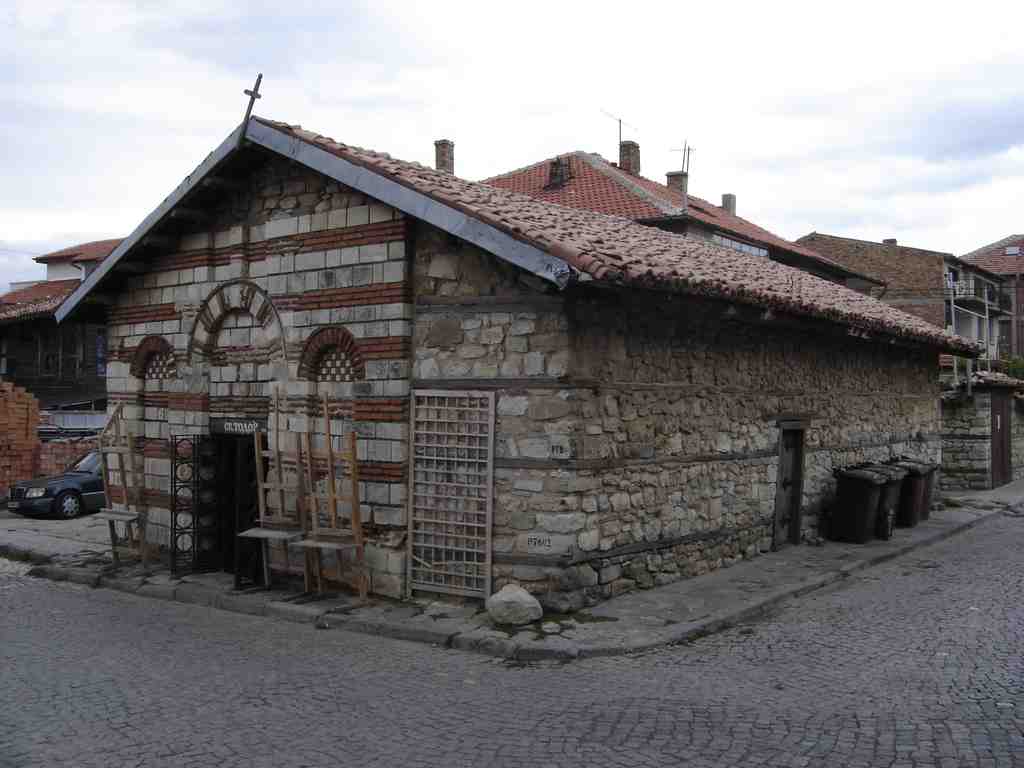
Church of St Theodore, NesebarPhoto: Wikimedia Commons contributor, Wikimedia Commons, CC BY-SA 3.0. Cropped & resized. On your left is a small brick-and-stone church with a plain rectangular body, a rounded apse at the back, and shallow blind arches filled with zigzag masonry.
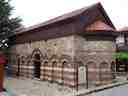
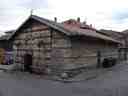
This is the Church of St Theodore... and it feels like a fitting last companion for our walk. The oldest parts you see, especially the north and west façades, reach back to the thirteenth century. Later builders, working in the Ottoman period, repaired other walls and the roof, so this is not a perfectly untouched medieval church. It is something more human than that... a survivor made in pieces.
Its greatest treasure was once not the building itself, but the holy relics of St Theodore. That meant this little church served as both parish church and shrine, a place where people came to pray and to stand near something they believed carried the saint’s living presence. Inside was a single nave, the main hall for worship, with a narthex, the entry space, and an apse, the rounded end of the sanctuary. It is tiny, only about eight point seven meters long and four point one five meters wide, but devotion does not measure itself by size.
If you glance at the image in the app, you can pick out the worked stone and brick, and those blind arches - arches built into the wall for decoration, not as openings - that helped make medieval Nesebar so distinctive.
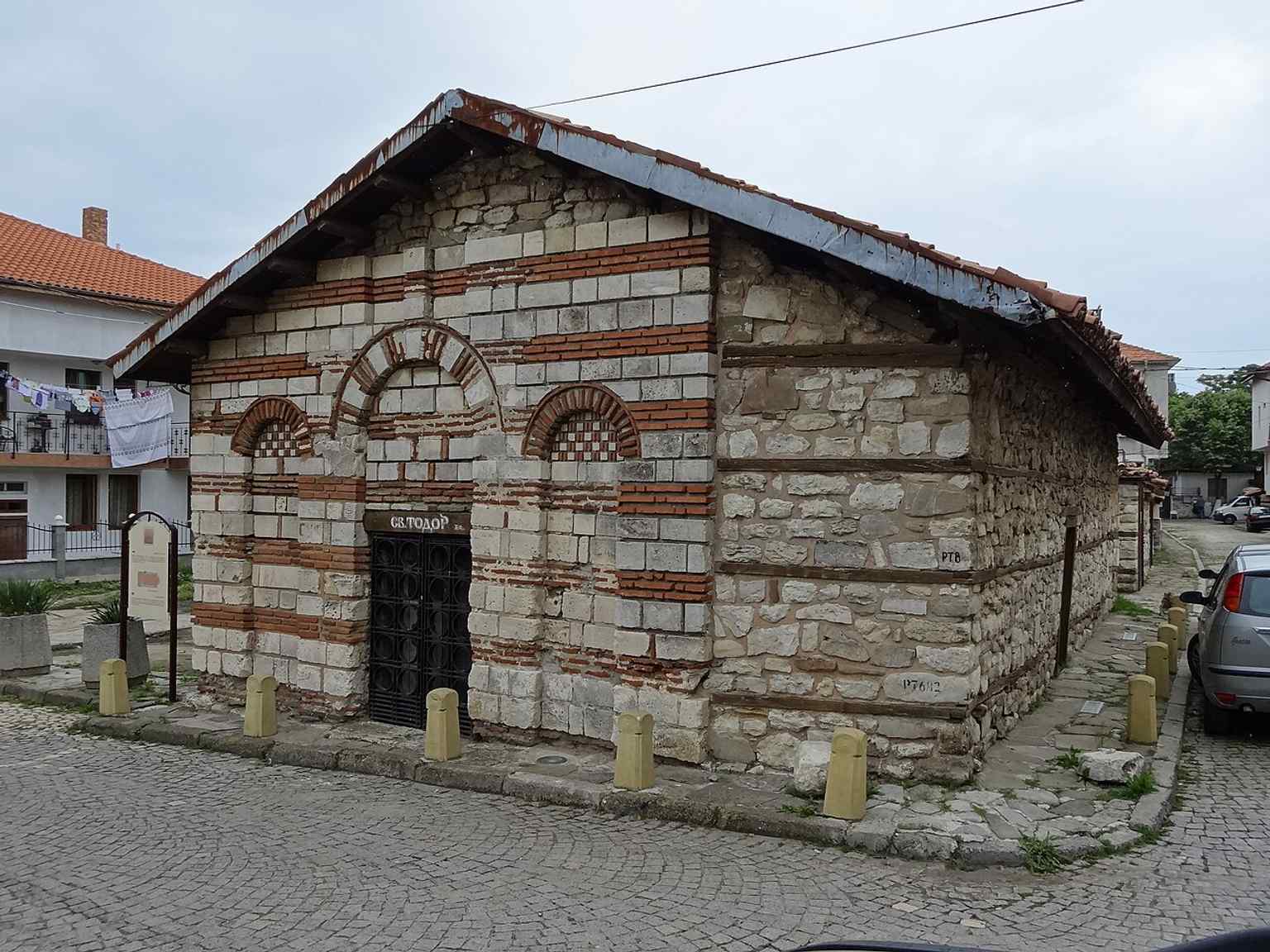
The surviving church exterior, showing the small medieval building that preserves 13th-century fabric from St Theodore’s time.Photo: Cherubino, Wikimedia Commons, CC BY-SA 3.0. Cropped & resized. By the end of the eighteenth century, people had left this church behind. Worship moved elsewhere. What remained depended on memory. One tender witness was Vadim Lazarkevich, who photographed the last iconostasis here in the nineteen twenties - the icon screen that once separated altar and nave. His photo preserved a vanished arrangement, including the patron icon of St Theodore Tyron in its proper place. Then, in twenty twenty-one and twenty twenty-two, Petar Katerinov and Dr. Milena Donkova carefully restored that icon, uncovering even an older painted layer beneath it, before the city displayed it publicly in St John the Baptist.
UNESCO warns that the old town has been altered so heavily that some of its historic wholeness has thinned. And still... this church remains. Not complete, not untouched, not full of relics and icons anymore. Just here, asking for one last act of imagination: to see a sacred life that the eye can no longer hold.
Frequently asked questions
How do I start the tour?
After purchase, download the AudaTours app and enter your redemption code. The tour will be ready to start immediately - just tap play and follow the GPS-guided route.
Do I need internet during the tour?
No! Download the tour before you start and enjoy it fully offline. Only the chat feature requires internet. We recommend downloading on WiFi to save mobile data.
Is this a guided group tour?
No - this is a self-guided audio tour. You explore independently at your own pace, with audio narration playing through your phone. No tour guide, no group, no schedule.
How long does the tour take?
Most tours take 60–90 minutes to complete, but you control the pace entirely. Pause, skip stops, or take breaks whenever you want.
What if I can't finish the tour today?
No problem! Tours have lifetime access. Pause and resume whenever you like - tomorrow, next week, or next year. Your progress is saved.
What languages are available?
All tours are available in 50+ languages. Select your preferred language when redeeming your code. Note: language cannot be changed after tour generation.
Where do I access the tour after purchase?
Download the free AudaTours app from the App Store or Google Play. Enter your redemption code (sent via email) and the tour will appear in your library, ready to download and start.
If you don't enjoy the tour, we'll refund your purchase. Contact us at [email protected]
Checkout securely with 






