
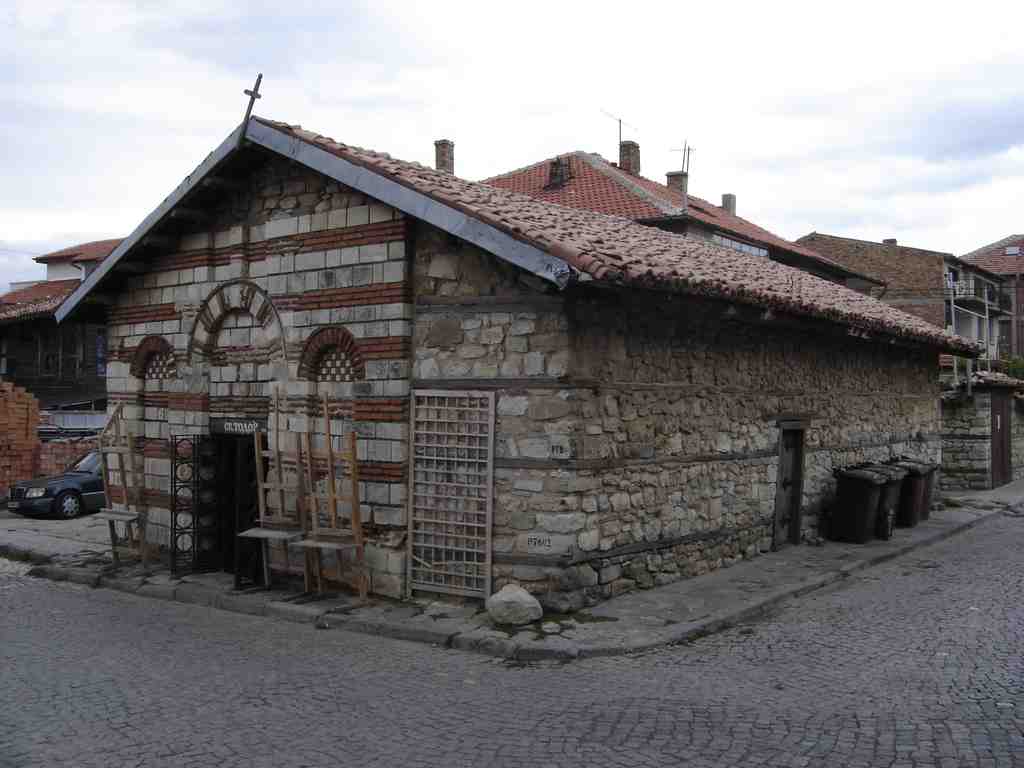
On your left is a small brick-and-stone church with a plain rectangular body, a rounded apse at the back, and shallow blind arches filled with zigzag masonry.
This is the Church of St Theodore... and it feels like a fitting last companion for our walk. The oldest parts you see, especially the north and west façades, reach back to the thirteenth century. Later builders, working in the Ottoman period, repaired other walls and the roof, so this is not a perfectly untouched medieval church. It is something more human than that... a survivor made in pieces.
Its greatest treasure was once not the building itself, but the holy relics of St Theodore. That meant this little church served as both parish church and shrine, a place where people came to pray and to stand near something they believed carried the saint’s living presence. Inside was a single nave, the main hall for worship, with a narthex, the entry space, and an apse, the rounded end of the sanctuary. It is tiny, only about eight point seven meters long and four point one five meters wide, but devotion does not measure itself by size.
If you glance at the image in the app, you can pick out the worked stone and brick, and those blind arches - arches built into the wall for decoration, not as openings - that helped make medieval Nesebar so distinctive.
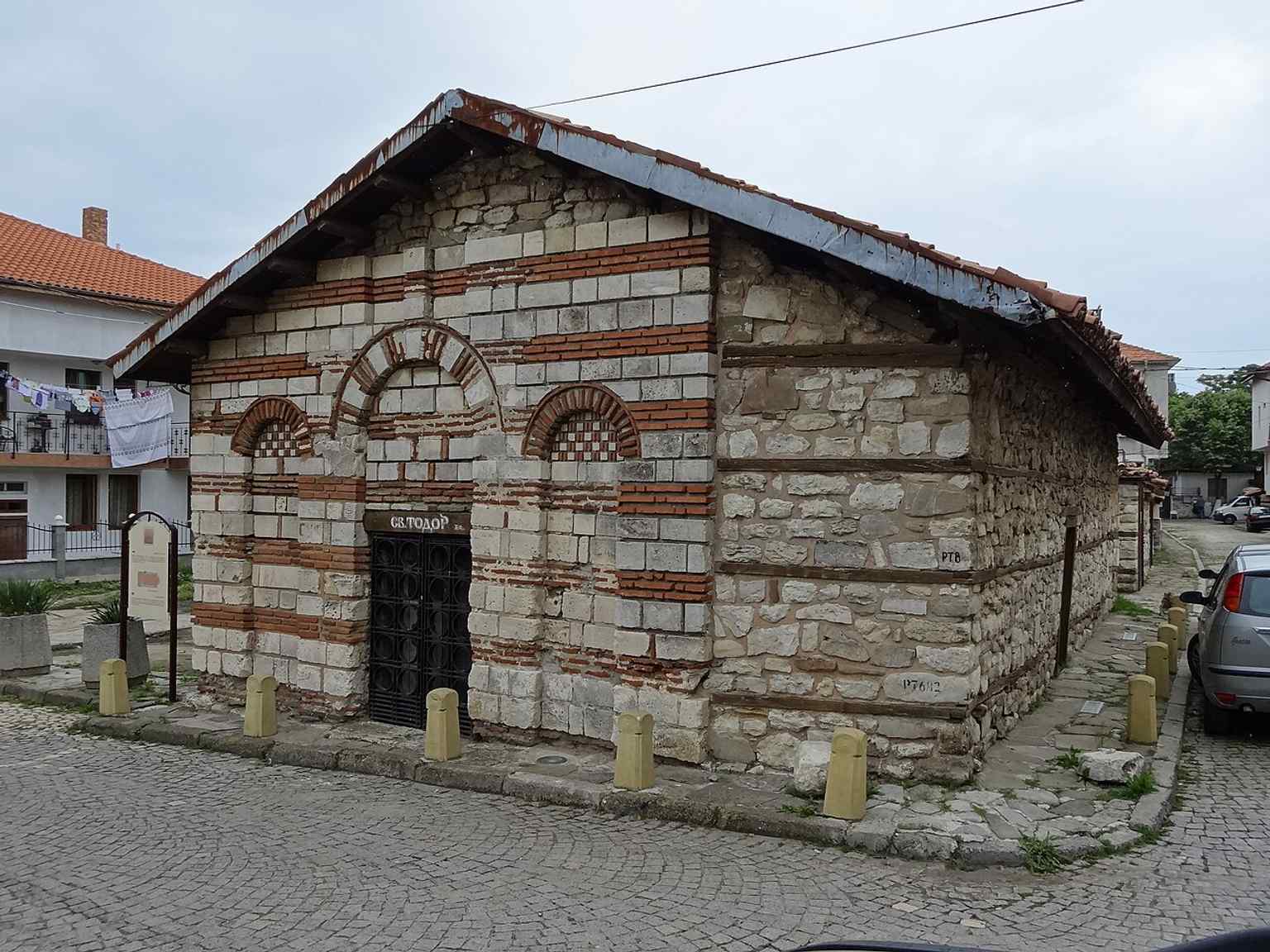
By the end of the eighteenth century, people had left this church behind. Worship moved elsewhere. What remained depended on memory. One tender witness was Vadim Lazarkevich, who photographed the last iconostasis here in the nineteen twenties - the icon screen that once separated altar and nave. His photo preserved a vanished arrangement, including the patron icon of St Theodore Tyron in its proper place. Then, in twenty twenty-one and twenty twenty-two, Petar Katerinov and Dr. Milena Donkova carefully restored that icon, uncovering even an older painted layer beneath it, before the city displayed it publicly in St John the Baptist.
UNESCO warns that the old town has been altered so heavily that some of its historic wholeness has thinned. And still... this church remains. Not complete, not untouched, not full of relics and icons anymore. Just here, asking for one last act of imagination: to see a sacred life that the eye can no longer hold.





