
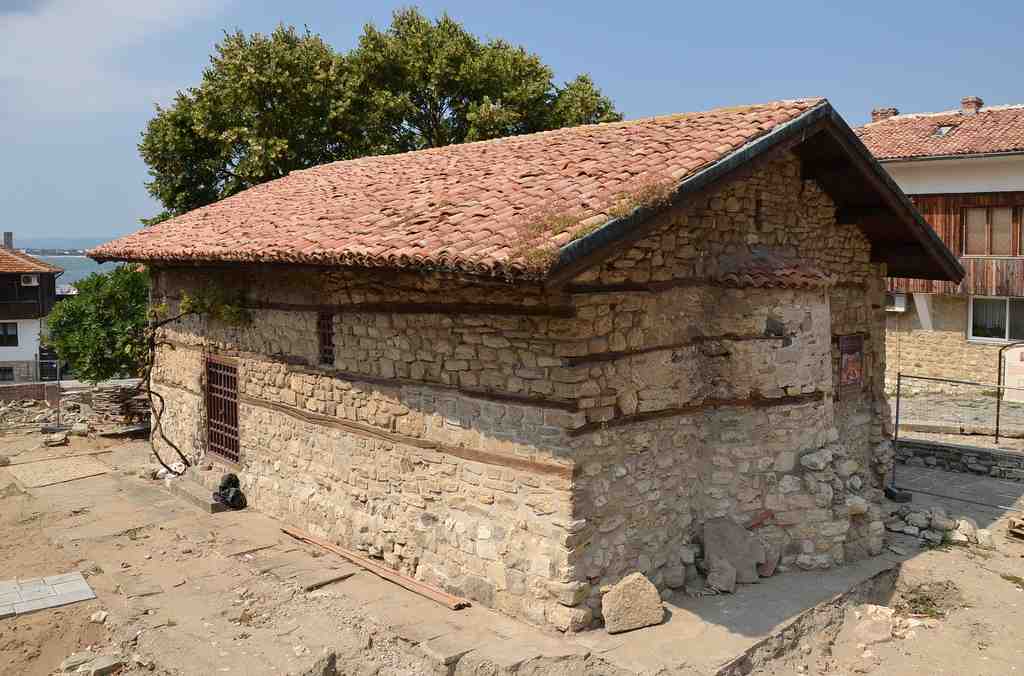
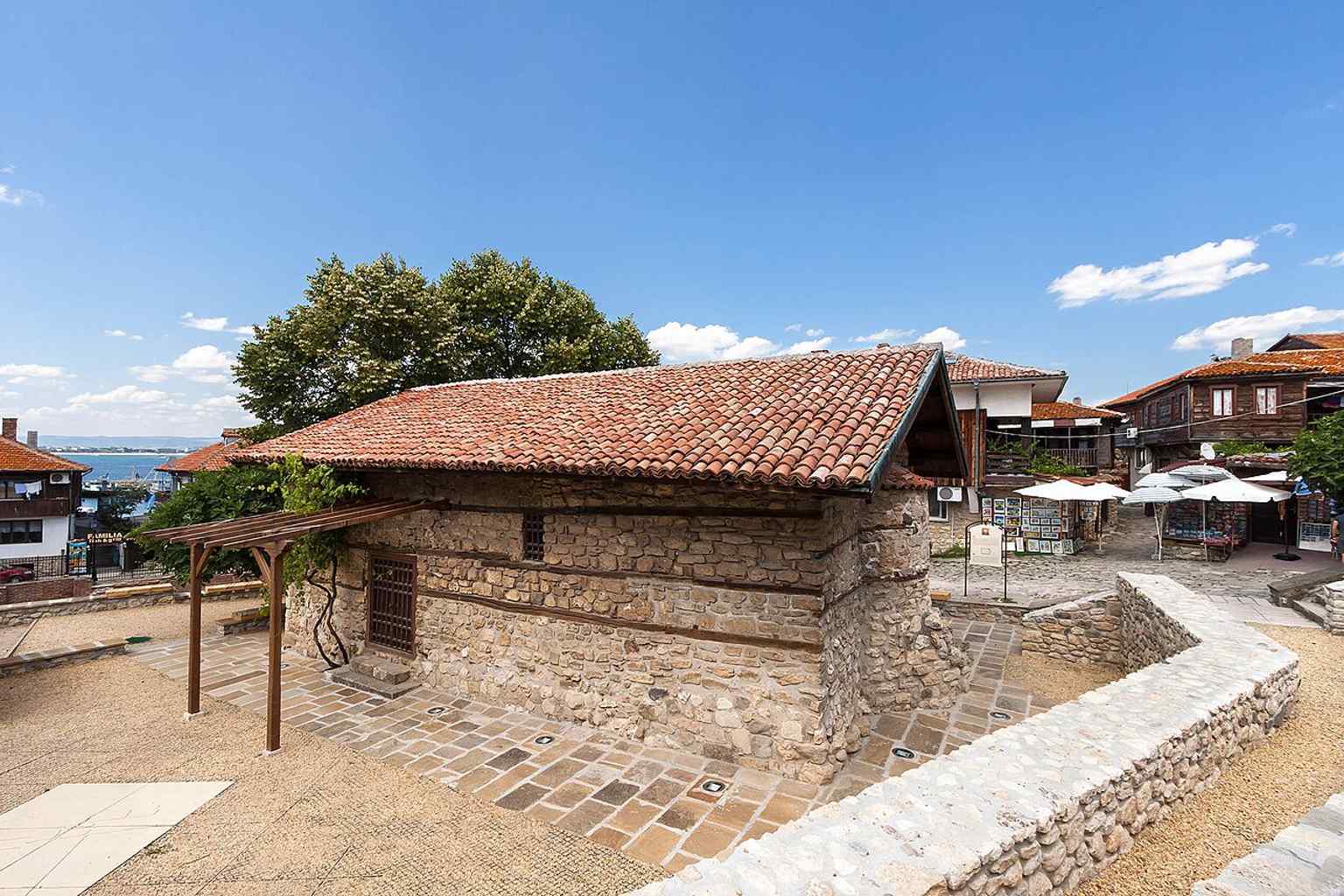
On your left, look for a low brick-and-stone rectangle, partly sunken into the ground, with a simple tiled roof and a small arched entrance.
The Church of the Holy Saviour teaches one of Nesebar’s quietest truths: the smallest buildings sometimes carry the heaviest hearts. A local man named Theodokis paid for this church in sixteen oh nine, and most people pass without noticing the clue he left behind. Above the south entrance, a donor inscription names Theodokis and Metropolitan Kiprian. That tiny line changes everything. Suddenly this is not just an old church. It is one person’s act of care. Heritage accounts treat it as a rare surviving church project from that year.
Its low, half-buried shape was deliberate, not poor. Under Ottoman rule, Christians worked within tight restrictions, so builders made new churches modest and discreet. If you glance at the image in the app, you can see how quietly this one settles into the ground.
But inside...
the plain shell gives way to a world of color. An unknown Nesebar painter covered the single nave, the main hall, with scenes from the life of Christ and the Virgin Mary. In the apse, the rounded end of the sanctuary, he painted the Virgin Platytera, Mary in prayer, immense in meaning inside this tiny room. Beneath those scenes stood full-length saints: Spyridon, John the Baptist, Constantine and Helena, Anastasia, Catherine, Matrona, Marina. We saw another unusually datable moment in Nesebar’s painted story at Saint Stephen, with its campaign of fifteen ninety-nine. Here, the early seventeenth century answers back in a smaller, more intimate voice.
And there is an older sorrow here too. Local memory says the Byzantine princess Mataissa Cantacuzina Paleologina died in Nesebar in fourteen forty-one. Later, people moved either her tombstone, or even her coffin, here to protect her memory. Her memorial now rests in the Archaeological Museum, and this deconsecrated church lives on as a museum itself. One name survives in stone, another in legend, and both refuse to let the city forget; if you want to step inside, it usually opens daily from ten thirty to two and from two thirty to seven, and the Church of the Holy Archangels Michael and Gabriel is about a one-minute walk from here.





