
Brussels Audio Tour: Royal Footsteps and Hidden Legends
Gold gleams on ancient facades while secrets hide behind every cobblestone in Brussels. This city of royal pageantry and smoky revolutions invites you to peel back centuries on a self-guided audio tour that reveals more than the maps ever will. Why did Grand-Place echo with shouts when a single monarch’s misstep shook Europe? What hidden symbols are etched just above your head in the Cathedral of St. Michael and St. Gudula? And who really vanished behind closed palace doors during a midsummer ball that changed royal fortunes forever? Move through Brussels’ powerful heart as forgotten feuds, breathtaking artistry, and silent scandals spring to life around you. The cool hush of cathedrals gives way to grandeur beneath palace arches and the bustling secrets of historic squares. Every step unlocks a new drama and a fresh way to see the city. Begin your tour now and strike the surface of Brussels to discover stories that glow brighter than gold.
Tour preview
About this tour
- scheduleDuration 100–120 minsGo at your own pace
- straighten4.3 km walking routeFollow the guided path
- location_onLocationMoortebeek, Belgium
- wifi_offWorks offlineDownload once, use anywhere
- all_inclusiveLifetime accessReplay anytime, forever
- location_onStarts at Mont des Arts
Stops on this tour
lock_open 3 free previews · 11 unlock with purchase
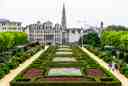
If you’re wondering how to spot the Mont des Arts, just look for a beautifully sculpted park with precise, geometric hedge patterns and colorful flower beds, leading down toward…Read moreShow less
If you’re wondering how to spot the Mont des Arts, just look for a beautifully sculpted park with precise, geometric hedge patterns and colorful flower beds, leading down toward the city with a grand equestrian statue in the center and the spire of Brussels Town Hall rising like a medieval rocket in the distance. Alright, traveler, let’s step back a few centuries and soak in the rich layers of history you’re standing on! Imagine you’re at the top of a slope that’s been at the heart of Brussels’ story for hundreds of years. Long before selfie sticks and Instagram, Jewish families in the Middle Ages climbed steep stairs here, called the Escaliers des Juifs, up to a neighborhood jam-packed with life, talk, and the aroma of fresh bread. This spot was once called the Montagne de la Cour, or Hill of the Court, because the famous Palace of Coudenberg, home to the Dukes of Brabant, once loomed above. That’s right-a royal palace perched up here, with parties, secrets, and royal drama, until one fateful night in 1731 when flames devoured it, leaving only memories-and some singed royal curtains, if you believe the rumors. As the centuries went by, the area became a tangle of busy streets and crowded houses. But by the late 1800s, Belgium’s King Leopold II had a bright idea (*insert dramatic kingly voice here*): why not clear away the old houses and build a magnificent arts quarter? He dreamt big, really big, and promptly bought up the land. Local mayor Charles Buls wanted to keep the charming old neighborhood, but the king had other plans, and after a heated council, it was demolition day for the old Saint-Roch district. If you think modern construction is slow, picture this: after tearing down the houses, the king ran out of money, leaving a huge, dusty gap in the city-a sort of proto-skatepark, but for city pigeons. Finally, just in time for the Brussels International Exposition of 1910, a French landscape architect swooped in to design a “temporary” garden-park, fountains, grand staircases tumbling down the hill, the works! Even after King Leopold’s death, the park stayed, green and loved by the people, until the 1950s rolled around. Cue Act 2: the garden gets a very “space-age” makeover by architects Houyoux and Ghobert, with sharp, geometric lines and towering structures like the Royal Library of Belgium (KBR) and the Square Brussels Convention Centre. That garden you see now, with its crisp patterns and vibrant colors, was crafted by landscape artist René Pechère right on top of a big car park-proving that beauty can really bloom anywhere, even above a bunch of parked cars. Look around and spot the mighty statue of King Albert I, dressed like a soldier and gazing out over the city. He’s ready for anything-except maybe the Brussels rain! Behind you, the Royal Library keeps millions of books, ancient coins, secret royal letters (maybe), and even a fifth-century Sicilian tetradrachm coin worth more than some houseplants. Next door, the National Archives contain boxes and boxes of dusty history-the paperwork of empires and revolutions-and if you listen carefully, you might hear a faint rustle… or just the wind in the trees. Above you, the Mont des Arts carillon chimes out the hour with a parade of twelve little figures from Brussels folklore, while a bronze automaton gives the bell a solid smack. On a clear day, look out and you’ll spot the famous spire of the Town Hall, the gold cross of St. James on Coudenberg, and maybe, just maybe, the shiny shape of the Atomium far in the distance. Standing here, you’re at the crossroads of old stories and new dreams-so take in the sweeping view and let the Mont des Arts work its magic. Just watch out for enthusiastic joggers and tourist photographers-they move faster than any medieval knight!
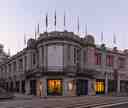
Open dedicated page →Look ahead for a grand grey stone building with a rounded corner, topped by a ring of flags and big modern banners-standing right at the crosswalk in front of you is the Centre…Read moreShow less
Look ahead for a grand grey stone building with a rounded corner, topped by a ring of flags and big modern banners-standing right at the crosswalk in front of you is the Centre for Fine Arts, also known as BOZAR. Now, let’s imagine you’re stepping back in time, but don’t worry, you won’t need a time machine-just your imagination (and maybe a little less rain than Brussels usually offers). It’s the roaring 1920s. Picture busy builders clattering away, the sound of hammers echoing down Rue Ravenstein, and the city’s top architect, Victor Horta, pacing around in a snazzy hat, sketching out his grand vision for a palace of the arts. What you’re seeing now-this curving, bold Art Deco façade-wasn’t built overnight. For decades, Brussels dreamed of a place to gather music, art, and theatre under one splendid roof. The government once thought about putting this center where the stock exchange now stands or even in the city’s parks. But after a whirlwind of design competitions, funding hiccups, and hopes dashed by world wars, finally in the early 1920s, the right ingredients appeared: determination, generous patrons, and a plot of land perfect for something special. Enter Henry Le Bœuf-a banker with an arty streak-who teamed up with Horta. Their goal? To create not just a hall for concerts, but a hub for every kind of creativity. Imagine the smell of fresh marble and parquet floors as the doors opened in 1928. The King and Queen themselves swept in for the occasion, and the concert halls soon throbbed with the sound of orchestras, legendary dancers, and the excited chatter of visitors. But building BOZAR didn’t go exactly as planned. The sloping land, tricky regulations, and never-enough money made the project a tough nut to crack-so tough, Horta sometimes joked the building was “the most difficult child” he ever brought into the world. Yet, despite it all, the Centre became famous for its beauty, its innovative horseshoe-shaped concert hall, and for welcoming everyone, from jazz lovers and surrealist painters to world-class conductors and star ballet dancers. Through the years, BOZAR survived world wars, occupation, economic crashes, and more than a few lively Belgian debates about funding and language. During WWII, it even managed to stay open-sometimes screening films, sometimes hosting secret meetings of artists who just wouldn’t let the music stop, even when the city outside felt silent and tense. After the war, the halls buzzed with new life: picture flickering film projectors, the footsteps of ballet dancers, the passionate judge in the Queen Elisabeth Competition, and the dramatic music of the Belgian National Orchestra. The Centre held wild art parties during Expo 58, where curious festival-goers glimpsed the first color TVs and the wildest modern art Brussels could offer. Of course, the story isn’t all glamour. Leaky roofs, cracked concrete, and wild student protests in '68 brought both challenges and wild energy into the building’s veins. Artists sat peacefully in the sculpture hall, demanding more space and democracy-a bit like an artistic sleepover, if you will. Fast-forward to more recent years, and BOZAR has been lovingly restored, even after fire damaged the roof in 2021. Today, the Center is home to art exhibitions, concerts, films, dance, and more, buzzing with ideas from Frida Kahlo to Keith Haring. It’s a place where, at any moment, you might see a world-famous violinist, a daring new play, or a rooftop concert as the sunset glows over Brussels. And hey, here’s a fun fact to end on: Out in space, there’s even an asteroid named after BOZAR. So, this is truly a palace of the arts that’s out of this world. Would you expect anything less from Brussels’ creative heart? Ready to delve deeper into the facilities, directors or the trivia? Join me in the chat section for an enriching discussion.
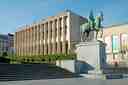
Open dedicated page →Right in front of you is a large, modern building with rows of tall, vertical windows made from pale stone, and a grand equestrian statue of a man on horseback standing guard near…Read moreShow less
Right in front of you is a large, modern building with rows of tall, vertical windows made from pale stone, and a grand equestrian statue of a man on horseback standing guard near the wide stairs-so just look for the impressive statue and the imposing rectangular building rising up just behind it! Ah, welcome to the Royal Library of Belgium, or as the locals affectionately call it-KBR, the “Albertine” or “Albertina”-where history’s treasure chest is piled so high, you’d need roller skates just to see all the shelves! Picture this: behind those stone walls hide over six million books and items, stacked along more than 150 kilometers of shelving. That’s long enough to reach to another country… if only you didn’t get lost in the fiction section on the way! But long before library cards and late fees, the fantastic story of this building began in the lamplit, page-turning days of the Burgundian dukes. We’re talking the 15th century here, a time when “browsing the library” meant leafing through illuminated manuscripts, and the only “cloud storage” was the chilly Brussels weather seeping through palace windows. The Library of the Dukes of Burgundy was the place to be-if you were a book, that is. By Philip the Good’s death in 1467, this collection was one of Europe’s finest, packed with about 900 beautifully illustrated manuscripts. It was the ultimate VIP book club, featuring star miniaturists like Simon Marmion and the mysterious Master of Mary of Burgundy. Of course, history had other ideas. The noble library hopped from palace to palace, dodging trouble, although not always successfully-after Charles the Bold died, the collection faced everything from neglect to outright looting. In 1559, King Philip II of Spain decided enough was enough and founded the Royal Library of the Low Countries right at the Palace of Coudenberg, putting what survived of the legendary manuscript collection under stricter supervision. If those books could talk, they might have a few harrowing tales to tell-especially about the inferno in 1731, when fire tore through Coudenberg. Servants desperately hurled manuscripts out the windows to save them, but much was lost to the flames. Some manuscripts, as if on an epic adventure, journeyed back and forth between Brussels and Paris, caught in the turbulence of wars, revolutions, and political swaps, with items taken during the French Revolution slowly trickling back after Napoleon’s defeat. The Royal Library as we know it really found its feet in the 19th century. After Belgian independence, in 1837, the modern institution was born, absorbing precious collections, including the massive Charles Van Hulthem trove-adding a whopping 70,000 books at once. As the reputation and collection of the library grew, they outgrew their old homes, prompting construction of new wings and, eventually, this very building you see now-a postwar tribute to King Albert I, opened in 1969 and shining today as Belgium’s very own fortress of knowledge. Inside, the treasures keep coming: a rare coin from ancient Sicily, manuscripts adorned by the likes of Rubens and Bruegel, and an unrivaled collection of Belgian prints and drawings. There’s even the Music Department, housing everything from manuscript scores by Bach to record collections perfect for jazz lovers. The KBR isn’t just about old books-its collections include coins, maps, posters, wallpaper, and even lottery tickets. And if you’re in the mood for a museum twist, the KBR Museum showcases the Burgundian manuscripts where you can almost sense the candlelight and the scratch of quills. Not everything here is fun and games-the building itself has witnessed its share of drama from fires to thefts, including an episode in 2020 when a long-lost artwork plundered by the Nazis was rediscovered here. Today, the KBR is a beacon for researchers worldwide-though you’ll need to be 18 and up, and yes, pay an annual fee, to dive into its endless shelves. So as you stand here, let your imagination soar-think of all those stories, secrets, and centuries waiting inside, keeping Brussels' curiosity alive, one manuscript at a time! Wouldn’t you love to have a library card here? Now, if only it came with a “find my book” magic wand! Intrigued by the collection, prints & drawings department or the music department? Make your way to the chat section and I'll be happy to provide further details.
Open dedicated page →
Show 11 more stopsShow fewer stopsexpand_moreexpand_less
To spot the Church of Our Lady of the Chapel, just look ahead for the striking stone building with a tall Baroque bell tower rising above elegant pointed arches and rows of spiky…Read moreShow less
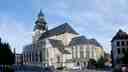
To spot the Church of Our Lady of the Chapel, just look ahead for the striking stone building with a tall Baroque bell tower rising above elegant pointed arches and rows of spiky pinnacles-it’s right at the edge of Place de la Chapelle. Now, as you stand before this mighty structure, imagine rolling back the clock nearly 900 years. Picture the hustle at the city’s edge: a dirt road, monks in heavy robes trudging along, and markets trading chatter in dozens of accents. Here, outside the ancient walls, once sat a simple little chapel, donated in 1134 by the powerful Count Godfrey I of Louvain. Soon after, Benedictine monks took over, probably thinking, “Nice donation, but could we get a bit more Gothic?”. The neighborhood here grew so much that Brussels needed a second parish church, and so the seeds for this splendid giant were sown. The church itself is a masterpiece of transition, visually and historically-a mix of rough-and-tough Romanesque and the lift-your-eyes-to-the-heavens Gothic, finished off with a dash of Baroque like some medieval stylist went on a decorating spree spanning centuries. The stones came all the way from Gobertange, a journey of 45 kilometers; by horse cart, that’s a lot of “are we there yet?" But, oh, this place has stories. Fires, Calvinist mobs, grand armies-everyone wanted a piece of the Chapel Church. In 1405, flames gobbled up most of the original nave. The townsfolk must have had a rough week, but they rebuilt, bigger and bolder, with those sizzling side chapels and pointy Brabantine Gothic lines. Then, in 1574, Brussels’ Calvinists stormed the church, smashing anything not nailed down (and a few things that were). Perhaps they were upset about the lack of seating? When the Catholics got their church back, the place needed more repairs than your average second-hand sofa from the flea market. If you look up, that charming bell tower wasn’t always so Baroque. In 1695, French cannons shattered the older spire during one of Brussels’ less-fun parties, so the city called in Antoine Pastorana, who whipped up the elegant slate crown you see today. The saga continued-sometimes closed, sometimes open, always loved and always getting patched up like a favorite old coat. Step closer and look at the grey buttresses and spiky pinnacles, like stone feathers and claws gripping the church tightly to this square. Gargoyles glare down, as if they dare pigeons to misbehave. The outside’s grandeur is only the start-inside, your eyes would adjust from the dim, ancient Romanesque transept to the airier, light-filled nave. Big windows, soft stone, a feeling both solemn and somewhat magical. And while most churches promise saints, this one delivers artists. Pieter Bruegel the Elder-yes, the very Bruegel who painted fantastic peasant scenes and wild festivals-found his final rest here in 1569. His funeral monument still greets visitors, perhaps with a ghostly wink and the echo of laughter from his wild paintings. Oh, and if you find yourself by a certain side chapel, you’ll spot an icon cherished by Brussels’ Polish community, connecting centuries-old bricks to new traditions every day. Let your mind wander through all those centuries-the clanking of medieval armor, the hush of monks at prayer, the clatter during yet another restoration, the thump-thump of today’s city life outside. This is a church that’s survived fire, warfare, and even some divine interior decorating. Through every blow and every prayer, the Chapel Church stands-sometimes battered, always beautiful, right where history and daily life cross paths on this busy square.
Open dedicated page →Right in front of you, look for a small bronze statue in a stone niche on the corner-he’s not very tall, about the size of a teddy bear-and you’ll spot Manneken Pis, a little boy…Read moreShow less
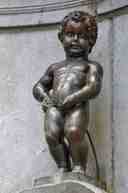
Right in front of you, look for a small bronze statue in a stone niche on the corner-he’s not very tall, about the size of a teddy bear-and you’ll spot Manneken Pis, a little boy boldly peeing into the fountain’s basin. Now, you’re face-to-face with Brussels’ most mischievous citizen. Just imagine: in the heart of a busy city square, you find this tiny, smiling boy doing exactly what his name promises-“Little Peeing Man.” He’s been holding his post since 1619, but his legend stretches back even further, through centuries of giggling locals, curious travelers, and the occasional thief who fancied a living room upgrade. The stories behind him are just as cheeky as the scene itself. One tale tells of a two-year-old noble, Duke Godfrey, who, in the heat of battle, was hung from a tree and gave his enemies a “golden shower” from above, inspiring his troops to victory. Another says a quick-thinking boy named Julianske once saved Brussels by peeing on a burning fuse, foiling enemy plans to blow up the city walls-take that, action heroes! But Manneken Pis isn’t just Brussels’ prankster. He started as a rather practical fountain, helping bring drinking water to the locals. Over time, the little statue grew into a true Brussels icon-you could say he rose to “pee-nomenal” fame. Even city kings and emperors wanted a piece of the action: after French grenadiers once nabbed the statue in the 1700s, the King of France himself made good by giving Manneken Pis an embroidered gentleman’s outfit and even a tiny sword. Royal fashion, right down to his shoes! If you’re lucky, you might catch him dressed up, because he has a collection of more than a thousand outfits-more costume changes than most supermodels! Once, he was a shepherd; another day, he might be Santa Claus, a samurai, or even Dracula. His wardrobe is so grand it has its own museum on this very street. Sometimes, he holds court with a brass band or squadrons of tourists snapping photos, and on Belgian holidays, he might ditch the water for a stream of local beer given out to the crowd. Now there’s a party trick only Brussels could dream up. Through it all, Manneken Pis has survived sieges, bombings, wild students, and more than a few kidnapping attempts, only to bounce back each time-sometimes with new repairs, sometimes with more fame. The original statue now lives safely in the City Museum, while his replica here still rules this little corner with a big sense of humor. Even as new legends pop up, one thing’s sure: this cheeky boy is Belgium’s favorite ambassador of fun. So go ahead-smile back, take a photo, and you’ll join a centuries-old club of visitors won over by Brussels’ tiny superstar. Just don’t try to outdo him-you’d have a lot of explaining to do to local police! Ready to delve deeper into the naming, legends or the traditions? Join me in the chat section for an enriching discussion.
Open dedicated page →Let’s rewind back to 1989. Picture Brussels at the dawn of a new political era. After much negotiation, Belgium was reshaping itself, decentralizing more and more powers to its…Read moreShow less
Let’s rewind back to 1989. Picture Brussels at the dawn of a new political era. After much negotiation, Belgium was reshaping itself, decentralizing more and more powers to its regions, and… voilà! The Brussels-Capital Region was born. Unlike its siblings, Flanders and Wallonia, who borrowed their first politicians directly from the Federal Parliament, Brussels broke tradition. Right from the start, it wanted the people’s direct voice. The very first Council of the Brussels-Capital Region was elected in historic fashion by universal suffrage. You had 75 deputies: 64 French-speakers and 11 Dutch-speakers, ready to squabble-uh, I mean, to govern together. The building you see today became their headquarters, a place where local issues-everything from transport to housing to the legendary Brussels nightlife-got their moment in the sun. But just like Brussels itself, nothing stood still for long. Fast forward to 2001-time for an upgrade! The Parliament grew to 89 members, now with 72 French-speakers and 17 Dutch-speakers. That’s more debates, more ideas, and, probably, a lot more lunchtime sandwiches. Over the years, new laws and reforms kept coming, bringing us to the big moment in 2006, when this evolved from a “Council” to the full-fledged Parliament of the Brussels-Capital Region. It sounds grand, and honestly, it is. These 89 people have a big job: they approve the regional budget, pass laws on Brussels matters (which, in Brussels, means nearly everything-from bilingual street signs to that festival you didn’t know you needed). They appoint five ministers and three secretaries of state, forming the cabinet that tries to keep Brussels moving, sometimes literally, with all those traffic jams. If they don’t like what the ministers are up to, the Parliament can even force them to pack their bags and resign-but only if they’ve already found someone else who’s brave enough to take over. Talk about a constructive argument! Now, here’s a quirky Brussels twist: the Parliament isn’t just a single group. It splits into two language groups-French and Dutch. Each group is essential, and, like two flavors of Belgian chocolate, you need both for the full experience. The French-speaking group also forms the Parlement francophone bruxellois, and the Dutch-speaking group shapes the Council of the Flemish Community Commission. Sometimes, these teams unite to manage shared challenges-a bit like superheroes, but with more paperwork. If you think political life looks complicated, you’re right! Some members even sit in the Parliament of the French Community of Belgium or the Senate, balancing more responsibilities than a Belgian juggling waffles. But don’t worry, there are rules to stop anyone from collecting too many jobs-those chocolate-scented corridors can only be patrolled by so many superheroes at once. So next time you pass this Parliament, remember: inside, the story of Brussels is being written every day-and with so many voices in the mix, it’s never, ever boring! Intrigued by the functions, elections or the previous compositions? Make your way to the chat section and I'll be happy to provide further details.
Open dedicated page →Look straight ahead across the Grand-Place and you’ll spot a dazzling Gothic masterpiece with a sky-high spire topped by a golden statue-this is the Brussels Town Hall, standing…Read moreShow less
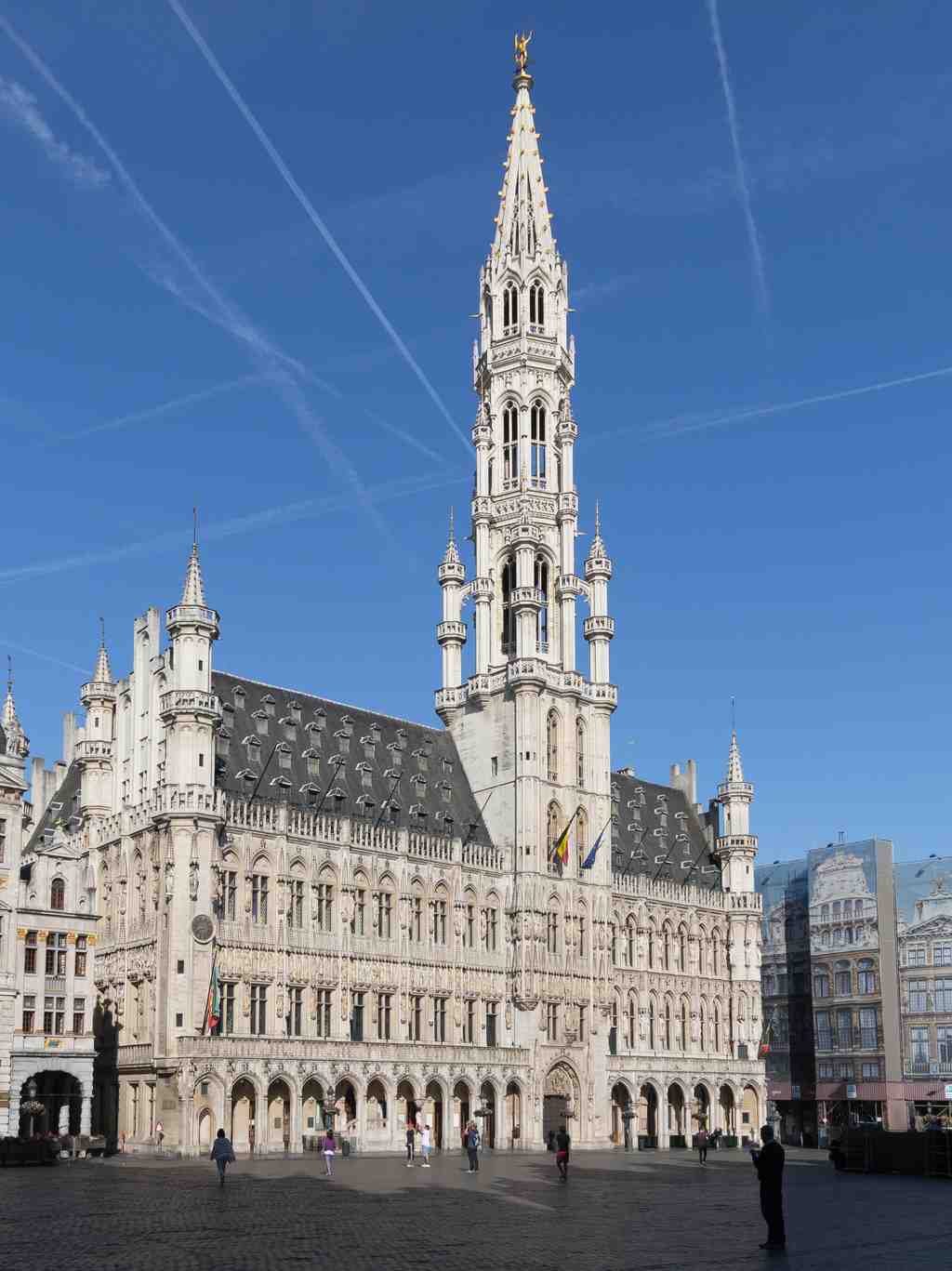
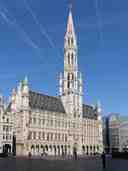
Look straight ahead across the Grand-Place and you’ll spot a dazzling Gothic masterpiece with a sky-high spire topped by a golden statue-this is the Brussels Town Hall, standing proudly like the grandest wedding cake in the city. Now, let’s unravel the centuries-old secrets swirling around this spectacular building. Imagine you’re here in Brussels in the early 1400s-the smell of fresh bread from market stalls, noble families bustling around on muddy streets, and right in front of you, workers begin laying the first stones for what would become the Town Hall. The oldest part is to your left, rising up with its original tower from 1401, put together by an architect who must have loved pointy arches as much as waffles. The building grew and grew, especially once the city’s crafty guilds demanded a spot in city government. When Charles the Bold-who had the best nickname of any Duke-helped lay the foundation of the longer wing, no one knew this place would someday steal the show on the Grand-Place. But let’s get dramatic. Flash forward to 1695. The peaceful city center is suddenly filled with thunder as 70,000 French soldiers begin bombarding Brussels. The buildings of the square burst into flames, and artwork that once told the story of Brussels gets lost in smoke. After the firestorm, the only building left standing in the main square is this-the Town Hall, albeit just its shell. It’s almost funny-this was the main target, yet it survived when all around was chaos. The city rose from the ashes, and the Town Hall gained even more wings and rooms, funded by the sale of houses and land. Gothic architects were big fans of towers, but the Town Hall’s is special-96 meters tall, all in the Brabantine Gothic style, with an octagonal lantern that looks almost like a crown. Jan van Ruysbroek built this marvel, and right at the top you’ll see a statue of Saint Michael, the city’s patron, busy dispatching a dragon-demon. Here’s a fun fact: stand back and you’ll notice the tower and the façade aren’t quite lined up. Legend has it, the architect noticed the error and leapt from the tower in despair. But knowing how much building plans change, maybe he just needed a strong espresso. By the 1800s, everyone wanted the Town Hall to look even fancier. Imagine artists high up on scaffolding adding statues left and right-now there are nearly three hundred of these noble saints, knights, and allegories lining the façade, each with their own expressive faces, ready to judge your fashion choices. On the ground, near the main portal, lions look over the city’s coat of arms, and carvings show legends of honest judges and unsolved mysteries. Inside, it’s like a treasure chest. There’s the Gothic Room with wooden walls and huge tapestries spun in Mechelen, the grand ceremonial Maximilian Room with its portraits and lush decorations, and even a hallway lined with 18th-century kings looking slightly confused about who’s next in charge. One of the quirkiest details is the marble star in the inner courtyard that marks Brussels’ geographical center-stand there and feel like you’re at the heart not just of the city, but of centuries’ worth of quirky stories and politics. Throughout history, this building has been a stage for revolutionaries, refuge for the wounded in wartime, a parade ground for mayors and monarchs, and sometimes, an accidental art gallery for very scary gargoyles. And today, as part of a UNESCO World Heritage Site, the Town Hall stands watch over the Grand-Place-weathering storms, welcoming tourists, and keeping an eye on generations passing through. Not bad for a building whose most famous flaw might just be its charm! Seeking more information about the architecture, interior or the influence? Ask away in the chat section and I'll fill you in.
Open dedicated page →In front of you is an immense cobblestone square, surrounded by tall, ornate golden and white buildings with intricate baroque façades-look for the towering Town Hall spire, which…Read moreShow less
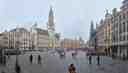
In front of you is an immense cobblestone square, surrounded by tall, ornate golden and white buildings with intricate baroque façades-look for the towering Town Hall spire, which rises high above everything else to help you spot the heart of the Grand-Place. Welcome to the Grand-Place, Brussels’ spectacular “Grand Square”-and you don’t need to be a detective to figure out why it’s called that! Take a moment to soak in all the magnificent architecture; the square is entirely wrapped in rows of opulent Baroque guildhalls, the proud old Town Hall with its lopsided spire, and the regal King’s House, also known as the Bread House. Now, imagine yourself here centuries ago when this spot started as a modest marketplace in the 11th century. Merchants and townsfolk bustled around, trading everything from bread to cloth, with the delicious scent of fresh baked goods wafting through the air. But this haven of commerce was no stranger to drama! Flash-forward to 1695-a terrifying moment when French cannons thundered, launching fiery balls into Brussels. People ducked for cover as flames swept through the neighbourhood, and only the skin of the Town Hall and some stone walls avoided disaster. The square looked like a scorched puzzle, but the people of Brussels rebuilt with gusto, giving the Grand-Place its elegant look today-a parade of style, from Gothic and Baroque to Louis XIV. If you peek at the Town Hall, see if you can spot its quirky secret: the tower isn’t perfectly centered! Legend says the architect was so horrified by this ‘mistake’ that he leapt from the roof, but don’t worry, the story is at least half as crooked as the building itself. Grand-Place was not only beautiful, but also fierce. It’s where fortunes were made and lost, where set-to’s over politics or religion turned deadly serious. Protestants were martyred here, and Counts lost their heads in front of the King’s House during the Spanish rule. All these events gave Brussels a rebellious spirit and a reputation for never backing down, not even to kings. Throughout the centuries, the square went through more fashion makeovers than a catwalk. In the 18th century, unwanted statues kicked to the curb by revolutionaries, and in the 19th, city leaders decided to spruce things up, dusting years of soot off the buildings. Famous writers like Victor Hugo fell in love with the place; he wasn’t the only romantic-just look around at the gilded gables and dramatic sculptures. For years, the Grand-Place was a true “Big Market,” filled with traders and farmers. The neighbouring streets still shout out old market business-like butter, cheese, or fish sellers-if you read their names. Believe it or not, cars even parked right here until 1972. Now the only thing racing past is excitement (and maybe a horde of tourists when the flower carpet appears). Speaking of which, every two years in August, this giant square bursts into bloom, covered in a flower tapestry as colourful as a painter’s wildest dreams. Around Christmas, the Grand-Place puts on its glittering jacket-lights, a towering tree, and a sound and light show bouncing off every brick. And if you’re lucky, you might arrive during the Ommegang, when a medieval parade brings giants, horses, and nobles parading around you as if you’ve wandered onto a movie set. So whether you’re standing still or spinning around for a 360-degree view, the Grand-Place is more than just Brussels’ most important square-it’s a stage for history, beauty, and the kind of energy that sticks with you long after you leave. And hey, where else can you find bread, revolution, drama, and flowers all in one place? Don’t let the buildings with gold trim distract you too much-there’s still plenty more Brussels to explore! For a more comprehensive understanding of the naming, buildings around the square or the events, engage with me in the chat section below.
Open dedicated page →To spot the Royal Saint-Hubert Galleries, just look ahead for an elegant passageway framed by arched glass shopfronts, all shining under a spectacular arched glass roof that…Read moreShow less
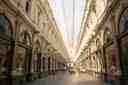
To spot the Royal Saint-Hubert Galleries, just look ahead for an elegant passageway framed by arched glass shopfronts, all shining under a spectacular arched glass roof that stretches above you like a delicate crystal canopy-trust me, you can’t miss it! Welcome to a place that seems to zip you straight back to the glitzy heart of 19th-century Brussels, with a dash of royal flair and more history than a vintage comic book shop. As you stand here, take in the soft echo of footsteps on polished stone, the scent of fresh chocolate from nearby boutiques, and the golden wash of sunlight streaming through the glass ceiling-that’s the Royal Saint-Hubert Galleries working their magic. Picture the year 1846: Rather than this luxurious arcade, the space around you was a maze of gloomy, cramped alleyways, the kind even local cats would think twice about exploring. Enter Jean-Pierre Cluysenaar, a young architect with big dreams and a knack for sweeping away the old and bringing in the fabulous. With royal approval-King Leopold I himself was a fan-Cluysenaar replaced the muddle of backstreets with a 213-metre corridor fit for a king, a queen, and yes, even a prince. And that’s not just a figure of speech: the galleries are actually split into the King’s Gallery, the Queen’s Gallery, and the Princes’ Gallery, each with its own charm. When the galleries first opened in 1847, the city threw a celebration worthy of a royal wedding-speeches, music, and crowds pouring in beneath the grand peristyle. The motto Omnibus omnia, meaning “Everything for everybody,” was engraved above the entrance, claiming this glittering passage for locals and travelers alike. You can almost hear the clinking of glasses and laughter from those first visitors, marveling at their city’s brand new stunner. Now, look up and around. The Italian-inspired façades glow with shades of pink and ochre, pilasters dividing the floors, and faux marble details. Statues and reliefs gaze down at you, sculpted to honor Trade and Industry-the real MVPs who helped bring Cluysenaar’s vision to life. Above, that airy, vaulted glass roof curves gracefully over the entire length, letting natural light spill in as it did all those years ago. Fun fact: before LEDs brought their modern zing, these galleries sparkled in gas lamp light. Imagine the shimmer of a thousand flames reflected in these shop windows, making the whole place feel straight out of a storybook. But this wasn’t just a fancy shopping mall; it quickly became Brussels’ go-to spot for meeting, sipping coffee, or just strutting the latest fashions-rain or shine. It’s no wonder that over the decades, the Saint-Hubert Galleries attracted artists, writers, and VIPs of every stripe. Victor Hugo, Alexandre Dumas, Charles Baudelaire, and even surrealist painters from the CoBrA movement were regulars here. You can almost smell the inky pages and strong coffee from literary debates echoing under these arches. And here’s a movie buff’s treat: in 1896, Brussels saw its first public cinema screening in these very galleries. The Lumière Brothers’ moving pictures flickered on, while the crowd probably wondered if the world would ever be the same. Today, the Royal Saint-Hubert Galleries remain that rare thing-a place that’s always bustling and never lost its sparkle. Whether you’re hunting down Belgian chocolates, browsing antique books, or waltzing into a theater show, you’re walking the same path as queens, artists, and dreamers before you. So go ahead-let yourself be dazzled. This isn’t just an arcade, it’s Brussels’ own time machine. And don’t worry-no ticket required! Seeking more information about the naming, description or the galleries? Ask away in the chat section and I'll fill you in.
Open dedicated page →Let’s step in closer. The cathedral before you is built from pale Gobertange stone, shimmering almost gold when evening sun catches it. The first chapel dedicated to Saint Michael…Read moreShow less
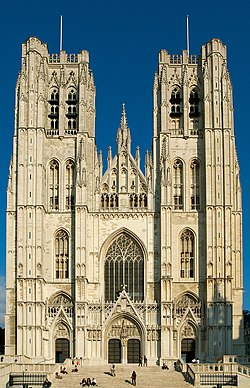
Let’s step in closer. The cathedral before you is built from pale Gobertange stone, shimmering almost gold when evening sun catches it. The first chapel dedicated to Saint Michael once sat here in the mists of the 9th century. Legend says the hill was called Mont des pleurs-“Mount of Sorrows”-because a gloomy prison stood nearby. Not the best real estate, unless you’re a medieval bishop or a budding escape artist. Fast forward to the 11th century, Count Lambert II had ambitions as big as his beard. He and his wife Oda of Verdun built a Romanesque church right here and brought relics of the city’s lesser-known but well-loved saint, Gudula. Imagine the excitement-relic processions, candlelight flickering, and the occasional chicken running loose during ceremonies. The church was reconsecrated in 1072, maybe after a rogue candle set a fire (hey, it was the Middle Ages). But let’s not stop there. As centuries rolled on, a parade of builders added their own flair: Henry I ordered the construction of these two round towers, and his son Henry II called in the stonemasons to begin the vast Gothic nave in 1226. Each stone you see was cut, hauled, cursed at, and carefully set over three hundred years. That’s right-some original workers probably finished building here and then, three centuries later, their great-great-great-grandkids put the last stones in place. Now that’s what I call family tradition. Those towers above you? Built by Jan Van Ruysbroeck, who also dreamt up Brussels’ town hall tower. They were supposed to be taller-legend has it the builders got so tired, they forgot the spires! But what’s lacking in height, they make up for in character-look at the buttresses, the intricate pinnacles, and, of course, the ever-watchful gargoyles. Would you want to clean their teeth? Didn’t think so. Step up to that elegant staircase-added in the early 1700s as a civic gift-while you take in the buzz of the city around you. In the garden stands a bust of King Baudouin, Brussels’ beloved monarch, who serenely watches over pigeons… and you, the modern visitor. Inside, don’t miss the tall, cabbage-leaf capitals atop the columns-honestly, what’s a Gothic church without a little medieval salad inspiration? The nave is lined with the apostles, dramatic baroque pulpits, and confessionals once whispered full of secrets. Marvel at the soaring vaults and the sunlight pouring through windows crafted by the likes of Jan Haeck and Bernard van Orley, their stained glass blazing with royal colors and biblical scenes. And listen for music, too. The cathedral has two mighty pipe organs, the larger with over 4,000 pipes that make the whole nave tremble during concerts. And the bells-49 in the south tower and the massive “Salvator” bourdon in the north-ring out over the city, marking royal weddings, state funerals, and Belgian National Day with the Te Deum. Some bells are named after Belgian royals, because even bells love a bit of celebrity status! But this isn’t just a place for kings and saints. It’s been battered by reformers, looted by revolutionaries, survived the railway, and even hosts a family of peregrine falcons these days-proving that, whether you have feathers or an archbishop’s hat, everyone is welcome. So take in the stone, the glass, the stories echoing through time. The Cathedral of St. Gudula stands not only as Brussels’ sacred heart, but as living proof that no matter how much the world changes, a good story-and a great building-lasts forever. Eager to learn more about the description, exterior or the interior? Simply drop your inquiries in the chat section and I'll provide the details you need.
Open dedicated page →Right in front of you, Place Royale stretches out as a grand rectangular square paved in stone, dominated by a striking statue of a knight on horseback in its very center, with a…Read moreShow less
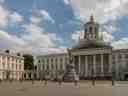
Right in front of you, Place Royale stretches out as a grand rectangular square paved in stone, dominated by a striking statue of a knight on horseback in its very center, with a gleaming white neoclassical church topped by a dome as its impressive backdrop-just look ahead and you can’t miss the symmetry and elegant façades all around. Welcome to Place Royale-or should I say, Brussels’ favorite royal hangout spot for over two centuries! Imagine yourself standing on what was once the real hub of power, drama, and, sometimes, a bit of royal misfortune. Back in the Middle Ages, this very spot housed the mighty Palace of Coudenberg, home to counts, dukes, kings, and even emperors who pretty much called the shots around here for centuries. But fate wasn’t too kind to the old palace: on a freezing night in February 1731, it burned so fiercely that only the ashes and a stubborn nickname remained-the Cour brûlée or “Burnt Court.” For over forty years, this place was just a scorched reminder of lost glory, waiting for a new chapter to begin. Luckily, in the late 18th century, the city decided to replace the ruins with something far more fashionable-and a little less flammable. With a little inspiration (and maybe a touch of envy) of French royal squares, the vision was born for an elegant new square fit for parades, power, and pomp. Austrian Governor Charles Alexander of Lorraine, not wanting to fall behind those fancy French cities, kick-started this project, and soon, led by architects Barré and Guimard, Place Royale began to take shape between 1775 and 1782. Suddenly, all the orderly lines and symmetry you see today rose from the smoke-filled past, and voilà, the square became one of Brussels’ most prestigious addresses. It didn’t take long for this new square to attract some drama of its own. At first, Charles Alexander himself got the honor of standing in the center-in statue form, that is-dressed like a Roman general. But Brussels likes a little revolution with its history! French revolutionaries toppled his statue in spectacular fashion, and when the Austrians tried to stand him back up, he got knocked down again. Eventually, the French melted him down for coins and replaced him with a so-called “Liberty tree.” Spoiler alert: the tree didn’t last, either. But the square wasn’t empty for long. In 1848, that impressive rider who greets you today-Godfrey of Bouillon, the fearless crusader knight-claimed his spot at the heart of Place Royale. His statue was the first of its kind in Brussels and still stands tall, bravely waving a standard like he’s leading a charge into history. And don’t miss those bronze bas-reliefs at the base! One side shows Godfrey’s legendary siege of Jerusalem, the other a set of laws for the new kingdom-talk about multitasking. Surrounding you, the architecture channels pure 18th-century confidence with eight stately pavilions. Each corner once housed the who’s who of Brussels-lottery offices, breweries, countesses, even an abbey. Today, you’ll find the BELvue Museum, the Royal Museums of Fine Arts, and the enchanting Musical Instruments Museum all just steps away. Some buildings even have cellars built atop secret medieval streets-now an archaeological site! If you had X-ray glasses, you could spot the ghostly outlines of ancient halls beneath your feet. And don’t forget the star of the show-the Church of St. James on Coudenberg right ahead. With its mighty white columns and domed bell tower added later, it has seen its share of pageantry, including Leopold I, who took the very first oath as King of the Belgians right here. Need another claim to fame? During the French revolution, the church briefly became a “Temple of Reason”! Only in Brussels do churches get career changes. Today, Place Royale isn’t just a crossroads for cars and trams; it’s a living patchwork of centuries, where royal parades once trotted, cannons defended barricades, and the city still meets to celebrate-or protest, depending on the day. Restoration work is underway, too, hoping to tip the balance from cars back to pedestrians, keeping those classic paving stones (and the unsuspectingly tricky traffic circle) just as Brussels intended. So, as you gaze around, you’re standing right where leaders plotted, revolutions sparked, and more than a few statues lost their balance-let’s just say, you might want to keep an eye on that crusader in the middle!
Open dedicated page →If you’re searching for the Royal Palace of Brussels, look for a grand, symmetrical stone building with a grand portico of columns and the Belgian flag waving right in the center…Read moreShow less
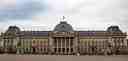
If you’re searching for the Royal Palace of Brussels, look for a grand, symmetrical stone building with a grand portico of columns and the Belgian flag waving right in the center above the entrance, standing proudly across the expanse of Place des Palais. Now, let’s jump into the palace’s story-no crown or royal cape required, I promise! Imagine you’re standing on ground that has played host to centuries of royal drama, intrigue, and maybe a few royal headaches. The roots here stretch back to the Middle Ages, when this very hill-Coudenberg-was crowned by a mighty castle. Picture armored knights, banquet halls echoing with laughter, and the esteemed Dukes of Brabant dreaming up new ways to impress their neighbors. Of course, things didn’t always run smoothly. The palace burned so many times you’d think the roof was made of matchsticks. The great inferno of 1731 nearly took it all, leaving only stubborn stone skeletons and the medieval chapel. After those ashes cooled, the plot thickened-literally! The neighborhood got a full makeover in the late 18th century, streets were laid, and soon, a new palace was built for the ever-so-chic Governor of the Austrian Netherlands. Eventually, grand schemes and even grander kings came along. Enter King Leopold II, a man who thought, “This just isn’t big enough!” So, he doubled the palace’s size and transformed the façade to this impressive black-tie look you see now. Fun fact: this façade is about 50% longer than Buckingham Palace’s. Belgian royalty loves to make a statement! But here’s the royal twist-nobody actually lives here. The king and his family hang their hats in Laeken, on the other side of town. This palace is the king’s office: a place for state affairs, glittering receptions, and hosting foreign dignitaries who come hoping for a taste of Belgian waffles and diplomacy. Take a moment to soak in that lavish architecture. The sculpted Belgium high over your head is flanked by statues celebrating industry and agriculture-because even queens and kings need to get things done. There’s a formal French-style front garden with gilded gates, and at the back, an English garden to keep things balanced. The palace’s three wings curve elegantly around courtyards you might imagine filled with carriages, chatter, and the odd pigeon making itself at home. Peek inside-at least in your imagination-and you’ll find rooms that are the stuff of fairy tales. White marble staircases that seem to float, an Empire Room where Napoleon himself once popped by, and the Hall of Mirrors, sparkling with over a million beetle wings in the ceiling. And don’t miss the Throne Room… though there’s no throne. Because in Belgium, apparently, thrones are so last century. Statesmen, diplomats, and even pop stars have waltzed through these halls for lavish balls, glittering receptions, or sometimes just for a peek at the king’s art collection. Modern touches mix with old masterpieces-think Napoleon’s chairs sitting right next to contemporary Belgian art and, somewhere downstairs, priceless crystal and silverware kept ready for the next royal banquet. The palace isn’t all show either; during World War I, it transformed into a military hospital. These days, if the Belgian flag’s flying, the king is in the country; if the guards are standing to attention out front, he’s inside. And if you’re lucky enough to visit between July and early September, you can step inside yourself and wander these 19th-century halls. For now, just imagine those mirrored walls, giant galleries, and all the secrets that have passed through these grand doors. Who knows? The next grand event could be just around the corner-or maybe it’ll be you making a royal entrance! Fascinated by the exterior, interior or the functions? Let's chat about it
Open dedicated page →Right in front of you, you’ll see two grand stone pillars topped with decorative busts and statues, flanked by ornate iron gates, opening into an avenue shaded by tall trees and…Read moreShow less
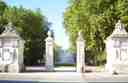
Right in front of you, you’ll see two grand stone pillars topped with decorative busts and statues, flanked by ornate iron gates, opening into an avenue shaded by tall trees and with a gracefully spraying fountain straight ahead-this is the main entrance to Brussels Park. Now that you’re here at the gates, picture this: a swath of green that’s more than just a park, but once belonged to dukes, emperors, and revolutionaries. We're talking about the largest public park in central Brussels, spreading across 32 acres-big enough that you might just get lost if you’re not careful. But don’t worry, there are no minotaurs in this labyrinth, only the occasional squirrel on a power trip. Long before joggers and chess players made it their haunt, this land was part of the grand gardens of the Coudenberg Palace-a playground for medieval nobility. Back in those days, this ‘Warande’ was a hunting ground, home to stag, regal falcons, and, rumor has it, some very snooty ducks. It was split into a wild game reserve and a private ornamental garden. Fancy Corinthian labyrinths, flower gardens, and aviaries packed with exotic birds-this might just have been the original Brussels Zoo, minus the ticket price. Things took a dramatic turn in 1731, when a devastating fire transformed the elegant palace into a field of smoldering ruins. The park, left behind, became little more than an afterthought-a ghost of former splendor, haunted by overgrown paths and toppled statuary. But then, in true Brussels spirit, the idea sparked to turn these ruins into something marvelous. First, planners wanted a statue-then they thought, “Why not a brand new park?” So began the grand neoclassical redesign of Brussels Park, spearheaded by Gilles-Barnabé Guimard and Joachim Zinner from 1776 to 1783. Out with the tangled wilds, in with straight avenues and geometric beauty. Over a thousand old trees were felled (treehugger tears optional), and three thousand more planted-a real ‘out with the old, in with the new’ situation. History kept trampling through here. In 1793, French Revolutionaries-those famous sans-culottes-stormed in and utterly trashed the sculptures, treating Roman emperor busts like bowling pins. Don’t worry, these statues made a comeback soon after, thanks to the generosity of Brussels’ citizens, who held a public subscription. The park was so precious that the thirty most generous donors picked their own committee to manage it-can you imagine the debates on which tree should be pruned next? “To prune, or not to prune,” that was definitely the question. In the 1800s, trees formed double rows thickening the quiet grandeur, while cast-iron fences and elegant entrances kept out city bustle. During the Belgian Revolution of 1830, soldiers took shelter here, probably wishing the grand fountains dispensed hot chocolate instead of water. Today, the park is full of lively detail. There’s the Royal Park Theatre, which started out as a literary salon where people rented novels for one penny-a sort of revolutionary Netflix, with fewer subscription tiers. Kids once performed here, to the horror of the local bishop, who clearly wasn’t a fan of burlesque comedy. Over its lifetime the theatre has dodged burning stages and changing styles but still stands strong. Just behind it, the Vauxhall-a meeting place with its green trelliswork and an imperial dome-echoes with the music, balls, and boisterous parties of 19th-century aristocrats. The Royal Theatre of La Monnaie even hosted concerts here at the bandstand: imagine summer evenings filled with fanfare and echoes of applause. Gaze down the main avenue and you’ll notice the symmetry-designed so three grand boulevards align perfectly with the Palace of Justice, the Royal Palace, and Place du Trône. The trees along the avenues are a veritable arboretum: plane trees, chestnuts, elms, beeches, and more, woven together in leafy grandeur. And scattered throughout are around sixty statues, many moved from far and wide, and inspired by Greco-Roman gods and legends-don’t be surprised if you see Hermes more than once. So, as birds chatter overhead and the sun casts dappled shadows on the wide paths, remember you are strolling through a park that has survived fires, revolutions, pompadoured aristocrats, and even fashion changes for statues. Who knows-maybe yours will be the next great story whispered beneath these ancient trees. If you're keen on discovering more about the buildings and monuments, sculptures or the remarkable trees, head down to the chat section and engage with me.
Open dedicated page →

Frequently asked questions
How do I start the tour?
After purchase, download the AudaTours app and enter your redemption code. The tour will be ready to start immediately - just tap play and follow the GPS-guided route.
Do I need internet during the tour?
No! Download the tour before you start and enjoy it fully offline. Only the chat feature requires internet. We recommend downloading on WiFi to save mobile data.
Is this a guided group tour?
No - this is a self-guided audio tour. You explore independently at your own pace, with audio narration playing through your phone. No tour guide, no group, no schedule.
How long does the tour take?
Most tours take 60–90 minutes to complete, but you control the pace entirely. Pause, skip stops, or take breaks whenever you want.
What if I can't finish the tour today?
No problem! Tours have lifetime access. Pause and resume whenever you like - tomorrow, next week, or next year. Your progress is saved.
What languages are available?
All tours are available in 50+ languages. Select your preferred language when redeeming your code. Note: language cannot be changed after tour generation.
Where do I access the tour after purchase?
Download the free AudaTours app from the App Store or Google Play. Enter your redemption code (sent via email) and the tour will appear in your library, ready to download and start.
If you don't enjoy the tour, we'll refund your purchase. Contact us at [email protected]
Checkout securely with 




