
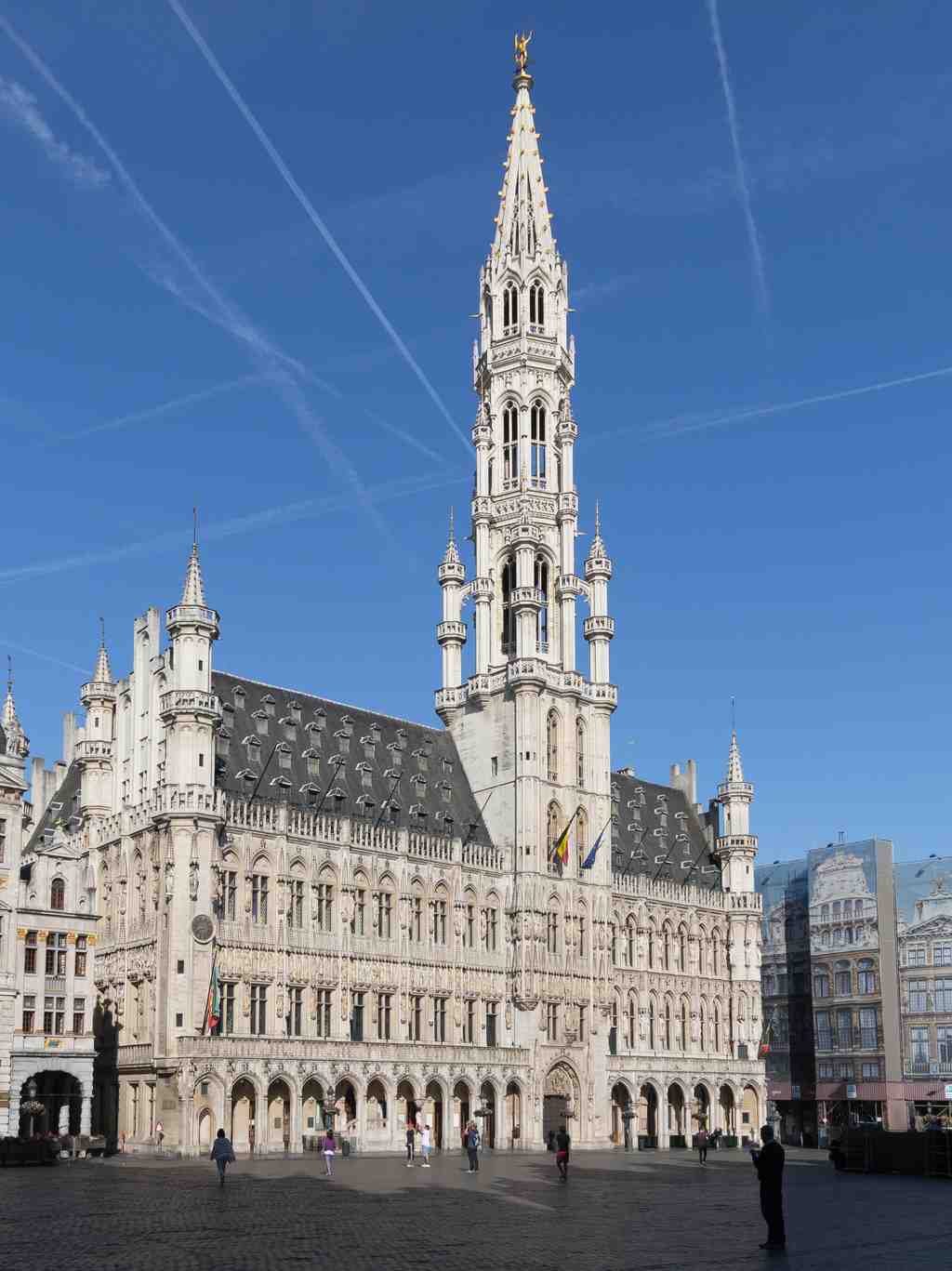
Look straight ahead across the Grand-Place and you’ll spot a dazzling Gothic masterpiece with a sky-high spire topped by a golden statue-this is the Brussels Town Hall, standing proudly like the grandest wedding cake in the city.
Now, let’s unravel the centuries-old secrets swirling around this spectacular building. Imagine you’re here in Brussels in the early 1400s-the smell of fresh bread from market stalls, noble families bustling around on muddy streets, and right in front of you, workers begin laying the first stones for what would become the Town Hall. The oldest part is to your left, rising up with its original tower from 1401, put together by an architect who must have loved pointy arches as much as waffles. The building grew and grew, especially once the city’s crafty guilds demanded a spot in city government. When Charles the Bold-who had the best nickname of any Duke-helped lay the foundation of the longer wing, no one knew this place would someday steal the show on the Grand-Place.
But let’s get dramatic. Flash forward to 1695. The peaceful city center is suddenly filled with thunder as 70,000 French soldiers begin bombarding Brussels. The buildings of the square burst into flames, and artwork that once told the story of Brussels gets lost in smoke. After the firestorm, the only building left standing in the main square is this-the Town Hall, albeit just its shell. It’s almost funny-this was the main target, yet it survived when all around was chaos. The city rose from the ashes, and the Town Hall gained even more wings and rooms, funded by the sale of houses and land.
Gothic architects were big fans of towers, but the Town Hall’s is special-96 meters tall, all in the Brabantine Gothic style, with an octagonal lantern that looks almost like a crown. Jan van Ruysbroek built this marvel, and right at the top you’ll see a statue of Saint Michael, the city’s patron, busy dispatching a dragon-demon. Here’s a fun fact: stand back and you’ll notice the tower and the façade aren’t quite lined up. Legend has it, the architect noticed the error and leapt from the tower in despair. But knowing how much building plans change, maybe he just needed a strong espresso.
By the 1800s, everyone wanted the Town Hall to look even fancier. Imagine artists high up on scaffolding adding statues left and right-now there are nearly three hundred of these noble saints, knights, and allegories lining the façade, each with their own expressive faces, ready to judge your fashion choices. On the ground, near the main portal, lions look over the city’s coat of arms, and carvings show legends of honest judges and unsolved mysteries.
Inside, it’s like a treasure chest. There’s the Gothic Room with wooden walls and huge tapestries spun in Mechelen, the grand ceremonial Maximilian Room with its portraits and lush decorations, and even a hallway lined with 18th-century kings looking slightly confused about who’s next in charge. One of the quirkiest details is the marble star in the inner courtyard that marks Brussels’ geographical center-stand there and feel like you’re at the heart not just of the city, but of centuries’ worth of quirky stories and politics.
Throughout history, this building has been a stage for revolutionaries, refuge for the wounded in wartime, a parade ground for mayors and monarchs, and sometimes, an accidental art gallery for very scary gargoyles. And today, as part of a UNESCO World Heritage Site, the Town Hall stands watch over the Grand-Place-weathering storms, welcoming tourists, and keeping an eye on generations passing through. Not bad for a building whose most famous flaw might just be its charm!
Seeking more information about the architecture, interior or the influence? Ask away in the chat section and I'll fill you in.




